1
69
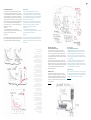
Asymptote d’autosuffisance
Rappel 1 : l’énergie solaire se récupère d’abord sur un plan horizontal
(et un petit peu en façade sud sous nos latitudes).
Rappel 2 : la récupération d’énergie éolienne en situation urbaine est
assez compliquée.
Rappel 3 : la géothermie profonde permet tant la production
d’électricité reste très confidentielle.
Conclusion préliminaire : pour réduire son empreinte énergétique en
autoproduisant, le mieux, c’est d’avoir beaucoup de toiture. Aussi, plus
on est haut, plus la surface de toiture rapportée à chaque mètre-carré
de programme devient faible; dès lors le plafond de bâtiments neutres
en énergie est rapidement atteint.
Aujourd’hui, l’émergence des hybrides, les sorties (trop) tardives de la
voiture électrique, la mode en cours sur le downsizing des moteurs :
on repense à l’efficacité (conversion du besoin en énergie finale). Mais
le vrai sujet est d’abord :
matière = alléger
espace = compacter
temps = mutualiser
Today, the emergence of hybrids, the (too) late release of electric
cars, the current trend of engine downsizing leaves us to reconsider
efficiency (conversion of the final energy requirement). Yet the real
issue is above all:
material = make lighter
space = make more compact
time = pool time
Rêvons à la victoire des Midgets japonaises, à l’arrivée sur le marché
de l’Aptera, à la résurrection de Colin Chapman (les Lotus et leur
fabuleux rapport poids-puissance) et d’Alec Issognis (la merveilleuse
compacité de la première Mini). Heureusement le génial Gordon
Murray va nous sauver avec sa T25 !
Let us dream of the victory of the Japanese Midgets, the launch of
the Aptera, the resurrection of Colin Chapman (the Lotus and its
fabulous power-to-weight ratio) and of Alec Issognis (the wonderful
compactness of the first Mini). Thank goodness our genius Gordon
Murray is here to save us with his T25!
Potentiels de ligne : vers les infrastructures à énergie positive
ou dès que l’homme habite le paysage, rendre productif l’artifice...
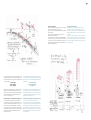
Infrastructures statiques : pylônes THT à équiper d’éoliennes sur le
site venteux (cf. développement industriel de Wind-it XL en cours par
Elioth avec Encore Heureux, modèle de 200kW). Toits solaires sur
les futurs automotrices à grande vitesse : l’efficacité morphologique
intrinsèque fait que, par grand soleil, la puissance-crête fournie par les
panneaux en toiture compense les frottements d’air de l’AGV à
200 kilomètres par heure.
Line potential: working towards positive energy infrastructure
As soon as people live somewhere, make it productive...
Static infrastructure: VHV pylons to be fitted with wind turbines
on windy sites (see the current industrial development of Wind-it
XL by Elioth with Encore Heureux, 200 kW model). Solar roofs on
the future AGVs (high-speed self-propelled train carriages): the
effectiveness of the inherent shape means that, in sunny spells, the
peak power generated by the roof panels will offset the train’s air
friction at 200 km/h.
The asymptote of self-sufficiency
Reminder 1: solar power is above all recovered on horizontal
surfaces (and a little on southern-facing façades in France).
Reminder 2: wind power recovery in urban areas is quite complex.
Reminder 3: deep geothermy as a generator of electricity remains
very limited.
Preliminary conclusion: the best way to cut one’s energy footprint
through self-sufficiency is to have a lot of roof surface. Also, the
higher up you are, the more the roof surface vis-à-vis each square
meter of project decreases; the faster the ceiling of energy-neutral
buildings is reached.