1
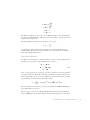
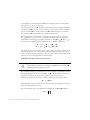
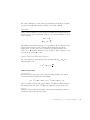
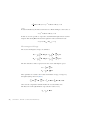
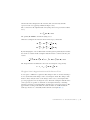
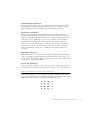
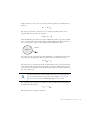
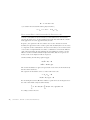
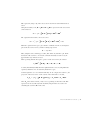
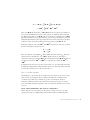
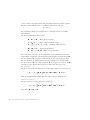
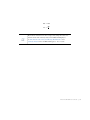
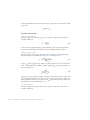
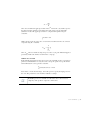
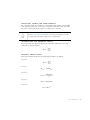
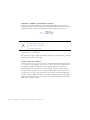
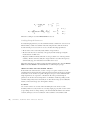
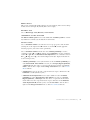
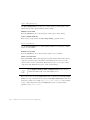
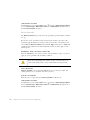
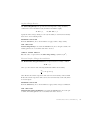
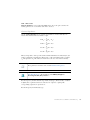
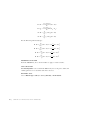
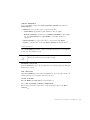
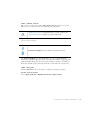
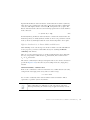
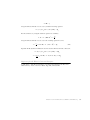
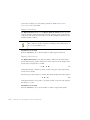
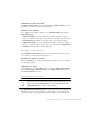
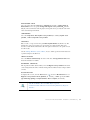
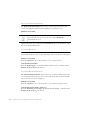
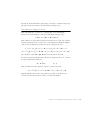
versions of the electromagnetic fields. The term Galilei invariant is used due to the fact that they remain unchanged after a coordinate transformation of the type r' = r + v0 t In continuum mechanics, this transformation is commonly referred to as a Galilei transformation. The Galilei invariant fields of interest are ˜ E = E+vB (Electromotive intensity) ˜ J = J – v (Free conduction current density) ˜ -----PP = + v P – v P (Polarization flux derivative) t ˜ M = M + v P (Lorentz magnetization) ˜ ˜ B H = ------ – 0 v E – M (Magnetomotive intensity) 0 The electromotive intensity is the most important of these invariants. The Lorentz magnetization is significant only in materials for which neither the magnetization M nor the polarization P is negligible. Such materials are rare in practical applications. The same holds for the magnetization term of the magnetomotive intensity. Notice that the term 0v × E is very small compared to B/0 except for cases when v and E are both very large. Thus in many practical cases this term can be neglected. Air and Vacuum The stress tensor in the surrounding air or vacuum on the outside of a moving object is 1 1 T T T T 2 = – pI – --- E D + --- H B I + ED + HB + D B v 2 2 There is an additional term in this expression compared to the stationary case. Elastic Pure Conductor The stress tensor in a moving elastic pure conductor is 1 1 T T T T 1 = M – --- E D + --- H B I + ED + HB + D B v 2 2 where D0E and B0H. 48 | CHAPTER 2: REVIEW OF ELECTROMAGNETICS