1
Declarative Hyperlinking
By default URI template parameter values are extracted from the implicit instance bean, i.e. the
following two annotations are equivalent:
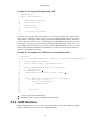
@Ref("widgets/{id}")
@Ref("widgets/${instance.id}")
The source for URI template parameter values can be changed using the @Binding annotation, E.g. the
following two annotations are equivalent:
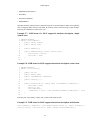
@Ref(value="widgets/{id}", bindings={
@Binding(name="id" value="${resource.id}"}
)
@Ref("widgets/${resource.id}")
6.3. Conditional Link Injection
Link value injection can be made conditional by use of the condition property. The value of this
property is a boolean EL expression and a link will only be injected if the condition expression evaluates
to true. E.g.:
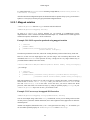
@Ref(value="widgets/${instance.id}/offers",
condition="${instance.offers}")
URI offers;
In the above, a URI will only be injected into the offers field if the offers property of the instance
is true.
6.4. Link Headers
HTTP Link headers [http://tools.ietf.org/html/draft-nottingham-http-link-header-09] can also be added to
responses using annotations. Instead of annotating the fields of an entity class with @Ref, you instead
annotate the entity class itself with @Link. E.g.:
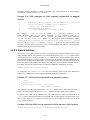
@Link(
value=@Ref("widgets/${resource.nextId}"),
rel="next"
)
The above would insert a HTTP Link header into any response whose entity was thus annotated. The
@Link annotation contains properties that map to the parameters of the HTTP Link header. The above
specifies the link relation as next. All properties of the @Ref annotation may be used as described above.
Multiple link headers can be added by use of the @Links annotation which can contain multiple @Link
annotations.
6.5. Configuration
Declarative hyperlinking support is provided in the form of a filter. First, the application must declare a
dependency on the jersey-server-linking module:
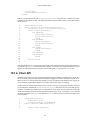
<dependency>
<groupId>com.sun.jersey</groupId>
<artifactId>jersey-server-linking</artifactId>
51