1
Graphic EQs
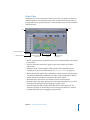
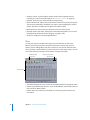
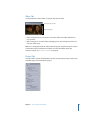
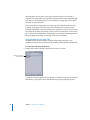
Graphic EQs give you a set of filters (often with 10 or 31 filters), each with a set center
frequency and bandwidth. Using a graphic EQ, you can shape a wide variety of
frequencies throughout the frequency range. Graphic EQs can be used to shape the
sound of the overall project mix.
Parametric EQs
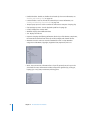
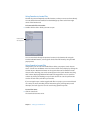
Parametric EQs are similar to bandpass EQs, but provide a greater amount of control,
and can be used for extremely precise adjustments. With a parametric EQ, you can set
the center frequency, the gain, and the bandwidth. Used carefully, a parametric EQ can
help a track cut through the mix, or help a track or project sound fuller. Parametric EQs
can also be used to remove specific, unwanted frequencies from a mix.
Modulation Effects
Modulation effects begin with a delayed signal, like time-based effects, but vary (or
modulate) the delay time, typically using a low-frequency oscillator (LFO). This can be
used to double a sound, making it seem stronger and “fatter,” to simulate a group of
voices or instruments playing together, or to add a distinctive character to the sound.
Modulation effects include chorus, phase shifters, and flangers.
Chorus
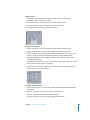
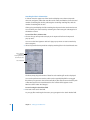
Chorus effects play back multiple repetitions of the delayed signal (like reverbs), but
vary the delay time for each one, using an LFO. As the name implies, this effect can
strengthen the sound, and create the impression that the sound is being played by
many instruments or voices in unison. The slight variations in delay time created by the
LFO simulate the subtle differences in timing and pitch heard when several people play
together. Using chorus also adds fullness or richness to the signal, and can add
movement to low or sustained sounds.
Phase Shifters
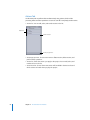
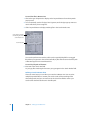
Phase shifters produce a characteristic “whooshing” sound by combining the original
signal with a copy of the signal that is slightly out of phase with the original. This
means that the amplitudes of the two signals’ sound waves reach their highest and
lowest points at slightly different times. The time between the two signals is
modulated, typically using an LFO. As the two signals go in and out of phase, certain
frequencies, called notch frequencies, are created, which give phase shifters their
distinctive sound.
The main difference between chorus and phase shifting is the amount of delay time.
Chorus effects typically use delay times between 20 and 30 milliseconds (ms), while
phase shifters (and flangers, discussed next) typically use shorter delay times, between
1 and 10 ms.
336
Chapter 11 Working with Audio Effects