1
Version History
•
•
•
•
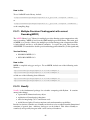
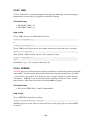
2015/01/28 NumPy 1.9.1 based on Python 2.6.6
2014/06/17 NumPy 1.8.1 based on Python 2.6.6
2014/06/13 NumPy 1.8.1 based on Python 2.7.6
2013/11/11 NumPy 1.8.0 based on Python 2.6.6
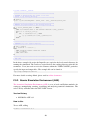
How to Use
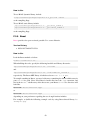
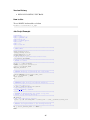
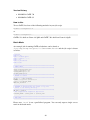
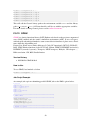
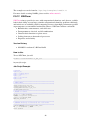
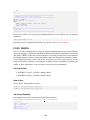
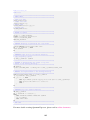
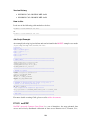
Load one of the following modules:
module load numpy/1.8.0
or
module load numpy/1.8.1
or
module load numpy/1.9.1
for python 2.6;
module load numpy/1.8.1\_py27
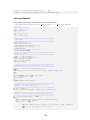
for python 2.7; For more details on using NumPy, please read tutorial.
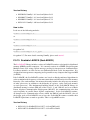
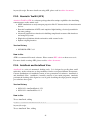
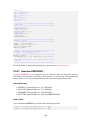
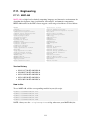
F.5.13. Scalable LAPACK (ScaLAPACK)
TheScaLAPACK library includes a subset of LAPACK routines redesigned for distributed
memory MIMD parallel computers. It is currently written in a SPMD (Single Program
Multiple Data) style using explicit message passing for interprocessor communication.
It assumes matrices are laid out in a two-dimensional block cyclic decomposition. It is
designed for heterogeneous computing and is portable on any computer that supports MPI
(or PVM).
Like LAPACK, the ScaLAPACK routines are based on block-partitioned algorithms in
order to minimize the frequency of data movement between different levels of the memory
hierarchy. (For such machines, the memory hierarchy includes the off-processor memory
of other processors, in addition to the hierarchy of registers, cache, and local memory
on each processor.) The fundamental building blocks of the ScaLAPACK library are
distributed memory versions (PBLAS) of the Level 1, 2 and 3 BLAS, and a set of Basic
Linear Algebra Communication Subprograms (BLACS) for communication tasks that
arise frequently in parallel linear algebra computations. In the ScaLAPACK routines,
all interprocessor communication occurs within the PBLAS and the BLACS. One of
the design goals of ScaLAPACK was to have the ScaLAPACK routines resemble their
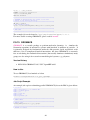
LAPACK equivalents as much as possible. This is a OpenMPI version.
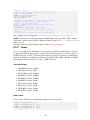
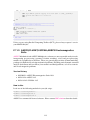
Version History
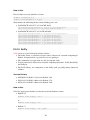
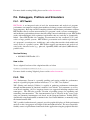
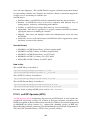
• 2013/11/11 ScalLAPACK 2.0.2 GCC 4.8.2+ACML build
• 2013/11/07 ScalLAPACK 2.0.2 GCC 4.8.2+ATLAS build
69