1
Bunkspeed DriveSuiteUser Guide
Appendix
Types of Materials in Bunkspeed DriveSuite
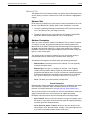
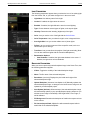
Anisotropic
The Anisotropic material simulates a surface with an asymmetrical specular
highlight that changes when the surface rotates, relative to the light sources.
Put another way, an anisotropic material has a "grain" or directionality. This
material is most commonly used to simulate brushed finishes on metallic
surfaces. The material’s parameters are:
•
Base Color: sets the color of the material in diffuse white light
•
Highlight Color: sets the color of the material’s specular highlights
•
Roughness: controls the size of the highlight. The rougher the material,
the more it diffuses the highlight (i.e. the larger and less focused the
highlight becomes).
•
Distortion: controls the amount of distortion by changing the ratio of
roughness in one direction on the surface, verses the perpendicular
direction. Zero causes no distortion, and 100 causes maximum distortion.
•
Angle: sets the direction of the Distortion effect.
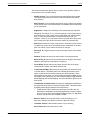
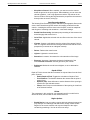
Backscattering
Backscattering is great for fabrics. It works well with Bump map textures.
Parameters:
•
Base Color: controls the darker color of the base material.
•
Highlight Color: controls the color of specular highlights.
•
Roughness: low values for things like satin; high value for leather, velvet,
and so forth.
•
Distortion: influences the anisotropic light to achieve an effect similar to
changing the direction of the stitching in the fabric.
•
Angle: controls the light direction of Distortion (above).
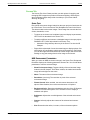
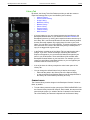
Emissive
The Emissive material emits light into the scene – provided that you assign a
Color texture (the only type of texture supported by emissive materials) and
enable the Blend Texture option in the Texture Parameters of Material Tab.
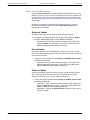
If you don’t do this, then the Emissive material will reflect the light that’s
shining on it, but will not radiate any additional light into the scene – even if
you crank up the Intensity parameter very high.
•
Copyright © Bunkspeed, Inc. 2002-2014
Color: in the absence of light, the material radiates the Emissive color. In
typical scenes, the color the Generic material is the sum of Base Color
plus Emissive Color (plus Highlight Color for highlights).
VIII