1
3.5
Water Molecules
3.5.1 Methodology For Handling Waters
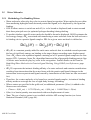
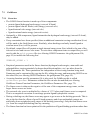
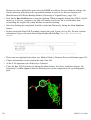
• Water molecules often play key roles in protein-ligand recognition. Water molecules can either
form mediating hydrogen bonds between protein and ligand, or be displaced by the ligand on
binding.
• GOLD allows waters to switch on and off (i.e. to be bound or displaced) and to rotate around
their three principal axes (to optimise hydrogen bonding) during docking.
• To predict whether a specific water molecule should be bound or displaced, GOLD estimates the
free-energy change, ∆Gb, associated with transferring a water molecule from the bulk solvent to
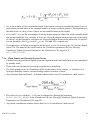
its binding site in a protein-ligand complex. ∆Gb for a given water molecule is defined as:
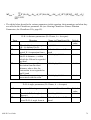
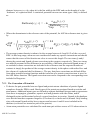
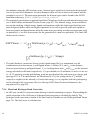
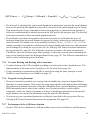
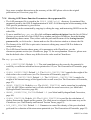
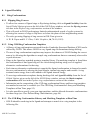
∆G b ( W ) = ∆G p ( W ) + ∆G i ( W )
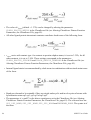
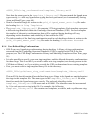
• ∆Gp(W) is a constant penalty added for each water molecule that is switched on and represents
the loss of rigid-body entropy on binding to the target (hence rewarding water displacement).
Note: ∆Gp values were optimised against a training set of 58 protein-ligand complexes for four
targets (HIV-1 protease, factor Xa, thymidine kinase and the oligopeptide-binding protein Opp
A) where water molecule play key roles in the recognition. Further details can be found in
Modelling Water Molecules in Protein-Ligand Docking Using GOLD (see References, page
163).
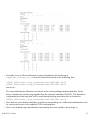
• ∆Gi(W) represents the intrinsic binding affinity of a water molecule and contains contributions
resulting from interactions that the water forms with the protein and ligand (changes in the
interactions between protein and ligand caused by introduction of the water are also accounted
for).
• Therefore, for a water molecule to be bound to a protein-ligand complex, its intrinsic binding
affinity needs to outweigh the loss of rigid-body entropy on binding.
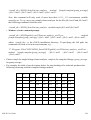
• Where waters are specified in the gold.conf, an additional parameter (S(bar)) is added to the
fitness score calculation:
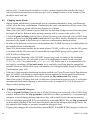
• Fitness = S(hb_ext) + 1.3750*S(vdw_ext) + S(hb_int) + 1.0000*S(int) + S(bar)
• S(bar) is a barrier/penalty term associated with non-displacement of water.
• Note: The use of active waters is not available with the ASP scoring function (see Astex
Statistical Potential (ASP), page 86).
GOLD User Guide
15