1
particular, the software is likely to be unreliable if protein residues have been partially deleted,
so that some atoms appear to have free valencies. This situation can be avoided by ensuring that
all residues included in the input file are complete.
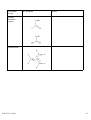
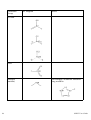
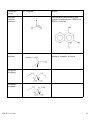
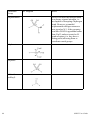
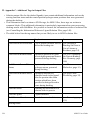
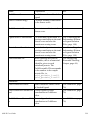
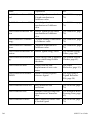
• There is usually a right and a wrong way to code groups which can be drawn in more than one
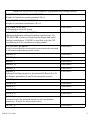
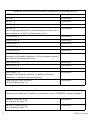
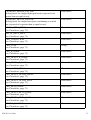
way (i.e. have more than one canonical form), such as nitro, carboxylate and amidinium. A list
of correct bond types for some of the common, difficult groups is available (see Atom and Bond
Type Conventions for Difficult Groups, page 62).
• Because correct atom typing is so important, any messages from the type checker are logged in
both the gold_protein.log file and the gold.err file. These errors will also be displayed in a
separate window if GOLD is run through the front end.
6.3
Manually Setting Atom and Bond Types
• If you do not want to use the automatic atom- and bond-type assignment available in GOLD,
you can define the atom and bond types yourself, provided that you use MOL2 format. This
option is useful when you want to set unusual atom types or user-defined types.
• GOLD atom typing is based on SYBYL atom types (see Appendix B: List of Atom and Bond
Types, page 236).
• SYBYL bond types are also used (see Appendix B: List of Atom and Bond Types, page 236).
• Even if atom types are set manually, the automatic atom-type assignment software is still run to
check the ligand structure for inconsistencies. Any errors will be recorded in both the log file
and the error file. In most cases, input types will not be reset.
• If for any reason GOLD is unable to deduce an atom type, then the atom in question will be
replaced with a dummy atom type Du.
• Bond types must be correctly set (see Atom and Bond Type Conventions for Difficult Groups,
page 62). This is normally just a case of checking single and double bonds. However, the amide
bond must be set to the am bond type. Also, the ar bond type is used for delocalised bonds (e.g.
in carboxylate, phosphate and guanidinium ions) as well as for aromatic bonds.
• Atom types should conform to those expected in SYBYL. In particular, sp2 oxygen is atom type
O.2, sp3 oxygen is O.3, tetrahedral nitrogen is N.3 (or N.4 if protonated), planar (non-amide)
nitrogen is N.pl3 and the planar amide nitrogen is N.am. The atom type O.co2 should be used for
the oxygens of carboxylate and phosphate ions or the singly-charged oxygen of phenolates.
• If an atom is mis-typed, it is possible that GOLD will assign it the wrong H-bond donor or
acceptor properties. Therefore, correct atom-type assignment is crucial. An N.3 donor
(tetrahedral nitrogen), is very different from an N.4 (protonated nitrogen) or an N.pl3 (planar
trigonal nitrogen) donor. The assignment of rotatable bonds may also be affected. If a bond has
the wrong type, it may be inappropriately allowed to rotate freely.
• A list of atom and bond type conventions for some common, difficult groups is available (see
Atom and Bond Type Conventions for Difficult Groups, page 62).
GOLD User Guide
61