1
AQUASENSATION AS2000T / AS2000
1
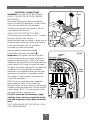
PLUMBING NOTES
1.1
All installations must comply with the Local
Water Company or Water Undertakers
Byelaws.
1.2
Supply pipes must be flushed to clear debris
before connecting the shower unit (Byelaw
55).
1.3
DO NOT connect the shower unit to the
mains cold water supply as it would damage
the unit and also, the installation would be
in breach of the guidance notes contained in
1.1 above.
1.4
DO NOT use excessive force when making
connections to the flexible hose or
sprayhead – finger tightness is sufficient.
1.5
DO NOT turn on the electrical supply until
the plumbing connections have been
completed. Only then can the electricity be
switched on in order to power the solenoid
to turn water on to the shower when
commissioning. The shower must not be
operated dry without water.
1.6
DO NOT solder pipes or fittings within
300mm of the shower appliance, as heat
transfer can damage components.
1.7
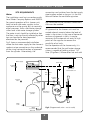
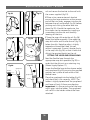
When installed, the top of the shower unit
must be at least 75mm lower than the base
of the cold water storage cistern to prevent
the pump being run dry without water.
1.8
1.9
an independent means of isolating the water
supplies should maintenance or servicing be
necessary. DO NOT use stop taps or ball-o-fix
type valves which restrict flow.
1.12 If the shower unit is installed on a common
supply which feeds an adjacent tap, the
maximum static inlet pressure for the unit
will, under certain circumstances be
exceeded. The action of closing the tap can
cause a pulse in the supply pressure which
will result in damage to the unit. This can be
resolved by the installation of a suitably sized
mini expansion vessel, sited as close as
possible to the tap and pressurised to 0.5
bar.
2
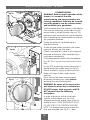
ELECTRICAL NOTES
2.1
The installation must comply with
BS 7671 ‘Requirements for electrical
installations’ (IEE wiring regulations) and
Electrical Supply Company regulations.
Ensure the incoming hot and cold water
supplies to the shower are adequately earth
bonded.
2.2
DO NOT turn on the electrical supply until
the plumbing connections have been
completed. Only then can the electricity be
switched on in order to power the solenoid
to turn water on to the shower when
commissioning. The shower must not be
operated dry without water.
A dedicated cold water supply must be
taken directly from the cold water cistern to
the shower. This draw-off must be on the
opposite side of the cistern to the float
operated valve.
2.3
The mains supply must be 230/240V, at
50Hz, connected to the unit via a double
pole switched 3 Amp fused connection unit
(not supplied) with a minimum 3mm contact
separation gap in each pole.
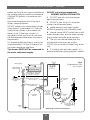
The action of the pump is to increase the
flow rate. If the supply pipework cannot
handle the resulting flow rate then;-
2.4
In accordance with ‘The Plugs and Sockets
etc. (Safety) Regulations 1994’, this unit is
intended to be permanently connected to
the fixed electrical wiring of the mains
system.
2.5
Fuses do not give personal protection
against electric shock.
2.6
It is strongly recommended to fit a 30mA
residual current device (RCD). This may be
part of the consumer unit or a separate unit.
1.9.1) The anticipated flow rate may not be
achieved.
1.9.2) Air may be drawn into the hot supply
from the vent pipe causing spluttering and
temperature fluctuations at the sprayhead.
1.10 A high level hot feed pipe run will result in
air locking and must be avoided.
1.11 Standard gate valves MUST be fitted on the
hot and cold water supplies to the shower as
1