1
ELASTIC BEHAVIOR
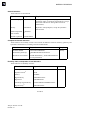
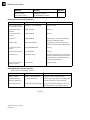
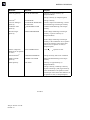
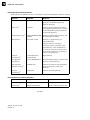
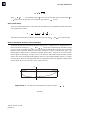
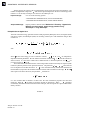
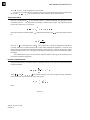
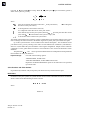
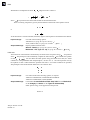
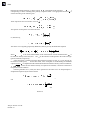
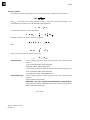
fabric behavior can include nonlinear elasticity, permanent deformation, rate-dependent response, and
damage accumulation.
•
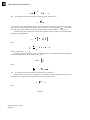
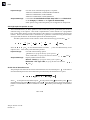
Viscoelasticity: The viscoelastic model is used to specify time-dependent material behavior
(“Time domain viscoelasticity,” Section 22.7.1). In Abaqus/Standard it is also used to specify
frequency-dependent material behavior (“Frequency domain viscoelasticity,” Section 22.7.2). It must
be combined with linear elasticity, rubberlike hyperelasticity, or foam hyperelasticity.
•
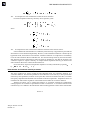
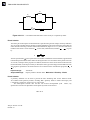
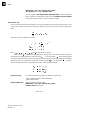
Parallel network viscoelastic model: The parallel network viscoelastic model in Abaqus/Standard
(“Parallel network viscoelastic model,” Section 22.8.2) is intended for modeling nonlinear viscous
behavior for materials subjected to large strains, such as polymers. The model consists of multiple
parallel elastic and viscoelastic networks. The elastic response is defined using the hyperelastic material
model, and the viscous response is specified using the flow rule derived from a creep potential.
•
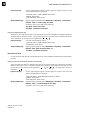
Hysteresis:
•
Mullins effect:
•
No compression or no tension elasticity:
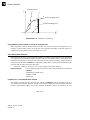
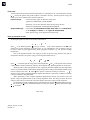
The hysteresis model in Abaqus/Standard (“Hysteresis in elastomers,” Section 22.8.1) is
used to specify rate-dependent behavior of elastomers. It is used in conjunction with hyperelasticity.
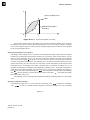
The Mullins effect model (“Mullins effect,” Section 22.6.1) is used to specify stress
softening of filled rubber elastomers due to damage, a phenomenon referred to as Mullins effect.
The model can also be used to include permanent energy dissipation and stress softening effects in
elastomeric foams (“Energy dissipation in elastomeric foams,” Section 22.6.2). It is used in conjunction
with rubberlike hyperelasticity or foam hyperelasticity.
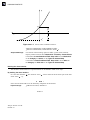
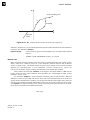
The no compression or no tension models in
Abaqus/Standard (“No compression or no tension,” Section 22.2.2) can be used when compressive or
tensile principal stresses should not be generated. These options can be used only with linear elasticity.
Thermal strain
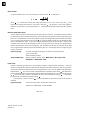
Thermal expansion can be introduced for any of the elasticity or fabric models (“Thermal expansion,”
Section 26.1.2).
Elastic strain magnitude
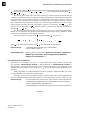
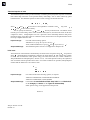
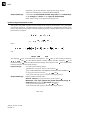
Except in the hyperelasticity and fabric material models, the stresses are always assumed to be small
compared to the tangent modulus of the elasticity relationship; that is, the elastic strain must be small
(less than 5%). The total strain can be arbitrarily large if inelastic response such as metal plasticity is
included in the material definition.
For finite-strain calculations where the large strains are purely elastic, the fabric model (for
woven fabrics), the hyperelastic model (for rubberlike behavior), or the foam hyperelasticity model
(for elastomeric foams) should be used. The hyperelasticity and fabric models are the only models
that give realistic predictions of actual material behavior at large elastic strains. The linear or, in
Abaqus/Standard, porous elasticity models are appropriate in other cases where the large strains are
inelastic.
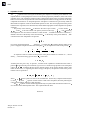
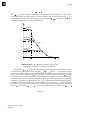
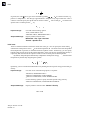
In Abaqus/Standard the linear elastic, porous elastic, and hypoelastic models will exhibit poor
convergence characteristics if the stresses reach levels of 50% or more of the elastic moduli; this
22.1.1–2
Abaqus Version 6.6 ID:
Printed on: