1
HDF User’s Guide
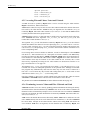
5.2.3 An Example Using Vgroups
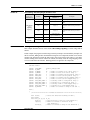
Although vgroups can contain any combination of HDF data objects, it is often useful to establish
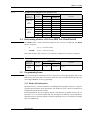
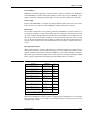
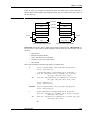
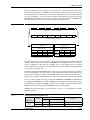
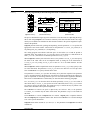
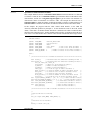
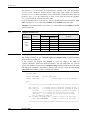
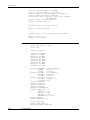
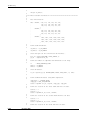
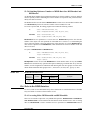
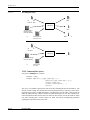
conventions on the content and structure of vgroups. This section, with the illustration in Figure
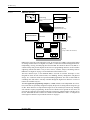
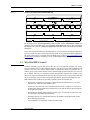
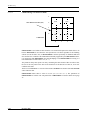
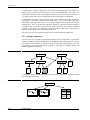
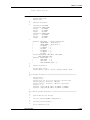
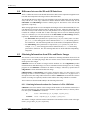
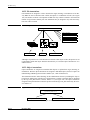
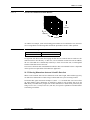
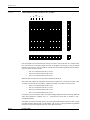
5d, describes an example of a vgroup convention that is used by scientific and graphics programmers to describe the surfaces of a mathematical or material object as well as its properties.
This vgroup consists of one list of coordinate data, one list of connectivity data, and one list of
node property data. These three lists are stored in separate vdata objects within the vgroup.
Each 2-dimensional coordinate in the list of coordinate data defines the relative location of a vertex, or node. Each entry in the list of connectivity data is an ordered list of node numbers which
describes a polygon. This ordered list is referred to as the connectivity list. For example, the number "2" as an item in a connectivity list would represent the second entry in the node table. Node
properties are user-defined values attached to each node within the polygon and can be numbers
or characters.
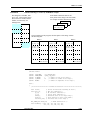
For example, consider a heated mesh of 400 triangles formed by connecting 1000 nodes. A
vgroup describing this mesh might contain the coordinates of the vertices, the temperature value
of the vertices, and a connectivity list describing the edges of the triangles.
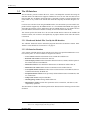
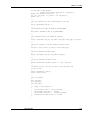
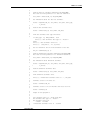
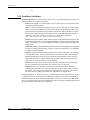
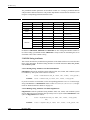
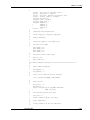
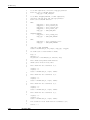
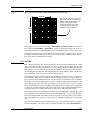
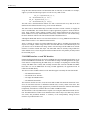
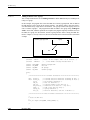
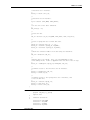
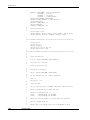
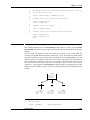
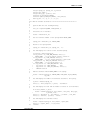
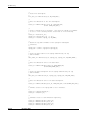
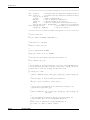
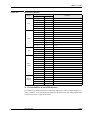
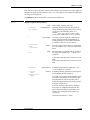
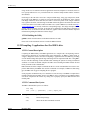
FIGURE 5d
Vgroup Structure Describing a Heated Mesh
Vgroup
"Nodes"
Node 1
Node 2
Node 3
.
.
.
Node 1000
Vdata
Vdata
Vdata
"PX, PY"
"TMP"
"PLIST"
(-1.5, 2.3)
(-1.5, 1.98)
(-2.4, .67)
.
.
.
(-2.4, -2.5)
23.55
3.77
0.092
.
.
.
-3.23
1, 2, 7
2, 7, 8
2, 8, 3
.
.
.
3, 8, 9
Coordinates of the
nodes
Temperature at
each node
Connectivity list
5.3 The Vgroup Interface
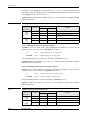
The Vgroup interface consists of routines for creating and accessing vgroups, and getting information about vgroups and their members.
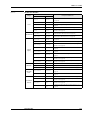
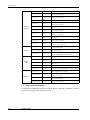
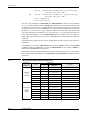
5.3.1 Vgroup Interface Routines
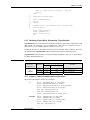
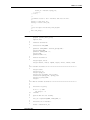
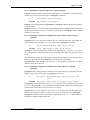
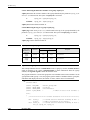
Vgroup interface routine names are prefaced by "V" in C and by "vf" in FORTRAN-77. These
routines are categorized as follows:
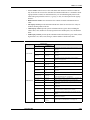
•
Access/Create routines control access to the Vgroup interface and to individual vgroups.
•
Manipulation routines modify vgroups’ characteristics, and add and delete vgroups’ members.
•
Vgroup inquiry routines obtain information about vgroups. Some of these routines are useful for locating vgroups in a file.
December 2007
5-197