1
74593.book Page 16 Wednesday, January 9, 2008 4:11 PM
16
CHAPTER 1
WINDOWS SERVER 2008 ARCHITECTURE
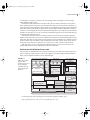
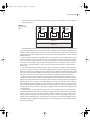
Figure 1.9
Windows Server
2008’s virtualization
architecture
Parent
Partition
Child
Partition
Child
Partition
Applications
Applications
Applications
Operating
System 1
Operating
System 2
Windows
Server
WMI Provider
Virtualization
Stack
IHV
Drivers
Windows Hyper-V Hypervisor
“Designed for Windows” Server Hardware
Hardware vendors have also incorporated virtualization instructions directly into their processors over the last couple of years. Intel calls their technology for the x86 architecture Intel VT (for
Virtualization Technology); while their virtualization technology for the 64-bit Itanium series is
called VT-i. To be enabled, Intel’s VT requires that both the chip set and the software support these
features. AMD’s hardware extensions are called AMD Virtualization, or AMD-V. All K8 processors
with F stepping support AMD-V. Stepping is similar to the version number in software, in that it
increases as the process gets older and more optimized; hopefully, making the processor faster and
more stable. The Standard Performance Evaluation Corporation (SPEC) has a working group
developing methods to test virtualization technologies using their developed benchmarks.
As you consider virtualization as an option, consider also that virtualization will probably change
Microsoft’s licensing model. Currently, servers are sold with a base license for which you purchase
additional packages of licenses on a per-processor basis. With virtualization, Microsoft can change
their model to a per-instance license. The pricing scheme at launch includes eight versions of Windows Server 2008, with Windows Server 2008 Standard, Enterprise, and Datacenter editions offered
both with and without the Hyper-V virtualization technology. Virtualization will appear on both
32- and 64-bit versions of Server, with the exception of the Itanium version of Server, which comes
only in the 64-bit version. On average, Hyper-V adds around $30 to the cost of a server license, per
processor, for all of these versions.