1
Chapter 1
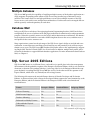
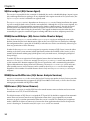
Feature
Enterprise Edition
Standard Edition
Workgroup Edition
Analysis Services Support
Yes
Yes
No
Data Mining
Yes
Limited
No
Reporting Services
Yes
Limited
Very Limited
Notification Services
Yes
Limited
No
Integration Services
Yes
Limited
Very Limited
Replication Services
Yes
Limited
Limited
For a complete list of supported features consult SQL Server 2005 Books Online under the topic
“Features Supported by the Editions of SQL Server 2005.”
SQL Server 2005 Mobile Edition
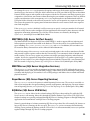
SQL Server Mobile is the replacement for SQL Server CE first offered in SQL Server 2000. The Mobile
Edition enables the installation of a small SQL Server database on a mobile device to support a CE or
Windows mobile application. SQL Server Mobile also enables the support of a database that is replicated
from a database hosted on a Windows Server.
This ability creates a world of opportunity for collecting data in a remote scenario and synchronizing
that data with a land-based database. For example, consider an overnight delivery service that must
maintain a record of a delivery truck’s inventory, including packages delivered and picked up. The truck
inventory could be uploaded via replication to a mobile device, where a mobile application kept track of
the deliveries and new packages picked up at delivery locations. Once the truck came back to the delivery center, the mobile device could be synchronized with the central database via replication or data
upload.
SQL Server 2005 Express Edition
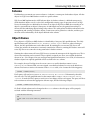
SQL Express is at the lowest end of functionality and scalability, but I am very excited about this particular edition. SQL Express replaces the Microsoft Desktop Edition (MSDE) and has a similar price index —
it’s free. For its very low price (you can’t beat free), it still contains a great deal of functionality.
The reason this edition excites me is that it is perfect for many of my customers who are starting or running small businesses. They have a genuine need for a centralized managed database, but aren’t ready to
pay for a more scalable and robust solution. At the risk of offending my friends in the Open Source community, most of my customers are not very technically savvy, and so very flexible and viable solutions
like MySQL running on Linux or Windows is just not appropriate when a Database Engine with an intuitive and free graphical management tool exists.
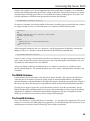
One of the most exciting improvements to Microsoft’s free version of its database system is that it comes
with a graphical management environment. It also supports databases up to 4GB in size and contains
much of the same functionality as the other editions.
6