1
Chapter 1: SSIS Solution Architecture
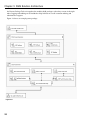
Each Execute Package Task ties to a package either stored in the file system, or in the msdb database
package store. In many solutions, you will need to execute a set of packages at different times and with
different precedence. The master package allows this, and helps implement a rollback and checkpoint
system. Chapter 2 provides more coverage of this topic when discussing the building of a package
framework.
Server and Storage Hardware
Identifying hardware upfront is a “Catch-22.” In other words, you may not know the total scope of your
project, or even what to expect from a load standpoint, but you are asked to estimate the hardware
requirements for the project.
Server Hardware
Here are some general principles to follow concerning the server hardware:
❑
64-bit — You can’t really purchase a server these days that is not an x64 processor architecture.
This is good news. But be sure that the x64-bit version of Windows Server OS is installed, and
that the x64 version of SQL Server 2008 is installed.
❑
Multicore processors — The biggest advantage to multicore processors (that is, dual core, quad
core, and six core, as of the writing of this book) is that for SQL Server 2008, you are only paying
per-socket. If you have a two-CPU quad core, the OS and SQL Server will see eight CPUs, but
you are only buying the license for two sockets.
❑
Memory — Memory is relatively cheap and very valuable for SSIS. You should use at least 16GB
of memory, but preferably 32GB or 64GB, or more, depending on the intensity of your ETL and
how much you are utilizing the SSIS data flow.
You are now probably asking, “But how many cores and how many servers should I target?” There is no
definitive answer to that question because it is so dependent on your ETL solution complexity, volume,
and schedule.
If you must estimate, keep in mind that for a small-scale ETL solution that is dealing with less than
10GB of data (during your ETL), and that is working with a destination database that is less than
1TB, your ETL machine can probably run on a two-socket dual-core or quad-core server with 16GB
or 32GB of RAM.
For a medium ETL solution (where your ETL requires execution in a smaller window, and your recurring
volumes are larger and/or your destination database is in the multi-terabyte range), consider a quad
socket with multicore processors, and at least 32GB of RAM or possibly 64GB with the option to expand.
Larger solutions are really dependent on so many factors, and you should also consider scale-out ETL
(which is discussed in Chapter 10). Thus, recommending a general rule — especially if you are building
an SSIS server that will run all your enterprise ETL operations — is difficult.
Again, there is so much context that will really drive the hardware requirements, that you must evaluate
your situation and customize a recommendation on what you see in your solution.
21