1
R
N
ep o
ro t fo
du r
ct
io
n
OPERATOR’S
MANUAL
Rear Tine Tiller
Mfg. No.
Description
1695577
1695583
1695767
1695923
6016RT, 8.5 TP Rear Tine Tiller
6016RT, 8.5 TP Rear Tine Tiller
7016RT, 9.0 TP Rear Tine Tiller
7016RT, 9.0 TP Rear Tine Tiller
1737349
Revision B
2
N
ep o
ro t fo
du r
ct
io
n
R
Table of Contents
3
4
4
4
4
4
5
5
6
7
Unpack Tiller ............................................................ 7
Attach Handlebar to Tiller ........................................ 7
Fill Engine Crankcase .............................................. 7
FEATURES ................................................................ 8
MAINTENANCE ...................................................... 15
Maintenance Schedule .......................................... 15
Servicing the Rototiller ...........................................15
Change Forward/Reverse Belt ...............................16
Engine Maintenance .............................................. 17
Check or Fill Engine Crankcase ............................ 17
Check Tiller Transmission Grease ......................... 17
Check Tire Pressure .............................................. 17
Lubrication ............................................................. 18
Clean Tine Axle Shaft ............................................ 18
STORAGE ................................................................ 18
Prepare for Storage ............................................... 18
TROUBLESHOOTING .............................................19
Troubleshooting Guide ...........................................19
N
ep o
ro t fo
du r
ct
io
n
OPERATION ............................................................... 9
Pre-Start Inspection .................................................. 9
Start-up ................................................................... 9
Idle Speed ............................................................... 10
Operating Speed ..................................................... 10
Shutting Down ........................................................ 10
Tilling ...................................................................... 10
Drive Safety Control Levers .................................. 11
Wheel Lock Pins .................................................. 12
Handlebar Height Adjustment .............................. 12
Depth Regulator Lever ......................................... 13
Belt Tension Adjustment ....................................... 13
Tilling Tips ............................................................. 14
Cultivating Tips ..................................................... 14
TECHNICAL MANUALS .......................................... 21
R
WARRANTY............................................................... 22
3
Safety Rules
OWNER’S RESPONSIBILITY
! DANGER
Accurate assembly and safe and effective use of the rototiller is the
owner’s responsibility.
s
Read and follow all safety instructions.
s
Carefully follow all assembly instructions.
s
Maintain the tiller according to directions and schedule included
in this Earthquake operator’s manual.
s
Ensure that anyone who uses the tiller is familiar with all
controls and safety precautions.
DANGER INDICATES A SERIOUS INJURY OR FATALITY WILL RESULT IF THE SAFETY INSTRUCTIONS THAT FOLLOW THIS SIGNAL WORD ARE
NOT OBEYED.
! WARNING
WARNING INDICATES A SERIOUS INJURY OR FATALITY COULD RESULT IF THE SAFETY INSTRUCTIONS THAT FOLLOW THIS SIGNAL WORD ARE
NOT OBEYED.
SPECIAL MESSAGES
Your manual contains special messages to bring attention to potential
safety concerns, machine damage as well as helpful operating and
servicing information. Please read all the information carefully to avoid
injury and machine damage.
! CAUTION
NOTE: General information is given throughout the manual
that may help the operator in the operation or service of the
machine.
CAUTION INDICATES YOU CAN OR YOUR EQUIPMENT CAN BE HURT IF THE SAFETY INSTRUCTIONS THAT FOLLOW THIS SIGNAL WORD ARE
NOT OBEYED.
N
ep o
ro t fo
du r
ct
io
n
IMPORTANT SAFETY PRECAUTIONS
Please read this section carefully. Operate the tiller according to the
safety instructions and recommendations outlined here and inserted
throughout the text. Anyone who uses this tiller must read the instructions and be familiar with the controls. Your tiller is equipped with a
safety device that enables you to stop the wheels and tines quickly
in an emergency. Learn how the drive safety control lever operates
and how to control the tiller at all times.
IMPORTANT
IMPORTANT INDICATES HELPFUL INFORMATION
FOR PROPER ASSEMBLY, OPERATION, OR
MAINTENANCE OF YOUR EQUIPMENT.
This symbol points out important safety instructions
which if not followed could endanger your personal
safety. Read and follow all instructions in this manual
before attempting to operate this equipment.
s
! WARNING
Do not allow children to operate this rototiller. Keep small children away
from the area being tilled. Do not allow adults to operate the tiller without
proper instruction.
PREPARATION
Dress appropriately when operating the tiller. Always wear sturdy
footwear. Never wear sandals, sneakers, or open shoes, and never
operate the tiller with bare feet. Do not wear loose clothing that
might get caught in moving parts.
s
Carefully inspect the area to be tilled and remove all foreign objects.
Do not till above underground water lines, gas lines, electric cables,
or pipes. Do not operate the tiller in soil with large rocks and foreign
objects which can damage the equipment.
s
Disengage all clutches and leave all control levers in the neutral
position before starting the engine.
s
Handle fuel with care; it is highly flammable.
R
s
a. Use an approved fuel container.
b. Never add fuel to a running engine or hot engine.
4
YOU MUST READ, UNDERSTAND AND COMPLY WITH
ALL SAFETY AND OPERATING INSTRUCTIONS IN
THIS MANUAL BEFORE ATTEMPTING TO SETUP
AND OPERATE YOUR ROTOTILLER.
FAILURE TO COMPLY WITH ALL SAFETY AND
OPERATING INSTRUCTIONS CAN RESULT IN LOSS
OF MACHINE CONTROL, SERIOUS PERSONAL
INJURY TO YOU AND/OR BYSTANDERS, AND RISK
OF EQUIPMENT AND PROPERTY DAMAGE. THE
TRIANGLE IN THE TEXT SIGNIFIES IMPORTANT
CAUTIONS OR WARNINGS WHICH MUST BE
FOLLOWED.
CALIFORNIA PROPOSITION 65 WARNING
ENGINE EXHAUST FROM THIS PRODUCT
CONTAINS CHEMICALS KNOWN TO THE STATE
OF CALIFORNIA TO CAUSE CANCER, BIRTH
DEFECTS, OR OTHER REPRODUCTIVE HARM.
Safety Rules
c. Fill fuel tank outdoors with extreme care. Never fill fuel
tank indoors.
IMPORTANT
THE RIGHT AND LEFT SIDES OF
YOUR ROTOTILLER ARE DETERMINED FROM THE OPERATING POSITION AS YOU FACE THE DIRECTION
OF FORWARD TRAVEL.
ENGINE IS SHIPPED FROM FACTORY
WITHOUT OIL. YOU MUST ADD ENGINE OIL BEFORE STARTING ENGINE.
d. Replace gasoline cap securely and clean up spilled fuel
before restarting.
s
Never attempt to make any adjustments while the engine is
running.
OPERATION
s Never operate the tiller without guards, covers, and hoods in
place.
s Never start the engine or operate the tiller with the wheels
in the free-wheel position. Make sure the wheel lock pins
are engaged through the wheel hubs and wheel axle. The
wheels act as a brake to keep the tiller at a controlled speed.
Disengage wheel lock pins to permit free-wheeling only when
engine is stopped.
s Keep hands, feet, and clothing away from rotating parts. Keep
clear of tiller tines at all times.
s5se only attachments and accessories approved by the
manufacturer of the tiller.
s.ever operate the tiller without good visibility or light.
s"E careful when tilling in hard ground. The tines may catch
in the ground and propel the tiller backward. If this occurs, let
go of the handlebars and do not restrain the machine.
sTake all possible precautions when leaving the machine
unattended. Disengage all control levers, stop the engine,
wait for all moving parts to stop, and make certain guards
and shields are in place.
N
ep o
ro t fo
du r
ct
io
n
s Tines and wheels rotate when tiller is engaged in forward or
reverse-- in forward, tines and wheels rotate when the drive
safety control lever, labeled “FORWARD”, is pulled toward the
handlebar. In reverse, wheels and tines rotate when the drive
safety control lever, labeled “REVERSE”, is pulled toward
the handlebar. Releasing the drive safety control levers to the
neutral position stops the wheels and tines. Do not operate
both drive safety control levers at the same time.
s.ever allow bystanders near the unit.
s Be extremely cautious when operating in reverse. Take extra
care to avoid slipping or falling, and keep hands and feet clear
of tines.
s5SE extreme caution when operating on or crossing gravel
drives, walks, or roads. Stay alert for hidden hazards or
traffic.
s!FTER striking a foreign object, stop the engine, remove the
wire from the spark plug, thoroughly inspect the tiller for
any damage, and repair the damage before restarting and
operating the tiller.
R
s)FVEGITATION clogs the tines, raise the handlebars to elevate
the tines, and run the tiller in reverse. If this does not clean
clogged vegetation from the tines, STOP THE ENGINE AND
DISCONNECT THE SPARK PLUG WIRE before removing
vegetation by hand.
s7HEN leaving the operating position for any reason:
- shut off the engine.
- wait for all moving parts to stop.
MAINTENANCE AND STORAGE
sKeep machine, attachments, and accessories in safe working
condition.
s#HEck shear bolts, engine mounting bolts, and other bolts at
frequent intervals for proper tightness to be sure the equipment
is in safe working condition.
sTo prevent accidental starting, always disconnect and secure
the spark plug wire from the spark plug before performing tiller
maintenance.
s.ever run the engine indoors. %XHAUST fumes are deadly.
s!Lways allow
to cool before
fuel tank.
sNever store equipment with gasoline in the tank inside a closed
or spark. !LLow
building where fumes may reach an open
the engine to cool before storing in any building.
s%NGINE
will be hot from operation. Do not touch it with
bare skin or a severe burn may result.
s!Lways refer to the operator’s guide instructions for important
details if the tiller is to be stored for an extended period.
s)F the unit should start to vibrate abnormally, stop the engine
and check immediately for the cause. Vibration is generally a
warning of trouble.
s!DD a fuel stabilizer to gas tank and run for 10-15 minutes to
prevent fuel from gumming up during an extended storage
period.
s$O not run the engine indoors; exhaust fumes are deadly.
s$O not overload the machine capacity by attempting to till too
deep at too fast a rate.
sNever operate the machine at high transport speeds on
slippery surfaces. Look behind and use care when backing.
5
Safety Rules
SAFETY DECALS
This rototiller unit has been designed and manufactured to provide you with the safety and reliability you would expect from an industry
leader in outdoor power equipment manufacturing.
Although reading this manual and the safety instructions it contains will provide you with the necessary basic knowledge to operated
this equipment safely and effectively, we have placed several safety labels on the tiller to remind you of this important information
while you are operating the unit.
These important safety labels are illustrated below, and are shown here to help familiarize you with the location and content of the
safety messages you will see as you perform normal tilling operations. Please review these labels now. If you have any questions
regarding their meaning or how to comply with these instructions, reread the complete safety instruction text on the preceding pages,
or contact your local dealer.
Should any of the safety labels become unreadable because of being worn, faded, or otherwise damaged during the use of your tiller,
please use the part number information provided to order a replacement label from your local authorized dealer.
R
N
ep o
ro t fo
du r
ct
io
n
The safety labels are easily applied, and will act as a constant visual reminder to you, and others who may use the equipment. Follow
the safety instructions necessary for safe, effective operation of your rototiller.
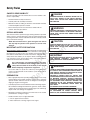
Part No. 1716747SM
WARNING INSTRUCTIONS
Hood Decal
Part No. 1716840SM
TINES DANGER
Hood Flap Decal
PLACE FREE
HAND HERE
Part No. 1716800SM
WARNING
Belt Cover Decal
Part No. 1716839SM
FREE HAND HERE
Bumper Guard Decal
6
Unpacking and Assembly
Your rototiller comes fully assembled except for a few parts. The following instructions will help you unpack your tiller and assemble and
adjust your tiller’s depth regulator lever, cable tension and handlebar
height. You will need 2- 9/16” wrenches.
UNPACK TILLER
1. Open top of carton and remove handlebar assembly.
IMPORTANT
THE RIGHT AND LEFT SIDES OF YOUR
ROTOTILLER ARE DETERMINED FROM
THE OPERATING POSITION AS YOU
FACE THE DIRECTION OF FORWARD
TRAVEL.
ENGINE IS SHIPPED FROM FACTORY
WITHOUT OIL.YOU MUST ADD ENGINE
OIL BEFORE STARTING ENGINE.
2. Find parts packet. Parts packet contains:
4- 3/8-16 x 3/4” hex head bolts
4- 3/8-16 locknuts
1- 5/16-18 x 3/4” hex head bolt
1- detent pin
1- five star knob
TILLER TRANSMISSION IS SHIPPED
FROM FACTORY WITH THE PROPER
AMOUNT OF LIQUID GREASE.
3. Cut open end of car ton and remove machine by:
a. Removing lock pins on wheels.
b. Roll tiller from carton.
! CAUTION
ATTACH HANDLEBAR TO TILLER
N
ep o
ro t fo
du r
ct
io
n
1. Place handlebar stems on outside of lower handlebar mount and
align lower holes. (SEE FIGURE 1)
DO NOT TRY TO LIFT THE ROTOTILLER FROM THE
CARTON.
DO NOT ADD ENGINE OIL INTO GEAR CASE DIPSTICK HOLE.
2. Insert one 3/8-16 x 3/4” bolt for each side in lower holes at the
desired handlebar height.
3. Start 3/8-16 nuts on each bolt.
4. Insert one 3/8-16 x 3/4” bolt for each side in upper holes.
5. Tighten all 3/8-16 nuts.
gear case
dipstick
FILL ENGINE CRANKCASE
1. Add oil according to engine manual. Do not overfill. Use a clean,
high quality detergent oil. Container must be marked A.P.I. Service
SF - SJ. Use no special additives with recommended oils. Do not
mix oil with gasoline. Oil level must be full. Check the oil level
by removing oil fill plug. Oil level should be up to the bottom of the
fill plug opening.
R
2. Always check oil level before starting engine. Refer to engine
manual for capacity and type of oil to use.
gear case
dipstick hole
NO ENGINE OIL!
3/8-16
nuts
lower handlebar
mount
3/8-16 x 3/4”
bolts
height
adjustment
holes
FIGURE 1
7
handlebar
stem
Features
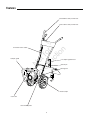
forward drive safety control lever
reverse drive safety control lever
bumper guard
N
ep o
ro t fo
du r
ct
io
n
forward & reverse cable
depth regulator lever
detent pin
R
belt guard
wheel lock pin
recoil start
serial number plate
8
Operation
PRE-START INSPECTION
! CAUTION
1. Make sure all safety guards are in place and all nuts and bolts
are secure.
2. Check oil level in engine crankcase. See your engine manual for
procedure and specifications.
3. Inspect air cleaner for cleanliness. See your engine manual for
procedure.
4. Check the fuel supply. Fill the fuel tank no closer than 1 inch
from top of tank to provide space for expansion. See your engine
manual for fuel recommendations.
5. Be sure spark plug wire is attached and spark plug is
tightened securely.
! WARNING
6. Check position of wheels and wheel lockouts.
7. Check depth regulator lever position.
8. Examine underneath and around engine for signs of oil or fuel
leaks.
9. Inspect fuel hoses for tightness and fuel seepage.
START-UP
area and recoil starter.
The controls required to start and run the rototiller are located on the
engine and are marked “Choke” and “Throttle”.
A more detailed description of engine operation and all related
precautions and procedures can be found in the engine manufacturer’s
manual that accompanies each tiller.
COLD STARTS
WHEELS MUST ALWAYS BE LOCKED IN THE
TILLING POSITION WHEN ENGINE IS RUNNING.
DO NOT OPERATE THE TILLER WITH THE WHEEL
LOCKOUTS UNLOCKED. ALWAYS SET THE
WHEELS IN TILLING POSITION BEFORE STARTING
ENGINE.
ALWAYS PUT THE DEPTH REGULATOR LEVER IN
THE TRANSPORT POSITION BEFORE STARTING
ENGINE. TINES SHOULD CLEAR THE GROUND.
IMPORTANT
ENGINE IS SHIPPED FROM FACTORY WITHOUT OIL.
YOU MUST ADD ENGINE OIL BEFORE STARTING
ENGINE.
1. Move choke lever to full choke position.
2. Move throttle lever to “start”.
GASOLINE IS HIGHLY FLAMMABLE AND MUST
BE HANDLED WITH CARE. NEVER FILL THE TANK
WHEN THE ENGINE IS HOT OR RUNNING. ALWAYS
MOVE OUTDOORS TO FILL THE TANK.
N
ep o
ro t fo
du r
ct
io
n
10. Look for signs of engine damage.
11. Remove excessive debris from
PLEASE DO NOT START YOUR TILLER UNTIL
YOU HAVE READ THE MANUAL THAT CAME
WITH YOUR ENGINE, AND THE SECTIONS IN THIS
MANUAL TITLED CONTROLS, ADJUSTMENTS AND
SAFETY. IF YOU HAVE READ THESE, FOLLOW THE
STEPS BELOW TO START YOUR TILLER. ALWAYS
PERFORM THIS PRE-START CHECKLIST BEFORE
STARTING THE ENGINE.
3. Pull starting rope out slowly one time and allow to return
normally.
! DANGER
4. Pull starting rope out rapidly, and allow rope to return normally.
RESTARTING A WARM ENGINE
R
5. When engine starts, gradually move choke lever to “no choke”
position and increase throttle speed.
Restarting an engine that is already warm from previous running does
not normally require use of the choke.
1. Move throttle lever to “start” position.
2. Pull starting rope out rapidly until engine starts. Allow rope to return
normally. Repeat until engine starts.
3. Adjust throttle speed to “high” for best tiller action.
9
ALWAYS KEEP HANDS AND FEET CLEAR OF
ROTATING MACHINE PARTS.
Operation
IDLE SPEED
Use the “low” position on the throttle lever to reduce stress on the
engine when tilling is not being performed. Lowering the engine speed
to “idle” will help extend the life of the motor, as well as conserve fuel
and reduce the noise level of the equipment.
OPERATING SPEED
For normal tilling, set the throttle lever to “fast”.
SHUTTING DOWN
To stop the engine at any time, move throttle control to the off position.
To stop wheels and tines at any time, release drive safety control
levers to neutral position.
TILLING
! WARNING
TEMPERATURE OF MUFFLER AND NEAR BY AREAS
MAY EXCEED 150 F. AVOID THESE AREAS.
DO NOT MOVE CHOKE CONTROL TO CHOKE TO
STOP ENGINE. BACKFIRE OR ENGINE DAMAGE
MAY OCCUR.
TO STOP WHEELS AND TINES AT ANY TIME, RELEASE DRIVE SAFETY CONTROL LEVERS TO
NEUTRAL POSITION.
ALWAYS RELEASE DRIVE SAFETY CONTROL
LEVERS TO NEUTRAL POSITION BEFORE
ADJUSTING THE DEPTH OF THE REGULATOR
LEVER.
1. Adjust the depth regulator lever to desired tilling depth.
NOTE: Raise depth regulator lever up one hole at a time,
testing tiller operation after each raise. Raising depth
regulator lever too high can result in loss of control of
tiller!
N
ep o
ro t fo
du r
ct
io
n
2. Move the throttle control to fast.
! DANGER
ENGINE AND SURROUNDING PARTS BECOME
EXTREMELY HOT DURING NORMAL USE AND WILL
CAUSE SERIOUS BURN INJURIES IF TOUCHED
BEFORE THE ENGINE HAS COOLED.
3. Place the tiller in forward by pushing down on the drive safety
control lever labeled “FORWARD”--this will engage the wheels and
tines.
NOTE: You can slow the tiller’s forward advance at any time
by putting slight downward pressure on the handlebars. You
can stop the tiller by releasing the drive safety control levers
to the neutral position.
ALLOW ENGINE TO COOL COMPLETELY BEFORE
TOUCHING THESE HOT SURFACES.
IMPORTANT
R
PRACTICE OPERATING THE CONTROLS AND
TILLER WITH TINES OUT OF GROUND BEFORE
BEGINNING TO TILL. IT IS IMPORTANT THAT YOU
KNOW HOW TO USE THE TILLER PROPERLY,
KEEP CONTROL AT ALL TIMES, STOP THE TINES
AND WHEELS FROM TURNING, AND STOP THE
ENGINE IF NECESSARY. IF YOU DO NOT KNOW
HOW TO DO THESE THINGS, READ THE CONTROLS,
ADJUSTMENTS AND SAFETY SECTIONS BEFORE
PROCEEDING.
10
Operation
DRIVE SAFETY CONTROL LEVERS
! CAUTION
FORWARD LEVER
DO NOT OPERATE BOTH “FORWARD” AND
“REVERSE” DRIVE SAFETY CONTROL LEVERS AT
THE SAME TIME.
Engages wheels and tines into forward.
Pulling the drive safety control lever labeled (FORWARD) toward the
handlebar engages the wheels and tines. Releasing the lever stops
the wheels and tines and brings the tiller to a complete stop.
THIS INFORMATION IS PROVIDED HERE ONLY TO
INTRODUCE THE CONTROLS. DO NOT START THE
ENGINE AT THIS TIME. STARTING AND OPERATING
INSTRUCTIONS ARE GIVEN ON PAGE 8. PLEASE
READ THIS SECTION AND ALL OPERATING AND
SAFETY INSTRUCTIONS BEFORE STARTING YOUR
TILLER.
forward lever engaged
s AS A SAFETY PRECAUTION, THE DRIVE SAFETY
CONTROL LEVERS WILL NOT LOCK IN THE
FORWARD OR REVERSE POSITION.
s AS A SAFETY PRECAUTION, THE REVERSE
DRIVE SAFETY CONTROL LEVER WILL NOT
LOCK IN REVERSE.
REVERSE LEVER
N
ep o
ro t fo
du r
ct
io
n
s TO STOP THE WHEELS AND TINES AT ANY TIME
RELEASE THE DRIVE SAFETY CONTROL LEVERS OR RELEASE THE REVERSE HANDLE.
Engages wheels and tines into reverse.
s DO NOT OPERATE BOTH THE REVERSE AND
FORWARD DRIVE SAFETY CONTROL LEVERS
AT THE SAME TIME.
Pulling the drive safety control lever labeled (REVERSE) toward the
handlebar reverses tiller. Releasing the lever stops the wheels and
tines.
reverse lever engaged
! WARNING
ENGINE SHOULD BE OFF BEFORE ADJUSTING
ANY CONTROLS.
R
EXTREME CAUTION SHOULD BE USED WHEN
OPERATING ROTOTILLER IN THE REVERSE
DIRECTION.
reverse lever
11
Operation
WHEEL LOCK PINS
! WARNING
Place wheels in tilling position.
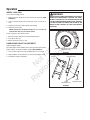
1. Remove lock pin. Align hole in axle with hole in wheel hub. (SEE
FIGURE 2)
2. Insert lock pin through holes, fold lock pin ring to secure pin to
axle.
3. Firmly lock wheel and axle together before tilling.
NEVER START ENGINE OR OPERATE TILLER WITH
WHEELS IN FREE-WHEEL POSITION. THE FREEWHEEL POSITION IS FOR TRANSPORTING THE
TILLER LONG DISTANCES OVER LEVEL GROUND-DO NOT ATTEMPT TO MOVE THE TILLER UP OR
DOWN STEEP GRADES IN THE FREE-WHEEL
POSITION.
4. Repeat for other wheel.
NOTE: Always have both wheel lock pins in or out. Do not
operate tiller with only one wheel locked.
To place wheels in free-wheel position.
1. Remove lock pin. Slide wheel inward toward machine.
2. Insert pin in axle only.
3. Wheel should turn freely on axle.
HANDLEBAR HEIGHT ADJUSTMENT
Adjust handlebar height.
Wheel lock pin in free-wheel position.
(axle hole only)
N
ep o
ro t fo
du r
ct
io
n
The ideal height of the handlebar varies with operator height and the
depth of tilling. To adjust handlebar height: (SEE FIGURE 3)
1. Unscrew nuts and remove top and bottom bolts on each side.
FIGURE 2
2. Align handlebar to desired holes on the lower handlebar mount.
lock nuts
R
3. Install bolts and nuts. Retighten.
height
adjustment bolts
height
adjustment holes
FIGURE 3
11
height
adjustment bolts
Operation
DEPTH REGULATOR LEVER
Tilling depth is controlled by the height of the depth regulator lever.
! WARNING
DO NOT ADJUST TILLING DEPTH UNLESS DRIVE
SAFETY CONTROL LEVERS ARE RELEASED TO
NEUTRAL POSITION.
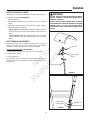
To adjust tilling depth. (SEE FIGURE 4)
1. Remove detent pin.
2. Raise the depth regulator lever to position tines at chosen tilling
depth.
3. Align hole in depth regulator lever with hole in depth regulator
bracket and replace detent pin.
ALWAYS SET THE DEPTH REGULATOR LEVER IN
THE TRANSPORT POSITION BEFORE STARTING
ENGINE, THAT IS, PLACE THE DETENT PIN IN
THE HIGHEST HOLE OF THE DEPTH REGULATOR
LEVER.
Depth Regulator Lever Down = Shallower tilling. Place the
detent pin in the top hole of the depth regulator lever for shallowest
tilling.
Depth Regulator Lever Up = Deeper tilling. Place the detent
pin in the bottom hole of the depth regulator lever for deepest
tilling.
BELT TENSION ADJUSTMENT
Proper belt tension is critical to good performance. After 1/2 hour of
operation, all cables may have to be adjusted due to initial stretch.
Thereafter, check tension after every 2 hours of operation.
N
ep o
ro t fo
du r
ct
io
n
detent pin
To increase belt tension: (SEE FIGURE 5)
1. Loosen upper jam nut. Turn nut up cable in 1/8” increments.
2. Tighten lower jam nut.
3. Check adjustment.
depth regulator
bracket
This procedure can be repeated until conduit adjustment bolts are
fully adjusted. If no more adjustment can be made, belt may have to
be replaced.
depth regulator lever
R
FIGURE 4
forward cable
reverse cable
upper jam nut
lower jam nut
FIGURE 5
12
Operation
TILLING TIPS
! WARNING
The key to successful tilling is to begin with a shallow cut on the
first pass, and then work an inch or two deeper on each successive
pass.
EXTREME CAUTION MUST BE TAKEN IN SELECTING TILLING DEPTH. IF YOU ATTEMPT TO TILL
TOO DEEPLY FOR SOIL CONDITIONS, THAT IS,
WITH THE DRAG STAKE IN TOO HIGH A POSITION,
LOSS OF CONTROL COULD RESULT.
s4ILLING depth WILL vary WITH gROUND CONDITIONs.
s7HEN BEGINNING to TILL IN UNBROkEN gROUND or IN eXTREMELY hard
SOIL set the DETENT PIN IN the HIGHEST HOLE of the drag stake (fOLLow
INSTrUCTIONS UNDER 4ILLING SECTION. 4HIS WILL ALLow for SHALLow TILLING.
7ITH the drag stake IN THIS POSITION make severAL LIGHT passes
over the area to be TILLED. Reset for deeper depths WITH SUCCESSIve
passes.
IF REMOVING MATERIAL FROM THE TINES BY
HAND, STOP ENGINE AND REMOVE SPARK PLUG
WIRE FIRST.
sIf tILLer jumps or skIds UNCONTROLLabLy Lower the drag stake by pLaCINg
the DETENT PIN IN a HIGHER HOLe. 4HIS WILL ALLow for SHALLower TILLING.
(OLD
to the HANDLEBARS to CONTROL SUDDEN LURCHEs.
s
weeds
If TALL grasses VINEs or other materIALS CLOG or jam the
TINEsRevERSETHETILLERTOUNWINDvEGETATION
CULTIVATING TIPS
N
ep o
ro t fo
du r
ct
io
n
Immediately release the drive control levers if the tines jam or you
strike a foreign object. With drive control levers in neutral position,
push throttle control to stop position to stop the engine. Disengage
the spark plug wire. When tines have stopped, remove foreign objects
and check for damage.
If you PLAN to use your TILLER for CULTIvATING
s0LANT rows ON 20" - 22" CENTERS for ease of turNING
R
sSet the depth REGULATOr Lever WITh the DETENt PIN IN ONe of the HIGHEr
HOLEs. 4HIS WILL ALLow for SHALLow CULTIvATION NECESSAry to turN over
weedsANDBREAKUPANDAErATETHESOIL
14
Maintenance
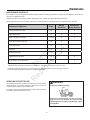
MAINTENANCE SCHEDULE
Your rototiller has been designed and produced by the industry’s leading manufacturer of outdoor power equipment to provide you
with years of reliable operation.
Keeping your tiller in top running condition will prolong its life, and help you obtain optimum performance.
Please read this normal care schedule, and note the recommended care operating intervals to extend the life of your unit.
Maintenance Operation
Page
Before
Each Use
50 hours or
Every Season
Change forward/reverse belt
16
Engine maintenance
17
X
X
17, EM
X
2
Check tiller transmission grease
18
X
Check tire pressure
18
X
Lubrication
Clean tine axle shaft
Lubricate wheel axle shaft
Check throttle control adjustment
EM = See engine manual
N
ep o
ro t fo
du r
ct
io
n
Check or fill engine crankcase
X
18
X
18
X
19
X
EM
1
1 Adjust throttle control after first 3 hours of operation or if engine is hard to start or run-on occurs.
R
2 Change oil after first 5-8 hours of use, then after every 50 hours or every season. Change oil every 25
hours when operating under heavy load or in high temperatures.
SERVICING THE ROTOTILLER
The following information will help you make the necessary checks
and perform the procedures required to follow the normal care
recommendations made for your rototiller unit.
! WARNING
To prevent accidental starting:
If you prefer, your local authorized dealer can make these checks and
perform the required procedures for you.
Engine must be turned off and cool, and spark
plug wire must be removed and secured from
spark plug before checking and adjusting engine
or equipment.
15
Maintenance
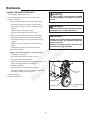
CHANGE FORWARD/REVERSE BELT
! CAUTION
1. Turn off engine. Engine must be cool.
DO NOT OPERATE TILLER BEFORE READING
THE ENGINE MANUAL PROVIDED IN THE PARTS
PACKET.
2. Remove spark plug wire and secure from spark plug.
3. Remove belt guard.
sREMove the forward belt from the forward engine pulley:
- gently pull the engine recoil rope to rotate the pulley.
! WARNING
- with the pulley turning, force the forward belt out of the
V-groove.
TEMPERATURE OF MUFFLER AND NEAR BY AREAS
MAY EXCEED 150° F. AVOID THESE AREAS.
- slide the belt free of the engine pulley.
- pull the forward belt down and out of the way.
sREMove the reverse belt from the reverse engine pulley:
- gently pull the engine recoil rope to rotate the pulley.
IMPORTANT
- with the pulley turning, force the reverse belt out of the
V-groove.
ENGINE CAN OVERHEAT AND BECOME DAMAGED
IF DEBRIS BLOCKS THE COOLING SYSTEM OR
ROTATING SCREEN.
- slide the belt free of engine pulleys and reverse belt
guides.
NEVER RUN ENGINE WITHOUT COMPLETE AIR
CLEANER INSTALLED ON ENGINE.
sINSTALL new reverse belt:
N
ep o
ro t fo
du r
ct
io
n
- pull belt down and away from transmission pulley.
NOTE: V side of belt should be up, away from pulley.
- thread belt up from bottom.
- place belt around transmission pulley in groove.
- place belt under reverse belt guides.
- gently pull engine recoil rope while forcing the belt over the
edge of the engine pulley into the V-groove.
sINSTALL new forward belt:
- place forward belt in transmission pulley groove.
4. Replace belt guard.
5. Attach spark plug wire.
R
- gently pull the engine recoil rope to rotate the pulley while
forcing the forward belt into the V-groove.
Reverse Belt,
V side up
ENGINE PULLEY
Forward Belt
16
TRANSMISSION
PULLEY
Maintenance
ENGINE MAINTENANCE
Refer to the engine manual included in your parts packet for
information on engine maintenance. Your engine manual provides
detailed information and a maintenance schedule for performing the
following tasks:
1. Check oil level before each use or after every 8 hours of
operation.
2. Change oil after first 5-8 hours of operation. Change oil while engine
is warm. Refill with new oil of recommended grade.
4. Check spark plug yearly or every 100 hours of operation.
IMPORTANT
ENGINE IS SHIPPED FROM FACTORY WITHOUT OIL.
YOU MUST ADD ENGINE OIL BEFORE STARTING
ENGINE.
IMPORTANT
TILLER TRANSMISSION IS SHIPPED FROM FACTORY
WITH THE PROPER AMOUNT OF LIQUID GREASE.
5. Service air cleaner.
6. Keep engine and parts clean.
7. Check engine and equipment often for loose nuts and bolts, keep
these items tightened.
WHEN REPLACING GREASE, THE TILLER TRANSMISSION
HOLDS 18-22 OUNCES. DO NOT OVERFILL.
CHECK OR FILL ENGINE CRANKCASE
N
ep o
ro t fo
du r
ct
io
n
1. Add oil according to engine manual. Do not overfill. Use a clean,
high quality detergent oil. Container must be marked A.P.I. Service
SF - SJ. Use no special additives with recommended oils. Do not
mix oil with gasoline. Oil level must be full. Check the oil level
by removing oil fill plug. Oil level should be up to the bottom of the
fill plug opening.
2. Always check oil level before starting engine. Refer to engine
manual for capacity and type of oil to use.
gear case
dipstick
CHECK TILLER TRANSMISSION GREASE
Check the grease level annually. To check the grease level:
1. Move tiller to level ground.
2. Remove grease level dipstick located between the handlebar
mounts on the engine mount. Correct grease level is indicated
between the high and low levels on the dipstick.
3. Replace grease level dipstick in the filler hole.
R
4. Note that the front wheel transmission and rear tine transmission
are one common reservoir. When you add to the front transmission,
you must wait a short period of time for the grease to
rearward
and equalize in both front and rear. The dipstick will read correctly
on level ground for both gear units.
CHECK TIRE PRESSURE
Recommended tire pressure is 20 PSI. If tires do not have equal
pressure, tiller will pull to one side.
17
transmission
cover plate
Maintenance
LUBRICATION
Proper lubrication of moving mechanical parts is critical for proper
care and maintenance. Oil the moving parts at 10 hour intervals using
a 30 weight oil.
CLEAN TINE AXLE SHAFT
1. Turn off engine. Engine must be cool.
2. Remove spark plug wire and secure from spark plug.
! WARNING
DO NOT STORE TILLER IN AN UNVENTILATED
AREA WHERE FUEL FUMES MAY REACH FLAME,
SPARKS, PILOT LIGHTS OR AN IGNITED OBJECT.
DRAIN FUEL OUTDOORS AWAY FROM ANY
IGNITION SOURCES. USE ONLY APPROVED FUEL
CONTAINERS.
3. Tip the tiller forward. Block the tiller in position so that it rests on
the engine mount and the tines are exposed.
4. Remove all vegetation, string, wire, and other material that may
have accumulated on the axle between the inside set of tines and
the seal on the transmission housing.
5. Tip the tiller back to a level position.
6. Replace spark plug wire.
STORAGE
PREPARE FOR STORAGE
N
ep o
ro t fo
du r
ct
io
n
Follow the steps below to prepare your tiller for storage. Read your
engine manual for detailed instructions on preparing the engine for
storage.
1. Protect wheels and axles from rust:
- Remove lockpin and slide wheel off hub.
- Coat the axles lightly with axle grease.
- Slide wheel back on hub and insert lock pin.
2. Drain fuel system completely following engine manufacturer’s
instructions or add fuel stabilizer to prevent fuel from gumming up
during extended storage period.
3. While engine is still warm, drain the oil from the engine. Refill with
fresh oil of the recommended grade.
4. Clean external surfaces, engine and cooling fan.
R
5. Remove spark plug, pour one ounce of SAE 30 oil into spark plug
hole.
6. Plug hole and pull starter cord slowly to distribute oil evenly in
cylinder head area.
7. Reinstall spark plug.
8. Transport unit to a suitable storage location. If you have chosen to
use a fuel stabilizer and have not drained the fuel system, follow all
safety instructions storage precautions in this manual to prevent the
possibility of fire from the ignition of gasoline fumes. Remember,
gasoline fumes can travel to distant sources of ignition and ignite,
causing risk of explosion and fire.
9. If there is any possibility of unauthorized use or tampering, remove
the spark plug and store it in a safe place before storing the rototiller
unit. Be sure to plug the spark plug hole to prevent foreign material
from entering.
18
Maintenance
TROUBLESHOOTING GUIDE
! WARNING
While normal care and routine maintenance will extend the life of
your rototiller, prolonged or constant use may eventually require
that service be performed to allow it to continue operating properly.
The troubleshooting guide below lists the most common problems,
causes and remedies.
PRACTICE SAFETY AT ALL TIMES. ENGINE MUST BE
TURNED OFF AND ALLOWED TO COOL, AND SPARK
PLUG WIRE MUST BE DISCONNECTED AND SECURED
BEFORE ATTEMPTING ANY MAINTENANCE OR
REPAIR.
FAILURE TO COMPLY WITH THIS SAFETY REQUIREMENT
CAN RESULT IN SERIOUS PERSONAL INJURY TO YOU
OR BYSTANDERS.
PROBLEM
s!DD gas to gas tank.
s#ONNECT spark plug wire to spark plug
s4HROTTLE must be positioned at choke for a cold start
Engine will not start
Engine runs rough,
REMEDY/ACTION
during operation
s#LEAN or replace air cleaner
s$rain old fuel and replace with fresh. Use gas stabilizer
at end of season
s-Ake sure spark plug wire is securely attached to spark
plug
s$rive safety control levers must be released to neutral
position to start the engine
N
ep o
ro t fo
du r
ct
io
n
Engine is hard to start
s2AISE the tines for shallow tilling by lowering the depth
regulator lever
s2EMove and clean fuel tank
s#LEAN or replace air cleaner
s)MPROPER carburetor adjustment, take to authorized
engine service center
s2EPLACE spark plug and adjust gap
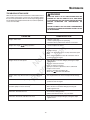
s$rain and
gas tank and carburetor
Engine misses or lacks power
R
Engine will not stop when throttle control is positioned at
stop
s3EE engine manual to check and adjust throttle linkage
Tiller moves forward during starting
s$rive safety control levers must be released to neutral
position to start the engine
Tiller is difficult to control when tilling
(machine jumps or lurches forward)
s,Ock wheels in tilling position
s2AISE the tines for shallower tilling by lowering the
depth regulator lever
Tines turn, wheels do not turn
s,Ock wheels in tilling position
s)NTErnal transmission failure, see your dealer
Tines turn, wheels turn, tiller does not move
s,ower the tines for deeper tilling by raising the depth
regulator lever
19
Maintenance
PROBLEM
REMEDY/ACTION
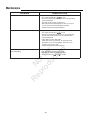
s Adjust forward belt guide:
- turn engine off and allow
to cool
- disconnect spark plug wire and secure from spark plug
- remove belt guard
- pull down on drive safety control levers
- manually bend forward belt guide so there is 1/16 inch
or less clearance between belt guide and belt
- replace belt guard and spark plug wire
Belts squeal in forward operation
s Adjust tabs on the reverse belt guide
to cool
- turn engine off and allow
- disconnect spark plug wire and secure from spark plug
- release drive safety control levers to neutral position
- remove belt guard
- adjust tabs of reverse belt guide:
while drive safety control levers are released, bend
metal tabs on reverse belt guide to 1/64 inch or less
clearance from reverse belt
- replace belt guard and spark plug wire
N
ep o
ro t fo
du r
ct
io
n
Belts squeal in neutral and/or reverse
s Remove vegetation by following instructions in Clean
Tine Axle Shaft of Normal Care section.
FOLLOW ALL SAFETY INSTRUCTIONS
s Check transmission
and
if needed
R
Excessive heat build up in transmission/tine
area during tilling
20
Technical Manuals
Additional Technical Literature Available
Additional copies of this manual are available, as well as
fully illustrated parts lists. These manuals show all of the
product’s components in exploded views (3D illustrations
which show the relationship of parts and how they go
together) as well as part numbers and quantities used.
Important assembly notes and and torque values are
also included.
R
N
ep o
ro t fo
du r
ct
io
n
Technical manuals can be downloaded from:
www.simplicitymfg.com
www.snapper.com.
21
BRIGGS & STRATTON POWER PRODUCTS GROUP, L.L.C. OWNER WARRANTY POLICY
LIMITED WARRANTY
Briggs & Stratton Power Products Group, LLC will repair and/or replace, free of charge, any part(s) of the equipment that is
defective in material or workmanship or both. Briggs & Stratton Corporation will repair and/or replace, free of charge, any
part(s) of the Briggs and Stratton engine* (if equipped) that is defective in material or workmanship or both. Transportation
charges on product submitted for repair or replacement under this warranty must be borne by purchaser. This warranty is
effective for the time periods and subject to the conditions stated below. For warranty service, find the nearest Authorized
Service Dealer using our dealer locator at www.BriggsandStratton.com or www.Murray.com.
There is no other express warranty. Implied warranties, including those of merchantability and fitness for a particular
purpose, are limited to one year from purchase or to the extent permitted by law. Liability for incidental or consequential
damages are excluded to the extent exclusion is permitted by law.
Some states or countries do not allow limitations on how long an implied warranty lasts, and some states or countries do
not allow the exclusion or limitation of incidental or consequential damages, so the above limitation and exclusion may not
apply to you. This warranty gives you specific legal rights and you may also have other rights which vary from state to state
or country to country.
WARRANTY PERIOD
Item
Equipment
Engine*
Battery
Consumer Use
2 Years
2 Years
1 Year
Commercial Use:
90 Days
90 Days
1 Year
N
ep o
ro t fo
du r
ct
io
n
The warranty period begins on the date of purchase by the first retail consumer or commercial end user, and continues for the
period of time stated above. “Consumer use” means personal residential household use by a retail consumer. “Commercial
use” means all other uses, including use for commercial, income producing or rental purposes. Once product has experienced
commercial use, it shall thereafter be considered as commercial use for purposes of this warranty.
No warranty registration is necessary to obtain warranty on Briggs & Stratton products. Save your proof of purchase receipt. If you
do not provide proof of the initial purchase date at the time warranty service is requested, the manufacturing date of the product will
be used to determine warranty eligibility.
ABOUT YOUR WARRANTY
We welcome warranty repair and apologize to you for being inconvenienced. Warranty service is available only through servicing
dealers authorized by Briggs & Stratton or BSPPG, LLC.
Most warranty repairs are handled routinely, but sometimes requests for warranty service may not be appropriate. This warranty
only covers defects in materials or workmanship. It does not cover damage caused by improper use or abuse, improper
maintenance or repair, normal wear and tear, or stale or unapproved fuel.
R
Improper Use and Abuse - The proper, intended use of this product is described in the Operator’s Manual. Using the product in
a way not described in the Operator’s Manual or using the product after it has been damaged will void your warranty. Warranty is
not allowed if the serial number on the product has been removed or the product has been altered or modified in any way, or if the
product has evidence of abuse such as impact damage, or water/chemical corrosion damage.
Improper Maintenance or Repair - This product must be maintained according to the procedures and schedules provided in the
Operator’s Manual, and serviced or repaired using genuine Briggs & Stratton parts. Damage caused by lack of maintenance or use
of non-original parts is not covered by warranty.
Normal Wear - Like all mechanical devices, your unit is subject to wear even when properly maintained. This warranty does not
cover repairs when normal use has exhausted the life of a part or the equipment. Maintenance and wear items such as filters,
belts, cutting blades, and brake pads (engine brake pads are covered) are not covered by warranty due to wear characteristics
alone, unless the cause is due to defects in material or workmanship.
Stale Fuel - In order to function correctly, this product requires fresh fuel that conforms to the criteria specified in the Operator’s
Manual. Damage caused by stale fuel (carburetor leaks, clogged fuel tubes, sticking valves, etc) is not covered by warranty.
* Applies to Briggs and Stratton engines only. Warranty coverage of non-Briggs and Stratton engines is provided by the engine manufacturer.
EN
1737660 Rev B
N
ep o
ro t fo
du r
ct
io
n
R
N
ep o
ro t fo
du r
ct
io
n
R
www.simplicitymfg.com
www.snapper.com
Briggs & Stratton Power Products Group, L.L.C.
Copyright © 2011 Briggs & Stratton Corporation
Milwaukee, WI USA. All Rights Reserved
www.BRIGGSandSTRATTON.com