1
HIGH RATE WATER PUMPS
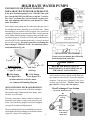
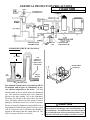
EXCESSIVE FLOW BYPASS MANIFOLD
FOR LARGE 2 H.P. PUMPS OR OVER 90 G.P.M.
If the pool circulation pump is over 2 HP OR if the total
flow exceeds 90 GPM you will have to add the "excessive
flow valve" as shown here. Do not install a bypass valve
that will completely shut off flow to the heater, see "Shutdown Procedures".
Some larger water pumps may be restricted if the pipe size is
not adequate therefore reducing its overall flow rate. When
determining if you need an excessive bypass valve, one has to
consider the hydraulic restriction of the filter, valving, amount
of 90˚ fittings and the distance of pipe to the pool in the existing filtering system. If you have a 2 HP water pump that does
not exceed 90 G.P.M. considering the above, you may not need
the excessive bypass. Excessive water flow can damage the
heat exchanger. SPECIAL NOTE: See chlorinator placement instructions (Pg. 10).
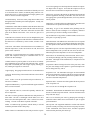
"Excessive Flow Valve Manifold"
Do not valve in a manner that will totally
isolate heater from water flow.
IN
2" p.v.c. "T"
Bypass Pipe Size:
1.5" or 2" pipe @ 2 H.P.
2" pipe @ 3 +.H.P
2 H.P Pumps
Close Bypass 50%
! CAUTION
OUT
2" p.v.c. "T"
Ball Valve
@ 45 Deg.
BE SURE THE BYPASS VALVE IS
POSITIONED TO ALLOW REMOVAL OF
THE FRONT ACCESS PANEL!
Position the valve so that the access panel can be
easily removed, always check before final gluing. Angle the valve out 45˚ to provide adequate
clearance. You may use a Compool 2-way valve
or other type if desired. "Do not" use a brass
gate valve or a 3-way valve for bypass !
3 H.P. Pumps
Close Bypass 25%
All others must be set by flow meter.
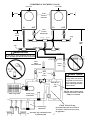
See Commercial Plumbing Diagram
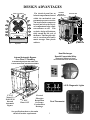
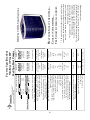
ADVANCED HEAT EXCHANGER DESIGN
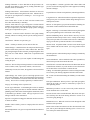
Heat Exchanger Cross Section
This diagram is a cross section of the heat exchanger.
The seamless tube within another tube design transfers heat very efficiently.
Closed Cell Insulation Foam
Hot
Refrigerant
Passage
The inner water tube is made of thicker resilient cupronickel metal alloy to help resist corrosive pool
water. The outer heavy gauge Freon™ tube is dipped
in a special weather proofing material.
Then, to insulate from heat loss and help prevent corrosion further, the heat exchanger is encased in a block
of special "closed cell" sealing foam.
9
Water Passage
Cupronickel
Metal Alloy