1
3.16
Predicting
Node Dropout
3.16.1
How the Network
Handles
Latency
T ime
Node Dropouts
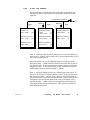
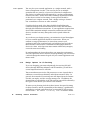
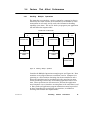
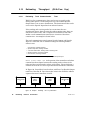
All active nodes maintain a member node table that identifies other
nodes in the ring. When a node holds the token and completes its
message traffic, it passes the token. The token is always passed to the
next active node in an ascending address sequence. If the next node
has left the network since its last token pass, a network timeout occurs
during the attempt to pass the token. The remaining nodes detect this
timeout, and begin to create a new address sequence that will bypass
the missing node.
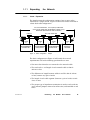
In the process of creating the new address sequence, all nodes try to
reclaim the token, with the lowest-addressed node invariably claiming
and holding it. During this process, each node builds a new ‘member
node’ list that re-establishes the sequence. When the ring is
re-established the token rotation begins again at the lowest address.
This process is handled automatically by the remaining nodes and is
transparent to the user application, except for the time interval
required to reconstitute the network ring.
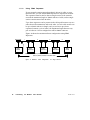
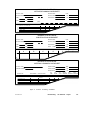
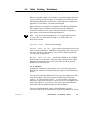
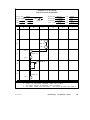
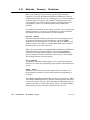
This time interval can be calculated separately for each node that
remains in the ring. It represents the time during which the node will
not be processing any data messages. It is called the Node Drop Out
Latency time (NDOL), and is expressed in ms. Nodes can be removed
from the network by some fault or by design in the application, for
example for scheduled maintenance on the field devices at the node
location. Possibly several nodes might drop out simultaneously due to
an area power failure. Network designers should become familiar with
typical latency times for reconstituting the network with the remaining
nodes, and should provide appropriate methods of handling them in
their application programs.
3.16.2
The Latency
Formula
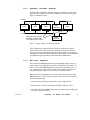
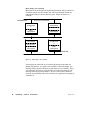
The formula for calculating node drop out latency (NDOL) produces two
time values. One time applies to nodes with addresses below the
address of the drop-out node. The other time applies to nodes with
addresses higher than that of the drop-out node. (If several nodes drop
out simultaneously, the address of the lowest drop-out is used.)
92
Estimating
Network
Performance
890 USE 100 00