1
C-Band Transceiver
Connector Pinouts
4.2.5
Revision 1
MN/CSAT5060.IOM
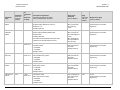
Mute
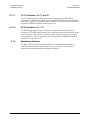
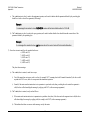
The output state of both the Receiver and the Transmitter are user controllable.
The receiver output state (the ‘IF IN’ port, J1) will be ON only if the following
two requirements are met:
•
•
The receiver hardware must be fault free (i.e., No Synthesizer or
IFLO faults).
The receiver shall be unmuted (i.e., DMU=0 ).
The transmitter output state (the ‘RF OUT’ port, J2) will be ON only if the
following three requirements are met:
•
The transmitter hardware shall be fault free
(i.e., No Synthesizer or IFLO faults).
•
The transmitter must be unmuted (i.e., UMU=0).
•
The transmitter Amplifier shall be ON (i.e., AMP=1).
Associated Remote Command(s):
Example(s):
4.2.6
DMU= , UMU=
DMU=0 , UMU=0
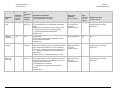
Tx Amplifier
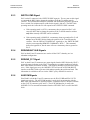
The Tx amplifier ON/OFF state is user controllable. Turning the Tx amplifier
OFF removes the 10Vdc supply to the RF Power FETs. The TX Amplifier
must be ON in order for the CSAT to transmit a RF signal.
Associated Remote Command(s):
Example(s):
4.2.7
AMP=
AMP=1
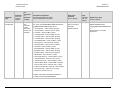
Channel Slope Adjust Mode
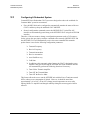
Comtech EF Data’s CSAT transceivers provide two operating modes for the
Receiver IF and Transmitter RF output channel slopes; ‘Calibrated’ and
‘Manual’ modes.
•
•
In Calibrated mode, the CSAT firmware uses a calibration ‘lookup’
table based on the selected frequency to determine the optimum
channel slope setting.
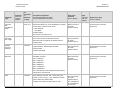
In Manual mode, the customer adjusts the channel slope using the DSA
and USA commands defined in the next section.
Associated Remote Command(s):
Example(s):
4–3
DSM=, USM=
DSM=1, USM=1