1
Use in Hazardous Environments
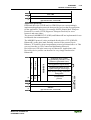
Classification meeting CENELEC and IEC
• 199
Explosive areas resulting from gases, fumes or mist:
• Zone 0 areas are subject to an explosive atmosphere
(> 1000 h /year) continuously or for extended periods.
• Zone 1 areas can expect the occasional occurrence of an explosive
atmosphere (> 10 h ≤ 1000 h /year).
• Zone 2 areas can expect the rare or short-term occurrence of an explosive
atmosphere (> 0 h ≤ 10 h /year).
Explosive areas subject to air-borne dust:
• Zone 20 areas are subject to an explosive atmosphere
(> 1000 h /year) continuously or for extended periods.
• Zone 21 areas can expect the occasional occurrence of an explosive
atmosphere (> 10 h ≤ 1000 h /year).
• Zone 22 areas can expect the rare or short-term occurrence of an explosive
atmosphere (> 0 h ≤ 10 h /year).
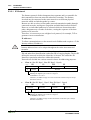
9.3.2 Explosion protection group
In addition, the electrical components for explosive areas are subdivided into
two groups:
Group I:
Group I includes electrical components for use in fire-damp
endangered mine structures.
Group II:
Group II includes electrical components for use in all other
explosive environments. This group is further subdivided by
pertinent combustible gases in the environment.
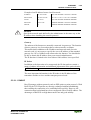
Subdivision IIA, IIB and IIC takes into account that
different materials/substances/gases have various ignition
energy characteristic values. For this reason the three subgroups are assigned representative types of gases:
•
•
•
IIA – Propane
IIB – Ethylene
IIC – Hydrogen
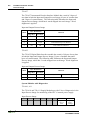
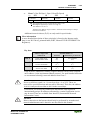
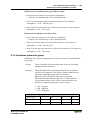
Minimal ignition energy of representative types of gases
Explosion group
I
IIA
IIB
IIC
Gases
Methane
Propane
Ethylene
Hydrogen
Ignition energy (µJ)
280
250
82
16
WAGO-I/O-SYSTEM 750
ETHERNET TCP/IP