1
How to Control the Implementation of VHDL
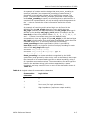
Of these four possible values, only the 1 and 0 result in logic being
generated for a signal, so an element of an enumerated type that is
defined using any of the four characters results in only a single wire
being generated. For enumerated type elements that are defined using
the “-” character, the VHDL synthesizer generates a don’t-care for the
signal. This often results in better logic optimization. Enumerated type
elements that are defined using the Z character result in output enable
logic being generated for the associated signal. (This matches the
convention for output enables commonly used in simulation
environments.)
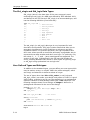
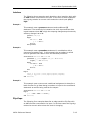
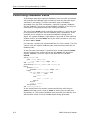
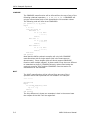
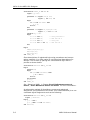
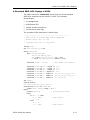
The enum_encoding attribute must be entered as a single string
value. Strings in VHDL cannot span multiple lines, so to enter a long
enum_encoding value, you must concatenate multiple strings using
the ’&’ (concatenate) operator as shown in the following example:
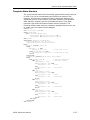
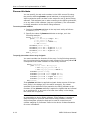
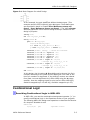
attribute enum_encoding of states:
"00101 00000 10000 00100 10100
"01100 01000 10101 10001 11000
"10011 00011 00001 01101 01001
type is
" &
" &
11001";
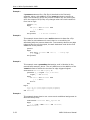
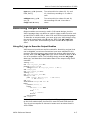
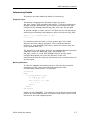
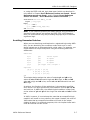
“One hot” Enumeration
In addition to the enumeration values shown above, the VHDL
synthesizer supports a special type of enumeration attribute value for
state machines. The following statements define an enumerated type
for a state machine and specify that the state machine is to be
encoded using a one hot (one bit active per state) representation:
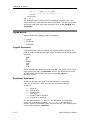
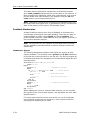
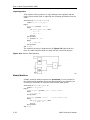
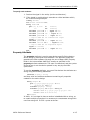
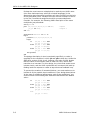
type machine is (init, s1, s2, s3, s4);
attribute enum_encoding of machine : type is "one hot";
In this example, the five states of the machine (init, s1, s2, s3, and
s4) are encoded automatically with the values 00001, 00010, 00100,
01000, and 10000, respectively by the VHDL synthesizer. When used
as next and previous state values in a subsequent case statement, the
value of the type is decoded using only that bit that is “hot” (has a
value of 1) for each enumerated value. This results in a dramatic
decrease in the amount of decoding logic required for each condition in
the case statement logic, at the expense of a few additional registers.
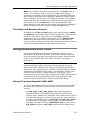
Note: One hot encoding is particularly effective when you are
generating circuits intended for implementation in register-rich
architectures such as FPGAs.
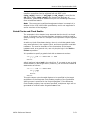
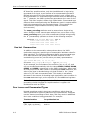
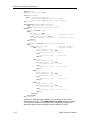
Don’t-cares and Enumerated Types
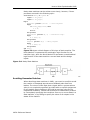
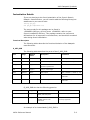
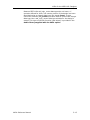
Unused encodings result in don’t-care conditions, which allow the
VHDL synthesizer to perform additional logic optimizations. Subtypes
use the element encodings of their base, and may result in additional
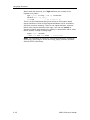
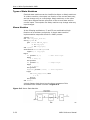
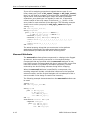
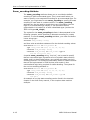
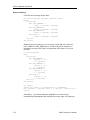
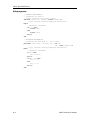
don’t-care conditions being generated. For example:
4-4
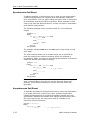
The declaration:
Is synthesized as:
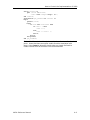
type direction is
(left, right, up, down);
Two wires with the values 00, 01, 10,
and 11.
VHDL Reference Manual