1
SWEEPING TECHNIQUE
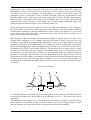
For extremely small object searching, such as coins, rings, nuggets, etc. lower the search coil to
within 1 inch of the ground. Sweeping the coil from side to side in a straight line in front of you.
Keep the coil at a constant height as you sweep from side to side. Move the coil at a rate of 0.5
metre per second. The optimum sweep rate must be determined by each operator. The detector
should be held comfortably in the hand, with the coil held as closely to the ground as possible.
As the detector is scanned from side to side in front of the operator, the search coil should be
advanced approximately two-thirds the diameter of the coil. This keeps the operator moving
ahead, and it allows some overlapping of each sweep. This overlapping ensures that nothing will
be missed. It is well to note here that the operator should not rush. This is one of the most
common mistakes made by detector users. If you rush, you will not adequately cover the ground.
METAL DETECTING AND THE ENGLISH LAW
The rights of the finder fall into two distinct classes. The first relates to objects that have been
recently lost, and the second to items of gold or silver which are subject, or might be subject, to
the laws of the Treasure Trove. In the first place, where the object has been recently lost and
found and is valuable, it should be handed to the Police as soon after it has been found as
possible. The Police will then attempt to locate the owner. If they succeed in locating the owner,
he has the legal right to the object and is not legally bound to reward the finder. That is a matter
for the owner's conscience.
In the event of the Police failing to locate the owner they will probably return the object to the
finder. If, however, the owner makes a claim for the object at a later date, the finder must return
the item to the owner. If the owner is not located the finder has the best rights to ownership,
provided that the object was not found on private property, in which case the owner of the land
has a better right than the finder. The solution here, of course, is to obtain permission beforehand
and to come to some agreement with the landowner with regards to the division of any finds.
If on the other hand, the find of gold or silver can be proved to have been deliberately concealed,
with a view to recovery at a later date, the find comes under the law of the Treasure Trove. If the
objects cannot be proved to have been deliberately concealed, the find cannot be declared
Treasure Trove. Usually this point centres around the quantity of coins in a hoard, or whether the
find is in a container. Obviously, if there are a hundred coins in a pot, they were almost certainly
deliberately concealed. If, however, there are only one or two coins, it is more likely that they
were lost accidentally. If the objects are declared Treasure Trove, the finder has no need to
worry, for he is usually rewarded with a cash settlement to the full market value of the find.
When the objects are not declared Treasure Trove, the owner of the land on which the find was
made usually has a better claim to ownership than the finder.
In Scotland all newly discovered ancient objects of all metals, whether deliberately concealed or
not are subject to the same procedure as Treasure Trove finds in England.
CODE OF CONDUCT FOR METAL DETECTOR USERS
1. Do not trespass. Ask permission before venturing on to any private land.
10