1
Introduction
Thank you for selecting the Community Distributed
Design Series™ of ceiling loudspeakers.
Whether you chose them because they deliver
exceptionally high quality sound, because they
have predictable, uniform coverage so spaces
are easy to lay out, because they are easy to
install and save time, or because they are very
competitively priced for such a high-performance,
durable loudspeaker, you can have confidence
you made the right choice.
The Distributed Design Series is built to satisfy
safety agency standards, with quality assured
by Community’s long history of building highperformance, durable loudspeakers for sound
reinforcement and contracting applications.
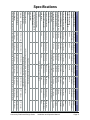
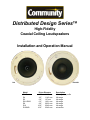
The Distributed Design Series is comprised of
these seven models:
Model
D4LP
D4
D5
D6 & D6-B
D8
D10
D10SUB
Driver Diameter
4.5" 114.3 mm
4.5" 114.3 mm
5.0" 127.0 mm
6.5" 165.1 mm
8.0" 203.2 mm
10.0" 254.0 mm
10.0" 254.0 mm
Response
full-range
full-range
full-range
full-range
full-range
full-range
subwoofer
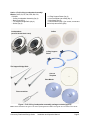
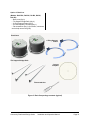
Each model is available as a complete assembly,
including everything needed for standard
installations, or you can purchase packages for
the face portion only or the back can portion.
Each of these packages has components for two
loudspeakers. The D4LP Low Profile model fits
where deeper units cannot and may be retrofitted
into existing shallow cans.
Except for the D10SUB subwoofer, each of the
other six models is a true coaxial loudspeaker.
This means it has a real compression driver
concentrically arranged so that the upper
frequencies emerge through the center of the
low-frequency driver’s magnetic structure and
cone via a precisely tapered Tru-Phase™ highfrequency waveguide. This special construction
provides consistent, wide dispersion right up
to 16 kHz, all but eliminating high-frequency
narrowing. You don’t have the reflection and
diffraction problems at multiple frequencies found
with "straight tube" coaxial loudspeakers, simple
"whizzer-cone" loudspeakers, or front-mounted
soft dome high frequency loudspeakers (typically
Community Distributed Design Series
found in ceiling speakers at this price point) that
attempt to emulate a true coax design.
Further pattern improvement is achieved by
precisely mounting the low frequency driver
(and its’ concentric HF driver) dead-center in the
baffle, as contrasted to the offset designs used
by many others.
Most competitive ceiling loudspeakers typically
have a half-inch or greater, "step" in their face
where the grille is attached, and the low-frequency
driver is rear-mounted behind the grille plate.
Such designs produce unwanted reflections and
diffraction effects such as frequency response
peaks and nulls, polar irregularities, and phase
response problems. To avoid these issues,
Community Distributed Design baffles are very
close to the grille (less than 1/8 inch away).
The loudspeaker baffle and ceiling thus form
an uninterrupted planar surface for diffractionfree HF driver acoustic loading and a smooth,
predictable pattern. This makes it easy to lay
out your loudspeaker installation for optimum
coverage without those unwanted dead zones or
too-loud overlaps.
The Distributed Design Series saves you money
in several ways. (a) Their powerful magnetic
structures and efficient coils ensure high output,
which gives you more headroom per power
amplifier so you can use a smaller amp that will
save you money. (b) These loudspeakers are very
competitively priced and (c) Community designed
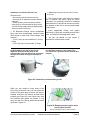
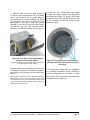
this series with place-through-the-cutout Tile
Support Bridge Rails, Drop-Stop™ installation
assistant tabs, Twist-Assist™ loudspeaker face
retainer tabs, and other innovations so that one
person on a ladder is easily able to install the
loudspeaker in the ceiling. Overall, this saves
a tremendous amount of time and labor during
the installation. You can use 8-ohm or constant
voltage distribution for which you get a 70 volt /
100 volt transformer built in.
We urge you to read these instructions carefully
and familiarize yourself with the features and
installation methods before you begin the job.
If you have any questions or concerns, please
contact Community right away.
Installation and Operation Manual Page 2