1
BBW 46 / DBW 46
Installation Instructions
Legal Provisions for Installation
For testing the heater in accordance with Section 19, 20 or
21 StVZO (German Regulations Authorising the Use of Vehicles for Road Traffic) the following regulations are primarily to be observed (Section 22 a StVZO):
NOTE:
These provisions are binding within the scope of the
StVZO and should also be observed in countries
where no special locally applicable regulations are in
effect!
Within the scope of the StVZO ”General Design Certifications” have been granted by the Federal Office for Motor
Traffic for the BBW 46 and DBW 46 water heaters with the
following design approval numbers:
~ S 185 for heaters BBW 46 - petrol
~ S 186 for heaters DBW 46 - diesel
The installation of the heaters must be performed in accordance with these Installation Instructions. The installation must be checked
a) upon the homologation of the vehicles
in accordance with Section 20 StVZO
b) upon any individual test
in accordance with Section 21 StVZO, or
c) upon any examination
in accordance with Section 19 StVZO by a
registered expert or examiner for motor traffic, an
expert for automotive vehicles, or any other
authorised official, in accordance with Paragraph
7.4 a of Appendix VIII to the StVZO,
and in the case of item c) the proper installation must be
certified on the approval certificate contained on the design certification stating the following:
- vehicle manufacturer
- vehicle type and
vehicle identification number.
The effectiveness of the design certification is dependent
on this certificate. The approval certification is to be kept in
the vehicle.
The year of initial operation must be durably marked by the
installer on the type plate of the heater by removing the
years that are not applicable.
Extracting the combustion air from the interior of the
vehicle is not permissible.
The discharge opening of the exhaust pipe should point upward, sideways, or in the case that the exhaust pipes are
routed on the underside of the bottom of the vehicle, it
must be positioned near the lateral or rear edge of the
driver’s cab or vehicle.
Exhaust pipes must be routed so that the possibility of exhaust fumes entering the interior of the vehicle is remote.
The functioning of any parts of the vehicle essential for its
operation must not be impaired.
orating fuel can neither collect nor be ignited by hot components or electrical equipment.
The heater must not be installed in spaces occupied by
persons.
The operating state of the heater at any given time – at
least an indication as to whether it is “on” or “off” - must be
easily recognisable.
The installation of components which are not of an approved type will lead to the revocation of the General Design Certification of the heater and thus the General Operating Permit of the entire vehicle. The same applies to improperly performed repairs or those where other than genuine replacement parts have been used.
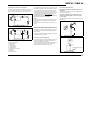
The openings of the combustion air inlet and exhaust gas
outlet pipes must be so designed that a spherical object of
16 mm dia. cannot be introduced.
Electric lines, switchgear and controlgear of the heater
must be so arranged in the vehicle that their functioning
cannot be impaired under normal operating conditions.
For the routing of fuel lines and the installation of additional fuel tanks, Sections 45 and 46 StVZO are to be
adhered to. The most important excerpts therefrom are as
follows:
Fuel lines must be designed in such a way that they remain unaffected by torsional stresses in the vehicle, engine movement, and the like. They must be protected
against mechanical damage. All parts of the fuel system
must be protected against heat which would impair their
operation, and must be located such that dripping or evap-
Use of the Water Heater
The BBW 46 / DBW 46 water heaters, in conjunction with
the vehicle’s heating system, are used for
- heating the passenger compartment,
- defrosting the vehicle’s windows,
- preheating water-cooled engines.
The water heaters operate independently of the vehicle’s
engine and are connected to the cooling system, the fuel
system and the electrical system of the vehicle.
1