1
CHAPTER 6
BRUTE FORCE METHOD
85
CHAPTER 6 BRUTE FORCE METHOD
This is the most basic problem solving technique. Utilizing the fact that computer is
actually very fast.
Complete search exploits the brute force, straight-forward, try-them-all method of finding
the answer. This method should almost always be the first algorithm/solution you
consider. If this works within time and space constraints, then do it: it's easy to code and
usually easy to debug. This means you'll have more time to work on all the hard
problems, where brute force doesn't work quickly enough.
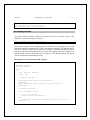
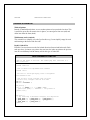
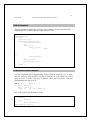
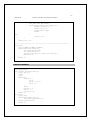
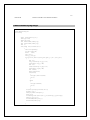
Party Lamps
You are given N lamps and four switches. The first switch toggles all lamps, the
second the even lamps, the third the odd lamps, and last switch toggles lamps
1,4,7,10,...
Given the number of lamps, N, the number of button presses made (up to 10,000),
and the state of some of the lamps (e.g., lamp 7 is off), output all the possible states
the lamps could be in.
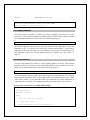
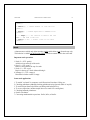
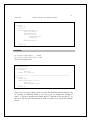
Naively, for each button press, you have to try 4 possibilities, for a total of 4^10000
(about 10^6020), which means there's no way you could do complete search (this
particular algorithm would exploit recursion).
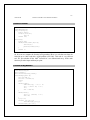
Noticing that the order of the button presses does not matter gets this number down to
about 10000^4 (about 10^16), still too big to completely search (but certainly closer by a
factor of over 10^6000).
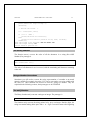
However, pressing a button twice is the same as pressing the button no times, so all you
really have to check is pressing each button either 0 or 1 times. That's only 2^4 = 16
possibilities, surely a number of iterations solvable within the time limit.
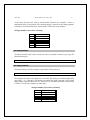
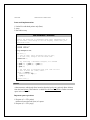
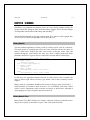
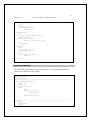
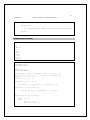
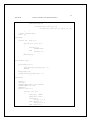
The Clocks
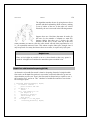
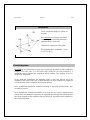
A group of nine clocks inhabits a 3 x 3 grid; each is set to 12:00, 3:00, 6:00, or 9:00.
Your goal is to manipulate them all to read 12:00. Unfortunately, the only way you
can manipulate the clocks is by one of nine different types of move, each one of
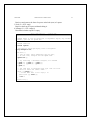
which rotates a certain subset of the clocks 90 degrees clockwise. Find the shortest
sequence of moves which returns all the clocks to 12:00.