1
152 Settings for analogue equipment
Settings for analogue equipment
Analogue equipment includes answering machines, fax machines
and analogue telephones. Analogue equipment is connected to the
Modular Plus system through the Integrated Analogue Terminal
Adapter (I-ATA) or with an external Analogue Terminal Adapter
(ATA). The Modular Plus system includes one I-ATA port.
Additional ATA ports must be added externally by purchasing
optional equipment. External ATA and Internal ATA support
different features. The I-ATA supports only one set and the external
ATA supports multiple sets. The internal ATA responds only to
incoming tone dialling signals.
The ATA and I-ATA allow analogue telephones to access some
Norstar features such as Call Forward, Conference, Transfer, and
Last Number Redial. Telephones connected to the ATA or I-ATA
cannot display the time and date. For information on using Norstar
features from an external analogue telephone connected to an ATA,
refer to Analogue Terminal Adapter User Card.
You can adjust the following settings:
• change the number of rings the analogue equipment waits before
answering a call
• change the extension used for analogue equipment to receive tone
dialling signals
• set whether an external ATA is required and whether it is used
On-site or Off-site
• change the dial mode for outgoing data of an external ATA to
either tone or pulse
• set whether the ATA should receive confirmation and error tones
(only for analogue telephones).
Setting the delay before the ATA answers
To accommodate the device connected to the Analogue Terminal
Adaptor (ATA), you may want to lengthen or shorten the delay
before the device is able to receive tones. For example, a modem or
fax machine requires only a short delay.
Refer to the ATA Terminal Feature Card for information on using the
ATA features.
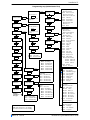
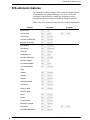
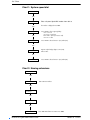
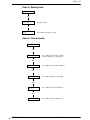
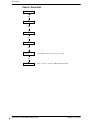
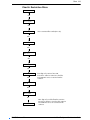
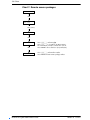
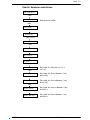
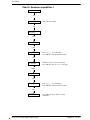
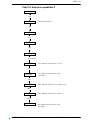
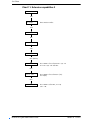
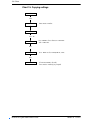
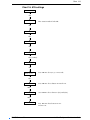
See "Chart 16: ATA settings" on page 339 in Appendix A for a
programming overview.
The ATA answer timer controls this delay. The default setting is a
seven-second delay before the speech path is connected.
Modular Plus System Administration Guide
P0607110 Issue 01