1
Norpix Inc - www.norpix.com
StreamPix 5 Tech Support:[email protected]
Bayer conversion, color correction and grading
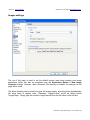
Bayer conversion is the process by which raw images from a Bayer camera are colorconverted using a Bayer interpolation algorithm. Some cameras equipped with a Bayer filter
will perform the color interpolation process before images are sent to output. However, most
cameras do not do this, leaving interpolation to applications like StreamPix.
A Bayer filter mosaic is a color filter array for arranging RGB color
filters on a square grid of photo sensors. The term derives from the
name of its inventor, Dr. Bryce E. Bayer of Eastman Kodak, and
refers to a particular arrangement of color filters used in most
single-chip digital image sensors used in digital cameras,
camcorders, and scanners to create a color image. The filter
pattern is 50% green, 25% red and 25% blue, and hence is also
called BGGR, GBRG, GRBG or RGGB depending on the color of
the first pixel in a 2x2-pixel square.
Bryce Bayer's patent called the green photo sensors luminance-sensitive elements and the
red and blue ones chrominance-sensitive elements. He used twice as many green elements
as red or blue to mimic the human eye's greater resolving power with green light.
The raw output of Bayer-filter cameras is referred to as a Bayer pattern image. Since each
pixel is filtered to record only one of three colors, two-thirds of the color data is missing from
each. To obtain a full-color image, various demosaicing algorithms can be used to interpolate
a set of complete red, green, and blue values for each pixel. Different algorithms requiring
various amounts of computing power result in final images of varying quality.
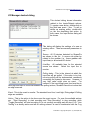
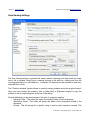
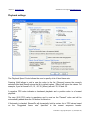
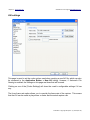
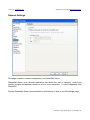
StreamPix includes Bayer conversion functionality as well as strong color balancing and
grading. Color balance can independently be applied to any supported image format, i.e. raw
images, color YUV or RGB. Changes to the color balance, saturation and contrast, plus
specific adjustments to shadows and highlights can all be performed using those various
tools.
Since a raw image contains all of the color information, StreamPix typically records images
from such cameras as raw data. Bayer conversion and color grading is performed only when
needed, namely when an image is being displayed, exported to an AVI movie or exported to
an individual image file. This has two advantages: raw image size is 3 times smaller than
color images, and CPU resources are conserved (Bayer rendering and color grading are quite
computation-intensive).
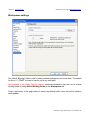
For details about Bayer rendering, color correction or grading, please refer to the StreamPix
settings Bayer and Color Correction(82) section.
StreamPix5 - Copyright Norpix Inc. (C) 2010 (30/116)