1
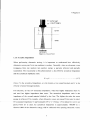
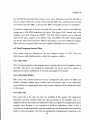
whereas the pulse-echo probe needs to be within a
range of 15mm. The physical principle behind this
system uses diffracted waves from the edge of the
defects and thus it is particularly effective for the
increased detection and sizing of centre-line defects.
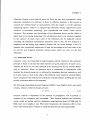
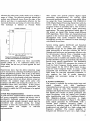
This technique is defined as Normal Probe
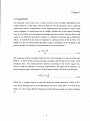
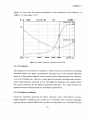
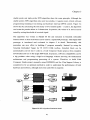
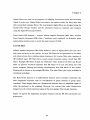
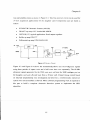
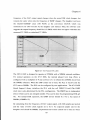
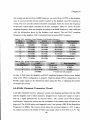
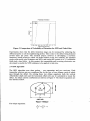
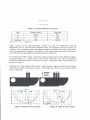
Probability of Detection
-P/E
-NPoi
£
I
45 «
39 36 33 30 27 24 21 18 15 12 9
6
3
0
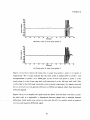
Distance fiom Defect (mm)
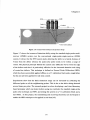
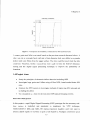
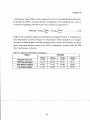
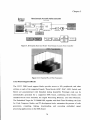
Figure 2 Comparison of Detection Range
for NPD and Pulse-Echo techniques
Diffraction (NPD), which has been successfully
applied offline on a V I calibration block and a
single billet, but has not yet been applied for realtime control.
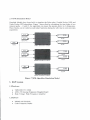
Experiments show that the defect detection range
can be increased by collecting the diffracted pulse on
all the neighbouring probes. This is due to the defect
being detected several times per pulse. The research
project involves in developing a real-time laboratory
based prototype which can detect defects using two
methods: the standard single probe pulse echo
technique and NPD, and testing the system on a V I
calibration block and a steel billet. In this project,
the transmitting and receiving electronics are
developed to enable the NPD technique to be applied
in real-time.
3. Real Time Implementation
A good real-time implementation should be reliable,
low power consuming, compact and always runs in
real-tiiiie[3]. Sufficient amount of instructions per
second and quick enough transport speed nuist be
considered and calculated during the design
procedure to meet the requirement of short delays
between
inputs and
outputs
in real-time
implementation.
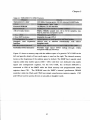
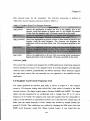
This system uses general purpose digital signal
processing microprocessors for solving signal
processing problems in real-time, particularly focus
on using the Texas Instruments (TI) TMSC6713
DSK (Digital Signal Processing Starter Kit) with the
C6713 kernel floating processor to implement
programs written in assembly and C. The T I C6713
DSK is for general real-time signal processing
applications. The main applications taking place in
this project are digital filter design using different
DSP algorithms. These filters are characterized and
applied on the received data. T I Hardware/software
development tools (Code Composer Studio and
DSP/BIOS) provide I/O channels for data exchange
with Matlab in real-time.
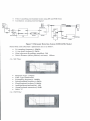
System testing applies M A T L A B and Simulink
including several toolboxes. The M A T L A B
Embedded Target for T I C6000 DSP enables the
rapid prototyping of real-time software for C6713
floating-point processor and generates efficient code
for the processor directly from a Simulink model
using M A T L A B Real-Time Workshop. The
generated code is readable and editable, and the code
profiler identifies regions of generated code that may
benefit from manual optimization. The Embedded
Target for T I C6000 DSP automates the creation of
Link for Code Composer Studio project, provides
board support for the C6713 DSK board, invokes
Link for Code Composer Studio to create a DSP
executable and downloads the executable to the
DSK board for real-time algorithm evaluation. It
also employs the link to enable interactive
debugging and systematic testing of the DSP
programs.
4. System Architecture
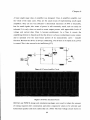
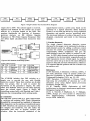
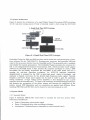
The system is available for testing single input and
output
channels
with
dual
transducers
(transmitter/receiver) and can be expanded for multichannel testing as well. This system combines
analogue and digital electronics technology together.
The digital part consists of pulser generation and
signal processing, while the analog part includes
pulse amplification and A/D (Analog-to-Digital),
DiA (Digital-to-Analog) conversion. A single
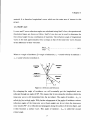
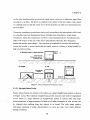
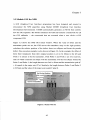
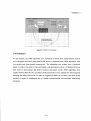
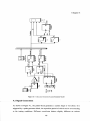
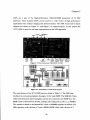
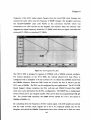
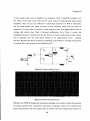
channel system is illustrated in figure 3. The digital
pulse signal generated by G67i3DSK,— with a
variable pulse repetition frequency (PRF), is
converted to analogue signal by AED330 analog
daughtercard and amplified by a high voltage high
frequency amplifier. The custom amplifier is
designed and fabricated to give out a high voltage