1
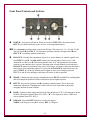
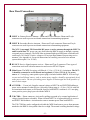
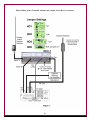
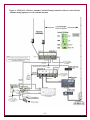
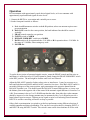
Introduction The DX Engineering NCC-1 Receive Antenna Variable Phasing Controller is a two-channel receive antenna phasing system. This sophisticated controller allows the user to combine and independently adjust the phase and level of two antenna inputs, essentially creating a fully adjustable phased array out of two similar receive antennas. It can be used with existing or new receiving antenna systems to improve or enhance desired signals by adding desired signals. It can also eliminate or greatly reduce unwanted signals or noise by phase nulling the unwanted signal regardless of the signal or noise type. The NCC-1 is fully compatible with the DX Engineering Active Receive Antennas. Using 102" whips as antenna elements, these antennas can provide excellent receiving performance from 100 kHz to 30 MHz. Two ARAV3-1P active receive vertical antennas can be phased to form a vertically polarized array. The minimum useable spacing varies with local noise floor, but is typically 1/10-wavelength. Maximum spacing for true unidirectional patterns is just over 1/4wavelength, although wider spacing is still very useable. Two ARAH2-1P active receive horizontal antennas can be configured as horizontally polarized dipoles to form a two element horizontally polarized receiving array. The NCC-1 front panel controls provide repeatable directional pattern adjustments. Properly spaced Active Receive antennas are useable over a wide range of frequencies, offering the best possible phase nulling and peaking. The NCC-1 can be used with many other combinations of receiving antennas including Single and Reversible Beverages, Receive Four-Square Arrays, K9AY Loops, and more. It will increase the directivity of any properly spaced combination of two similar antennas. The NCC-1 is primarily designed for 500 kHz to 15 MHz use, although the useful operating range extends from below 300 kHz to above 30 MHz. Typical applications include: Combining two similar non-directional antenna elements to create a directional pattern. Combining two similar directional antennas to produce a better pattern. Reducing overload or interference by removing or reducing a strong signal or noise Reducing interference from distant signals or noise Direction finding -3-