1
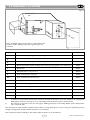
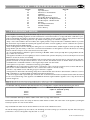
8.2 GAS SUPPLY ROUTES
GB IE
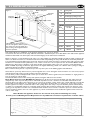
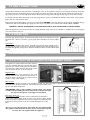
The gas supply may enter the appliance across the hearth or through the ‘knock outs’ provided in the rear of the firebox. Gas
pipes should not be buried or routed through walls without being protected by conduit or sleeving. An isolation tap must be
included in the gas connection pipe to facilitate servicing.
Figure 7
Note: Any fittings used underneath the appliance must be
Outer leaf
rated to 80 C and must not come into contact with the
underside of the burner unit
o
Cavity
For INSTALLATION METHOD 1, the gas supply can be run in the
conventional manner taking due account of rules and regulations.
For INSTALLATION METHOD 2, use only factory sleeved pipe in a
continuous unjoined length in the cavity of the wall and area which
communicates with the cavity. Ensure a good seal where the pipe
enters through the appliance grommet. This is a permitted gas supply routing.
Firebox
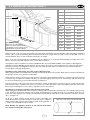
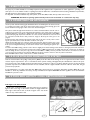
8.3 INSTALLATION METHOD 1
Figure 8
Fireplace
backpanel
Outer cavity leaf
Rockwool
Insulation
E
D
C
Inner cavity leaf
A
A
Opening width
C
Overall height (excluding hearth)
B
D
E
F
Model
Dim.
F
A Min.
A Max.
B
B
C
D Min.
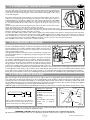
The hearth must extend 300mm
in front of the appliance, with it’s top surface 50mm above the surrounding floor
level or having a 50mm high fixed fender
around it’s perimeter.
False chimney
breast
Fireplace panel
D Max.
E
F
Overall width
Opening height: (excluding hearth):
Recessed depth of fire
Space allowed for Rockwool jacket:
Full depth
models
Slimline models
460mm
450mm
375mm
380mm
480mm
480mm
590mm
565mm
580mm
180mm
25mm
590mm
540mm
580mm
125mm
25mm
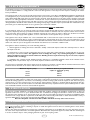
This method requires minimal modification to the property’s wall and is achieved utilising either an extended
fire surround or by constructing a shallow false chimney breast of a minimum 180mm deep. See diagram for further dimensions.
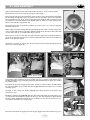
Centring on the pilot hole already drilled, create a hole from inside the property 125mm diameter. If the property has loose fill
cavity wall insulation fitted, it will be necessary to seal the wall cavity where the flue opening is formed to prevent insulation material coming into contact with hot surfaces of the fire and it’s components. The recommended method is to pack a depth of 50100mm of Rockwool or a similar non-combustible insulation material into the cavity .
Where the property does not have existing cavity wall insulation, it is still recommended that a space 50-100mm into the cavity
is packed with Rockwool or similar material, to prevent any future installation of cavity wall insulation from coming into contact
with hot areas of the appliance.
At this point the false chimney breast or fire surround should be installed.
Note: When constructing the stud partition, all uninsulated, combustible material must be kept a minimum of
75mm away from the fireplace. Combustible materials closer than 75mm MUST be protected with a minimum
of 25mm insulation material.
7
© 2011 Focal Point Fires plc.