1
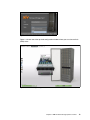
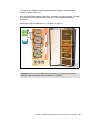
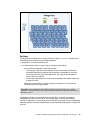
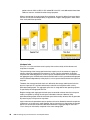
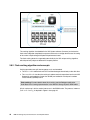
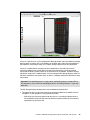
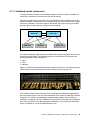
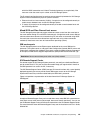
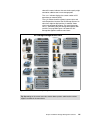
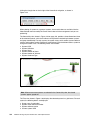
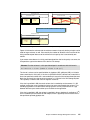
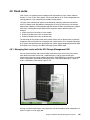
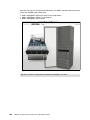
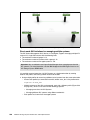
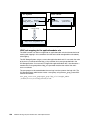
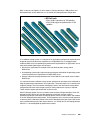
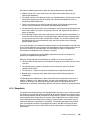
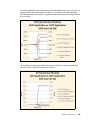
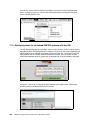
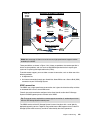
Now, in contrast, see Figure 6-2, which shows a LUN virtualized into 1 MB partitions and distributed evenly across 180 drives in a 15-module XIV Storage System configuration. XIV full rack • Every LUN is carved out of 180 spindles • Every LUN enjoys the performance of 180 spindles Figure 6-2 XIV Storage System full rack with 180 drives In a traditional storage system, it is common for an application’s performance requirements to be greater than the performance capabilities of a single RAID array. To engage multiple traditional RAID arrays into providing the performance requirements of an application, one or more of the following techniques must be used: Break up the application into multiple LUNs and distribute them among several RAID arrays Use operating system logical volume striping techniques to distribute the operating system across the performance capabilities of multiple RAID arrays Storage subsystem striping techniques that create LUNs that are striped across multiple RAID arrays It is common for these traditional storage system performance techniques to be combined to meet the performance requirements of an application. These techniques are a necessity with traditional storage. They can become challenging if there is ever the need to change these configurations because more storage capacity or more performance capacity is required. These activities require specialized skills and much work. With XIV Storage System, there is no need to resort to these multiple techniques. Each XIV Storage System LUN has only one disk performance limitation and that is the full performance potential of the entire XIV Storage System, which includes all disks and modules in the XIV Storage System configuration. The consequence of this massive parallel approach and the way data is effectively laid out within the XIV Storage System grid is that LUNs can be easily resized without physical disk layout concerns. It is unlikely that an XIV Storage System LUN will ever be reconfigured for performance reasons. Chapter 6. Performance 289