1
progressive inversion (subject, finite verb, participle), and these sentences are
divided over the word orders „Ptcp-Vfin-S‟ and „Other‟.
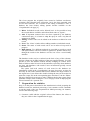
(2)
1.
2.
3.
4.
5.
6.
7.
8.
9.
10.
11.
12.
13.
14.
15.
16.
17.
18.
19.
20.
21.
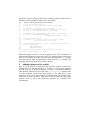
Xquery code to find the inversion examples
(: Look in all main clauses :)
for $search in //eTree[ru:matches(@Label, $_matrixIP)]
(: There must be a subject and a finite verb :)
let $sbj := tb:SomeChildNo($search, $_subject, $_nosubject)
let $vfin := tb:SomeChild($search, $_finiteverb)
(: There must be a progressive or ptcp, but not an absolute :)
let $ptcp := tb:SomeChildNo($search,
'IP-PPL*|[VB]AG*|PTP*', '*ABS*')
(: Find out word order :)
let $order := if ( ($vfin << $sbj) and ($ptcp << $vfin))
then 'Ptcp-Vfin-S' else 'Other'
(: Check conditions: subject, V-fin, progressive, word order :)
where ( exists($sbj)
and exists($vfin)
and exists($ptcp) )
(: Return the main clause, subcategorize on word order :)
return ru:back($search, '', $order)
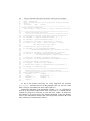
While the Xquery code in (2) serves its purpose well, a few extensions are
required that will show up later in the code. Two particular main clause types
need to be excluded, since they skew the data: the quotations (QTP clauses)
and main clauses with left dislocations (those with an LFD element); the
algorithm should only look for non-empty subjects.
4
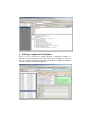
Adding features to the results
Step (2) in the process of addressing the linguistic question at hand (see
Introduction) is to add characteristics, or „features‟, to each of the examples
we find. One way to do this in Xquery is to make a user-defined function.
This function, which will receive the name tb:ProgrInv(), is called in line
23 of the extended version of the main query (3). The main query is also
extended with a test for the exclusion of left-dislocated and quotative main
clause type in lines 5-6 and 26, while lines 10 and 27 make sure that empty
subjects (such as traces and dislocation markers) are excluded from
consideration.