1
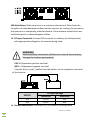
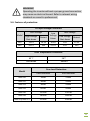
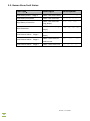
5-6. Installation: The power inverter should be installed in an environment that meets the following requirements. Dry --- Do not allow water to drip on or enter into the inverter. Cool --- Ambient air temperature should be between 0℃ and 40℃, the cooler the better. Safe --- Do not install the inverter in a battery compartment or other areas where flammable fumes may exist, such as fuel storage areas or engine compartments. Ventilated --- Keep the inverter at least 10cm away from surrounding objects, and at least 30cm from fans. Ensure the ventilation slots on the rear and the bottom of the unit are not obstructed in any way. Dust --- Do not install the inverter in a dusty environment. Dust can be drawn into the unit when the cooling fan is working and cause damage to the circuits. Close to batteries --- Avoid excessive cable lengths. Do not install the inverter in the same compartment as batteries. Use the recommended wire lengths and sizes. Do not mount the inverter where it will be exposed to the gases from the batteries, as prolonged exposure will damage the inverter. WARNING! Shock Hazard. Before proceeding, carefully check that inverter is NOT connected to any batteries, and that all wiring is disconnected from any electrical sources. NEVER connect the AC output terminals of the inverter to an incoming AC source such as mains, or an AC generator. 5-7. DC Wiring Connections: Follow this procedure to connect the battery cables to the DC input terminals of the inverter. The DC cables should be as short as possible (less than 3 meters) and large enough to handle the required current in accordance with the electrical codes or regulations applicable to the installation. Cables that are too small in gauge (too thin) or too long will drastically reduce inverter performance, causing poor surge capability and frequent 13