1
Is there an antialias filter ?
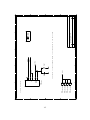
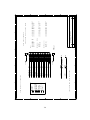
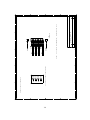
The USB4CH amplifier circuitry has solder pads for simple RC filtering at a
number of signal nodes. The factory default values for these positions are mild
so no roll off occurs even for the highest A/D sampling rates. This type of
antialias filtering is intended for protection against RF contamination. See the
A/D signal conditioning circuit diagrams for details.
What is the 50/60Hz rejection ?
If you need powerline rejection, there are three options: numerical filters, op
amp notch filters, and twisted pair. When numerically filtering use high sampling rates and then apply the numerical filter. Any op amp filters of course
must be added in front of the USB4CH. Often the most effective solution for
50/60Hz rejection is to simply use twisted pair for the inputs.
Do you recommend twisted pair for 50/60Hz rejection ?
Yes! Twisted pair along with proper use of the differential inputs is often
a very effective way to achieve 50/60Hz rejection. Often more effective than
any amount of numerical or op amp filtering. Ideally the twisted pair would
also have a foil shield that is connected to the USB4CH case to provide ESD
shielding. See the Analog inputs chapter for more information.
How long can the USB cable be ?
The formal USB specification quotes 6 feet as the maximum. You can probably
use a longer cable if needed, 12 feet being reasonable. However, you will not
be successful using a 100 foot cable. That is simply beyond USB capabilities.
For longer cable runs use USB hubs and repeaters for reliable operation.
171