1
SKILL # 12
NEUTRAL BUOYANCY PRACTICE
Neutral buoyancy is not something which can be mastered in a
classroom. We can teach the physics of neutral buoyancy and how
to attain and maintain neutral buoyancy, but until you are in the water
practicing the skill you will not begin feeling it. Neutral buoyancy is all
about “feel”.
As you learned in your open water class, you know that inhaling a lung
full of gas will increase your displacement of water, making you lighter so
you can ascend, and exhaling will decrease your displacement of water,
making you heavier so you can descend.
In closed circuit diving, none of this applies. Remember, you are simply
moving your breathing gas from one flexible membrane (your lungs) to
another flexible membrane (your counter-lungs). Therefore we must rely
on our buoyancy device to maintain neutral buoyancy. Every open circuit
trained diver who takes a rebreather class always comments in frustration
that they have to re-learn their buoyancy skills. This is normal and you will
quickly learn to adjust.
This means the fin pivot as a way of attaining neutral buoyancy is out.
It won’t matter how much you breathe in or out. Your buoyancy won’t
change.
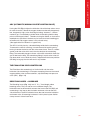
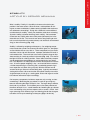
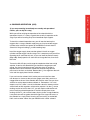
To maintain depth with a rebreather, you will add just enough air to your
buoyancy device to get you neutrally buoyant and when swimming, use
your body as a rudder and your fins as propeller. If you want to go up
slightly, bend your body so your head and chest are higher than your
lower body and kick with your fins. If you want to descend slightly, put
your head and shoulders down while kicking.
As you change depths, inflate or deflate your buoyancy device as needed
but never use your buoyancy device as an elevator button, allowing the
equipment to control your ascent or descent. Remember, ascents and
descents on a rebreather must be slow and deliberate to control and
maintain your PO2.
97 |