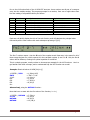
1
HP‐41Z Module Complex Number Module for the HP‐41 User’s Manual and Quick Reference Guide Written and developed by: Ángel M. Martin October 2011 41Z User Manual Page 1 This compilation, revision A.3.5.
Copyright © 2005-2011 Ángel M. Martin
Published under the GNU software licence agreement.
The author wishes to thank the contributors to this project in various ways, as follows:
W. Doug Wilder, who wrote the code for the non-merged functions in program mode,
Håkan Thörngren for his assistance and advices on the Memory Buffer implementation,
Valentín Albillo, who wrote the original “ZPROOT” FOCAL program,
M. Luján García, who prepared the 41Z Keys overlay bitmap file.
Some graphics taken from http://www.clarku.edu/~djoyce/complex, copyright 1999 by David E. Joyce.
Some graphics taken from http//www.wikipedia.org
Screen captures taken from V41, Windows-based emulator developed by Warren Furlow. See
http://www.hp41.org/
Original authors retain all copyrights, and should be mentioned in writing by any party utilizing this
material. No commercial usage of any kind is allowed.
41Z User Manual Page 2 Index. 1. Introduction . . . . . . . . . . . . . . . . . . . . . . . . . . . . . . . . . . . . . . .
5
2. Complex Stack, number entering and displaying . . . . . . . . . . . . . .
5
3. User interface enhancements . . . . . . . . . . . . . . . . . . . . . . . . . . . .
3.1
3.2
3.3
3.4
Display and Conversion functions . . . . . . . . . . . . . . . . . . . . . . .
Complex Natural Data entry . . . . . . . . . . . . . . . . . . . . . . . . . . .
The Complex User Assignments . . . . . . . . . . . . . . . . . . . . . . . .
The Complex Keyboard . . . . . . . . . . . . . . . . . . . . . . . . . . . . . .
8
8
9
12
13
4. Stack and Memory functions . . . . . . . . . . . . . . . . . . . . . . . . . . . .
16
4.1. Stack functions group . . . . . . . . . . . . . . . . . . . . . . . . . . . . . . .
4.2. ZSTO Math function group . . . . . . . . . . . . . . . . . . . . . . . . . . . .
16
20
5. Complex Math . . . . . . . . . . . . . . . . . . . . . . . . . . . . . . . . . . .. . . .
21
5.1. Simple Arithmetic . . . . . . . . . . . . . . . . . . . . . . . . . . . . . . . . . .
5.2. Exponentials and Powers that be . . . . . . . . . . . . . . . . . . . . . . .
5.3. Complex Logarithm . . . . . . . . . . . . . . . . . . . . . . . . . . . . . . . . .
21
23
28
6. Complex Geometry . . . . . . . . . . . . . . . . . . . . . . . . . . . . . . . . . . .
30
7. Complex Trigonometry . . . . . . . . . . . . . . . . . . . . . . . . . . . . . . . .
36
8. 2D-vectors or complex numbers? . . . . . . . . . . . . . . . . . . . . . . . . .
39
9. It’s a Gamma world out there . . . . . . . . . . . . . . . . . . . . . . . . . . .
40
10. Application programs . . . . . . . . . . . . . . . . . . . . . . . . . . . . . . . .
44
Appendix 1.- Complex Buffer functions . . . . . . . . . . . . . . . . . . . . . . . .
59
Appendix 2.- Complex Keyboard key-maps. . . . . . . . . . . . . . . . . . . . . .
65
Appendix 3.- Formula compendium. . . . . . . . . . . . . . . . . . . . . . . . . . .
66
Appendix 4.- Quick Reference Guide . . . . . . . . . . . . . . . . . . . . . . . . . .
67
Appendix 5.- Complex functions logic. . . . . . . . . . . . . . . . . . . . . . . . . .
72
10.1.
10.2.
10.3.
10.4.
10.5.
10.6.
Solution to quadratic equation . . . . . . . . . . . . . . . . . . . . . . . .
Lambert W function. . . . . . . . . . . . . . . . . . . . . . . . . . . . . . . .
Multi-valued functions . . . . . . . . . . . . . . . . . . . . . . . . . . . . . .
Polynomial roots . . . . . . . . . . . . . . . . . . . . . . . . . . . . . . . . . .
Solutions to f(z)=0 . . . . . . . . . . . . . . . . . . . . . . . . . . . . . . . .
Bessel Functions. . . . . . . . . . . . . . . . . . . . . . . . . . . . . . . . . . .
41Z User Manual 44
44
45
48
50
54
Page 3 41Z User Manual Page 4 41Z – Complex Number Module for the HP‐41 1. Introduction.
Complex Number handling is perhaps one of the very few areas where the HP-41 didn’t have a
comprehensive set of native functions, written in machine mode and so taking advantage of the
speed and programming enhancements derived from it. While both the Math Pack and the
Advantage Rom provide FOCAL programs for complex number treatment, neither of them could be
properly consider as a full function set to the effect of, for instance, the powerful Matrix handling
functions contained in the Advantage Rom (in turn an evolution of those implemented in the CCD
Module).
The 41Z module provides a significant number of functions that should address the vast majority
of complex number problems, in a user-friendly context, and with full consistency. To that goal
this manual should also contribute to get you familiar with their usage and applications, hopefully
learning a couple of new things and having some fun during the process.
The implementation provided in this 8k-module is a second-generation code, building on the initial
41Z ROM released by the author in April 2005. Numerous improvements have been added to the
initial function set, notably the addition of a 4-level complex stack, a POLAR mode, and a fully
featured complex mode keyboard. Memory management is facilitated by prompting functions that
deal with complex arguments, like ZSTO, ZSTO Math, ZRCL, Z<>, and ZVIEW - all of them fully
programmable as well.
2. Complex Stack, number entering and displaying.
A four-level complex stack is available to the user to perform all complex calculations. The
complex stack levels are called U, V, W, and Z – from top to bottom. Each level holds two real
numbers, the imaginary and real parts of the corresponding complex number. Besides them, a
“LastZ” complex register S temporarily stores the argument of the last executed function.
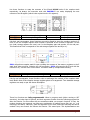
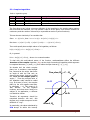
The complex stack uses a dedicated buffer in main memory. It is
created and maintained by the 41Z module and its operation
should be transparent to the user. This buffer is independent
from the real stack (X, Y, Z, and T registers) but it’s important
however to understand how they interact with each other. A
complex number uses two real stack levels (like X and Y), but a
single complex stack level (like Z or W). The figure on the left
shows the relationship between the complex and real stacks,
which is automatically maintained upon function execution, as
we’ll see later on.
The real stack is used to enter the complex number values, real and imaginary parts. The input
sequence varies depending on the method used but all functions will expect the imaginary part in
the Y register and the real part in the X register. More about this later.
The contents of complex and real stack levels are automatically synchronized before and after
each complex operation is performed. This may just involve real levels X,Y and complex level Z if
41Z User Manual Page 5 it’s a monadic (or unary) operation requiring a single complex argument, or may also involve real
levels Z,T and complex level W if it’s a dual operation requiring two complex arguments.
Monadic functions will assume that the real numbers in X,Y are the most-updated values for the
real and imaginary parts of the complex argument. They will overwrite the contents of complex
level Z. This allows quick editing and modification of the complex argument prior to executing the
function.
Dual functions will assume that the second argument is stored in W, that is level 2 of the
complex stack, and will thus ignore the values contained in real stack registers Z,T. Note that
because the real stack overflows when trying to hold more than four different values, it is not a
reliable way to input two complex numbers at once.
The design objective has been to employ as much as possible the same rules and conventions as
for the real number stack, only for complex numbers instead. This has been accomplished in all
aspects of data entering, with the exception of automated complex stack lift: with a few
exceptions, entering two complex numbers into the complex stack requires pressing ZENTER^ to
separate them.
Once again: entering two complex numbers into the complex stack is accomplished by executing
ZENTER^ to separate the first and second complex number. Exceptions to this rule are the other
complex-stack lifting functions, such as GEUZ, ZRCL, ZRPL^, IMAGINE, ^ZIMAG, ^ZREAL,
^IM/AG, and the “Complex Keypad”. Here the left-side symbol “^” (SHIFT-N) represents an
input action.
2.1 Rectangular vs. Polar forms.
The HP-41 sorely lacks a polar vs. Rectangular mode. This limitation is also overcome on the 41Z
module, with the functions POLAR and RECT to switch back and forth between these modes. It
uses an internal flag in the complex buffer, not part of the 41 system flags. The operation is
simplified in that complex numbers are always stored in their rectangular (or Cartesian) form,
z=x+yi. So while all functions expect the argument(s) in rectangular form, yet the results are
shown in the appropriate format as defined by the POLAR or RECT mode. (The notable exception
is ZPOL, which always returns the value in Polar form). Note also that the POLAR mode is directly
affected by the angular mode as well, as it occurs with real argument values.
Note: The POLAR display of the complex number requires an
additional R-P conversion after the result is calculated in
Cartesian form. The Polar form is temporarily stored in the Real
stack registers T,Z – which have no active role in the Complex
Stack and therefore can always be used as scratch. Once again,
no changes are made to either X,Y registers or Complex stack
level Z.
41Z User Manual Page 6 2.2 Data Entry Conventions
And how about complex number entering? Here the world divides in two camps, depending on
whether the sequence is: “Re(z), ENTER^, Im(z)” – like on the HP-42S - , or its reverse: “Im(z),
ENTER^, Re(z)” – like on the HP-32/33S and other FOCAL programs -. With the 41Z module you
can do it either way, but it’s important to remember that regardless of how you introduce the
numbers, all functions expect the imaginary part in the Y real-stack register and the real part in
the X real-stack register.
Fast data entry will typically use the sequence Im(z) , ENTER^, Re(z), followed by the complex
function. This is called the “Direct” data entry, as opposed to the “Natural” data entry, which
would first input the real part. The 41Z module includes the function “^IM/AG” that can be used
to input the number using the “Natural” convention (reversed from the Direct one).
Its usage is the same as the “i”-function on the HP-35s, to separate the real and the imaginary
parts. The sequence is completed by pressing ENTER^ or R/S, after which the imaginary part will
be left in the Y register and the real part in the X register as explained before.
(Incidentally, the 42S implementation of the complex stack isn’t suitable for a true 4-level, since
the COMPLEX function requires two levels prior to making the conversion!)
Other functions and special functionality in the 41Z module can be used as shortcuts to input
purely real or imaginary numbers more efficiently. For instance, to enter the imaginary unit one
need only press: 1, ZIMAG^ (which is also equivalent to executing the IMAGINE function) – or
simply “ZKBRD, Radix, 1” using the “complex keypad”. And to enter 4 as a complex number,
just press: 4, ZREAL^ - or simply “ZKBRD, 4” using the “complex keypad”.
Incidentally, the 42S implementation fails short from delivering a true 4-level stack, due to the
COMPLEX function and the fact that it requires two stack levels to be available to combine the
complex number. In this regard the 41Z solution is a better one.
<==>
Two (opposite) alternatives to data entry: COMPLEX key on the 42S, and ” ï” key on the 35S
41Z User Manual Page 7 3. User interface enhancements.
Table-3.1: Functions to enhance the user interface.
Index
1
2
3
4
5
6
Function
ZK?YN
ZKBRD
ZAVIEW
POLAR
RECT
^IM/AG
Group
Usability
Usability
Display
Display
Display
Usability
Description
Activates and deactivates the Complex Assignments
Accesses most of the 41Z functions plus special features
Views complex number in X,Y
Displays complex numbers in Polar form
Displays complex numbers in Rectangular form
Inputs Imaginary Part (or Argument) of complex number
These functions facilitate the showing of the complex number on the display, and the conversion
between the polar and rectangular forms. They enhance the usability by supplying a system to
handle the lack of native complex number treatment capabilities of the calculator.
3.1 Display mode and conversion functions.
ZAVIEW
Complex number AVIEW
Uses ALPHA registers
Shows the contents of the complex stack level Z in the display, using the current complex display
mode (POLAR or RECT).:
RECT:
POLAR:
Re(z) + J Im(z) ; where Re(z) is stored in register X and Im(z) in register Y.
Mod(z) <| Arg(z); shown but not stored in the X,Y stack registers (!)
Note that ZAVIEW uses the ALPHA register, thus the previous contents of the M, N and O
registers will be lost.
The displaying will respect the current DEG, RAD, or GRAD angular mode (in POLAR form), the
current FIX, SCI or ENG settings, as well as the number of decimal places selected on the
calculator. Note that “J” precedes the imaginary part, as this improves legibility with real-life
complex numbers, with decimal imaginary parts.
For a simplified visualization, ZAVIEW won’t show decimal zeroes if the number is an
integer. This is done automatically regardless of the number of decimal places selected in the
calculator; so one can immediately tell whether the real or imaginary parts are true integers as
opposed to having some decimal content hidden in the least significant places not shown.
versus:
ZAVIEW will extract common factor if both the real and imaginary parts are equal:
or also:
Executing the functions POLAR and RECT will also display the complex number currently stored in
X,Y
41Z User Manual Page 8 POLAR
RECT
ZPOL
ZREC
Sets POLAR mode on
Sets RECT mode on
Convert to Polar
Convert to Rectangular
Displays number
Displays number
Converts X,Y to POLAR
Converts X,Y to RECT
Shows in SET mode
Shows in SET mode
Always shows in POLAR
Shows in SET mode
ZPOL Converts the complex number in the Z stack level from rectangular to polar mode. If
executed in run mode, the display shows the value of its magnitude (its module) and its argument,
as follows:
Mod < Arg ; where:
Mod = |z| and Arg=α
[z = |z|* e^iα ]
The argument value will be expressed in the angular settings currently selected: DEG, RAD, or
GRAD.
equals
or also
ZREC is the reciprocal function, and will convert the complex number in Z (assumed to be in polar
form) to rectangular form, showing it on the display (in run mode) in identical manner as
ZAVIEW.
In fact, if it weren’t because of the displaying capabilities, these two functions will be identical to
the pair R-P and P-R, standard on the calculator. Recognizing this, they’re assigned to the very
same position as their real counterparts on the Complex User keyboard.
Notice that contrary to the POLAR and RECT functions (which only display the values), ZPOL
and ZREC perform the actual conversion of the values and store them in the stack registers
(complex and real). This is also very useful to enter complex numbers directly in polar form,
simply using the sequence: (direct data entry: Angle first, then modulus):
-
Arg(z), ENTER^, |z|, ZREC
-> Re(z) + J Im(z)
3.2 Complex Natural Data Entry.
This function belongs to its own category, as an automated way to input a complex number using
the “Natural” data entry convention: Real part first, Imaginary part next. Its major advantage
(besides allowing the natural data entry sequence) is that it performs a complex stack lift upon
completion of the data entry, thus there’s no need to use ZENTER^ to input the complex number
into the complex stack. That alone justifies its inclusion on the 41Z module.
^IM/AG _
Inputs Im(z)/Arg(z) Part
Does Stack Lift
Prompting function
The function will prompt for the imaginary part (or the argument if in POLAR mode) of the
complex number being entered. The design mimics that on the HP-35S calculator, and it’s used as
a way to separate the two complex parts during the complex number data entering.
A few important considerations are:
41Z User Manual Page 9 •
•
•
•
•
•
•
•
•
•
•
•
The real part (or module) must be introduced right before calling it, so it’s in X during
the data entry.
The keyboard is redefined to allow for numeric digits, RADIX, CHS and EEX as only alid
keys.
The radix symbol used (comma or dot) is controlled by the user flag 28.
Only one RADIX character will be allowed in the mantissa – and none in the exponent.
Only nine digits will be used for the mantissa, and two in the exponent. ^IM/AG will
not check for that during the input process, but exceeding entries will simply be
ignored.
Only one EEX can exist in the imaginary part - ^IM/AG will check for that.
Only one CHS can be used for the mantissa sign, ^IM/AG will check for that.
Multiple CHS can be used for the exponent sign, but ^IM/AG will apply the arithmetic
rules to determine the final sign as follows: odd number is negative, even number is
positive.
Pressing Back Arrow will remove the last entry, be that a number, Radix, EEX or CHS.
If the entry is the first one it will cancel the process and will discard the real part as
well.
The sequence must be ended by pressing ENTER^ or R/S.
The display cue is different depending on the actual complex mode (RECT or POLAR),
and it’s controlled automatically.
Upon completion, the complex number is pushed into the Z complex stack level, and
placed on the X,Y real stack registers as well following the same 41Z convention: real
part in X and imaginary part in Y. The complex stack is lifted and the real stack is
synchronized accordingly.
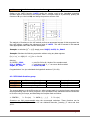
The screens below show usage examples in RECT and POLAR modes:
until finally:
ending as:
Note: To extract the numeric value from the input string, ^IM/AG executes the same code as the
X-function ANUM. All conversion conventions will follow the same ANUM logic. Suffice it to say
that the implementation of ^IM/AG is not absolute perfect and you can trip it up if that’s what
you really want – but it should prevent likely errors that could yield incorrect results. It’s a very
convenient way to meet this need solving the diverse issues associated with its generic character.
If the input string doesn’t yield any sensible numeric result, the message “SYNTAX ERROR” is
briefly shown in the display, and the stack is restored to its status prior to executing ^IM/AG.
will trigger:
Some apparently incorrect syntax constructions will however be properly interpreted by
^IM/AG, returning a valid imaginary part. This is for instance the case with multiple negative
signs in the exponent, or decimal values after negative sign in the mantissa. Such is the
flexibility of the ANUM function!
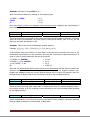
41Z User Manual Page 10 Example: Vector Load addition (taken from the 35s User Guide):We start by setting POLAR and DEG
modes, then using the ^IM/AG
function three times will set the
three complex numbers on the
complex stack, and finally simply
execute the complex addition
function Z+ twice:
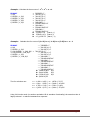
POLAR, DEG
185, ^IM/AG, 62, ENTER^
170, ^IM/AG, 143, R/S
100, ^IM/AG, 261, R/S
Z+, Z+
Result:
Or in Rectangular mode (as it’s saved in XY): RECT
-> 178,9372 <) 111,1489
-> -64,559 + J166,885
Note the following points:
•
•
•
We used indistinctly ENTER^ and R/S to terminate the complex number entry.
No need to store intermediate results as the complex buffer can hold up to four levels.
We didn’t need to use ZENTER^ to push the complex numbers into the complex stack
because the stack-lift was performed by ^IM/AG.
With regard to the data entry sequence, one could have used ZREC instead of ^IM/AG – albeit
in that case it would have been in “direct mode”, as opposed to the more intuitive natural
convention. It also requires pressing ZENTER^ to push each number into the complex stack.
This is the keystroke sequence and partial results (assuming we’re in POLAR mode)
62, ENTER^, 185, ZREC, ZENTER^
143, ENTER^, 170, ZREC, ZENTER^
261, ENTER^, 100, ZREC
Z+, Z+
->
->
->
->
185 <)62
170 <)143
100 <)-99
178,9372 <) 111,1489
One last remark about data displaying vs. data entry.- As it was explained before, ZPOL
will convert the complex number into Polar coordinates, and it will be displayed in POLAR form
even if RECT mode is selected. This is the single one exception all throughout the 41z module,
and it will only work immediately after pressing ZPOL but not for subsequent executions of
ZAVIEW – which always expects the number is stored in rectangular form, and therefore will
show an incorrect expression.
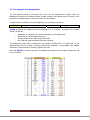
41Z User Manual Page 11 3.3 The Complex User Assignments.
The 41Z module provides a convenient way to do user key assignments in masse. Given the
parallelisms between the real and complex number functions, the natural choice for many of the
functions is “predetermined” to be that of their real counterparts.
A single function is used for the mass-assignment (or de-assignment) action:
ZK?YN
Complex User Assignments
Prompting function
ZK?YN automates the assignment and de-assignment of 37 functions. It prompts for a Yes/No
answer, as follows:
-
Answering “Y” will assign the complex functions to their target keys
Answering “N” will de-assign them, and
Pressing “Back Arrow” will cancel the function.
Any other key input (including ON) will be ignored.
The assignment action will be indicated by the message “Z-KEYS: ON” or “Z-KEYS OFF” in the
display during the time it takes to perform, followed by “PACKING” – and possibly “TRY AGAIN”
should the enough number of memory registers not exist.
Note that ZK?YN is selective: any other key assignment not part of the complex functions set will
not be modified.
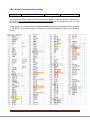
Table 3.3. Complex key assignments done by ZK?YN
41Z User Manual Page 12 3.4 The Complex Keyboard.
As good as the user assignments are to effectively map out many of the 41Z functions, this
method is not free from inconveniences. Perhaps the biggest disadvantage of the Complex
Assignments is that it’s frequently required to toggle the user mode back and forth, depending on
whether it’s a complex or a real (native) function to be executed.
Besides that, the Complex Assignments consume a relative large number of memory registers that
can be needed for other purposes. Lastly, there are numerous 41Z functions not included on the
user assignments map, and no more “logical” keys are available without compromising the
usability of the calculator.
To solve these quibbles, the 41Z module provides an alternative method to access the majority of
the complex functions, plus some unique additional functionality. It’s called the Complex
Keyboard, accessed by the function ZKBRD: a single key assignment unleashes the complete
potential of the module, used as a complex prefix, or in different combinations with the SHIFT
key and with itself.
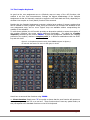
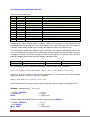
Figure 3.4. Complex Keyboard overlay (with ZKBRD assigned to Sigma+).
On the left: the version for V41. On the right, for i41CX
© 2009 M. Luján García.
Here’s how to access all the functions using ZKBRD:
a.- Direct functions. Simply press “Z” as a prefix to denote that the next function will operate on
a complex argument, and not on a real one. These functions don’t have any special marks, as
they correspond to the standard functions on the HP-41 keyboard.
41Z User Manual Page 13 Examples: Pressing Z, LN will execute ZLN; pressing Z, COS will execute ZCOS, etc…
Pressing Z, + will execute Z+; pressing Z, R/S will execute ZAVIEW,
There are twenty 41Z functions directly accessible like these.
b.- Shifted functions. Press “Z” followed by the SHIFT key. These functions are either marked
in blue when different from the standard SHIFTED ones, or just marked in yellow as part of the
standard HP-41 keyboard (like x=y?, which will execute Z=W? if the pressed key sequence is this:
Z, SHIFT, x=y?
Examples: pressing Z, SHIFT, LN will execute ZEXP; pressing Z, SHIFT, SIN will execute ZASIN,
Pressing Z, SHIFT, R/S will execute ZVIEW (a prompting function itself).
There are thirty-one 41Z functions accessible using this SHIFTED method.
c.- Dual (alternate) functions. Press “Z” twice as a double prefix to access the dual complex
functions and many others. These functions are marked in red, on the right side of each available
key.
Examples: Pressing Z, Z, 7 will execute ZWDET; pressing Z, Z, 5 will execute ZWCROSS, , and
so on with all the “red-labeled” keys.
Pressing Z, Z, ENTER^ will execute ZREPL; pressing Z, Z, Z will execute Z<>U
There are twenty-five 41Z functions accessible using this Dual method.
d.- Multi-value functions. As a particular case of the dual functions case above, the ZNEXT
function group is enabled by pressing “Z” twice and then SHIFT. This group is encircled on the
keyboard overlay, and sets the five multi-value functions as follows: NXTASN, NXTACS,
NXTATN, NXTLN, and NXTNRT (this one will also prompt for the root order, as an integer
number 0-9).
Notice that pressing SHIFT while in the NEXT section toggles the display to “ZBSL”. Use it as a
shortcut to access the different Bessel functions of first and second kind provided in the 41, as
follows: ZJBS, ZIBS, ZKBS, and ZYBS. – as well as EIZ/IZ, a particular case of Spherical
Hankel h1(0,z).
e.- Hyperbolic functions. Press “Z” followed by SHIFT twice to access the three direct
hyperbolics. Pressing SHIFT a third time will add the letter “A” to the function name and will
enable the inverse functions. This action toggles with each subsequent pressing of SHIFT. (Watch
the 41Z building up the function name in the display as you press the keys…)
Example: Pressing Z, SHIFT, SHIFT, SHIFT, SIN will execute ZASINH
f.- Complex Keypads. Press “Z” followed by a numeric key (0 to 9) to enter the corresponding
digit as a complex number in the complex stack. Pressing “Z” followed by the Radix key, and then
the numeric key will input the digit as an imaginary number as opposed to as a real number into
the complex stack. This is a very useful shortcut to quickly input integer real or imaginary values
for complex arithmetic or other operations (like multiplying by 2, etc.)
41Z User Manual Page 14 Pressing Z, XEQ calls the function ^IM/AG for the Natural Data entry. This is obviously not
shown on the keyboard - which has no changes to the key legends for un-shifted functions. Note
that there are three different ways to invoke ^IM/AG, as follows:
XEQ, ALPHA, SHIFT, N, I, M, /, A, G, ALPHA
Z, SHIFT, ENTER^
Z, XEQ
-> the standard HP-41 method, or:
-> shown in blue in the overlay, or:
-> not shown.
Other keystrokes. The 41Z module takes control of the calculator keyboard when ZKBRD is
executed. Available keys are determined by the partial key sequence entered, as defined on the
41Z Keys overlay and as explained above. Pressing USER or ALPHA will have no effect, and
pressing ON at any time will shut the calculator off. The back arrow key plays its usual important
role during data entering, and also undoes the last key pressed during a multi-shifted key
sequence. Try it by yourself and you’ll see it’s actually easier than giving examples on how it
works here.
In summary: a complete new keyboard that is accessed by the “Z” blue prefix key. This being the
only requisite, it’s a near-perfect compromise once you get used to it - but if you don’t like it you
can use the User Assignments , the choice is yours.
The 41Z overlay can be downloaded from the HP-41 archive website, at:
http://www.hp41.org/LibView.cfm?Command=View&ItemID=893
To use it with V41 emulator, replace the original file “large.bmp” in the V41 directory with the 41Z
bitmap file, after renaming it to the same file name.
The figure below shows the main different modes of the ZKBRD function, the real cornerstone of
the 41Z module:
SHIFT
SHIFT
SHIFT
SHIFT
SHIFT
RADIX
ZKBRD
Press the Back-arrow key to bring the command chain back to the starting point (ZKBRD).
Pressing it twice shows “NULL” and cancels out the sequence.
Pressing non-relevant keys (i.e. those not supposed to be included in the corresponding mode)
causes the display to blink, and maintain the same prompt (no action taken).
41Z User Manual Page 15 4. Stack and Memory functions.
Let Z and W be the lower two levels of the complex stack, and z and w two complex numbers
stored in Z and W respectively. Z = Re(z)+ j Im(z); W = Re(w) + j Im(w)
Note the use of “j“ to express the imaginary unit, instead of “i“ . This isn’t done to favor those EE’s
in the audience (you know who we are), but rather due to the displaying limitations of the 41
display: no lower-case letters for either i or j, and better-looking for the last one in caps.
Note also that despite their being used interchangeably, the complex stack register “Z” – in bold
font - and the real stack register “Z” – in regular font - are not the same at all.
Table-4.1: Stack and memory function group.
Index
1
2
3
4
5
6
7
8
9 (*)
10 (*)
11 (*)
12 (*)
13 (*)
14
15
16
17
18
Function
ZTRP
ZENTER^
ZREPL
ZRDN
ZRUP
ZREAL^
ZIMAG^
Z<>W
Z<>ST _ _
ZRCL _ _
ZSTO _ _
Z<> _ _
ZVIEW _ _
CLZ
CLZST
ZREAL
ZIMAG
LASTZ
Name
Re(z)<>Im(z)
Complex ENTER^
Complex Stack Fill
Complex Roll Down
Complex Roll Up
Inputs real Z
Inputs imaginary Z
Complex Z<>W
Complex Z<> level
Complex Recall
Complex Storage
Complex Exchange
Complex Display
Clears Level Z
Clears Complex Stack
Extracts real part
Extracts Imag part
Last number used
Description
Exchanges (transposes) Re and Im for number in level Z.
Enters X,Y into complex level Z, lifts complex stack.
Fills complex stack with value(s) in X,Y
Rolls complex stack down
Rolls complex stack up
Enters value in X as real-part only complex number
Enters value in X as imaginary complex number
Swaps complex levels Z and W
Swaps complex levels Z and any stack level (0-4)
Recalls complex number from memory to level Z
Stores complex number in Z into memory
Exchanges number in level Z and memory
Shows Complex number stored in memory register
Deletes complex level Z
Clears all complex levels U, V, W, and Z
Clears Im(z)
Clears Re(z)
Recovers the last complex number used
(*) Note: These functions are fully programmable. When used in a program their argument is taken
from the next program line, see below for details.
4.1 Stack and memory functions group.
Let’s start with the individual description of these functions in more detail, beginning with the
simplest.
ZTRP
Z Transpose
Does Re <>Im
This function’s very modest goal is to exchange the real and imaginary parts of the complex
number stored in the Z level of the complex stack.
Hardly a worthwhile scope, you’d say, considering that the standard function X<>Y does the same
thing? Indeed it is quite similar (and as such it’s logically assigned to the shifted X<>Y key). But
it’s not quite the same, as in run mode ZTRP also shows on the display the complex number after
transposing their real and imaginary parts. Besides, as it was mentioned in the introduction, this
41Z User Manual Page 16 function may play an important role during data entry: it is the one to use when entering the real
part first, as per the following sequence: Re(z), ENTER^, Im(z), ZTRP
Thus its use is analogous to the “COMPLEX” function on the HP-42S, also required to enter the
complex number in the stack, from its two real components. Note that the other, alternative data
entering sequence doesn’t require using ZTRP, although the order of the real and imaginary parts
is reversed (and arguably less intuitive): Im(z), ENTER^, Re(z). Either one of these two is
entirely adequate once you become familiar with it and get used to using it - it’s your choice.
ZENTER^
ZRPL^
Enters X,Y into levels Z, W
Fills complex stack
Does Stack lift
ZENTER^ enters the values in X,Y as a complex number in the Z stack level, and performs stack
lift (thus duplicates Z into W as well – and U is lost due to the complex stack spill-over). As said
in the introduction, always use ZENTER^ to perform stack lift when entering two (or more)
complex numbers into the complex stack. This is required for the correct operation of dual
complex functions, like Z+, or when doing chain calculations using the complex stack (which,
unlike the real XYZT real stack, it does NOT have an automated stack lift triggered by the
introduction of a new real number).
ZREPL simply fills the complex stack with the values in the real registers X,Y. This is convenient in
chained calculations (like the Horner method for polynomial evaluation). If executed in run mode it
also displays the number in Z. This is in fact a common characteristic of all the functions in the
41Z module, built so to provide visual feedback of the action performed.
ZREAL^
ZIMAG^
Enters X in Z as (x+j0)
Enters X in Z as (0+jX)
Does Stack Lift
Does Stack Lift
These functions enter the value in X either as a purely real or purely imaginary number in complex
form in the Z stack level, and perform stack lift. If executed in run mode it also displays the
number in Z upon completion.
Z<>ST (*)
Z<>V
Z<>W
Exchanges Z and Stack
Exchanges Z and V
Exchanges Z and W
Level# = 0,1,2,3,4
Prompting function
(*) Fully programmable, see note in previous page.
41Z User Manual Page 17 Use these functions to swap the contents of the Z and U/V/W levels of the complex stack
respectively. As always, the execution ends with ZAVIEW in run mode, displaying the new
contents of the Z register.(which is also copied into the XY registers).
ZRCL _ _
ZSTO _ _
Recall from Complex Register
Store in Complex Register
Does Stack lift
Prompting function
Prompting function
Like their real counterparts, these functions are used to Recall or store the complex number in Z
from or into the complex register which number is specified as the function’s argument. In fact
two (real) storage registers are used, one for the imaginary part and another for the real part.
This means that CRnn corresponds to the real storage registers Rnn and R(nn+1).
ZRCL will perform complex stack lift upon recalling the contents of the memory registers to the Z
stack level. Also note that, following the 41Z convention, ZSTO will overwrite the Z level with the
contents of X,Y if these were not the same. This allows walk-up complex data entering.
ZVIEW _ _
Z<> _ _
Displays Complex Register value
Exchanges Z and complex register
Prompting function
Prompting function
Like its real counterparts, these functions view or exchange the content of the complex stack
level Z with that of the complex storage register given as its argument. Two standard storage
registers are used, as per the above description.
These four functions are fully programmable. When in program mode (either running or SST
execution), the index input is ignored, and their argument is taken from the following program line
after the function. For this reason they are sometimes called non-merged functions. In fact, the
number denoting the argument can have any combination of leading zeroes (like 001, 01, 1 all
resulting in the same). Moreover, when the argument is zero then such index following line can be
omitted if any non-numeric line follows the function. This saves bytes. This implementation was
41Z User Manual Page 18 written by W. Doug Wilder, and it is even more convenient than the one used by the HEPAX
module for its own multi-function groups.
Similar to the real counterparts, keys on the first two rows can be used as shortcut for indexes
1-9. Note that indirect addressing is also supported (say ZRCL IND _ _) pressing the
SHIFT key - in RUN mode only (i.e. not programmatically). In program mode you can make use
of the fact that the indirect addressing is nothing more that adding 128 to the address,
thus it can be handled by simply adding such factor to the index in the second program line.
Also note that despite being possible to invoke, their logic doesn’t support the use of the stack
registers. (ZRCL ST _); and certainly neither the combination of both, indirect and stack
addressing (ZRCL IND ST _ _). If you use these, unpredicted (and wrong) results will occur. The
same can be said if you press the arithmetic keys (+, -, *, /): simply don’t.
Lastly, a NONEXISTENT message will be shown if the storage register is not available in main
memory. Registers can be made available using the SIZE function of the calculator.
ZRDN
ZRUP
Rolls complex stack down
Rolls complex stack up
Like their real stack counterparts, these functions will roll the complex stack down or up
respectively. If executed in run mode it also displays the number in Z. Real stack registers will be
synchronized accordingly.
Be aware that although ZRDN and ZRUP do not perform stack lift, they update the Z complex
register with the values present in X,Y upon the function execution. This behavior is common
across all 41Z functions.
CLZ
CLZST
ZREAL
ZIMAG
Clears complex stack level Z
Clears complete complex stack
Extracts Real part from Z
Extracts Imaginary part from Z
Use these four functions to partially or completely clear (delete) the contents of the complex stack
Z level, or the complete complex stack. No frills, no caveats. The real stack will also be cleared
appropriately.
41Z User Manual Page 19 LASTZ
Recalls last number used to Z
Does Stack Lift
Similar to the LASTX function, LASTZ recalls the number used in the immediate preceding
operation back to the Z level of the complex stack. A complex stack lift is performed, pushing the
contents of Z up to the level W, and losing the previous content of U.
The majority of functions on the 41Z module perform an automated storage of their argument into
the LastZ register, enabling the subsequent using of LASTZ. This will be notated in this manual
when appropriate under each function description.
Example: to calculate [(z2 + z)/2] simply press: ZSQRT, LASTZ, Z+, ZHALF
Example: Calculate the following expression without using any data registers:
F(z) = Ln [ z + SQR(z^2 + 1)], for z= 20+20i
Solution:
20, ENTER^, ZRPL
Z^2, 1, ZREAL^, Z+
ZSQRT, Z+, ZLN
-> puts 20+20i in all 4 levels of the complex stack
-> could have used “1, +” as a more direct method
-> 4,035+J0,785
Congratulations! You just calculated the hyperbolic arcsine of (20+20i).
4.2. ZSTO Math function group.
ZST+ _ _
ZST- _ _
ZST* _ _
ZST/_ _
Recall from Complex Register
Store in Complex Register
Recall from Complex Register
Store in Complex Register
Prompting
Prompting
Prompting
Prompting
function
function
function
function
The newest addition to the 41Z function set.- allow storage math in a concise format, saving bytes
and programming steps in FOCAL programs. Their equivalence with standard functions would have
to be done using four steps, and disturbing the Complex Stack as follows:
1.- ZENTER^,
2.- Z<>(nn)
3.- MATH (+, -, *, /)
3.- Z<>(nn)
Functions are fully programmable using the non-merged technique. These functions can be
accessed using the Z-keyboard from its own dedicated launcher, pressing „Z“ twice and then
„STO“.
41Z User Manual Page 20 5. Complex Math.
Complex numbers are much more than a simple extension of the real numbers into two
dimensions. The Complex Plane is a mathematical domain with well-defined, own properties and
singularities, and it isn’t in the scope of this manual to treat all its fundamental properties. On
occasions there will be a short discussion for a few functions (notably the logarithms!), and some
analogies will be made to their geometric equivalences, but it is assumed throughout this manual
that the user has a good understanding of complex numbers and their properties.
5.1. Arithmetic and Simple Math.
Table-5.1:- Arithmetic functions.
Index
1
2
3
4
5a
5b
6
7
8
9
10
11
Function
Z+
ZZ*
Z/
ZINV
1/Z
ZDBL
ZHALF
ZRND
ZINT
ZFRC
ZPIX
Formula
Z=w+z
Z=w-z
Z=w*z
Z=w/z
Z=1/z
Z=1/r e^(-iArg)
z=2*z
z= z/2
Z=rounded(z)
Z=Int(z)
Z=Frc(z)
Z=zπ
Description
Complex addition
Complex subtraction
Complex multiplication
Complex division
Complex inversion, direct formula
Complex inversion, uses TOPOL
Doubles the complex number
Halves the complex number
Rounds Z to display settings precision
Takes integer part for Re(z) and Im(z)
Takes fractional part for Re(z) and Im(z)
Simple multiplication by pi
Here’s a description of the individual functions within this group.
Z+
ZZ*
Z/
Complex addition
Complex subtraction
Complex multiplication
Complex division
Z=w+z
Z=w-z
Z=w*z
Z=w/z
Does
Does
Does
Does
LastZ
LastZ
LastZ
LastZ
Complex arithmetic using the RPN scheme, with the first number stored in the W stack level and
the second in the Z stack level. The result is stored in the Z level, the complex stack drops
(duplicating U into V), and the previous contents of Z is saved in the LastZ register.
ZINV
1/Z
Direct Complex inversion
Uses POLAR conversion
Z=1/z
Z=1/r e^(-iArg)
Does LastZ
Does LastZ
Calculates the reciprocal of the complex number stored in Z. The result is saved in Z and the
original argument saved in the LastZ register. Of these two the direct method is faster and of
comparable accuracy – thus it’s the preferred one, as well as the one used as subroutine for other
functions.
This function would be equivalent to a particular case of Z/, where w=1+0j, and not using the
stack level W. Note however that Z/ implementation is not based on the ZINV algorithm [that is,
making use of the fact that : w/z = w * (1/z)], but based directly on the real and imaginary parts
of both arguments.
41Z User Manual Page 21 Example. Calculate z/z using ZINV for z=i
We’ll use the direct data entry, starting w/ the imaginary part:
1, ENTER^, 0, ZINV
LASTZ
Z*
-> 0-j1
-> 0+j1
-> 1+j0
Note that integer numbers are displayed without decimal zeroes, simplifying the visual display of
the complex numbers.
ZDBL
ZHALF
Doubles Z
Halves Z
Z=2*z
Z=z/2
Does LastZ
Does LastZ
These two functions are provided to save stack level usage and programming efficiency. The same
result can also be accomplished using their generic forms (like Z* and Z/, with w=2+0j), but the
shortcuts are faster and simpler to use.
Example. Taken from the HP-41 Advantage manual, page 97.
Calculate: z1/(z2+z3); for: z1=(23+13i;) z2=(-2+i), and z3=(4-3i)
If the complex stack were limited to 2 levels deep, we would need to calculate the inverse of the
denominator and multiply it by the numerator, but using the 4-level deep complex stack there’s no
need to resort to that workaround. We can do as follows:
13, ENTER, 23, ZENTER^
1, ENTER^, 2, CHS, ZENTER^
3, CHS, ENTER^, 4, Z+
Z/
->
->
->
->
23+j13
-2+j1
2(1-j)
2,500+j9
Note that 41Z automatically takes common factor when appropriate, and that integer numbers are
displayed without decimal zeroes to simplify the visuals display of the complex numbers. Nonintegers are displayed using the current decimal settings, but of course full precision (that is 9
decimal places) is always used for the calculations (except in the rounding functions).
ZRND
ZINT
ZFRC
Rounds Complex number
Takes integer parts
Takes Fractional parts
Z=Rounded(z)
Z=Int[Re(z)+jInt[Im(z)
Z=Frc[Re(z)+jFrc[Im(z)
Does LastZ
Does LastZ
Does LastZ
These functions will round, take integer part or fractional part both the real and imaginary parts of
the complex number in Z. The rounding is done according to the current decimal places specified
by the display settings.
ZPIX
Multiplies by pi
Z=π*z
Does LastZ
Simple multiplication by pi, used as a shortcut in the Bessel FOCAL programs. Has better accuracy
than the FOCAL method, as it used internal 13-digit math.
41Z User Manual Page 22 5.2. Exponential and powers that be.
Table-5.2: Exponential group.
Index
1a
1b
2
3a
3b
4
5
6
7
8
9
10
11
Function
ZEXP
e^Z
Z^2
ZSQRT
SQRTZ
W^Z
W^1/Z
X^Z
X^1/Z
Z^X
Z^1/X
ZALOG
NXTRTN
Formula
Z=REC(e^x, y)
See below
Z=REC(r^2, 2α)
Algebraic Formula
Z=REC(r^1/2, α/2)
Z=e^z*Ln(w)
Z=e^1/z*Ln(w)
Z=e^z*Ln(x)
Z=e^z*Ln(x)
Z=e^x*Ln(z)
Z=e^1/x*Ln(z)
Z=e^z*Ln(10)
Z=z*e^j 2π/N
Description
Complex exponential (method one)
Complex Exponential (method two)
Complex square
Principal value of complex square root
Principal value of complex square root
Complex to complex Power
Complex to reciprocal complex Power
Real to complex power
Real to reciprocal complex power
Complex to real Power
Complex to reciprocal real Power
Complex decimal power
Next value of complex nth. Root
Looking at the above formula table it’s easy to realize the importance of the exponential and
logarithmic functions, as they are used to derive many of the other functions in the 41Z module. It
is therefore important to define them properly and implement them in an efficient way.
The 41Z module includes two different ways to calculate the complex exponential function. The
first one is based on the trigonometric expressions, and the second one uses the built-in polar to
rectangular routines, which have enough precision in the majority of practical cases. The first
method is slightly more precise but takes longer computation time.
ZEXP
e^Z
Complex Exponential
Complex Exponential
Z=REC(e^x, y)
Trigonometric
Does LastZ
Does LastZ
One could have used the rectangular expressions to calculate the result, as follows:
e^z = e^x * (cos y + i sin y), thus: Re(z) = e^(x) * cos y ; and: Im(z) = e^(x) * sin y
and this is how the function e^Z has been programmed. It is however more efficient (albeit
slightly less precise) to work in polar form, as follows:
since z= x+iy, then e^z = e^(x+iy) = e^x * e^iy,
and to calculate the final result we only need to convert the above number to rectangular form.
Example.- Calculate exp(z-2), for z=(1+i)
1, ENTER^, ZENTER^
2, CHS, Z^X
ZEXP
-> 1(1+j)
-> 0-j0,500
-> 0,878-j0,479
Another method using W^Z and the complex keypad function (ZREAL^):
1, ENTER^, ZENTER^
2, CHS, ZREAL^
W^Z, ZEXP
41Z User Manual -> 1(1+j)
-> -2+j0
-> 0,878-j0,479
Page 23 or alternatively, this shorter and more efficient way: (leaves W undisturbed)
1, ENTER^, Z^2, ZINV, ZEXP
-> 0,878-j0,479
Note how this last method doesn’t require using ZENTER^ to terminate the data input sequence,
as the execution of monadic functions will automatically synchronize the complex stack level Z
with the contents of the real X,Y registers.
Z^2
ZSQRT
SQRTZ
Complex square
Complex square root
Complex square root
Z=REC(r^2, 2α)
Algebraic Formula
Z=REC(r^1/2, α/2)
Does LastZ
Does LastZ
Does LastZ
Two particular cases also where working in polar form yields more effective handling. Consider
that:
Z^2 = |z|^2 * e^2iα, and:
Sqrt(z) = z^1/2 = Sqrt(|z|) * e^iα, where α=Arg(z),
It is then simpler first converting the complex number to its polar form, and then apply the
individual operations upon its constituents, followed by a final conversion back to the rectangular
form.
Note that this implementation of ZSQRT only offers one of the two existing values for the square
root of a given complex number. The other value is easily obtained as its opposite, thus the sum
of both square roots is always zero.
Such isn’t exclusive to complex arguments, for the same occurs in the real domain - where there
are always 2 values, x1 and –x1, that satisfy the equation SQRT[(x1)^2].
As with other multi-valued functions, the returned value is called the principal value of the
function. See section 6 ahead for a more extensive treatment of this problem.
W^Z
W^1/Z
Complex to complex Power
Complex to reciprocal Power
Z=e^[z*Ln(w)]
Z=e^[Ln(w)/z]
Does LastZ
Does LastZ
The most generic form of all power functions, calculated using the expressions:
w^z = exp[z*Ln(w)], and
w^1/z = exp[Ln(w) / z]
The second function is a more convenient way to handle the reciprocal power, but it’s obviously
identical to the combination ZINV, W^Z.
Example: calculate the inverse of the complex number 1+2i using W^Z:- Then obtain its
reciprocal using ZINV to verify the calculations.
2, ENTER^, 1, ZENTER^
0, ENTER^, -1
W^Z
ZINV
41Z User Manual number stored in level W (also as: 1, ENTER^, 2, ZTRP)
exponent –1 stored in level Z (also as: -1, ENTER^, 0, ZTRP)
result: 0,200-j0,400
result: 1,000+j2
Page 24 Note that the final result isn’t exact – as the decimal zeroes in the real part indicate there’s a loss
of precision in the calculations.
Z^X
Z^1/X
X^Z
X^1/Z
ZALOG
Complex to real power
Complex to reciprocal real
Real to complex power
Real to reciprocal complex
10 to complex power
Z=e^[x*Ln(z)]
Z=e^[Ln(z)/x]
Z=e^[z*Ln(x)]
Z=e^[1/z*Ln(x)]
Z=e^[z*Ln(10)]
Does
Does
Does
Does
Does
LastZ
LastZ
LastZ
LastZ
LastZ
These five functions are calculated as particular examples of the generic case W^Z. Their
advantage is a faster data entry (not requiring inputting the zero value) and a better accuracy in
the results
Z^1/X is identical to: 1/X, Z^X
X^1/Z is identical to: RDN, ZINV, R^, X^Z
Data entry is different for hybrid functions, with mixed complex and real arguments. As a rule, the
second argument is stored into its corresponding stack register, as follows:
-
x into the real stack register X for Z^X and Z^1/X
z into the complex stack register Z for X^Z and X^1/Z
The first argument needs to be input first, since this is an RPN implementation.
Because ZALOG is a monadic function, it expects z in the stack level Z, and thus it doesn’t disturb
the complex stack.
Example: Calculate (1+2i)^3 and 3^(1+2i)
2, ENTER^, 1, ZENTER^, 3, Z^X
2, ENTER^, 1, ZENTER^, 3, X^Z
results: (1+2i)^3 = -11-2 j
results: 3^(1+2i) = 1+0 j
Example: Verify the powers of the imaginary unit, as per the picture below.- You can use either
Z^X, with z=(0+i) and x=1,2,3,4,5; or alternatively W^Z, with w=(0+i) and z=(1+0i), (2+0i),
(3+0i), etc.
This keystroke sequence will quickly address the even powers:
0, ENTER^, 1, ZTRP
Z^2
Z^2
41Z User Manual -> 0 + j1
-> -1 + j0
-> 1 + J0
i
i2 = -1
i4 = 1
Page 25 Whilst this will take care of the rest (and also in general):
0, ENTER^, 1, ZTRP
3, Z^X
LASTZ
5, Z^X
->
->
->
->
0
0
0
0
+ j1
- j1
+ j1
+ j1
i
i3 = -i
i5 = i
(Note in this example that for enhanced usability Z^X stores the original argument in the LastZ
register, even though it wasn’t strictly located in the Z level of the complex stack. The same
behavior is implemented in X^Z.)
Alternatively, using W^Z and ZREPL:
1, ENTER^,
0, ENTER^,
ZRND
0, ENTER^,
ZRND
0, ENTER^,
ZRND
0, ENTER^,
0, ZREPL
2, W^Z
3, W^Z
4, W^Z
5, W^Z
->
->
->
->
->
->
->
->
0 + j1
-1 + j0
0 + j1
0 - j1
0 + j1
1 + j0
0 + j1
0 + j1
i
i2 = -1
i
i3 = -i
i
i4 = 1
i
i5 = i
Examples.- Calculate the value of z = 2^1/(1+i), and z=(1+i)^1/2
These two have a very similar key sequence, but they have different meaning:
Solution: 1, ENTER^, ENTER^, 2, X^1/Z
Solution: 1, ENTER^, ENTER^, 2, Z^1/X
NXTNRT
-> 1,330 – J0,480
-> 1,099 + j0,455
Next value of Nth. Root
Z=z0*e^j 2π/N
z0 is the principal value
In its general form, the solution to the Nth. root in the complex plane admits multiple solutions.
This is because of its logarithmic nature, since the logarithm is a multi-valued function (see
discussion in next section).
Z^1/N = e^[Ln(z)/N] = e^[Ln(|z|)+i(α+2π)]/N = e^[Ln(|z|)+iα]/N * e^j 2π/N
From this we derive the general expression:
Next(z^1/N) = z^1/N * e^(j 2 π /N)
thus there are N different Nth. roots, all separated by (2π over N). See the geometric
interpretation on section 7 ahead for further discussion on this.
When executed in a program or RUN mode, data entry for this function expects N in the X
register, and z in the Z complex stack level. However when the Complex Keyboard shortcut is
used, the index N is prompted as part of the entry sequence – a much more convenient way.
Shortcut: Z, Z, SHIFT, SQRT
41Z User Manual Page 26 Example:- Calculate the two square roots of 1.
0, ENTER^, 1, ZENTER^, 2, Z^1/X
2, NXTNRT ( plus ZRND)
-> 1+j0
-> -1+j0
Note that the previous root is temporarily stored in the LastZ register:
LASTZ
-> 1+j0 (previous root)
See section 9 for a general application program to calculate the n different Nth. Roots of a
complex number
Example.- Calculate the three cubic roots of 8.
Using “direct” data entering: [Im(z), ENTER^, Re(z)]
0, ENTER^, 8, ZENTER^, 3, Z^1/X
3, NXTNRT
3, NXTNRT
-> 2+j0
-> -1,000+j1,732
-> -1,000-j1,732
Note: for this example use the Complex Keyboard ZKBRD to execute NXTNRT, as follows:
Z, Z, SHIFT, SQRT, and then input 3 at the last prompt.
Example: Calculate both quadratic roots of 1+2i.
2, ENTER^, 1, ZSQRT
2, NXTNRT
2, NXTNRT
gives the first root:
z= 1,272+0,786 j
gives the second root: z=-1,272-0,786 j
reverts to the first, principal value, of the root.
This verifies that both roots are in fact on the same straight line, separated 180 degrees from each
other and with the same module.
Example: Calculate the three cubic roots of 1+2i.
2,
3,
3,
3,
ENTER^, 1, ZENTER^
1/X, Z^X
NXTNRT
NXTNRT
inputs z in the complex stack level Z
gives the main root:
z= 1,220+0,472 j
gives the second root: z=-1,018+0,82 j
give the third and last: z=-0,201-1,292 j
In the next section we’ll discuss the logarithm in the complex plane, a very insightful and indeed
interesting case study of the multi-valued functions.
41Z User Manual Page 27 5.3. Complex Logarithm.
Table-x: Logarithm group.
Index
1
2
3
4
Function
ZLN
ZLOG
ZWLOG
NXTLN
Formula
Z=Ln|z|+iα
Z=Ln(z)/Ln10
Z=Ln(z)/Ln(w)
Z=z+2π j
Description
Principal value of natural logarithm
Principal value of decimal logarithm
Base-w logarithm of z
Next value of natural logarithm
The first thing to say is that a rigorous definition of the logarithm in the complex plane requires
that its domain be restricted, for if we defined it valid in all the plane, such function wouldn’t be
continuous, and thus neither holomorfic (or expressible as series of power functions).
This can be seen intuitively if we consider that:
Since: z = |z|*e^iα, then: Ln z = Ln |z| + Ln (e^iα) = Ln(|z|) + iα
But since z = |z|*e^i (α+2π) = |z|*e^i (α+4π)=…. = |z|*e^i (α+2π n)
Then we’d equally have multiple values of its logarithm, as follows:
Ln(z) = Ln(|z|) + iα = Ln(|z|)+i (α+2πn) = ….
Or, in general:
LN z = Ln(|z|)+i (α+2π n), where n is a natural number.
To deal with this multi-valued nature of the function, mathematicians define the different
branches of the complex logarithm, (logγ) as the single one and only logarithm which argument
is comprised between (γ-π) and (γ+π), thus within the open interval ]( γ-π), (γ+π)[
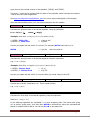
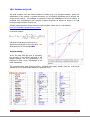
Its domain isn’t the whole complex
plane, but it excludes a semi-straight
line, centered at the origin, that forms
an angle & with the real axis, as
shown in the picture. Such set is called
the “torn” or cut complex plane at
angle γ”. Thus the principal value of
the logarithm really should be called
Log0, as it tears (or cuts) the complex
plane by the real negative semi-axis,
or otherwise γ =0. This means it is
NOT defined
for any negative
numbers, and when those need to be
subject of its application, a different
cut should be chosen.
Therefore all arguments should be
comprised between 180 and –180
degrees, as it would correspond to this
definition of “Log0”.
In practicality, the values calculated by
ZLN always lie within this interval,
41Z User Manual Torn plane, D& = C – H&
&
&+Pi
&-Pi
Branch, H&
Page 28 since they use the internal routines of the calculator, [TOPOL] and [TOREC].
The angle γ should not be confused with the base of the logarithm, which is always the number e
–that is, there are natural logarithms.
(See http://en.wikipedia.org/wiki/Branch_point for a more rigorous description of this subject).
After this theoretical discussion, let’s see the functions from the 41Z module:ZLN
Natural logarithm
Z=Ln|z|+iα
Does LastZ
Calculates the principal value of the natural logarithm, using the expression:
Ln z = Ln|z| + iα,
where α = Arg(z)
Example: check that: z=Ln(e^z), for z=(1+i) and z=(2+4i)
1, ENTER^, ZEXP, ZLN
4, ENTER^, 2, ZEXP, ZLN
-> 1,000+j1,000
-> 2-j2,283
How do you explain the last result? Is it correct? Try executing NXTLN (see below) on it…
NXTLN
ZLOG
-> 2+j4,000
Decimal logarithm
- that’s more like it!
Z=Ln(z)/Ln10
Does LastZ
Calculates the principal value of the decimal logarithm using the expression:
Log z = Ln z / Ln(10)
Example: check that: z=Log(10^z), for z=(1+i) and z=(2+4i)
1, ENTER^, ZALOG, ZLOG
4, ENTER^, 2, ZALOG, ZLOG
-> 1(1+j)
-> 2+j1,271
How do you explain the last result? Is it correct? Have you found a bug on the 41Z?
ZWLOG
Base-W Logarithm
Z=Ln(z)/Ln(w)
Does LastZ
General case of ZLOG, which has w=10. This is a dual function,
Log z = Ln z / Ln w
NXTLN
Next Natural logarithm
Z=z0+2π j
z0 is the principal value
Calculates the next value of the natural logarithm, using the expression:
Next(Ln z) = Ln(z) + 2π j
So the different logarithms are “separated” 2π in their imaginary parts. This works both “going
up” as well as “going down”, thus each time NXTLN is executed two values are calculated and
placed in complex levels Z and W. You can use Z<>W to see them both.
41Z User Manual Page 29 6. Complex geometry.
The next set of functions admits a geometrical interpretation for their results. Perhaps one of the
earliest ways to approach the complex numbers was with the analogy where the real and
imaginary parts are equivalent to the two coordinates in a geometric plane.
Table-6.1: Complex geometric group.
Index
1
2
3a
3b
4
5
6
7
8
Function
ZMOD
ZARG
ZNEG
ZCHSX
ZCONJ
ZSIGN
ZNORM
Z*I
Z/I
Formula
|z|=SQR(x^2+y^2)
α =ATAN(y/x)
Z=-z
Z=(-1)^x * z
Z=x-y j
Z=z/|z|
Z=|z|^2
Z=z*i
Z=z/i
Description
Module or magnitude of a complex number
Phase or angle of a complex number
Opposite of a complex number
Opposite (by X) of a complex number
Conjugated of a complex number
Sign of a complex number
Norm of a complex number
Rotates z 90 degrees counter clockwise
Rotates z 90 degrees clockwise
In fact, various complex operations admit a geometrical interpretation. An excellent reference
source for this can be found at the following URL: http://www.clarku.edu/~djoyce/complex.
Let’s see the functions in detail.
ZMOD
ZARG
Module of z
Argument of z
|z|=SQR(x^2+y^2)
α=ATAN(y/x)
Does LastZ
Does LastZ
This pair of functions calculates the module (or magnitude) and the argument (or angle) of a
complex number, given by the well-known expressions:
|z| = SQR( x2 + y2 )
α = ATAN( y/x)
Since they use the internal [TOPOL] routine (like R-P does), the argument will always be given
between 180 and –180 degrees (or equivalent in the selected angular mode).
The result is saved in the complex Z register, and the real X,Y stack levels – as a complex number
with zero imaginary part. The original complex number is stored in the LastZ register. The other
complex stack levels W, V, U aren’t disturbed.
These functions display a meaningful description when used in run mode, as can be seen in the
pictures below, for z= 5+4 j and RAD mode.
ZNEG
ZCHSX
ZCONJ
Opposite of z
Opposite of z by X
Conjugate of z
41Z User Manual Z=-z
Z=(-1)^x * z
Z=x-y j
Does LastZ
Does LastZ
Does LastZ
Page 30 This pair of functions calculate the opposite- or the multiple-opposite by (-1)^x - and the
conjugate of a complex number z=x+y i, as follows:
-z = -x –y I, and
z* = x – y I
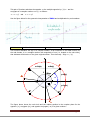
See the figure below for the geometric interpretation of ZNEG and multiplication by real numbers:
ZSIGN
Module of z
Z=z/|z|
Does LastZ
This function calculates the sign of a complex number. As an extension to the SIGN function for
the real domain, it is a complex number with magnitude of one (i.e. located on the unit circle),
that indicates the direction of the given original number. Thus obviously: Zsign = z / |z|
x=-Re(z)
Z
x=Re(z)
-Z
i
Zsign
y=Im(z)
Z2
α
1/Z
-1
1
−α
y=-Im(z)
-i
-Z
Z
Z3
The figure above shows the unit circle and the relative position in the complex plane for the
opposite (-z), conjugate (zc), and opposite conjugate (-zc) of a given number z.
41Z User Manual Page 31 Note that the inverse of z (1/z) will be located inside of the unit circle, and over the direction
defined by the negative of its argument [-Arg(z)]
Note that if z happens to be a cubic root of another number (i.e. z3), then the other two roots (z2
and z3) will have the same module and be located at 120 degrees from each other, on the red
circle line.
ZNORM
Norm of z
||Z||=|z|^2
Does LastZ
This function calculates the norm of a complex number, also known as the square of its module”
||z|| = |z|2 ; thus: Znorm = x2 + y2
When executed in run mode, the display shows a meaningful representation for it, like in the
example below, also for z = 4 + 5 j :
Z*I
Z/I
Multiply by i
Divide by i
Z=z*i
Z=z/i
Rotates z 90 deg ccw
Rotates z 90 deg cw
The main role of these two functions is as subroutines for the trigonometric set, and they are also
provided for completion sake. Their geometric interpretation is a 90 degrees rotation of the
complex number either clockwise or counter-clockwise respectively.
6.2 Complex Comparisons.
The 41Z module includes a comprehensive set of comparison checks, based on the complex
numbers themselves and their modules (for relative position in the complex plane). Checks for
purely real or imaginary cases are also provided. The main utilization for these functions is in
program mode, as conditional decisions under program control based on the different values.
Table 6.2. Complex comparisons function group.
Index
1
2
3
4
5
6
7
8
9
10
11
12
Function
Z=0?
Z#0?
Z=I?
Z=W?
Z=WR?
Z#W?
ZUNIT?
ZIN?
ZOUT?
ZREAL?
ZIMAG?
ZINT?
41Z User Manual Formula
Is z=0?
Is z#0?
Is z=i?
Is z=w?
Is z=w rounded?
Is z#w?
Is |z|=1?
Is |z|<1?
Is |z|>1?
Is z a real number?
Is z true imaginary?
Is z true integer?
Description
Checks if z is zero
Checks if z is not zero
Checks if z is the imaginary unit
Checks if z and w are the same
Checks if rounded z and rounded w are the same
Checks if z and w are different
Checks if z is on the unit circle
Checks whether z is inside the unit circle
Checks whether z is outside the unit circle
Checks whether Im(z)=0
Checks whether Re(z)=0
Checks whether Im(z)=0 and FRC[Re(z)]=0
Page 32 It’s well know that, contrary to real numbers, the complex plane isn’t an ordered domain. Thus we
can’t establish ordered relationships between two complex numbers like they are done with real
ones (like x>y, x<y?, etc.).
There are however a few important cases that can also be used with complex numbers, as defined
by the following functions.- As it is standard, they respond to the “do if true” logic, skipping the
next program line when false.
Z=W?
Z#W?
Z=WR?
Z=0?
Z#0?
Z=I?
Compares z with w
Compares z with w
Compares z with w rounded
Compares z with zero
Compares z with zero
Compares z with i
Are
Are
Are
Are
Are
Are
they
they
they
they
they
they
equal?
different?
equal?
equal?
different?
equal?
The first two functions compare the contents of the Z and W stack levels, checking for equal
values of both the real and imaginary parts.
z=w iff Re(z)=Re(w) and Im(z)=Im(w)
The third function, Z=WR? will establish the comparison on the rounded values of the four real
numbers, according to the current display settings on the calculator (i.e. number of decimal places
shown). This is useful when programming iterative calculations involving conditional decisions.
Rnd(z) = Rnd(w) iff rnd[Re(z)]=rnd[Re(w)] and rnd(Im(z)] = rnd[Im(w)]
The remaining three functions on the table are particular applications of the general cases,
checking whether the Z complex stack level contains zero or the imaginary unit:
z=0 iff Re(z)=0 and Im(z)=0
z=i iff Re(z)=0 and Im(z)=1
Some of the inverse comparisons can be made by using standard functions, as follows:
-
use X#0? to check for Z#0? condition
Use X#0? to check for Z#I? Condition
ZUNIT?
ZIN?
ZOUT?
Checks if z is on the unit circle
Checks if |z|<1
Checks if |z|>1
These three functions base the comparison on the actual location of the complex number referred
to the unit circle: inside of it, on it, or outside of it. The comparison is done using the number’s
modulus, as a measure of the distance between the number and the origin.
41Z User Manual Page 33 Unit Circle
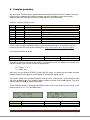
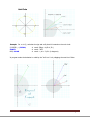
Example: For z=4+5j , calculate its sign and verify that it’s located on the unit circle:
5, ENTER^, 4, ZSIGN,
ZUNIT?
DEG, POLAR
result: ZSign = 0,62+0,78 j
result: “YES”
result: 1,00 < 51,34 (in degrees)
In program mode the behavior is ruled by the “do if true” rule, skipping the next line if false.
41Z User Manual Page 34 ZREAL?
ZIMAG?
ZINT?
Checks if z is purely real
Checks if z is purely imaginary
Checks if z is an integer
The first two functions check whether the complex number is purely a real or imaginary number.
Do not mistake these comparison functions with the other pair, {ZREAL and ZIMAG}, which
cause the number to change to become either real or imaginary – nor with {ZREAL^ and
ZIMAG^}, which are used to input complex numbers of the selected type based on the value
stored in the real stack level X.
The third one extends the scope of ZREAL?, adding the condition of being a true integer number:
-
ZINT? True means ZREAL? True, and FRC(Re(z))=0
Do not mistake it with ZINT, which causes the complex number to have no decimal figures in
BOTH its real and imaginary parts – therefore it’s result not a Real number!
ZINT? is used in the FOCAL programs to calculate Bessel Function, as a quick an effective way to
determine if the order is integer – which triggers different expressions for the formulas.
Like it occurs with any built-in comparison function, there’s no action taken on the original
number, which will remain unchanged.
41Z User Manual Page 35 7. Complex Trigonometry.
Table 7.1. Complex trigonometry function group.
Index
1
2
3
4
5
6
Function
ZSIN
ZCOS
ZTAN
ZHSIN
ZHCOS
ZHTAN
And their inverses:
7
ZASIN
8
ZACOS
9
ZATAN
10
ZHASIN
11
ZHACOS
12
ZHATAN
Formula
sin z = -i *sinh (iz)
cos z = cosh (iz)
tan z = - i * tanh (iz)
sinh z = 1/2 * [e^z - e^-z]
cosh z = 1/2 * [e^z + e^-z]
tanh z = (e^z-e^-z)/(e^z+e^-z)
Description
Complex Sine
Complex Cosine
Complex Tangent
Complex Hyperbolic Sine
Complex Hyperbolic Cosine
Complex Hyperbolic Tangent
asin z = -i * asinh (iz)
acos z = π/2 - asin z
atan z = -i * atanh (iz)
asinh z = Ln[z + SQ(z^2 + 1)]
acosh z = Ln[z + SQ(z^2 - 1)]
atanh z = 1/2 * Ln[(1+z)/(1-z)]
Complex
Complex
Complex
Complex
Complex
Complex
Inverse Sine
inverse Cosine
Inverse Tangent
Inverse Hyperbolic Sine
Inverse Hyperbolic Cosine
Inverse Hyperbolic Tangent
This section covers all the trigonometric and hyperbolic functions, providing the 41Z with a
complete function set. In fact, their formulas would suggest that despite their distinct grouping,
they are nothing more than particular examples of logarithm and exponential functions (kind of
“logarithms in disguise”).
Their usage is simple: the argument is taken from the complex-Z level and always saved on the
LastZ register. The result is placed on the complex-Z level. Levels W, V, U are preserved in all
cases, including the more involved calculations with ZTAN and ZATAN (those with the devilish
names), for which extensive use of scratch and temporary internal registers is made.
The formulas used in the 41Z are:
sin z = -i *sinh (iz)
cos z = cosh (iz)
tan z = - i * tanh (iz)
sinh z = 1/2 * [ez - e-z]
cosh z = 1/2 * [ez + e-z]
tanh z = (ez - e-z)/(ez + e-z)
asin z = -i * asinh (iz)
acos z = π /2 – asin z
atan z = -i * atanh (iz)
asinh z = Ln[z + SQ(z2 + 1)]
acosh z = Ln[z + SQ(z2 - 1)]
atanh z = 1/2 * Ln[(1+z)/(1-z)]
So we see that interestingly enough, the hyperbolic functions are used as the primary ones, also
when the standard trigonometric functions are required. This could have also been done the other
way around, with no particular reason why the actual implementation was chosen.
Example. Because of their logarithmic nature, also the inverse trigonometric and hyperbolic
functions will be multi-valued. Write a routine to calculate all the multiple values of ASIN z.
01
02
03
04
05
06
07
LBL “ZASIN”
ZASIN
ZSTO
ZAVIEW
E
STO 02
LBL 00
41Z User Manual 08
09
10
11
12
13
14
ZRCL
ZNEG
ZSTO
RCL 02
PI
*
+
15
16
17
18
19
20
ZAVIEW
PSE
E
ST+ 02
GTO 00
END
Page 36 The 41Z module now also includes new functions to calculate next values for complex ASIN, ACOS
and ATAN, as follows: NXTASN, NXTACS, and NXTATN. Using the first one the program above
changes to this very simplified way:
01 LBL “ZASIN2”
02 ZASIN
03 LBL 00
04 ZAVIEW
05 NXTASN
06 GTO 00
07 END
Using the general expressions we can obtain the multiple values of a given function from its
principal value “Z” of a given function, as follows:
Ln(k)=Ln + 2kπ J
Z+2π j
z-6π
z-5π
z-3π
z-4π
z-π
z-2π
Z
z+π
asin(k)=(-1)^k * asin + kπ
acos(k)=+/- acos +2kπ
atan(k) = atan +kπ
z+2π
z+3π
z+4π
-Z
i
Zsign
Z2
Z-2π j
1/Z
-1
1
-i
-Z
-z+4π
-z+2π
-z+π
-z-π
Z-4π j
-z+3π
Z3
ArcSin
ArcCos
ArcTan
Ln
Z
-z+6π
-z+5π
-z+7π
Z-6π j
Z-8π j
-
the multiple values for ASIN(z) -in green squares- are placed on the two straight lines
parallel to the x axis, y=Im[ASIN(z)] and y=–Im[ASIN(z)], and are separated at intervals
of 2π length on each line.
-
the multiple values for ACOS(z) –in yellow circles– are placed on the same two straight
lines, and are separated at intervals of 2π length on each line.
-
the multiple values for ATAN(z) –in brown triangles- are placed on the upper of those
straight lines, separated at intervals of π length on it.
41Z User Manual Page 37 -
the multiple values for Ln(z) –in blue squares- are placed on the vertical straight line
x=Re[LN(z)], and separated at intervals of 2π length on it.
-
the three different values for z^1/3 are placed in the circle r=|z|^1/3, and are separated
at 120 degrees from each other (angular interval).
NXTASN
NXTACS
NXTATN
Next Complex ASIN
Next Complex ACOS
Next Complex ATAN
Does LastZ
Does LastZ
Does LastZ
Let z0 be the principal value of the corresponding inverse trigonometric function. Each of
these three functions returns two values, z1 and z1’ placed in complex stack levels Z and W.
z1 will be shown if the function is executed in RUN mode. You can use Z<>W to see the
value stored in W (that is, z1’)
The NEXT values z and z1’ are and given by the following recursion formulas:
Next ZASIN:
Z1 = Z0 + 2 pi
Z1'= -Z0 + pi
Next ZACOS:
Z1 = Z0+ 2 pi
Z1' = -Z0 + 2 pi
Next ZATAN:
Z1=Z0 + pi
Z1'= Z0 – pi
The figure on the right plots the multivalued imaginary part of the complex
logarithm function, which shows the
branches. As a complex number z goes
around the origin, the imaginary part of
the logarithm goes up or down:
For further information on multi-valued complex functions see the following excellent
reference: http://en.wikipedia.org/wiki/Branch_point
See section 9 ahead for further details on multi-valued functions, with the FOCAL driver program ZMTV
(ZMulTiValue) that calculates all the consecutive results of the eight multi-value functions.
41Z User Manual Page 38 8. 2D-vectors or complex numbers?
One of the common applications for complex numbers is their treatment as 2D vectors. This
section covers the functions in 41Z that deal with vector operations between 2 complex numbers.
Table 8.1. 2D vectors function group.
Index
1
2
3
4
5
6
Function
ZWANG
ZWDIST
ZWDOT
ZWCROSS
ZWDET
ZWLINE
Formula
Arg(ZW) = Arg(Z) - Arg(W)
|W-Z| = SQR[(Wx-Zx)^2 - (Wy-Zy)^2]
Z*W = Zx*Wx + Zy*Wy
Z x W = |z| *|w| *Sin(Angle)
|ZW| = Wx*Zy - Wy*Zx
a=(Y1-Y2) / (X1-X2)
b=Y2 - a*X2
Description
Angle between 2 vectors
Distance between 2 points
2D vector Dot product
2D vector Cross product
2D determinant
Equation of line through two points
These functions use W and Z levels of the complex stack, leaving the result in level Z after
performing complex stack drop. The original contents of Z is saved in the LastZ register.
The following screen captures from V41 show the different displays for these functions:
Let z = 4 <45 degrees, and w= 3 <75 degrees .
45, ENTER^, 4, ZREC
ZREPL
75, ENTER^, 3, ZREC
-> 2,828(1+j)
[don’t forget or Z will be overwritten]
-> 0,776 + 2,898J
1. ZWANG,- angle defined between both vectors (in degrees in this case)
2. ZRDN , LASTZ, ZWDIST – distance between both complex numbers
and
The angle will be expressed in the selected angular unit.
3. ZRDN , LASTZ, ZWDOT - dot product of both vectors
4. ZRDN, LASTZ, ZWCROSS - magnitude of the cross product of both vectors
and
5. ZRDN, LASTZ, ZWDET - magnitude of the determinant of both vectors
6. ZRDN, LASTZ, ZWLINE - equation of the straight line linking both points
and
(*) Note that despite having a simpler formula, ZWDET shows less precision than ZWCROSS.
41Z User Manual Page 39 9. It’s a Gamma/Zeta world out there.
This section describes the different functions and programs included on the 41Z that deal with the
calculation of the Gamma and Zeta functions in the complex plane. A group of five functions in
total, two completely written in machine code and three as FOCAL programs, plus a couple of
example application programs to complement it.
Table 9.1. Gamma function group.
ZGAMMA
ZGPRD
ZPSI
ZLNG
ZZETA
Complex Gamma function
Auxiliary Product
Complex Digamma (Psi)
Gamma Logarithm
Complex Riemann Zeta
for z#-k, k=integer
PROD[(z+n); n=1,..6]
see below
see below
For z#1
Does LastZ
Does LastZ
FOCAL program
FOCAL program
FOCAL program
ZGAMMA uses the Lanczos approximation to compute the value of Gamma. An excellent
reference source is found under http://www.rskey.org/gamma.htm, written by Viktor T. Toth.
Remark that ZGAMMA is implemented completely in machine code, even for Re(z)<0 using the
reflection formula for analytical continuation.
For complex numbers on the positive semi-plane [Re(z)>0], the formula used is as follows
q0 =
75122.6331530
q1 =
80916.6278952
q2 =
36308.2951477
q3 =
8687.24529705
q4 =
1168.92649479
q5 =
83.8676043424
q6 =
2.5066282
And the following identity (reflection formula) is used for numbers in the negative semi-plane:
[Re(z)<0]: which can be re-written as: G(z) * G(-z) = -π / [z*Sin(π z)]
Example: Calculate G(1+i)
1, ENTER^, ZGAMMA
-> “RUNNING…”, followed by -> 0,498-j0,155
Example: Verify that G(1/2) = SQR(π)
0, ENTER^, 0.5, ZGAMMA
PI, SQRT, ZREAL^, Z-
-> 1,772 + j0
-> -2,00E-9 + j0
Example: Calculate G(-1.5+i)
1, ENTER^, 1.5, CHS, ZGAMMA
-> 0,191 + j0,174
For cases when the real part of the argument is negative [Re(z)<0], ZGAMMA uses a FOCAL
program to compute the reflection formula – all internal and transparent to the user.
41Z User Manual Page 40 The graphic below (also from the same web site) shows Gamma for real arguments. Notice the
poles at x=0 and negative integers.
The following graphic showing the module of the Complex Gamma function is taken from
http://en.wikipedia.org/wiki/Gamma_function.- Note the poles at the negative integers and zero.
Example: Use ZLNG to calculate G(1+i) and compare it with the value obtained by ZGAMMA
1, ENTER^, ZGAMMA, LASTZ, ZLNG, ZEXP, Z-
41Z User Manual -> 2,400E-9+j3,000E-10
Page 41 Program listings.The two FOCAL programs listed below calculate the Digamma and the Gamma functions for
complex arguments. The first one is an example using the asymptotic approximation as described
below, whilst the second one is an extension of the MCODE function ZGAMMA, using the
reflection formula for arguments with Re(z)<1 (programmed in turn as another MCODE function,
ZGNZG).
Approximation for Digamma when x>8
programmed as: u^2{[(u^2/20-1/21)u^2 + 1/10]u^2 –1}/12 – [Ln u + u/2],
where u=1/x; and using the following precision correction factor:
The next expression shows Stirling’s approximation for Gamma:
41Z User Manual Page 42 The following two programs calculate the Logarithm of the Gamma function for complex
arguments. The first one uses the Stirling approximation, with a correction factor to increase the
precision of the calculation. This takes advantage of the ZGPRD function, also used in the Lanczos
approximation.
correction factor: LnG(z) = LnG(z+7) - Ln[PROD(z+k)|k=1,2..6]
The second one applies the direct definition by calculating the summation until there’s no
additional contribution to the partial result when adding more terms. In addition to being much
slower than the Stirling method, this is also dependent of the display precision settings and thus
not the recommended approach. It is not included on the 41Z but nevertheless is an interesting
example of the utilization of some of its functions, like Z=WR? and the memory storage registers,
ZSTO and ZRCL.
The table on the right shows the
correspondence
between
the
complex register number( CRnn)
and the required SIZE in the
calculator. Note that a minimum of
SIZE 003 is required for CR00 to
exist.
41Z User Manual Page 43 10. Application programs.
The following functions in the 41Z are in reality FOCAL programs, included as application examples
because of their applicability and as a way to illustrate actual programming of the complex number
functions of the module.
Index
1
2
3
4
5
6
7
Function
ZQRT
ZCRT
ZMTV
ZPROOT
ZSOLVE
ZWL
ZAWL
Description
Roots of Quadratic equation
Roots of Cubic equation
Multi-valued functions
Roots of a polynomial of any degree
Solves f(z)=0 by secant method
Lambert-W function
Inverse of Lambert-W
Author
AM
AM
AM
Valentín Albillo
AM
JM Baillard & AM
AM
Note: Most of these functions appear on CAT’2 as M-Code entries, instead of as FOCAL programs.
This is achieved by using a clever technique shown by William E. Wilder (author of the BLDROM),
which allows cleaner and convenient program listings (no ugly “XROM” description before the
program title).
These programs can still be copied into main memory using COPY as usual, but won’t have the
global label. The drawback is that they can’t be “looked-up” using GTO + global LBL, since there’s
no global LBL for them.
10.1 Solution of quadratic and cubic equations.
ZCRT
ZQRT
Roots of cubic equation
Roots of quadratic equation
Main routine
Main routine
ZQRT Solves the roots of a quadratic equation with complex coefficients, as follows:
C 1 * z2 + C2 * z + C3 = 0; where C1, C2, C3, and z are complex numbers
By applying the general formula:
z1,2 = [ -C2 +/- SQR(C22 – 4C1*C3)] /2*C1
Example: find out the roots of (1+i)*z2 + (-1-i)*z + (1-i) = 0
ZQUAD
1, ENTER^, R/S
1, CHS, ENTER^, R/S
1, CHS, ENTER^, 1, R/S
R/S
“aZ^2+bZ+c=0”, followed by:
“IM^RE a=?
“IM^RE b=?
“IM^RE c=?
“RUNNING...” followed by:
“ 1,300+j0,625“
“ -0,300-j0,625”
We can see that both roots are NOT conjugate of each other, as it occurs with real coefficients.
Program listing.-
41Z User Manual Page 44 Note that ZQUAD is just a driver for ZQRT, which expects the three complex coefficients stored
in levels V, W, and Z of the complex stack. Note also that no memory registers are used, and all
calculations are performed using exclusively the complex stack. The core of the program is from
lines 16 to 37, or just 21 programming steps to resolve both roots.
The 41Z complex function set and complex stack enables the programmer to treat complex
calculations as though they used real numbers, not worrying about the real or imaginary parts but
working on the complex number as single entity. In fact, exercising some care, you could almost
translate one-to-one many FOCAL programs by replacing the standard functions with the
equivalent complex ones. That’s why it’s important that the function set be as complete as
possible, and that the same RPN conventions are followed by the complex stack.
10.2 Lambert W function.
ZWL
ZAWL
Lambert W(z)
Inverse of Lambert-W
z* e^z
FOCAL program
Does LastZ
These two functions provide a dedicated way to compute the Lambert-W function and its inverse.
The FOCAL program uses an iterative method to compute W(z), using 1+Ln(z) as initial guess for
Re(z)>0, and simply 1+i elsewhere.
This program is based on a real-mode version written by JM Baillard, just applying the seamless
transposition method provided by the 41Z module. In the vast majority of cases convergence is
provided for all complex arguments, with 8-decimal digits accuracy. It uses the Z=WR? Function
on FIX 8 mode to determine that two consecutive iterations are equal.
Another version using SOLVE is listed in section 10.5.1, with slightly more accurate results , but
significantly slower execution.
10.3 Multi-value Functions.
ZMTV
Multi-valued functions
This program calculates all possible values for the multi-valued functions, including the n different
Nth. roots of a complex number, all the inverse trigonometric and hyperbolic, plus the logarithm
itself (source of all the multi-valued scenarios).
41Z User Manual Page 45 Due to the 64-function limit of the 41 ROM FAT structure. these routines are all part of a common
entry into the module catalog. The program prompts for a number, from zero to eight where Zero
lists the catalog of all possible choices, as follows:
Index
1
2
3
4
5
6
7
8
Function
ZACOS
ZACOSH
ZASIN
ZASINH
ZATAN
ZATANH
ZLN
Z^1/N
Description
Inverse Complex Cosine
Inverse Complex Hyperbolic Cosine
Inverse Complex Sine
Inverse Complex Hyperbolic Sine
Inverse Complex Tangent
Inverse Complex Hyperbolic Tangent
Complex Logarithm
Roots of Complex number
Equivalence
Same as NXTACS
n/a
Same as NXTASN
n/a
Same as NXTATN
n/a
Same as NXTLN
Same as NXTNRT
Each case will briefly display the title of the sub-function, and will calculate the principal value
followed by all the other values with each subsequent pressing of [R/S].
The first 7 routines expect z into the Z level of the complex stack. Data entry is the same for all of
them except the last one, which expects N in the real-stack register X, and z in Z. Only the first N
values will be different, running into cyclical repetition if continued.
This is a simple program, mostly written to document an example for the 41Z functions. Use it to
get familiar with these concepts, and to understand fully the NXT function set as well.
Example: Obtain all values of ASIN [Sin(1+j)]
1, ENTER^, ZSIN
ZMTV
3, R/S
R/S
R/S
R/S
etc…
->
->
->
->
->
->
1,298+j0,635
“FNC.=? 0-8”
1,000+j1
2,142-j1
7,283+j1
8,425-j1
Alternatively, using the NXTASN function:
Note that here we start with the first value of the function, i.e. 1+j
1, ENTER^, NXTASN -> 7,238+j1
Z<>W
-> 2,142-j1
NXTASN
-> 8,425-j1
NXTASN
-> 14,708-j1
41Z User Manual Page 46 Program listing.Note the use of flag 22 for numeric entry: the catalog of functions will display continuously until
one choice is made, (expected between 1 and 8), and all initial prompting will be skipped.
1
2
3
4
5
6
7
8
9
10
11
12
13
14
15
16
17
18
19
20
21
22
23
24
25
26
27
28
29
30
31
32
33
34
35
36
37
38
39
40
41
42
43
44
45
46
47
LBL "ZMTV"
CF 22
LBL 20
"FCN#.=? 1-8
AVIEW
PSE
PSE
FC? 22
GTO 90
INT
ABS
90
+
RDN
SF 25
GTO IND T
GTO 20
LBL 90
CF 21
"1:- ZACOS"
AVIEW
PSE
"2:- ZACOSH"
AVIEW
PSE
"3:- ZASIN"
AVIEW
PSE
"4:- ZASINH"
AVIEW
PSE
"5:- ZATAN"
AVIEW
PSE
"6:- ZATANH"
AVIEW
PSE
"7:- ZLN"
AVIEW
PSE
"8:- Z^1/N"
AVIEW
PSE
GTO 20
LBL 95
ZATAN
GTO 06
41Z User Manual 48
49
50
51
52
53
54
55
56
57
58
59
60
61
62
63
64
65
66
67
68
69
70
71
72
73
74
75
76
77
78
79
80
81
82
83
84
85
86
87
88
89
90
91
92
93
94
LBL 93
ZASIN
ZSTO
ZAVIEW
E
STO 02
LBL 03
ZRCL
ZNEG
ZSTO
RCL 02
PI
*
+
ZAVIEW
PSE
E
ST+ 02
GTO 03
LBL 91
ZACOS
ZSTO
ZAVIEW
E
STO 02
LBL 01
ZRCL
RCL 02
ST+X
PI
*
STO 03
+
ZAVIEW
PSE
ZRCL
ZNEG
RCL 03
+
ZAVIEW
PSE
E
ST+ 02
GTO 01
LBL 94
ZHASIN
GTO 07
95
96
97
98
99
100
101
102
103
104
105
106
107
108
109
110
111
112
113
114
115
116
117
118
119
120
121
122
123
124
125
126
127
128
129
130
131
132
133
134
135
136
137
138
139
140
141
142
143
LBL 92
ZHACOS
GTO 07
LBL 96
ZHATAN
LBL 06
ZAVIEW
PSE
PI
+
GTO 06
LBL 97
ZLN
LBL 07
ZAVIEW
PSE
NXTLN
GTO 07
LBL 98
CF 00
"N=?"
PROMPT
ABS
INT
X=0?
RTN
STO 00
E
STO 01
X=0?
SF 00
E
+
1/X
Z^X
SF 21
ZAVIEW
FS?C 00
GTO 08
LBL 05
RCL 00
NXTNRT
ZAVIEW
DSE 01
GTO 05
LBL 08
CF 21
END
zeroth. Root?
N-1
unit root?
N
1/N
main value
Page 47 10.4 Roots of Complex Polynomials.
ZPROOT
Roots of Polynomials
By Valentín Albillo
This program calculates all the roots of a polynomial of degree n, and with complex coefficients. It
is therefore the most general case of polynomial root finders that can possibly be used, as it also
will work when the coefficients are real.
This program is a wonderful example of FOCAL capabilities, and very well showcases the versatility
of the HP-41C (even without the 41Z module). It was first published on PPC Technical Notes,
PPCTN.
41Z User Manual Page 48 Example.- Calculate the three roots of: x3 + x2 + x + 1
ZPROOT
3, R/S
0, ENTER^,
0, ENTER^,
0, ENTER^,
0, ENTER^,
1,
1,
1,
1,
R/S
R/S
R/S
R/S
->
->
->
->
->
->
->
->
->
->
->
“DEGREE=?”
“IM^RE (3)=?“
“IM^RE (2)=?“
“IM^RE (1)=?“
“IM^RE (0)=?“
“SOLVING...”
“FOUND ROOT#3”
“SOLVING…”
“FOUND ROOT#2”
“SOLVING…”
“FOUND ROOT#1”
-5,850E-14-j1 (that is, -i)
5,850E-14+j1 (that is, i)
-1+j1,170E-13 (that is, -1)
Example:- Calculate the four roots of: (1+2i)*z4 + (-1-2i)*z3 + (3-3i)*z2 + z – 1
ZPROOT
-> “DEGREE=?”
4, R/S
-> “IM^RE (4)=?“
2, ENTER^, 1, R/S
-> “IM^RE (3)=?“
2, CHS, ENTER^, 1, CHS, R/S -> “IM^RE (2)=?“
3, CHS, ENTER^, CHS, R/S
-> “IM^RE (1)=?“
0, ENTER^, 1, R/S
-> “IM^RE (0)=?“
0, ENTER^, 1, CHS, R/S
-> “SOLVING…”
-> “FOUND ROOT#4”
-> “SOLVING…”
-> “FOUND ROOT#3”
-> “SOLVING…”
-> “FOUND ROOT#2”
-> “SOLVING…”
-> “FOUND ROOT#1”
1,698+J0,802
R/S
-0,400-J0,859
R/S
0,358+J0,130
R/S
-0,656-J0,073
The four solutions are:
z1 =
z2 =
z3 =
z4 =
1,698 +
-0,400 0,358 +
-0,,656 -
0,802
0,859
0,130
0,073
j
j
j
j
or:
or:
or:
or:
1,878
0,948
0,381
0,660
<) 25,27
<)-114,976
<) 9,941
<)-173,676
Using V41’s turbo mode (or another equivalent HP-41 emulator functionality) the execution time is
largely reduced – to almost instantaneous response!
41Z User Manual Page 49 10.5 Solution to f(z)=0.
The final example uses the Secant Method to obtain roots of a complex equation, given two
estimations of the solution. A general discussion on root-finding algorithms and is beyond the
scope of this manual – this example is intended to show the capabilities of the 41Z module, in
particular how programming with complex numbers becomes as simple as doing it for real
numbers using the native function set.
See the following link for further reference on this subject (albeit just for real variable):
http://en.wikipedia.org/wiki/Secant_method
The secant method is defined by the
recurrence relation:
which will be calculated until there’s no
significant contribution to the new value – as
determined by the function Z=WR?.
Program listing:As it’s the case with this type of programs,
the accuracy of the solution depends of the
display settings, and the convergence (i.e.
likelihood to find a root) will depend on the
initial estimations.
The program works with 8-digit precision, therefore will largely benefit from the turbo-mode
settings on V41 to dramatically reduce the execution time.
41Z User Manual Page 50 User flag 06 is for subroutine usage: when set, the data input will be skipped. In that case the
relevant data is expected to be in the appropriate registers, as follows:
CR0 = Initial estimation z1,
Cr1 = initial estimation z2
R06 = Function’s name,
FIX set manually to required precision.
Example.- Calculate one root of the equation: SINH(z) + z^2 + pi = 0
Which we easily program using 41Z functions as follows:
LBL “ZT”, ZSINH, LASTZ, Z^2, Z+, PI, +, END.
Using the initial estimations as z0=0, and z1=1+i, we obtain:
Root = -0,27818986 + j 1,81288037
Example:- Calculate two roots of the equation: e^(z) = z
programmed as follows: LBL “ZE”, ZEXP, LASTZ, Z-, END
using the estimations: {z0=-1-j & z1=1+j} - note that both roots are conjugated!
Root1 = 0,3181315 + j 1,3372357
Root2 = 0,3181315 - j 1,3372357
Example:- Calculate the roots of the polynomials from section 10.1 and 10.3:
P2 = (1+i)*z2 + (-1-i)*z + (1-i)
- re-written as: z[(-1-i)-z(1+i)} + (1-i)
P3 = z3 + z2 + z + 1
- re-written as: z[1+z(1+z)] +1
P4 = (1+2i)*z4 + (-1-2i)*z3 + (3-3i)*z2 + z – 1
- re-written as: z{1+z[(3-3i)-z[(1+2i)-z(1+2i)]]}-1
Use the following estimations for the P4 example:{z0=-1-j ; z1=1+j} for root #1,
{z0=-2j ; z1= 2j} for root #3,
{z0=1+j ; z1=2+2j} for root #2,
{z0= 4j ; z1= 5j} for root #4
And programmed as follows:
41Z User Manual Page 51 Lastly, a few other excellent programs written by Jean-Marc Baillard address the general solution
to the equation f(z)=0. They don’t use functions from the 41Z module, but are mentioned here for
their obviously close related content. The programs can be found at the following link:
http://www.hpmuseum.org/software/41/41cmpxf.htm
41Z User Manual Page 52 10.5.1. Application example;- Using ZSOLVE to calculate the Lambert W function.
In this example we see a few techniques applied together, combining the capabilities of the 41Z in
a convenient way. The solution is a direct application of the definition, requiring very simple extra
programming – albeit with the logical slow performance.
The Lambert W function is given by the following functional equation:
z = W(z) eW(z), for every complex number z:
Which cannot be expressed in terms of elementary functions, but can be properly written with the
following short program:
The complex value is expected to be in the Z complex stack level,
and X,Y registers upon initialization. Set the FIX manually for the
required precision.
Because ZSOLVE uses all the complex stack levels and registers 0
to 6, the argument is saved in the complex register 4 –
corresponding to real registers 8 and 9, thus a SIZE 10 or higher is
required (see register correspondence map below).
We solve for W(z)=z, using as the function initial estimations the
logarithm of the same argument and the same point plus one,
perhaps not a refined choice but sufficient to ensure convergence
in the majority of cases. Some calculated values are:
This example is not meant to compete with a dedicated program
using an iterative algorithm, yet it showcases the versatility of the approach. The obvious speed
shortcomings are diminished when ran on modern emulators like V41.
The Taylor series of W0 around 0 is given by:
Another technique (somehow a brute-force
approach) would employ this definition to
calculate successive terms of the summation until
their contribution to the sum is negligible. This
method would only be applicable within the
convergence region.
See the following links for further references on the Lambert W function:
http://en.wikipedia.org/wiki/Lambert_W_function
http://mathworld.wolfram.com/LambertW-Function.html
41Z User Manual Page 53 10.6 Bessel functions.
This last section represents an interesting “tour de force” within the 41Z module – taking the
humble 41 system to the realm of true high-level math. Use it or leave it, it’s all a matter of choice
– but programming techniques and valid algorithms are always interesting, despite its obvious
speed shortcomings.
Index
1
2
3
4
5
6
7
8
7
Function
ZJBS
ZIBS
ZBS
ZKBS
ZYBS
ZBS2
EIZ/IZ
ZSHK1
ZSHK2
Description
Complex Bessel J function
Complex Bessel I function
Subroutine for J and I
Complex Bessel K function
Complex Bessel Y function
Subroutine for K and Y
Spherical Hankel first kind order zero
Spherical Hankel first kind
Spherical Hankel second kind
First kind
First kind
First & Second Kind
Second kind
Second kind
Second Kind
See the paper “Bessel functions on the 41 with the SandMath Module” by the author, for an
extensive description of the (real-number) Bessel Functions on the 41 system. In fact, following
the “do it as it’s done with real numbers” standard philosophy of the 41Z module, the complex
versions of these programs are very similar to those real-number counterparts described in said
paper.
The formulae used are as follows:
J(n,z) = S {Uk | k=1,2,….} * (z/2)n / G(n+1)
U(k) = -U(k-1) * (z/2)2 / k(k+n)
U(0) = 1
Yn(x) = [ Jn(x) cos(np)) - J-n(x) ] / sin(np))
Kn(x) = (p/2) [ I-n(x) - In(x) ) / sin(np)) ]
n # .... -3 ; -2 ; -1 ; 0 ; 1 ; 2 ; 3 ..
Like for the real case, there are two auxiliary functions, ZBS and ZBS2, to perform intermediate
calculations used by the main programs: ZJBS, ZIBS (first kind), and ZYBS, ZKBS (second kind).
Other auxiliary functions are:
•
•
GEUZ – Euler’s gamma constant – and
HARM, to obtain the harmonic number of a given integer:
H(n) = SUM [1/k] |k=1,2…n (*)
The expressions used to calculate the results are different for integer orders (remember the
singularities of Gamma), requiring special branches of the main routines. For that reason two
other functions have been added to the 41Z as follows:
•
•
ZINT?, to determine integer condition, and
ZCHSX, to simplify calculation of z*(-1)^k
Both the function order and the argument are complex numbers, which are expected to be on
complex stack levels W (order) and Z (argument) prior to the execution of the function. The result
is placed on the Z-level complex stack.
Below are the program listings for each particular case.-
41Z User Manual Page 54 a) Bessel Functions of the first kind.
1
2
3
4
5
8
8
8
9
10
11
12
13
14
15
16
17
18
19
20
21
22
23
24
25
26
27
28
29
30
31
32
33
34
35
36
37
38
39
40
41
42
43
44
45
46
47
LBL ZJBS
CF 00
GTO 00
LBL ZIBS
SF 00
LBL 00
CF 01
Z<>W
ZINT?
XEQ 05
Z<>W
ZHALF
XROM "ZBS"
FS? 01
RCL 01
FS? 01
ZCHSX
LBL 04
ZAVIEW
RTN
LBL 05
X<0?
SF 01
ABS
RTN
LBL "ZBS"
Z#0?
GTO 00
Z=W?
E
GTO 04
LBL 00
-ZSTACK
ZSTO 01
Z<>W
ZSTO 00
E
ZREAL
ZSTO 02
ZSTO 03
STO M
LBL 02
ZRCL 01
Z^2
ZRCL 02
FC? 00
ZNEG
is n integer?
z/2
n integer
J(-n, z) = (-1)^n J(n, z)
n<0?
running…
(z/2)
n
n
1
1+J0
1+J0
1+J0
k=1
(z/2)^2
Uk-1
48
49
50
51
52
53
54
55
56
57
58
59
60
61
62
63
64
65
66
67
68
69
70
71
72
73
74
75
76
77
78
79
80
81
82
83
84
85
86
87
Z*
ZRCL 00
RCL M
+
LASTX
ST* Z
*
Z/
ZSTO 02
ZRCL 03
Z+
ZENTER^
Z<> 03
Z=W?
GTO 01
E
ST+ M
GTO 02
LBL 01
ZRCL 00
INCX
CF 02
X<0?
SF 02
X<0?
ZNEG
ZGAMMA
FC? 02
GTO 00
LASTZ
ZGNGZ
Z<>W
Z/
LBL 00
Z/
ZRCL 01
ZRCL 00
W^Z
Z*
END
n
n
k
n+k
k
k(n+k)
U(k)
SUM(k-1)
SUM(k)
SUM(k-1)
k=k+1
n
(n+1)
-z
-z
(z/2)
n
(z/2)^n
CR00 - n
CR01 - Z/2
CR02 - Uk
CR03 - SUM
CR04 - result
Examples:- Calculate JBS(1+i, -1-i) and IBS(-0.5+i; 1-0,5i)
1, ENTER^, ZENTER^, ZNEG, ZJBS
-->
1, ENTER^, 0,5, CHS, ZENTER^, ENTER^, 1, ZIBS -->
41Z User Manual -8,889 + j 2,295
3,421 + j 1,178
Page 55 b) Bessel functions of the second kind.
1
2
3
4
5
6
7
8
9
10
11
12
13
14
15
16
17
18
19
20
21
22
23
24
25
26
27
28
29
30
31
32
33
34
35
36
37
38
39
40
41
42
43
44
45
46
47
48
49
50
51
52
53
54
55
56
LBL "ZB1"
CLZ
ZSTO 02
ZSTO 04
STO 01
LBL 02
XEQ 10
Z=0?
GTO 01
ZRCL 04
Z+
ZENTER^
Z<> 04
Z=W?
RTN
LBL 01
E
ST+ 01
GTO 02
LBL 10
ZRCL 01
RCL 01
ST+ X
RCL 00
+
Z^X
ZENTER^
RCL 01
FACT
LASTX
RCL 00
+
FACT
*
ZREAL
Z/
FS? 00
GTO 00
RCL 01
ZCHSX
LBL 00
Z<> 02
ZRCL 02
Z+
Z<> 02
ZENTER^
RCL 01
HARMN
LASTX
RCL 00
+
HARMN
+
ZREAL
Z*
END
41Z User Manual SUM{f(n,x)}
Jn / In
SUM
k=0
summing term
x=0?
ignore term
S(k-1)
S(k)
are they equal?
Final result(s)
increase index
k=k+1
Function to Sum
x/2
k
2k
n
2k+n
(x/2)^(2k+n)
k
k!
k
n
k+n
(k+n)!
k! * (k+n)!
k-th. Term
is it Kn?
k
[term] * (-1)^k
ZST+ 02
f(k) + SUM(k-1)
Jn / In
k
H(k)
k
n
k+n
H(k+n)
H(k)+H(k+n)
1
2
3
4
5
6
7
8
9
10
11
12
13
14
15
16
17
18
19
20
21
22
23
24
25
26
27
28
29
30
31
32
33
34
35
36
37
38
39
40
41
42
43
44
45
LBL "ZB2"
CLZ
ZSTO 03
RCL 00
X=0?
RTN
DECX
E3
/
STO 08
LBL 05
ZRCL 01
RCL 08
INT
STO 01
ST+ X
RCL 00
Z^X
RCL 00
RCL 01
DECX
FACT
RCL 01
FACT
/
ST* Z
*
FC? 00
GTO 00
RCL 01
ZCHSX
LBL 00
ZRCL 03
Z+
ZSTO 03
ISG 08
GTO 05
ZRCL 03
FC? 00
RTN
RCL 00
ZCHSX
END
SUM{g(n,x)}
reset partial SUM
ABS(n)
n=0?
skip it
0,00(n-1)
x/2
k,00(n-1)
k
2k
n
2k-n
(x/2)^(2k-n)
n
k
n-k
n-k-1
(n-k-1)!
k
k!
(n-k-1)! / K!
[**]
is it Yn?
k
(-1)^k * term
(k+1),00(n-1)
is it Yn?
n
SUM*(-1)^n
Note: functions DECX and INCX
can b e replaced b y standard
FOCAL sequences:
DECX = 1, INCX = 1, +
Page 56 1
2
3
4
5
6
7
8
9
10
11
12
13
14
15
16
17
18
19
20
21
22
23
24
25
26
27
28
29
30
31
32
33
34
35
36
37
38
39
40
41
42
43
44
45
46
LBL "ZYBS"
CF 00
GTO 00
LBL "ZKBS"
SF 00
LBL 00
ZHALF
ZSTO 01
Z<>W
ZINT?
GTO 05
Z<>W
XROM "ZBS"
FS? 00
GTO 00
ZRCL 00
PI
ST* Z
*
ZCOS
Z*
LBL 00
ZSTO 04
ZRCL 00
ZNEG
ZRCL 01
XROM " ZBS"
ZRCL 04
Z<>W
ZZRCL 00
ZNEG
PI
ST* Z
*
ZSIN
Z/
FC? 00
GTO 03
PI
2
/
CHS
ST* Z
*
GTO 03
Integer Index
(z/2)
n
-n
(z/2)
-n
n
Exit
47
48
49
50
51
52
53
54
55
56
57
58
59
60
61
62
63
64
65
66
67
68
69
70
71
72
73
74
75
76
77
78
79
80
81
82
83
84
85
86
LBL 05
CF 01
X<0?
SF 01
ABS
STO 00
XROM "ZB2"
ZNEG
ZSTO 03
XROM "ZB1"
ZRCL 03
Z<>W
ZZRCL 01
ZLN
GEU
+
ZRCL 02
Z*
ZDBL
Z+
FC? 00
GTO 04
RCL 00
INCX
ZCHSX
ZHALF
GTO 03
LBL 04
PI
ST/ Z
/
FC? 01
GTO 03
RCL 00
ZCHSX
LBL 03
ZSTO 03
ZAVIEW
END
integer orders
negative
-[SUM*(-1)^n]
to ob tain b oth!
x/2
Ln(x/2)
g
g+Ln(x/2)
J(n,x) or I(n,x)
[ }*J/I(n,x)
K(n,x)/Y(n,x)
is it Yn?
FINAL STEPS
n
(n+1)
K(n,x)* (-1)^(n+1)
Exit
Yn
negative index?
Exit
n
Exit
The formulae used for integer orders are as follows:
p Yn(x) = 2[γ + Ln x/2] Jn(x) – S (-1)k fk(n,x) – S gk(n,x)
n
k
n+1
(-1)
2 Kn(x) = 2 [γ + Ln x/2] In(x) – S fk(n,x) – (-1) S (-1) gk(n,x)
2k-n
gk (n,x) = (x/2)
[(n-k-1)! / k!] ; k=0,2,…(n-1)
2k+n
fk (n,x) = (x/2)
[H(k) + H(n+k)] / [k! (n+k)!] ; k=0,1,2,…..
41Z User Manual Page 57 Example:- Calculate KBS(-0.5+i; 1-0,5i)
1, ENTER^, 0,5, CHS, ZENTER^,
ENTER^, 1, ZKBS
0,348 + j 0,104
Example:- Calculate YBS(-1,-1)
0, ENTER^, 1, CHS, ZENTER^,
ZYBS
- 0,781 + j 0,880
This last example shows how even real arguments can yield complex results.
Example.- Calculate JBS and IBS for (1+2i, -1-3i)
2, ENTER^, 1, ZENTER^
3, CHS, ENTER^, 1, CHS, ZIBS
35,813 - j 191,737
2, ENTER^, 1, ZENTER^
3, ENTER^, 1, ZNEG, ZJBS
- 257,355 - j 12,633
Note: Using the Complex Keyboard shortcuts the Bessel function group can be accessed pressing
SHIFT when the NEXT indicator is shown, as per the following sequence:
Z, Z, SHIFT, SHIFT -> then I, J, for ZJBS and ZJBS or D, E for ZKBS and ZYBS.
The same group can be used to access ZWL (Complex Lambert) and EIZ/IZ, the Spherical
Hankel function of first kind and order zero.
, then SHIFT:
41Z User Manual Page 58 Appendix 1.- Complex Buffer functions
This appendix lists the buffer handling functions included in the 41Z, and thus are not related to
the Complex Number treatment per se. This set is only useful to diagnose problems or to bypass
the normal execution of the module’s “standard” functions, therefore its use is not recommended
to the casual user (i.e. do it at your own risk!).
Function
-HP 41Z
CLZB
L1=XY?
L1<>L _
L1<>LX
L2=ZT?
L2>ZT
LVIEW _
LVIEWX
PREMON
PSTMON
RG>ZB _ _
ST>ZB
XY>L _
XY>L0
XY>L1
ZB>RG _ _
ZB>ST
ZBDROP
ZBHEAD
ZBLIFT
ZBSHOW
Description
Initializes Z Buffer
Clears Z buffer
Is L1 equal to XY?
Swap L1 & Level
Swap L1 & Level
Is L2 equal to ZT?
Copies L2 into ZT
View Level
View level by X
Copies XY into L0 and finds Zbuffer
Copies XY into L1 and synch's up
Copies registers to Z buffer
Copies real stack to L1 & L2
Copies XY into Level
Copies XY into L0
Copies XY into L1
copies buffer to registers
Copies L1 & L2 into real stack
Drops Z buffer one level
Z buffer Header info
Lifts Z buffer one level
Shows Z Buffer
Input
None
None
None
Level# as suffix
level in X
None
None
Level# as suffix
level in X
Re(z) in X; Im(z) in Y
Complex stack Z
Reg# as suffix
None
Level# as suffix
Re(z) in X; Im(z) in Y
Re(z) in X; Im(z) in Y
Reg# as suffix
None
None
None
None
None
Output
Buffer created
Buffler cleared
Y/N, skip if false
levels exchanged
levels exchanged
Y/N, skip if false
L2 copied to ZT
Transposed value!
Transposed value!
none
Re(z) in X; Im(z) in Y
data copied from registers
stack copied to buffer
XY copied to LEVEL
XY copied to L0
XY copied to L1
data copied to registers
buffer copied to Stack
levels dropped
header register in ALPHA
buffer lifted
shows header & all levels
(*) Items highlighted in yellow indicate prompting functions.
Buffer layout. The complex buffer has 5 levels, labelled L0 to L4; that’s 10 memory registers plus
the header and footer registers – for a total of 12 registers. The function names in this group use
the Level number (L0 to L4) to identify each level, and not the U, V, W, and Z notation employed
in previous sections of the manual.
The buffer header (b0 register) is placed at the lowest memory address. It contains the buffer id#,
its size, and its initial address (when it was first created – no updates if it’s re-allocated later on).
41Z User Manual Page 59 Buffer creation is done automatically by the 41Z module upon power on (when the 41 awakes
from deep sleep), using the corresponding poll point in the module. The contents of the real stack
registers XYZT is copied into the buffer levels L1 & L2 upon initialization.
The buffer is maintained by the 41 OS, which handles it when modifying the layout of main
memory – either changing the SIZE settings, or modifying the user key assignments. The buffer
id# is 8, and thus should be compatible with any other memory buffer that uses a different id#
(an example of which are the TIMER alarms).
Should for any reason the buffer is damaged or erased (like when using the function CLZB), the
message “NO Z-BUFFER” would appear when trying to execute any of the 41Z module functions.
To manually re-create the complex buffer simply execute the first function in the module, “–HP
41Z” - either by using XEQ or the Complex Keyboard sequence “Z, SHIFT, Z”. This requires at
least 12 memory registers to be available or the error message “NO ROOM” will be shown.
Because the buffer can be dynamically re-allocated by the 41 OS upon certain circumstances, it’s
not possible to store its address to be reused by the functions. Every 41Z function would first seek
out the buffer address prior to proceeding with its calculation. Fortunately this takes very little
overhead time.
Buffer synchronization with the appropriate real-stack levels is also performed automatically by
the 41Z functions, as follows:
-
In the input phase (pre-execution), monadic functions will copy the XY contents into level
L1 prior to executing their code. Dual functions will do the same for the second argument
Z, and will use the current contents of the L2 level as first argument W.
-
In the output phase (post-execution) the results will be placed in the complex buffer levels
and then copied to the real stack registers as appropriate: XY for monadic functions, and
XZYT for dual functions.
That’s the reason why the real stack should just be considered as a scratch pad to prepare the
data (like doing math on the real values), as only levels X,Y will be used. You must use ZENTER^
to push the W argument into the complex level L2. In other words: real stack registers T,Z will be
ignored!
The same consideration applies when performing chain calculations: because there’s no
automated complex stack lift, the result of a monadic function would be overwritten by the
subsequent input unless it is first pushed into the complex stack, using ZENTER^ or another 41Z
function that does stack lift.
Example: Calculate Ln(1+i) + (2-i)
The following sequence use the direct data entry, entering Im(z) first.
1, ENTER^, ZLN, ZENTER^, 1, CHS, ENTER^, 2, Z+
-> 2,347-j0,215
Some functions perform stack lift by default, and thus ZENTER^ is not required before them.
They are as follows:
• LASTZ
• ZRCL _ _
• ZREAL^ (also when using the complex real keypad, Z plus digit key)
41Z User Manual Page 60 •
•
ZIMAG^ (also when using the complex imaginary keypad, Z, radix, plus digit
key)
^IM/AG _
The following sequence uses natural data entry - entering Re(z) first - as an alternative method
for the previous example. Note that because ^IMG does stack lift, it’s not necessary to use
ZENTER^
1, ^IMG, 1, R/S, ZLN, 2, ^IMG, 1, CHS, R/S, Z+
-> 2,347-j0,215
Buffer synchronization with the real stack registers can be tested and forced using the following
functions in this group:
L1=XY? - Tests for the first buffer level and XY registers
XY>L1 - Copies X,Y into level L1
L2=ZT? - Tests for second buffer level and Z,T registers
L2>ZT - Copies L2 into registers Z,T
ST>ZB - Copies real stack XYZT to buffer levels L1 & L2
ZB>ST - Copies L1 & L2 to the real stack XYZT
To dump the complete contents of the complex buffer into memory registers and back you can
use these two complementary functions:
ZB>RG _ _ - Copies complex buffer to memory registers
RG>ZB _ _ - Copies memory registers to complex buffer
Note that RG>ZB won’t check for valid header data, thus it expects the contents to be correct –
like with a previously execution of ZB>RG. Remember that the header register is a nonnormalized number (NNN), thus do not recall it using RCL.
Other functions to manipulate the contents of the buffer levels are:
L1<>L _ - swaps buffer level L1 and level given by prompt
L1<>LX - swaps buffer level L1 and level input in X
XY>L0 - copies registers X,Y into buffer level L0 (used to save arguments into LastZ)
XY>L _ - copies registers X,Y into buffer level given by prompt
ZBDROP - drops contents of complex buffer one level (used during ZRDN)
ZBLIFT - lifts contents of complex buffer one level (used by ZRUP, ZENTER^ and others)
All these functions act on the complex buffer, but will not display the “resulting” complex number
(i.e. will not trigger ZAVIEW upon completion). To see (view) the contents of the buffer levels
without altering their position you can use the following functions:
LVIEW _
LVIEWX
ZBSHOW
ZBHEAD
- prompts for level number (0 – 4)
- expects level number in X
- lists the contents of all buffer levels
- shows in Alpha the decoded buffer header
Note that all complex level contents will be shown transposed, that is: Im(z) + j Re(z).
41Z User Manual Page 61 Finally, the other two functions are auxiliary mainly used to perform action between the two lower
and upper 4k-pages within the 41Z module: (*)
PREMON - Finds Z Buffer address, Copies XY into L0 and checks X,Y for ALPHA DATA
PSTMON - Copies the Z complex level into X.Y
(*) Note: FAT entries for these two functions were removed in newer versions of the module.
Because of its relevance and importance within the 41Z module, the following section lists the
buffer creation and interrogation routines – pretty much the heart of the implementation. Consider
that they are called at least twice every time a function is executed and you’ll appreciate their
crucial role in the whole scheme!
41Z User Manual Page 62 Notice how we finish with ZAVIEW to show the current complex number in the stack upon buffer
creation. [CHKBUF] does not create the buffer, but reads its address into register A and the
content of the header into register C. The following section shows the actual buffer creation
snippets.
41Z User Manual Page 63 Remember that the buffer is created each time the calculator is turned on, and that it gets
reallocated when key assignments or other buffers (like timer alarms) are made – yet it’s possible
that it gets “unsynchronized” or even lost altogether, and therefore the assignment to the –HP
41Z function as well.
41Z User Manual Page 64 Appendix 2. Complex Keyboard keymaps.
The following table shows the detailed key map supported by the ZKBRD complex keyboard
function launcher.
I
II
Z
Z
Z
Z
Z
Z
Z
Z
Z
Z
Z
Z
Z
Z
Z
Z
Z
Z
Z
Z
Z
Z
Z
Z
Z
Z
Z
Z
Z
Z
Z
Z
Z
Z
Z
Z
Z
Z
Z
Z
Z
Z
Z
Z
Z
Z
Z
Z
Z
1/X
SQRT
LOG
LN
X<>Y
RDN
SIN
COS
TAN
XEQ
STO
RCL
SST
ENT^
CHS
EEX
+
*
/
0-9
R/S
,
Z
Z
Z
Z
Z
Z
Z
Z
Z
Z
Z
Z
Z
Z
Z
Z
Z
Z
Z
Z
Z
Z
Z
Z
Z
Z
Level
III
IV
0-9
1/X
SQRT
LOG
LN
X<>Y
RDN
XEQ
STO
RCL
SST
ENT^
EEX
7
8
9
+
4
5
*
1
2
/
0
,
Z
41Z User Manual V
Function
Name
ZINV
ZSQRT
ZLOG
ZLN
Z<>W
ZRDN
ZSIN
ZCOS
ZTAN
^IMG _
ZSTO _ _
ZRCL _ _
Z<> _ _
ZENTER^
ZNEG
Z^X
ZZ+
Z*
Z/
Z0-Z9
ZAVIEW
ZJ0-ZJ9
W^1/Z
ZPSI
ZLNG
e^Z
Z<>V
ZQRT
ZIMAG^
ZREAL^
Z/I
CLSTZ
ZRPL
Z^1/X
Z#W?
ZWDET
ZWDIST
ZWANG
ZREAL?
ZIN?
ZWCROSS
ZIMAG?
ZUNIT?
ZWLINE
Z#0?
ZOUT?
ZWDOT
Z<>U
I
Z
Z
Z
Z
Z
Z
Z
Z
Z
Z
Z
Z
Z
Z
Z
Z
Z
Z
Z
Z
Z
Z
Z
Z
Z
Z
Z
Z
Z
Z
Z
Z
Z
Z
Z
Z
Z
Z
Z
Z
Z
Z
Z
Z
Z
Z
Z
Z
Z
Z
II
Level
III
¯-
IV
Y^X
X^2
10^X
e^X
X<>Y
RDN
ASIN
ACOS
ATAN
ASN
LBL
GTO
CAT
ISG
RTN
CLX
X=Y?
SF
CF
FS?
X<=Y?
BEEP
P-R
R-P
X>Y?
FIX
SCI
ENG
X=0?
PI
LASTX
VIEW
SIN
COS
TAN
Z
Z
Z
Z
Z
Z
Z
Z
Z
Z
Z
SQRT
LN
SIN
COS
TAN
V
Function
Name
-HP 41Z
W^Z
Z^2
ZALOG
ZEXP
ZTRP
ZRUP
ZASIN
ZACOS
ZATAN
ZK?YN
ZSIGN
Z*I
^IMG _
ZCONJ
X^Z
CLZ
Z=W?
ZNORM
ZMOD
ZARG
Z=WR?
ZTONE
ZREC
ZPOL
Z=I?
ZRND
ZINT
ZFRC
Z=0?
ZGAMMA
LASTZ
ZVIEW _ _
ZSINH
ZCOSH
ZTANH
SIN ZASINH
COS ZACOSH
TAN ZATANH
ZNXTNRT _
ZNXTLN
ZNXTASN
ZNXTACS
ZNXTATN
LOG ZKBS
LN
ZYBS
COS ZIBS
TAN ZJBS
ZWL
SIN
SQRT EIZ/IZ
Page 65 Appendix 3.- Formula Compendium.
Elementary complex numbers and functions – By W. Doug Wilder.
41Z User Manual Page 66 #
1
2
3
4
5
6
7
8
9
10
11
12
13
14
15
16
17
18
19
20
21
22
23
24
25
26
27
28
29
30
31
32
33
34
Function
-HP 41Z
W^1/Z
W^Z
X^Z
Z+
ZZ*
Z/
Z^1/X
Z^2
Z^X
Z=0?
Z=I?
Z=W?
Z=WR?
Z#0?
Z#W?
ZACOS
ZALOG
ZASIN
ZATAN
ZCOS
ZDBL
ZEXP
ZFRC
ZHACOS
ZHALF
ZHASIN
ZHATAN
ZHCOS
ZHSIN
ZHTAN
ZIMAG?
ZIN?
Description
Initializes Complex Stack
Complex Y^1/X
Complex Y^X
Hybrid Y^X
Complex addition
Complex substraction
Complex multiplication
Complex division
Hybrid Y^X
Complex X^2
Hybrid Y^X
Is z=0?
Is z=I?
Is z=w?
are z & w equal if rounded?
is z equal to zero?
Is z equal to w?
Complex ACOS
Complex 10^X
Complex ASIN
Complex ATAN
Complex COS
Calculates 2*Z (Doubles it)
Complex e^X
Fractional Parts
Complex Hyp. ACOS
Calculates Z/2 (halves it)
Complex Hyp. ASIN
Complex Hyp. ATAN
Complex Hyp. COS
Complex Hyp. SIN
Complex Hyp. TAN
is Im(z)=0?
Is z inside the unit circle?
67
Formula
Z=XY; W=ZT
w^1/z = exp(Ln w / Z)
w^z = exp(z*Ln w)
a^Z = exp( z*Ln a)
(x1+x2) + i (y1+y2)
w-z = w + (-z)
(x1*x2 - y1*y2) + i (x1*y2 + y1*x2)
w/z = w * (1/z)
z^1/n = r^1/n * exp(i*Arg/n)
z^2 = r^2 * exp(2i*Arg)
z^n = r^n * exp(i*n*Arg)
is z=0?
is z=i?
is z=w?
is Rnd(z)=Rnd(w)?
is z#0?
is z=w?
acos z = pi/2 - asin z
e^[z*ln(10)]
asin z = -i * asinh (iz)
atan z = -i * atanh (iz)
cos z = cosh (iz)
2z = 2x + 2iy
e^x * e^(iy)
FRC[Re(z)]; FRC[Im(z)]
acosh z = Ln[z + SQ(z^2 - 1)]
z/2 = (x/2 + iy/2)
asinh z = Ln[z + SQ(z^2 + 1)]
atanh z = 1/2 * Ln[(1+z)/(1-z)]
cosh z = 1/2 * [e^z + e^-z]
sinh z = 1/2 * [e^z - e^-z]
tanh z = (e^z-e^-z)/(e^z+e^-z)
is Im(z)=0?
is |z|<1?
Input
none
w in W; z in Z (XY)
w in W; z in Z (XY)
x in X reg; z in Y,Z regs
w in W; z in Z (XY)
w in W; z in Z (XY)
w in W; z in Z (XY)
w in W; z in Z (XY)
x in X reg; z in Y,Z regs
z in Z (XY)
x in X reg; z in Y,Z regs
z in Z (XY)
z in Z (XY)
w in W; z in Z (XY)
w in W; z in Z (XY)
z in Z (XY)
w in W; z in Z (XY)
z in Z (XY)
z in Z (XY)
z in Z (XY)
z in Z (XY)
z in Z (XY)
z in Z (XY)
z in Z (XY)
z in Z (XY)
z in Z (XY)
z in Z (XY)
z in Z (XY)
z in Z (XY)
z in Z (XY)
z in Z (XY)
z in Z (XY)
z in Z (XY)
z in Z (XY)
Output
Initializes Z buffer & ZAVIEW
w^1/z in Z (XY)
w^z in Z (XY)
x^z in Z (XY)
w+z in Z (XY)
w-z in Z (XY)
w*z in Z (XY)
w/z in Z (XY)
z^1/x in Z (XY)
z^2 in Z, (XY)
z^x in Z, (XY)
YES/NO (skips if false)
YES/NO (skips if false)
YES/NO (skips if false)
YES/NO (skips if false)
YES/NO (skips if false)
YES/NO (skips if false)
acos(z) in Z (XY)
10^z in Z (X,Y) and ALPHA
asin(z) in Z, (XY)
atan(z) in Z (XY)
cos(z) in Z (XY)
2*z in Z (XY)
e^z in Z (XY) and ALPHA
result in Z (XY)
acosh(z) in Z (XY)
Halves z in Z (XY)
asinh(z) in Z (XY)
atanh(z) in Z (XY)
cosh(z) in Z (XY)
sinh(z) in Z (XY)
tanh(z) in Z (XY)
YES/NO (skips if false)
YES/NO (skips if false)
Appendix 4.- Quick Reference Guide. The tables in the following four pages list all 41Z functions in alphabetical order.
does LastZ
does LastZ
does LastZ
does LastZ
does LastZ
does LastZ
does LastZ
does LastZ
does LastZ
does LastZ
does LastZ
does LastZ
does LastZ
does LastZ
does LastZ
Comments
runs on CALC ON
Drops Buffer
Drops Buffer
does LastZ
Drops Buffer, LastZ
Drops Buffer, LastZ
Drops Buffer, LastZ
Drops Buffer, LastZ
does LastZ
does LastZ
does LastZ
35
36
37
38
39
40
41
42
43
44
45
46
47
48
49
50
51
52
53
54
55
56
57
58
59
60
61
62
63
64
1
2
3
4
5
6
7
ZINT
ZINV
ZLN
ZLOG
ZNEG
ZOUT?
ZREAL?
ZRND
ZSIN
ZSQRT
ZTAN
ZUNIT?
-ZSTACK
CLZ
CLZST
LASTZ
ZAVIEW
ZENTER^
Z<> _ _
Z<>ST _ _
ZTRP
Z<>W
ZIMAG^
ZRCL _ _
ZRDN
ZREAL^
ZRPL^
ZRUP
ZSTO _ _
ZVIEW _ _
^IM/AG _
1/Z
e^Z
NXTACS
NXTASN
NXTATN
NXTLN
Integers Z
Complex Inversion
Complex LN
Complex LOG
Complex CHS
Is z outside the unit circle?
Is Re(z)=0?
Rounds Z to display settings
Complex SIN
Complex SQRT (Direct)
Complex TAN
Is z on the unit circle?
Section Header
Clears Z
Clears Z-Stack
Complex LASTX
Shows Complex Z
Copies Z into the W register
Complex Exchange
Exchanges Z and L#
Exchanges Re(Z) and Im(Z)
Exchange Z and W (L2)
Enter imaginary number
Complex RCL
Z-Stack Roll Down
Enter Real number in Z
Replicates z in all levels
Z-Stack Roll Up
Complex STO
Complex View
Natural Data Entry
alternative ZINV (Uses TOPOL)
alternative ZEXP
Next ACOS Value
Next ASIN Value
Next ATAN value
Next Ln(z)
INT[(Re(z)] & INT[Im(z)]
x/(x^2 + y^2) - i y/(x^2 + y^2)
ln(z) = ln(r) + i*Arg
log(z) = ln(z)/ln(10)
-z = -x - iy
is |z|>1?
Is Re(z)=0?
rounded values to display
sin z = -i *sinh (iz)
sqr(z)=sqr( r) * e^(i*Arg/2)
tan z = - i * tanh (iz)
is |z|=1?
n/a
Re(z)=0=Im(z)
n/a
n/a
n/a
n/a
n/a
n/a
zTrp = y + iX
n/a
n/a
n/a
n/a
n/a
L4=L3=L2=L1
n/a
n/a
n/a
Re ^ IM or r ^ arg
1/r * exp(-i arg)
e^z = e^x * (cos y + i sin y)
z1,2 = +/- z0 + 2π
z1,2 = +/- z0 + 2π/2
z1,2 = z0 +/- π
next(k) = Ln(z) + 2kπ J
68
z in Z (XY)
z in Z (XY)
z in Z (XY)
z in Z (XY)
z in Z (XY)
z in Z (XY)
z in Z (XY)
z in Z (XY)
z in Z (XY)
z in Z (XY)
z in Z (XY)
z in Z (XY)
none
none
none
none
z in Z (XY)
z in Z (XY)
Reg# as suffix
z in XY, level# in prompt
z in Z (XY)
w in W, z in Z (XY)
Im(z) in X
Reg# as suffix
Stack Levels
Re(z) in X
z in Z (XY)
Stack Levels
Reg# as suffix
Reg# as suffix
Prompts for Im(z)
z in Z (XY)
z in Z (XY)
z0 in Z (XY)
z0 in Z (XY)
z0 in Z (XY)
LN(z) in Z (XY) regs
Integer Re and Im in Z (XY)
1/z in Z (XY) and ALPHA
Ln(z) in Z (XY)
Log(z) in Z (X,Y)
-z in Z (XY)
YES/NO (skips if false)
YES/NO (skips if false)
Rounded Re & Im in Z (XY)
sin(z) in Z (XY)
main value of z^1/2 in Z (XY)
tan(z) in Z (XY)
YES/NO (skips if false)
Shows "Running…" msg
Z level (XY) cleared
Z-Stack Cleared
Last z in X,Y regs;
Shows z in ALPHA
Pushes z one level Up
Exchanges Z with regs contents
z in L#; L# in L1 & X,Y
Im(z) in X, Re(z) in Y
z in L2 & Z,T w in L1 & X,Y
zero in X; Im(z) in Y
z in X,Y - lifts stack
Rolls Down stack
Re(z) in X;, Zero in Y
z in all 4 levels
Rolls Up stack
Stores z in consequtive regs
Shows z in ALPHA
z in Z (XY), stack lifted
1/z in X,Y registers and ALPHA
exp(z) in Z (XY)
z1 in W, z2 in Z (XY)
z1 in W, z2 in Z (XY)
z1 in W, z2 in Z (XY)
z1 in W, z2 in Z (XY)
Lifts Buffer
Lifts Buffer, Prompting
Drops Buffer
Lifts Buffer
Lifts Buffer
Lifts Buffer
Prompting
Prompting
Prompting, Lifts Buffer
does LastZ
does LastZ
does LastZ
does LastZ
does LastZ
does LastZ
Lifts Buffer
Prompting
Prompting
does LastZ
Lifts Buffer
does LastZ
does LastZ
does LastZ
does LastZ
does LastZ
does LastZ
does LastZ
does LastZ
does LastZ
NXTRTN
SQRTZ
X^1/Z
Z^3
ZCHSX
ZIMAG
ZINT?
ZK?YN
ZKBRD _
ZMTV
ZREAL
ZST+ _ _
ZST- _ _
ZST* _ _
ZST/ _ _
ZWLOG
-ZVECTOR
HARM
POLAR
RECT
Z*I
ZARG
ZCONJ
ZMOD
ZNORM
ZPOL
ZREC
ZSIGN
ZWANG
ZWCROSS
ZWDET
ZWDIST
ZWDOT
ZWLINE
-HL ZMATH
43 EIZ/IZ
44 GEUZ
8
9
10
11
12
13
14
15
16
17
18
19
20
21
22
23
24
25
26
27
28
29
30
31
32
33
34
35
36
37
38
39
40
41
42
spherical hankel h1(0,z)
Euler's gamma constant
Next Complex Root
Alternative SQRT (Uses TOPOL)
Hybrid Y^X
Cubic power
Sign Change by X
Make z Imaginary
Checks if Z is an integer number
Block Key Assignments
Complex keyboard launcher
Multi-Value Complex functions
Make Z Real
STO Addition
STO Subtraction
STO Multiply
STO Divide
Base-w Logarithm
Section Header
Harmonic numbers
Sets POLAR mode on
Sets RECT mode on
Multiplies by I (90 deg. Rotation)
Argument of Z
Complex Conjugate
Module of Z
Norm of Z (I.e. square of Module)
Converts to Polar notation
Convers to Rectangular notation
Complex SIGN
Angle between Z and W
Cross product of Z and W
Determinant of Z and W
Distance between Z and W
Dot product of Z and W
Line equation defined by Z and W
Section Header
z in Z (XY)
none
h(1)(0,z) = exp(i*z) / i*z
γ=0,577215665
69
n in X reg.; z^1/n in Z,Y
regs
z in Z (XY)
x in X reg; z in Y,Z regs
z in Z (Im in Y, Re in X)
x in X reg; z in Y,Z regs
z in Z (Im in Y, Re in X)
z in Z (Im in Y, Re in X)
prompt-driven
Prompt-driven
z in Z (XY)
z in Z (XY)
z in Z (XY)
z in Z (XY)
z in Z (XY)
z in Z (XY)
w in W, z in Z (XY)
none
n in X
none
none
z in Z (XY)
z in Z (XY)
z in Z (XY)
z in Z (XY)
z in Z (XY)
z in Z (XY)
Mod(z) in X; Arg(z) in Y
z in Z (XY)
z in Z (XY)
w in W, z in Z (XY)
w in W, z in Z (XY)
w in W, z in Z (XY)
w in W, z in Z (XY)
w in W, z in Z (XY)
x in X
next(k) = z^1/n * e^(2kπ/n J)
sqr(z)=sqr( r) * e^(i*Arg/2)
a^1/z = exp(1/ z*Ln a)
z=z^3
(-1)n * z
Re(z)=0
are Im(z)=0 and FRC[Re(z)]=0?
n/a
n/a
see manual
Im(z)=0
cR + z
cR - z
cR * z
cR / z
base w in W, arg. In Z
n/a
Σ(1/k) , k=1,2…n
sets the Polar flag in Buffer
clears the Polar flag in Buffer
iz = -Im(z) + I Re(z)
atan(y/x)
conj = x - iy
|z|=sqr(x^2+y^2)
||z||=|z| ^2
R-P
P-R
sign = z/|z|
arg(zw) = Arg(z) - Arg(w)
z x w = |z| *|w| *Sin(Angle)
|zw| = x2*y1 - y2*x1
|w-z| = SQR[(x2-x1)^2 - (y2-y1)^2]
z*w = x1*x2 + y1*y2
a=(y1-y2) / (x1-x2)
Calculates 2^x-1
result in Z (XY)
γ constant as complex
Displays Revision Number
H(n) in X, x in LastX
shows Re(z)+J Im(z)
shows r <) arg
z*i in L1 & XY
Arg(z) in X, (Y reg void)
Inverts sign of Im(z)
Mod(z) in X, (Y reg void)
(mod(z)^2) in X,Y
Mod(z) in X; Arg(z) in Y
Re(z) in X; Im(z) in Y
z/Mod(z) in X,Y
ang(z,w) in X (Y void)
z x w in X (Y void)
det(z,w) in X (Y void)
dist(z,x) in X (Y void)
dot(z,w) in X, (Y void)
y=ax+b in ALPHA; b in Y, a in X
Result in X
z1/n * e^(2π/n J) in Z (XY)
main value of z^1/2 in Z (XY)
x^z in Z (XY)
result in Z (XY)
{(-1)^x * z} in Z (XY)
zero in X; Im(z) in Y
YES/NO (skips if false)
Makes / Removes assignments
Launches function
Menu-driven
Re(z) in X;, Zero in Y
Adds z to complex register#
Subtract z from complex register#
Multiplies z to complex register#
Divides complex register by z
does LastZ
Lifts Buffer
does LastZ
zeroes Y, LastZ
does LastZ
zeroes Y, LastZ
zeroes Y, LastZ
does LastZ
does LastZ
does LastZ
Drops Buffer LastZ
Drops Buffer LastZ
Drops Buffer LastZ
Drops Buffer LastZ
Drops Buffer LastZ
Drops Buffer LastZ
used in ZZETA
used in Bessel fncs
does LastZ
does LastZ
does LastZ
more accurate than Z^X
does LastZ
does LastZ
used in Bessel fncs
may do PACKING
prompting, launcher
FOCAL
does LastZ
prompting
prompting
prompting
prompting
Drops Buffer, LastZ
Inverse of Lambert W
Bessel subroutine 1st. Kind
Bessel subroutine 2nd. Kind
Complex Cubic Eq. Roots
Complex Γ(z) for z#0, -1, -2…
Partial calculation of Gamma
Bessel I function
Bessel J function
Bessel K function
Gamma Logarithm function
Product by pi
Roots of complex polynomials
Complex Digamma
Complex Quadratic Eq. Roots
Spherical Hankel h1
Spherical Hankel h2
Solves for F(z)=0
Lambert W function
Bessel Y function
Riemann Zeta function
Section Header
Clears Z buffer
is L1 equal to XY?
Swap L1 & Level
Swap L1 & L2
Swap L1 & L3
Swap L1 & L4
Swap L1 & Level
is L2 equal to ZT?
Copies L2 into ZT
View Level
View level by X
Copies XY into L0 and finds Zbuffer
Copies XY into L1 and synch's up
Copies registers to Z buffer
Copies real stack to L1 & L2
ZAWL
ZBS
ZBS2
ZCRT
ZGAMMA
ZGPRD
"ZIBS"
"ZJBS"
"ZKBS"
ZLNG
ZPIX
ZPROOT
ZPSI
ZQRT
"ZSHK1"
"ZSHK2"
ZSOLVE
"ZWL"
"ZYBS"
ZZETA
-ZBUFFER
CLZB
L1=XY?
L1<>L _ _
L1<>L2
L1<>L3
L1<>L4
L1<>LX
L2=ZT?
L2>ZT
LVIEW _
LVIEWX
PREMON
PSTMON
RG>ZB _ _
ST>ZB
45
46
47
48
49
50
51
52
53
54
55
56
57
58
59
60
61
62
63
64
1
2
3
4
5
6
7
8
9
10
11
12
13
14
15
16
n/a
n/a
n/a
n/a
n/a
n/a
n/a
n/a
n/a
n/a
n/a
n/a
n/a
n/a
n/a
n/a
70
z* e^z
see manual
see manual, Flag 6 controls case
Cubic ecuation roots
Lanczos approximation
PROD(z+k); k=0,1…6
see manual
see manual
see manual
Stirling method w/ correction
z*π
Iterative
Approximation
Quadratic ecuation roots
h(1)(w,z)
h(2)(w,z)
Newton's method
see manual
see manual
Borwein Algorithm
None
None
None
Level# as suffix
None
None
None
level in X
None
None
Level# as suffix
level in X
Re(z) in X; Im(z) in Y
Re(z) in X; Im(z) in Y
Reg# as suffix
None
z in Z (XY)
w in W, z/2 in Z
w in cR00, z/2 in cR01
A,B,C,D in Z-Stack
z in Z (XY)
z in Z (XY)
w in W, z in Z (XY)
w in W, z in Z (XY)
w in W, z in Z (XY)
z in Z (XY)
z in Z (XY)
Prompt-driven
z in Z (XY)
A,B,C in Zstack
order w in W; arg. z in Z
order w in W; arg. z in Z
Fnc. name in R06
z in Z (XY)
w in W, z in Z (XY)
z in Z (XY)
None
buffler cleared
Y/N, skip if false
levels exchanged
levels exchanged
levels exchanged
levels exchanged
levels exchanged
Y/N, skip if false
L2 copied to ZT
Transposed value!
Transposed value!
none
None
data copied from registers
stack copied to buffer
result in Z (XY)
iterative SUM
iterative SUM
roots in V, W, and Z (XY) levels
Γ(z) in Z (XY)
result in Z (XY)
I(w,z) in Z (XY)
J(w,z) in Z (XY)
K(w,z) in Z (XY)
result in Z (XY)
result in Z (XY)
roots in W and Z (XY) levels
Psi(z) in X,Y regs. And ALPHA
Calculates roots of equation
result in Z (XY)
result in Z (XY)
Calculates one root for f(z)
W(z) in Z (XY)
Y(w,z) in Z (XY)
result in Z (XY)
Prompting
Prompting
Prompting
does LastZ
FOCAL
FOCAL
FOCAL
uses reflection for Re(z)<0
does LastZ
FOCAL
FOCAL
FOCAL
FOCAL
more accurate FOCAL
FOCAL
FOCAL
FOCAL
FOCAL
FOCAL
FOCAL
FOCAL
FOCAL
FOCAL
XY>L _
XY>L0
XY>L1
ZB>RG _ _
ZB>ST
ZBDROP
ZBHEAD
ZBLIFT
ZBVIEW
-B UTILS
B?
BLIST
BLNG?
BX>RG
CLB
FINDBX
MAKEBX
RG>BX
Does buffer exist?
lists all buffers existing
Buffer length
copies buffer to registers
Clear buffer
finds buffer address
makes buffer in RAM
copies registers to buffer
Section Header
Copies XY into Level
Copies XY into L0
Copies XY into L1
copies buffer to registers
Copies L1 & L2 into real stack
Drops Z buffer one level
Zbuffer Header info
Lifts Z buffer one level
Shows Z Buffer
n/a
n/a
n/a
n/a
n/a
n/a
n/a
n/a
n/a
n/a
n/a
n/a
n/a
n/a
n/a
n/a
n/a
n/a
Level# as suffix
Re(z) in X; Im(z) in Y
Re(z) in X; Im(z) in Y
Reg# as suffix
None
None
None
None
None
None
buffer id# in X
none
buffer id# in X
buffer id# in X
buffer id# in X
buffer id# in X
(id#,size) in X
Data in R00 to Rnn
XY copied to LEVEL
XY copied to L0
XY copied to L1
data copied to registers
buffer copied to Stack
levels dropped
header register in ALPHA
buffer lifted
shows header & all levels
None
YES/NO (skips if false)
list in Alpha
buffer size in X
data copied into R00 to end
Clears buffer from memory
buffer address in X
buffer created
Copied to Buffer
71
(*) Buffer functions have been moved to the BUFFERLAND Module, under a dedicated section for the 41Z case.
17
18
19
20
21
22
23
24
25
26
27
28
29
30
31
32
33
34
CCD Module
D. Yerka
CCD Module
David Assm
CCD Module
D. Yerka
D. Yerka
David Assm
Lifts Buffer
FOCAL
Drops Buffer
Prompting
Prompting
1
2
3
4
5
6
7
8
9
10
11
12
13
14
15
16
17
18
19
20
21
22
23
24
25
26
27
28
29
30
- HP-41 Z
W^Z
Z+
ZZ*
Z/
ZWANG
ZWCROSS
ZWDET
ZWDIST
ZWDOT
ZWLINE
Z=W?
Z=WR?
Z#W?
Z=0?
Z#0?
Z=I?
ZREAL?
ZIMAG?
ZIN?
ZOUT?
ZUNIT?
X^Z
Z^2
Z^X
ZACOS
ZACOSH
ZALOG
ZASIN
ASIN
10^Z
ACOSH
ACOS
Z^X
Z^2
Hybrid Power
|Z|=1?
|Z|>1?
|Z|<1?
Is Z imag?
Is Z real?
is Z = i?
is Z not zero?
is Z Zero?
is Z not W?
is Z=W round?
is Z=W?
Line Equation
Dot Product
Distance
Determinat
Cross Product
Angle between
Divide
Multiply
Substraction
Addition
Power
Initialize Buffer
yes
yes
yes
yes
yes
yes
yes
yes
yes
yes
yes
yes
yes
yes
yes
yes
yes
yes
yes
yes
yes
yes
yes
yes
yes
yes
yes
yes
yes
yes
Alpha in XY
no
yes
yes
yes
yes
yes
yes
yes
yes
yes
yes
yes
no
no
no
no
no
no
no
no
no
no
no
yes
yes
yes
yes
yes
yes
yes
XY to L0
Appendix 5.- Buffer logic function table.
yes
no
no
no
no
no
no
no
no
no
no
no
yes
yes
yes
yes
yes
yes
yes
yes
yes
yes
yes
no
no
no
no
no
no
no
XY to L1
Pre-Exec
no
no
no
no
no
no
no
no
no
no
no
no
no
no
no
no
no
no
no
no
no
no
no
no
no
no
no
no
no
no
Buffer LIFT
72
no
yes
yes
yes
yes
yes
yes
yes
yes
yes
yes
yes
yes
yes
yes
no
no
no
no
no
no
no
no
no
no
no
no
no
no
no
L2 -> ZT
PREMON
PREMON
PREMON
PREMON
PREMON
PREMON
PREMON
PREMON-2
PREMON-2
PREMON-2
PREMON-2
PREMON-2
PREMON-2
PREMON-2
PREMON-2
PREDUL-2
PREDUL-2
PREDUL-2
PREDUAL
PREDUAL
PREDUAL
PREDUAL
PREDUAL
PREDUAL
PREDUAL
PREDUAL
PREDUAL
PREDUAL
PREDUAL
no
yes
yes
yes
yes
yes
yes
yes
yes
yes
yes
yes
no
no
no
no
no
no
no
no
no
no
no
no
no
no
no
no
no
no
Buffer DROP
no
yes
yes
yes
yes
yes
yes
yes
yes
yes
yes
yes
no
no
no
no
no
no
no
no
no
no
no
yes
yes
yes
yes
yes
yes
yes
no
yes
yes
yes
yes
yes
yes
yes
yes
yes
yes
yes
no
no
no
no
no
no
no
no
no
no
no
yes
yes
yes
yes
yes
yes
yes
L1,2 -> XYZT
Post-Exec
XY into L1
yes
yes
yes
yes
yes
yes
no
no
no
no
no
no
no
no
no
no
no
no
no
no
no
no
no
yes
yes
yes
yes
yes
yes
yes
ZAVIEW
POSTMON
POSTMON
POSTMON
POSTMON
POSTMON
POSTMON
POSTMON
PSTDUAL-2
PSTDUAL-2
PSTDUAL-2
PSTDUAL-2
PSTDUAL-2
PSTDUAL-2
POSTDUAL
POSTDUAL
POSTDUAL
POSTDUAL
POSTDUAL
31
32
33
34
35
36
37
38
39
40
41
42
43
44
45
46
47
48
49
50
51
52
53
54
55
56
57
58
59
60
61
62
63
64
65
66
ZASINH
ZATAN
ZATANH
ZCONJ
ZCOS
ZCOSH
ZDBL
ZEXP
ZHALF
ZINV
ZLN
ZINT
ZFRC
ZLOG
ZNEG
ZRND
ZSIGN
ZSIN
ZSINH
ZSQRT
ZTAN
ZTANH
ZTRP
ZARG
ZMOD
ZNORM
ZREC
ZPOL
e^Z
EIZ/IZ
Z^1/X
Z*I
Z/I
NXTASN
NXTACS
NXTATN
Next ATAN
Next ACOS
Next ASIN
rotation
rotation
hybrid power
function
alternate ZEXP
Polar Notation
Rectangular
|Z|^2
|Z|
Zarg
Re<>Im
TANH
TAN
Square Root
SINH
SIN
Sign(Z)
rounded Z
-Z
Log(Z)
Ln(Z)
1/Z
Z/2
E^Z
2*Z
COSH
COS
X-Yj
ATANH
ATAN
ASINH
yes
yes
yes
yes
yes
yes
yes
yes
yes
yes
yes
yes
yes
yes
yes
yes
yes
yes
yes
yes
yes
yes
yes
yes
yes
yes
yes
yes
yes
yes
yes
yes
yes
yes
yes
yes
yes
yes
yes
yes
yes
yes
yes
yes
yes
yes
yes
yes
yes
yes
yes
yes
yes
yes
yes
yes
yes
yes
yes
yes
yes
yes
yes
yes
yes
yes
yes
yes
yes
yes
yes
yes
no
no
no
no
no
no
no
no
no
no
no
no
no
no
no
no
no
no
no
no
no
no
no
no
no
no
no
no
no
no
no
no
no
no
no
no
no
no
no
no
no
no
no
no
no
no
no
no
no
no
no
no
no
no
no
no
no
no
no
no
no
no
no
no
no
no
no
no
no
no
no
no
73
no
no
no
no
no
no
no
no
no
no
no
no
no
no
no
no
no
no
no
no
no
no
no
no
no
no
no
no
no
no
no
no
no
no
no
no
PREMON
PREMON
PREMON
PREMON
PREMON
PREMON
PREMON
PREMON
PREMON
PREMON
PREMON
PREMON
PREMON
PREMON
PREMON
PREMON
PREMON
PREMON
PREMON
PREMON
PREMON
PREMON
PREMON
PREMON
PREMON
PREMON
PREMON
PREMON
PREMON
PREMON
PREMON
PREMON
PREMON
PREMON
PREMON
PREMON
no
no
no
no
no
no
no
no
no
no
no
no
no
no
no
no
no
no
no
no
no
no
no
no
no
no
no
no
no
no
no
no
no
no
no
no
yes
yes
yes
yes
yes
yes
yes
yes
yes
yes
yes
yes
yes
yes
yes
yes
yes
yes
yes
yes
yes
yes
yes
yes
yes
yes
yes
yes
yes
yes
yes
yes
yes
yes
yes
yes
yes
yes
yes
yes
yes
yes
yes
yes
yes
yes
yes
yes
yes
yes
yes
yes
yes
yes
yes
yes
yes
yes
yes
yes
yes
yes
yes
yes
yes
yes
yes
yes
yes
yes
yes
yes
yes
yes
yes
yes
yes
yes
yes
yes
yes
yes
yes
yes
yes
yes
yes
yes
yes
yes
yes
yes
yes
yes
yes
no
no
no
yes
yes
yes
yes
yes
yes
yes
yes
yes
yes
POSTMON
POSTMON
POSTMON
POSTMON
POSTMON
POSTMON
POSTMON
POSTMON
POSTMON
POSTMON
PSTMON-2
PSTMON-2
PSTMON-2
POSTMON
POSTMON
POSTMON
POSTMON
POSTMON
POSTMON
POSTMON
POSTMON
POSTMON
POSTMON
POSTMON
POSTMON
POSTMON
POSTMON
POSTMON
POSTMON
POSTMON
POSTMON
POSTMON
POSTMON
POSTMON
POSTMON
POSTMON
67
68
69
70
71
72
73
74
75
76
77
78
79
80
81
82
83
84
85
86
87
NXTLOG
NXTNRT
ZAVIEW
CLZ
ZIMAG
ZREAL
CLZST
Z<>
Z<>W
Z<>R
Z<>S
LASTZ
ZR^
ZRCL
IMAGINE
ZENTER^
ZREAL^
ZIMAG^
ZRDN
ZREPL
ZSTO
Stores Z
Replicates Z
Roll Down ZSTK
Input number
Input number
Enter level
inputs Im(z)
Recall to Z
Roll Up Zstack
last argument
Exchange Stack
Exchange Stack
Exchange Stack
Exchange
Clear Zstack
Clear Im(z)
Clear Re(z)
Clear Z
Output Z
Next Nth. Root
Next LN
yes
yes
yes
no
no
no
no
yes
yes
yes
yes
yes
yes
yes
yes
yes
yes
yes
yes
yes
yes
yes
yes
no
no
yes
yes
no
no
no
no
no
no
no
no
no
no
no
no
no
no
no
no
no
no
no
no
no
no
no
yes
yes
yes
yes
yes
yes
yes
yes
no
no
yes
yes
yes
no
no
no
no
no
no
no
no
no
no
no
yes
yes
yes
yes
yes
yes
yes
no
no
no
74
no
no
no
no
no
no
no
no
no
no
no
no
no
no
no
no
no
no
no
no
no
PREMON-2
PREMON-2
PREMON-2
PREMON
PREMON
PREMON-2
PREMON-2
PREMON-2
PREMON-2
PREMON-2
PREMON-2
PREMON-2
PREMON-2
PREMON
PREMON
PREMON
no
no
no
no
no
no
no
no
no
no
no
no
no
no
no
no
no
no
yes
no
no
yes
yes
no
yes
yes
yes
no
yes
no
no
no
no
no
yes
yes
no
yes
yes
no
no
no
yes
yes
no
yes
yes
yes
yes
yes
yes
yes
yes
yes
yes
yes
yes
yes
yes
yes
yes
yes
yes
yes
yes
yes
yes
yes
yes
yes
yes
yes
yes
yes
yes
yes
yes
yes
yes
yes
yes
yes
yes
yes
PSTMON-3
PSTMON-3
PSTMON-3
POSTMON
POSTMON
PSTMON-3
POSTMON
POSTMON
PSTMON-3
PSTMON-3
PSTMON-3
PSTMON-3
PSTMON-3
POSTMON
PSTMON-3
POSTMON
POSTMON
POSTMON
POSTMON
POSTMON