1
CHAPTER 4. USER FUNCTIONS
16
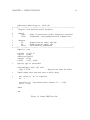
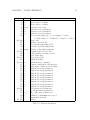
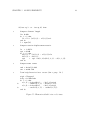
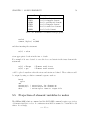
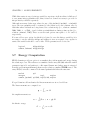
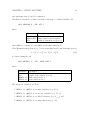
lct = yyy(16:30)
call setval(yyy(31:45),15, ctl)
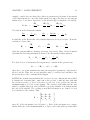
If FEAP parameters or expressions are used to define a numerical entry the subprogram
setval will make the appropriate evaluation. If necessary, the real value for ctl can
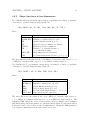
be cast into an integer using
itl = nint(ctl)
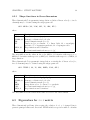
Note that the total number of added words must be 15 items or less (this is imposed
by the total of 16 items on any FEAP input record).
4.2
User Material Models
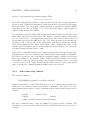
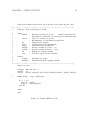
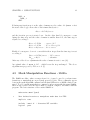
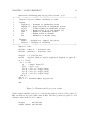
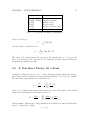
Users may add material models to elements by appending subprograms UMATIn and
UMATLn (where n have values from 0 to 9) to the FEAP system. The subprogram
UMATIn defines parameters used by the model and the subprogram UMATLn is called by
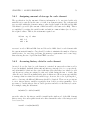
the element for each computation point (i.e., the quadrature point), receives the value
of a deformation measure as input and must return the value of stress and tangent
moduli as output.
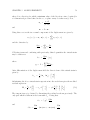
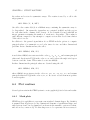
To activate a user material model the input data for the mesh MATErial command
must include a statement with UCON as the first field. For example in a solid element
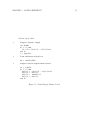
the command sequence can be
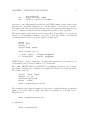
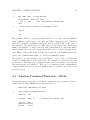
MATErial ma
SOLId
UCONstitutive xxxx v1 v2 ...
The role of the xxxx and vi data will be described in Section 4.2.1.
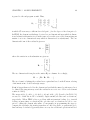
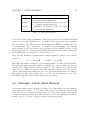
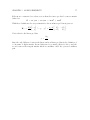
It is possible to use standard input parameters defined in Tables 5.5 to 5.8, as well
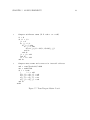
as by preceding the UCON command with a normal input sequence. For example, if
isotropic elastic properties are needed they may be included in the input sequence as
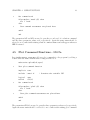
MATErial ma
SOLId
ELAStic ISOTropic e nu
UCONstitutive xxxx v1 v2 ...
No standard commands should follow the UCON command.
Alternatively, users may input elastic properties as part of their UMATIn module. If
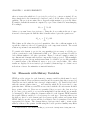
the user routine does input additional data records (after the UCON record) and these