1
breakdown
interaction
time stamp
0:00:00
0:00:12
2
3
1
log
segments
context
action
description of
task 1
action
interaction
description
0:00:13
action
segment
0:00:19
action
description of
0:00:21
action
interaction
0:00:22
action
segment
0:00:23
action
4
0:00:24
action
0:00:25
action
(verbal utterance)
0:00:44
action
description of
task 2
0:00:46
action
interaction
description
0:00:49
action
segment
0:00:50
action
(verbal utterance)
indications
1
2
code
3
5
4
7
code
5
6
6
code
7
column for logging user-product interaction
primary boundary, indicating the start of a new
interaction segment
secondary boundary, indicating the possible start of a
new interaction segment
column for definitive interaction segment boundaries
and descriptions
column for task descriptions and descriptions of
intermediate level episodes
column for breakdown indication type codes
event marked as breakdown indication
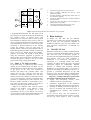
Figure 2. General format for DEVAN’s interaction overview table.
a programmable thermostat. The data from one of
these subjects was used for measuring and analysing
the evaluator effect (a subject who’s task
performance was not too extreme in terms of speed
and breakdowns). Subjects were given 12 tasks on
paper. Sessions lasted about 20 to 25 minutes. Tasks
were formulated as scenarios, in terms of user goals
describing a desired behaviour of the heating
system. For example: ‘You are going away on
holiday and don’t find it necessary that the house is
heated during that time. Make settings such that the
house will not be heated during the holidays’.
Subjects were asked and trained to think aloud,
using the instructions suggested by Ericsson &
Simon (1984). All sessions were recorded on video
(showing the subject’s hands as well as an overall
picture of the subject sitting at the table).
2.3
Study 3: TV-Video recorder
In the third study, a combined TV-video recorder
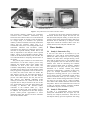
(Philips type nr. 21PT351A/00, see figure 1c) was
tested with twelve subjects. Data sets of two subjects
of age group 30 –40 years, were analysed to
measure and analyse the evaluator effect. One
subject (user A) was a relatively quiet man, who
worked in a reasonably systematic way. The other
subject (user B) was a talkative woman who seemed
to work less systematic and who experienced many
problems in performing the tasks. Subjects were
asked to perform 38 tasks in a maximum of onehour time. All tasks were related to the product’s
video functions and to general TV functions.
Subjects sat behind a table with the remote
control of the product, a user manual, a quick
reference card and a TV-guide on it. The
experimenter sat next to the subject. All sessions
were recorded on video (showing the handling of the
remote control as well as the TV in front view).
3 Data Analysis
In studies two and three the tool DEVAN
(Vermeeren et al. 2002) was used for analysing the
data. In study one, only DEVAN’s checklist of
breakdown indication types was used. Below, the
most important characteristics of DEVAN are
described.
3.1 The DEVAN Tool
DEVAN (Vermeeren et al. 2002) was developed as
a tool for structured and detailed analysis of video
data from user tests of interactive systems. It
provides clear and detailed data analysis procedures
and detailed criteria for what constitutes a
breakdown in an interaction. Interactions are
transcribed to a specified format that assists
evaluators in making explicit how they interpreted
interactions (figure 2). Additionally, DEVAN
provides a checklist that facilitates detecting
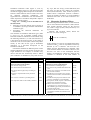
breakdowns in interactions (table 1), as well as a
format for describing the breakdowns. Moreover, it
provides a procedural description of the data
analysis process. Two main stages are distinguished,
consisting of three and two sub stages, respectively:
Stage one - creating a table that represents the
interaction at multiple levels of abstraction:
• logging and transcribing actions, verbal
utterances and non-verbal behaviour;
• preliminary segmentation of the interaction
based on threshold pause times between actions;
• deciding on definitive interaction segments, as
well as clustering and abstracting these to
intermediate-level episodes and task-level
episodes.
At the end of stage one, the interaction is
represented in the format shown in figure 2 (except
for the grey marks (figure 2, item 7) and the