1
Safety Information: Laser
SAFETY LABELS
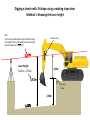
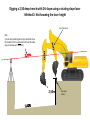
The One-Dot Laser used for first-time setup is a Class 2 laser, manufactured to comply with
the international rules of safety IEC 60825-1, 2001. Although the power of the emission of the
beam is less than 5mW in Class 2, the following cautions are recommended:
• Do not stare directly at the beam
• Do not set up the laser at eye level
Introduction
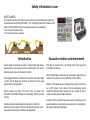
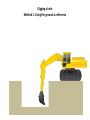
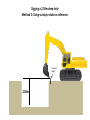
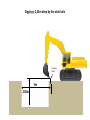
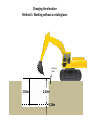
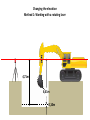
Use the system to dig with an excavator to a desired depth and create a
leveled plane or to set a slope and create a tilted surface. Also use it to
determine reach, such as for the width of a trench.
All the digging information is referenced to the center of the bucket blade
(or teeth) and the depth value shown is the distance from the actual
teeth position to the target depth.
Sensors measure the angle of the boom, stick, and bucket. The
information is transmitted instantly to the cab display. LEDs tell you how
far to dig.
A simple one-time procedure allows the iDig system to “learn” the
dimensions of your machine. That is how it constantly calculates, in real
time, where the bucket tip is in relation to the target depth.
Excavator rotation and movement
With iDig, the operator has to dig “straight ahead” (only moving the
booms/bucket in and out).
After the target depth has been set, the chassis has to stay stable. Any
rotation of it may produce an error depending on the inclination.
Rotation of the chassis can be compensated by using a fourth sensor
as a “pitch” sensor on the chassis. This will automatically correct
forward and backward tilting movements of your machine as well as
rotation, providing accurate depth information.
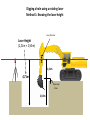
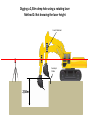
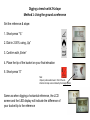
Every time that the excavator tracks are moved, it’s necessary to zero
again the reference (target) depth on a previous point or, depending on
the setup, take the laser height again.