1
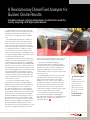
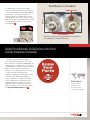
Part #1
Part #2
External strainers of both parts show
discoloration, but very little rust contamination.
Contamination caused by
rusted fuel lines
This vehicle received two fuel modules in
less than a week. The reported issue was
noisy operation and erratic fuel pressure.
Both modules were analyzed, and the fuel
module bucket and internal strainer were
heavily contaminated with rust. The external
strainers showed some discoloration, but
had significantly less rust in them. The
cause was a rusted return fuel line.
Fuel Pump
Installation
Checklist
Tips for successful
installations and
increased customer
satisfaction:
√ For proper installation
procedures, consult
the appropriate
vehicle service
manual. Read all
instruction sheets
included in the kit.
√ Don’t reuse an old
strainer. Install a
new Delphi strainer.
√ Install a new
in-line fuel filter, if
equipped with one.
On both parts, rust was found inside
the bucket and on the pump strainer.
found in the strainer should immediately trigger
an inspection of the fuel tank. A tank cleaning
or replacement should be conducted, based on
what is found.
It is important to understand how
contamination entered the fuel tank so
preventative action can be taken to eliminate
future occurrences. Areas like the tank vent
system should be checked to determine if
contaminants entered through this area. If
determined contaminants were “pumped” into
the tank or intentionally added, it’s important to
change fuel supplies or add a locking gas cap to
the vehicle.
Third Checkpoint
Visually examine the fuel module bucket and
internal strainer. Depending on the module
design, you may be able to view the module
bucket through an opening in the fuel module
design. If not, the bucket may have to be
removed from the fuel module through
disassembly. What is important to note is what
has accumulated in the fuel module bucket and
internal pump strainer. Contaminants entering
the fuel module bucket are indefinitely trapped,
so the bucket will contain a contamination history
of the fuel module.
√ Closely examine
electrical wiring
leading to the fuel
pump or module
for any evidence
of heat damage.
Replace damaged
wiring with new.
A significant amount of contamination found in
the bucket and internal strainer is a sure sign that
the part failed due to contamination. This
indicates that there are other issues on the
vehicle that need repair prior to the installation of
a new fuel module.
√ If the fuel module has
a detached float arm
included in the kit,
be sure to install it
using the instructions
provided with the kit.
Analysis of Actual Failures
Above are actual scenarios showing failed
modules. Since these issues were not identified
during the initial diagnosis, the results were
repeat failures. On closer inspection, all the
needed repairs could have been made the first
time. More important, a customer “comeback”
would have been avoided.
√ Inspect the fuel
tank and the metal
fuel lines for
contamination and
rust. Clean or replace
the tank and fuel
lines as needed.
15