1
Attachment: CDOT Traffic Signal Manual
CDOT Lead-In Cable Spec.
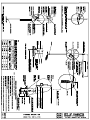
QUESTIONS & ANSWERS #3
DATE:
July 27, 2015
TO:
Prospective Bidders
FROM:
Jennifer Miloy
PROJECT:
Mt. Holly-Huntersville Road and Couloak Drive
Traffic and Pedestrian Signals Installation
Project # CDOT-IMP-015-001
The following questions and answers are presented solely for information purposes and do not change any
elements or aspects of the bid documents for this project.
1. Question: I have a couple questions regarding the cable. There are specs for the cable, but it doesn't
detail anything physical about the cable. I need to know how many conductors are required for the
16AWG cable and I also need to know what type 1 lead in cable is. Specifications do not clarify.
Answer: Conductor is 16 AWG 7 wire, used for the traffic signals, and 4 wire Belden used for the
pedestrian signals ran back to the controller. The lead in cable is 2 pair Belden cable, 18 AWG, and
is run from each induction loop detector to the controller, see attached Lead-In Cable Spec.
2. Question: There is mention of the Charlotte Department of Transportation Traffic Signal Manual,
but I can’t seem to find it anywhere. Please provide.
Answer: Please see attached Manual.
3. Question: Please provide more details for the application of the standoff bracket. The one
described in the first question and answers seemed to be too much for anything in this particular
contract. Risers according to NCDOT standards are attached with straps so I am not sure what the
application will be.
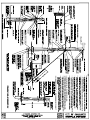
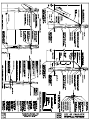
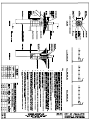
Answer: The bracket bolts to the pole and holds the risers so the conduit is not clamped to the pole.
Duke only allows us 2 conduits attached directly to the pole. You can see them on the signal at
Monroe Road and Richland and Mount Holly Huntersville Road and Brookshire (HWY 16).
NOTES
Submit all questions, request-for-interpretations, or request-for-clarifications by e-mail immediately upon
receipt of this Questions and Answers to Jennifer Miloy at [email protected].
End of Questions & Answers #3
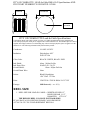
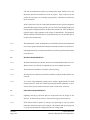
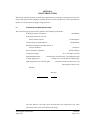
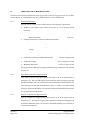
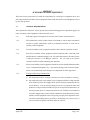
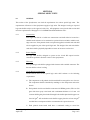
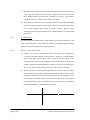
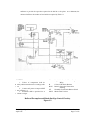
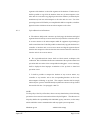
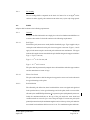
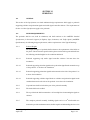
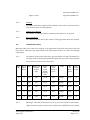
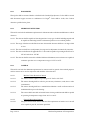
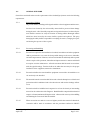
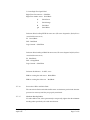
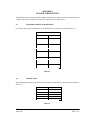
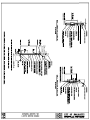
CITY OF CHARLOTTE LEAD-In Cable IMSA 50-2 Specifications AND
CDOT PART NUMBER T30120 DATED 11/2006
WIDETH
DIAMETER
HOLE
FOR BAR
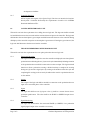
CITY OF CHARLOTTE Lead-In Cable Specifications
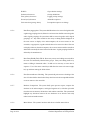
Construction details: This cable consists of 2 pairs of 18 AWG stranded tinned copper insulated with
color coded polyethylene. Each pair is wrapped with a shield and drain wire. The shielded pairs are cabled
together and wrapped with an over all shielding tape. Then a black polyethylene jacket is applied over the
shielded core. The following information fully described this product.
Conductors:
18 AWG 16/30TC
Insulation:
Polyethylene .030”
Wall .107 Dia
Color Code:
BLACK / WHITE, BLACK / RED
Ind. Shield:
Ind. Drain Wire:
Overall Shield:
Overall Drain Wire:
Alum. / Mylan Foil-In
20AWG (10 / 30) TC
Alum. / Mylar-Foil-Out
None
Jacket:
Black Polyethylene
.030” Wall .335 Dia.
Print:
CDOT P/N # T30120 IMSA 50-2 YYYY
Footage:
1000 foot reel ( + or – 0%)
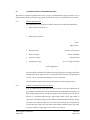
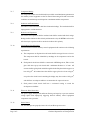
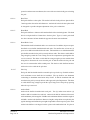
REEL SIZE
1. REEL SIZE FOR LEAD-IN CABLE----WIDETH OF REEL 12”
HOLE FOR BAR 1-1/2”
DIAMETER 15”TO 19”
THE BELDEN REEL CAN HAVE PLYWOOD SIDES
IF YOU HAVE ANY QUESTION PLEASE CALL KIM RHYNE
AT 704-336-2315 TO AVOID SHIPPMENT REFUSAL
SECTION 1
GENERAL REQUIREMENTS
1.1
INTENT
The purpose of this section of the Traffic Signal Specifications, hereinafter referred to as the
Specifications, is to set forth the general requirements and administrative details governing traffic signal
equipment and materials and their installation. All equipment and materials shall be furnished and
installed in accordance with the specified requirements.
If construction or installation services of traffic signal equipment is necessary, the requirements of the
NCDOT's Standard Specifications for Roads and Structures (hereafter referred to as the Standard
Specifications) shall also apply. In the event of conflict between the requirements of the Traffic Signal
Specifications and the Standard Specifications, the requirements of the Traffic Signal Specifications shall
take precedence.
Unless otherwise noted, all equipment and materials shall be new.
Whenever a reference is made to any standard, specification or code, the reference shall mean the
standard, specification or code specified, including amendments and addenda thereto, that is in effect on
the date of advertising for bids.
All materials and work necessary to complete the work and to make complete, operating and fully
functional systems shall be furnished whether or not specifically mentioned. Unless otherwise specifically
noted in each instance, no unit shall be left unconnected or nonfunctional.
1.2
DEFINITION OF CONTRACT TERMS
The Definitions of Terms set forth in the Standard Specifications (Division 1, Section 101) shall apply.
The following additional terms also apply.
Date of installation The date, according to the Engineer's daily record of construction, that the
equipment's operation is accepted and it begins normal continuous
operation.
City
The City of Charlotte Department of Transportation.
MUTCD
Manual on Uniform Traffic Control Devices for Streets and Highways
published by the United States Department of Transportation Federal
Highway Administration.
1.3
SUBMITTAL DATA
Various items must be submitted to the Engineer for review and acceptance. Prior to the purchase or
Traffic Signal Specifications
April 1998
Section 1
Page 1 of 7
fabrication of any such equipment or material, appropriate catalog cut sheets and specifications for all
standard, off-the-shelf items and shop drawings and other necessary data for all non-catalog or custommade items shall be submitted for review by the Engineer. All submittal data shall satisfy the
documentation size requirements set forth in paragraph 1.5.2, except that sepias may be submitted
instead of vellums. Unless otherwise noted, three (3) copies of 216 mm x 279 mm submittal information
and one (1) reproducible sepia of all larger submittal information shall be submitted. One (1) copy of the
216 mm x 279 mm documentation and the sepia, both with appropriate notations, will be returned after
the review.
The purpose of the submittal data is to show specifically and in detail that the specified requirements will
be satisfied, in order to avoid non-conformance with those requirements which does not become apparent
until it is too late to correct without serious consequences. For this reason, unusually detailed submittal
data is required prior to acceptance of many of the items. If preprinted literature, such as catalog cut
sheets, is used to satisfy some or all of the submittal data requirements, there shall be no statements on
the literature which conflict with the specified requirements. Any such statements shall be crossed off
and initialed. If a cut sheet shows more than one (1) option, the option(s) that will be provided shall be
clearly indicated.
Each item of submittal data shall be clearly labeled with the item number of the item to which it applies
in order to facilitate review. Each submittal shall contain sufficient information and details to permit full
evaluation of the item and its interrelationship with other items. Submittals which, in the judgement of
the Engineer, are insufficient to permit proper evaluation, will not be reviewed. All of the specified
requirements shall be carefully addressed in the submittal data. Nothing shall be left to assumption. The
functional and technical interrelationships among the various items shall be carefully addressed. In order
to facilitate the Engineer's review when preprinted manuals or other documentation are used to describe
compliance with the requirements for closed-loop systems or other computerized systems, a photocopy of
the specified requirements (both functional and equipment) for such system shall be included with the
submittal data. This photocopy shall be annotated to indicate specifically where, by page and paragraph,
the specified requirements are addressed in the submittal data.
Each element of submittal data shall be clearly marked with the item(s) to which it applies. An element is
one part of several parts of information related to the same item. Each drawing shall have a unique
drawing number which can be referenced. The same drawing number shall not be used on more than one
(1) sheet.
Following review of the submittal data, the Engineer will mark the items in one (1) of three (3) ways:
"approved", "approved as noted", or "rejected". Any items marked "approved" may be purchased or
fabricated. Items which are marked "approved as noted" are judged to be basically acceptable, but will
Section 1
Page 2 of 7
General Requirements
Charlotte Department of Transportation
have notations made on them about additional information required or corrections which are necessary
before the items can be accepted. In such case, said items shall be corrected and resubmitted for review.
Items which are marked "rejected" are judged to be basically unacceptable and shall be replaced with
alternate items or shall be redesigned and resubmitted for review.
1.4
CERTIFICATION
When requested, the manufacturer(s) shall certify, in writing in a form acceptable to the City, that the
equipment being furnished meets all specified requirements. Additional certification(s) from an
independent testing laboratory shall also be furnished by the manufacturer(s) when requested. The
report shall also state that the testing laboratory is independent of the controller manufacturer and that
neither the laboratory nor the controller manufacturer has any vested interest in the other.
1.5
DOCUMENTATION
As-built documentation of the work shall be provided as indicated below prior to acceptance of the work.
All documentation shall satisfy the documentation size requirements set forth in paragraph 1.5.2. All asbuilt documentation shall be subject to the approval of the Engineer prior to acceptance.
In addition to the documentation specified below, two (2) manuals of each type and two (2) prints of each
schematic diagram and cabinet wiring diagram applicable to each control equipment cabinet and the
equipment in it, shall be provided and shall be placed in a weatherproof holder which is provided and
mounted within each cabinet or housing for easy access. No documentation placed in the cabinet shall be
on blueline paper. All wiring diagrams and schematic diagrams not bound into printed manuals shall be
on bond paper at least 559 mm x 914 mm. All bond documentation shall be stored in a manila envelope
and placed in the weatherproof holder. Documentation, including two (2) operator's manuals, for
equipment purchased for stock by the City shall be packaged with the equipment in its shipping container.
1.5.1
Types of Documentation Required
The as-built documentation shall consist of the following documents as a minimum and
as applicable. Required manuals and other documentation may be combined.
1.5.1.1
Operator's Manuals
A manual containing detailed operating instructions for each different type or model of
equipment shall be furnished. This manual must also contain instructions for possible
modification to the equipment within the capability of the equipment.
Traffic Signal Specifications
April 1998
Section 1
Page 3 of 7
1.5.1.2
System Software User's Manual
When a closed-loop system or other type of computerized system is furnished, a user's
manual or manuals shall be furnished covering the proper use of all traffic signal
applications software furnished for the microcomputers or computers. This manual(s)
shall be written from a traffic engineering perspective and for use by personnel who
have virtually no understanding of the operation of a computer system.
1.5.1.3
Maintenance Procedures Manuals
A manual containing detailed preventive and corrective maintenance procedures shall
be furnished for each different type or model of equipment.
1.5.1.4
Cabinet Wiring Diagrams
A cabinet wiring diagram shall be furnished for each different cabinet, identified by
location.
1.5.1.5
Electrical Schematic Wiring Diagrams
An electrical schematic wiring diagram shall be furnished for each different type or
model of equipment.
1.5.1.6
System Connection Diagrams
Connection diagrams for system interconnection cables and associated terminations
shall be furnished.
1.5.2
Formats and Quantities of Documentation
At least five (5) copies of all bound documentation shall be furnished, except that only
one (1) set of manuals shall be required for commercially available software packages,
such as word processors and spread sheets. Except for standard bound manuals, all 216
mm x 279 mm documentation, including 279 mm x 432 mm drawings folded to 216 mm
x 279 mm, shall be bound in logical groupings in loose-leaf binders of either the 3-ring
or plastic slide-ring type. Each such bound grouping of documentation shall be
permanently and appropriately labeled.
All documentation which exceeds the size of 216 mm x 279 mm shall be furnished in the
form of good quality, highly legible, reproducible vellum drawings; however, the use of
279 mm x 432 mm drawings folded and bound into 216 mm 279 mm manuals shall be
permitted without the need for vellums. These vellum drawings may be vellum, sepias,
or photographically created vellums of the original drawings. Only one (1) copy of such
reproducible vellums is required in each instance; however, a separate vellum of the
cabinet wiring diagram for each control equipment cabinet, labeled with the location
Section 1
Page 4 of 7
General Requirements
Charlotte Department of Transportation
name and number, shall be required even though some of the cabinets may be wired
identically. All vellums shall be 559 mm x 914 mm, unless otherwise approved by the
Engineer in each instance, and shall be reverse-reading. If smaller drawings exist, they
shall be placed in the lower left-hand corner of the 559 mm x 914 mm vellum sheets.
All vellums shall be either single-matte or double-matte. If single-matte, the text shall
read correctly when viewed from the matte side. Vellums shall not be folded or creased
in any way.
1.6
GUARANTEES
All of the equipment, materials and workmanship supplied under these Specifications shall be fully
guaranteed for at least two years. All warranties and guarantees that are customarily issued by the
equipment manufacturers which exceed this requirement shall be acceptable to the City. The warranty
period shall begin on the date of the final acceptance of all work if contractor supplied, or on the date of
delivery to the City if supplied to the City by a manufacturer or manufacturer's representative. This
guarantee shall cover all parts and labor necessary or incidental to the repair of any defect in equipment
or workmanship and malfunctions that arise during the guarantee period. The guarantee shall be
provided to the City in writing prior to final acceptance of the work or material. The guarantee shall
unconditionally cover all specified requirements. The wording of the guarantee shall be subject to the
approval of the Engineer.
The warranties and guarantees delivered by the manufacturer to a contractor shall include the provision
that they are subject to transfer to the City or its designated maintaining agency, and shall be
accompanied by proper validation by the manufacturer. Transfer of warranties and guarantees to the
City shall occur at the time of acceptance of the work.
Workmanship supplied in the installation of equipment and materials under these Specifications by a
contractor shall be fully guaranteed for a minimum period of one year from the date of final acceptance
of all work.
1.7
SOFTWARE LICENSING AND UPDATES
Each control equipment manufacturer shall furnish to the City updates of the software contained in, used
by or related to the operation and maintenance of equipment furnished to the City as follows. Updates
provided for equipment purchased for use on the National Highway System with Federal Aid shall
require only that updates be supplied to correct deficiencies in the operation of the equipment, and this
requirement shall be limited to the warranty period. In no case shall the period in which updates are
provided to the City be shorter than the usual and customary period offered by the manufacturer.
Traffic Signal Specifications
April 1998
Section 1
Page 5 of 7
1.7.1
Equipment Software and Firmware Updates
Each control equipment manufacturer shall furnish all control equipment program
updates, including updated documentation, to the City for a minimum period of five (5)
years from the date of acceptance of the equipment at no additional cost to the City.
For this purpose, program updates are defined as adjustments to the equipment's
software or firmware programming to correct errors and to provide minor
enhancements. It is not intended that new programs or major revisions (new versions)
of existing programs be provided. Furthermore, this requirement is not intended to
apply to personal type computers. Software shall include programming of any standard
programmable logic device (PLD), including PALs, ROMs, PROMs, EPROMs,
EEPROMs and MCUs. All software and firmware updates shall be furnished either as
readable programmed devices or as JEDEC or binary files on 1.44 Mega-byte diskettes,
as applicable, for downloading from a personal computer to appropriate programming
devices..
1.7.2
Control Equipment Related Personal Computer Software Updates
Each control equipment manufacturer shall furnish to the City updates, including
updated documentation, of all control equipment related personal computer software
that is furnished to the City with or for the control equipment for a minimum period of
five (5) years from the date of acceptance of the associated control equipment at no
additional cost to the City.
For this purpose, program updates are defined as
adjustments to the related equipment's personal computer software programming to
correct errors and to provide minor enhancements. It is not intended that new
programs or major revisions (new versions) of existing programs be provided. The
software updates shall be furnished on the same medium as the originally furnished
software.
Section 1
Page 6 of 7
General Requirements
Charlotte Department of Transportation
1.7.3
Closed-Loop System Software Updates
Each closed-loop system manufacturer shall furnish to the City updates, including
updated documentation, of all closed-loop system traffic applications personal
computer software that is furnished to the City with or for the closed-loop system for a
minimum period of five (5) years from the date of acceptance of the associated system
at no additional cost to the City. For this purpose, program updates are defined as
adjustments to the related equipment's traffic applications software programming to
correct errors and to provide minor enhancements. It is not intended that new
programs or major revisions (new versions) of existing programs be provided.
Furthermore, it is not intended that updates be provided for computer operating
systems, word processing software, spreadsheet software or other standard software that
is not related to the traffic control, monitoring or reporting functions of the systems.
The software updates shall be furnished on the same medium as the originally furnished
software.
1.7.4
Software Documentation Updates
Required updates of written documentation shall be provided in the same number as
were originally provided.
1.7.5
Software Licensing
The City shall be licensed by the manufacturer to copy and utilize all software updates,
including documentation, in all equipment and on all personal computers owned or
under the control of the City. The City shall also be licensed to copy and utilize all
firmware or software provided in equipment purchased for the maintenance of
equipment under control of the City. Any software or firmware devices (as defined in
Section 1.7.1) installed in equipment shall be readable (not copy protected), or a copy
shall be furnished to the City in a format required by Section 1.7.1.
1.8
IDENTIFICATION OF EQUIPMENT
Each piece of traffic control equipment which is housed in a case or housing shall have permanently
inscribed on the exterior of said case or housing the manufacturer's name, model number, serial number,
and any additional data needed for proper identification. Identification information for cabinets shall be
permanently inscribed on the interior of the door.
Traffic Signal Specifications
April 1998
Section 1
Page 7 of 7
SECTION 2
PRETIMED TRAFFIC SIGNAL CONTROLLERS
SECTION 3
ACTUATED TRAFFIC SIGNAL CONTROLLERS
These sections have purposely been omitted from these specifications. Signal controllers will be supplied
by the City or will be purchased using the current North Carolina Department of Transportation traffic
signal equipment specifications and/or the project special provisions.
Traffic Signal Specifications
April 1998
Sections 2 and 3
Page 1 of 1
SECTION 4
CONFLICT MONITORS
This section of the Specifications sets forth the requirements for conflict monitors.
4.1
BASIC REQUIREMENTS
All conflict monitors shall conform to the requirements of Section 1 and the following requirements.
4.1.1
All conflict monitors furnished shall be new.
4.1.2
All conflict monitors furnished shall meet the requirements of Section 6 of the
NEMA
Standards
Publication
TS1-1989,
Traffic
Control
Systems
(TS-1
Specifications), published by the National Electrical Manufacturers Association.
4.1.3
All electronic components used in the conflict monitor shall be commercially
available components which may be supplied by electronics supply houses. No
proprietary components shall be used in the conflict monitors.
Exception:
The City may permit, at its discretion, equipment with proprietary
components to be supplied if the manufacturer agrees to supply the proprietary
components to the City for repair purposes for a minimum period of five years. If
the components are no longer available during this period, the manufacturer shall
replace or otherwise repair any unit in which the component fails during that period
at the price of the discontinued component.
4.1.4
The decision to perform warranty work by the City of Charlotte electronics
technicians or to have warranty work performed by the vendor shall be at the
discretion of the City. Bench repair training on the manufacturer’s equipment shall
be provided as required by the bid document or plans at no additional cost to the
City unless otherwise specified. In addition to any formal training requirements, the
manufacturer shall agree to provide the following upon request:
1) Prompt
technical support to the City repair personnel during the contract and for a period
of one year after the end of the warranty period at no cost to the City 2) Parts shall
be supplied by the vendor to the City for all warranty repairs at no cost to the City
(defective parts replaced under warranty by the Electronic Systems Lab will be
returned to the vendor for examination at the vendor’s request). 3) Schematics and
other documentation required to perform bench repair shall be sent to the
Electronic Systems Lab within two weeks of request.
Traffic Signal Specifications
April 1998
Upon request from the
Section 4
Page 1 of 3
vendor, the City agrees not to divulge any proprietary information contained in
those documents. At the request of the City, the vendor shall perform warranty
repairs to equipment which fails during the warranty period at no cost to the State
including freight costs to ship repaired equipment back to the Electronic Systems
Lab.
The City shall pay freight charges to ship equipment to the vendor or
manufacturer. All equipment shall be repaired and returned to the City within
twenty-one (21) calendar days of receipt by the manufacturer.
4.1.5
The manufacturer's name, model number, serial number, and any other information
necessary for proper identification shall be permanently inscribed on each piece of
equipment covered by this section of the Specifications.
4.2
FUNCTIONAL REQUIREMENTS.
4.2.1
The absence of the programming card shall cause the conflict monitor to trigger,
and remain in the triggered state until reset.
4.2.2
The conflict monitor shall recognize the following faults, in addition to those
specified by NEMA TS–1 Section 6, and shall trigger as required by the NEMA
Specifications:
A. Yellow indication missing or shorter than 2.7 seconds (with ± 0.1 second
accuracy);
B. Walk indication without green vehicle indication on same channel;
C. Dual Indications.
The tests for short and missing yellows and for dual indications shall be turned on or
off per channel. The test for walk without green shall be selectable for each unit.
The conflict monitor shall remain in the triggered state until the unit is reset unless
otherwise specified.
4.2.3
When the conflict monitor is triggered, it shall provide a visual indication of the type
of event which triggered the unit. These indications and the status of each channel
shall be retained until the conflict monitor is reset.
4.2.4
Section 4
Page 2 of 3
The conflict monitor shall allow user selectable latching of the CVM, 24V I, and
Conflict Monitors
Charlotte Department of Transportation
24V II inputs. When the monitor is set for latching operation and one of these
events is triggered, the conflict monitor shall be required to be reset before
returning to normal operation.
4.3
PHYSICAL REQUIREMENTS.
4.3.1
Where required by the plans or bid list, the conflict monitor shall be supplied with a
wiring harness set. Each harness shall be fitted with the proper connector and shall
be three meters long.
4.3.2
The conflict monitor shall have the number of channels required by the plans, bid
list or specifications.
4.3.3
All circuit boards shall have a moisture resistant coating.
4.4
ADDITIONAL REQUIREMENTS FOR LOGGING MONITORS
If the plans or the bid list require a logging conflict monitor, the conflict monitor shall conform to all
of the requirements of Articles 4.1 - 4.3 and the following additional requirements.
4.4.1
The conflict monitor shall have an RS-232C serial communications port for the
connection of a serial printer using ASCII codes.
4.4.2
The conflict monitor shall retain in nonvolatile memory at a minimum, the most
recent nine (9) fault occurrences and the most recent ten (10) power failures. The
conflict monitor shall have an internal time-of-year clock that will allow log entries
to be identified by date and time-of-day. Each entry shall be so identified.
4.4.3
The conflict monitor shall, upon request, cause the most recent nine (9) (minimum)
faults to be printed.
Traffic Signal Specifications
April 1998
Section 4
Page 3 of 3
SECTION 5
VEHICLE DETECTORS
This section of the Specifications sets forth the requirements for both digital loop type vehicle detectors
(also referred to as detector amplifiers or loop detector units) and magnetometer vehicle detectors. All
vehicle detectors shall conform to the requirements of Section 1 of these Specifications and to the
following requirements. Requirements for microloop detector elements may be found in Section 16.
5.1
GENERAL REQUIREMENTS
All vehicle detectors shall conform to the following requirements.
5.1.1
All detectors furnished shall be new.
5.1.2
The detector shall conform to the requirements of NEMA TS1-1989 Section 15 or
NEMA TS2-1992 Section 6.5, “Inductive Loop Detectors,” except as superseded or
modified by this section of the Specifications.
For the purpose of these
specifications, the loop and its associated lead-in cable are not considered part of
the Inductive Loop Detector.
5.1.3
All electronic components used in the detector shall be commercially available
components which may be supplied by electronics supply houses. No proprietary
components shall be used in the detectors.
Exception: The City may permit equipment with proprietary components to be
supplied if the manufacturer agrees to supply the proprietary components to the
City for repair purposes for a minimum period of five years. If the components are
no longer available during this period, the manufacturer shall replace or otherwise
repair any unit in which the component fails during that period at the price of the
discontinued component.
5.1.4
The decision to perform warranty work by the City of Charlotte electronics
technicians or to have warranty work performed by the vendor shall be at the
discretion of the City. Bench repair training on the manufacturer’s equipment shall
be provided as required by the bid document or plans at no additional cost to the
City unless otherwise specified. In addition to any formal training requirements,
the manufacturer shall agree to provide the following upon request: 1) Prompt
technical support to the City repair personnel during the contract and for a period
of one year after the end of the warranty period at no cost to the City 2) Parts shall
be supplied by the vendor to the City for all warranty repairs at no cost to the City
(defective parts replaced under warranty by the Electronic Systems Lab will be
returned to the vendor for examination at the vendor’s request). 3) Schematics
Traffic Signal Specifications
Section 5
April 1998
Page 1 of 5
and other documentation required to perform bench repair shall be sent to the
Electronic Systems Lab within two weeks of request. Upon request from the
vendor, the City agrees not to divulge any proprietary information contained in
those documents.
At the request of the City, the vendor shall perform warranty repairs to equipment
which fails during the warranty period at no cost to the City including freight costs
to ship repaired equipment back to the Electronic Systems Lab. The City shall pay
freight charges to ship equipment to the vendor or manufacturer. All equipment
shall be repaired and returned to the City within twenty-one (21) calendar days of
receipt by the manufacturer.
5.1.5
The manufacturer's name, model number, serial number and any other information
necessary for proper identification shall be permanently inscribed on each detector.
5.1.6
Operating instructions for shelf mounted detectors shall be permanently inscribed
on the detector.
5.2
PHYSICAL REQUIREMENTS.
5.2.1
All shelf mounted detector shall be housed in a durably finished nonferrous case.
Removal of the case shall be accomplished by the use of simple hand tools.
5.2.2
All circuit boards shall have a moisture resistant coating.
5.2.3
All components of shelf mounted detectors shall be readily accessible with the case
removed.
5.2.4
A 1.8 meter long (minimum) wiring harness shall be supplied with each shelf
mounted detector. Each wire shall be permanently labeled, numbered or colorcoded. The loop wires shall be twisted to within 13 mm of the connector.
5.3
ELECTRICAL REQUIREMENTS.
5.3.1
Lightning and surge protection shall be incorporated into the design of the
detector. It shall not be necessary to add external surge protection devices.
5.3.2
Each channel shall be capable of tuning to and operating on any loop system
inductance within the range of 50 to 2,000 μh. The channel shall operate properly
on a loop system which has a single-point short to earth ground.
Section 5
Page 2 of 5
Vehicle Detectors
Charlotte Department of Transportation
5.4
FUNCTIONAL REQUIREMENTS.
5.4.1
The detector shall register a permanent call during tuning operations, as a result of
a loop fault, and when power is removed.
5.4.2
The detector shall be completely self-tuned within 10 seconds after application of
power or restoration of interrupted power and within 10 seconds after correction of
a loop fault.
5.4.3
Each multi-channel detector amplifier shall sequentially scan each of its channels.
5.4.4
Each channel shall have a minimum of eight (8) sensitivity levels.
5.4.5
On a multi-channel detector, it shall be possible to turn a channel off and disable its
operation from the front panel.
5.4.6
Each channel shall monitor the loop for fault conditions. Upon detection of a fault
condition, the monitor shall provide an indication of the occurrence and shall
maintain the indication until manually reset, even if the condition is subsequently
corrected. The fault conditions are:
5.4.7
•
An open-circuited loop system
•
A short to ground
•
A 25 percent reduction in inductance
When the test specified in NEMA TS-1 paragraph 15.2.17.1 or TS-2 paragraph
6.5.2.17.1 is performed, the output shall be maintained for a minimum of 4 minutes.
When the same test is performed with a Class 3 vehicle, the output shall be
maintained for a minimum of 30 minutes, but not more than 120 minutes.
5.4.8
If specified, the detector shall be equipped with timing features. Delay shall be
adjustable in one second increments (maximum) over the range of zero to thirty
seconds (minimum). Extend shall be adjustable in one quarter (1/4) second
increments (maximum) over the range of zero to fifteen seconds (minimum). It
shall be possible to set both delay and extend timing for the same channel. If both
timings are set, the delay shall operate first. After the delay condition has been
satisfied, the extend timer shall operate normally. It shall not be necessary to
satisfy the delay timing for an actuation arriving during the extend portion.
Traffic Signal Specifications
April 1998
Section 5
Page 3 of 5
5.4.9
A Two-Channel Detector shall operate normally with the same loop connected to both
channels.
5.5
MAGNETOMETER DETECTORS
This article sets forth functional and design requirements for a magnetometer vehicle detector which
operates by measuring the difference in the level of the earth's magnetic field caused by the passage or
presence of a vehicle within its zone of influence. The magnetometer detector shall consist of a control
unit and the probes (sensors). The magnetometer detector shall conform to the requirements of Article
5.1 and the following requirements.
5.5.1
Detection shall be possible for all vehicles at speeds from 0 to 130 km/h. Only one (1)
actuation per vehicle shall be allowed for each sensor.
5.5.2
The control unit shall have two (2) separate channels and each channel shall accept
from one (1) to at least twelve (12) probes connected to it in series. The number of
probes to be furnished with each channel shall be as specified on the bid list or plans.
5.5.3
Parked or stalled vehicles over the probes on a channel or damaged probes on a
channel shall have no effect on the operation of the other channel.
5.5.4
The detector shall, as a minimum, provide both presence and pulse modes of operation.
In the presence mode, the control unit shall provide an output as long as a vehicle
remains in the detection zone. In the pulse mode, a pulse of 125 milliseconds ± 25
milliseconds duration shall be provided.
5.5.5
Each channel of the detector shall detect bicycles, motorcycles and other licensed
vehicles when the probes are installed according to the manufacturer's specifications.
5.5.6
The control unit shall be designed to provide the output via a relay or an optically
isolated solid state device for each channel as required by the plans or bid list. The
output shall conform to the requirements of paragraphs 15.2.27.1 (for relays) or
15.2.27.2 (for solid state devices) of the NEMA Standards Publication TS-1.
5.5.7
Each probe shall include at least 9.1m of low-capacitance lead-in cable. The lead-in
cable shall be 4-conductor cable with minimum A.W.G. #18 stranded conductors. The
cable shall have a polyethylene jacket and shall be filled with a water-blocking material.
Longer lengths of lead-in cable shall be provided if required by the bid list or the plans.
5.5.8
The probes shall be unaffected by temperature change, water, ice and pavement
deterioration.
Section 5
Page 4 of 5
Vehicle Detectors
Charlotte Department of Transportation
5.5.9
Electrical connections for both input and output circuits shall be by means of an MStype connector. All similar detectors shall be directly interchangeable without any
wiring or component changes. Each detector shall be furnished with a 1.8m (minimum)
properly coded wiring harness.
Traffic Signal Specifications
April 1998
Section 5
Page 5 of 5
SECTION 6
SURGE PROTECTORS
This section of the Specifications sets forth the requirements for various types of surge protectors for use
in the traffic signal control equipment specified elsewhere in these Specifications. The requirements of
Section 1 of the Specifications apply to surge protectors.
6.1
POWER LINE SURGE PROTECTORS
The power line surge protector shall conform to the following requirements.
Peak surge current occurrences:
20 minimum
Peak surge current for an 8 x 20
microsecond waveform:
20,000 amperes
Clamp voltage at 20,000 amperes:
280 maximum
Maximum continuous operating current at
120 volts, 60 Hertz
10 amperes
Series inductance (nominal):
200 microhenrys
Temperature range:
-40 to +85 degrees Celsius
Maximum dimensions:
105 mm wide x 185 mm long x 77 mm high plus studs
Voltage Suppression:
Voltage never exceeds 280 volts during surge
Spike suppression for ±700 volt spike:
±40-volt deviation from sine wave at all
phase angles from 0 to 180°
Filtering:
Minimum
Insertion
Frequency (Hertz)
Loss (dB)
60
0
10,000
30
50,000
55
100,000
50
500,000
50
2,000,000
60
5,000,000
40
10,000,000
20
20,000,000
25
The unit shall be a two-stage device that will allow the connection of the radio
interference filter in the circuit between the stages.
Traffic Signal Specifications
April 1998
Section 6
Page 1 of 4
6.2
LOOP DETECTOR SURGE PROTECTORS
This article sets forth the specifications for two (2) types of loop detector surge protectors: one (1) which
mounts directly on terminal blocks and one (1) which mounts on a self-contained stud.
6.2.1
General Requirements
All loop detector surge protectors shall conform to the following requirements.
•
Number of 100 ampere surge current occurrences of a 10 x 700 microsecond
waveform:
•
Common mode:
at least 25
Differential mode:
at least 25
Clamp characteristics (common and differential modes):
Maximum break-over voltage:
170 volts
Maximum on-state clamping
30 volts
voltage:
Response time:
less than 5 nanoseconds
Off-state leakage current:
less than 10 microamperes
•
Capacitance (common and differential modes):
•
Temperature range:
•
Maximum dimensions:
less than 220 picofarads
-40 to +85 degrees Celsius
51 mm x 51 mm x 32 mm
The surge protector shall operate properly with the loop type vehicle detectors specified
in Section 5.
6.2.2
Type TB Loop Detector Surge Protectors
Type TB loop detector surge protectors shall conform to all of the requirements of
paragraph 6.2.1. The Type TB surge protector shall have three (3) integral spade lugs
that shall enable the unit to be mounted and connected directly to a terminal block. The
Type TB surge protector shall be furnished for either 11.11 mm or 14.29 mm terminal
spacing as required by the bid list or as required to match the terminal blocks to which it
is to be connected in each instance.
6.2.3
Type SC Loop Detector Surge Protectors
Type SC loop detector surge protectors shall conform to all of the requirements of
paragraph 6.2.1. The Type SC surge protector shall have an integral mounting ground
stud with a minimum length of 9.5 mm and a maximum diameter of 4.9 mm with an
associated mounting nut.
Section 6
Page 2 of 4
Surge Protectors
Charlotte Department of Transportation
6.3
COMMUNICATIONS SURGE PROTECTORS
This article sets forth the specifications for two (2) types of communications surge protectors: one (1)
which mounts directly on telephone-type quick-connect blocks and one (1) which mounts in a socket.
6.3.1
General Requirements
All communications surge protectors shall conform to the following requirements.
•
•
Surge current occurrences at:
2000 amperes, 8 x 20 microsecond waveform:
at least 80
400 amperes, 10 x 700 microsecond waveform:
at least 80
Peak surge current for:
8 x 20 microsecond waveform:
10,000 amperes
(2,500
amperes/line)
10 x 700 microsecond waveform:
•
Response time:
•
Series resistance:
•
Capacity, average:
•
Temperature range:
•
Clamp voltage:
500 amperes/line
less than 1 nanosecond
15 ohms, maximum
1500 picofarads
-40 to +85 degrees Celsius
As specified on bid list or as required to match equipment in application.
The unit shall be a hybrid device with the first stage formed by a 3-element gas tube that
will withstand a peak surge current (8 x 20 microsecond waveform) of 10,000 amperes
per side. The second stage shall dissipate at least 1.5 kilowatts.
No tools shall be required for the insertion and removal of the surge protector.
6.3.2
Type Q Communications Surge Protectors
Type Q communications surge protectors shall conform to all of the requirements of
paragraph 6.3.1 and shall be for use on communications circuits which are not subject to
high-voltage ringing currents. The Type Q surge protector shall mount on and connect
directly to a standard telephone-type quick-connect block (ATT Type 66M1 or
equivalent). The Type Q surge protector shall have dimensions that allow Type Q surge
protectors to be mounted adjacent to each other on the same quick-connect block in a
way that does not render any of the quick-connect block terminals useless. The surge
protectors shall have finger grips on one end for easy removal.
Traffic Signal Specifications
April 1998
Section 6
Page 3 of 4
6.3.3
Type SC Communications Surge Protectors
Type SC communications surge protectors shall conform to all of the requirements of
paragraph 6.3.1 and shall service up to two communications circuit pairs. The Type SC
surge protector shall have a printed circuit board card-edge connector that will mate
with a Buchannan PN PCB 1B-10A connector. The contact strips shall be gold-plated.
The Type SC surge protector shall be furnished with a mating socket. The maximum
size of the Type SC surge protector with its socket shall be 51 mm x 70 mm x 32 mm.
6.4
24-VOLT DC SURGE PROTECTORS
The 24-volt DC surge protector shall conform to the following requirements.
•
Surge current occurrences at:
2000 amperes, 8 x 20 microsecond waveform:
•
at least 80
Peak surge current for:
8 x 20 microsecond waveform:
•
Response time, maximum:
•
Series resistance, each conductor:
•
Maximum dimensions:
•
Temperature range:
•
Clamp voltage:
2,000 amperes
30 nanoseconds
15 ohms, maximum
32 mm wide x 32 mm long x 64 mm high plus stud
-20 to +85 degrees Celsius
As specified on bid list or as required to match equipment in application.
The unit shall be a hybrid device with the first stage formed by a 3-element gas tube that
will withstand a peak surge current (8 x 20 microsecond waveform) of 5,000 amperes
per side. The second stage shall dissipate at least 1.5 kilowatts.
The 24-volt DC surge protector shall have an integral mounting ground stud with a
minimum length of 9.5 mm and a maximum outside diameter of 4.9 mm with an
associated mounting nut.
Section 6
Page 4 of 4
Surge Protectors
Charlotte Department of Transportation
SECTION 7
AUXILIARY CONTROL EQUIPMENT
This section of the Specifications sets forth the requirements for various types of equipment to be used
with and generally located in the control equipment cabinets with other traffic control equipment covered
by these Specifications.
7.1
GENERAL REQUIREMENTS
The requirements of Section 1 of these Specifications and the following general requirements apply to all
items of auxiliary control equipment, unless otherwise noted.
7.1.1
Following a power interruption, the accessory shall resume normal operation.
7.1.2
The manufacturer's name, model number, serial number, and any other information
needed for proper identification shall be permanently inscribed on each item of
auxiliary control equipment.
7.1.3
No item of auxiliary control equipment shall be either altitude or position sensitive.
7.1.4
Each item of auxiliary control equipment shall be furnished with a connecting cable
which shall have a minimum length of 3 m. The cable shall attach to the item by either
a multi-pin connector or an MS-type connector.
The raw ends of the harness
conductors shall have labels indicating their functions.
7.1.5
Each item of auxiliary control equipment shall be housed in a durably finished metallic
case or a shielded thermoplastic case. Any unused openings in the enclosure shall be
neatly covered with blank panels designed to complement the unit's appearance.
7.1.6
Testing and Servicing Considerations
A. All components shall be arranged so that they are easily accessible for servicing.
B. All components used in the auxiliary control equipment shall be readily available
from commercial electronics supply outlets, unless otherwise permitted by the City
in each instance. A list of parts specifying at least two (2) equivalent makes and
models for each part shall be furnished as part of the required documentation. If
the City permits the use of components which are not available from commercial
electronics supply outlets, a letter shall be submitted from the manufacturer of the
auxiliary control equipment to the City agreeing to supply said components to the
City and its maintaining agency (generally a municipality) for at least seven (7)
years from final acceptance of all work under the contract.
Traffic Signal Specifications
April 1998
Section 7
Page 1 of 5
7.1.7
Component Rating
All components shall be rated sufficiently beyond their actual minimum requirement in
the auxiliary control equipment so that no material shortening of life will occur under
conditions of maximum power dissipation at maximum ambient temperature.
7.1.8
Inductors and Transformers
All inductors and transformers shall have insulated windings. The insulation shall be
impregnated to exclude moisture.
7.1.9
Resistors and Capacitors
All resistors and capacitors shall be insulated and shall be marked with their ratings.
Ratings shall be indicated either directly with numerals or by the RETMA color codes.
All electrolytic capacitors shall be marked to indicate their polarity.
7.1.10
Circuit Board Considerations
Circuit boards used in the auxiliary control equipment shall conform to the following
requirements.
A. The components on all printed circuit boards shall be arranged for ease of access.
The components shall be identified by markings on the components and on the
boards.
B. Each printed circuit board shall be constructed of NEMA grade A, FR-4 or G10
glass cloth base epoxy resin board with a minimum thickness of 1.5 mm. All
contacts shall be gold-plated and all through-holes shall be plated with copper to at
2
2
least 305 g/m . All conduction tracks shall be copper plated to at least 610 g/m ,
2
except that the circuit board containing the display may have tracks of 305 g/m ,
and shall have an adequate width to accommodate the expected current.
C. Each printed circuit board shall have a conformal coating to retard the
development of mildew.
7.1.11
Electronic Noise Protection
The power supply shall provide sufficient filtering and capacity to prevent transient
voltage spikes from improperly triggering internal auxiliary control equipment
components into operation.
7.1.12
Power Source
The unit shall operate properly from a 120-volt, 60-Hertz power source.
Section 7
Page 2 of 5
Auxiliary Control Equipment
Charlotte Department of Transportation
7.1.13
Controller Interface
All DC inputs and outputs of the unit that are intended to interface directly with a
controller shall satisfy the requirements of Article 13.2 of NEMA Standards Publication
TS-1.
7.1.14
Fuses/Circuit Breakers
Auxiliary control equipment shall be suitably protected by a fuse or circuit breaker. If
fused, the fuse shall be replaceable by hand. The ratings of the fuses shall be labeled on
a panel surface adjacent to the fuse holder.
7.2
TIME SWITCHES
This article of the Specifications sets forth the requirements for solid-state, seven-day, automatic time
switches to be furnished as required by the bid list or the plans. The time switches shall conform to the
requirements of Article 7.1 and to the following requirements.
7.2.1
The unit shall be of all solid state design, except for the output relay, and shall contain a
real-time clock from which all time-selectable programs shall be derived.
7.2.2
The unit shall provide programming for one (1) full year or an automatic clock calendar
which extends a minimum of twenty (20) years beyond the unit's delivery date.
7.2.3
During power outage, the real-time clock and memory shall continue to operate on an
internal battery or capacitor backup power source. The backup power source shall
supply the power for a single outage of 48 hours minimum. Automatic recharging of
the battery or capacitor shall occur within 24 hours after resumption of power. The
time shall be crystal controlled with an accuracy of ± 0.005 percent throughout the full
temperature range.
7.2.4
The time settings and the real-time clock shall be programmable in increments of one
(1) minute or less.
7.2.5
Means shall be provided for rapidly setting the real-time clock via the front panel.
7.2.6
There shall be indicating devices on the unit to indicate the time and day, battery
condition, program in effect, and day of the week.
7.2.7
It shall be possible to manually synchronize the clocks in two (2) time switches to ± 1
second.
7.2.8
Means shall be provided for the manual selection of all programs via the front panel.
Traffic Signal Specifications
April 1998
Section 7
Page 3 of 5
7.2.9
Lightning and surge protection shall be provided for all input and output terminals.
7.2.10
Each output circuit shall have a minimum rating of 10 amperes at 120 volts, 60 Hertz
with a resistive load. Output relays shall have Form C contacts.
7.2.11
Daylight savings time data and feature enable shall be entered via the keyboard. Leap
year compensation shall be automatic.
7.2.12
ll programming shall be accomplished via a push button keyboard which is an integral
part of the time switch. The functions of the keys shall be clearly marked on the front of
the time switch. Time-of-day, day-of-week, date, year and the operation of the relay
output shall be easily settable from the integral keyboard.
7.2.13
The time switch shall be capable of initiating a minimum of sixteen (16) program steps.
A program step is defined as the time of day and the day or days of the week at which
the output shall be turned ON or OFF. It shall be possible to alter any individual
program step without disturbing any other step in the program.
7.2.14
The time switch shall be capable of executing ten (10) separate skip plans programmable up to a year in advance to accommodate school holidays. Each skip plan shall be
programmed by entering the beginning day (month/day/year) and the ending date for
which the output of the time switch will not be activated. The time switch shall be
capable of skipping as short a duration as one (1) day or as long as six (6) months. It
shall be possible to begin a skip plan in one (1) calendar year and end that same plan in
the next consecutive year.
7.2.15
Integral with the time switch shall be an easy to read alpha-numeric display. If time is
kept in a 12-hour format, provision shall be made to display AM/PM.
7.2.16
A means shall be provided to review the time switch program via the keyboard. Such
program review shall not affect the operation of the time switch.
7.2.17
The front panel of the time switch shall indicate the current day of the week, the current
time of the day, the current date and the status of the output (ON or OFF).
7.3
LOAD SWITCHES
This article of the Specifications sets forth the requirements for load switches as required by the plans, the
bid list or other sections of these Specifications. All load switches shall conform to the following
requirements.
7.3.1
Section 7
Page 4 of 5
Each load switch shall be a three-circuit load switch conforming to the requirements of
Auxiliary Control Equipment
Charlotte Department of Transportation
Section 5 of NEMA Standards Publication TS-1, except that load switches having all
components totally encapsulated on the connector shall be permitted.
7.3.2
All load switches shall be furnished with sturdy plugs which shall not crack due to
careless insertion or removal of the load switches.
7.4
FLASHERS
This article of the Specifications sets forth the requirements for solid state flashers as required by the
plans, the bid list or other sections of these Specifications. All flashers shall conform to the following
requirements.
7.4.1
Each flasher shall be a Type 3 solid state flasher conforming to the requirements of
Section 8 of NEMA Standards Publication TS-1, except that flashers having all
components totally encapsulated on the connector shall be permitted.
7.4.2
Each flasher shall be furnished with a sturdy plug which shall not crack due to careless
insertion or removal of the flasher.
Traffic Signal Specifications
April 1998
Section 7
Page 5 of 5
SECTION 8
SPECIAL LOGIC UNITS
8.1
GENERAL
This section of the Specifications sets forth the requirements for various special logic units. The
requirements of Section 1 of the Specifications apply to logic units. The design of each type of special
logic unit shall be subject to the approval of the City. All equipment covered under this section shall
meet the requirements of Paragraph 2.1.5 of NEMA Standards Publication TS-1.
8.1.1
Construction
Each logic unit shall be of solid state construction and shall either be housed in a
suitable metal enclosure or be contained on a printed circuit card with a suitable cardedge connector. If the printed circuit card option is supplied, a suitable card rack shall
also be supplied as part of the special logic unit. The design of the card rack shall be
such that it shall be physically impossible to insert an incorrect card in a slot.
8.1.2
Power Supplies
The logic units shall be designed to operate on the 24-volt DC output from the
controllers specified in Sections 2 and 3 of the Specifications.
8.1.3
Harnesses
Each special logic unit shall be equipped with a harness with a suitable connector. The
harness shall be at least 3 m long.
8.1.4
Circuit Board Considerations
Circuit boards used in the special logic units shall conform to the following
requirements.
A. The components on all printed circuit boards shall be arranged for ease of access.
The components shall be identified by markings on the components and on the
boards.
B. Each printed circuit board shall be constructed of NEMA grade A, FR-4 or G10
glass cloth base epoxy resin board with a minimum thickness of 1.5 mm. All
contacts shall be gold-plated and all through-holes shall be plated with copper to at
2
2
least 305 g/m . All conduction tracks shall be copper plated to at least 610 g/m
and shall have an adequate width to accommodate the expected current.
C. Each printed circuit board shall have a conformal coating to retard the
Traffic Signal Specifications
April 1998
Section 8
Page 1 of 3
development of mildew.
8.1.5
Controller Interface
All DC inputs and outputs of the Special Logic Unit that are intended to interface
directly with a controller shall satisfy the requirements of Article 13.2 of NEMA
Standards Publication TS-1.
8.2
CALLING DETECTOR LOGIC UNIT
This article sets forth the requirements for a calling detector logic unit. The logic unit shall be suitable
for installation between a detector unit and the associated detector input to the controller. The logic unit
shall monitor the associated phase's green output and shall connect the detector to the controller during
all displays of the controller except the associated phase's green interval. During the green interval, the
logic unit shall disconnect the detector from the controller.
8.3
TWO-PULSE PEDESTRIAN DETECTOR LOGIC UNIT
This article sets forth the requirements for a two-pulse pedestrian detector logic unit.
8.3.1
Functional Operation
This logic unit shall be designed to cause the controller to display the associated phase's
pedestrian intervals during the two (2) successive cycles immediately following actuation
of the pedestrian detector which is connected to its detector input. The logic unit shall
function to allow a pedestrian crossing a divided roadway to complete his crossing
during two (2) successive signal cycles by crossing to the median on the first cycle and
completing his crossing on the second cycle without the need for a pedestrian detector
on the median.
8.3.2
Output
The output of the logic unit shall be suitable for connection to the pedestrian detector
input of the associated phase of the controller.
8.3.3
Inputs
The logic unit shall have two (2) inputs. One (1) shall be a contact closure from a
pedestrian push-button. The other shall be the WALK or GREEN output from a
controller.
8.3.4
Signal Monitoring
The logic unit shall monitor the associated WALK (or GREEN, if no pedestrian
signals) signal output of the controller as necessary.
Section 8
Page 2 of 3
Surge Protectors
Charlotte Department of Transportation
8.3.5
Logic Reset
Each actuation of the associated pedestrian detector shall reset the logic to cause two
successive displays following the most recent actuation.
8.4
DETECTOR SWITCHING LOGIC UNIT
This article sets forth the requirements for a detector switching logic unit. The logic unit shall be suitable
for installation between a detector unit and the associated detector inputs to the controller. The logic unit
shall monitor a specified phase's green output or other specified 120-volt signal and shall connect the
detector to one (1) specified phase of the controller when the monitored signal in ON and to a second
specified phase when the monitored signal is OFF.
Traffic Signal Specifications
April 1998
Section 8
Page 3 of 3
SECTION 9
CONTROL EQUIPMENT CABINETS
This section of the Specifications sets forth the requirements for various types of control equipment
cabinets. All cabinets shall conform to the following requirements. The requirements of Section 1 of the
Specifications also apply. The following types of control equipment cabinets are covered in this section:
•
Pretimed cabinets to house pretimed traffic signal controllers;
•
Type 2 cabinets to house two-phase traffic signal controllers;
•
Type 4 cabinets to house two-phase through four-phase traffic signal controllers;
•
Type 8 cabinets to house two-phase through eight-phase traffic signal controllers;
•
On-street master cabinets to house on-street master controllers; and
•
Remote detector cabinets to house loop-type vehicle detector units remotely from an
intersection traffic control cabinet.
9.1
GENERAL CABINET REQUIREMENTS
All cabinets shall conform to the following requirements unless otherwise noted.
9.1.1
Shop Drawings Required
Detailed shop drawings showing the dimensions, layout, labeling, back panel terminal
facilities, and control circuit wiring of all cabinet models shall be submitted for the City's
review prior to fabrication of the cabinets. The drawings shall show the location of all
equipment and terminals within the cabinet in all three (3) orthogonal views in such a
way that the accessibility of each item can be verified.
9.1.2
NEMA Standards
All cabinets shall conform to NEMA Standards Publication TS-1 (NEMA
Specifications) published by the National Electrical Manufacturers Association, unless
otherwise noted.9.1.3
9.1.3.1
Cabinet Size - General
Each cabinet shall be large enough to accommodate all of the required and specified
future equipment and wiring within the cabinet in a manner that provides sufficient
room for servicing and for possible additional equipment. Ample space shall be
provided in the bottom of the cabinet for the entrance and forming of all necessary
wires and cables without interference with the operation, viewing and servicing of the
equipment. The size of the cabinet shall permit all required and specified future
equipment to be mounted in the upright position with sufficient space around it to
provide adequate ventilation. At least 50 mm clearance shall be provided around all
vents and fans to insure proper air circulation.
Traffic Signal Specifications
April 1998
Section 9
Page 1 of 23
9.1.3.2
The interior size of the cabinets shall be at least:
3
68,800 cm
Remote detector cabinets:
3
141,000 cm
Pole- and pedestal-mounted controller cabinets:
Base-mounted controller cabinets:
328,000 cm
Pole- and pedestal-mounted on-street master cabinets:
Base-mounted on-street master cabinets:
98,000 cm
213,000 cm
3
3
3
3
If specified on the bid list or the plans, controller cabinets as small as 93,000 cm may
be furnished for pole- and pedestal-mounted cabinets provided all other requirements
of the Specifications are satisfied.
9.1.3.3
Unless otherwise noted, cabinets shall not exceed the following dimensions.
Maximum Outside Dimensions
Type of Cabinet
Height
Width
Depth
Pole-mounted
1320 mm
765 mm
560 mm
Pedestal-mounted
915 mm
765mm
560 mm
None
None
None
Base-mounted
9.1.4
Cabinet Construction
9.1.4.1
Materials
Walls and Top: The walls and top of the cabinet shall be sheet aluminum. Sheet
aluminum shall be Aluminum Association alloy 5052H and shall be at least 2.5 mm
thick.
Hardware:
All hardware, including pins, hinges, and door handles, shall be of
corrosion-resistant material.
9.1.4.2
One-Piece Surfaces
Each side, the top, and the bottom (if any) of the cabinet shall be a single piece of
aluminum. The joining of more than one (1) piece of aluminum in any way to form any
single side, the top, or the bottom shall not be permitted.
Section 9
Page 2 of 23
Control Equipment Cabinets
Charlotte Department of Transportation
9.1.4.3
Welding
All welds shall be continuous, smooth and approximately flush with the surrounding
surfaces.
9.1.4.4
Strength
The cabinet shall be sturdy and shall not exhibit noticeable flexing, bending or distortion
under any normal conditions, even when the doors are open, except that a minor
amount of flexing shall be permitted in the main door and rear door (if specified) only
when it is open. In such case, the flexing shall not result in permanent deformation of
the door or damage to components mounted on the door. The cabinet, including the
doors, shall be adequately framed and braced to achieve these requirements. Pedestalmounted cabinets shall have sufficient framing around the slipfitter attachment so that
no noticeable flexing will occur at or about this point.
9.1.4.5
Door
A. Each cabinet shall have a main door. The door opening shall encompass the full
frontal area of the cabinet and the door shall cover the entire opening. The door
shall be hinged on the right side as viewed from the front.
B. The door shall have a lockable latching device which secures the door to the cabinet
at the mid-point of the left side. Doors over 0.8 m tall shall have a 3-point, lockable
latching device which secures the door to the cabinet at the top, bottom and the
mid-point of the left side. The lock's drive pin connecting the handle to the lock
mechanism shall have a minor cross-sectional dimension of at least 12 mm. The
door handle shall be mounted through a brass bushing or by some equivalent
method subject to the City's approval in order to keep the handle from freezing to
the door. In order to prevent damage to the keys and the operators' fingers, the
lock shall be designed and installed in such a way that it will be impossible to turn
the lock handle into or over the key. The handle shall be vertical in the locked
position and shall accommodate a padlock. The handle shall be connected to the
locking plate via a secure means easily disassembled with hand tools. The door
handle and the locking rod assembly shall be easily disassembled using only simple
hand tools. The locking plate shall be at least 4.5 mm thick and shall mate securely
with the lock bolt for proper locking. The lock bolt shall have a flat end (no bevel
allowed) and shall have approximately 13 mm of travel. The lock shall be keyed to
a standard #2 Corbin (or equivalent) traffic control cabinet key. The lock's key
receptacle shall be not extend more than 6.5 mm beyond the outside surface of the
Traffic Signal Specifications
April 1998
Section 9
Page 3 of 23
door and shall have a cover.
C. At least two (2) keys shall be furnished with each cabinet. The grip of each key
2
shall have an area of at least 500 mm .
D. The door shall have a retainer mechanism which will catch and hold the door in the
fully open position at approximately 170 degrees. This mechanism shall also hold
the door at the 90-degree position.
E. All doors shall be gasketed at the openings and the doors shall fit firmly and evenly
against the gaskets when closed.
F. When specified on the plans or bid list, a rear door shall be provided on base
mounted cabinets with a door opening which encompasses the entire area of the
back panel. The door shall be provided with the features identified in paragraphs
B, D,and E above.
9.1.4.6
Equipment Mounting
Shelves, slideways or wall- or shelf-mounted card racks shall be provided for the
mounting of all current and specified future equipment. At least two (2) sturdy shelves
shall be provided. The bottom shelf shall have an unobstructed depth of at least 460
mm. The top shelf shall be at least 305 mm below the top of the door opening, and shall
have an unobstructed depth of at least 260 mm. Where card racks are used, they shall
be secured to the walls or shelves. Equipment and components which are mounted on
the cabinet walls shall require not more than the use of a screwdriver to accomplish
their easy removal for servicing. It shall be possible to place shelf-mounted units in
their proper positions on the shelves without having to twist or turn them during the
placement process.
9.1.4.7
Roof
The cabinet shall have a roof that slopes slightly downward from front to back. The
roof shall be equipped with a shield that prevents water from dripping into the cabinet.
The roof shall also be equipped with an thermostatically controlled exhaust fan and
suitable screened exhaust vents which will permit the flow of air for which the fan is
rated. Base-mounted cabinets shall have a fan rated for at least 47 L/s and pole- and
pedestal-mounted cabinets shall have a fan rated for at least 23 L/s. The fan shall not
protrude to the outside of the cabinet and shall be mounted in such a way that it can be
easily removed for servicing. The fan shall not require fusing. The roof assembly shall
be formed in such a way that it facilitates air exhaust from the fan.
Section 9
Page 4 of 23
Control Equipment Cabinets
Charlotte Department of Transportation
9.1.4.8
Cabinet To Be Weathertight
The cabinet shall be weathertight. It shall prevent the entrance of rain, splashed water,
dirt, bugs and other foreign objects.
9.1.4.9
Neat Appearance
The cabinet shall be neat and clean cut in appearance. There shall be no superfluous
holes in the outside of the cabinet. No nuts, screws or bolts shall protrude to the
outside of the cabinet. The surface of the cabinet shall be smooth and free of blemishes
and discolorations.
9.1.4.10
Mounting
The cabinet shall be furnished with all necessary mounting hardware. Pole-mounted
cabinets shall be mounted by means of pole plates and 19 mm stainless steel straps for
attachment to wood or metal poles or, if required by the bid list or the plans, by means
of lag screws for attachment to wood poles. Pedestal-mounted cabinets shall be
furnished with a 115 mm slipfitter to mate with the pedestals defined in Section 13.
Base-mounted cabinets shall be mounted by means of studs set in the foundations. The
mounting points shall be located inside the base-mounted cabinets.
9.1.4.11
Vents
In addition to the vents in the roof assembly, the cabinet shall have a vent or vents at or
near the bottom to permit the intake of air. The size of the vents shall permit the flow
of air corresponding to the rated flow of the fan. Vents shall not be smaller than 19,000
2
mm . The vents shall be equipped with standard-size, replaceable fiberglass filters.
Vents shall not permit the entrance of rain or snow.
9.1.5
Finish
Unless otherwise noted, aluminum cabinets shall be unpainted natural aluminum. The
aluminum shall be degreased and shall be free of scratches and blemishes.
9.1.6
Equipment Layout
All equipment and components shall be laid out for ease of use and servicing. It shall
not be necessary to move or remove any equipment in order to view and operate the
controls of any equipment. It shall not be necessary to remove any equipment or
components in order to have access to other equipment or components for servicing.
Exceptions to these requirements are that the fan, thermostat and side/back panels may
require removal of shelf-mounted equipment to render them accessible. In these cases,
Traffic Signal Specifications
April 1998
Section 9
Page 5 of 23
the equipment which must be removed shall require the use of only simple hand tools to
accomplish the removal. To the extent practical, the layout of equipment and terminals
within the various cabinets furnished shall be identical from cabinet to cabinet. The
cabinet shall have a hinged, fold-down back panel to permit easy access to the rear
terminals.
9.1.7
Lamp and Door Switch
The cabinet shall be equipped with two (2) 15-watt (minimum) fluorescent lamp
assemblies, complete with lamps, located to illuminate the face of the equipment in the
cabinet and the field terminals. The lamps shall be controlled by a door-actuated switch
which turns the lamps on when the door is open and off when the door is closed. The
lamp assemblies shall utilize standard lamps that are readily available from commercial
lamp outlets.
9.1.8
Thermostat
The cabinet shall be equipped with an adjustable thermostat located in the upper
portion and connected to control the fan. It shall be manually adjustable within the
range of at least 26 to 77 °C and shall have a calibrated scale. The thermostat shall have
contacts rated sufficiently for use with the fan. The thermostat shall turn the fan on at
the set temperature and shall turn it off when the temperature is 2.5 degrees below the
set temperature.
9.1.9
Electronic Noise Suppression
The cabinet shall have sufficient electrical and electronic noise suppression to enable all
equipment in it to function properly. In addition, the cabinet shall be equipped with
one or more radio interference filters connected between the stages of the power line
surge protector. The filter(s) shall minimize interference generated in the cabinet in
both the broadcast and aircraft frequencies. The filter(s) shall provide attenuation of at
least 50 decibels over a frequency range of 200 kilohertz to 75 megahertz. Filters shall
be hermetically sealed in metal cases and shall be insulated. The filter shall be rated at
least at the rated current of the main circuit breaker, 125-volt, 60 Hertz.
9.1.10
Duplex Receptacle
The cabinet shall be equipped with a duplex receptacle located conveniently for service
personnel and in such a position that no electrical hazard will be presented to such
personnel when using the receptacle. The receptacle shall be of the 3-wire ground fault
interrupt type that will also accept a standard 2-prong, non-grounding plug. The
Section 9
Page 6 of 23
Control Equipment Cabinets
Charlotte Department of Transportation
receptacle shall be reserved for the use of service personnel. No normal control cabinet
equipment shall be connected to the receptacle.
9.1.11
Electrical Service
A. The cabinet shall be equipped with a NEMA standard circuit breaker box having at
least two (2) circuit breakers. Alternatively, the circuit breakers shall be installed in
such a way that personnel servicing the cabinet, including the rear of the back
panel, cannot inadvertently be exposed to hazard. A terminal block connected to
the circuit breakers shall accommodate service wire as large as A.W.G. #6. These
circuit breakers shall be in addition to any fuses which are a part of the individual
control equipment components. See Figure 9.1, which supersedes Figure 10-4 in
the NEMA Specifications.
B. The electrical service conductors shall be contained in a 25 mm flexible conduit as
described in the National Electrical Code. This conduit shall enclose the service
from the entrance conduit to the circuit breaker box or other suitable enclosure. It
shall be long enough to be dressed neatly and attached to the cabinet walls. The
conduit shall be equipped with a coupling to enable its attachment to the entrance
conduit.
9.1.12
Bus Bars
9.1.12.1
Ground Bus
The cabinet shall have a ground bus having at least 20 terminals. The bus shall be
attached and electrically bonded to the wall of the cabinet and located conveniently to
the traffic signal load circuits. The terminals shall accommodate A.W.G. #10, #12 and
#14 conductors. At least one (1) terminal on each end shall be grounded and shall
accommodate an A.W.G. #4 conductor
9.1.12.2
AC Neutral Bus
The cabinet shall have an AC Neutral bus having at least 24 terminals. The bus shall be
isolated electrically from the cabinet ground. The terminals shall accommodate A.W.G.
#10, #12 and #14 conductors. The bus bar shall be conveniently located near the
traffic signal load circuits.
9.1.12.3
Bonding Jumper
The bonding jumper between AC Neutral and cabinet ground shall be installed using
A.W.G. #6 or larger copper wire. This jumper is shown in Figure 9.1. A label shall be
Traffic Signal Specifications
April 1998
Section 9
Page 7 of 23
attached to this jumper with string tie. This label shall read:
This Jumper and label shall be removed if AC Neutral is
bonded to Ground in a service disconnect housing or meter
base located ahead of this point in the service.
9.1.13
Surge Protection
The cabinet shall be equipped with surge protection devices to protect all of the
equipment in the cabinet from damage due to lightning and external circuit power and
current surges. As a minimum, the cabinet shall be furnished with the following surge
protection devices which conform to the requirements of Section 6 of these
Specifications.
Cabinet Power Distribution
Figure 9.1
9.1.13.1
Power Line Surge Protector
A power line surge protector (see Section 6) shall be furnished and installed in the
power service as shown in Figure 9.1. The surge protector shall be installed in the
circuit breaker box in a manner that will permit easy servicing. The surge protector
Section 9
Page 8 of 23
shall be grounded and electrically bonded to the cabinet within 50 mm.
Control Equipment Cabinets
Charlotte Department of Transportation
9.1.13.2
Loop Detector Surge Protectors
Loop detector surge protectors (see Section 6) shall be furnished and installed in
cabinets which house loop type vehicle detectors as required by these Specifications, the
plans or the bid list. A loop detector surge protector shall be used to protect each
detector loop input to each loop type vehicle detector in the cabinet. The protectors
shall be installed directly on the loop field terminals. The grounding conductor shall be
as short and straight as possible. The grounding conductor shall provide grounding of
each protector that is the electrical equivalent of an A.W.G. #6 (minimum) copper
conductor.
9.1.13.3
Communications Surge Protectors
If the plans or the bid list require that the cabinet house a controller or communications
equipment that is to be interconnected with other locations via telephone lines or
paired-conductor interconnect cable and using multiplexed communications techniques,
the cabinet shall be furnished with communications surge protectors (Type Q and Type
SC as appropriate) conforming to the requirements of Section 6 of these Specifications.
The cabinet shall contain a sufficient number of each type of communications surge
protector to protect the equipment in the cabinet from surges which may be introduced
from each communications pair that is actually connected to the equipment in the
cabinet. A surge protector shall also be furnished for the voice communications circuit,
if any. Surge protection is not required for communications pairs that are merely
spliced in the cabinet with no connection to the equipment.
9.1.13.4
Signal Circuit Surge Protectors
All vehicular signal load circuits and all pedestrian signal load circuits shall have metal
oxide varistors (V150LA20 or approved equivalent) connected to their load terminals to
protect the load switches from surges on the signal cables.
9.1.14
Equipment Connection
9.1.14.2
It shall be possible to remove each item of equipment from the cabinet without
disconnecting individual wires. The equipment shall either be connected to the cabinet
by means of harnesses with suitable MS-type, or other multi-pin connectors, or be
mounted in card racks that provide for automatic connection of the card when it is
inserted in the rack. The connector of any harness carrying voltages in excess of 50 V
shall be grounded, if metal.
9.1.14.3
Functionally
Traffic Signal Specifications
April 1998
equivalent
equipment
shall
be
electrically
and
mechanically
Section 9
Page 9 of 23
interchangeable.
9.1.14.4
All equipment and circuit cards shall be designed or keyed so that it shall be physically
impossible to connect the unit to the wrong connector or insert it into an incorrect slot.
9.1.14.5
The cabinet shall be furnished with all necessary circuitry for connecting and interfacing
all of the equipment which the cabinet is required to contain and to provide the
operation required by the bid list or the plans.
9.1.15
Terminals
9.1.15.1
The cabinet shall be equipped with terminal blocks (strips) for the termination of all
field conductors and all internal wires and harness conductors. All wires shall be
terminated at terminals.
9.1.15.2
All field terminals shall be readily accessible without the removal of equipment and
shall be located conveniently to the wires, cables and harnesses to be connected.
9.1.15.3
Each terminal block shall be of electrical grade thermoplastic or thermosetting plastic.
Each terminal block shall be of closed back design and have recessed-screw terminals
with molded barriers between the terminals.
9.1.15.4
Each terminal shall consist of two (2) terminal screws with a removable shorting bar
between them; however, if the terminal block is part of a fabricated panel, each terminal
may consist of a single terminal screw with a feed-through binding post to which
conductors are soldered behind the panel.
9.1.15.5
Each terminal block shall be labeled with a block designation and each terminal shall be
labeled with a number. All terminal functions shall also be labeled on the back panel or
terminal blocks. All labels shall be visible when the terminal block is fully wired. The
labels shall be shown on the cabinet wiring diagrams.
9.1.15.6
No terminals shall be closer than 100 mm to the bottom of the cabinet. Those in basemounted cabinets shall be at least 150 mm from the bottom.
9.1.15.7
Terminals serving similar functions shall be grouped together.
9.1.15.8
No terminals shall be located on the under side of shelves or at other places where they
are not readily visible and accessible or where they may be a hazard to personnel who
might inadvertently touch them. The police panel, if required, shall have an enclosure
over the terminals of its components to prevent hazard to personnel. Cardboard and
other types of flexible covers shall not be acceptable.
Section 9
Page 10 of 23
Control Equipment Cabinets
Charlotte Department of Transportation
9.1.16
Harnesses
9.1.16.1
All equipment in the cabinet shall be connected to the cabinet, to the other items of
equipment and to the field circuits at the cabinet terminal blocks by means of neatly
trained harnesses.
9.1.16.2
All functions on each utilized connector of each unit of equipment shall be connected to
the cabinet terminal block even though some of the functions may not be used at the
particular location.
9.1.16.3
Each harness which supplies power or an AC
+
input greater than 24 volts shall contain
a separate, secondary ground conductor of sufficient size to safely carry any fault
current which its associated unit may develop.
9.1.16.4
Harness lengths specified elsewhere in these Specifications as part of the associated
items of equipment are for raw harnesses. When these harnesses are installed in the
cabinet, they may be shortened appropriately, provided that they shall remain long
enough to allow their associated equipment units to be relocated in an upright position
for servicing to the roof of the cabinet or to the ground at an elevation 305 mm below
the cabinet.
9.1.16.5
All harnesses shall be neatly dressed along the cabinet walls either parallel to or
perpendicular to the floor. They shall not run diagonally.
9.1.16.6
The harness connecting the components on the door to the remainder of the cabinet
shall not touch the door jamb in any door position including fully open.
9.1.17
Wiring
9.1.17.1
Each conductor, including unused conductors, within or entering the cabinet shall be
connected to a terminal. No more than two (2) conductors shall be connected to any
single terminal screw. This provision does not apply to terminals on the load side of the
load switches.
9.1.17.2
Each conductor shall have a crimped spade lug where connected to a terminal screw.
Terminations to the back panel may be soldered. Terminators such as quick connectors
and barrel connectors are not acceptable.
9.1.17.3
No in-line splices shall be permitted in any conductor. All connections shall be made at
terminals.
Traffic Signal Specifications
April 1998
Section 9
Page 11 of 23
9.1.17.4
The outgoing circuits shall be of the same polarity as the line side of the AC supply.
The common return shall be of the same polarity as the grounded side of the AC
supply.
9.1.17.5
All wiring shall be formed into neatly packaged and neatly dressed harnesses and shall
be laced, braided or tied with nylon tie wraps at closely spaced intervals.
9.1.17.6
Where wires, cables or harnesses must be attached to the cabinet walls or door for
support or to prevent undue wear or flexing, the attachment shall be made using nylon
tie straps or metal clamps with rubber or neoprene insulators. These attachment
devices shall be screwed to the cabinet. Stick-on clamps or straps shall not be
permitted.
9.1.17.7
All field wiring and all internal conductors which are likely to be disconnected from
time to time shall be tagged with non-fading, permanent sleeve labels at the ends of the
conductors at the terminals. Sleeve labels shall be shrunk to tightly grip the conductors.
Alternatively, internal conductors shall have their labels hot stamped on the insulation
at intervals of no greater than 100 mm.
9.1.17.8
All jumpers shall be wire conductors or metal plates. The use of printed circuit back
panels or back panels using wire tracks on boards shall not be permitted.
9.1.18
Prints and Holder
A 255 mm x 355 mm plastic envelope or container shall be furnished and installed in the
cabinet for holding the cabinet wiring diagrams and equipment manuals. It shall be
located so that it is convenient for service personnel. Two (2) sets of non-fading cabinet
wiring diagrams shall be furnished in a paper envelope or container and placed in the
plastic envelope or container.
9.2
CONTROLLER CABINETS
This article sets forth the requirements for controller cabinets as required by the bid list or the plans.
Controller cabinets are control equipment cabinets to be used at intersections or mid-block pedestrian
crossings to house controllers, conflict monitors, detectors, on-street masters and other items of
equipment as required by the bid list or the plans. The following types of controller cabinets are covered
in this article:
Section 9
Page 12 of 23
•
Pretimed cabinets to house pretimed traffic signal controllers;
•
Type 2 cabinets to house two-phase traffic signal controllers;
•
Type 4 cabinets to house two-phase through four-phase traffic signal controllers;
Control Equipment Cabinets
Charlotte Department of Transportation
and
•
Type 8 cabinets to house two-phase through eight-phase traffic signal controllers.
As required by the plans or the bid list, controller cabinets shall also house on-street master controllers.
Controller cabinets shall conform to the requirements of article 9.1 and to the following requirements as
applicable.
9.2.1
Detector Terminals
Three (3) terminals (two (2) for loop conductors and one (1) for shield) shall be
provided for each loop shown on the plans or required by the bid list. As a minimum,
the cabinet shall provide sufficient terminals for four (4) loops and detectors in Type 2
cabinets, eight (8) loops and detectors in Type 4 cabinets, and sixteen (16) loops and
detectors in Type 8 cabinets.
9.2.2
Flasher and Flashing Operation
9.2.2.1
The cabinet shall be furnished with one (1) or more solid state flashers conforming to
the requirements of Section 7 of these Specifications to operate the signal displays when
the intersection is operated in the flashing mode. If needed to handle the signal load
without overloading the flasher, the cabinet shall be furnished with additional flashers.
9.2.2.2
The cabinet shall also be furnished with a flasher socket for each flasher. The sockets
shall be a part of the cabinet back panel.
9.2.2.3
The cabinet shall be wired so that it shall be possible to select either flashing red or
flashing yellow for each signal circuit by switching a jumper plug on the back panel or by
switching jumpers using simple hand tools. Disassembly of and access to the rear of the
back panel shall not be required to effect a flash color change. Movement of no more
than three (3) jumpers shall be required to change the flash color for any signal circuit.
9.2.2.4
The cabinet shall be wired to effect the switch between normal stop-and-go operation
and flashing operation. The flashing operation shall be as follows:
A. The controller shall control the planned change from stop-and-go operation to
flashing operation.
B. Upon actuation of the emergency flash switch in the police panel or the technician
flash switch in the test switch panel or upon command of the conflict monitor, the
signal indications shall be disconnected from the load switches and the appropriate
signal indications shall be connected to flashing power. All other signal indications
shall be dark. This change shall take place immediately upon actuation regardless
of the signal indications being displayed.
Traffic Signal Specifications
April 1998
Section 9
Page 13 of 23
C. Regardless of the mode of entry into flashing operation, the return to normal stopand-go operation shall occur only when the controller begins to time the major
street WALK interval (green interval if WALK is not used). This shall be
accomplished via the activation of the external start input.
D. The operation of the intersection controller shall not be affected when flashing
operation is initiated by the technician flash switch or the communications unit, if
any, and the controller shall continue to operate normally. However, when
actuated by the emergency flash switch or the conflict monitor, the controller shall
stop timing.
9.2.3
Test Switch Panel
The cabinet shall be furnished with a neatly labeled test switch panel mounted on the
inside of the cabinet door. The panel shall contain the following components which
shall be connected to provide the functions indicated.
9.2.3.1
Detector Circuit Test Switches
A. Each detector circuit test switch shall be a three (3) position (on-off-momentary
on) switch. Each switch shall be connected to the controller's or communications
unit's detector input and in parallel with its associated detector's output so that
service personnel can place both momentary and constant calls on the device to be
actuated. When off, the switch shall have no effect on the device to be actuated. In
all cases, the detector shall remain connected to the device to be actuated.
B. A detector circuit test switch shall be provided and connected for each vehicle
detector input to the controller and each pedestrian detector input to the controller
regardless of how many of the controller's phases are in use. In addition, detector
circuit test switches shall be provided and connected to the system detector inputs
of the communications unit if required by the plans or the bid list. As a minimum,
the following numbers of switches shall be provided.
Section 9
Page 14 of 23
Vehicle
Pedestrian
Type of Cabinet
Detector Switches
Detector Switches
Pretimed cabinet
0
0
Type 2 cabinet
2
2
Type 4 cabinet
4
4
Type 8 cabinet
8
4
Control Equipment Cabinets
Charlotte Department of Transportation
9.2.3.2
Technician Flash Switch
The test switch panel shall contain a toggle switch for switching the intersection
operation between normal stop-and-go (AUTO) operation and flashing (see paragraph
9.2.2) operation.
9.2.3.3
Controller Power Switch
The test switch panel shall contain a toggle switch connected to remove power from the
controller and all auxiliary equipment but it shall not interrupt power to the flasher.
9.2.3.4
Preemption Test Switches
The cabinet shall contain a preemption test switch for each distinct preemption
operation required by the plans or the bid list.
9.2.4
Police Panel
The cabinet shall have a police panel which shall be furnished with the indicated
components connected to accomplish the functions indicated.
9.2.4.1
Police Panel Construction
The police panel shall be furnished in the main door and it shall have a door on it. The
police panel door shall permit access to the police panel when the main door is closed.
Even with the police panel door open, no rainwater shall enter the cabinet. The door
shall be hinged on the right side as viewed from the front. The police panel door shall
have a lock which is keyed to a standard police/fire call box key. At least two (2) keys
shall be furnished with each cabinet. The grip of each key shall have an area of at least
2
500 mm .
9.2.4.2
Emergency Flash Switch
The police panel shall contain a toggle switch for switching the intersection operation
between normal stop-and-go (AUTO) operation and flashing (see paragraph 9.2.2)
operation.
9.2.4.3
Signal Switch
The police panel shall contain a toggle switch connected to permit power to the field
signal indications to be turned off and on. When in the off position, power shall be
removed from the field signal indications but the controller and all equipment in the
cabinet shall continue to operate normally.
Traffic Signal Specifications
April 1998
Section 9
Page 15 of 23
9.2.4.4
Automatic/Manual Switch
The police panel shall contain a toggle switch connected to switch the intersection
operation between normal stop-and-go operation (AUTO) and manual operation
(MANUAL) using a hand control. Manual control shall be implemented using only the
Manual Control Enable and Interval Advance functions of the controller.
9.2.4.5
Hand Control
A. The police panel shall contain a 6.35 mm locking phone jack for a hand control to
effect manual control of the intersection as described above. The police panel shall
also have sufficient room for storage of the hand control and its cord.
B. A hand control shall be furnished with each cabinet if specifically required by the
plans or the bid list. The hand control shall be a standard traffic signal manual
control push-button located on one end of a 3 m coil cord, with a suitable locking
plug on the other end. The plug and jack shall lock together so that they will not
disconnect even when the cord is stretched to its limit.
9.2.5
Preemption
9.2.5.1
For cabinets where the bid list or the plans require preemption of the normal signal
sequence, the cabinet shall be fully wired to support the preemption functions of the
controller. Preemption shall be provided by the controller and external preemptors are
not acceptable.
9.2.5.2
If railroad preemption is required by the plans or the bid list, the cabinet shall be
furnished with the circuitry shown in Figure 9.2 to provide control of associated blankout signs even with the controller removed.
9.2.6
Load Switches
9.2.6.1
The cabinet shall be furnished with load switch sockets to accommodate load switches
which conform to the requirements of Section 7 of these Specifications. The number of
load switch sockets provided shall be sufficient to provide the operation required in the
bid list or the plans. As a minimum, the cabinets shall have the number of sockets
required by Table 9.1. The sockets shall be located in the load bay in phase number
order and in overlap order. Overlap load switch sockets shall be located between those
for the prime phases and the pedestrian signals.
9.2.6.2
The cabinet shall be furnished with load switches which conform to the requirements of
Section 7 of these Specifications. The number of load switches provided shall be
Section 9
Page 16 of 23
Control Equipment Cabinets
Charlotte Department of Transportation
sufficient to provide the operation required in the bid list or the plans. As a minimum, the
cabinets shall have the number of load switches required by Table 9.1.
KL
NOTES:
1. Values of components shall be
mined by cabinet manufacturer to satisfy specific
ation.
2. Connect AC power to output of RFI
hown in Figure 9.1.
3. Terminals shall be provided for at
wo blank-out signs.
R
RCN
PT
MOV
Single-Pole, Double-Throw Plug-In
Relay
1.5 kΩ, 25 W Drain Resistor
Resistor Capacitor Network for
Filtering
Normally-Closed Push-Button Switch
Metal Oxide Varistor
Railroad Preemption and Blank-Out Sign Control Circuitry
Figure 9.2
Traffic Signal Specifications
April 1998
Section 9
Page 17 of 23
9.2.6.3
All load switch sockets shall be sturdy so that they will not crack due to careless
insertion or removal of the load switches.
9.2.7
Pedestrian Detector Isolation Assembly
All cabinets, except pretimed cabinets, shall be furnished with optical isolation circuits
connected between the pedestrian push-buttons and the pedestrian detector inputs of
the controllers and the two-pulse pedestrian detector logic units, if any. All electronic
components for the isolation circuits shall be contained on a circuit board that can be
easily disconnected from its receptacle. Isolation circuits shall be provided for the
following number of pedestrian detector circuits:
Pretimed cabinet:
None
Type 2 cabinet:
2
Type 4 cabinets:
4
Type 8 cabinets:
4
The voltage present at the pedestrian push-buttons shall not exceed 24 volts.
9.2.8
Conflict Monitor
The cabinet shall be fully wired for a conflict monitor conforming to the requirements
of Section 4. As a minimum, the conflict monitor shall have the number of channels
required by Table 9.1 and its connection shall accommodate the minimum complement
of load switch sockets required by Table 9.1.
9.2.9
NEMA Controller Compatibility
Unless otherwise specifically noted in each instance, the Type 2, Type 4 and Type 8
cabinets shall be wired in such a way that the controller may be replaced with any
controller, regardless of manufacturer, that conforms to the requirements of the NEMA
Specifications without the need for cabinet modifications and without any loss of
function.
An exception to this requirement is cabinets for intersections with
preemption.
9.3
ON-STREET MASTER CABINETS
This article sets forth the requirements for on-street master cabinets as required by the bid list or the
plans. On-street master cabinets are control equipment cabinets to be used to house closed-loop system
on-street masters, detectors and other items of equipment as required by the bid list or the plans. Onstreet master cabinets shall conform to the requirements of Article 9.1 and to the following requirements
as applicable.
Section 9
Page 18 of 23
Control Equipment Cabinets
Charlotte Department of Transportation
Traffic Signal Specifications
April 1998
Section 9
Page 19 of 23
9.3.1
Shelf
Unless more shelves are required to accommodate the equipment to be housed, only
two (2) shelves are required.
9.3.2
Detector Terminals
Three (3) terminals (two (2) for loop conductors and one (1) for shield) shall be
provided for each loop, if any, shown on the plans or required by the bid list to be
connected to the cabinet.
9.3.3
Test Switch Panel
The cabinet shall be furnished with a neatly labeled test switch panel mounted on the
inside of the cabinet door. The panel shall contain a detector circuit test switch
connected to each detector input of any device in the cabinet to which the plans or the
bid list require detectors to be connected. Each detector circuit test switch shall be a
three (3) position (on-off-momentary on) switch. The switch shall be connected in
parallel with its associated detector's output so that service personnel can place both
momentary and constant calls on the device to be actuated. When off, the switch shall
have no effect on the device to be actuated. In all cases, the detector shall remain
connected to the device to be actuated.
9.3.4
Police Panel
No police panel is required.
9.4
REMOTE DETECTOR CABINETS
This article sets forth the requirements for remote detector cabinets as required by the bid list or the
plans. Remote detector cabinets are control equipment cabinets which house loop-type vehicle detectors
which must be located remotely from a controller cabinet. Two (2) types of remote detector cabinets are
specified herein; slave remote detector cabinets for use when the cabinet can be connected to the
controller cabinet and stand-alone remote detector cabinets for use when the cabinet must be connected
to a traffic signal system via a paired-conductor interconnect cable. Except as otherwise noted, the
remote detector cabinets shall conform to the requirements of Article 9.1 and to the following
requirements:
9.4.1
Slave Remote Detector Cabinets
Slave remote detector cabinets are intended to be connected to the associated
controller cabinet by a 3-conductor (minimum) signal cable and a 6-pair (minimum)
interconnect cable. They shall conform to the following requirements.
Section 9
Page 20 of 23
Control Equipment Cabinets
Charlotte Department of Transportation
9.4.1.1
3
The minimum size of a slave remote detector cabinet shall be 69,000 cm of usable
space. The cabinet shall have unobstructed shelf space to accommodate a future unit
that is 355 mm x 355 mm x 255 mm.
9.4.1.2
Only one (1) shelf is required.
9.4.1.3
The cabinets shall accommodate six (6) Type 1 loop-type vehicle detectors.
9.4.1.4
Three (3) terminals (two (2) for loop conductors and one (1) for shield) shall be
provided for each of six (6) loops.
9.4.1.5
Twenty (20) terminals shall be provided for the connection of the signal cable from the
associated controller cabinet. They shall have the following functions.
9.4.1.6
•
AC Power
•
AC Common (neutral)
•
Secondary ground (cabinet and earth)
•
Channel 1 output
•
Channel 1 common
•
Channel 2 output
•
Channel 2 common
•
Channel 3 output
•
Channel 3 common
•
Channel 4 output
•
Channel 4 common
•
Channel 5 output
•
Channel 5 common
•
Channel 6 output
•
Channel 6 common
•
5 spare terminals
No flexible electrical service conduit shall be provided inside the cabinet. The main
circuit breaker input shall be connected to the AC terminals required in paragraph
9.4.1.5.
9.4.1.7
Ground Bus
The cabinet shall have a ground bus having at least 10 terminals. The bus shall be
attached and electrically bonded to the wall of the cabinet and located conveniently to
the traffic signal load circuits. The terminals shall accommodate A.W.G. #10, #12 and
#14 conductors. At least one (1) terminal on each end shall be grounded and shall
accommodate an A.W.G. #4 conductor.
Traffic Signal Specifications
April 1998
Section 9
Page 21 of 23
9.4.1.8
AC Neutral Bus
The cabinet shall have an AC Neutral bus having at least 12 terminals. The bus shall be
isolated electrically from the cabinet ground. The terminals shall accommodate A.W.G.
#10, #12 and #14 conductors. The bus bar shall be conveniently located near the
detector harness connections.
9.4.1.9
Bonding Jumper
The bonding jumper between AC Neutral and cabinet ground shall be installed using
A.W.G. #6 or larger copper wire. This jumper is shown in Figure 9.1. A label shall be
attached to this jumper with string tie. This label shall read:
This Jumper and label shall be removed if AC Neutral is
bonded to Ground in a service disconnect housing or meter
base located ahead of this point in the service.
9.4.1.10
No light is required.
9.4.2
Stand-Alone Remote Detector Cabinets
Stand-alone remote detector cabinets are intended to be connected to a traffic signal
system by a paired-conductor interconnect cable. They shall conform to the following
requirements.
9.4.2.1
3
The minimum size of a stand-alone remote detector cabinet shall be 69,000 cm of
usable space. The cabinet shall have unobstructed shelf space to accommodate a future
unit that is 355 mm x 355 mm x 255 mm.
9.4.2.2
Only one (1) shelf is required.
9.4.2.3
Three (3) terminals (two (2) for loop conductors and one (1) for shield) shall be
provided for each of six (6) loops.
9.4.2.4
Ground Bus
The cabinet shall have a ground bus having at least 10 terminals. The bus shall be
attached and electrically bonded to the wall of the cabinet and located conveniently to
the traffic signal load circuits. The terminals shall accommodate A.W.G. #10, #12 and
#14 conductors. At least one (1) terminal on each end shall be grounded and shall
accommodate an A.W.G. #6 conductor.
Section 9
Page 22 of 23
Control Equipment Cabinets
Charlotte Department of Transportation
9.4.2.5
AC Neutral Bus
The cabinet shall have an AC Neutral bus having at least 12 terminals. The bus shall be
isolated electrically from the cabinet ground. The terminals shall accommodate A.W.G.
#10, #12 and #14 conductors. The bus bar shall be conveniently located near the
detector harness connections.
9.4.2.6
Bonding Jumper
The bonding jumper between AC Neutral and cabinet ground shall be installed using
A.W.G. #6 or larger copper wire. This jumper is shown in Figure 9.1. A label shall be
attached to this jumper with string tie. This label shall read:
This Jumper and label shall be removed if AC Neutral is
bonded to Ground in a service disconnect housing or meter
base located ahead of this point in the service.
9.4.2.7
No light is required.
Traffic Signal Specifications
April 1998
Section 9
Page 23 of 23
SECTION 10
BEACON CONTROLLER ASSEMBLIES
This section of the Specifications sets forth the requirements for beacon controller assemblies. Three (3)
types of beacon controller assemblies are described herein as follows:
Type F1 - The beacon controller assembly consists of a cabinet, dual-circuit flasher, specified electronics,
and 20 Amp circuit breaker. This cabinet has no minimum size requirement.
Type F2 - The beacon controller assembly consists of a cabinet, dual-circuit flasher, specified electronics
and a 20 Amp circuit breaker. The minimum size requirement for this cabinet shall be 500 mm high, 400
mm wide and 300 mm deep.
Type F3 - The beacon controller assembly consists of a cabinet, dual-circuit flasher, specified
electronics, circuit breakers, a fan and thermostat and a cabinet light. The minimum size requirement
for this cabinet shall be 1000 mm high, 560 mm wide, and 375 mm deep.
All beacon controller cabinets shall conform to the following requirements unless otherwise noted.
10.1
SUBMITTAL REQUIREMENTS.
Drawings showing dimensions, location of required equipment and mechanisms,
cabinet electrical diagrams, part numbers and descriptions of required equipment
and accessories shall be submitted to the Engineer. Certification that materials used
in the construction of the cabinet meets these specifications shall be submitted to the
Engineer.
10.2
PHYSICAL REQUIREMENTS.
10.2.1
Cabinet shell requirements shall conform to the requirements of Section 9.1.4 of
these Specifications.
10.2.2
The cabinet(s) shall have a vent or vents at or near the bottom to permit the intake
of air. On the F1 and F2 cabinets, there shall be a single vent on each side of the
cabinet at the bottom in order to facilitate air flow. On the F3 cabinet, the size of
the vents shall permit the flow of air corresponding to the rated flow of the fan.
Traffic Signal Specifications
April 1998
Section 10
Page 1 of 5
Vents shall not be smaller than 12900 mm2. The vents shall be equipped with
standard-size, replaceable filters or permanent filters if located where they can easily
be cleaned.
10.2.3
The cabinet (F3 only) shall be equipped with two NEMA standard circuit breakers
(20A & 15A). Alternatively, the circuit breakers shall be installed in such a way that
personnel servicing the cabinet, including the rear of the back panel, cannot
inadvertently be exposed to hazard. A terminal block connected to the circuit
breaker shall accommodate service wire as large as A.W.G. #4. The circuit breakers
shall be in addition to any fuses which are a part of the individual control equipment
components.
10.2.4
All cabinets shall have sufficient electrical and electronic noise suppression to enable
all equipment in it to function properly. In addition, the cabinets shall be equipped
with a radio interference filter connected between the stages of the power line surge
protector. The filter shall minimize interference generated in the cabinets in both
the broadcast and aircraft frequencies. The filter shall provide attenuation of at
least 50 decibels over a frequency range of 200 kilohertz to 75 megahertz. The filter
shall be hermetically sealed in metal cases and shall be insulated. The filter shall be
designed to operate in a 125-volt, 60 Hertz, single phase circuit with currents of 15
amperes or more.
10.2.5
Surge Protection (F2 & F3):
A power line surge protector per Section 9.1.13 shall be furnished and installed in
the power service. The surge protector shall be installed in the circuit breaker
enclosure in a manner that will permit easy servicing. The surge protector shall be
grounded and electrically bonded to the cabinet within 100 mm. Metal oxide
varistors, type V150LA20, shall be connected between each field terminal and the
ground bus on all three cabinet types. Filtered power shall feed the time switches in
F2 cabinets and the detector panel in F3 cabinets.
10.2.6
Terminals shall be installed within the cabinets in conformance with the
requirements of Section 9.1.15 of these Specifications.
Section 10
Page 2 of 5
Beacon Controller Assemblies
Charlotte Department of Transportation
10.2.7
Wiring:
(1) Each conductor, including unused conductors, within or entering the cabinet
shall be connected to a terminal. No more than two conductors shall be connected
to any single terminal screw.
(2) Each conductor shall have a crimped spade lug where connected to a terminal
screw. Terminations to the back panel may be soldered. Terminators such as quick
connectors and barrel connectors are not acceptable.
(3) No in-line splices shall be permitted in any conductor inside the controller
cabinet. All connections shall be made at terminals.
(4) The outgoing circuits shall be of the same polarity as the line side of the power
supply. The common return shall be of the same polarity as the grounded conductor
(neutral) of the power supply.
(5) All wiring shall be formed into neatly packaged and neatly dressed harnesses
and shall be laced, braided or tied with nylon tie wraps at closely spaced intervals.
(6) Where wires, cables or harnesses must be attached to the cabinet walls for
support, or to prevent undue wear or flexing, the attachment shall be made using
nylon tie straps or metal clamps with rubber or neoprene insulators. These
attachment devices shall be screwed to the cabinet. Stick-on clamps or straps shall
not be permitted.
(7) AC+, AC-, chassis ground and flasher circuit conductors shall be tagged with
non-fading, permanent sleeve labels at the ends of the conductors at the terminals or
be color coded. Sleeve labels shall tightly grip the conductors. Alternatively,
internal conductors shall have their labels hot stamped on the insulation at intervals
of no greater than 100mm. Label legends shall be permanent.
(8) All jumpers shall be wire conductors or metal plates. The use of printed circuit
backpanels or back panels using wire tracks on boards shall not be permitted.
Traffic Signal Specifications
April 1998
Section 10
Page 3 of 5
10.2.8
Equipment Layout:
All equipment and components shall be laid out for ease of use and servicing. It
shall not be necessary to move or remove any equipment in order to view and
operate the controls of any equipment. It shall not be necessary to remove any
equipment or components in order to have access to other equipment or
components for servicing. Two (2) exceptions to these requirements are that the fan
and the thermostat may require removal of equipment to render them accessible. In
these cases, the equipment which must be removed shall require the use of only
simple hand tools to accomplish the removal. The layout of equipment and
terminals within the various cabinets furnished shall be identical from cabinet to
cabinet, unless otherwise approved by theCity.
10.2.9
Equipment Connection:
(1) It shall be possible to remove each shelf-mounted item of equipment from the
cabinet without disconnecting individual wires. The equipment shall either be
connected to the cabinet by means of harnesses with suitable multipin (or similar)
connectors or be mounted in card racks that provide for automatic connection of the
card when it is inserted in the rack.
(2) Functionally equivalent equipment shall be electrically and mechanically
interchangeable.
(3) All equipment and circuit cards shall be designed or keyed so that it shall be
physically impossible to connect the unit to the wrong connector or insert it into an
incorrect slot.
(4) The cabinet shall be furnished with all necessary circuitry for connecting and
interfacing all of the equipment which is to be furnished with the cabinet and to
provide the operation required by the bid list or the plans.
(5) Type F3 cabinets shall be equipped with a minimum of 20 spare terminals.
(6) Type F3 cabinets shall be equipped with three (3) terminals (two (2) for loop
conductors and one (1) for shield) for each loop for a minimum of eight (8) loop
Section 10
Page 4 of 5
Beacon Controller Assemblies
Charlotte Department of Transportation
circuits. A loop detector surge protector shall be connected to each detector loop
input.
10.2.10
Prints and Holder (Does not apply to F1):
A suitably sized plastic envelope or container shall be furnished and installed in the
cabinet for holding the cabinet wiring diagrams and equipment manuals. It shall be
located so that it is convenient for service personnel. Two (2) sets of non-fading
cabinet wiring diagrams shall be furnished in a paper envelope or container and
placed in the plastic envelop or container.
10.3
REQUIRED CONTROL EQUIPMENT.
The following control equipment shall be furnished as part of the beacon controller assembly:
10.3.1
The cabinet shall be furnished with a solid state flasher meeting the
requirements of Section 7.4. The flasher shall be connected to provide the
beacon operation designated by the plans or the bid list.
10.3.2
If required by the plans or the bid list, each Type F2 cabinet shall be furnished
with a solid state time switch meeting the requirements of Section 7.2. The time
switch shall be connected to control the operation of the flasher. The time
switch and the flasher shall be connected to provide the beacon operation
designated by the plans or the bid list.
Traffic Signal Specifications
April 1998
Section 10
Page 5 of 5
SECTION 11
CLOSED-LOOP TRAFFIC SIGNAL SYSTEM
This section sets forth the requirements for equipment and software used in closed loop systems
comprised of interconnected TS-1 and TS-2 actuated traffic signal controllers. This section contains
requirements which supersede the NEMA Specifications. The requirements of Section 1 of these
Specifications apply to closed-loop systems.
11.1
GENERAL REQUIREMENTS.
11.1.1
All equipment furnished under this section shall be new including controllers,
closed loop masters, auxiliary equipment, communications equipment, cabinets,
conflict monitors, MMU’s, cabinet accessory equipment, and system central
equipment.
11.1.2
All controllers, accessory equipment, and cabinets furnished shall meet the
requirements of the applicable portions of NEMA Standards Publication No. TS11989, or No. TS2-1992, Traffic Controller Assemblies published by the National
Electrical Manufacturers Association, as called for in other sections of these
Specifications, including those for cabinets, and accessories and the NEMA TS11989 or NEMA TS-2-1992 specifications for controllers, cabinets, and accessories.
Also, the equipment shall meet any additional requirements cited in the applicable
sections of these Specifications for traffic signal controllers, auxiliary and accessory
equipment, conflict monitors, cabinets, and any other item cited in the various
Sections of these Specifications which is used in the closed loop system.
11.1.3
In addition to the above requirements, the controllers, cabinets, and accessories
shall be furnished with all circuitry and software needed to perform all functions
required by this section unless otherwise specified in the bid document, plans,
special provisions, or purchase order.
11.1.4
Any personal computer traffic signal system software necessary for operations
required by this section shall be furnished to the City. The software shall be
licensed for use by City personnel and by personnel of any other agency responsible
for maintaining or operating the signal system equipment to use in the course of
maintaining or operating the signal system and its various component equipment.
The City shall be licensed to duplicate and distribute the software as necessary for
Traffic Signal Specifications
April 1998
Section 11
Page 1 of 24
design and maintenance support.
11.1.5
Year 2000 compliance: All software shall perform fault-free in the processing of
date and date-related data (including, but not limited to, calculating, comparing,
sequencing, and logging) by all hardware, telecommunications, and software
products required by these Specifications, individually and in combination. Faultfree performance includes the manipulation of this data with dates prior to,
through and beyond January 1, 2000, and shall be transparent to the user.
Hardware, telecommunications and software products, individually and in
combination shall successfully transition into the year 2000 with the correct date,
without human intervention, including leap year calculations. Hardware and
software products, individually and in combination, shall also provide correct
results when moving forward or backwards in time across the year 2000.
11.1.6
All electronic components used in the conflict monitor shall be commercially
available components which may be supplied by electronics supply houses. No
proprietary components shall be used in the conflict monitors.
Exception: The City may permit, at its discretion, equipment with proprietary
components to be supplied if the manufacturer agrees to supply the proprietary
components to the City for repair purposes for a minimum period of five years. If
the components are no longer available during this period, the manufacturer shall
replace or otherwise repair any unit in which the component fails during that
period at the price of the discontinued component.
11.1.7
The decision to perform warranty work by the City of Charlotte electronics
technicians or to have warranty work performed by the vendor shall be at the
discretion of the City. Bench repair training on the manufacturer’s equipment shall
be provided as required by the bid document or plans at no additional cost to the
City unless otherwise specified. In addition to any formal training requirements,
the manufacturer shall agree to provide the following upon request: 1) Prompt
technical support to the City repair personnel during the contract and for a period
of one year after the end of the warranty period at no cost to the City 2) Parts shall
be supplied by the vendor to the City for all warranty repairs at no cost to the City
(defective parts replaced under warranty by the Electronic Systems Lab will be
Section 11
Page 2 of 24
Closed-Loop Traffic Signal System
Charlotte Department of Transportation
returned to the vendor for examination at the vendor’s request). 3) Schematics
and other documentation required to perform bench repair shall be sent to the
Electronic Systems Lab within two weeks of request. Upon request from the
vendor, the City agrees not to divulge any proprietary information contained in
those documents.
At the request of the City , the vendor shall perform warranty repairs to equipment
which fails during the warranty period at no cost to the City including freight costs
to ship repaired equipment back to the City. The City shall pay freight charges to
ship equipment to the vendor or manufacturer. All equipment shall be repaired
and returned to the City within twenty-one (21) calendar days of receipt by the
manufacturer.
11.1.8
Identification of Unit: The manufacturer's name, model number, serial number,
and any other information necessary for proper identification shall be permanently
inscribed on each piece of equipment covered by this section of the Specifications.
11.2
STRUCTURE OF THE SYSTEM.
11.2.1
Overall Structure: The system shall have essentially three (3) levels of control and
interface: office, on-street master, and intersection. At the office level there shall
be two (2) possible office sites as defined by the plans: a control center and a signal
shop. Each site shall have a microcomputer with various peripheral equipment and
identical software. Each on-street master shall be contained in the same cabinet as
one (1) of the intersection controllers in its group, unless otherwise noted, and shall
supervise the operation of one group of a minimum of 24 intersections. Each
intersection shall have a conventional traffic signal controller and cabinet with
various ancillary equipment as defined in other sections of these Specifications.
The system shall operate properly, including traffic-responsive operation and timeof-week/time-of-day operation, in the absence of the microcomputers, except that
transfer of information between the microcomputers and the on-street masters
shall not be possible. Control center/signal shop functions which depend on this
transfer shall not be provided in such circumstances.
11.2.2
Communications Structure:
(A) Central to Master: Both microcomputers shall communicate with the on-street
Traffic Signal Specifications
April 1998
Section 11
Page 3 of 24
masters via the commercial, dial-up telephone network unless otherwise specified.
Operator-definable telephone numbers of up to fourteen (14) digits with up to two
(2) intermediate pauses shall be accommodated. The standard interface shall be a
Hayes compatible smart modem at each microcomputer station and at the master
cabinet.
(B) Central to Intersections: The microcomputers shall communicate with the
intersection controllers and other intersection equipment through on-street
masters. The system shall provide standard two-way system communications via
the specified media with appropriate interface hardware.
The microcomputers, the on-street masters and the intersection controllers shall be
furnished with all necessary modems, serial ports and telemetry to enable all
required communications. Controllers shall have internal telemetry to interface
them to the on-street masters via the interconnect cable and local modem device.
11.3
TRAFFIC FUNCTIONS.
The manufacturer’s closed-loop traffic signal system with all of its components shall conform to the
following functional requirements.
11.3.1
Number of Timing Plans: An intersection timing plan is defined as a unique
combination of cycle length, split and offset at an intersection. The system may
utilize either discrete timing plans or constructed timing plans. If discrete timing
plans are used, at least sixteen (16) independent cycle lengths per group
(subsystem) shall be provided, each with its own split and three offsets. If
constructed timing plans are used, at least five (5) active cycle lengths per group
shall be provided, each with at least three (3) offsets and three (3) splits (Thus,
each intersection shall have a total of at least 45 constructed intersection timing
plans available.). In addition, the system shall provide a means to select both
flashing and free operation of the intersections on an on-street master basis.
11.3.2
Functions Related to Timing Plans: The following functions shall be related to the
specific intersection timing plans and shall be implemented in the correct state as
part of the associated timing plan. It shall not be necessary to use a special
Section 11
Page 4 of 24
Closed-Loop Traffic Signal System
Charlotte Department of Transportation
scheduler entry to implement any of these functions. These functions shall be
implemented by the unique combinations of cycle number, offset number and split
number, if timing plan construction is used, or by the timing plan number, if
discrete timing plans are used. The functions are:
11.3.3
•Alternate sequence operation
•Maximum recall by phase
•Primary coordinated phases
•Pedestrian recall by phase
•Minimum recall by phase
•Phase omit by phase
Number of On-Street Masters: Unless otherwise noted, the system shall support at
least sixteen (16) on-street masters without hardware or software additions to the
microcomputers even if a fewer number of on-street masters are to be implemented
as part of this project. No modifications to the system program software shall be
required to accomplish full expansion of the system.
11.3.4
Number of Groups and Intersections Per On-Street Master: Each on-street master
shall support at least one (1) group of at least 24 intersections. If the on-street
master will support more than one (1) group of intersections, at least one (1) of the
groups shall support up to at least 24 intersections.
11.3.5
Timing Plan and Scheduler Resolution: Cycle lengths shall be adjustable in onesecond increments. Offsets and splits shall be adjustable in 1-second increments or
in percents of the cycle lengths. Events in the scheduler (both turn-on and turn-off)
shall be adjustable in 1-minute increments.
11.3.6
Local Zero Reference for Timing Plans: The system shall enable the user to enter
actual offset from the group's zero reference to the planned beginning of the
primary coordinated phase green. It shall not be necessary to calculate adjustments
in the yield points for varying amounts of pedestrian clearance times. Similarly, the
system shall enable the user to enter the actual phase (green plus yellow plus
second clearance) splits. It shall not be necessary to calculate fictitious splits. All
adjustments required by the system for its operation shall be calculated and
implemented by the system.
11.3.7
Intersection Operations Accommodated: The system shall accommodate and
Traffic Signal Specifications
April 1998
Section 11
Page 5 of 24
properly control all of the intersection sequences required of actuated controllers in
these Specifications including dual quad operation, sequential operation, quad
sequential operation, and lead-lag operation.
11.3.8
Cross-Street Coordination: The system shall provide coordination of traffic on
crossing streets as follows.
1.
It shall be possible for the operator to select a secondary coordinated phase
(phase pair in dual-ring controllers) for the intersection. When so selected, the
system shall not permit termination of the secondary coordinated phase or phase
pair until the planned (force-off) point in the cycle, even if traffic on the secondary
coordinated phase is light.
2.
Crossing artery control shall be provided for coordinated traffic flow through
the common intersection of two (2) streets controlled by different on-street masters
when the timing plans commanded by both field masters have the same cycle length
and the on-street masters are linked together via a dedicated communications link.
Crossing arterial control shall be in effect as long as both arterial cycle lengths are
the same and shall remain in effect for a user-definable minimum period of 0 to 30
cycles or 0 to 60 minutes under traffic-responsive operation.
11.3.9
Double-Cycling: The system shall permit the operation of some signals in a group
at one-half the cycle length of other signals in the group. The intersections
operating on both cycle lengths shall share a common reference so that
coordination can be maintained.
11.3.10
Traffic-Responsive Operation:
The system shall be provided with a traffic-
responsive mode of operation. The software providing traffic-responsive operation
shall be resident in the master controller and shall provide the features outlined
below.
A. General - Plan selection during traffic-responsive operation shall be based on
user-selectable volume and occupancy data from the system detectors. Plan
selection shall consider, at a minimum, the following traffic parameters:
a. Arterial traffic volume level;
b. Arterial traffic occupancy level;
Section 11
Page 6 of 24
Closed-Loop Traffic Signal System
Charlotte Department of Transportation
c. Side street traffic volume level;
d. Side street traffic occupancy level.
B. Weighted traffic parameters - The system shall compute weighted traffic
parameters using system detector data from a minimum of sixteen (16) system
detectors, whose data is modified by user selected weights.
The computed
parameters used by the system shall indicate the traffic levels outlined in
subparagraph A. A smoothing algorithm employing a user selectable smoothing
factor shall be used to minimize the effects of spurious traffic changes.
C. Selection of cycle length, offset, and split - The system shall compare the
weighted traffic parameters with user programmed parameters and select the
desired combination of cycle length, split, and offset (plan number).
D. Cycle length, split, and offset (plan number) selection hysteresis - The system
shall provide a user adjustable method to prevent rapid multiple plan changes from
occurring due to variance of parameters near plan transfer points.
E. Priority of mode - Time-of-week/time-of-day operation shall take precedence
over traffic-responsive operation.
F. The system shall permit the use of any or all system detectors as desired in the
computation of parameters used to select cycle length, split, and offset.
G. If a system detector is used for the computation of more than one (1)
parameter, the system shall permit use of a separate weighting factor in the
computation of each parameter.
H. System detector failure adjustment - System detectors determined to be failed
shall be removed from use in the computation of traffic parameters and the
selection of cycle length, split, and offset. Upon resumption of satisfactory
operation, the system shall resume use of that detector in plan selection.
I.
Detector group failure - The system shall provide a user adjustable method of
determining if enough system detectors are operating to provide meaningful data
for selection of a traffic plan. If sufficient data does not exist to select either cycle
Traffic Signal Specifications
April 1998
Section 11
Page 7 of 24
length, offset, or split, the master shall revert to a time-of-week/time-of-day plan.
11.3.11
Detector Monitoring:
A. Intersection (Local) Detector Monitoring - A minimum of eight (8) intersection
actuation (local) detectors per intersection shall be monitored for constant calls
and absence of calls. Threshold values shall be user-definable. The occurrence of
local detector failure and subsequent recovery shall be stored for reporting to the
microcomputer.
B. System Detector Monitoring - Each system detector shall be monitored for
constant calls, absence of calls, and erratic output. All such anomalies shall be
reported by the on-street master to the microcomputer. Threshold values for
constant calls, absence of calls and volume and occupancy scaling factors shall be
user-definable for each system detector. Threshold values for absence of calls shall
be capable of being eliminated based on a user-definable threshold.
Alternate: A functionally equivalent system utilizing detector diagnostics as
defined in NEMA TS-2 subsection 3.9.3.1.4 shall be an acceptable alternative.
11.3.12
Manual Operation: Means shall be provided in the microcomputers for the
operator to manually implement any of the timing plans, flash operation, or free
operation for any or all controllers. Such manual operation shall override both
traffic-responsive and time-of-week/time-of-day operation.
11.3.13
Preemption: The system shall recognize and log locally initiated preemptions.
When any preemption is active, the on-street master shall monitor, but not
supervise, the intersection.
11.3.14
Pedestrian Activity Recognition: The background cycle may be exceeded at
intersections with walk and pedestrian clearance times in order to provide for safe
occasional pedestrian crossings on minor phases Under this mode of operation, the
signal will get out of step with the system after the pedestrian has been served. The
system shall be designed and set up to recognize the actuation of the pedestrian
push-buttons for at least two (2) phases per intersection. The system shall simply
resynchronize the signal after this out-of-step condition occurs as a result of the
Section 11
Page 8 of 24
Closed-Loop Traffic Signal System
Charlotte Department of Transportation
pedestrian activity. Skipping of a phase to achieve resynchronization shall not be
acceptable. No "out-of-synchronization" reports, error messages or other exception
messages shall occur under these conditions.
These requirements may be
implemented through the design of the on-street masters, the controllers, the
control equipment cabinets or the applications software or any combination of
these.
11.3.15
Scheduler Capacity: The system shall provide a time-of-year scheduler. The
scheduler shall provide at least ten (10) independent day schedules for each
intersection. Each day schedule for each intersection shall provide a minimum of
twenty (20) event (state-change) times with each event time capable of being
programmed for all possible function changes that are supported by the
controller/time-based coordinator; however, the system shall not be required to
provide more than a total of 150 event times per week per intersection. The event
times for each day schedule at an intersection shall be independent of the event
times for the other day schedules. An alternate scheduling scheme utilizing an
equivalent minimum number of events shall be acceptable.
11.3.16
Special Event Day Schedules: It shall be possible to program the system at least
seven days in advance to implement any of up to at least three (3) special day
schedules to accommodate special circumstances. The special day schedules shall
override the normal daily plans.
11.3.17
Leap-Year Adjustment:
It shall be possible to program the scheduler to
automatically adjust for both the beginning and the end of leap-year up to one year
in advance. Alternatively, this adjustment shall not require programming, but shall
be inherent in the system design.
11.3.18
Special Function Control: The system shall provide the control of at least three (3)
user-definable special functions at each intersection under the control of the
scheduler.
11.3.19
Backup Coordination:
The intersection controllers shall provide time-of-
week/time-of-day time-based coordination when the on-street master is off-line and
when there are telemetry failures.
Traffic Signal Specifications
April 1998
Section 11
Page 9 of 24
11.3.20
Clock Updates and Accuracy:
A.
A clock update shall periodically be automatically down-loaded to the
controllers from the central microcomputer and the on-street masters. A means for
manual update shall be provided to update all system clocks from the
microcomputer.
B. While on battery back-up, the time clock within the on-street master shall
maintain an accuracy of 25 parts per million or better. With primary power
applied, the accuracy shall be that of the line frequency.
11.3.21
Automatic Daylight Savings Time Adjustment: The master and all system clocks
shall perform automatic daylight savings time adjustment.
11.3.22
Number of System Detectors: Each on-street master shall accommodate at least
sixteen (16) system detectors.
11.3.23
On-Street Master Data Storage Requirements: The on-street master shall have
sufficient capacity to store and format monitored function data for either
immediate or future output to one of the microcomputers for a minimum of either
24 hours or 200 events.
11.3.24
Field Communications Checking:
The on-street master communications
equipment shall perform parity and error checking diagnostics to assure
communication of valid system data.
11.4
REPORTING FEATURES AND FUNCTIONS.
11.4.1
General Printed Reports: It shall be possible to easily obtain a printed copy of any
report that can be displayed on the microcomputer's screen. It will be acceptable
for the scope of any report to be limited to logical functions (as defined by the
manufacturer) for those intersections and groups that are associated with a
specifically requested on-street master. It shall not be necessary to execute a
PRINT SCREEN operation for each report, except that status reports may require
the use of the PRINT SCREEN function. The system shall produce the following
standard reports.
Section 11
Page 10 of 24
Closed-Loop Traffic Signal System
Charlotte Department of Transportation
A. A log of system status changes and failures - This log shall be on demand,
however, at least failures shall be printed as they occur if the system is enabled
to do so. Events and changes shall also be stored on the hard disk so that the
event report can be printed as needed. Reports indicating operating failures at
intersections or at on-street masters shall be initiated by each on-street master
either at the time of the failure occurrence or within a user programmable time
after the occurrence of such a failure. Each log entry shall include the group
identification, the time and date of occurrence, the device identification (if a
device related event), the intersection identification, if applicable, and the
event description.
B. Event report - The event report shall list the events and failures in a concise
report. It shall be possible to print the event report from the system files of the
hard disk. It shall also be possible to print the events within operator-specified
date ranges and segregated by type.
C. Status reports - In response to operator commands, the system shall print
status reports on the screen and on paper, as selected by the operator, showing
the current status of all aspects of the system. Printing on the screen and on
paper is not required to occur simultaneously. At least the following status
information shall be included in the status reports.
•
On-street master identification.
•
Program in effect and its characteristics.
•
Status of special functions.
•
Telemetry channels on-line and failed.
•
Status of each intersection (on-line, off-line, flash, failed, and
preempted).
•
Status of each detector (operational, failed).
•
Operation mode (traffic-responsive, time-of-week/time-of-day or
equivalent)
It shall be possible for the operator to suppress the printing of any or all of the
status reports.
Traffic Signal Specifications
April 1998
Section 11
Page 11 of 24
11.4.2
System Detector Reports: The system shall provide traffic data reports, from data
collected from the system detectors at each intersection, and system detector failure
reports as described below.
A. The microcomputer shall receive system detector volume and occupancy data
from each on-street master and shall record, tabulate, format and output
reports of such data as defined below. Such data shall be uploaded from the
on-street master on demand and automatically according to a user-defined
schedule.
B. Raw system detector data reports shall be recorded at the microcomputer
according to a user-defined schedule and displayed or printed on demand as
selected by the user.
C. System Detector Failure Reporting -
System detectors determined to be
failed shall be automatically deleted from volume and occupancy calculations
and the event of failure occurrence shall be stored for future reporting.
D. System Detector Count Files - The system shall provide the following functions
for collecting and processing system detector count data.
On request from the operator, the system shall log in disk files raw traffic
volume data from the system detectors. In building the system detector count
file(s), the system shall allow the operator to select the complement of system
detectors to be logged. This selection shall also be possible via the scheduler.
In accomplishing the logging, the system shall poll the on-street masters at least
once per day, but not more than four (4) times a day. The method of polling
and storing the count data shall insure that no data is duplicated in the file and
that no data is lost.
It is permissible that all detectors to be logged
simultaneously may be restricted by the system's design to those that are
related to the same on-street master. The logging of the system detector count
data shall be selectable from menu selections in the closed-loop software. It
shall be possible to copy the file(s) containing the system detector counts to
diskette using the closed-loop software or the operating system's COPY
Section 11
Page 12 of 24
Closed-Loop Traffic Signal System
Charlotte Department of Transportation
program and to actually process the counts on another compatible
microcomputer. All count data shall be in 15-minute increments, with each
increment beginning on a quarter-hour. Counts from 15 minutes to 168 hours
(one full week) shall be accommodated. If errors are detected by the system in
the operation of any of the system detectors being logged, the associated data
in the logging file shall be replaced with an error code. The error code shall be
"ERR".
11.4.3
Spreadsheet Compatible Software: Software shall be provided that will enable the
operator to process the system detector count files into spreadsheet form
compatible with Microsoft ACCESS or EXCEL format.
11.4.4
Logging: The system shall log on hard disk files all system and intersection status
changes and all failures and warnings. It shall also be possible to recall log
information from the disk and print all of it or selected subsets (as defined by the
manufacturer) of it. It shall also be possible to copy the log file to diskette for
permanent storage. The operating system's COPY program may be used for this
copying.
11.4.5
Report Routing: All exception reports (failure and warning messages) initiated by
the system shall be accomplished by the system on the microcomputer. If the
system is equipped with two (2) microcomputers, logging shall be on the primary
microcomputer unless the user specifies that the associated report may be accomplished on the secondary microcomputer. When an on-street master is calling the
primary microcomputer and said microcomputer is unavailable for any reason, the
on-street master shall buffer the information to be transmitted and shall redial the
associated microcomputer until connection is established. It shall be acceptable for
the user to define those critical types of events that are to be automatically
reported.
11.5
USABILITY FEATURES.
The system shall provide the following usability features.
11.5.1
General Principles on Database Entry/Edit: The following principles shall apply to
the data entry/editing process provided by the system.
Traffic Signal Specifications
April 1998
Section 11
Page 13 of 24
A. Field widths or data formats shall be structured such that the data entry location
for each field is clearly definedshown on the screens or protected fields shall be
used.
B. All data items entered via the microcomputers shall be tested for data type
(numeric or text) and allowed range. All string data items shall be tested to insure
that they do not exceed the allowed length. The program shall not terminate
because any data item is incorrectly entered. When errors or potential errors are
detected, the program shall either display a specific diagnostic message on the
screen or shall give an audible alarm and shall place the cursor in the proper field.
In either case, the system shall allow the operator to re-enter the item. Prior to or
simultaneously with re-entry, the diagnostic message, if any, shall be erased.
C. All numeric data items shall be tested to insure that they are within the ranges
allowed by the system and the associated control equipment. Furthermore, all such
data items shall be tested for reasonableness (as defined by the manufacturer)
considering their application. A specific warning message shall be printed or an
audible alarm shall be sounded whenever a data item falls outside the reasonable
bench marks and the operator shall be allowed to change the data item if desired.
D. Whenever a logical grouping of data (such as a full screen or the complete
database file) has been entered or edited satisfactorily, that data shall be written to
the proper file.
This may take place upon return to the main menu or,
alternatively, it may take place as the entry or editing of each distinct file is ended.
E. The same screen formats shall be used for initial entry and for editing.
F. The screen organization and data entry/edit method shall enable the operator to
use all functions without the need to use reference manuals or cards.
G. Simple English Required - All codes shall be simple and all text shall be in
simple English and common traffic engineering terminology. It shall not be
necessary to perform any decoding to read the information. All necessary codes
shall be specifically and discretely provided on the same display as they are needed.
11.5.2
Section 11
Page 14 of 24
Copy Facility: It shall be possible to copy from within the system all logical
Closed-Loop Traffic Signal System
Charlotte Department of Transportation
segments of the database to other like segments of the database. Furthermore, it
shall be possible to copy all of the database from one (1) microcomputer to the
other and vice versa and to copy logical portions of the database (as defined by the
manufacturer) from one microcomputer to the other and vice versa. Use of the
operating system's COPY utility to accomplish this shall be acceptable, as shall the
physical transfer of diskettes from one microcomputer to the other.
11.5.3
Up-load/Down-load of Database:
A. The software shall provide a means to up-load (copy) the database and logical
segments thereof from any on-street master and any controller or interface unit via
its on-street master to the microcomputer while all equipment is performing its
traffic control functions. It shall be possible to down-load (copy) the database for a
controller or interface unit or an on-street master and logical segments thereof
from the microcomputer to the associated on-street master and to the controller or
interface unit via its on-street master.
B.
The up-load/down-load feature shall use block transfer techniques with
verification. Non-verified data shall cause termination of the up-load or down-load
operation with no transfer of the corrupted block taking place. An error message
shall be displayed when improper termination of the up-load or down-load
operation occurs.
C. It shall be possible to compare the database of any on-street master, any
controller or any interface unit to the corresponding database on file in the
microcomputer following an up-load. The compare function shall be simply
initiated by the operator and shall identify any differences between the up-loaded
data and the file data. See paragraph 1060-7G.
NOTE:
It is the policy of the City of Charlotte, that no one may download any of the following
parameters from a remote location unless directed by the Engineer. The adherence to
this policy shall be the responsibility of the individual, agency, contractor, or other entity
which establishes remote communications with any signal system component.
Minimum greens
Traffic Signal Specifications
April 1998
Added initial settings
Section 11
Page 15 of 24
11.5.4
WALKs
Gap reduction settings
Pedestrian clearances
Overlap definitions
First (yellow) clearances
Lagging overlap settings
Second (red) clearances
Allowable sequences
Unit extensions (passage times)
Preemption sequences or timings
Data Entry Aggregation: The system shall allow data to be entered in logical traffic
engineering groupings; that is, all data for an intersection shall be entered together
and in logical groupings, all system data shall be entered together and in logical
groupings, etc. Any codes needed for data entry or editing shall be displayed on
the same screen or display of the microcomputer, the on-street master or the
controller, as appropriate, together with the data to be entered or edited. Screens
or displays of data on the microcomputer, the on-street masters and the controllers
shall utilize essentially the same formats for like data. Logical groupings shall be as
defined by the manufacturer.
11.5.5
Data Entry/Edit By Table Fill-In: Data entry screens and editing screens shall be
the same for functionally identical data groups. Entry and editing shall be by
means of filling in formatted tables. It shall not be necessary to enter data in
sequence. Use of the cursor control keys shall allow the cursor to be moved right,
left, up and down among the fields of data.
11.5.6
Error/Reasonableness Checking: The system shall perform error checking of the
data. No data shall be down-loaded if any data is found to be incompatible with the
on-street master or the controller.
11.5.7
Database Comparison: The system shall, upon operator request, compare the
database in the microcomputer, and logical segments of it, with that up-loaded
from the on-street masters, the interface units and the controllers. The system shall
highlight any deviations between the two databases in an effective and easily
understood and usable manner.
11.5.8
Section 11
Page 16 of 24
Menu Driven: The system's interface with the user shall be menu driven.
Closed-Loop Traffic Signal System
Charlotte Department of Transportation
11.5.9
Use of Mnemonics: The system shall minimize the use of mnemonics to interface
with the user on the screen, on the controllers, on the on-street masters, in printed
reports and in the system's documentation or worksheets. Only mnemonics
consisting of accepted traffic engineering abbreviations and other straightforward
abbreviations shall be acceptable.
11.5.10
User Access: The system shall provide at least two (2) levels of access security.
One (1) level shall permit the operator to view and change all information in the
system. The other level shall permit the operator to view at least the reports and
the monitoring information, but shall not permit any changes. This level shall not
permit the operator to view the access security codes. Intermediate levels of access
may be provided. The system shall require a password before allowing a user to
change data stored in a local controller, an on-street master controller or a
microcomputer from the microcomputer.
11.5.11
Labeling: All reports and screens associated with specific intersections or groups
shall be labeled with the intersection's or group's number or name.
11.5.12
Database Backup and Restoration:
The system shall provide the following
database backup and restoration features:
1. The system shall include simple means of copying the database files from the
hard disk to diskette(s). All files required to restore the system to operation
without the need to manually reenter data shall be included on the backup
diskette(s).
2. Microcomputer files containing records of events and detector data shall be
saved on the microcomputer's hard disk when received from the on-street masters.
The system shall enable the simple transfer of such files to storage diskettes. The
system shall be capable of analyzing such stored files on diskette by the same
programs and producing the same reports as are possible when the files are on the
hard disk. Recopy of the diskette files to the hard disk to accomplish this shall be
permitted.
3. The system shall provide simple, straightforward means for restoring system
operation from the backup database files.
Traffic Signal Specifications
April 1998
Section 11
Page 17 of 24
11.5.13
Data Entry/Edit Through On-Street Equipment: In addition to the data entry and
editing at the microcomputers, it shall be possible to enter and edit all data via
keyboards and displays on both the on-street masters and the controllers.
11.5.14
Intersection Display: Upon operator request, the microcomputer shall display the
dynamic operation of any selected intersection in schematic form. The system or
stand-alone software furnished as part of the system but operating off-line shall
permit the operator to draw the intersection in schematic form or it shall provide
preprogrammed graphics that can easily be adapted to the intersections by the
operator. If preprogrammed graphics are provided, they shall include at least
cross-type intersections and T-type intersections. The display shall accommodate
all standard NEMA phasings as well as those that can be produced by the following
phase sequences shown:
Dual Quad sequence, Quad Sequential sequence,
Sequential Sequence and Lead Lag sequences. As a minimum, the display shall
show the following:
A. The layout of the intersection with intersection label.
B. All vehicle indications for each active phase and up to four (4) overlaps with
red, yellow and green indicators.
C. All pedestrian signal indications for at least four (4) active phases. WALK,
flashing DONT WALK and steady DONT WALK shall be shown.
D. Vehicle and pedestrian detector actuations for each active phase.
E. Cycle countdown.
F. Timing plan in effect.
G. Status of special functions.
H.
Operational status of the intersection (on-line, standby, off-line, flash,
preempted).
I. The actuation status of at least eight (8) intersection detector inputs.
11.5.15
Group Map Display: The system shall provide an active group map display that
conforms to the following requirements:
A. The system shall display the on-line status (on-line and off-line) of any selected
group or larger subset of intersections in schematic map form on the microcom-
Section 11
Page 18 of 24
Closed-Loop Traffic Signal System
Charlotte Department of Transportation
puter. The system shall also display the operational status (operational or failed) of
said group and each of its associated system detectors. The information shown in
both displays shall be dynamically updated in real-time.
B. The system shall display on the group map the current group operating
parameters.
C. The system shall allow the operator to draw the group maps, including grid
patterns, 5-legged intersections and angled approaches. This may be done off-line
with stand-alone software.
11.6
ON-STREET MASTERS.
Each on-street master shall supervise a group or groups of signalized intersections, providing plan (or
cycle, split, offset) and scheduler information to the intersection controllers and interfacing them to the
microcomputers. The on-street masters shall also collect monitoring and detector information from the
associated intersections, temporarily store it and report it to the microcomputers. Each on-street master
required by the plans or the bid list shall satisfy the following requirements.
11.6.1
The on-street master shall be microprocessor-based.
11.6.2
The on-street master shall conform to the requirements of Section 2 and Article
13.2 of NEMA Standards Publication TS-1 or Article 3.2.3 of NEMA Standards
Publication TS2-1992.
11.6.3
The on-street master shall be a self-contained unit designed for shelf mounting.
11.6.4
Connection of the on-street master to the microcomputers shall be via the standard
dial-up commercial telephone network.
11.6.5
Unless otherwise specified, the on-street master shall include a Hayes or approved
equivalent auto-dial/auto-answer modem, either internally or externally, to
accomplish the interface to the microcomputers. The modem shall provide for a
minimum baud rate of 28,800 and be downward compatible to the master and
microcomputer communication baud rate(s).
Traffic Signal Specifications
April 1998
Section 11
Page 19 of 24
11.6.6
Connection of the on-street master to the intersection controllers and interface
units shall operate over no more than two (2) wire-pairs when a twisted pair wire
interconnect cable system is used as the link to local controllers. In twisted pair
wire installations, the wire-pairs shall be connected to the intersections in each
group. Each on-street master shall include all necessary telemetry with the unit. ).
Any special cables or connectors between the master or local control unit and a
transceiver device in an optical, radio, microwave, or other link, which are not
standard to the computer industry and commercially available, shall be included
with the controller unit (if bid as a closed loop controller) or the master unit unless
otherwise specified in the bid document.
11.6.7
The on-street master shall provide scheduled traffic plan selection; secondary
coordinated phase synchronization (unless provided within the intersection
controller); diagnostics of itself, the telemetry, the controllers, the interface units,
and the system detectors; logging; reporting; and data entry in conformance with
Section 11.3.
11.6.8
The on-street master shall have a keyboard(s) located on the front panel permitting
entry of all data. A functionally equivalent data entry means may be approved by
the City.
11.6.9
The on-street master shall store and retain all information and parameters, except
current time, in electrically alterable nonvolatile memory described in Section
11.7.2.
11.6.10
The on-street master shall have a display or displays for the display of data during
the data entry process and for display of parameters and operational status. The
displays shall be easily readable under all ambient lighting conditions. As a
minimum, such displays shall include:
•
Parameter values;
•
Current operating status;
•
Plan command status;
•
Cycle synchronization; and
•
Operational status of all controllers and detectors (e.g. stand-by, on-line,
failed).
Section 11
Page 20 of 24
Closed-Loop Traffic Signal System
Charlotte Department of Transportation
11.6.11
In addition to keyboard entry of the data, the on-street master shall allow uploading and down-loading of the entire database and logical segments of the
database from the microcomputers for all local intersections. The on-street master
shall store and retain all information and parameters, except current time, in
electrically alterable nonvolatile memory. The controller nonvolatile memory shall
have a data retention design life of at least ten (10) years and shall provide for a
minimum of 10,000 write cycles per memory segment.
11.6.12
The on-street master shall permit the use of a user-specified access code which shall
be required in order to change any portion of the database. A master code or other
means shall be provided to override the security provided by the user-specified
access code.
11.6.13
The on-street master shall continuously perform tests on the system detector data,
telemetry communications, and controllers and interface units. Detected faults
shall be logged by the on-street master and shall be transmitted to the
microcomputer.
11.6.14
Physical and Electrical Requirements: Each on-street master shall conform to the
following physical and electrical requirements.
A) All on-street masters shall be of completely solid-state construction. All active
devices for logic, timing, and control functions shall be solid-state and shall be
sufficiently derated to insure no material shortening of life under conditions of
maximum power dissipation at maximum ambient temperature.
B) All timing shall be digital; that is accomplished in discrete intervals. All timing,
except splits and offsets, shall be adjustable in seconds, not in percent of the cycle.
Splits and offsets shall be adjustable in either seconds or percent of cycle.
C) The on-street master shall be designed so that it shall not be possible to
inadvertently connect a harness or a printed circuit board incorrectly.
D) All components shall be arranged so that they are easily accessible for
servicing. When modular in construction, guides and positive connection devices
Traffic Signal Specifications
April 1998
Section 11
Page 21 of 24
shall be provided to insure proper pin alignment and connection.
E) The on-street master shall have internal diagnostics to aid in identifying master
failures. A PROM change to effect the diagnostics will be permissible.
F) One (1) set (not one (1) set per master) of all PROMs, modules, extender
boards, harnesses and cables necessary for the proper servicing and diagnosis of the
on-street master shall be furnished.
G) The components on all printed circuit boards shall be arranged for ease of
access. The components shall be identified by markings on the components and on
the boards.
H) Each printed circuit board shall be constructed per the requirements of NEMA
TS-2 subsection 3.2.3.
I)
All components shall be rated sufficiently beyond their actual minimum
requirement in the on-street master so that no material shortening of life will occur
under conditions of maximum power dissipation at maximum ambient temperature.
J) All inductors and transformers shall have insulated windings. The insulation
shall be impregnated to exclude moisture.
K) All resistors and capacitors shall be insulated and shall be marked with their
ratings. Ratings shall be indicated either directly with numerals or by the RETMA
color codes. All electrolytic capacitors shall be marked to indicate their polarity.
L) The front panel of the on-street master shall contain all of the following.
•
All necessary connectors (except that the communications connector may be on
the side);
Section 11
Page 22 of 24
•
The data entry controls;
•
All indicators and displays; and
•
All necessary fuse holders and fuses or circuit breakers.
Closed-Loop Traffic Signal System
Charlotte Department of Transportation
Each of these devices shall be neatly and permanently labeled.
M) The AC power supply circuit and DC supply circuits shall each be protected
with a fuse or circuit breaker of suitable rating. The ratings of these devices shall
be labeled on the on-street master adjacent to them.
N) The on-street master shall be housed in a single, dust- and corrosion-resistant
metal enclosure or a properly shielded polymer enclosure. Any unused openings in
the enclosure shall be neatly covered with blank panels designed to complement the
master's appearance.
O) The connectors shall be firmly mounted on the chassis or on a circuit board
with a backing plate.
P) The on-street master shall have a watchdog timer circuit or equivalent
functional means to detect unexpected processor halts and to monitor the integrity
of the microprocessor's operation.
Q) All like plug-in assemblies shall be directly interchangeable. All modules shall
be neatly and systematically arranged and easily accessible. Each module shall have
a part number permanently inscribed on it.
R) If the on-street master has a mother-board, it shall have slide-ways and a
positive locking device for each module to insure proper pin alignment and pin
contact area. Each module shall be provided with a pull-handle or similar device
for ease of removal.
S) The power supply shall provide sufficient filtering and capacity to prevent
transient voltage spikes from improperly triggering internal on-street master
components into operation.
T) During power outages, the real-time clock and memory shall continue to
operate on an internal battery or capacitor backup power source. If the backup
power source is rechargeable, it shall supply the power for a single outage of 48
hours minimum. Automatic recharging of the rechargeable power source shall
occur within 24 hours after resumption of power. If the backup power source is
Traffic Signal Specifications
April 1998
Section 11
Page 23 of 24
non-rechargeable, it shall supply the power for a minimum outage of 30 days and
shall have a minimum shelf life of five (5) years. The time shall be crystal
controlled with an accuracy of ± 0.005 percent throughout the full temperature
range.
11.7
11.7.1
PHYSICAL REQUIREMENTS.
Master Display Size: The minimum display size shall be 4 lines by 40 characters per
line. LCD displays shall be back-lit.
(A) Readability: The display shall be easily readable under all conditions of
ambient lighting including bright sunlight shining directly on the display face. The
display shall have back-lighting that will render it readable in darkness.
(B) Life: The display shall have a minimum design life of 20,000 hours at rated
voltage.
11.7.2
Master Backup Memory: Backup memory shall be implemented using EEPROM
technology or an equally stable commercially available equivalent approved by the
Engineer. The controller nonvolatile memory shall have a data retention design
life of at least ten (10) years and shall provide for a minimum of 10,000 write cycles
per memory segment.
11.7.3
Moisture Resistant Coating: All circuit boards shall have a moisture resistant
coating.
Section 11
Page 24 of 24
Closed-Loop Traffic Signal System
Charlotte Department of Transportation
SECTION 12
METAL POLES AND ARMS
12.1
GENERAL REQUIREMENTS
This section of the Specifications describes metal poles and mast arms for traffic signal support (see
Article 16.10 for wood poles). All such poles and mast arms shall conform to the requirements of Section
1 of these Specifications, the typical drawings, the plans and the following requirements.
The
Specifications cover monotube strain and mast arm poles and monotube cantilevered mast arms. The
general design of the poles and arms shall conform to the requirements of the plans and the typical
drawings with no guys, struts, rods, stay braces, clamps or U-bolts, except where noted otherwise.
12.1.1
AASHTO Specifications
The design of the completed assembly of poles, mast arms and hardware shall equal or
exceed the current AASHTO Standard Specifications for Structural Supports for Highway
Signs, Luminaires and Traffic Signals (AASHTO Specifications), and addenda thereto,
assuming ice and average winds for a 25-Year Mean Recurrence Interval with a 1.3 gust
factor when loaded in accordance with the typical drawings, the plans and these
Specifications.
12.1.2
Design Drawings and Calculations
Design drawings, showing design details, and copies of the design strength and
deflection calculations for each completed pole/arm structure shall be submitted with
the submittal data (see Article 1.3) for review and acceptance prior to fabrication. The
ASTM specification numbers for the materials to be used shall be included as part of
the design strength calculations. The types and sizes of all welds shall be shown on the
design drawings. All design drawings and calculations shall be signed, dated and sealed
by the responsible Registered Professional Engineer. Such Registered Professional
Engineer shall be registered in the State of North Carolina.
Said Registered
Professional Engineer shall immediately bring to the attention of the Engineer any
structural deficiency which becomes apparent in any structure or member of any
structure as a result of the design requirements imposed by these Specifications, the
plans or the typical drawings. Said Registered Professional Engineer shall be wholly
responsible for the design of all poles and arms and review and acceptance of these
designs by the Department shall not relieve said Registered Professional Engineer of
this responsibility.
Traffic Signal Specifications
April 1998
Section 12
Page 1 of 11
12.1.3
Dimension Limits
Each complete pole/arm assembly shall be within the dimension limits shown on the
drawings.
12.1.4
Structural Cross-Sections
All poles and mast arms shall have a round or near-round cross-sectional design
consisting of no less than six (6) sides. The sides may be straight, convex, or concave.
12.1.5
Cable Outlets
The design shall permit all cables to be installed inside poles and mast arms. All holes
in the poles and arms to accommodate cables shall have full-circumference grommets.
These grommets shall be installed prior to wiring of the pole or arm. The grommets
shall not be cut or split.
12.1.6
Galvanizing
All steel poles and mast arms, including all parts used in the assembly (except the
standard length galvanizing on the anchor bolts), shall be completely hot-dip galvanized
after fabrication. All threaded material shall be brushed and retapped as necessary
after galvanizing. Hot-dip galvanizing on the structure shall be in accordance with
ASTM Standard A-123. Galvanizing on the hardware shall be in accordance with
ASTM Standard A-153.
12.1.7
Repair of Galvanized Steel
The repair of damaged galvanizing shall be in accordance with the Standard
Specifications.
12.1.8
Masses and Areas of Signal Heads, Signs, and Cables to be Supported
In the design of the pole/arm structures, the following masses and areas shall be
assumed.
12.1.8.1
The combined minimum weight of a messenger cable bundle (including messenger
cable, signal cable and detector lead-in cables) shall be assumed to be 1.94 kg/m. The
combined minimum diameter of this cable bundle shall be assumed to be 33 mm.
12.1.8.2
Signal head on mast arm, including backplate and Astro-Brac (or equivalent):
•
1-way, 3-section, 200 mm
Mass: 19.5 kg
2
Projected area: 0.63 m
•
Section 12
Page 2 of 11
1-way, 4-section (vertical-type), 200 mm
Metal Poles and Arms
Charlotte Department of Transportation
Mass: 24.3 kg
2
Projected area: 0.74 m
•
1-way, 5-section, 200 mm
Mass: 34.0 kg
2
Projected area: 1.02 m
•
1-way, 3-section, 300 mm
Mass: 27.4 kg
2
Projected area: 0.88 m
•
1-way, 4-section (T-type), 300 mm
Mass: 40.8 kg
2
Projected area: 1.53 m
•
1-way, 4-section (vertical-type), 300 mm
Mass: 33.6 kg
2
Projected area: 1.09 m
•
1-way, 5-section, 300 mm
Mass: 46.7 kg
2
Projected area: 1.53 m
12.1.8.3
Signal heads attached to span wire, including backplate, hanger and balance adjuster:
•
1-way, 3-section, 200 mm
Mass: 18.6 kg
2
Projected area: 0.63 m
•
1-way, 4-section (vertical-type), 200 mm
Mass: 22.2 kg
2
Projected area: 0.74 m
•
1-way, 5-section, 200 mm
Mass: 28.1 kg
Traffic Signal Specifications
April 1998
Section 12
Page 3 of 11
2
Projected area: 1.02 m
•
1-way, 3-section, 300 mm
Mass: 25.4 kg
2
Projected area: 0.88 m
•
1-way, 4-section (T-type), 300 mm
Mass: 33.1 kg
2
Projected area: 1.53 m
•
1-way, 4-section (vertical-type), 300 mm
Mass: 31.3 kg
2
Projected area: 1.09 m
•
1-way, 5-section, 300 mm
Mass: 40.4 kg
2
Projected area: 1.53 m
12.1.8.4
All signal heads attached to pole or pedestal shaft, worst case, common mounting:
Mass: 61.2 kg
2
Projected area: 0.88 m
12.1.8.5
Signs with span wire hanger or Astro-Brac (or equivalent):
•
600 mm x 750 mm sign
Mass: 5.0 kg
2
Projected area: 0.47 m
•
750 mm x 750 mm sign
Mass: 5.7 kg
2
Projected area: 0.58 m
•
750 mm x 900 mm sign
Mass: 6.4 kg
2
Projected area: 0.70 m
Section 12
Page 4 of 11
Metal Poles and Arms
Charlotte Department of Transportation
12.1.9
Ice Loading
3
The ice loading shall be computed on the basis of 15 mm of ice at 961 kg/m on the
surfaces of cables, signals, poles and mast arms and on one (1) face only of sign panels.
12.2
POLES
All poles shall conform to the following requirements.
12.2.1
General
Each pole shall be fabricated from a single piece of steel or aluminum and shall have no
transverse butt welds. Poles shall conform to the following requirements.
12.2.1.1
Pole Types
Each kind of pole (mast arm or strain) shall be classified by type. Type 0 applies only to
strain poles and indicates that the pole does not support a mast arm. Types 1, 2 and 3
apply to both mast arm poles and strain poles with mast arm attachments. The types
indicate the lengths of mast arms which the pole shall be designed to support as follows:
Type 1 - Up to 9.1 m arm;
+
Type 2 - 9.1 to 13.7 m arm; and
+
Type 3 - 13.7 to 15.2 m arm.
The poles shall be permanently stamped above the hand holes with their type numbers
and the manufacturer's name or logo.
12.2.1.2
Worst-Case Loads
The poles and hardware shall be designed to support the worst-case loads as shown in
the typical drawings or the plans.
12.2.l.3
Pole Deflection
The allowable pole deflection, when loaded with the worst-case signal and sign dead
loads specified above, in the typical drawings and in the plans, shall not exceed that
allowed by the AASHTO Specifications. For span wire poles (with primarily transverse
loads) the maximum deflection at the top of the pole under the worst dead load
conditions shall not exceed 2.5 per cent of the pole height. For mast arm poles (with
primarily moment loads) the maximum angular rotation of the top of the pole under the
worst dead load conditions shall not exceed 1° 40'. For combination poles with both
Traffic Signal Specifications
April 1998
Section 12
Page 5 of 11
span wire and mast arm attachments, the worst of the two criteria shall govern in sizing
the pole.
12.2.1.4
Base Plate
Each pole shall have a base plate. The anchor bolt holes in the pole base plate shall be
7 mm larger than the anchor bolt diameters. Anchor bolt holes in the base plates shall
be elongated to provide adequate adjustment of the pole's orientation.
12.2.1.5
Hand Hole
Each pole shall have a 100 mm x 205 mm hand hole with a reinforcing frame. The hand
hole in each pole shall be 150 mm above the base plate. Types 1, 2 and 3 poles shall
also have 100 mm x 205 mm hand holes opposite the mast arm attachment.
12.2.1.6
Hand Hole Covers
The hand hole shall be furnished with a cover and screws. In addition, 20 percent spare
hand hole covers shall be furnished with each order. For small orders, at least one (1)
spare cover shall be furnished with each order. The hand hole cover furnished with the
pole shall be attached to the pole by a sturdy chain or cable. The chain or cable shall be
long enough to permit the cover to hang clear of the compartment opening when the
cover is removed. The chain or cable shall be strong enough to prevent vandals from
being able to disconnect the cover from the pole. It shall be attached to the pole and
the cover in a manner that will be vandal-proof. The chain or cable shall not interfere
with service to the cables in the pole base.
12.2.1.7
Pole Cap
Each pole shall be furnished with a removable pole cap for the top. Suitable stainless
steel attachment screws shall also be furnished. The cap shall be cast aluminum
conforming to Aluminum Association Alloy 356.0F. It shall be furnished with and
attached to the pole by a sturdy chain or cable approved by the Department. The chain
or cable shall be long enough to permit the cap to hang clear of the pole-top opening
when the cap is removed.
12.2.1.8
Anchor Bolts
Anchor bolts shall be furnished with each pole. Two (2) anchor nuts and two (2)
washers shall be furnished for each bolt. Anchor bolts shall be fabricated from steel
with a minimum yield strength of 370 MPa and a minimum ultimate tensile strength of
483 MPa. Anchor bolts shall have diameters, lengths, and positions as required by the
typical drawings and shall develop strengths comparable to their respective poles. Each
anchor bolt shall have a 90-degree bend or a plate at the unthreaded end. If a plate is
Section 12
Page 6 of 11
Metal Poles and Arms
Charlotte Department of Transportation
used, it shall be adequate to prevent pull-out of the bolts. The number of anchor bolts
furnished shall conform to the requirements of the typical drawings.
12.2.1.9
Pedestrian Signals and Pushbuttons
All poles shall be designed to accommodate 2 pedestrian signals with pushbuttons.
Pedestrian signals shall be banded to the pole as shown on Standard Drawing SIG-4 and
a 25 mm hole with rubber grommet shall be provided to feed the cable from the signal
into the pole. Pushbuttons may be banded to the pole or attached directly using screws.
A 25 mm hole with rubber grommet shall be provided to feed the cable from the
pushbutton into the pole.
12.2.1.10
Grounding Lugs
Each pole shall be equipped with a 12 mm minimum thread diameter, coarse thread
stud and nut for grounding which will accommodate an A.W.G. #4 ground wire. The
lug shall be electrically bonded to the pole and shall be conveniently located inside the
pole at the hand hole.
12.2.1.11
J-Hook
Each pole shall have a J-hook inside the pole opposite the mast arm attachment. The Jhook shall be mounted 150 mm above the hand hole.
12.2.1.12
Additional Fittings
Each pole shall be drilled and furnished with such additional fittings as may be shown
on the plans or called for in the Project Special Provisions.
12.2.1.13
Taper
The taper for all shafts shall begin at base. The diameter shall decrease uniformly at
the rate of not more than 11.7 millimeters per meter of length.
12.2.1.14
Bolt Covers
Cast aluminum bolt covers shall, when called for on the bid list or plans, be furnished
and attached to the base by means of one (1) hex head cap screw each.
12.2.1.15
Materials and Construction
Poles shall be either aluminum or steel as indicated on the plans or the bid list.
A. Aluminum Poles
1.
The poles shall be fabricated from Aluminum Association Alloy 6061-T6, 6063-T6,
or approved equivalent.
2.
The shaft shall be tapered by spinning and cold-working a seamless extruded tube
of the aluminum alloy.
Traffic Signal Specifications
April 1998
Section 12
Page 7 of 11
3.
The shaft shall have no longitudinal or circumferential welds except at the lower
end joining the shaft to the base.
4.
The shaft, unless otherwise specified, shall be satin brush finished and individually
"tire wrapped".
5.
The base of the shaft shall be of Aluminum Association Alloy 356.0-T6, of
adequate strength, shape and size, and capable of withstanding the design load of
the shaft.
6.
All aluminum surfaces in contact with concrete or dissimilar metal shall be coated
with bituminous paint.
B. Steel Poles
1.
Shafts shall be of the tapered tubular type and fabricated of steel conforming to
ASTM A-595 Grade A or an approved equivalent and shall be galvanized in
accordance with ASTM A-123.
2.
Shafts shall be continuously welded for the entire length by the submerged arc
process. The exposed welds shall be ground or rolled smooth and flush with the
base metal. The shaft shall have no circumferential welds except at the lower end
joining the shaft to the base. All welding shall conform to the provisions of the
Standard Specifications for welding structural steel. No field welding on any part of
the pole will be permitted.
3.
Anchor bases for steel poles shall be fabricated from plate steel meeting the
requirements of ASTM A 36M or cast steel meeting the requirements of ASTM A
27M Grade 485-250 or an approved equivalent.
12.2.2
Mast Arm Poles
Mast arm poles shall conform to the requirements of Article 12.1 and paragraph 12.2.1
of these Specifications and to the following requirements.
12.2.2.1
Mast Arm Attachment
Each mast arm pole shall be furnished with a pole plate and associated gussets and
fittings for the attachment of the appropriate type of mast arm.
12.2.2.2
Pole Base
Each mast arm pole shall have either a shoe base or transformer base as indicated on
the plans or in the bid list. Transformer bases shall include all necessary fittings and
attachments. The transformer base, if provided, shall have a large door opening with a
removable door provided in the side of the base. The transformer base shall be
Section 12
Page 8 of 11
Metal Poles and Arms
Charlotte Department of Transportation
furnished with four (4) galvanized bolts, each with a hex nut and two (2) washers for
attaching the pole to the transformer base.
12.2.3
Strain Poles
Strain poles shall conform to the requirements of Article 12.1 and paragraph 12.2.1 of
these Specifications and to the following requirements.
12.2.3.1
Mast Arm Attachment
Type 0 strain poles shall not accommodate mast arms. Each Type 1, 2, and 3 strain pole
shall be furnished with a pole plate and associated gussets and fittings for the
attachment of the appropriate type of mast arm. The orientation angle, in degrees, shall
be stamped on the pole above the hand hole and adjacent to the type stamp. As part of
the mast arm attachment, a grommeted cable passage hole shall be provided in the pole
to allow passage of the signal cables from the pole to the arm.
12.2.3.2
Messenger Cable Attachment Provisions
Each strain pole shall include a span wire clamp and associated hardware, for each span
attachment on a pole, for the attachment of the support cable of the span wire
suspension. The diameter of the clamp shall be appropriate to its location on the pole.
12.2.3.3
Cable Outlets
A 50 mm hole equipped with a weatherhead shall be provided on the span wire load
side of the pole to accommodate passage of the signal cables from inside the pole to the
suspension. Holes should be drilled and weatherheads installed after the pole is
erected. Holes shall be a minimum of 150 mm above the highest attachment and a
minimum of 150 mm below the top of the pole.
The number of holes with
weatherheads in each pole shall be specified by the engineer.
12.3
MAST ARMS
Mast arms shall conform to the requirements of Article 12.1 and to the following requirements.
12.3.1
Arm Fabrication
All mast arms up to and including 15.2 m arms shall be fabricated from one (1) piece
monotube steel or aluminum. Mast arms shall not have any transverse butt welds.
12.3.2
Mast Arm Deflection
The maximum total deflection at the tip of the mast arm due to the combined deflection
Traffic Signal Specifications
April 1998
Section 12
Page 9 of 11
of the pole and the arm itself shall not exceed 2.5 per cent of its length under the worstcase dead load conditions.
12.3.3
Mast Arm Attachment
The mast arm shall be fastened to the pole per the manufacturers instructions. The arm
plate and all necessary attachment hardware, including bolts and brackets, which are
not included as part of the pole, as described in Article 12.2, shall be furnished as part
of the arm. Fifty (50) percent spare bolts shall be furnished with each order.
12.3.4
Holes for Signal Cable
Grommeted holes shall be provided on the underside of the mast arm to accommodate
the cables for the signals. Holes shall be located within 300 mm of the signal heads.
12.3.5
Weatherproof Connections
Mast arms shall be furnished with weatherproof connections for attaching to the shaft
of the pole.
12.3.6
Hardware
All hardware shall be galvanized steel, stainless steel, or corrosive-resistant aluminum.
12.3.7
End Cap
The end of the mast arm shall be equipped with a weatherproof cast aluminum cap
which can be removed for wiring access. The cap shall be held in place by stainless steel
set screws. The cap shall be of Aluminum Association Alloy 356.0F. It shall be
furnished with and attached to the arm by a sturdy chain or cable. The chain or cable
shall be long enough to permit the cap to hang clear of the arm end opening when the
cap is removed.
12.3.8
Materials and Construction
Mast arms shall be the same material as the support poles.
12.3.8.1
Aluminum Arms
A. Aluminum mast arms shall conform to the Aluminum Association Alloy 6061-T6, 6063T6 or approved equivalent.
B. The requirements for welding aluminum arms shall be the same as those for welding
aluminum poles.
C. Aluminum mast arms shall be satin brush finished and individually wrapped unless
otherwise specified on the bid list or plans.
Section 12
Page 10 of 11
Metal Poles and Arms
Charlotte Department of Transportation
12.3.8.2
Steel Arms
A. Steel mast arms shall be standard weight black steel pipe conforming to ASTM A 5390a, Type E or Type S, Grade B or an approved equivalent.
B. All steel mast arms shall be hot-dipped galvanized inside and outside after all
fabricating, cutting, punching, and welding is completed.
C. All welding of steel which is permitted shall conform to the provisions of the Standard
Specifications for welding structural steel.
Traffic Signal Specifications
April 1998
Section 12
Page 11 of 11
SECTION 13
PEDESTALS
13.1
GENERAL
This section of the Specifications sets forth minimum design requirements which apply to pedestals
supporting vehicular and pedestrian signals and traffic signal controller cabinets. The requirements of
Section 1 of these Specifications apply to the pedestals.
13.2
DESIGN REQUIREMENTS
The pedestals shall be new, shall be aluminum, and shall conform to the AASHTO Standard
Specifications for Structural Supports for Highway Signs, Luminaires, and Traffic Signals (AASHTO
Specifications), the following design requirements, and the requirements of the Typical Drawings.
13.2.1
Pedestal Heights
The lengths and types of pedestals shall conform to the requirements of the bid list or
the plans. Unless otherwise specified on the plans or in the bid list, pedestals shall have
the following standard heights for the conditions indicated.
13.2.1.1
Pedestals supporting only traffic signal controller cabinets: 760 mm above the
foundation.
13.2.1.2
Pedestals supporting vehicular signal heads or pedestrian signal heads mounted on top
of the pedestal: 2.5 m above the foundation.
13.2.1.3
Pedestals supporting pedestrian signal heads mounted on the side of the pedestal: 3.4
m above the foundation.
13.2.1.4
Pedestals supporting vehicular signal heads or vehicular and pedestrian signal heads
combined mounted on the side of the pedestal: 4.6 m above the foundation.
13.2.2
Caps and bases shall be included as part of the pedestal assembly.
13.2.3
The shaft shall not be welded.
13.2.4
The top of the shaft shall accommodate a 115 mm slip-fitter for mounting the signals or
cabinets.
13.2.5
2
The complete pedestal assembly, including signals and a 1.4 m wind-loaded area
mounted to provide maximum moment, shall be capable of withstanding the force of an
Traffic Signal Specifications
April 1998
Section 13
Page 1 of 3
130 km/h wind without excessive deflection, vibration, flutter or structural failure.
13.2.6
Pedestal Base
A. The pedestal base shall be made of Aluminum Association Alloy 356.0 or approved
equivalent.
B. The pedestal base shall be designed to break upon impact in accordance with the
AASHTO Specifications.
C. The pedestal shall have either a shoe-type or a transformer-type base as required by the
plans or the bid list.
•
The shoe-type base shall consist of an aluminum flange plate with four (4) anchor
bolt holes and a hole to match the pedestal shaft. The pedestal shall have a handhole located approximately 205 mm above the base. The hand-hole shall be 100 mm
x 205 mm and shall have a reinforcing frame.
•
The transformer-type base shall be approximately 380 mm high x 330 mm wide x
330 mm deep.
It shall have a hand-hole, with a removable cover, that is
approximately 205 mm x 205 mm or larger.
D. The base shall be continuously welded to the shaft or shall be threaded to receive the
shaft.
E. The base shall have a 12 mm minimum thread diameter, coarse thread stud and nut
installed for use in grounding. The stud shall be located inside the base at the handhole and be oriented so that it is easily accessible.
F. The bolt circle and layout of the base shall conform to the requirements of the typical
drawings.
G. Detailed drawings of templates for setting the anchor bolts shall be furnished with each
pedestal. Alternatively, in lieu of multiple drawings, a single reproducible drawing,
satisfactory to the City, may be furnished with each order.
13.2.7
Pedestal Shaft
A. Pedestal shafts shall be aluminum fabricated from Aluminum Association 6061-T6 or
6063-T6 alloy or approved equivalent. The minimum thickness of the shaft shall be 3.2
mm.
B. The shaft shall be circular in cross-section and shall be either a tapered tube or a
straight pipe with a 100 mm inside diameter. The diameter of tapered aluminum
Section 13
Page 2 of 3
Pedestals
Charlotte Department of Transportation
pedestals shall begin at the base and decrease at a taper rate of not more than 11.7 mm
per meter of length.
C. The pedestal shaft shall be formed by spinning and cold-working a seamless extruded
tube of aluminum alloy.
D. Unless otherwise specified, the shaft shall have a satin brush finish and be individually
wrapped for protection during shipment.
13.2.8
Pedestal Caps
Pedestal caps shall be cast aluminum conforming to Aluminum Association Alloy
356.0F and shall use stainless steel set screws as fasteners.
13.2.9
Hardware
13.2.9.1
Anchoring Hardware
Each pedestal shall be furnished with anchoring hardware meeting the following
requirements.
A. The number of bolts for each pedestal shall be in accordance with the manufacturer’s
specifications.
B. The anchor bolts shall be completely hot-dip galvanized in accordance with ASTM A153. The nuts and washers shall also be completely galvanized.
C. Each anchor bolt shall have a 50 mm right-angle bend at the end which is to be
embedded in the concrete.
13.2.9.2
Installation Hardware
All necessary installation hardware shall be furnished with each pedestal.
Traffic Signal Specifications
April 1998
Section 13
Page 3 of 3
SECTION 14
TRAFFIC SIGNALS AND ACCESSORIES
This section sets forth the Specifications for vehicular and pedestrian signals, for school speed limit
beacon assemblies and for changeable message/blank out signs. The requirements of Section 1 apply.
14.1
VEHICULAR SIGNALS
This article of the Specifications covers both aluminum signals and plastic vehicular signals. All vehicular
signals shall conform to the following requirements. The number and size of the sections in each signal
head shall conform to the requirements of the plans or the bid list. All vehicular signals and assemblies
shall conform to the "Vehicle Traffic Control Signal Heads" section of the Equipment and Materials
Standards of the Institute of Transportation Engineers (ITE Standards), unless otherwise noted.
Vehicular signal heads shall be made entirely of plastic sections unless otherwise specified by the plans or
special provisions, except that the top section of 5 section “doghouse” type signals and 4 section in-line
signals shall always be aluminum.
14.1.1
General
The following general requirements shall apply to all vehicular signal heads.
14.1.1.1
Each vehicular signal head shall consist of one (1) or more signal faces arranged in a
suitable mounting framework to satisfy the requirements of the plans or the bid list.
14.1.1.2
Signal heads shall be arranged for vertical mounting unless otherwise specified on the
plans or the bid list.
14.1.1.3
Traffic signals shall be tested by either method described below using three-section
heads. The test results shall be furnished to the City as part of the submittal data (see
Article 1.3). The tests shall be conducted on signal heads of each size (200 mm, 300
mm) to be furnished. The City will accept the results of tests conducted on batches of
signal heads other than those furnished, provided that a certified statement is provided
stating that the furnished signal heads are identical to those tested.
A. Test Method 1
A three-section head with a nominal 200 mm backplate, when completely assembled
and supported solely from the top or bottom section, shall withstand the laboratory
equivalent of a sustained wind load of 1200 Pa applied perpendicularly to the signal face
and backplate. "Withstand" shall mean that the specified load shall not cause any
damage to the signal face or backplate nor any permanent deformation sufficient to
adversely affect performance of the signal face or backplate. The 200 mm width of the
Traffic Signal Specifications
April 1998
Section 14
Page 1 of 20
backplate shall apply to the top, bottom and sides.
B. Test Method 2
Each metal three-section head, completely assembled except for visor, shall meet the
following strength test when supported at the bottom in a vertical position by a standard
100 mm x 40 mm post top slip-fitter, nipple, and lock nut on a short rigid length of
standard 100 mm pedestal and base and subjected to a horizontal force as indicated
below, one-third of which is applied at the center of each section of the head, whether
the lenses face in the direction of the applied force or in the opposite direction.
Net Deflection
Breaking
Shall Not
Strength Shall
Nominal
Exceed
Be Not
Lens Diameter
25 mm At
Less Than
200 mm
467 N total force
667 N total force
300 mm
266 N total force
400 N total force
Net deflection is the deflection at a point 6 mm below the top of the signal head minus
the deflection at a point of the slip-fitter 145 mm below the bottom of the signal head.
Total force is the sum of the three (3) equal forces applied at the center of each of the
three (3) sections of the signal.
14.1.2
Construction
14.1.2.1
The housing of each section shall be one-piece complete with integrally cast top,
bottom, and sides. Two (2) integrally cast hinge lugs shall be provided on the left of
each section housing. Integrally cast latch screw lugs shall be provided on the right side
of each housing section. One (1) lug shall be provided for 200 mm sections and two (2)
lugs shall be provided for 300 mm sections. A plastic signal section shall not weigh
more than a similar size aluminum section.
14.1.2.2
The door of each signal section shall be hinged to the housing so as to permit access to
the section for relamping. The door shall be secured with a simple metal mechanical
screw device or other latching features that will hold the door tightly closed when the
section is subjected to a wind load corresponding to 1200 Pa. It shall be possible to
open and close the door without the use of any tools.
14.1.2.3
Each 200 mm signal section shall be 255 ± 25 mm high. Each 300 mm signal section
shall be 355 ± 25 mm high.
14.1.2.4
Section 14
Page 2 of 20
A gasket groove on the inside of the door shall accommodate a gasket. The gasket shall
Traffic Signals and Accessories
Charlotte Department of Transportation
be provided. It shall be a weatherproof and mildew-proof air-core resilient neoprene
gasket, which, when the door is closed, shall seal against a raised bead on the housing,
making a positive weatherproof and dust-proof seal.
14.1.2.5
The outer face of the door shall have four (4) tapped holes equally spaced about the
circumference of the lens opening with four (4) 18-8 stainless steel slotted-head screws
to accommodate the signal visor in the correct position for both horizontal and vertical
mounting of the signal face.
14.1.3
Optical System for Incandescent Lamps
The optical system of each section shall conform to the following requirements.
14.1.3.1
Lens
Vehicular signal lenses shall conform to the following requirements.
A. The lens shall be standard red, yellow, or green, or specified stenciled red, yellow or
green arrow traffic signal lens.
B. The lenses shall conform to the American National Standards Association
Specification D 10.1-1966, UDC-656.057 where applicable. Unless otherwise specified
on the plans or the bid list, all lenses shall be glass. If polycarbonate lenses are
specified, the material shall conform to the ASTM Specifications D788-84 Grade 8 or
D-3935-87 grade.
C. Directional arrow lenses shall have the same brilliance, no matter which direction
they are pointed.
D. The lens shall fit into a specially designed one-piece slotted air-core neoprene lens
gasket designed to fit the housing door in such a manner so as to exclude moisture, dust,
and road film. The lens and gasket shall be provided with an open slot extending
completely around the circumference of the gasket to accommodate the lens clips in
such a manner that the lens may be easily rotated and aligned without removing the
lens, gasket, or clips.
14.1.3.2
Reflector
The reflector shall be a one-piece parabolic specular aluminum with anodic coating.
14.1.3.3
Lamp Holder
The lamp holder shall be designed to accommodate all standard 40 to 150-watt traffic
signal lamps and to automatically position the filament of the lamp at the exact focal
point of the reflector so that an accurate focus will always be obtained. The lamp
Traffic Signal Specifications
April 1998
Section 14
Page 3 of 20
holder shall be designed so that it can be easily rotated and positively positioned
without the use of any tools and provide proper lamp filament orientation without
affecting the lamp focus.
14.1.3.4
Reflector Ring
A. The reflector and lamp holder shall be held in place in a die cast aluminum
reflector ring by means of a cadmium, zinc or tin plated spring-wire bail.
B. The reflector ring and complete reflector and socket assembly shall be pivoted
between two (2) stainless steel pins in such a manner that it can be swung open for ease
in servicing the signal without the use of any tools. The reflector, reflector ring, lamp
holder, and spring-wire bail shall be designed so that they may be moved or replaced
individually or as a complete unit without the use of any tools.
14.1.3.5
Optical System for Light Emitting Diode (LED) Traffic Signals
This specification provides performance requirements for LED
indications intended for retrofit of existing signal lamps including
300mm and 200mm ball indications and 300mm arrow indications.
14.1.3.5.1
Physical
Installation into existing traffic signal housings built to the ITE Vehicle
Traffic Control Signal Heads (VTCSH) standard shall be without
modification to the housing and shall not require special tools.
Installation of a retrofit LED signal shall only require the removal of
the existing optical unit components,
i.e., lens, lamp module, and
gasket; shall be weather tight and fit securely in the housing; and shall
connect directly to existing electrical wiring.
14.1.3.5.2
LED Signal Module Lens
Shall be capable of replacing the existing colored signal lens. The
outside lens surface shall be smooth to reduce the collection of debris
and facilitate cleaning. The lens may be uniformly tinted to enhance
ON/OFF contrasts in a manner not to affect luminous intensity or
chromaticity. The lens shall be easily replaceable in the field without
the need of any special tools or adhesives in the event of vandalism or
vehicle impact. The lens shall be keyed to the housing to assure proper
orientation. The lens material shall be Ultraviolet (UV) stabilized
polycarbonate to withstand direct sunlight exposure for a minimum of 5
Section 14
Page 4 of 20
Traffic Signals and Accessories
Charlotte Department of Transportation
years without exhibiting evidence of deterioration.
14.1.3.5.3
Environmental Requirements
LED signals shall be rated for continuos use in the ambient
temperature range of -40°C (-40°F) to +74°C (+165°F) and be
protected against dust and moisture intrusion per the requirements of
NEMA Standard 250-1991 for Type 4 enclosures when properly
mounted and oriented in the signal housing.
14.1.3.5.4
Construction
The LED signal shall be a self-contained device not requiring on-site
assembly and be capable of withstanding mechanical shock and
vibration per MIL-STD-883, Test Method 2002 when properly
mounted in the signal housing.
14.1.3.5.5
Materials
The LEDs shall be indium based AllnGap technology for red and
amber, and GaN for green. The lens and signal module shall conform
to ASTM specifications where applicable. Enclosure and lens material
shall
14.1.3.5.6
have a minimum UL94-V2 flame retardant rating.
Module Identification
Module identification shall be provided on each LED signal for
traceability purposes. Identification shall include: manufacturer’s
name, trade, and serial number specified, operating voltage, power
consumption, and volt-amperes. A
permanent
indexing
indicator, i.e., ≠,UP, or TOP shall be provided for proper orientation in
signal housing.
14.1.3.5.7
Luminous Intensity & Spatial Light Output Distribution
Luminous intensity and spatial output distribution shall meet the
minimum initial intensity requirements as defined in Section 11.04 of
the VTCSH standard after operating for 30 minutes at 117 V rms and
+25°C (+77°F).
14.1.3.5.8
Chromaticity (Color)
Coordinates of LED signal modules shall conform to the chromaticity
requirements of Section 8.04 and Figure 1 of the VTCSH standard.
14.1.3.5.9
Electrical
Wiring shall be captive, color-coded, 0.91m (36 in.) long, 16 AWG
minimum in accordance with Section 13.02 of the VTCSH standard.
Traffic Signal Specifications
April 1998
Section 14
Page 5 of 20
14.1.3.5.10
Voltage Range
Operation from 80V to 135V at 60 Hz ac shall prevent perceptible
flicker. All test measurements shall be taken at 117V rms.
14.1.3.5.11
Transient Voltage Protection and Fusing
Transient voltage protection and fusing shall be provided to withstand
high-repetition noise transients and low-repetition high energy
transients per Section 2.1.6 of NEMA Standard TS-2, 1992.
14.1.3.5.12
LED Drive Circuitry
The individual LED light sources shall be wired so that a catastrophic
failure of one LED light source will not result in the loss of illumination
in more than 20 percent of the LED light source. The LED on-board
circuitry must meet Federal Communications Commission (FCC) Title
47, CFR Subparts B. Section 15.107, 109, regulations concerning the
emission of electronic noise.
14.1.3.5.13
Electronic Noise
The LED on-board circuitry must meet Federal Communications
Commission (FCC) Title 91, Part 15A regulations concerning the
emission of electronic noise.
14.1.3.5.14
Certificate of Compliance
The LED indication shall conform to the ITE standard in effect at time
of order plus amendments or exceptions listed on purchase order, and
shall be shipped with each lot of LED signals.
14.1.3.5.15
Warranty
LED signals shall be warrantied for 60 months of field operation against failure due to
workmanship or material defects and against loss of luminous intensity such that the
signal no longer conforms to the VTCSH standards.
14.1.4
Visors
Each signal section shall be furnished with a visor on the door.
14.1.4.1
Visors shall be 200 mm tunnel type, unless otherwise noted on the plans or the bid list,
and shall encompass 80 percent of the lens circumference.
14.1.4.2
Visors shall have twist-on attaching ears to facilitate installation. The visors shall be
constructed in such a manner that they can be installed or removed from the signal head
without removing the attaching screws.
14.1.4.3
Visors for aluminum signal sections shall be made from 1.25 mm (minimum) thick
aluminum alloy sheet. Visors for plastic signal sections shall be either formed from
Section 14
Page 6 of 20
Traffic Signals and Accessories
Charlotte Department of Transportation
sheet plastic or assembled from one or more injection, rotational or blow-molded plastic
sections.
14.1.5
Gaskets
Each signal section shall have the following gaskets.
A. Door Gasket - A neoprene hollow core door gasket shall provide positive seal
between the door and signal housing.
B. Lens Gasket - A special one-piece slotted air-core neoprene lens gasket shall
provide the seal between the lens and signal door and between the lens and
reflector ring.
C. Lamp Holder Gasket - A socket gasket to provide a cushion and a positive seal
between the reflector and lamp holder.
14.1.6
Mounting Assemblies
Each traffic signal head shall accommodate the type of mounting required by the plans
or the bid list. Mounting assemblies shall conform to the following requirements.
14.1.6.1
All traffic signal mounting brackets and fittings shall be watertight when assembled.
14.1.6.2
Each mounting fitting in contact with a signal section shall match the positive locking
device on the section and shall have 40 mm (inside diameter) threaded in accordance
with NEC specifications for rigid metal conduit.
14.1.6.3
Brackets shall be 40 mm (inside diameter) standard pipe or rigid conduit, or cast,
molded or extruded metal. All brackets shall be of sufficient strength to withstand both
the vertical loading of the signal faces and horizontal wind loading corresponding to
1200 Pa. "Withstand" shall mean no damage or permanent deformation sufficient to
adversely affect the normal performance of the signal.
14.1.6.4
All brackets shall have raceways free of sharp edges and protrusions that might damage
conductor insulation and shall be of sufficient size to accommodate at least ten (10)
A.W.G. #14 conductors with 1.143 mm thick insulation.
14.1.6.4.1
A metal re-inforcement plate shall be installed between the signal head and the
mounting bracket on all plastic three, four, and five section signal heads as shown in the
detail drawings.
14.1.6.5
Mast arm slip-fitters and span wire suspension fittings shall include means for adjusting
the signal head to the proper vertical alignment, including a universal mounting bracket.
Traffic Signal Specifications
April 1998
Section 14
Page 7 of 20
14.1.6.5.1
Mast arm swinging mount brackets shall be installed as shown in the detail drawings.
14.1.6.6
Signal heads to be span wire mounted shall, in addition to the upper suspension fitting,
accept mounting attachments for securing the signal to a lower span wire. Such
mounting attachments shall be furnished when specified on the bid list or plans.
14.1.6.7
All mounting hardware shall be malleable iron unless otherwise allowed by the
Engineer. Serrated rings shall be aluminum.
14.1.7
Miscellaneous Fittings and Parts
All exposed screws and fasteners shall be 18-8 stainless steel. All interior screws,
fasteners, and metal parts shall be stainless steel or corrosion resistant materials. If
ferrous materials are used, they shall be protected against corrosion by cadmium, zinc
or tin plating. Zinc coatings of ferrous components shall be applied in accordance with
ASTM B 633-85 or ASTM B 695-91. Tin platings of ferrous components shall be
applied in accordance with ASTM B 545-83. The thickness of the applied coatings shall
be a minimum of 5 μm. All cadmium plating shall meet the minimum requirements of
Federal Specification QQ-P-416E, Type II, Class A.
14.1.8
Exterior Finish
All signal heads shall be finished as follows.
14.1.8.1
Plastic Heads - All exterior surfaces of the housing and the mounting assembly, except
backplates, louvers and the insides of visors, shall be yellow meeting Federal Standard
595A, Color Chip # 13538 unless otherwise specified. Backplates, louvers and the
insides of visors shall be dull black. The colors shall be completely impregnated in the
plastic material with the exception of the insides of the visors, which shall be painted
dull black.
Aluminum signal heads shall be finished either by spray painting or by a dry powder
method.
A. Spray Painting Method - All exterior surfaces of the signal housing, door, visors,
louvers and backplates shall be finished with at least two coats of the best quality
infrared oven baked paint before assembly, except that all threads are to be free of
paint and shall not require cleaning or chasing. The stainless steel latching device
shall not be painted.
1.
First Coat: Primer - Shall be Zinc Chromate or Epon, Oxide Baking Primer,
and shall meet of exceed the performance of MIL-P-53030.
Section 14
Page 8 of 20
Traffic Signals and Accessories
Charlotte Department of Transportation
2.
Second Coat: Yellow Enamel - Shall be Traffic Signal Yellow Alkyd Urea
Exterior Baking Enamel, except on the inside of the visors. Color shall
conform to Federal Standard 595A, Color Chip # 13538.
3.
Second Coat on Backplates, Louvers and Inside of Visors - The second coat on
the backplates, louvers, and insides of the visors shall be an Alkyd Urea Black
Synthetic Baking Enamel, with minimum gloss reflectance, and shall meet the
performance requirements of MIL-E-10169 Enamel Heat Resisting,
Instrument Black.
A third coat of paint equivalent to the second coat may be applied. The thickness of the
second coat or the combined thickness of the second and third coats shall be 0.051 mm
minimum.
B. Dry Powder Method - All exterior surfaces of the signal housing, door, visors,
louvers and backplates shall be finished with dry powder before assembly, except
that all threads are to be free of paint and shall not require cleaning or chasing.
The stainless steel latching device shall not be painted. Finish colors shall be the
same as specified under the Spray Painting Method. Finishes applied using the dry
powder method shall conform to the following requirements.
1.
The finish shall be applied by cold electrostatic spray and heat cured.
2.
The film thickness shall be 0.06 to 0.09 mm for yellow and 0.04 to 0.05 mm for
black.
14.1.9
Wiring
Each socket shall be provided with two (2) color-coded leads with spade-type terminals.
The leads shall be A.W.G. #18 600-volt insulated wire with 105-degree Celsius
thermoplastic insulation.
The insulation shall not be degraded by exposure to
hydrocarbon-based compounds. Each complete signal face shall be provided with a
terminal block. Terminal blocks shall be placed in the amber section unless otherwise
specified. The terminal block shall be a barrier type block with the indicated number of
terminals.
Traffic Signal Specifications
April 1998
Section 14
Page 9 of 20
Number of Sections
Minimum Number of
In Signal Face
Terminals Required
3
4
4
5
5
6
Each terminal shall have two (2) terminal screws with a shorting bar between them.
Each terminal screw shall accept a 5 mm spade lug. To one side of each terminal block
shall be attached white, red, yellow, and green signal section leads, leaving the opposite
terminals for field wires.
14.1.10
Hanger Extension Assemblies
Hanger Extension Assemblies shall have a tri-stud design, be constructed of aluminum,
and be finished with Federal Yellow enamel paint. The assembly, when mounted to the
signal head, shall keep the signal head water tight. Other types of hanger extension
assemblies may be used with approval by the Engineer.
14.1.11
Signal Head Backplates
Signal head backplates shall meet the following requirements:
14.1.11.1
Materials
The signal head backplates shall be constructed of sheet aluminum a minimum of 1.2
mm thick, and shall extend at least 125 mm from the outline of the signal head. The
backplate shall be secured to the signal head using stainless steel "L" brackets and
stainless steel screws. A minimum of two mounting brackets shall be used per signal
section. Pop rivets shall be used to secure the mounting brackets to the backplate, and
to secure all joints within the backplate.
14.1.11.2
Finish
The backplate assembly shall be painted flat black per Section 14.1.8
14.1.11.3
Fit of Backplate
The backplate assembly shall fit the signal head for which it was provided. A 7 mm
maximum gap between the backplate the signal head, as viewed from the front, shall be
allowed. The backplate shall not interfere with the function of any hardware used to
mount the signal head to the span wire or mast arm. The backplate shall not interfere
with the operation of the door hinges or latches of the signal sections, and shall allow
the signal section doors to open to a minimum of 90°. The backplate shall fill in gaps
between cluster mounted signal sections (for example: T-type heads or 5-section heads).
Section 14
Page 10 of 20
Traffic Signals and Accessories
Charlotte Department of Transportation
14.1.12
Strobe Signal Sections
The strobe lights are mounted in the red section. The strobe section emits a periodic
pulse of white light during the red interval. Signal head mounted strobe beacons must
meet the following requirements.
14.1.12.1
Orientation
The strobe section shall operate in eigher a verical or horizontal orientation. Unless
otherwise spedified, the section shall be provided for the vertical orientation.
14.1.12.2
Assembly
The strobe section shall be comprised of a standard signal section with a strobe
assembly. The strobe assembly shall be powered by the red indication power. All
electronic equipment necessary to flash the strobe shall be mounted in or on the strobe
section. The strobe bulb shall be mounted in front of the red lens (which shall be made
of glass unless otherwise specified) and behind a clear non-yellowing lens. The strobe
assembly shall be watertight and dust-tight.
Terminal blocks with high voltage
connections shall be screw type with high barriers and encapsulated back. Terminal
blocks for high voltage connections shall be thermoplastic material or other material
which, unlike themoset or phenolic materials, does not carbonize under arcing
conditions. The terminal block shall be sized to provide sufficient distance (at least
1.25cm) between high voltage connections and ground such that there is not a path to
ground either through mounting screws or by terminal proximity to mounting surfaces.
The distances between high voltage and ground shall be sufficient to prevent a ground
path even after normal build up of dust, humidity, and debris over a 5 year period.
Silicon RTV used near terminals in the assembly shall be electrical grade type which is
noncorrosive to metals. The location and mounting of strobe components shall not
interfere with changing the traffic signal lamp.
14.1.12.3
Display
The strobe shall be positioned horizontally when the signal is mounted in its intended
orientation. The strobe light shall be clearly visible from a distance of 300 meters in
sunlight. The strobe light shall flash at a rate of approximately once per second.
14.1.12.4
Bulb
The bulb shall be a xenon tube no more that 10mm in diameter. The bulb shall be
Traffic Signal Specifications
April 1998
Section 14
Page 11 of 20
supported in its position. Bulb duty life shall be 5000 hours minimum.
14.1.12.5
Field-Accessible Connections
All field-accessible connections shall be made with pressure connections which are
adequately supported and insulated.
14.1.12.6
Size
Unless otherwise specified, strobe signal heads shall be nominal 300mm diameter lens
type vehicle heads.
14.1.12.7
Environmental Requirements
The strobe assembly shall operate over the ambient temperature range -37 to 73°C in
an environment up to 95% humidity. Each component shall be rated sufficiently for the
assembly to operate within this ambient temperature and humidity range.
14.2
PEDESTRIAN SIGNALS
Pedestrian signals shall conform to the following requirements. This article of the Specifications
covers aluminum and plastic versions of the single section pedestrian signals. The number and
size of the sections in each signal head and its material type shall conform to the requirements of
the plans or the bid list. All pedestrian signals and assemblies shall conform to "Pedestrian
Traffic Control Signal Indications" section of the latest Equipment and Materials Standards of
the Institute of Transportation Engineers (ITE Standards), unless otherwise noted.
14.2.1
General
Each pedestrian signal head shall consist of one (1) signal face arranged in a suitable
mounting framework to satisfy the requirements of the plans or the bid list.
14.2.2
Construction
14.2.2.1
Each signal section shall have an opening in the top and bottom for mounting purposes.
Each opening shall be round to accommodate 40 mm (inside diameter) threaded in
accordance with NEC specifications for rigid metal conduit. Each unused opening shall
be closed with a gasketed plug to make a weather- and dust-tight closure.
14.2.2.2
The housing of each section shall be one-piece complete with integrally cast top,
bottom, and sides. Two (2) integrally cast hinge lugs shall be provided on the left of
each section housing. Two integrally cast latch screw lugs shall be provided on the right
Section 14
Page 12 of 20
Traffic Signals and Accessories
Charlotte Department of Transportation
side of each housing section. The top and bottom of the housing shall each have a
positive locking mechanism cast into the housing at the mounting opening to provide
positioning of the entire signal face without rotation or misalignment. Adjustment in
five (5) degree increments shall be provided.
14.2.2.3
Materials - Pedestrian signal section materials shall conform to the requirements for
vehicular signals.
14.2.2.4
The door of each signal section shall be hinged to the housing so as to permit access to
the section for relamping. The door shall be secured with a simple metal mechanical
screw device or other latching features that will hold the door tightly closed when the
section is subjected to a wind load corresponding to 1200 Pa. It shall be possible to
open and close the door without the use of any tools.
14.2.2.5
A gasket groove on the inside of the door shall accommodate a gasket. The gasket shall
be provided. It shall be a weatherproof and mildew-proof air-core resilient neoprene
gasket, which, when the door is closed, shall seal against a raised bead on the housing,
making a positive weatherproof and dust-proof seal.
14.2.2.6
The outer face of the door shall have four tapped holes about the perimeter of the lens
opening with four 18-8 stainless steel slotted-head screws to accommodate the signal
visor.
14.2.3
Optical System for Incandescent and Light Emitting Diode (LED) Pedestrian Signals
The optical system of each section shall conform to the following requirements.
14.2.3.1
Lens
Pedestrian signal lenses shall conform to the following requirements.
A. All pedestrian signals shall provide the international walking person and raised
hand symbols. The message shall be transmitted by the illumination of the signal
lens.
B. The lens shall be glass and shall be designed for continuous exposure to weather.
C. The lens shall conform to the ANSI Specification D 10.1-1966, UDC-656.057 where
applicable.
D. All lenses shall be uniformly colored throughout the body of the material, true to
size and form, and free from any streaks, wrinkles, chips, or bubbles that in any way
impair their light transmission or distribution.
E. The lens shall fit into a specially designed one-piece slotted air-core neoprene lens
gasket designed to fit the housing door in such a manner so as to exclude moisture,
dust, and road film.
Traffic Signal Specifications
April 1998
Section 14
Page 13 of 20
14.2.3.2
Illuminating Element Receptacle(s)
The illuminating element receptacle shall be of heat resisting material and shall be
provided with a grip to prevent loosening of the illuminating element(s) due to
vibration, temperature changes or other causes. If the illuminating element(s) are
incandescent lamp(s), the receptacle material shall allow lamps with brass or aluminum
bases to be used without the receptacle and the lamp base binding to hinder insertion
and removal of the lamp.
14.2.3.3
Incandescent Illuminating Elements
Each pedestrian signal section shall be furnished with illuminating element(s)
conforming to the requirements of Article 16.6 of these Specifications as applicable to
the section size.
14.2.3.4
LED Illuminating Elements
LED illuminating elements shall easily retrofit into a standard housing using existing
screw-based sockets and meet ITE portland orange color requirements. In addition the
LED illuminating elements shall conform to the ITE standard in effect at time of order.
14.2.3.5
Double Parabolic Reflector
Single section pedestrian signals shall have a single-piece double parabolic reflector.
The reflector shall be formed from either sheet aluminum or vacuum-formed from
polycarbonate plastic sheet. The polycarbonate reflector shall be reflectorized by
vacuum-deposition of an aluminum coating. The two sections of the reflector shall be
divided so that light spillage from one section to the other is prevented when assembled
with the message lens.
14.2.4
Visors
Each signal section shall be furnished with a gridded visor. Gridded visors shall consist
of at least fifteen (15) vertical members and at least 26 horizontal members plus at least
two (2) integral locking strips to prevent vandalism. The depth of the visor shall be
approximately 40 mm and the horizontal members shall be spaced 13 mm apart. The
vertical and horizontal members shall be either aluminum or polycarbonate material.
14.2.5
Gaskets
Each signal section shall have at least the following gaskets.
A. Door Gasket - A neoprene hollow core door gasket shall provide positive seal
between the door and signal housing.
Section 14
Page 14 of 20
Traffic Signals and Accessories
Charlotte Department of Transportation
B. Lens Gasket - A special one-piece slotted air-core neoprene lens gasket shall
provide the seal between the lens and signal door and between the lens and reflector
ring.
14.2.6
Mounting Assemblies
Mounting assemblies for pedestrian signal heads shall conform to the following requirements.
14.2.6.1
All pedestrian signal mounting brackets and fittings shall be watertight when assembled.
14.2.6.2
Each mounting fitting in contact with a signal section shall match the positive locking
device on the section and shall have 40 mm (inside diameter) threaded in accordance
with NEC specifications for rigid metal conduit.
14.2.6.3
Brackets shall be 40 mm (inside diameter) standard pipe or rigid conduit, or cast,
molded or extruded metal. All brackets shall be of sufficient strength to withstand both
the vertical loading of the signal faces and horizontal wind loading corresponding to
1200 Pa. "Withstand" shall mean no damage or permanent deformation sufficient to
adversely affect the normal performance of the signal.
14.2.6.4
All brackets shall have raceways free of sharp edges and protrusions that might damage
conductor insulation and shall be of sufficient size to accommodate at least ten (10)
A.W.G. #14 conductors with 1.143 mm thick insulation.
14.2.6.5
It shall be possible to mount both pedestrian and vehicular signals in the same mounting
assemblies.
14.2.7
Miscellaneous Fittings and Parts
All exposed screws and fasteners shall be 18-8 stainless steel. All interior screws,
fasteners, and metal parts shall be stainless steel or corrosion resistant materials. If
ferrous materials are used, they shall be protected against corrosion by cadmium, zinc
or tin plating. Zinc coatings of ferrous components shall be applied in accordance with
ASTM B 633-85 or ASTM B 695-91. Tin platings of ferrous components shall be
applied in accordance with ASTM B 545-83. The thickness of the applied coatings shall
be a minimum of 5 μm. All cadmium plating shall meet the minimum requirements of
Federal Specification QQ-P-416E, Type II, Class A.
14.2.8
Wiring
Each illuminating element socket shall be provided with two color-coded leads with
spade-type terminals. The leads shall be A.W.G. #18 600-volt insulated wire with 105-
Traffic Signal Specifications
April 1998
Section 14
Page 15 of 20
degree Celsius thermoplastic insulation. The insulation shall not be degraded by
exposure to hydrocarbon-based compounds. Each complete signal face shall be
provided with a terminal block. Terminal blocks shall be placed in the DONT WALK
section unless otherwise specified. Each terminal shall have two (2) terminal screws with
a shorting bar between them. To one side of each terminal block shall be attached
white, red, and green signal section leads, leaving the opposite terminals for field wires.
14.2.10
Exterior Finish
The exterior finish of pedestrian signals shall conform to the same requirements as the
exterior finish for vehicular signals.
14.3
SCHOOL SPEED LIMIT BEACON ASSEMBLIES
Each school speed limit beacon assembly shall consist of a speed limit sign and a one-or two-section, 200
mm signal face on a slipfitter mounting. LED illumination may be substituted for incandescent
illumination when required by the bid list or the plans. These signal sections shall conform to the
requirements of Article 14.1. The assembly shall conform to the requirements of the plans. Both sections
of the signal face shall be equipped with yellow lenses. Each assembly shall be furnished with all of the
mounting hardware shown in the plans. If required by the bid list or the plans, each school speed limit
beacon assembly shall also include a Type F2 beacon controller assembly conforming to the requirements
of Section 10 of these Specifications.
14.4
CHANGEABLE MESSAGE SIGN
This article sets forth functional and design requirements for changeable message/blank out signs.
14.4.1
General Requirements
14.4.1.1
The sign shall have the legend and be of the size required by the plans or the bid list.
The color of the legend message shall conform with the requirements of the Manual on
Uniform Traffic Control Devices. The message shall be white on a black background
unless otherwise specified.
14.4.1.2
A barrier type terminal block shall be provided inside the sign for the connection of the
associated signal cable. Each terminal shall have two (2) terminal screws with a
shorting bar between them. The terminal block shall have a common terminal and a
terminal for each color to be illuminated.
Section 14
Page 16 of 20
Traffic Signals and Accessories
Charlotte Department of Transportation
14.4.1.3
The sign shall have wire entrances and mounting fittings that are compatible with
standard traffic signal mounting hardware.
14.4.2
Electro-mechanical Changeable Message Signs
Electro-mechanical Changeable Message Signs shall satisfy the requirements of
paragraph 14.4.1 and the following requirements.
14.4.2.1
The sign shall display either a single or double message as shown in the plans or
directed by the Engineer.
14.4.2.2
The sign, both single and double, shall consist of two hinged outer panels which close
over a center panel or open to display a sign face.
14.4.2.3
The display interval shall be capable of being controlled manually, by a sensor device, by
a remote signal, or with a conventional clock timer.
14.4.2.4
The sign face shall be composed of reflective sheeting. The message, border, and
background color shall conform to the “Manual of Uniform Traffic Control Devices.”
14.4.2.5
The sign shall be capable of properly functioning in rain, snow, wind, and temperatures
from -40° F to 140° F.
14.4.2.6
The sign shall be capable of being mounted to any standard size wood or metal pole.
14.4.2.7
The sign shall be constructed from 6061-T6 aluminum components.
14.4.2.8
The sign’s drive mechanism shall consist of a chain drive, cam driven, self-locking device
with positive drive on both cycles with spring override.
14.4.2.9
The drive motor shall be a 115V AC, magnetic break, non-reversing, gear reduction
type motor. All drive mechanism parts shall be enclosed in a corrosion resistant box.
14.4.3
Fiber Optic Blank-Out Signs
Fiber optic blank-out signs shall satisfy the requirements of paragraph 14.4.1 and the
following requirements.
14.4.3.1
The sign shall operate properly within the ambient temperature range of -37 and +45
°C and within a voltage range from 105 volts to 130 volts, 60 Hertz.
14.4.3.2
The light energy shall be transmitted to the sign face from the light source by bundles of
glass fibers.
14.4.3.3
Two (2) light sources shall be provided for each color. The sign shall be designed so
Traffic Signal Specifications
April 1998
Section 14
Page 17 of 20
that failure of one of these light sources shall not cause the legend associated with the
color to extinguish, but to be reduced in intensity.
14.4.3.4
Lamps for the light sources shall have a rated life of 8,000 hours minimum at rated
voltage.
14.4.3.5
If the sign utilizes lamps rated for less than 120 volts, a separate transformer shall be
provided for each light source for redundancy. The transformers used to reduce the
voltage shall contain Class A insulation and weatherproofing. The volt-ampere rating
of the transformer shall be at least 10 percent greater than the requirements imposed by
the load.
14.4.3.6
Power consumption shall not exceed 100 watts per color.
14.4.3.7
Unless otherwise required by the plans, symbols and text legends shall be solid rather
than outlined. The apparent text stroke widths and symbol dimensions shall conform to
the requirements of the MUTCD and the plans, taking into account the halation effect
of the illumination.
14.4.3.8
The sign shall display a clearly visible message even when illuminated in bright sunlight.
The message shall appear with full intensity when viewed from anywhere within a 60degree cone of vision as measured perpendicular to the sign face.
14.4.3.9
When the sign is off, the message shall not be legible even with bright sunlight shining
on the face of the sign.
14.4.3.10
Finish - The blank-out sign shall be finished as follows.
A. The exterior of the sign case shall be finished as required for vehicular traffic signal
heads in Article 14.1.8.
B. The interior of the sign case shall be finished with two coats of dull black paint.
C. The visor/sun screen, if any, shall be painted with two coats of dull black.
14.4.3.11
The message shall be mounted in or on a hinged door which forms a weathertight seal
(via gasket) with the sign case.
14.4.3.12
The material of the sign case shall be 3.175mm thick aluminum. There shall be a
25.4mm diameter vent plug located in each lower corner of the housing to prevent the
collection of water from possible gasket leaks. Each vent plug shall have a screen which
allows the passage of water but does not readily allow insects to enter the housing.
14.4.3.13
Section 14
Page 18 of 20
There shall be a wiring diagram secured to the interior of the sign for easy wire tracing.
Traffic Signals and Accessories
Charlotte Department of Transportation
14.4.3.14
The fiber optic unit shall be completely self-contained and removable from the door.
14.5
CERTIFICATIONS AND SAMPLES
When requested by the City, the manufacturer shall furnish certification as to the conformance of the
signal heads, school speed limit beacon assemblies and blank out signs to these Specifications based on
tests made at an independent testing laboratory.
14.6
OPTICALLY PROGRAMMABLE SIGNAL HEADS
This article of the Specifications covers optically programmable vehicular signal heads. These signal
heads shall adhere to the standard specifications in Section 14.1 “Vehicular Signals” unless otherwise
noted below. All vehicular signals and assemblies shall conform to the "Vehicle Traffic Control Signal
Heads" section of the Equipment and Materials Standards of the Institute of Transportation Engineers
(ITE Standards), unless otherwise noted.
14.6.1
Construction
14.6.1.1
The housing of each section of the optically programmable traffic signal shall be onepiece complete with integrally cast top, bottom, and sides. Hinge lugs shall be provided
on each section housing. Integrally cast screw lugs shall be provided on the other side
of each section housing.
14.6.1.2
The signal section shall be constructed so that it can be tilted in two (2) degree
increments for a maximum of ten (10) degrees above the horizontal and ten (10)
degrees below the horizontal, while still maintaining a common vertical axis.
14.6.1.3
The signal section shall mount as a single or multiple section to industry standard 40mm
fittings as described in Section 14.1.6 and 14.1.10. The signal section shall also be
mountable in combination with standard traffic signals.
14.6.1.4
All screws and fasteners shall be stainless steel as described in Section 14.1.7.
14.6.2
Optical System
Programming is accomplished optically with the use of a lamp, a diffuser, an optical
limiter, and an objective lens. No hoods or louvers shall be required.
14.6.2.1
The lamp shall be a nominal 150 watt, 115 VAC lamp with integral reflector and an
average life of at least 6000 hours as rated by the manufacturer. The lamp shall be
rated at a nominal 1600 lumens. The lamp shall be held secure in the signal section.
14.6.2.2
The diffuser shall be either integral or discrete to the optical limiter.
Traffic Signal Specifications
April 1998
Section 14
Page 19 of 20
14.6.2.3
The optical limiter shall be manufactured from heat-resistant glass. It shall provide an
accessible imaging surface at focus on the optical axis for objects 275-366 meters distant.
The optical limiter shall also provide a masking surface for signal programming.
14.6.2.4
The objective lens shall be a high resolution annular incremental lens sealed within
weather-resistant acrylic or an Engineer-approved equal. The lens may be rotated to
any 90 degree orientation on the optical axis without displacing the primary image. The
objective lens shall be red, yellow, green, or specified stenciled red, yellow, or green
arrow traffic signal lens.
14.6.2.5
The indication from the lens shall conform to ITE transmittance and chromaticity
standards. No indication shall result from external illumination.
14.6.3
Optical Masking Tape
An application-specific opaque tape shall be provided with each signal assembly in
order to mask the optical limiter.
Section 14
Page 20 of 20
Traffic Signals and Accessories
Charlotte Department of Transportation
SECTION 15
WIRE AND CABLE
This section of the Specifications sets forth minimum design requirements which apply to various types of
wire and cable used in traffic signal installations. The types of wire and cable covered in this section are:
Signal cable
Interconnect cable
Messenger cable
Loop lead-in cable
Loop wire
Ground wire (grounding electrode conductor)
Preemptor detector cable
Electric service wire
Pedestrian push-button cable
Fiber optic cable
Lashing Wire
Video Cable
15.1
GENERAL REQUIREMENTS
The requirements of Section 1 of these Specifications and the following general requirements shall apply
to all wire and cable.
15.1.1
Referenced Specifications
References to IMSA Specifications shall mean the Wire and Cable Specifications of the
International Municipal Signal Association, Incorporated.
15.1.2
Testing, Certification and Sample
15.1.2.1
Testing
All wire and cable furnished under this section of the Specifications shall be tested to
verify at a minimum the continuity of the conductors and, if electrical wire or cable, the
insulation resistance of the wire or cable. Testing shall be conducted prior to shipment.
15.1.2.2
Certification
The wire and cable supplier(s) shall furnish a certified report for each type of wire and
cable being furnished which states that the wire or cable fully complies with the
requirements of these Specifications. It is not necessary that the report be for samples
of the specific batches of wire and cable furnished, provided that a statement shall be
Traffic Signal Specifications
April 1998
Section 15
Page 1 of 8
attached to the certified report indicating that the batches furnished were manufactured
under the same conditions as the batches which were tested.
15.1.2.3
Samples
When requested, samples of the wire or cable which is to be supplied shall be furnished
without cost to the City for inspection and testing by the City.
15.1.3
Non-Returnable Reels
All wire and cable shall be supplied on non-returnable reels.
15.2
SIGNAL CABLE
Signal cable shall be used to connect traffic and pedestrian signals and other devices to controller
cabinets. Low voltage pedestrians pushbuttons shall not be connected to the controller cabinet using the
same cable as the conection for high voltage signals.
15.2.1
The requirements of Article 15.1 apply.
15.2.2
Signal cable shall conform to the current Specification 19-1 or 20-1 of the International
Municipal Signal Association Incorporated (IMSA). The jacket of each signal cable
shall be labeled with the IMSA specification number.
15.2.3
Signal cable shall be 12 conductor A.W.G. #14 unless specified otherwise.
15.2.4
Pedestrian pushbutton cable shall be 4 conductor A.W.G. #14 unless otherwise
specified.
15.2.5
All conductors shall be of solid copper.
15.3
INTERCONNECT CABLE
Interconnect cable is cable used to connect intersections with one another or with a
master control system. Interconnect cable shall satisfy the following requirements.
Unless otherwise noted in the bid list or on the plans, interconnect cable shall conform
to the requirements of Article 15.1 and to the following current specifications of IMSA,
as applicable for the specific application shown on the plans or as specified in the bid
list.
15.3.1
Paired Interconnect
Paired interconnect cable shall be used for Closed Loop system communications and
other communications at nominal voltage levels less than 100 volts. Cable shall be
selected from the following schedule.
Non-Figure-8 Cable for Aerial
Installation:
Specification IMSA 40-2
Non-Figure-8 Cable for Conduit
Section 15
Page 2 of 8
Wire and Cable
Charlotte Department of Transportation
Installation:
Specification IMSA 40-2
Figure-8 Cable:
Direct-Burial Cable:
15.3.2
Specification IMSA 40-4
Specification IMSA 40-6
Marking
The IMSA specification number shall be labeled on the jacket of each interconnect
cable at intervals not exceeding 600 mm.
15.3.3
Number of Conductors
The number of conductors shall be as indicated in the bid list or on the plans.
15.3.4
Size of Conductors
All conductors shall be A.W.G. #19 and be of solid copper unless otherwise specified.
15.4
MESSENGER CABLE
Messenger cable is steel cable used to support or guy signal heads, signal cable, interconnect cable and
other devices. Messenger cable shall conform to the requirements of Article 15.1 and to the following
requirements.
15.4.1
The diameter of messenger cable used to guy poles shall be 9.53 mm. The diameter of
messenger cable used to support signal heads, signal cable, interconnect cable and other
devices shall be as shown on the chart below.
Cable
AST
M
Designation
Zinc
Coatin
g Class
6.35
Ex.High
Str.
A-475
A
22.50
6.35
Ex.High
Str.
A-475
A
7.20
26.50
6.35
Ex.High
Str.
A-475
A
0.05
8.50
31.10
9.53
Ex.High
Str.
A-475
A
0.05
9.20
33.80
9.53
Ex.High
Str.
A-475
A
Span
(M)
No. of
Signal
Heads
Sag
Dead Load
Stringing
Tension
(kN)
Req’d
Min.
Cable
Tensile
Capacity
(kN)
Req’d
Cable
Diameter
(mm)
30
5
0.05
4.00
14.90
45
8
0.05
6.10
60
8
0.05
75
8
90
8
15.4.2
Messenger cable shall be fabricated of seven (7) steel wires which are twisted into a
single concentric strand to conform to the requirements of ASTM A 475-89 for Extra
Traffic Signal Specifications
April 1998
Section 15
Page 3 of 8
High Strength Grade Wire Strand, Class A zinc coating.
15.4.3
Galvanizing shall conform to ASTM A 475-89.
15.5
LOOP LEAD-IN CABLE
Loop lead-in cable is cable used to connect a detector loop at the roadside to a detector unit in a control
equipment cabinet. Two (2) types of lead-in cable shall be furnished as required by the bid list. Type 2
shall not be used for direct burial. Loop lead-in cable shall conform to the requirements of Article 15.1
and to the following requirements.
15.5.1
Type 1 Lead-In Cable
This polyethylene insulated, polyethylene jacketed loop detector lead-in cable shall
conform to the specifications set forth in IMSA Specification 50-2 except as follows:
A. The conductor size shall be A.W.G. #14.
B. The jacket shall have a minimum average thickness of 1.15 mm with a minimum
thickness of 1.02 mm at any point.
C. The polyethylene jacket compound shall have a carbon black content of 2.5 to 5.0
percent based on the ASTM test method D 1603.(Intentionally left blank)
15.5.3
Type 3 Lead In Cable
Type 3 Lead In Cable shall meet the requirements of Section 15.3 of these
Specifications.
15.6
LOOP WIRE
Loop wire is wire used for forming a detector loop sensing element in the pavement. It shall conform to
the requirements of Article 15.1 and to the following requirements.
15.6.1
General
Loop wire shall be composed of 19-strand conductor insulated by a cross-linked
polyethylene compound. The insulated conductor shall be completely encased in a tube
of low density polyethylene compound.
15.6.2
Conductor
15.6.2.1
The conductor shall be copper and shall, before insulating, conform to the requirements
of ASTM B-3.
15.6.2.2
Section 15
Page 4 of 8
The conductor shall have nineteen (19) strands.
Wire and Cable
Charlotte Department of Transportation
15.6.2.3
The stranded conductor shall utilize either concentric or bunch stranding and shall
conform to the circular mil area and physical requirements specified in ASTM
Designation B-8 or ASTM Designation B-174, for bunch stranding.
15.6.2.4
The conductor size shall be A.W.G. #14.
15.6.3
Conductor Insulation
15.6.3.1
The insulating compound shall be cross-linked thermosetting black polyethylene
(ASTM D-2655-80).
15.6.3.2
The insulation shall be applied concentrically about the conductor. The thickness of the
insulation shall be not less than 0.66 mm at any point with a minimum average thickness
of 0.76 mm.
The method of measurement and the apparatus used shall be in
accordance with Underwriters Laboratories, Incorporated Standard UL62 (ANSI
C33.1).
15.6.3.3
The insulation after, application to the conductor, shall comply with the requirements
specified for cross-linked thermosetting polyethylene (ASTM D-2655-80).
15.6.3.4
The insulation of the finished conductor shall withstand without break down the
application of a 60 Hertz or 3000 Hertz, 7500 volt (RMS) essentially sinusoidal spark
test potential in accordance with the method and using equipment specified in
Underwriters Laboratory, Incorporated Standard UL83 (ANSI C33.8).
15.6.4
Protective Tube
The insulated conductor shall be factory-installed in a protective encasing tube
conforming to the following requirements.
15.6.4.1
The encasing tube shall be a polyethylene compound conforming to ASTM D-1248 for
Type I, Class C, Grade E5.
15.6.4.2
15.6.4.3
The encasing tube shall conform to the following dimensions:
Inside Diameter:
3.8 mm minimum
Wall Thickness:
1.0 ± 0.25 mm
Outside Diameter:
6.1± 0.25 mm
The name of the manufacturer, the year of manufacture, and any applicable part
number shall be printed on the encasing tube at intervals of 600 mm or less.
Traffic Signal Specifications
April 1998
Section 15
Page 5 of 8
15.7
GROUND WIRE (GROUNDING ELECTRODE CONDUCTOR)
Ground wire shall conform to the requirements of Article 15.1 and to the following requirements.
15.7.1
All ground wire shall be copper and shall be A.W.G. #6 or #4, as required.
15.7.2
Ground wire for bonding fixed elements shall be bare, soft-drawn and solid if not in
conduit.
15.7.3
Ground wire for bonding fixed elements shall be green insulated and stranded if in
conduit.
15.7.4
Ground wire for bonding elements, any of which are movable, shall be braided
conductor having a cross-sectional area equivalent to A.W.G. #6.
15.8
PREEMPTOR DETECTOR CABLE
Preemptor detector cable is cable used to connect a preemptor detector or other calling device to a
control equipment cabinet backpanel. Preemptor detector cable shall conform to the requirements of
Article 15.1 and to the following requirements.
15.8.1
The preemptor detector cable shall be 3 conductor A.W.G. #20, 7/28 stranded tinned
copper per ASTM B-286.
15.8.2
The insulation shall be high density polyethylene meeting ASTM D1248 Type III Class
A-5 Grade E-8.
15.8.3
Each conductor shall be coded with solid insulation color as follows:
1. Yellow
2. Blue
3. Orange
15.8.4
The insulated conductors shall be cabled together to form a substantially cylindrical
core.
15.8.5
An overall aluminum/mylar tape shall be spirally applied with an overlap. Aluminum
foil shall be facing out in contact with a A.W.G. #20 7/28 tinned copper drain wire.
15.8.6
The jacket shall have a minimum 1.1 mm average wall thickness of chrome gray 80°C
polyvinyl chloride compound.
15.8.7
Section 15
Page 6 of 8
The average calculated finished O.D. shall be 6.35 mm.
Wire and Cable
Charlotte Department of Transportation
15.9
ELECTRIC SERVICE CABLE
Electrical service cable is cable used to connect a power company secondary service to a control
equipment cabinet. Electrical service cable shall be 2-conductor signal cable conforming to the
requirements of Article 15.2. Alternatively, two (2) separate conductors with THW insulation shall be
used. A third conductor shall be provided for grounding. Unless otherwise noted, A.W.G. #10
conductors shall be required.
15.10
PEDESTRIAN PUSH-BUTTON CABLE
Pedestrian push-button cable is cable used to connect pedestrian push-buttons to the associated control
equipment cabinets. It shall conform to the requirements set forth in Article 15.2.
15.11
FIBER OPTIC CABLE
Fiber optic cable is non-electric cable used to transmit information between units of communications
equipment via light rays. It shall conform to the requirements of Article 15.1 and to the following
requirements.
15.11.1
Single-Mode Fiber Optic Cable
Single-mode fiber optic cable shall be appropriate for use outdoors in conduit without
connectors. It shall have the number of fibers required by the plans or the bid list and
shall conform to the following requirements.
Cladding diameter
125.0 μm
Core diameter
8 to 10 µm
Core eccentricity
1.0 µm maximum
0.3 µm typical
Attenuation
0.40 dB/km maximum at 1300 nm
Temperature range
-34.5° to +74° C
Coating diameter
245 to 250 µm
Cable construction
Loose buffer
Outer jacket
Polyethylene
Minimum bending radius
305 mm maximum
Tensile strength
2670 N
Central member
Dielectric
Traffic Signal Specifications
April 1998
Section 15
Page 7 of 8
15.11.2
Multi-Mode Fiber Optic Cable
Multi-mode fiber optic (MMFO) cable shall meet the optical requirements of the Fiber
Distributed Data Interface (FDDI) standards and shall be appropriate for use outdoors
in conduit without connectors. It shall have the number of fibers required by the plans
or the bid list and shall conform to the following requirements.
15.11.3
Cladding diameter:
125.0 µm
Core diameter:
62.5 µm
Temperature range:
-34.5° to +74° C
Cable construction:
Loose buffer
Outer jacket:
Polyethylene
Minimum bending radius:
230 mm maximum
Tensile strength:
2670 N
Central member:
Dielectric
Single-Mode/Multi-Mode Combination Fiber Optic Cable
Single-Mode/Multi-Mode Combination Fiber Optic Cable shall consist of a quantity of
Single-Mode fibers as well as a quantity of Multi-Mode fibers within the same cable.
The specific fiber count shall be determined by the plans or the bid list and shall
conform to the requirements set forth in Articles 15.11.1 and 15.11.2.
15.12
LASHING WIRE
Lashing Wire shall have a diameter of 1.14 mm and stainless steel Alloy 430.
15.13
VIDEO CABLE
All Video Cable shall be pre-approved by the Engineer prior to use.
Section 15
Page 8 of 8
Wire and Cable
Charlotte Department of Transportation
SECTION 16
MISCELLANEOUS ITEMS
This section of the Specifications sets forth the requirements for various items. These items shall conform
to the requirements of Section 1 of these Specifications and to the following requirements.
16.1
PEDESTRIAN PUSH-BUTTONS
Pedestrian push-buttons conforming to the following requirements shall be furnished as required by the
plans or the bid list.
16.1.1
Each pedestrian push-button shall have a die-cast aluminum housing with a diameter of
approximately 75 mm. The housing shall be weather tight, but shall have a weep hole in
the bottom.
16.1.2
The housing shall be suitable for mounting on both flat and curved surfaces.
16.1.3
The housing shall be Federal yellow unless otherwise specified.
16.1.4
The unit shall have a heavy duty push-button assembly with a button having a diameter
of at least 18 mm. A larger button may be specified in the bid list or on the plans.
16.1.5
The unit shall have a sturdy, momentary, normally-open switch. The push-button shall
be rated for a minimum of 5 mA at 24 volts DC and 250 mA at 12 volts AC. The
contacts shall be entirely insulated from the housing and the push-button.
16.1.6
The housing shall be threaded in accordance with NEC specifications for rigid metal
conduit to accept a 15 mm conduit. This hole shall be either in the back or in the
top/bottom of the unit as required by the plans or the bid list.
16.1.7
The unit shall be vandal-resistant.
16.2
SPEED ANALYSIS UNIT
This article of the Specifications sets forth the requirements for a speed analysis unit that will detect the
occurrence of vehicle speeds that exceed a set threshold and will activate a warning device. Vehicle
detection is by means of wire loops embedded in the pavement. For purposes of this article, the loops
and associated lead-in cables are not considered part of the speed analysis unit. The speed analysis unit
shall conform to the following requirements.
16.2.1
The unit shall compute the speeds of vehicles crossing a two-loop trap when the
upstream edges of the loops are 3 m ± 50 mm apart.
Traffic Signal Specifications
April 1998
Section 16
Page 1 of 14
16.2.2
The unit shall provide an output suitable for driving load switches when a vehicle speed
in excess of the set threshold occurs. The output shall be provided by Form C relay
contacts rated for 2 amperes minimum.
16.2.3
The unit shall permit selection of the threshold speed in two (2) switch-selectable
ranges:
Range 1:
10 to 120 km/h; and
Range 2:
20 to 240 km/h.
These ranges shall have the following maximum adjustment increments:
Range 1:
10 km/h; and
Range 2:
20 km/h.
16.2.4
The unit shall detect speeds with an accuracy of ±3 percent of the threshold speed.
16.2.5
The unit shall provide an output signal with an adjustable duration. The output signal
shall be adjustable within the range of 0.5 to 15 seconds in maximum increments of 0.5
second. If a succeeding over-threshold speed is detected prior to expiration of the
output, the output timer shall be reset.
16.2.6
The selection of the variable output and the threshold speed shall be accomplished by
controls on the front of the unit.
16.2.7
The unit shall be furnished with two (2) inductive loop vehicle detector channels which
shall conform to the requirements of Section 5 of these Specifications. The detector
shall be fully connected to the unit. The unit shall have a power supply for the detector.
16.2.8
The unit shall conform to the "Environmental Requirements" for "Inductive Loop
Detectors" set forth in NEMA Standards Publication TS-1.
16.2.9
The unit shall be neither attitude nor position sensitive.
16.2.10
The unit shall be housed in a nonferrous case durably finished with two (2) coats of high
quality enamel paint or in a shielded polymer housing having the finish color
impregnated in the material.
16.3
PULL (JUNCTION) BOXES
This article covers preformed underground traffic signal pull (junction) boxes, covers and extensions for
Section 16
Page 2 of 14
Miscellaneous Items
Charlotte Department of Transportation
roadside applications where occasional exposure to heavy vehicles is anticipated. These units are not
intended for roadway or shoulder applications.
16.3.1
Submittal Data
Orthographic drawings with accompanying specification sheets shall be submitted to the
Engineer for approval with the submittal data required by Article 1.3 of these
Specifications. Drawings shall indicate the configuration, dimensions and tolerances of
each component. Specification data shall detail the load rating and materials of
construction of each component and the assembled enclosure as a whole.
16.3.2
Dimensions and Configuration
16.3.2.1
The pull box inside dimensions shall be a minimum of 445 mm in length, 267 mm in
width and 286 mm in depth, excluding the cover mounting boss.
16.3.2.2
Pull box covers shall lie flush with the flanges of their associated pull boxes and be
secured by a bolt in each of two (2) diagonally opposite corners. Each cover shall have
an imprint of the words TRAFFIC SIGNAL, as shown in the typical drawings, and shall
be provided with a pull slot and pin for easy removal.
16.3.2.3
Cover anchor bolts shall be of sufficient length to provide maximum engagement of the
threads between the bolt and the nut. The bolt shall be a minimum 9.5 mm outside
diameter, hex head. Cover anchor bolt inserts shall be provided with a cleaning port to
facilitate maintenance.
16.3.2.4
Vertical extensions for the pull box shall be available within the depth range of 150 mm
to 300 mm.
16.3.3
Physical and Chemical Characteristics
16.3.3.1
For ease of handling and installation, no individual enclosure component shall have a
mass of more than 21.3 kg.
16.3.3.2
When installed, all exposed enclosure surfaces shall be neutral in color. Color changes
caused by environmental exposure are acceptable only if no degradation of the material
is indicated and the overall product appearance is not sacrificed.
16.3.3.3
Pull boxes, covers and extensions, excluding hardware, shall be made of non-conductive
materials.
16.3.3.4
Pull pins, anchor bolts and associated inserts shall be made of stainless steel.
16.3.3.5
Pull boxes, covers and extensions shall be tested as set forth in paragraph 16.3.4. All
Traffic Signal Specifications
April 1998
Section 16
Page 3 of 14
test and control samples shall be taken from finished products.
16.3.3.6
Sample sizes for each test shall be sufficient to assure a minimum test result confidence
level of 95 percent. The tests outline in sub-paragraphs A, B, D, E, F, G and H of
paragraph 16.3.4 may be made with samples from all components of the pull box
assembly prepared in accordance with the appropriate test specification.
16.3.3.7
The tests outlined in subparagraphs A, C and F of paragraph 16.3.4 shall also be
performed at -45°C and +60°C.
16.3.3.8
The tests outlined in subparagraphs A, B, D and F of paragraph 16.3.4 shall effect a
maximum change of 2 percent in any sample dimension or sample weight.
16.3.3.9
Test samples exposed to the tests described in subparagraphs A, B, D and F of
paragraph 16.3.4 shall maintain a minimum of 75 percent of the compressive, tensile,
and flexural strengths of their control sample counterparts. These tests shall be
conducted in accordance with the test methods cited in subparagraphs G, H, and I of
paragraph 16.3.4 respectively.
16.3.3.10
The tests described in subparagraphs A, B, D and F of paragraph 16.3.4 shall effect no
visually discernible crazing or cracking of the test samples.
16.3.3.11
The tests outlined in subparagraphs L and M of paragraph 16.3.4 shall be preceded by
the application of a pre-load equal to 5 percent of the designated test load. The
assembled enclosure shall be subjected to the pre-load for 1 minute and allowed to
stand at rest for 1 minute before proceeding with the test. The designated test load
shall be applied, held and removed within a 3 minute period. A 1 minute rest period
shall precede reapplication of the load. This cycle shall be repeated a minimum of ten
(10) times. Deflection under designated test loads shall not exceed 13 mm per meter
for the net cover deflection or 21 mm per meter of average box length for vertical loadlateral deflection and lateral load deflection. Permanent deflection shall not exceed 10
percent of the maximum allowable deflection or interfere with cover removal or
placement. Upon completion of the test for maximum deflection, the enclosure shall be
loaded to the point of failure. The load at failure shall be at least twice the designated
test load. The failure type and load at failure shall be defined in the specification data.
16.3.4
Testing
Testing of the pull box components shall be performed as follows.
Section 16
Page 4 of 14
Miscellaneous Items
Charlotte Department of Transportation
A. Pull boxes, covers, and extensions with their associated hardware shall be sunlightresistant and tested in accordance with ASTM G-53 for simulating ultraviolet light
and condensation exposure. UV-A 340 lamps shall be used for this test procedure.
B. Pull boxes, covers, and extensions with their associated hardware shall be weather
resistant and tested in accordance with ASTM D-756 Procedure E for accelerated
service exposure.
C. Each exposed surface of the pull box and cover shall have a static coefficient of
friction greater than or equal to 0.5 as determined by ASTM D-1894.
D. Component samples shall have a water absorption ratio of 0.5 percent or less as
determined by ASTM D-570.
E. Component samples shall be fire-resistant up to and including resistance to the
heat of direct flame. When the heat source is removed, no material shall sustain
burning. Fire-resistance tests shall be conducted in accordance with ASTM D-635.
F. Component samples shall be resistant to chemicals commonly found in roadside
environments including calcium chloride (10 percent solution), sodium chloride (10
percent solution), acetic acid (5 percent solution), sulfuric acid (0.1 normal
solution), antifreeze, hydraulic fluid, brake fluid, motor oil, diesel fuel and gasoline.
Chemical resistance tests shall be conducted in accordance with ASTM D-543.
G. Component samples shall have a minimum compressive strength of 75 MPa.
Compressive strengths shall be determined in accordance with ASTM C-109 or D695 as applicable.
H. Component samples shall have a minimum tensile strength of 11.7 MPa. Tensile
strengths shall be determined in accordance with ASTM C-496 or D-638 as
applicable.
I.
Component samples shall have a minimum flexural strength of 51.7 MPa. Flexural
strengths shall be determined in accordance with ASTM C-293 or D-790 as
applicable.
J.
Any point on a component shall withstand a minimum of a 95 J
impact
administered with a 26.4 kg mass having a Type C tup. Impact resistance shall be
determined in accordance with ASTM D-2444.
K. When a cover is installed, a tightening torque of 95 N•m applied to the cover
fasteners shall not damage cover fasteners, their associated cover or their
associated pull box.
Traffic Signal Specifications
April 1998
Section 16
Page 5 of 14
L. Pull boxes, covers and extensions shall be designed for and tested under a minimum
vertical load of 9500 kg. The test load shall be distributed by a loading pad. The
loading pad shall be a 255 mm x 510 mm x 13 mm thick rubber pad backed by a 255
mm x 510 mm x 25 mm thick steel plate. Load application and removal shall be
made in three equal increments. Vertical loading tests shall be performed on
assembled enclosures with unsupported sidewalls.
1.
The loading pad shall be centered over the enclosure cover and the designated
load applied to the center of the pad. Measurements shall be taken to indicate
maximum cover deflection under the designated vertical load.
2.
The loading pad shall be centered over a long edge of the enclosure. The
designated load shall be applied to the center of that portion of the loading pad
that is over the enclosure. Measurements shall be taken to indicate the
maximum sidewall deflection under the designated vertical load.
M. Pull boxes, covers and extensions shall be designed for and tested under a minimum
lateral load of 28.7 kPa. Lateral loading tests shall be performed on an assembled
enclosure. The lateral load shall be uniformly distributed and applied along the
length of the enclosure to an exterior sidewall. Only the opposing exterior surface
shall be supported during this test. Measurements shall be taken to indicate the
maximum sidewall deflection under the designated lateral load.
16.3.5
Packing for Shipment
Pull boxes and covers shall be shipped assembled when the quantities ordered are
compatible. Orders of extensions shall be shipped on separate pallets from those
containing pull box and cover assemblies. Assemblies shall be stacked and strapped on
pallets in such a manner that they may be safely shipped and handled by forklift without
risk of damage or binding. Overall pallet height shall not exceed 1.8 m. Each pallet
shall be readily identifiable by applicable purchase order and requisition numbers
without need for unwrapping or package alteration.
16.4
INTERCONNECT CABLE SPLICE ENCLOSURE
All cable splices shall be aerial, in line, and enclosed within a splice enclosure. The splice enclosure shall
conform to the following requirements.
Section 16
Page 6 of 14
Miscellaneous Items
Charlotte Department of Transportation
16.4.1
The splice enclosure shall be a 100MB/200MB ready access splice enclosure.
16.4.2
The splice enclosure shall be constructed of polyethylene and be capable of
accommodating both messenger strand and cable.
16.4.3
The splice enclosure shall have an inner-shield bond and ground system.
16.4.4
The splice enclosure shall be capable of accommodating up to four 6-pair, or one 6- or
12-pair stubbed unprotected, or four 3-pair protected terminal blocks.
16.5
LOOP SLOT SEALANT
Loop slot sealant shall conform to the following requirements.
16.5.2
The sealant shall bond with both asphalt and concrete pavement saw slots to prevent
the sealant and the conductors from working out of the slot.
16.5.3
The cured sealant shall protect the conductors by preventing the entrance of water, dirt,
rocks, and sticks into the saw slot.
16.5.4
The cured sealant shall be resistant to traffic, water, gasoline, chemical and chemical
fumes, mild alkalis, oils and mild acids. Furthermore, in the pre-cured state, the sealant
shall not be affected by water.
16.5.5
No noticeable deterioration of the sealant shall be apparent after exposures to
temperatures within the range of -40 to 73°C.
16.5.6
The sealant shall not chemically interact with the loop wire insulation or pavement. The
sealant shall not generate temperatures in excess of 105°C during its curing or settling
process.
16.5.7
The sealant shall have sufficient flexibility to permit expected pavement expansion and
contraction due to weather and to permit pavement movement due to traffic without
cracking at all temperatures from -40 to 73°C.
16.5.8
The sealant shall be self leveling, but shall have sufficient viscosity to prevent exit from
the saw slot when installed on a 10 percent grade.
16.5.9
The sealant shall dry to a tack free state in two (2) hours or less.
16.5.10
When installed according to the manufacturers instructions, the sealant shall not flow
within the slot or flow out of the slot after exposed surface has become tack free.
16.5.11
The sealant shall have a usable life, once mixed (if more than one (1) component), of at
least 10 minutes when the ambient temperature is 25°C.
16.5.12
A two-part sealant shall cure sufficiently within 48 hours to attain 95% of its published
Traffic Signal Specifications
April 1998
Section 16
Page 7 of 14
properties for cured material. A one-part sealant shall cure sufficiently within 30 days
to achieve 95% of its published properties for cured material.
16.6
BACKER ROD
Backer rod may be installed in traffic signal loop slots between the loop wires and slot sealant when
specified. The backer rod shall conform to the following requirements.
16.6.1
9.5 mm diameter backer rod shall be installed over the inductive loops in a loop slot by
pressing the rod uniformly into the joint with a blunt tool or roller.
16.6.2
The backer rod shall be chemically inert, and resistant to oils, gasoline, and solvents.
16.6.3
The backer rod shall be round, flexible, and be installed with one continuous length.
16.6.4
The backer rod shall be composed of a closed-cell polyethylene foam.
16.6.5
The backer rod shall conform to the requirements of ASTM D 5249-92.
16.7
TRAFFIC SIGNAL LAMPS
This article sets forth the requirements for traffic signal lamps for both 200 mm and 300 mm vehicular
traffic signal sections and both 225 mm and 300 mm pedestrian traffic signal sections. Traffic signal
lamps shall be furnished as required by the bid list or the plans and shall conform to the requirements of
the "Traffic Signal Lamps" section of the Equipment and Materials Standards of the Institute of
Transportation Engineer (ITE Standards), unless otherwise noted, and to the following requirements.
16.7.1
Incandescent Lamps for Standard (Non-Programmed) Signals
Incandescent lamps for standard (non-optically programmed) traffic signals shall
conform to the following requirements.
16.7.1.1
Each lamp shall have a rated operating voltage of 130 volts AC.
16.7.1.2
Each lamp shall have a rated life of not less than 8,000 hours when operated at rated
voltage under the design conditions set forth in paragraph 16.6.1.1.
16.7.1.3
Each lamp shall have the indicated wattage and rated initial lumen output for its
application as follows:
SIGNAL SECTION
WATTAGE
LUMEN OUTPUT
200 mm vehicle signal
90
1040
300 mm vehicle signal
135
1750
300 mm pedestrian signal
90
1040
The lumen output of the lamp shall not be less than 80 percent of the above value at the
Section 16
Page 8 of 14
Miscellaneous Items
Charlotte Department of Transportation
rated life of the lamp.
16.7.1.4
Certification from the lamp manufacturer shall be provided to the City stating that all
lamps conform to these Specifications.
16.7.2
Lamps for Optically Programmed Signals
Lamps for optically programmed traffic signals shall conform to the following
requirements.
16.7.2.1
Each lamp shall be designed to be fully compatible with the signal section in which it
will be used.
16.7.2.2
Each lamp shall have a rated operating voltage of 120 volts AC.
16.7.2.3
Each lamp shall have a rated life of not less than 6,000 hours when operated at rated
voltage under the design conditions.
16.7.2.4
Lamps for use in 300 mm optically programmed signal sections shall provide 950 beam
candela (150-watt) in a Parabolic Annular Reflector 46 envelope.
16.7.2.5
Certification from the lamp manufacturer shall be provided to the City stating that all
lamps conform to these Specifications.
16.7.3
Illuminating Elements for Special Traffic Signal Sections
Illuminating elements for other than standard incandescent traffic signal sections or
standard optically programmed traffic signal sections shall conform to the
recommendations of the traffic signal section's manufacturer. All such elements shall
have a rated life of at least 6,000 hours at a rated voltage of 120 volts AC.
16.7.4
LED Lamps for Standard (Non-Programmed) Signals
LED lamps for standard (non-optically programmed) traffic signals shall conform
to
the requirements of Section 14.1.3.5 of these specifications.
16.8
CONDUIT
Conduit and related boxes and fittings required by the bid form or the plans shall conform to the
following requirements and shall be of the type and sizes required by said documents.
16.8.1
Metallic Conduit
Metallic conduit shall be rigid galvanized steel conduit meeting the requirements of UL
Standard 6, "Rigid Metallic Conduit", with rigid full-weight sherardized or galvanized
Traffic Signal Specifications
April 1998
Section 16
Page 9 of 14
fittings. Metallic conduit shall be used for all above ground applications, unless
otherwise specified.
16.8.2
Non-Metallic Conduit
16.8.2.1
PVC Conduit
PVC conduit shall be rigid polyvinyl chloride (PVC) heavy wall conduit approved for
underground use without concrete encasement in accordance with UL Standard 651,
Schedule 40 (for underground use only) or schedule 80. When PVC conduit is specified
for above ground use, UL Standard 651, schedule 80 PVC shall be used.
16.8.2.2
Polyethylene Conduit
Polyethylene conduit shall be low-friction, coilable, high-density conduit conforming to
the following requirements.
A. The conduit shall be manufactured of virgin high-density polyethylene.
B. The conduit shall have smooth walls.
C. The conduit shall be capable of being coiled on reels in continuous lengths,
transported, stored outdoors and subsequently uncoiled for installation without
affecting its properties or performance.
D. The conduit shall be suitable for underground use in an ambient temperature range
of -35 to +55°C without degradation of material properties.
E. The conduit shall be resistant to benzene, calcium chloride, ethyl alcohol, fuel oil,
gasoline, lubricating oil, potassium chloride, sodium chloride, sodium nitrate and
transformer oil. It shall be protected against degradation due to oxidation and
general corrosion.
F. It shall be possible to bend the conduit to a minimum supported radius of ten (10)
outside diameters.
G. The open ends of each length of conduit shall be sealed to prevent the entrance of
dirt and moisture.
H. The conduit shall be furnished in the lengths and diameters specified on the plans
or the bid list.
I.
The conduit shall be of the nominal size required by the plans or the bid list. The
outside diameter and the wall thickness shall correspond to Standard Dimension
Ratio (SDR) 13.5 as stated in ASTM-D3035.
J.
The conduit shall be factory-lubricated to aid in the installation of wires and cables.
K. The conduit shall be equipped with a factory-installed rope having a nominal
Section 16
Page 10 of 14
Miscellaneous Items
Charlotte Department of Transportation
tensile strength of 11 kN to aid in the installation of wires and cables.
L. The conduit shall satisfy the following ASTM requirements.
ASTM-D638
Tensile strength
Elongation
20MPa, minimum
400 percent, minimum
ASTM-D1238
Melt index
0.4 maximum
ASTM-D1505
Density
0.941 - 0.955 g/cc
ASTM-D1693
Condition B
ASTM-D2444
Impact
20 percent failure, maximum
Per NEMA Standards
Publication No. TC7
ASTM-D3350
Cell classification
16.8.3
334420 or 344420
Flexible Conduit
Flexible conduit shall be liquid-tight metallic conduit meeting the requirements of UL
Standard 360, "Liquid-Tight Flexible Steel Conduit, Electrical", acceptable for
equipment grounding; and with insulated throat, grounding, malleable iron watertight
fittings.
16.8.4
Conduit Boxes and Fittings
Conduit boxes and fittings shall be watertight galvanized steel or Schedule 80 PVC
meeting the requirements of UL Standard 514B, "Fittings for Conduit and Outlet
Boxes".
16.9
AUDIBLE PEDESTRIAN SIGNALS
Audible pedestrian signals are devices that issue two (2) distinct audible signals for the control of visually
impaired pedestrians. Audible pedestrian signals shall conform to the following requirements.
16.9.1
Function Requirements
Audible pedestrian signals shall conform to the following functional requirements.
16.9.1.1
Each audible pedestrian signal shall provide two (2) distinct signals, one (1) for the
control of pedestrians crossing the North-South (NS) street and one (1) for the control
of pedestrians crossing the East-West (EW) street. Selection of the appropriate signal
Traffic Signal Specifications
April 1998
Section 16
Page 11 of 14
shall be by means of a jumper or a switch inside the unit.
16.9.1.2
One (1) of the signals, Signal NS, shall have a duration of 0.6 seconds ± 20 percent and
shall be derived from the combination of two (2) frequencies: 1,100 Hz ± 20 percent
and 1,220 Hz ± 20 percent. The signal shall be repeated at the rate of 40 times per
minute. The combination of tones shall generate a cuckoo sound.
16.9.1.3
The other signal, Signal EW, shall have a duration of 0.2 seconds ±20 percent and shall
be derived from the combination of two (2) frequencies: 2,800 Hz 20 percent and 2,000
Hz ± 20 percent. The signal shall be repeated at the rate of 60 times per minute. The
combination of tones shall generate a chirping sound.
16.9.1.4
A volume control shall be provided inside the unit. Use of a screwdriver will be
acceptable for adjusting the volume.
16.9.1.5
The base audio output level for each signal shall be at least 90 dB at 1 W/m. An
automatic level control (ALC) circuit shall be provided to automatically monitor
ambient noise at the intersection. Based on the volume control setting, the ALC shall
maintain the proper signal-to-noise ratio for clear audible recognition.
16.9.1.6
The input for each signal shall be 115 volts ± 15 percent, 60 Hz.
16.9.1.7
Power consumption shall not exceed 4 watts per input.
16.9.1.8
The audible pedestrian signal shall operate properly when the ambient temperature is
within the range of -37 and +74°C and the humidity is within the range of 5 to 95
percent relative humidity.
16.9.1.9
The audible pedestrian signal shall be suitable for use outdoors without requiring a
cover or housing.
16.9.2
Physical Requirements
Audible pedestrian signals shall conform to the following physical requirements.
16.9.2.1
The audible pedestrian signal dimensions shall not exceed 150 mm high x 100 mm wide
x 150 mm deep, excluding mounting hardware.
16.9.2.2
The mass of the audible pedestrian signal head shall not exceed 4.5 kg.
16.9.2.3
The audible pedestrian signal shall have a hole in the bottom that is suitable for the
entrance of a standard 25 mm conduit. This hole shall be adequate to accommodate
both mounting of the unit and entrance of the electrical cable. Alternatively, an
Section 16
Page 12 of 14
Miscellaneous Items
Charlotte Department of Transportation
adjustable mounting shall be provided which shall serve as the mounting device and the
conduit. The adjustable mounting shall provide a positive means of locking the signal in
the proper position.
16.9.2.4
The audible pedestrian signal shall be enclosed in a shielded, high-impact polymer or
non-ferrous housing.
16.10
MICROLOOP SENSOR
This article of the Specifications sets forth the requirements for microloop sensors for use with the
inductive loop detectors specified in Section 5. The microloop sensors shall conform to the following
requirements.
16.10.1
The sensor shall be suitable for imbedding in pavement for the purpose of detecting
vehicles when connected to the inductive loop detectors specified in Section 5.
16.10.2
The sensor shall be a cylindrical transducer that converts magnetic field intensity into
inductance.
16.10.3
The sensor shall have maximum dimensions of 23 mm in diameter and 100 mm in
length. It shall install in a 25 mm hole.
16.10.4
The sensor shall provide a field strength in the range of 15.9 to 791 A/m.
16.10.5
The inductance of the sensor shall be 20 microhenrys plus 20 microhenrys per 30 meters
of lead-in cable.
16.10.6
The DC resistance of the sensor shall be 0.5 ohm plus 3.2 ohms per 30 meters of lead-in
cable.
16.10.7
The sensor shall operate properly when the ambient temperature is within the range
of -37° to +74°C and the ambient relative humidity is within the range of 0 percent to
100 percent.
16.10.8
The sensor shall operate properly even when submerged in solutions of chemicals
typically found in roadway runoff.
16.10.9
The sensor shall be furnished with the lead-in cable permanently connected to it. The
amount of lead-in cable shall conform to the requirements of the plans or the bid list.
The lead-in cable shall have four (4) A.W.G. #22 conductors and shall have a maximum
outside diameter of 5 mm.
Traffic Signal Specifications
April 1998
Section 16
Page 13 of 14
16.11
WOOD POLES
Wood poles shall be structural timber as defined in the Standard Specifications. Poles shall be treated
3
with chromated copper arsenate to a minimum of 31.5 kg/m . Poles shall be 10.5m, class 5 unless
otherwise specified in the plans.
16.12
MICROWAVE DETECTORS
This article sets forth the minimum requirements for sidemount and overhead mount Microwave vehicle
detectors.
16.12.1 The detector shall be capable of detecting motion of every type of vehicle including mopeds and
be capable of funtioning in either a sidemount position or an overhead position.
16.12.2 The range of the detector shall be from 1m to 30m and the detector shall have a 16 degree field
of view.
16.12.3 The detector shall have an adjustment for range and an adjustment for time delay extension.
16.12.4 The detector shall meet all applicable F.C.C. rules and be capable of operating from 10V AC to
24V AC and also at 12V DC.
16.12.5 The detector shall be encased in a finished fabricated aluminum, water resistant case capable of
continuos operation over a temperature range of -35°F to 165°F.
16.13
CAMERAS
This article sets forth the minimum requirements for cameras used for general observational purposes
and for cameras to be used in conjunction with machine vision detection.
16.13.1
Machine Vision Detection Cameras
16.13.1.1
The camera shall be capable of operating on 115 VAC or 220 VAC.
16.13.1.2
The camera housing shall be sealed to prevent entry of moisture, sand, dust or other
contaminents.
16.13.1.3
The camera housing shall have a sunshield that includes a cradle to allow rotation of
sunshield with respect to the housing.
16.13.1.4
The camera shall come with an internal heater for icing conditions and shall be capable
of operating in temperature ranges from -40°C to 160°C.
16.13.2
16.13.2.1
General Observation Cameras
The general observation camera shall meet the requirements of Article 16.13.1 as well
as be capable of pan, tilt, and zoom operations.
Section 16
Page 14 of 14
Miscellaneous Items
Charlotte Department of Transportation
SECTION 17
INSTALLATION AND CONSTRUCTION
17.1
GENERAL
This section of the Specifications sets forth the requirements for the on-site installation and construction
work related to installing the traffic control equipment. All such installation and construction work shall
conform to the following requirements and to the requirements of the typical drawings, unless otherwise
specifically noted. The requirements of Section 1 apply to work and material provided under this Section.
Whenever equipment or materials must be furnished, said equipment and materials shall conform to the
applicable requirements of Sections 2 through 16.
17.2
ELECTRICAL AND WIRING REQUIREMENTS
The following electrical and wiring requirements shall apply to all work under these specifications. All
electrical equipment shall be fabricated and connected in accordance with the National Electrical Code
published by the National Fire Protection Association and with all State and City codes.
17.2.1
Grounding and the National Electrical Code
17.2.1.1
All equipment, housings, cabinets, pedestals and metal poles shall be grounded and
bonded in accordance with the National Electrical Code. Pedestrian push-buttons are
included in this item.
17.2.1.2
All metallic conduit shall be grounded and bonded in accordance with the National
Electrical Code.
17.2.1.3
All grounding electrodes shall be of copper clad steel rod at least 3.05m in length,
having a diameter of at least 15.87mm, and be driven into undisturbed earth to a point
such that no more than 100mm of the rod will be exposed above the cabinet base or
ground.
17.2.2
Wiring Requirements
17.2.2.1
All wire, cable, connectors, and other incidental materials necessary to connect all new
equipment and all existing equipment shall be installed to form a fully functional and
properly operating installation and system. Existing wire or cable which is damaged or
too short shall be replaced with proper type and size as required by these Specifications.
17.2.2.2
All splices will be made in-line with approved connections.
Traffic Signal Specifications
April 1998
Section 17
Page 1 of 23
17.2.2.3
Cable which is to be attached to a messenger cable shall be attached using 1.14 mm
(minimum) diameter galvanized steel spiral cable lashing. Cable shall be lashed to the
messenger cable at a rate of 1 revolution every 330 linear millimeters.All cable attached
to messenger cable shall be pulled tight and lashed closely to the cable so that the
combined installation of the messenger cable and the various cables attached to it
appear to be one integral cable. There shall be no gaps between the various cables and
the messenger cable.
17.2.2.4
Electric service conductors shall not be exposed or installed in the same conduits,
raceways or pull boxes with other conductors or fiber optic cables.
17.2.2.5
The ends of all conductors which are to be attached to screw-type terminal blocks shall
be provided with solderless lugs that meet the requirements of the National Electrical
Code, that are sized to match the conductors and the terminal screws, and are of the insulated positive-grip type. The lugs shall be installed on the conductors with an
approved terminal crimping tool. The terminal crimping tool shall produce a transverse
crimp on the wire.
17.2.2.6
All wire and cable entrances into conduit weatherheads, signal heads, and holes in mast
arms, pedestals and poles shall be made via insulating bushings.
17.2.2.7
Wiring within control equipment cabinets and pull boxes shall be cabled together with
self-clinching nylon cable ties, waxed lacing or other method approved by the Engineer.
17.2.3
Signal Equipment Cabinet Grounding
17.2.3.1
A grounding electrode shall be installed at each new cabinet installation. These
electrodes shall be permanently connected to the grounding electrode at the pole with
solid #4 AWG copper ground wire.
17.2.3.2
Grounding conductors (ground wires) used for connecting the grounding electrode(s)
together and to a signal equipment cabinet ground bus, metallic conduits, or pedestals
shall be solid copper wire or strap having a cross-sectional area at least as great as
A.W.G. #4 wire.
17.2.3.3
Connections between grounding electrodes and the grounding conductors shall be by
exothermic weld.
17.2.3.4
Grounding shall be accomplished by bonding the cabinet grounding circuits to
grounding electrodes. Maximum resistance between the grounding electrode and any
point in the cabinet grounding system shall not exceed five (5) ohms.
Section 17
Page 2 of 23
Installation and Construction
Charlotte Department of Transportation
17.2.3.5
The grounding system shall be tested at the connection point to the cabinet ground bus
using an approved test method. The ground system shall measure a maximum of 20
ohms.
Additional ground rods shall be connected to the system to improve
conformance with the test results as per the Engineer.
17.2.3.6
Connections to underground metallic conduits or down guys shall not be deemed
sufficient for grounding purposes.
17.2.3.7
The ground bus in each control equipment cabinet shall be permanently connected to
the grounding electrode by a A.W.G. #4 (minimum) ground wire. The power company
neutral shall be connected to the AC common bus in the cabinet. The AC common bus
shall be connected to the cabinet earth ground bus at the service entrance. All conduits
and equipment grounds shall be connected to the cabinet earth ground bus and
grounding electrode.
17.2.4
Grounding and Bonding of Signal Poles
17.2.4.1
NEC Compliance
All work shall be in compliance with the National Electrical Code.
17.2.4.2
Materials
All grounding electrodes shall be 3.05 m copper clad steel rod having a diameter of at
least 15.87 mm. Grounding conductors used for jumpers and for connecting the
grounding electrode(s) to metallic conduits, metal poles and pedestals, and messenger
cable shall be A.W.G. #4 solid copper wire or strap having a cross-sectional area at
least as great as A.W.G. #4 wire. Stranded wire may be run in conduit only.
17.2.4.3
Continuity of Metallic Objects
Metallic cable sheaths, metallic conduit, transformer bases, anchor bolts, metal poles
and pedestals shall be made mechanically and electrically secure to form a continuous
electrical system and shall be effectively grounded.
17.2.4.4
Wood Poles
Each wood pole used in a signal installation shall have a ground wire installed in such a
manner as to minimize damage to the wire from natural abuse and vandalism. This
ground wire shall be A.W.G. #4 (minimum) copper wire bonded to a new grounding
electrode. The ground wire shall extend up the pole to a point adjacent to the
uppermost span. Wire staples, with a 300 mm maximum spacing from ground level to at
Traffic Signal Specifications
April 1998
Section 17
Page 3 of 23
least 2.4 m above ground and a 600 mm maximum spacing above 2.4 m, shall be used to
secure the wire to the pole.
17.2.4.5
Metal Poles
Each metal pole used in a signal installation shall be grounded as shown in the typical
drawings. Should existing poles be used that do not have a grounding electrode, a new
grounding electrode shall be driven. All protective finish shall be removed from the
pole in the area of attachment. The resistance from any point on the pole to the
grounding electrode shall not exceed 5 ohms.
17.2.4.6
Joint-Use Poles
Joint-use poles shall contain a separate grounding system for signal equipment and
hardware. The grounding system(s) owned by other users of the pole shall not be used
under any circumstances.
17.2.4.7
Grounding Electrodes Required
A grounding electrode shall be installed at each new pole. An existing grounding
electrode may be used at an existing pole if the resistance of the grounding system to
ground is 20 ohms or less.
17.2.4.8
Bonding Requirements
All span wires, conduits, down guys, pedestrian signals, and pedestrian detectors shall
be bonded to the pole ground using split-bolt connectors or approved equivalents.
Connections between messenger cables and the ground wire shall be by a listed, screwtype, positive locking bonding clamp. No snap-on connections shall be permitted.
Maximum resistance between the grounding electrode and any point in the grounding
system shall not exceed 5 ohms. Connections to underground metallic conduits or down
guys shall not be deemed sufficient for grounding purposes.
17.2.4.9
Connections between grounding electrodes and the grounding conductors shall be by
mechanical means with an approved connection.
17.2.4.10
Bonding Multiple Span Wires or Messengers
All multiple span wire arrangements shall be connected at the corners with A.W.G. #4
copper wire and bonded with split-bolt connectors
Section 17
Page 4 of 23
Installation and Construction
Charlotte Department of Transportation
17.3
GENERAL SITE WORK
General site work shall conform to the requirements of the Standard Specifications and to the following
requirements.
17.3.1
Protection of Utilities
All present utilities, including traffic signals and their related equipment and detectors,
that have been located by the various utility owners shall be protected from damage
during the work. All of the utility companies and agencies known to be affected by the
work shall be contacted to verify the location of existing utilities. Damaged utilities
which have been located by the owner shall be repaired and replaced. The party
damaging the utility shall be responsible for notifying the owner, arranging for repair,
and bearing the expense of these repairs.
17.3.2
Excavating and Backfilling
17.3.2.1
Excavations required for the installation of conduit, foundations and other equipment
shall be performed so as to cause the least possible damage to the streets, sidewalks,
and other improvements. However, such excavations shall be sufficiently wide to permit
effective repair of the pavement, sidewalks and improvements in a manner which will
not require excessive maintenance. All such excavations shall be made in accordance
with the typical drawings. Trenches shall not be wider than necessary for the proper
installation of the equipment, materials or foundations.
17.3.2.2
Excavations shall not be started until the equipment or materials to be installed are on
site and ready to be installed.
17.3.2.3
The material from the excavation shall be located so that the disruption to vehicular and
pedestrian traffic is minimized and so that interference with surface drainage will not
occur.
17.3.2.4
Excavations shall be backfilled and compacted to at least the density of surrounding
material to the satisfaction of the Engineer. Backfill shall be tamped with mechanical
tamps in 150 mm (maximum) fill depths or lifts. All materials necessary for backfilling
and finishing the excavations shall be installed.
17.3.2.5
When excavations are made in a street or highway and the base material is disturbed,
restoration will be made in accordance with the procedures outlined in CDOT’s
Traffic Signal Specifications
April 1998
Section 17
Page 5 of 23
Regulations and Fee Schedule Procedures for Closing Asphalt and Concrete Pavements.
17.3.3
Site Restoration
17.3.3.1
Roadway Surfaces, Curbs/Curbs and Gutters, Driveway Aprons, and Sidewalks
When it becomes necessary to excavate roadway surfaces, curbs/curbs and gutters,
driveway aprons, or sidewalks, then the Contractor is responsible for following the
procedures outlined in CDOT’s Regulations and Fee Schedule Procedures for Closing
Asphalt and Concrete Pavements. Copies may be obtained by calling (704) 336-2930.
17.3.3.2
Walls
Walls which are damaged by the operations shall be restored in a manner approved by
the Engineer in each instance. Care shall be taken to match the material and
construction of the restoration with that of the original wall so that the fact the damage
occurred will be unnoticeable to the extent practical.
17.3.3.3
Grassed Areas
All grassed areas disturbed by the operations shall be restored to their original levels
and contours. In restoring such areas, the top 40 mm of soil shall be raked to render it
free of large stones and debris and make it suitable for seeding or sodding. All areas
shall be seeded with K-31 fescue per NCDOT specifications unless otherwise specified.
17.3.4
Protection of Underground Buildings
Some buildings may extend under the sidewalks and streets. Before beginning any
excavation work, verify that excavations will not damage any underground building.
17.3.5
Protection of Existing Detection
Existing traffic signal detectors shall remain in operation. Loops, detector elements and
lead-in cables which are damaged by the operations shall be replaced in a manner which
is satisfactory to the Engineer and at no cost to the City. Prior to beginning work, verify
the existence and working order of traffic detection systems and bring to the attention
of the Engineer any which are not in working order or which are damaged.
17.3.6
Removal of Excess Material
All excess material shall be removed from the site and disposed of in accordance with
the Standard Specifications.
Section 17
Page 6 of 23
Installation and Construction
Charlotte Department of Transportation
17.4
CONCRETE
All concrete needed for the proper installation of the work shall be installed in accordance with the
typical drawings, the plans and the other contract documents. Unless otherwise specifically noted in each
instance, all concrete used in the work shall satisfy the requirements for Class "B" concrete as set forth in
the Standard Specifications.
17.5
CONDUIT AND PULL (JUNCTION) BOXES
Conduit and pull (junction) boxes shall be installed in accordance with the following requirements.
17.5.1
All conduit and all pull boxes necessary to complete the work shall be installed in
accordance with the typical drawings, the plans and the other contract documents.
Conduit shall conform to the requirements of these Specifications. Each length of
conduit shall be true to size and form and shall be free from warps, kinks and bends,
except the bends required to fulfill the requirements of the plans.
17.5.2
Larger size conduit than that shown on the plans or typical drawings may be used, if
approved by the Engineer. Where larger size is used, it shall be for the entire length of
the run from termination point to termination point. Reducing couplings shall not be
permitted.
17.5.3
Bends shall be of uniform curvature and the inside radius of curvature of any bend shall
not be less than six (6) times the internal diameter of the conduit. Bends shall be made
so that the conduit will not be damaged or its internal diameter changed.
17.5.4
Bends and conduit elbows shall have sufficient radii to accommodate the minimum
bending radii of the wire and cables to be installed in them.
17.5.6
Conduit runs shown in the plans may be changed, if approved by the Engineer.
17.5.7
To the extent practical, conduit runs shall be combined in the same trench to minimize
the amount of trenching and backfilling.
17.5.8
Underground conduit shall be placed at a minimum depth of 450 mm below finish grade
or 150 mm below roadway subgrade, whichever is deeper.
17.5.9
All metallic conduit ends shall be threaded in accordance with NEC specifications for
rigid metal conduit.
17.5.10
All conduits shall be capped with standard end caps until wiring is started. When caps
are removed, the threaded ends of metallic conduits shall be provided with approved
Traffic Signal Specifications
April 1998
Section 17
Page 7 of 23
conduit bushings and the ends of non-metallic conduit shall be provided with bell ends.
17.5.11
The threads on all steel pipe conduit shall be painted with zinc rich paint and allowed to
dry before couplings are made up. A waterproofing compound shall be applied to all
joints before coupling.
17.5.12
Where the galvanized finish on conduit has been damaged in handling, it shall be
repaired in accordance with the section on "Galvanizing" in the Standard Specifications.
Ungalvanized conduit stubs, caps, and exposed threads on ferrous metal type conduit
resulting from field cuts shall be painted with two (2) coats of zinc-rich paint.
17.5.13
All couplings shall be tightened until the ends of conduits are brought together so that
an electrical connection will be made throughout the entire length of the conduit run.
17.5.14
Conduit buried in open trenches parallel to a roadway shall be placed a minimum of 300
mm from the back of curb or, in the absence of curb, a minimum of 1.8 m from the edge
of pavement, unless otherwise shown on the plans or directed by the Engineer.
17.5.15
Unless otherwise required by the plans or the Project Special Provisions, open trench
methods of placing conduit will be permitted except where the conduit is to be placed
under existing concrete pavement or a railroad. If it is determined by the Engineer that
it is impractical to jack or bore the conduit under concrete pavement or at other locations required by the plans due to unforeseeable obstructions, with the Engineer's
permission, an open cut may be used.
17.5.16
When conduit must be installed without trenching, approved jacking or boring methods
shall be used. Water jetting shall not be permitted. Pits for jacking or boring shall not
be closer than 600 mm to the back of curb or the edge of pavement, in the absence of a
curb, unless otherwise directed by the Engineer.
17.5.17
Underground conduits shall be installed at least 160 mm from any utility line, unless
otherwise allowed by the Engineer.
17.5.18
Conduit terminating in metal poles or pedestal bases shall be sloped toward the handhole openings.
17.5.19
Conduit entering foundations and manholes shall enter from the direction of the run
and shall be sloped to facilitate pulling cable.
Section 17
Page 8 of 23
Installation and Construction
Charlotte Department of Transportation
17.5.20
A 10 mm braided nylon cord having a nominal tensile strength of 11 kN, or approved
equivalent, shall be installed in all conduit which the plans or the Project Special
Provisions indicate is to receive cable to be installed by others or which is to be left
otherwise empty. At least 600 mm of pull wire shall be doubled back into the conduit at
each termination.
17.5.21
Expansion fittings shall be installed where conduit crosses expansion joints in concrete
structures. Each section of metallic conduit at an expansion joint shall be bonded by a
method listed by Underwriters Laboratory for use with that expansion fitting or with an
A.W.G. #6 copper wire jumper.
17.5.22
All conduit runs shall be free of moisture, trash, and debris before wire or cable is
pulled.
17.5.23
Where conduit must be installed transversely across sidewalks,stairs, or other structures
which are 3 m or less wide, the installations shall be made by simple (not jacking and
boring) boring techniques without cutting the sidewalks or stairs. Simple borings will be
paid at the per meter rate for open trenching.
17.5.24
Conduit which is installed essentially parallel with the roadway or sidewalk shall be
installed by trenching, unless otherwise noted; however, with the approval of the
Engineer, such conduit may be installed by jacking and boring.
17.5.25
For purposes of conduit installation, driveways shall be considered as part of the
sidewalks or sidewalk areas which they cross.
17.5.26
Conduits entering concrete foundations for poles, pedestals or control equipment
cabinets shall extend approximately 100 mm above the foundations. Conduits entering
pull boxes shall extend approximately 100 mm above the crushed stone base of the pull
box, provided that the cables and wires shall not touch the pull box cover.
17.5.27
The open ends of all outside vertical conduits which are exposed to rain shall be
equipped with weatherheads. This requirement does not apply to conduit which houses
only a grounding conductor for a pole.
17.5.28
As part of the installation of conduit, pull (junction) boxes shall be installed as shown on
the plans. With the approval of the Engineer, additional pull boxes may be installed to
facilitate the work of installing conduit and pulling wires and cable. When subjected to
traffic loads, adequately designed precast concrete or cast iron pull boxes shall be
allowed if, in the opinion of the Engineer, the subgrade has sufficient bearing qualities
to adequately support the pull box under the traffic load. When the subgrade does not
Traffic Signal Specifications
April 1998
Section 17
Page 9 of 23
have sufficient bearing capacity, cast-in-place concrete foundations acceptable to the
Engineer shall be formed and allowed to set before forms are removed. The foundations shall conform to the requirements of the "Incidental Concrete Construction General" and "Foundation Excavation" sections of the NCDOT Standard Specifications.
17.5.29
In some cases, installation of conduit into existing pull boxes will be required. In such
cases, the completed installation shall be in accordance with the requirements of
Paragraphs 17.5.29 and 17.5.31.
17.5.30
Wherever pull (junction) boxes are required, the pull boxes shall be installed in
accordance with the typical drawings, installing all crushed stone and other incidental
items required to complete the work. Pull boxes shall conform to the requirements of
Article 16.3.
17.5.31
All pull box covers shall be bolted to the pull box.
17.5.32
After placement of the conduit, the trench shall be backfilled and restored as required
by Paragraphs 17.3.2 and 17.3.3.
17.5.33
Following the backfilling, all conduits shall be tested and cleaned.Testing shall be by
means of a mandrel having an outside diameter of 6 mm less than the inside diameter of
the conduit and a length of at least 50 mm. Any conduit which fails this test shall be
replaced and retested.
17.5.34
As required by the plans, pull boxes which are no longer needed shall be removed and
the surface shall be restored as described under Paragraph 17.3.3, installing all
necessary materials.
17.6
EQUIPMENT INSTALLATION
When the work requires the installation of traffic control equipment, the equipment shall be installed in
accordance with this article of the Specifications and the typical drawings. Unless otherwise specifically
noted in each instance, all necessary materials and equipment shall be installed to effect a complete and
totally operational traffic signal. This includes, but is not limited to, anchor bolts and other mounting
hardware, wire, cable, connectors, conduit and associated fittings, concrete, grounding electrodes and
grounding conductors, studs, and other items necessary to the installations.
Section 17
Page 10 of 23
Installation and Construction
Charlotte Department of Transportation
17.6.1
Foundations
Foundations for control equipment cabinets, poles and pedestals shall be installed as
required by the typical drawings and the plans in accordance with the following
requirements and the requirements of the "Incidental Concrete Construction -General"
and the "Foundation Excavation" sections of the NCDOT Standard Specifications.
17.6.1.1
The Engineer shall be informed when the excavation is complete. No concrete shall be
poured until the Engineer has approved the excavation for each individual foundation.
17.6.1.2
No foundation shall be placed over any uncompacted fill or muck except with the
approval of the Engineer.
17.6.1.3
The use of forms shall not be permitted except when the foundation is above ground
level. When forms are used, they shall be true to line and grade and securely braced in
place and approved by the Engineer prior to pouring. Tops of foundations shall be
finished to the grade shown on the plans or typical drawings or to the curb or sidewalk
grade as directed by the Engineer.
17.6.1.5
Anchor bolts with leveling nuts and locking nuts shall conform to the provisions in
Sections 12 and 13 of these Specifications. Anchor bolts shall be set to provide the pole
and mast arm orientation required by the plan(s) or typical drawings using a template
or detailed drawing furnished by the associated pole, pedestal or cabinet manufacturer.
17.6.1.6
All concrete foundations for poles and pedestals shall be allowed to set for at least
seven (7) days before any structures are installed thereon. This period may be reduced
to 72 hours when high early-strength concrete is used. Foundations for base-mounted
control equipment cabinets shall be allowed to set for at least 72 hours before
placement of the cabinets. This period may be reduced to 24 hours when high earlystrength concrete is used.
17.6.1.7
All necessary reinforcing steel shall be installed in accordance with the typical drawings
and the plans.
17.6.1.8
Foundations shall be monolithic with the exposed surfaces formed and finished to
present a neat, smooth appearance. The tops of all foundations for poles and pedestals
shall be exactly level for proper mounting of the poles and pedestals. The bottom of
each foundation shall rest on undisturbed earth.
17.6.1.9
A copper clad steel grounding electrode with a diameter of at least 15.87 mm shall be
installed in each foundation. The grounding electrode shall be installed, as shown in the
typical drawings, so that it extends into the surrounding undisturbed earth from the side
Traffic Signal Specifications
April 1998
Section 17
Page 11 of 23
or bottom of the foundation for a minimum of 2.44 m. The grounding electrode shall
be driven into place. Unless otherwise noted, the grounding electrode shall extend 75
mm above the foundation. The location of the grounding electrode shall not interfere
with the entry, dressing or connection of cables.
17.6.1.10
Forms for the concrete shall be rigid and securely braced in place. Templates shall be
used to properly position and hold in place necessary conduits, anchor bolts and the
grounding electrode.
17.6.2
Control Equipment Cabinets
Control equipment cabinets, when included in the contract, shall be installed in
accordance with the following requirements.
17.6.2.1
Control equipment cabinets and associated equipment shall be installed in accordance
with the typical drawings and the plans to form a fully functional system. Such
installation shall include:
•
Installation of the electrical service;
•
Conduits for wires and cables entering the cabinet;
•
Installation of all wire and cable;
•
Connection of the cabinet and its equipment to the power source, and all new
signals, detectors, signal systems and other devices;
•
Connection of the cabinet and its equipment to all existing signals, detectors, signal
systems and other devices which are to remain;
•
Installation of all required equipment in the cabinet;
•
Installation of all mounting hardware; and
•
Set up and timing of all of the equipment in the cabinet using timings and settings
which are shown on the plans or which have been furnished by the City.
17.6.2.2
When installing an electrical service, obtain the electric meter base from the City.
17.6.2.3
If the cabinet to be installed is a ground-mounted or pedestal-mounted cabinet, a
foundation shall be installed in accordance with paragraph 17.6.1 and the standard
drawings of the Specifications, unless otherwise noted.
17.6.2.4
All detectors shall be labeled with their associated loop or sensor number and phase
identification.
Section 17
Page 12 of 23
Installation and Construction
Charlotte Department of Transportation
17.6.3
Poles, Mast Arms and Signal Pedestals
Signal pedestals, poles and mast arms, when included in the contract, shall be installed
in accordance with requirements of the typical drawings, the plans and the following
requirements.
17.6.3.1
Wood Poles
A. A hole that will allow adequate compaction of the earth after placement of the
wood pole shall be drilled or augured.
B. After placement of the pole, the hole shall be backfilled with the excavated material
and the material shall be compacted to a density at least equivalent to that of the
surrounding material. Compaction shall be performed in lifts that do not exceed
150 mm in depth.
C. The wood pole shall be installed so that the pole is within 2 degrees of vertical when
loaded with the suspension spans, signals and signs shown on the plans.
D. All unbalanced loads imposed by the suspensions attached to the poles shall be
guyed as shown in the typical drawings and the plans and in accordance with
paragraph 17.7.2.
E. The pole, the span wires, the guys and the messenger cables shall be grounded to
the grounding electrode and the intersection grounding system, installing all
needed grounding electrodes, ground wire and associated hardware as shown in the
typical drawings.
F. The pole shall be set at the depth recommended by the manufacturer.
17.6.3.2
Mast Arm Poles, Strain Poles and Mast Arms
A. The poles and mast arms shall be installed so that the pole is within 2 degrees of
vertical, and the arms, if of horizontal-type, are within 2 degrees of horizontal and
within 2 degrees of the horizontal orientation shown on the plans when loaded with
the suspension spans, signals and signs shown on the plans. Strain and mast arm
poles shall be installed with the proper "rake" as recommended by the associated
manufacturers to assure proper set when the load is applied. Threaded leveling nuts
shall be used to establish the rake. The use of shims or other leveling devices shall
not be permitted. Hardware and fittings shall be installed as shown on the
manufacturer's installation drawings.
Traffic Signal Specifications
April 1998
Section 17
Page 13 of 23
B. The pole shall be connected to the grounding electrode and the intersection
grounding system.
17.6.3.3
Signal Pedestals
A. The pedestal shall be installed so that it is within 1 degree of vertical.
B. The pedestal shall be connected to the grounding electrode and the intersection
grounding system.
17.6.4
Signal Heads
Signal heads, both vehicular and pedestrian, including blank-out and changeable
message signs, shall be installed with all appropriate mounting hardware, in accordance
with the plans, the typical drawings and the following requirements.
17.6.4.1
Vehicular and pedestrian signal heads shall be covered in a manner acceptable to the
Engineer until the intersection is placed in operation.
17.6.4.2
Each signal face shall be adjusted vertically and horizontally so that its light output will
be of maximum effectiveness to the approaching traffic for which it is intended. The
signal faces shall not be tilted forward unless otherwise directed by the Engineer. See
typical installation drawings.
17.6.5
Pedestrian Push-Buttons and Related Items
Pedestrian push-buttons and related items shall be installed as required in accordance
with the typical drawings and the plans. Installation of pedestrian push-buttons shall
include drilling the poles as necessary, mounting the push-button units, mounting the
associated regulatory signs and connecting the push-buttons to the control equipment
cabinet, installing all pedestrian push-button cable.
17.6.6
School Speed Limit Beacon Assemblies
School speed limit beacon assemblies shall be installed in accordance with the plans.
The faces of each assembly shall be covered with a device acceptable to the Engineer
until the face is put into operation.
17.6.7
Audible Pedestrian Signals
Audible pedestrian signals shall be installed with all appropriate mounting hardware in
accordance with the plans and the following requirements.
17.6.7.1
All miscellaneous hardware and materials necessary for the installation, including 25
mm conduit, shall be installed.
Section 17
Page 14 of 23
Installation and Construction
Charlotte Department of Transportation
17.6.7.2
The pole or pedestal shall be drilled and tapped as necessary to accommodate conduit.
17.6.7.3
The audible pedestrian signal shall be connected to the control equipment cabinet or to
the associated pedestrian signal using signal cable.
17.6.7.4
The audible pedestrian signal shall be set so that the proper signal is presented to the
associated crosswalk. Signal NS shall be used for pedestrians using the north/south
crosswalks (across the east/west street) and Signal EW shall be used for pedestrians
using the east-west crosswalks (across the north/south street).
17.7
CABLE AND WIRE INSTALLATION
Cable and wire shall be installed in accordance with the requirements of the plans, the typical drawings
and the following requirements.
17.7.1
General Installation Requirements
The following general requirements apply to all types of wire and cable installation.
17.7.1.1
Wire and Cable Specifications
Wire and cable used on the project shall conform to the requirements of Section 15 of
the Specifications.
17.7.1.2
No Splices
No splices will be allowed in messenger cable and only aerial, in-line splices will be
allowed on all other cables.
17.7.1.3
Mounting Hardware Included
As part of the installation of wires and cables, all necessary mounting hardware shall be
installed. This shall include but not be limited to deadend strandvises, shoulder
eyebolts, washers, nuts, thimbleyelets, 3-bolt clamps, J-hooks, angle thimbleyes,
thimbleyes, split bolt connectors, grounding clamps and lashing material.
17.7.1.4
Multiconductor Splicing
A. Electric Conductors
Electric Wires and Cables shall be spliced and sealed in accordance with standard
drawing #’s Sig-9 and Sig-10 of these Specifications.
B. Fiber Optic Communication Cables
Traffic Signal Specifications
April 1998
Section 17
Page 15 of 23
When splicing fiber optic cables, splices shall be made using fusion splicing
techniques and fiber optic splice kits. Splices shall conform to the specifications of
the cable and splice kit manufacturers. Each splice shall introduce less than 0.5 dB
attenuation.
C. Low Voltage Metallic Communication Cables
Metallic communication cables shall be spliced and covered in accordance with
Section 16.4 of these specifications and with the instructions provided with the
splice enclosure.
17.7.1.5
Color Coding Maintenance
The color coding of wires and cable conductors shall be maintained through all splices
as shown on the chart below.
Straight thru
G
Solid Green
Y
Solid Orange
R
Solid Red
grd
Solid White
Left turn:Protected/Prohibited
G
Green/White
Y
Black/White
R
Red/White
grd
Solid White
Left turn: Protected/Permissive (5 section signal head)
Left Turn Green Arrow: Green/White
Left Turn Amber Arrow: Black/White
Section 17
Page 16 of 23
G
Solid Green
Y
Solid Orange
R
Solid Red
grd
Solid White
Installation and Construction
Charlotte Department of Transportation
5 Section Right Turn Signal Head
Right Turn Green Arrow: Solid Blue
Right Turn Amber Arrow: Solid Black
G
Solid Green
Y
Solid Orange
R
Solid Red
grd
Solid White
Pedestrian Heads walking WITH the main street (The street designated to flash yellow is
considered the main street)
W: Green/Black
DW: Red/Black
Logic Ground: Solid White
Pedestrian Heads walking ACROSS the main street (The street designated to flash yellow is
considered the main street)
W: Blue/Black
DW: Orange/Black
Logic Ground: Solid White
Pedestrian Pushbuttons - 18 AWG, 4 wire
PPB for crossing the main street: Black/White
PPB for crossing the side street:
17.7.1.6
Red/Black
Protection of Wire and Cable Ends
The raw ends of all wires and cables shall be water- and moisture-proofed and otherwise
protected as necessary until they are properly terminated.
17.7.1.7
Minimum Bending Radius
No cable shall be bent, either permanently or temporarily, tighter than the minimum
bending radius specified by the cable manufacturer.
Traffic Signal Specifications
April 1998
Section 17
Page 17 of 23
17.7.1.8
Slack
Slack shall be provided in all wires and cables in all control equipment cabinets, pull
boxes and terminal boxes and at all termination points. At least 600 mm of slack shall
be provided in all electric wires and cables. At least 1.2 m of slack shall be provided in
all fiber optic cables. All slack wires and cables shall be neatly coiled and wrapped.
17.7.1.9
Maximum Tension
Wires and cables shall be installed in a manner that insures that the wire or cable is not
permanently deformed or damaged. Tension gauges shall be used in the pulling
operation. The gauges shall automatically release when the tension exceeds 80 percent
of the manufacturer's recommended maximum pull tension.
17.7.1.10
No Pulling By Conductors
Cables shall not be pulled by attachment to the conductors, but by attachment to the
cable jacket.
17.7.1.11
As-Built Documentation
A diagram or table, labeled by location, shall be furnished for each location where
splicing of system cables occurs. It shall show all cables and conductors, including all
spares, with their color codes, terminal numbers and functions. Where such splicing
occurs at a signalized intersection, the required information for the control equipment
cabinet, and all pole terminal compartments may be shown on a single intersection
diagram. This information shall be furnished as part of the Documentation and shall
conform to all requirements for Documentation as set forth in Article 1.5.
17.7.2
Aerial Cable Installation Requirements
The following requirements apply to the installation of aerial cable.
17.7.2.1
Cable Attachment to Poles
Messenger cable and Figure-8 cable shall be attached to poles using standard cable
clamps in mid-run and using deadend strand vises at terminal poles. When messenger
cable is used, cable clamps shall be equipped with J-hooks. If Figure 8 cable must be
spliced in mid run, it shall be spliced within 1.5m of a pole with an approved splicing
mechanism as detailed in Section 17.7.1.4 of these Specifications.
17.7.2.2
Electrical Continuity and Grounding
The electrical continuity of each messenger cable shall be maintained at all splices.
Section 17
Page 18 of 23
Installation and Construction
Charlotte Department of Transportation
Each messenger cable and the integral support cable of each Figure-8 cable shall be
grounded at each end and at intervals of 300 m or less.
17.7.2.3
Installation on Utility Poles
When aerial cable must be installed on a utility pole, all regulations and requirements
imposed by the owner of the utility pole shall be complied with. As a minimum, the
following requirements shall be complied with.
A. All work shall conform to the requirements of the National Electrical Safety Code
(ANSI C2).
B. Cables shall be installed to the same sag as the existing cables immediately above
and below them.
C. Where guying and anchoring are required, the guys and anchors shall be installed
before the cables are attached to the poles.
D. Attachment to existing guys and anchors shall not be made unless specifically
approved by the utility owner in each instance.
E. Guys shall not be bonded to power company grounding electrodes.
F. Cable stringing and attachment operations shall be conducted in a way that will
ensure that all proper clearances above the ground and above traveled ways are
maintained.
17.7.2.4
Guying
Cable guys shall be installed as shown on the typical drawings or the plans and as
directed by the Engineer where it is necessary to balance otherwise unbalanced stresses
on poles. The strength of each guy shall be at least equal to the breaking strength of the
conductor or cable being guyed. Cable guys shall conform to the following minimum
requirements:
A. If a sidewalk or an obviously used pedestrian path is present at the guy location and
would be wholly or partially blocked by the guy, a sidewalk guy shall be used.
Otherwise, a direct guy shall be used.
B. Guy cables shall be at least 9.52 mm messenger cable as specified in Article 15.4.
17.7.2.5
Drip Loop Required
When installing wires and cables, a drip loop shall be provided, as shown in the typical
drawings, in the wire or cable at weatherheads, terminal boxes, signal heads, etc. to
prevent water from running along the wire or cable into these devices. The depth of the
Traffic Signal Specifications
April 1998
Section 17
Page 19 of 23
drip loop shall be 100 to 150 mm below the entry point.
17.7.2.6
Cable Lashing
The attachment of new cable or wire to existing or new messenger cable or Figure-8
cable shall be accomplished with 1.14 mm (minimum) diameter galvanized steel spiral
cable wrap. Lashing shall be accomplished in a manner that results in the wire and cable
appearing to be an integral part of the support cable.
17.7.2.7
Hooks and Rings Prohibited
The use of cable rings or hooks for attaching wires and cables to their support cables is
prohibited. Where such rings or hooks exist along any span of cable on which new wire
or cable must be installed, they shall be removed and both the new and the existing
wires and cables shall be lashed as described in paragraph 17.7.2.6.
17.7.2.8
Bending Protection
When installing signal interconnect cable, the cable shall be supported during
installation by the use of pulleys or rollers at each pole. The pulleys or rollers at the end
points of the pulling section shall have radii at least 25 mm greater than the minimum
bending radius of the cable being installed. In no case shall these pulleys or rollers have
radii smaller than 75 mm. Pulleys or rollers at intermediate poles may have radii as
small as 50 mm.
17.7.2.9
Required Sag
Unless otherwise specified by the Engineer, messenger cable supporting both cable and
traffic signal heads shall be allowed a sag in a vertical direction equal to 3 to 4 percent
of the length of the span between poles. Messenger cable supporting only wires or
cables shall be allowed a vertical sag equal to 3 to 4 percent of the length of the span
between poles.
17.7.3
Installation Requirements for Cable in Conduit
The following requirements apply to the installation of wires and cables in conduit.
17.7.3.1
Cable Lubrication
Cables and wires shall be lubricated entering a conduit to prevent damage to the
insulation during the installation process. The lubricant shall not cause any physical or
chemical degradation of the cable jacket, wire insulation, or conduit.
Section 17
Page 20 of 23
Installation and Construction
Charlotte Department of Transportation
17.7.3.2
Installation With Existing Circuits
Existing wires and cables in conduits shall be removed, reinstalled and reconnected as
necessary to facilitate the installation of new wire and cable. Such existing wires or
cables shall not be damaged in any way.
17.7.4
Directly Buried Cable Installation Requirements
Where cable is to be directly buried, the trench shall be at least 900 mm deep and shall
not exceed 210 mm in width. Trenching and backfilling shall conform to the requirements of paragraph 17.3.2.
17.7.5
Fiber Optic Cable Termination
When a fiber optic cable conductor (fiber) is to be terminated, a Type ST connector
shall be installed on each fiber. The connector shall have an attenuation less than 0.5
dB.
17.8
LOOP SYSTEM INSTALLATION
Loop detector systems for traffic detection shall be installed in accordance with the requirements of the
typical drawings, the plans and the following requirements. All loop wire, lead-in cable, loop slot sealant,
connectors, saw slots, solder, wire nuts, spade lugs, tape, wire ties, waterproofing and incidental materials
required to complete the installation shall be installed. Unless otherwise noted, all conduit and pull boxes
shall also be installed.
17.8.1
Saw-Cut Corner Options
Two (2) saw-cut corner options are defined in this article as shown in the typical
drawings: Option 1, generally for use in good pavements; and Option 2, generally for
use in weak or damaged pavements.
17.8.2
Installation Requirements
17.8.2.1
Each loop system shall be installed in accordance with the requirements of the typical
drawings and the plans for each type of loop.
17.8.2.2
Prior to installing the loop wire or lead-in cable, the saw slots shall be cut, the needed
conduit shall be installed, and the needed pull boxes shall be installed.
17.8.2.3
Prior to installation of the loop wire, the saw slots shall be cleared of jagged edges or
protrusions.
17.8.2.4
The pavement surrounding the saw slot shall be washed and swept clean. The saw slot
Traffic Signal Specifications
April 1998
Section 17
Page 21 of 23
shall be cleaned with a high pressure wash method employing an air and water mixture.
Following completion of the high pressure wash, slots shall be blown dry with
compressed air.
17.8.2.5
The loop wire shall be installed in the slots, taking care not to damage the insulation.
17.8.2.6
Loop wire shall not be spliced at any point. It shall be one (1) continuous piece of wire
from the pull box, through the loop, and back to the pull box. The loop wire shall be
twisted between the corner of the loop and the pull box a minimum of 15 turns per
meter. The loop wires shall be labeled. Labels shall be formed of clear heat-shrinkable
tubing installed on each twisted pair of loop wires in the pull box. The legend of each
label may either be on a piece of paper slipped between the wires and the tubing before
shrinking or be printed on the tubing before shrinking using waterproof drafting ink.
The legend shall be legible and shall indicate the associated loop number. The tubing
shall be shrunk to form a tight fit on the loop wires near the splice to the lead-in cable.
Other methods of labeling may be used if approved by the Engineer.
17.8.2.7
All turns of loop wire required for a loop shall be installed in the same slot.
17.8.2.8
The lead-in cable shall be installed between the control equipment cabinet and the pull
box adjacent to the loops. Each lead-in cable shall be one (1) piece between its termini.
It shall not be spliced, except on runs in excess of 230 m. All splices shall be made in
approved pull boxes or condulets and shall be no closer than 230 m.
17.8.2.9
A single lead-in cable may be used to connect multiple loops as shown on the typical
drawings if interconnect cable (lead-in cable Type 3) is specified as the lead-in cable on
the plans or in the bid list.
17.8.2.10
Loops to be connected to the same amplifier shall be wired in parallel at the pull box
adjacent to the loops unless otherwise specified.
17.8.2.11
A label formed of clear heat-shrinkable tubing shall be installed on each lead-in cable in
the control equipment cabinet. The legend of the label may either be on a piece of
paper slipped between the cable and the tubing before shrinking or be printed on the
tubing before shrinking using waterproof drafting ink. The legend shall be legible and
shall indicate the associated loop number and phase identification. The tubing shall be
shrunk to form a tight fit on the cable near the end. Other methods of labeling may be
used if approved by the Engineer.
17.8.2.12
The loop wire shall be spliced to its associated lead-in cable in the pull box and the
splice shall be sealed as shown in the typical drawings.
17.8.2.13
Section 17
Page 22 of 23
When specified, backer rod may be placed in the slot over the loop wires prior to
Installation and Construction
Charlotte Department of Transportation
placing the sealant.
17.8.2.14
The slots shall be sealed with loop slot sealant in accordance with the typical drawings
and the sealant manufacturer's recommendations. Slots shall be dry at the time of
sealing. The conduit entrance in the pavement shall be sealed to prevent the flow of
loop sealant into the conduit. The viscosity and curing characteristics of the sealant
shall be sufficient to allow leveling, but remain flush with the roadway surface when
installed on a 10% grade. An open foam material may be used to seal the end of the
conduit.
17.9
PAINTING OF NEW CABINETS, POLES, PEDESTALS AND SIGNALS
17.9.1
Painting
Where painting of new control equipment cabinets, signal heads, signal poles and
pedestals is required, said painting shall be applied at the factory. No field painting of
control equipment cabinets, signal heads, signal poles or pedestals shall be permitted,
except when the paint on portions of them has been scratched or marred. In such cases,
two (2) field coats of enamel of the same color and grade as the original paint shall be
applied to the marred portions.
17.10
ELECTRICAL (POWER) SERVICE
Where required, the electrical service for various traffic control functions shall be installed in accordance
with the plans, the typical drawings and the following requirements.
17.10.1
Unless shown on the plans, the exact location of the power source shall be determined
in coordination with the City.
17.10.2
The power connection shall be to a single-phase 120/240 volt 3-wire, 60-Hertz supply
furnished by the City at a point close to the controller. Only single-phase 120 volts may
be brought into the cabinet. Service wire shall be electric service cable with A.W.G.
#10 or larger stranded copper wires.
Traffic Signal Specifications
April 1998
Section 17
Page 23 of 23
DEFINITIONS
The following words, phrases and operational parameters utilized in these Specifications shall have the
meanings ascribed to them below. Other technical words, phrases and operations parameters used in
these Specifications shall have the meanings ascribed to them in the referenced specifications and
standards.
AASHTO
American Association of State Highway and Transportation Officials.
Acceptable Gap
In gap-reduction controller timing, the current gap value computed by the controller
based on the settings of the Passage Time, the Minimum Gap, the Time Before
Reduction, and the Time to Reduce parameters.
Actuation
A call.
Adjustable Signal
A signal head having the signal faces mounted in the support hardware so that each face
may be adjusted, as required, to properly present the indication to approaching traffic.
All-Red Interval
See Red Clearance Interval.
ANSI
American National Standards Institute, Incorporated.
Applications Software
Computer programs added to a computer system, in addition to the computer's
operating system and basic support programs, that enable the computer to perform the
specific tasks (e.g. traffic control, computation, word processing) required by its
intended application.
ASCII
American Standard Code for Information Interchange.
ASTM
American Society of Testing and Materials.
Auxiliary Equipment
Separate devices used to add supplementary features to a controller assembly.
A.W.G.
American Wire Gauge.
Back Panel
A panel which is mounted on the back of a control equipment cabinet and on which
terminals are mounted. For purposes of these Specifications, the term back panel may
also include the side walls of the cabinet.
Traffic Signal Specifications
April 1998
Definitions
Page 1 of 19
Beacon
A signal head or heads which is operated only in a flashing mode. The signal head(s)
may be a part of a sign assembly.
Beacon Controller Assembly
A controller assembly for controlling the operation of a beacon.
Blank-out Sign
An electrically, internally illuminated sign having a legend which essentially disappears
when the internal illumination is off.
Cabinet
See Control Equipment Cabinet.
Call
A registration of a demand for right-of-way by traffic at a controller unit.
Clearance Interval(s)
The interval(s) occurring between the green right-of-way of one phase and the
beginning of a conflicting phase.
Closed-Loop System
A traffic signal system characterized by supervision and monitoring of system operation
from a personal type microcomputer via an on-street master, with timing plans and
operations schedule data being stored in the local controller but changeable from the
microcomputer.
Color Sequence
A description of the displays of all signal faces in each and every interval of a
controller's timing sequence.
Communications Unit
An electronic device that receives coded signals from a remote location and translates
them into circuit closures to activate other devices and that encodes information and
transmits it for remote use.
Conflict Monitor
A device used to continuously check for the presence of conflicting signal indications
and to provide an output in response to any detected conflict.
Conformal Coating
A coating applied to printed circuit boards to retard mildew.
Definitions
Page 2 of 19
Charlotte Department of Transportation
Constructed Timing Plan
In a traffic signal system, a timing plan that is assembled by the independent selection of
a cycle length from a set of predetermined cycle lengths, a split from a set of
predetermined splits, and an offset from a set of predetermined offsets; rather than by
the single selection of a unique combination of predetermined, related cycle length,
split and offset from a set of such unique combinations.
Control Area
A grouping of generally contiguous traffic signals that are operated in a coordinated
relationship. Defined on a timing plan basis.
Control Equipment Cabinet
An outdoor enclosure for housing a controller unit and associated equipment.
Controlled Detector Output
A pulse mode detector output that has a predetermined duration regardless of the
length of time a vehicle is in the field of influence of the detector.
Controller (Controller Unit)
That portion of a controller assembly that is devoted to the selection and timing of
signal displays.
Controller Assembly
A complete electrical mechanism fully interconnected in a cabinet for controlling the
operation of a traffic control device.
Coordinated Operation
The operation of two or more controllers in a predetermined time relationship to
achieve progressive movement of traffic.
Coordinator (Coordinating Unit)
A device used to relate the timing of one controller to others.
Cutaway Visor
See Visor.
Cycle
In a pretimed controller unit, a complete sequence of signal indications. In an actuated
controller unit, a complete cycle is dependent on the presence of calls on all phases.
Cycle Length
The time period in seconds required for one (1) complete cycle.
Traffic Signal Specifications
April 1998
Definitions
Page 3 of 19
Date of Installation
The date, according to the Engineer's daily record of construction, that the equipment
begins normal continuous operation.
Delayed Output
A detector feature that enables a detector to delay its output for a predetermined
length of time after the vehicle enters the detection zone.
Density
A measure of the concentration of vehicles, stated as the number of vehicles per mile
per lane.
Detection (Vehicle, Pedestrian)
A registration of a demand by vehicles or pedestrians for traffic right-of-way at a
controller assembly.
Detector
A device for indicating the presence or passage of vehicles or pedestrians.
Detector Amplifier (Detector Unit)
An electronic device that converts the signal generated by an associated sensor or
sensors to an output usable by a controller or other device.
Detector Loop
A sensing element of a detector that consists of one (1) or more loops or turns of wire
embedded in the pavement to form the inductive portion of a tuned circuit.
Detector Memory
A feature of a controller assembly that retains a detection for future utilization by the
assembly. Also simply called Memory. When in operation, it is referred to as Locked
Detector Memory. When disabled, it is referred to as Non-Locking Detector Memory.
Detector Mode
A term used to describe the operation of a detector channel output when a presence
detection occurs.
1.
Pulse Mode - Detector produces a short output pulse when detection occurs.
2.
Presence Mode (Continuous Presence Mode) - Detector output continues if any
vehicle remains in the field of influence.
3.
Limited-Presence Mode - Detector output continues for a limited period of time if
any vehicle is in the field of influence.
Digital Controller
A controller which utilizes digital timing.
Definitions
Page 4 of 19
Charlotte Department of Transportation
Digital Timing
A method of timing that operates by counting discrete units.
Disconnect Switch
See Main Power Switch.
Discrete Timing Plan
In a traffic signal system, a timing plan that is a unique combination of predetermined,
related cycle length, split and offset selected from a set of such unique combinations;
rather than assembled by the independent selection of a cycle length from a set of
predetermined cycle lengths, a split from a set of predetermined splits, and an offset
from a set of predetermined offsets.
EEPROM
Electrically erasable programmable read-only memory.
EIA
Electronic Industries Association.
Electrically Alterable Nonvolatile Memory
Random access memory (RAM) which retains its contents in the absence of external
power.
Electromechanical Device
An electrical device which is characterized by electrical circuits utilizing relays, step
switches, motors or other moving parts.
Engineer
The Chief Engineer, Division of Highways, North Carolina Department of
Transportation, acting directly or through his duly authorized representatives.
EPROM
Erasable programmable read-only memory.
Extend
With regard to detectors, the ability of a detector unit to continue its output for a
predetermined length of time following an actuation and after the vehicle leaves the
detection zone.
Extensible Portion
That portion of the green interval of an actuated phase following the initial portion
which may be extended, for example, by traffic actuation.
Extension Limit
The maximum time of the extensible portion for which actuations on a traffic phase may
retain the right-of-way after actuation on a conflicting phase.
Traffic Signal Specifications
April 1998
Definitions
Page 5 of 19
Fiber Optic Cable
Communications cable that is made up of glass or plastic fiber conductors for the
transmission of light rays.
Field Terminals
Devices for connecting conductors entering a cabinet.
First Clearance
The yellow change interval.
Flash Control Switch
A device which, when operated, discontinues normal signal operation and causes the
flashing of a predetermined combination of signal indications.
Flasher
A device used to open and close signal circuits at a repetitive rate.
Flasher Beacon Controller Assembly
A complete electrical mechanism fully interconnected in a cabinet for controlling the
flashing operation of a signal or beacon.
Focal Point
The location relative to the reflector of an optical unit from which light emitted from a
source at the location will be redirected by the reflector into a prescribed pattern.
Force Off
A command that will force termination of the right-of-way.
Full-Circle Tunnel Visor
A visor which encircles the entire lens. Also called simply full-circle visor. See Visor.
Full-Traffic-Actuated Controller Assembly
A traffic-actuated controller assembly in which means are provided for traffic actuation
on all approaches to the intersection.
Gap
The time between the end of an actuation of a phase and the beginning of the next
actuation of the phase.
Gap Reduction
A feature whereby the unit extension or allowed time spacing between successive
vehicle actuations on the phase displaying the green in the extensible portion of the
interval is reduced.
Ground Rod
Definitions
Page 6 of 19
A type of grounding electrode.
Charlotte Department of Transportation
Grounding Electrode
A metal rod or network that is placed in the ground for the purpose of electrically
bonding the earth with electrical equipment to dissipate electrical charges which could
damage such equipment or injure personnel.
Hold
A command that retains the existing right-of-way.
IMSA
International Municipal Signal Association.
Inhibit Maximum Termination
A actuated controller function which, when activated, disables the maximum
termination functions of all phases in the associated timing ring.
Initial Interval
See Minimum Green.
Initial Portion
The first timed portion of the green interval in an actuated controller unit.
1.
Fixed initial portion - a preset initial portion that does not change.
2.
Computed initial portion - an initial portion which is traffic-adjusted.
3.
Maximum initial portion - the limit of the computed initial portion.
4.
Added initial portion - an increment of time added to the minimum initial portion
in response to vehicle actuations.
5.
Variable initial - computed initial portion.
Intersection Timing Plan
A unique combination of cycle length, offset and split stored in an intersection
controller's or coordinating unit's database.
Interval
The part or parts of a signal cycle during which signal indications do not change.
Interval Portion
A discrete subdivision of an interval during which the signals do not change.
Isolated Controller Assembly
A controller assembly which is not part of a coordinated traffic signal system.
ITE
Institute of Transportation Engineers.
Traffic Signal Specifications
April 1998
Definitions
Page 7 of 19
JEDEC
1.
Joint Electronic Device Engineering Council.
2.
In programmable logic, a computer file containing information about the
programming device in a file format that is a standard approved by the Joint
Electronic Device Engineering Council.
Lamp
That part of the optical unit of a traffic signal section or an illuminated sign which, when
energized, electrically provides the optical unit light source.
Lane
See Traffic Lane.
Last Car Passage
A controller feature that assures that, unless terminated by the maximum setting, a
force-off command, or other external command, a full passage time will be provided
following the last actuation that occurred prior to expiration of the gap in gap-reduction
operation.
Legend
Word messages or symbols used on signs to convey specific meanings.
Lens
That part of the optical unit of a traffic signal section through which light from the light
source and reflector passes and, in so doing, is redirected into a prescribed pattern and
is filtered to a prescribed color.
Load Switch
An electrical device for controlling the connection of the power source for a traffic
signal display by means of a low power, low current signal from a controller.
Locking Memory
The mode of controller detector circuit operation in which vehicle actuation during the
red or yellow interval of a phase is registered and remembered without the vehicle
remaining in the detection zone. See also Detector Memory.
Logic Unit
An electrical device for producing one or more electrical switch closures based on a
programmed response to one or more electrical inputs.
Loop Detector
A detector that senses a change in inductance of its wire loop sensor caused by the
passage or presence of a vehicle near the sensor.
Loop System
The entire detection element of a loop detection system including the loop wire, the
associated loop lead-in cable, and the splice between them.
Magnetic Detector
A detector that senses changes in the earth's magnetic field caused by the movement of
a vehicle near its sensor.
Definitions
Page 8 of 19
Charlotte Department of Transportation
Magnetometer Detector
A detector that measures the difference in the level of the earth's magnetic forces
caused by the passage or presence of a vehicle near its sensor.
Main Power Switch
A manual switch for disconnecting power to a controller assembly and associated traffic
control signals.
Major Street
A roadway approach or pair of approaches at an intersection normally carrying the
higher traffic volume.
Manual Operation
The operation of a controller assembly by means of a hand-operated device(s). (A
push-button is an example of such a device.)
Mast Arm
An essentially horizontal, cantilevered structural member of a traffic signal suspension
system that supports traffic signal heads over a roadway and is supported by a shaft or
mast.
Mast Arm Pole
A vertical structural member of a traffic signal suspension that supports a mast arm.
Master Controller
An electronic device for supervising one or more secondary controller assemblies.
Master Controller Assembly
A controller assembly for supervising a system of secondary controller assemblies.
Master-Secondary Controller Assembly
A controller assembly operating traffic signals and providing supervision of other
secondary controller assemblies.
Maximum Green
The maximum length of time that a phase will remain in the green interval after a
serviceable call on conflicting a phase.
MCU
A single-chip microcomputer unit.
Memory
1.
The portion of an electronic device that retains data and operational parameters
for use by the unit.
2.
Detector memory.
Traffic Signal Specifications
April 1998
Definitions
Page 9 of 19
Menu-Driven
A mode of user interface with an electronic device characterized by the making of
selections from menus of possible choices displayed on the device.
Microcomputer
A computer utilizing a microprocessor.
Microprocessor
A computer central processing unit wholly contained on a single component or chip.
Minimum Gap
A controller parameter to establish the gap which, when exceeded, will permit the
termination of the extensible portion of the associated green interval as if the passage
time had expired.
Minimum Green
The first timed portion of a green interval and the shortest time for which that green
interval will be displayed.
Minimum Initial Green
See Minimum Green.
Minor Movement Controller Unit
A device that can be added to a controller assembly to provide one (1) or more
additional intervals.
Minor Street
A roadway approach or approaches at an intersection normally carrying the lesser
traffic volume.
Mnemonic Parameters
Abbreviations used in an electronic device to represent the memory allocations for
specific parameters.
Modular Design
An equipment structure in which components which perform certain functions are
fabricated into plug-in units which can be readily exchanged with similar units.
MUTCD
Manual on Uniform Traffic Control Devices for Streets and Highways published by the
Federal Highway Administration.
National Electric Code
A code governing the installation of electrical equipment and circuits published by the
National Fire Prevention Association (NFPA 70).
Definitions
Page 10 of 19
Charlotte Department of Transportation
National Electric Safety Code
A code (ANSI Standard C2) governing the installation of electrical equipment and
circuits published by the Institute of Electrical and Electronics Engineers.
NCDOT North Carolina Department of Transportation.
NEC
National Electric Code.
NEMA
National Electrical Manufacturers Association.
NEMA Specifications
When used without qualifying phrases, NEMA Standards Publication No. TS 1, Traffic
Signal Systems. When used with qualifying phrases, the particular NEMA Standard that
is referred to.
NEMA Standard TS-1
NEMA Standards Publication No. TS 1, Traffic Signal Systems.
NESC
National Electrical Safety Code.
Non-Locking Memory
See Detector Memory.
Non-Phase Modular Controller
A controller unit which is designed to contain circuitry for 8 phase operation and which
has no field removable modules to provide I/O for intersection operation.
Offset
The time relationship, expressed in seconds or percent of cycle length, determined by
the difference between a defined point in the coordinated phase green and a system
reference point.
On-Street Master
A master controller in a closed-loop system.
Optical Unit
An assembly in a traffic signal section consisting of a lens, a reflector, a light source, a
light source socket and other components if required, with the necessary supporting
parts to be used for providing a single signal indication.
Overlap
A right-of-way indication that allows traffic movement when control of the right of way
is provided by two (2) or more traffic phases.
PAL
Programmable array logic device.
Traffic Signal Specifications
April 1998
Definitions
Page 11 of 19
Passage Detection
The ability of a vehicle detector to detect the passage of a vehicle moving through the
detection zone and to ignore the presence of a vehicle stopped within the detection
zone.
Passage Period
The time allowed for a vehicle to travel at a selected speed from the detector to the
nearest point of conflicting traffic.
Passage Time
The controller parameter for setting the passage period. Also called unit extension,
vehicle interval and preset gap.
Pedestrian-Actuated Controller Assembly
A controller assembly in which pedestrian intervals can be added to or included in the
controller cycle by the actuation of a pedestrian detector.
Pedestrian Clearance Interval
The first clearance interval following the pedestrian WALK indication.
Pedestrian Detector
A detector that is responsive to operation by or the presence of a pedestrian.
Pedestrian Phase
A phase allocated to pedestrian traffic which may provide a pedestrian right-of-way
indication either concurrently with one (1) or more vehicular movements or to the
exclusion of all vehicular movements.
Pedestrian Push-Button
A pedestrian detector that utilizes a pedestrian operated push-button to place
actuations.
Pedestrian Signal
An electrically operated traffic control device composed of one (1) or more indications
which is erected for the exclusive purpose of directing pedestrian traffic at a signalized
location.
Peripheral Equipment
Equipment related to a computer for performing various ancillary tasks such as
printing, data storage and communications.
Definitions
Page 12 of 19
Charlotte Department of Transportation
Phase Modular Controller
A controller unit which is designed to accept field insertable and removable modules to
provide I/O for intersection operation. The controller can be configured via this
method for 2 phase operation, 4 phase operation, or 8 phase operation. A phase
modular controller unit shall not require software changes when reconfigured.
Phase Sequence
A predetermined order in which the phases of a cycle normally occur.
PLD
Programmable logic device.
Preemption
The transfer of the normal control of signals to a special signal control mode.
Preemption Dwell Phase
A controller phase in which a controller is maintained in the green interval for the
duration of preemption following the completion of all necessary emergency clearance
intervals.
Preemption Exit Phase
A controller phase during the green interval of which the controller is released from
preempted control to normal operation.
Preferred Sequence
The normal order of phase selection within a ring of an actuated controller with calls on
all phases.
Presence Detection
The ability of a vehicle detector to sense that a vehicle, whether moving or stopped, has
appeared in its field.
Pretimed Controller Assembly
A controller assembly for the operation of traffic signals with predetermined fixed cycle
length(s), fixed interval duration(s), and interval sequence(s).
Probe
The sensor that is commonly used with a magnetometer-type detector.
PROM
Programmable read-only memory device.
PVC
Polyvinyl-chloride.
Quick-Connect Block
A terminal block for the termination of communications circuits and conforming to
American Telephone and Telegraph Type 66M1.
Traffic Signal Specifications
April 1998
Definitions
Page 13 of 19
RAM
Random Access Memory device.
Real-time
A type of operation in an electronic device in which functions are continuously
managed or controlled by an accurate clock (called a real-time clock).
Recall
A controller function which, when invoked, causes the automatic return of the right-ofway to the phase associated with the function. There are four (4) modes of recall:
1.
Minimum Recall - The controller serves the phase every cycle with at least the
minimum green time.
2.
Pedestrian Recall - The controller serves the phase every cycle with at least the
WALK and pedestrian clearance times.
3.
Maximum Recall - The controller serves the phase every cycle with the maximum
green time.
4.
Soft Recall - The controller serves the phase when all conflicting phases are in a
green or red dwell interval and there are no serviceable calls on conflicting phases.
Recall Switch
A manual switch to affect the recall of a controller phase.
Red Clearance Interval
A clearance interval which may follow the yellow change interval during which both the
terminating phase and the next right-of-way phase normally display red. Also called allred and second clearance.
Red Rest
A mode of actuated controller operation in which, in the absence of demand on all
phases, the controller dwells in a rest interval that displays red in all phases and overlaps
and terminates immediately upon receipt of demand on any phase.
Regulatory Sign
A sign used to give notice of traffic laws or regulations.
Rest
The interval portion of a phase when all timing requirements have been completed.
ROM
Read-only memory device.
Sampling Detector
A vehicle detector used to obtain representative traffic flow information for a traffic
signal system or for traffic data collection. Also called system detector.
Second Clearance
See Red Clearance Interval.
Definitions
Page 14 of 19
Charlotte Department of Transportation
Secondary Controller Assembly
A controller assembly which operates traffic signals either independently or under the
supervision of a master controller assembly or a central master computer.
Semi-Traffic-Actuated Controller Assembly
A traffic-actuated controller assembly in which means are provided for traffic actuation
on one (1) or more but not all approaches to the intersection.
Signal
A device which is electrically operated by a controller assembly and which communicates a prescribed action or actions to vehicular or pedestrian traffic.
Signal Face
A signal section or combination of signal sections capable of displaying its indication in
one (1) direction.
Signal Head
An assembly of one (1) or more signal faces.
Signal Indication
1.
If referring to a specific signal section, the illumination of the signal lens (or an
equivalent device) whereby the movement of vehicular or pedestrian traffic is
controlled.
2.
If referring to a signal face, set of all illuminated lenses (or equivalent devices) in
the signal face.
Signal Installation
All of the equipment and material involved in the control of traffic at one (1) or more
intersections by a single controller assembly.
Signal Section
An optical unit and housing capable of displaying one (1) indication.
Signal Sequence
The order of intervals and their corresponding signal indications during a cycle.
Signal Shutdown Switch
A manual switch to discontinue the operation of traffic control signals without affecting
the power supply to other components in the controller cabinet.
Skipability
The ability of an actuated controller to skip or not serve phases on which there is no
demand.
Soft Recall
See Recall.
Traffic Signal Specifications
April 1998
Definitions
Page 15 of 19
Software
The computer programs used by a computer or other electronic device to perform
logical functions that govern how the device functions.
Solid-State Device
A device which is characterized by electrical circuits, the active components of which
are semi-conductors, to the exclusion of electromechanical devices or electron tubes.
Span Wire
A steel cable, supported by poles, from which signal heads are suspended.
Specifications
1.
When capitalized initially and without qualifying terms, these North Carolina
Department of Transportation Traffic Signal Specifications.
2.
When capitalized initially with qualifying terms, the specific specification document
referred to.
3.
Split
When not capitalized, all of the written requirements for the associated project.
A division of the cycle length to each of the various phases.
Standard Dimension Ratio
The ratio of pipe or conduit outside diameter to wall thickness.
Standard Specifications
Standard Specifications for Roads and Structures published by the North Carolina
Department of Transportation.
Stop-Timing
A controller input which, when activated, causes cessation of controller unit ring timing
for the duration of such activation.
Strain Pole
A pole, used to support a span wire traffic signal suspension, which has sufficient
strength and stiffness to resolve all horizontal stress within itself without the use of guys.
Stretch
See Extend.
Subsystem
1.
From an operations perspective, a Control Area.
2.
From an electrical perspective, a grouping of signalized intersections that are
connected together for the purpose of providing coordinated operation.
Surge Protector
A device for protecting electronic equipment from damage due to lightning and
excessive voltage conditions.
System Detector
See Sampling Detector.
Definitions
Page 16 of 19
Charlotte Department of Transportation
Time-Based Coordinated Operation
Coordinated operation of two (2) or more controllers without the need for interconnecting them.
Time-Based Coordinator
A coordinating unit that uses a real-time clock to maintain time-based coordinated
operation of a traffic signal controller.
Time Before Reduction
A controller parameter that permits setting of the time which must expire from the
occurrence of the phase green with a serviceable conflicting call to the beginning of the
reduction in the acceptable gap from the passage time to the minimum gap.
Time Switch
A real-time device programmable for the selection of events according to a
predetermined time schedule.
Time to Reduce
A controller parameter that permits setting of the amount of time required for the
acceptable gap to be reduced from the passage time to the minimum gap once
reduction begins.
Timed Overlap
An overlap which does not terminate concurrently with one (1) or more of its associated
phases, but displays at least a lagging green interval, yellow change interval, and red
clearance interval. The timing of the lagging intervals shall begin with the beginning of
the phase yellow change interval. No phase shall time during the display of the lagging
intervals.
Timing Function
1.
A specific controller parameter that is adjustable to control the timing of a related
interval or function.
2.
Sometimes, all of the controller parameters for a phase as defined in NEMA
Standards Publication No. TS-1.
Timing Plan
When referring to an intersection, an Intersection Timing Plan. When referring to a
control area, the intersection timing plans for all intersections in the control area that
Traffic Signal Specifications
April 1998
Definitions
Page 17 of 19
are intended to be in effect simultaneously. See also Constructed Timing Plan and
Discrete Timing Plan.
Track Clearance Phase
A controller phase to which a controller is forced upon initiation of a railroad
preemption for the purpose of clearing traffic which may be stopped on the railroad
tracks.
Traffic
Pedestrians, vehicles, and other conveyances using any street for purposes of travel.
Traffic-Actuated Controller Assembly
A controller assembly for the operation of traffic control devices in accordance with
varying traffic demand registered with the controller by detectors.
Traffic Control Device
Any traffic sign, traffic signal, traffic marking, or other device erected or placed over,
on, or adjacent to a roadway by authority of a public agency having jurisdiction for
regulating, warning, or guiding traffic.
Traffic Lane
A width of roadway intended to accommodate the forward movement of a single line of
vehicles.
Traffic Phase
Those right-of-way, change and clearance intervals in a cycle assigned to any
independent movement(s) of traffic.
Traffic-Responsive Operation
A mode of signal system operation in which traffic data from sampling detectors is
continuously updated and analyzed to automatically select the signal system's
operational parameters from predetermined sets of parameters.
Traffic Right-of-Way
The right of a vehicle or pedestrian to proceed in a lawful manner before another
vehicle or pedestrian crossing under such circumstances as to present danger of collision
without granting precedence to the other.
Traffic Sign
A device mounted on a fixed or portable support for the purpose of regulating, warning,
or guiding traffic by a specific message conveyed by words or symbols.
Tunnel Visor
See Visor.
Unit Extension
Passage Time.
Definitions
Page 18 of 19
Charlotte Department of Transportation
Variable Initial
See Initial Portion.
Vehicle
Every licensable device in, upon, or by which any person or property is or may be
transported or drawn upon a street, except devices moved by human power.
Vehicle Clearance Interval
See Yellow Change Interval.
Vehicle Detector Unit
See Detector Amplifier.
Vehicular Phase
A controller phase allocated to vehicular traffic.
Visor
A hood on a signal section which encompasses all or a portion of the lens and shields
the lens face from direct ambient light. Visors are of three types as follows.
1.
Cutaway Visor - A visor which has its lower half partially removed and contoured
and which encircles approximately 300 degrees of the lens.
2.
Tunnel Visor - A visor which encircles the entire lens except a segment of the
circumference at the bottom of the lens equal to approximately 100 mm for 200 mm
signal sections and 150 mm for 300 mm signal sections.
3.
Full Circle Tunnel Visor - A visor which encircles the entire lens.
Waveform, (A x B)
With regard to surge protection, a test pulse pattern having timing A x B as defined for
current waveforms in ANSI/IEEE Std. 4-1978.
Yellow Change Interval
The first interval following the green right-of-way interval in which the signal indication(s) for that phase is yellow. Also referred to as first clearance interval or vehicle
clearance interval.
Yield
In a coordinating unit or communications unit, a command which permits an associated
actuated controller transfer of the right-of-way to one or more conflicting phases while
in an interconnected system. In a controller, a command which permits transfer of the
right-of-way (the inverse of Hold).
Traffic Signal Specifications
April 1998
Definitions
Page 19 of 19
APPENDIX A
ENGLISH SUBSTITUTIONS
This appendix to the Specifications defines English substitutions for metric measures for standard sizes of
conduit, traffic signs, and spanwire hardware as required by these Specifications.
A.1
STANDARD CONDUIT AND PIPE SIZES
Conduit specified by metric sizing shall use standard trade size conduit as required by Table A.1.
Nominal Size
Metric (mm)
English (Inch)
15
16
1/2
5/8
20
3/4
25
1
32
1 1/4
40
1 1/2
50
2
65
2 1/2
80
3
90
3 1/2
100
4
115
4 1/2
125
5
150
6
Table A.1
A.2
TRAFFIC SIGNS
Standard English sized signs may be substituted for metric specified sizes as allowed by the schedule of
Table A.2.
Metric (mm)
English (Inch)
230 x 300
9 x 12
300 x 690
12 x 27
600 x 750
24 x 30
600 x 900
24 x 36
750 x 900
30 x 36
Table A.2
Traffic Signal Specifications
April 1998
Appendix A
Page 1 of 2
A.3
SPANWIRE HARDWARE
The contractor may substitute 5/8 inch coarse thread hardware for use on the spanwire and guy
assemblies for the M16 x 2 hardware required by these Specifications. The contractor shall use 5/8 inch
coarse thread hardware where required for campatibility with existing installations
Appendix A
Page 2 of 2
Charlotte Department of Transportation