1
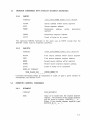
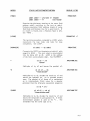
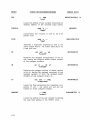
WORD
STACK NOT ATION/DEFINITION
GROUP ATTR
DEFINING
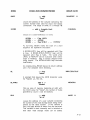
DOES>
"does"
Defines the run-time action within a high-level
defining word.
Used in the form:
: <name> • •• (BUILDS
DOES> ••• ;
and the <name> <namex>.
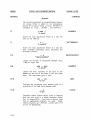
Marks the termination of the defining part of the
defining word <name> and begins the definition
of the run-time action for words that will later
be defined by <name>.
DOES> alters the code field and first parameter
of the new word to execute the sequence of
compiled word addresses following DOES>. Used
in combination with <BUILDS. The execution of
the DOES> part begins with the address of the
first parameter of the new word <namex> on the
stack. Upon execution of <name> the sequence
of words between DOES> and ; will be executed,
with the address of <namex>'s parameter field on
the stack. This allows interpretation using this
area or its contents.
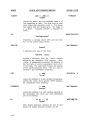
Typical uses include a FORTH assembler, multidimensional arrays, and compiler generation.
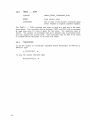
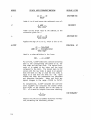
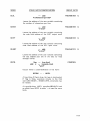
DP
--- addr
"d-p"
COMPILER
U
Leaves the address of user variable, the dictionary
pointer, which points to address the next free
memory address above the dictionary. The value
may be read by HERE and altered by ALLOT.
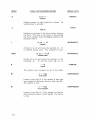
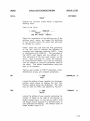
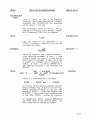
DPL
--- addr
"d-p-l"
FORMAT
U
Leaves the address of user variable containing the
number of digits to the right of the decimal on
double integer input. It may also be used to hold
the output column location of a decimal point, in
user generated formatting. The default value on
single number input is -1.
A-21