1
4.18.2
How Ownerless Files Are Managed in a Retention Pair
For retention pairs, Dynamic File Services keeps a UserName-SID database (DswUserDB.xml) that
contains information about the user names or group names associated with the file owners’ SIDs. The
file is located in the C:\Program Files\Dynamic File Services\ directory, or in the custom install
location.
As a file is moved to a retention repository, an entry is added to the UserName-SID database if the
name is valid. For example, the following is an entry for a local Administrators group’s SID in the
DswUserDB.xml file:
<TrackerEntry>
<SID>S-1-5-32-544</SID>
<Name>Administrators</Name>
<IsValid>true</IsValid>
</TrackerEntry>
An entry is kept until there are no more files with the SID in any repositories of the retention pairs on
the server. Because the user name is known to Dynamic File Services, the user’s files do not become
orphaned in the repository if the user name is deleted from the server or from Active Directory, even
though the files might be orphaned from the file system point of view.
The user names and group names in the database are validated daily (at 0030 hours by default)
against the users and groups for the server and for the Active Directory domain (if present). The
name’s validity status is set to false if a name becomes invalid. If an invalid user name becomes valid
again (such as through an Active Directory restore action), the validity setting is set to true when the
database is next validated.
Dynamic File Services validates the user names and group names against the information stored in
the Active Directory domain controller for the server. After you remove a user name or group name
from Active Directory, the following must occur before Dynamic File Services is aware of the change:
1. Active Directory synchronizes the invalid status of the name with the domain controller for the
Dynamic File Services server. When this update occurs depends on Active Directory.
2. Dynamic File Services runs the daily validation check for the Username-SID database on the
server.
During a retention review, a reviewer sees the name as valid until the Username-SID database has
been updated. The Retention Review Service displays a file owner’s name with a strikethrough if the
name is marked as invalid in the Username-SID database. This allows you to sort files by file owners,
even if user names become invalid.
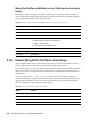
If an orphan file is moved to the repository, a new entry for its SID cannot be created in the
UserName-SID database file because the user name is unknown to the file system. The Retention
Review Service displays the file owner as Unknown. However, if other files in any repository on the
server were moved there when the user name was valid, an entry exists for that relationship in the
database, and the Retention Review Service can display the file owner’s name with a strikethrough.
If you restore an orphan file to the primary location, the owner information is not known to the NTFS
file system. Only the SID is known from the file’s metadata. If the restored orphan file is the last file
with that SID in any of the pairs’ repositories, its SID information is also removed from the
UserName-SID database. If you move the orphan file back to the repository, the user name is now
unknown to the Retention Review Service.
When a SID is not found for any of the remaining files in any of the pairs’ retention repositories, the
SID’s entry is removed from the UserName-SID database. The entry is removed whether the user
name information is valid or invalid at that time.
Planning for Pairs and Policies
69