1
ADOBE® FRAMEMAKER® (2015 release)
MIF REFERENCE
© 2015 Adobe Systems Incorporated and its licensors. All rights reserved.
MIF Reference Online Manual
If this guide is distributed with software that includes an end-user agreement, this guide, as well as the software
described in it, is furnished under license and may be used or copied only in accordance with the terms of such license.
Except as permitted by any such license, no part of this guide may be reproduced, stored in a retrieval system, or
transmitted, in any form or by any means, electronic, mechanical, recording, or otherwise, without the prior written
permission of Adobe Systems Incorporated. Please note that the content in this guide is protected under copyright law
even if it is not distributed with software that includes an end-user license agreement.
The content of this guide is furnished for informational use only, is subject to change without notice, and should not be
construed as a commitment by Adobe Systems Incorporated. Adobe Systems Incorporated assumes no responsibility
or liability for any errors or inaccuracies that may appear in the informational content contained in this guide.
Please remember that existing artwork or images that you may want to include in your project may be protected under
copyright law. The unauthorized incorporation of such material into your new work could be a violation of the rights of
the copyright owner. Please be sure to obtain any permission required from the copyright owner.
Any references to company names in sample templates are for demonstration purposes only and are not intended to
refer to any actual organization.
Adobe, the Adobe logo, Acrobat, Distiller, Flash, FrameMaker, Illustrator, PageMaker, Photoshop, PostScript, Reader,
Garamond, Kozuka Mincho, Kozuka Gothic, MinionPro, and MyriadPro are trademarks of Adobe Systems Incorporated.
Microsoft, Windows, and Windows Vista are either registered trademarks or trademarks of Microsoft Corporation in the
United States and/or other countries. Solaris is a trademark or registered trademark of Sun Microsystems, Inc. in the
United States and other countries. UNIX is a trademark in the United States and other countries, licensed exclusively
through X/Open Company, Ltd. SVG is a trademark of the World Wide Web Consortium; marks of the W3C are
registered and held by its host institutions MIT, INRIA, and Keio. All other trademarks are the property of their respective
owners.
This product contains either BISAFE and/or TIPEM software by RSA Data Security, Inc.
This product contains color data and/or the Licensed Trademark of The Focoltone Colour System.
PANTONE® Colors displayed in the software application or in the user documentation may not match PANTONEidentified standards. Consult current PANTONE Color Publications for accurate color. PANTONE® and other Pantone, Inc.
trademarks are property of Pantone, Inc. © Pantone, Inc. 2003. Pantone, Inc. is the copyright owner of color data and/or
software which are licensed to Adobe Systems Incorporated to distribute for use only in combination with Adobe
Illustrator. PANTONE Color Data and/or Software shall not be copied onto another disk or into memory unless as part of
the execution of Adobe Illustrator software.
Software is produced under Dainippon Ink and Chemicals Inc.'s copyrights of color-data-base derived from Sample
Books.
This product contains ImageStream® Graphics and Presentation Filters Copyright ©1991-1996 Inso Corporation and/or
Outside In® Viewer Technology ©1992-1996 Inso Corporation. All Rights Reserved.
This product includes software developed by the Apache Software Foundation (http://www.apache.org/).
Certain Spelling portions of this product is based on Proximity Linguistic Technology. ©Copyright 1990 MerriamWebster Inc. ©Copyright 1990 All rights reserved. Proximity Technology A Division of Franklin Electronic Publishers, Inc.
Burlington, New Jersey USA. ©Copyright 2003 Franklin Electronic Publishers Inc.©Copyright 2003 All rights reserved.
Proximity Technology A Division of Franklin Electronic Publishers, Inc. Burlington, New Jersey USA. Legal Supplement
©Copyright 1990/1994 Merriam-Webster Inc./Franklin Electronic Publishers Inc. ©Copyright 1994 All rights reserved.
Proximity Technology A Division of Franklin Electronic Publishers, Inc. Burlington, New Jersey USA. ©Copyright 1990/
1994 Merriam- Webster Inc./Franklin Electronic Publishers Inc. ©Copyright 1997All rights reserved. Proximity
Technology A Division of Franklin Electronic Publishers, Inc. Burlington, New Jersey USA ©Copyright 1990 MerriamWebster Inc. ©Copyright 1993 All rights reserved. Proximity Technology A Division of Franklin Electronic Publishers, Inc.
Burlington, New Jersey USA. ©Copyright 2004 Franklin Electronic Publishers Inc. ©Copyright 2004 All rights reserved.
Proximity Technology A Division of Franklin Electronic Publishers, Inc. Burlington, New Jersey USA. ©Copyright 1991 Dr.
Lluis de Yzaguirre I Maura ©Copyright 1991 All rights reserved. Proximity Technology A Division of Franklin Electronic
Publishers, Inc. Burlington, New Jersey USA. ©Copyright 1990 Munksgaard International Publishers Ltd. ©Copyright
1990 All rights reserved. Proximity Technology A Division of Franklin Electronic Publishers, Inc. Burlington, New Jersey
USA. ©Copyright 1990 Van Dale Lexicografie bv ©Copyright 1990 All rights reserved. Proximity Technology A Division
of Franklin Electronic Publishers, Inc. Burlington, New Jersey USA. ©Copyright 1995 Van Dale Lexicografie bv
©Copyright 1996 All rights reserved. Proximity Technology A Division of Franklin Electronic Publishers, Inc. Burlington,
New Jersey USA. ©Copyright 1990 IDE a.s. ©Copyright 1990 All rights reserved. Proximity Technology A Division of
Franklin Electronic Publishers, Inc. Burlington, New Jersey USA. ©Copyright 1992 Hachette/Franklin Electronic
Publishers Inc. ©Copyright 2004 All rights reserved. Proximity Technology A Division of Franklin Electronic Publishers,
Inc. Burlington, New Jersey USA. ©Copyright 1991 Text & Satz Datentechnik ©Copyright 1991 All rights reserved.
Proximity Technology A Division of Franklin Electronic Publishers, Inc. Burlington, New Jersey USA. ©Copyright 2004
Bertelsmann Lexikon Verlag ©Copyright 2004 All rights reserved. Proximity Technology A Division of Franklin Electronic
Publishers, Inc. Burlington, New Jersey USA. ©Copyright 2004 MorphoLogic Inc. ©Copyright 2004 All rights reserved.
Proximity Technology A Division of Franklin Electronic Publishers, Inc. Burlington, New Jersey USA. ©Copyright 1990
William Collins Sons & Co. Ltd. ©Copyright 1990 All rights reserved. Proximity Technology A Division of Franklin
Electronic Publishers, Inc. Burlington, New Jersey USA. ©Copyright 1993-95 Russicon Company Ltd. ©Copyright 1995
All rights reserved. Proximity Technology A Division of Franklin Electronic Publishers, Inc. Burlington, New Jersey USA.
©Copyright 2004 IDE a.s. ©Copyright 2004 All rights reserved. Proximity Technology A Division of Franklin Electronic
Publishers, Inc. Burlington, New Jersey USA. The Hyphenation portion of this product is based on Proximity Linguistic
Technology. ©Copyright 2003 Franklin Electronic Publishers Inc.©Copyright 2003 All rights reserved. Proximity
Technology A Division of Franklin Electronic Publishers, Inc. Burlington, New Jersey USA. ©Copyright 1984 William
Collins Sons & Co. Ltd. ©Copyright 1988 All rights reserved. Proximity Technology A Division of Franklin Electronic
Publishers, Inc. Burlington, New Jersey USA. ©Copyright 1990 Munksgaard International Publishers Ltd. ©Copyright
1990 All rights reserved. Proximity Technology A Division of Franklin Electronic Publishers, Inc. Burlington, New Jersey
USA. ©Copyright 1997 Van Dale Lexicografie bv ©Copyright 1997 All rights reserved. Proximity Technology A Division
of Franklin Electronic Publishers, Inc. Burlington, New Jersey USA. ©Copyright 1984 Editions Fernand Nathan
©Copyright 1989 All rights reserved. Proximity Technology A Division of Franklin Electronic Publishers, Inc. Burlington,
New Jersey USA. ©Copyright 1983 S Fischer Verlag ©Copyright 1997 All rights reserved. Proximity Technology A
Division of Franklin Electronic Publishers, Inc. Burlington, New Jersey USA. ©Copyright 1989 Zanichelli ©Copyright 1989
All rights reserved. Proximity Technology A Division of Franklin Electronic Publishers, Inc. Burlington, New Jersey USA.
©Copyright 1989 IDE a.s. ©Copyright 1989 All rights reserved. Proximity Technology A Division of Franklin Electronic
Publishers, Inc. Burlington, New Jersey USA. ©Copyright 1990 Espasa-Calpe ©Copyright 1990 All rights reserved.
Proximity Technology A Division of Franklin Electronic Publishers, Inc. Burlington, New Jersey USA. ©Copyright 1989
C.A. Stromberg AB. ©Copyright 1989 All rights reserved. Proximity Technology A Division of Franklin Electronic
Publishers, Inc. Burlington, New Jersey USA.
Portions of Adobe Acrobat include technology used under license from Autonomy, and are copyrighted.
Adobe Systems Incorporated, 345 Park Avenue, San Jose, California 95110, USA.
Notice to U.S. government end users. The software and documentation are “Commercial Items,” as that term is defined
at 48 C.F.R. §2.101, consisting of “Commercial Computer Software” and “Commercial Computer Software
Documentation,” as such terms are used in 48 C.F.R. §12.212 or 48 C.F.R. §227.7202, as applicable. Consistent with 48
C.F.R. §12.212 or 48 C.F.R. §§227.7202-1 through 227.7202-4, as applicable, the Commercial Computer Software and
Commercial Computer Software Documentation are being licensed to U.S. Government end users (a) only as
Commercial items and (b) with only those rights as are granted to all other end users pursuant to the terms and
conditions herein. Unpublished-rights reserved under the copyright laws of the United States. For U.S. Government End
Users, Adobe agrees to comply with all applicable equal opportunity laws including, if appropriate, the provisions of
Executive Order 11246, as amended, Section 402 of the Vietnam Era Veterans Readjustment Assistance Act of 1974 (38
USC 4212), and Section 503 of the Rehabilitation Act of 1973, as amended, and the regulations at 41 CFR Parts 60-1
through 60-60, 60-250, and 60- 741. The affirmative action clause and regulations contained in the preceding sentence
shall be incorporated by reference.
5
Contents
Chapter 1: Introduction
Why use MIF? . . . . . . . . . . . . . . . . . . . . . . . . . . . . . . . . . . . . . . . . . . . . . . . . . . . . . . . . . . . . . . . . . . . . . . . . . . . . . 1
Using this manual
......................................................................... 1
Style conventions
......................................................................... 2
Overview of MIF statements
MIF statement syntax
............................................................... 2
..................................................................... 4
Chapter 2: Using MIF Statements
Working with MIF files . . . . . . . . . . . . . . . . . . . . . . . . . . . . . . . . . . . . . . . . . . . . . . . . . . . . . . . . . . . . . . . . . . . . 9
Creating a simple MIF file for FrameMaker
. . . . . . . . . . . . . . . . . . . . . . . . . . . . . . . . . . . . . . . . . . . . . . . . 11
Creating and applying character formats
. . . . . . . . . . . . . . . . . . . . . . . . . . . . . . . . . . . . . . . . . . . . . . . . . 23
Creating and formatting tables
Specifying page layout
Creating markers
. . . . . . . . . . . . . . . . . . . . . . . . . . . . . . . . . . . . . . . . . . . . . . . . . . . . . . . . . . . . . . . . . . . . . . . . 36
Creating cross-references
Creating variables
. . . . . . . . . . . . . . . . . . . . . . . . . . . . . . . . . . . . . . . . . . . . . . . . . . . . . . . . . . . . . . . . 36
. . . . . . . . . . . . . . . . . . . . . . . . . . . . . . . . . . . . . . . . . . . . . . . . . . . . . . . . . . . . . . . . . . . . . . . . 38
Creating conditional text
Creating filters
. . . . . . . . . . . . . . . . . . . . . . . . . . . . . . . . . . . . . . . . . . . . . . . . . . . . . . . . . . . 24
. . . . . . . . . . . . . . . . . . . . . . . . . . . . . . . . . . . . . . . . . . . . . . . . . . . . . . . . . . . . . . . . . . 31
. . . . . . . . . . . . . . . . . . . . . . . . . . . . . . . . . . . . . . . . . . . . . . . . . . . . . . . . . . . . . . . . . 40
. . . . . . . . . . . . . . . . . . . . . . . . . . . . . . . . . . . . . . . . . . . . . . . . . . . . . . . . . . . . . . . . . . . . . . . . . . . 43
Including template files
. . . . . . . . . . . . . . . . . . . . . . . . . . . . . . . . . . . . . . . . . . . . . . . . . . . . . . . . . . . . . . . . . . 44
Setting View Only document options
. . . . . . . . . . . . . . . . . . . . . . . . . . . . . . . . . . . . . . . . . . . . . . . . . . . . . 45
Applications of MIF
. . . . . . . . . . . . . . . . . . . . . . . . . . . . . . . . . . . . . . . . . . . . . . . . . . . . . . . . . . . . . . . . . . . . . . 47
Debugging MIF files
. . . . . . . . . . . . . . . . . . . . . . . . . . . . . . . . . . . . . . . . . . . . . . . . . . . . . . . . . . . . . . . . . . . . . 50
Other application tools
. . . . . . . . . . . . . . . . . . . . . . . . . . . . . . . . . . . . . . . . . . . . . . . . . . . . . . . . . . . . . . . . . . . 51
Where to go from here
. . . . . . . . . . . . . . . . . . . . . . . . . . . . . . . . . . . . . . . . . . . . . . . . . . . . . . . . . . . . . . . . . . . 51
Chapter 3: MIF Document Statements
MIF file layout . . . . . . . . . . . . . . . . . . . . . . . . . . . . . . . . . . . . . . . . . . . . . . . . . . . . . . . . . . . . . . . . . . . . . . . . . . . . 52
MIFFile statement
. . . . . . . . . . . . . . . . . . . . . . . . . . . . . . . . . . . . . . . . . . . . . . . . . . . . . . . . . . . . . . . . . . . . . . . . 54
Macro statements
. . . . . . . . . . . . . . . . . . . . . . . . . . . . . . . . . . . . . . . . . . . . . . . . . . . . . . . . . . . . . . . . . . . . . . . . 55
Track edited text
. . . . . . . . . . . . . . . . . . . . . . . . . . . . . . . . . . . . . . . . . . . . . . . . . . . . . . . . . . . . . . . . . . . . . . . . . 56
Conditional text
. . . . . . . . . . . . . . . . . . . . . . . . . . . . . . . . . . . . . . . . . . . . . . . . . . . . . . . . . . . . . . . . . . . . . . . . . 56
Boolean expressions
Filter By Attribute
. . . . . . . . . . . . . . . . . . . . . . . . . . . . . . . . . . . . . . . . . . . . . . . . . . . . . . . . . . . . . . . . . . . . . 58
. . . . . . . . . . . . . . . . . . . . . . . . . . . . . . . . . . . . . . . . . . . . . . . . . . . . . . . . . . . . . . . . . . . . . . . . 59
Paragraph formats
. . . . . . . . . . . . . . . . . . . . . . . . . . . . . . . . . . . . . . . . . . . . . . . . . . . . . . . . . . . . . . . . . . . . . . . 60
Character formats
. . . . . . . . . . . . . . . . . . . . . . . . . . . . . . . . . . . . . . . . . . . . . . . . . . . . . . . . . . . . . . . . . . . . . . . . 65
Object styles
. . . . . . . . . . . . . . . . . . . . . . . . . . . . . . . . . . . . . . . . . . . . . . . . . . . . . . . . . . . . . . . . . . . . . . . . . . . . . 70
Line numbers
. . . . . . . . . . . . . . . . . . . . . . . . . . . . . . . . . . . . . . . . . . . . . . . . . . . . . . . . . . . . . . . . . . . . . . . . . . . . 73
Tables
. . . . . . . . . . . . . . . . . . . . . . . . . . . . . . . . . . . . . . . . . . . . . . . . . . . . . . . . . . . . . . . . . . . . . . . . . . . . . . . . . . . 73
Color
. . . . . . . . . . . . . . . . . . . . . . . . . . . . . . . . . . . . . . . . . . . . . . . . . . . . . . . . . . . . . . . . . . . . . . . . . . . . . . . . . . . . 83
Variables
. . . . . . . . . . . . . . . . . . . . . . . . . . . . . . . . . . . . . . . . . . . . . . . . . . . . . . . . . . . . . . . . . . . . . . . . . . . . . . . . 86
Cross-references
. . . . . . . . . . . . . . . . . . . . . . . . . . . . . . . . . . . . . . . . . . . . . . . . . . . . . . . . . . . . . . . . . . . . . . . . . 86
Global document properties
. . . . . . . . . . . . . . . . . . . . . . . . . . . . . . . . . . . . . . . . . . . . . . . . . . . . . . . . . . . . . 87
6
Pages
. . . . . . . . . . . . . . . . . . . . . . . . . . . . . . . . . . . . . . . . . . . . . . . . . . . . . . . . . . . . . . . . . . . . . . . . . . . . . . . . . . . 107
Mini TOC
. . . . . . . . . . . . . . . . . . . . . . . . . . . . . . . . . . . . . . . . . . . . . . . . . . . . . . . . . . . . . . . . . . . . . . . . . . . . . . . 109
Graphic objects and graphic frames
Text flows
. . . . . . . . . . . . . . . . . . . . . . . . . . . . . . . . . . . . . . . . . . . . . . . . . . . . . 110
. . . . . . . . . . . . . . . . . . . . . . . . . . . . . . . . . . . . . . . . . . . . . . . . . . . . . . . . . . . . . . . . . . . . . . . . . . . . . . 129
Text insets (text imported by reference)
. . . . . . . . . . . . . . . . . . . . . . . . . . . . . . . . . . . . . . . . . . . . . . . . . . 137
Chapter 4: MIF Book File Statements
MIF book file overview . . . . . . . . . . . . . . . . . . . . . . . . . . . . . . . . . . . . . . . . . . . . . . . . . . . . . . . . . . . . . . . . . . 144
MIF book file identification line
Book statements
. . . . . . . . . . . . . . . . . . . . . . . . . . . . . . . . . . . . . . . . . . . . . . . . . . . . . . . . . . 145
. . . . . . . . . . . . . . . . . . . . . . . . . . . . . . . . . . . . . . . . . . . . . . . . . . . . . . . . . . . . . . . . . . . . . . . . 145
Chapter 5: MIF Statements for Structured Documents and Books
Structural element definitions . . . . . . . . . . . . . . . . . . . . . . . . . . . . . . . . . . . . . . . . . . . . . . . . . . . . . . . . . . . 156
Attribute definitions
Format rules
. . . . . . . . . . . . . . . . . . . . . . . . . . . . . . . . . . . . . . . . . . . . . . . . . . . . . . . . . . . . . . . . . . . . 159
. . . . . . . . . . . . . . . . . . . . . . . . . . . . . . . . . . . . . . . . . . . . . . . . . . . . . . . . . . . . . . . . . . . . . . . . . . . . 161
Format change lists
Elements
. . . . . . . . . . . . . . . . . . . . . . . . . . . . . . . . . . . . . . . . . . . . . . . . . . . . . . . . . . . . . . . . . . . . . 167
. . . . . . . . . . . . . . . . . . . . . . . . . . . . . . . . . . . . . . . . . . . . . . . . . . . . . . . . . . . . . . . . . . . . . . . . . . . . . . . 174
Banner text
. . . . . . . . . . . . . . . . . . . . . . . . . . . . . . . . . . . . . . . . . . . . . . . . . . . . . . . . . . . . . . . . . . . . . . . . . . . . . 177
Filter By Attribute
. . . . . . . . . . . . . . . . . . . . . . . . . . . . . . . . . . . . . . . . . . . . . . . . . . . . . . . . . . . . . . . . . . . . . . . 177
XML data for structured documents
. . . . . . . . . . . . . . . . . . . . . . . . . . . . . . . . . . . . . . . . . . . . . . . . . . . . . 178
Preference settings for structured documents
Text in structured documents
Structured book statements
MIF Messages
. . . . . . . . . . . . . . . . . . . . . . . . . . . . . . . . . . . . . . . . . . . . 179
. . . . . . . . . . . . . . . . . . . . . . . . . . . . . . . . . . . . . . . . . . . . . . . . . . . . . . . . . . . 182
. . . . . . . . . . . . . . . . . . . . . . . . . . . . . . . . . . . . . . . . . . . . . . . . . . . . . . . . . . . . . 182
. . . . . . . . . . . . . . . . . . . . . . . . . . . . . . . . . . . . . . . . . . . . . . . . . . . . . . . . . . . . . . . . . . . . . . . . . . . 186
Chapter 6: MIF Equation Statements
MathML statement . . . . . . . . . . . . . . . . . . . . . . . . . . . . . . . . . . . . . . . . . . . . . . . . . . . . . . . . . . . . . . . . . . . . . . 188
Document statement
Math statement
. . . . . . . . . . . . . . . . . . . . . . . . . . . . . . . . . . . . . . . . . . . . . . . . . . . . . . . . . . . . . . . . . . . 189
. . . . . . . . . . . . . . . . . . . . . . . . . . . . . . . . . . . . . . . . . . . . . . . . . . . . . . . . . . . . . . . . . . . . . . . . . 193
MathFullForm statement
. . . . . . . . . . . . . . . . . . . . . . . . . . . . . . . . . . . . . . . . . . . . . . . . . . . . . . . . . . . . . . . . 194
Chapter 7: MIF Asian Text Processing Statements
Asian Character Encoding . . . . . . . . . . . . . . . . . . . . . . . . . . . . . . . . . . . . . . . . . . . . . . . . . . . . . . . . . . . . . . . 213
Combined Fonts
. . . . . . . . . . . . . . . . . . . . . . . . . . . . . . . . . . . . . . . . . . . . . . . . . . . . . . . . . . . . . . . . . . . . . . . . 214
Kumihan Tables
. . . . . . . . . . . . . . . . . . . . . . . . . . . . . . . . . . . . . . . . . . . . . . . . . . . . . . . . . . . . . . . . . . . . . . . . . 217
Rubi text
. . . . . . . . . . . . . . . . . . . . . . . . . . . . . . . . . . . . . . . . . . . . . . . . . . . . . . . . . . . . . . . . . . . . . . . . . . . . . . . . 227
Chapter 8: Examples
Text example . . . . . . . . . . . . . . . . . . . . . . . . . . . . . . . . . . . . . . . . . . . . . . . . . . . . . . . . . . . . . . . . . . . . . . . . . . . 231
Bar chart example
. . . . . . . . . . . . . . . . . . . . . . . . . . . . . . . . . . . . . . . . . . . . . . . . . . . . . . . . . . . . . . . . . . . . . . 232
Pie chart example
. . . . . . . . . . . . . . . . . . . . . . . . . . . . . . . . . . . . . . . . . . . . . . . . . . . . . . . . . . . . . . . . . . . . . . . 235
Custom dashed lines
Table examples
. . . . . . . . . . . . . . . . . . . . . . . . . . . . . . . . . . . . . . . . . . . . . . . . . . . . . . . . . . . . . . . . . . . . 236
. . . . . . . . . . . . . . . . . . . . . . . . . . . . . . . . . . . . . . . . . . . . . . . . . . . . . . . . . . . . . . . . . . . . . . . . . 238
Database publishing
. . . . . . . . . . . . . . . . . . . . . . . . . . . . . . . . . . . . . . . . . . . . . . . . . . . . . . . . . . . . . . . . . . . . 241
Chapter 9: MIF Messages
General form for MIF messages
. . . . . . . . . . . . . . . . . . . . . . . . . . . . . . . . . . . . . . . . . . . . . . . . . . . . . . . . . . 248
7
List of MIF messages
. . . . . . . . . . . . . . . . . . . . . . . . . . . . . . . . . . . . . . . . . . . . . . . . . . . . . . . . . . . . . . . . . . . . 248
Chapter 10: MIF Compatibility
Changes between version 12.0 and 2015 release
. . . . . . . . . . . . . . . . . . . . . . . . . . . . . . . . . . . . . . . . . 251
Changes between version 11.0 and 12.0
. . . . . . . . . . . . . . . . . . . . . . . . . . . . . . . . . . . . . . . . . . . . . . . . . 253
Changes between version 9.0 and 10.0
. . . . . . . . . . . . . . . . . . . . . . . . . . . . . . . . . . . . . . . . . . . . . . . . . . 254
MIF syntax changes in FrameMaker 8
. . . . . . . . . . . . . . . . . . . . . . . . . . . . . . . . . . . . . . . . . . . . . . . . . . . . 254
Changes between version 6.0 and 7.0
. . . . . . . . . . . . . . . . . . . . . . . . . . . . . . . . . . . . . . . . . . . . . . . . . . . 255
Changes between version 5.5 and 6.0
. . . . . . . . . . . . . . . . . . . . . . . . . . . . . . . . . . . . . . . . . . . . . . . . . . . 256
Changes between version 5 and 5.5
. . . . . . . . . . . . . . . . . . . . . . . . . . . . . . . . . . . . . . . . . . . . . . . . . . . . . 257
Changes between versions 4 and 5
. . . . . . . . . . . . . . . . . . . . . . . . . . . . . . . . . . . . . . . . . . . . . . . . . . . . . . 259
Changes between versions 3 and 4
. . . . . . . . . . . . . . . . . . . . . . . . . . . . . . . . . . . . . . . . . . . . . . . . . . . . . . 262
Chapter 11: Facet Formats for Graphics
Facets for imported graphics . . . . . . . . . . . . . . . . . . . . . . . . . . . . . . . . . . . . . . . . . . . . . . . . . . . . . . . . . . . . 267
Basic facet format
. . . . . . . . . . . . . . . . . . . . . . . . . . . . . . . . . . . . . . . . . . . . . . . . . . . . . . . . . . . . . . . . . . . . . . . 268
Graphic insets (UNIX versions)
. . . . . . . . . . . . . . . . . . . . . . . . . . . . . . . . . . . . . . . . . . . . . . . . . . . . . . . . . . . 269
General rules for reading and writing facets
. . . . . . . . . . . . . . . . . . . . . . . . . . . . . . . . . . . . . . . . . . . . . . 274
Chapter 12: EPSI Facet Format
Specification of an EPSI facet . . . . . . . . . . . . . . . . . . . . . . . . . . . . . . . . . . . . . . . . . . . . . . . . . . . . . . . . . . . . 275
Example of an EPSI facet
. . . . . . . . . . . . . . . . . . . . . . . . . . . . . . . . . . . . . . . . . . . . . . . . . . . . . . . . . . . . . . . . 275
Chapter 13: FrameImage Facet Format
Specification of a FrameImage facet . . . . . . . . . . . . . . . . . . . . . . . . . . . . . . . . . . . . . . . . . . . . . . . . . . . . . 277
Specification of FrameImage data
. . . . . . . . . . . . . . . . . . . . . . . . . . . . . . . . . . . . . . . . . . . . . . . . . . . . . . . 277
Differences between monochrome and color
Sample unencoded FrameImage facet
Sample encoded FrameImage facet
. . . . . . . . . . . . . . . . . . . . . . . . . . . . . . . . . . . . . . . . . . . . 280
. . . . . . . . . . . . . . . . . . . . . . . . . . . . . . . . . . . . . . . . . . . . . . . . . . . 281
. . . . . . . . . . . . . . . . . . . . . . . . . . . . . . . . . . . . . . . . . . . . . . . . . . . . . 282
Chapter 14: FrameVector Facet Format
Specification of a FrameVector facet . . . . . . . . . . . . . . . . . . . . . . . . . . . . . . . . . . . . . . . . . . . . . . . . . . . . . 284
Specification of FrameVector data
Sample FrameVector facet
. . . . . . . . . . . . . . . . . . . . . . . . . . . . . . . . . . . . . . . . . . . . . . . . . . . . . . . 284
. . . . . . . . . . . . . . . . . . . . . . . . . . . . . . . . . . . . . . . . . . . . . . . . . . . . . . . . . . . . . . 300
1
Chapter 1: Introduction
MIF (Maker Interchange Format) is a group of ASCII statements that create an easily parsed, readable text file of all
the text, graphics, formatting, and layout constructs that Adobe® FrameMaker® understands. Because MIF is an alternative representation of a FrameMaker document, it allows FrameMaker and other applications to exchange information while preserving graphics, document content, and format.
Why use MIF?
You can use MIF files to allow FrameMaker and other applications to exchange information. For example, you can
write programs to convert graphics and text MIF and then import the MIF file into FrameMaker with the graphics
and text intact. You can also save a FrameMaker document or book file as a MIF file and then write a program to
convert the MIF file to another format. These conversion programs are called filters; filters allow you to convert
FrameMaker document files into foreign files (files in another word processing or desktop publishing format), and
foreign files into FrameMaker document files.
You can use MIF files with database publishing applications, which allow you to capture changing data from
databases and format the data into high-quality documents containing both text and graphics information. You use
the database to enter, manipulate, sort, and select data. You use FrameMaker to format the resulting data. You use
MIF files as the data interchange format between the database and FrameMaker.
You can also use MIF files to do the following:
•
•
•
Share documents with earlier versions of FrameMaker
Perform custom document processing
Set options for online documents in View Only format
These tasks are described in “Applications of MIF” on page 47. You can use other FrameMaker to perform some of
these tasks. See “Other application tools” on page 51.
Using this manual
This manual:
•
•
•
•
Describes the layout of MIF files.
Provides a complete description of each MIF statement and its syntax.
Provides examples of how to use MIF statements.
Includes MIF statements for FrameMaker®.
To get the most from this manual you should be familiar with FrameMaker. For information about FrameMaker and
its features, see the documentation for your product. In addition, if you are using MIF as an interchange format
between FrameMaker and another application, you should be familiar with the tools needed to create and manipulate the other application, such as a programming language or database query language.
This chapter provides basic information about working with MIF files, including opening and saving MIF files in
FrameMaker. It goes on to provide detailed information about the MIF language and its syntax.
ADOBE FRAMEMAKER 2
MIF Reference
For an introduction to writing MIF files, read , “Using MIF Statements.” You can then use the statement index,
subject index, and table of contents to locate more specific information about a particular MIF statement.
For a description of a MIF statement, use the table of contents or statement index to locate the statement.
For a description of the differences between the MIF statements for this version of FrameMaker and earlier versions,
see , “MIF Compatibility.”
Style conventions
This manual uses different fonts to represent different types of information.
•
What you type is shown in
text like this.
•
MIF statement names, pathnames, and filenames are also shown in
text like this.
•
Placeholders (such as MIF data) are shown in
text like this.
•
For example, the statement description for PgfTag is shown as:
<PgfTag tagstring>
•
You replace tagstring with the tag of a paragraph format.
This manual also uses the term FrameMaker, (as in FrameMaker document, or FrameMaker session) to refer to
FrameMaker and to refer to structured or unstructured documents.
Overview of MIF statements
When you are learning about MIF statements, you may find it useful to understand how FrameMaker represents
documents.
How MIF statements represent documents
FrameMaker represents document components as objects. Different types of objects represent different components
in a FrameMaker document. For example, a paragraph is considered an object; a paragraph format is considered a
formatting object. The graphic objects that you create by using the Tools palette are yet another type of object.
Each object has properties that represent its characteristics. For example, a paragraph has properties that represent
its left indent, the space above it, and its default font. A rectangle has properties that represent its width, height, and
position on the page.
When FrameMaker creates a MIF file, it writes an ASCII statement for each object in the document or book. The
statement includes substatements for the object’s properties.
For example, suppose a document (with no text frame) contains a rectangle that is 2 inches wide and 1 inch high.
The rectangle is located 3 inches from the left side of the page and 1.5 inches from the top. MIF represents this
rectangle with the following statement:
<Rectangle
<ShapeRect 3.0" 1.5" 2.0" 1.0">
>
# Type of graphic object
# Position and size: left offset, top offset,
# width, and height
ADOBE FRAMEMAKER 3
MIF Reference
FrameMaker also treats each document as an object and stores document preferences as properties of the document.
For example, a document’s page size and page numbering style are document properties.
FrameMaker documents have default objects
A FrameMaker document always has a certain set of default objects, formats, and preferences, even when you create
a new document. When you create a MIF file, you usually provide the objects and properties that your document
needs. However, if you don’t provide all the objects and properties required in a FrameMaker document, the MIF
interpreter fills in a set of default objects and document formats.
The MIF interpreter normally provides the following default objects:
•
•
•
•
•
•
•
•
•
•
Predefined paragraph formats for body text, headers, and table cells
Predefined character formats
A right master page for single-sided documents and left and right master pages for double-sided documents
A reference page
Predefined table formats
Predefined cross-reference formats
Default pen and fill values and dash patterns for graphics
Default colors
Default document preferences, such as ruler settings
Default condition tags
Although you can rely on the MIF interpreter to provide defaults, the exact properties and objects provided may vary
depending on your FrameMaker configuration. The MIF interpreter uses default objects and properties that are
specified in setup files and in templates. In UNIX® versions, these templates are ASCIITemplate and NewTemplate.
You can modify these default objects and document formats by creating your own version of ASCIITemplate or
NewTemplate or by modifying your setup files.
For more information about modifying the default templates and setup files, see the online manual Customizing
FrameMaker for UNIX versions of FrameMaker. For the and Windows® version, see the chapter on templates in your
user manual.
Current state and inheritance
FrameMaker has a MIF interpreter that reads and parses MIF files. When you open or import a MIF file, the interpreter reads the MIF statements and creates a FrameMaker document that contains the objects described in the MIF
file.
When the interpreter reads a MIF file, it keeps track of the current state of certain objects. If the interpreter reads an
object with properties that are not fully specified, it applies the current state to that object. When an object acquires
the current state, it inherits the properties stored in that state.
For example, if the line width is set to 1 point for a graphic object, the interpreter continues to use a 1-point line width
for graphic objects until a new value is specified in the MIF file. Similarly, if the MIF file specifies a format for a
paragraph, the interpreter uses the same format until a new format is specified in the file.
The MIF interpreter keeps track of the following document objects and properties:
•
•
•
•
Units
Condition tag properties
Paragraph format properties
Character format properties
ADOBE FRAMEMAKER 4
MIF Reference
•
•
•
•
•
•
•
•
•
•
Page properties
Graphic frame properties
Text frame properties
Fill pattern
Pen pattern
Line width
Line cap
Line style (dash or solid)
Color
Text line alignment and character format
Because the interpreter also provides default objects for a document, the current state of an object may be determined by a default object. For example, if a document does not provide any paragraph formats, the interpreter
applies a set of default paragraph properties to the first paragraph. Subsequent paragraphs use the same properties
unless otherwise specified.
How FrameMaker identifies MIF files
A MIF file must be identified by a MIFFile or Book statement at the beginning of the file; otherwise FrameMaker
simply reads the file as a text file. All other statements are optional; that is, a valid MIF file can contain only the
MIFFile statement. Other document objects can be added as needed; FrameMaker provides a set of default objects
if a MIF file does not supply them.
MIF statement syntax
The statement descriptions in this manual use the following conventions to describe syntax:
<token data>
token data where token represents one of the MIF statement names (such as Pgf) listed in the MIF statement
descriptions later in this manual, and data represents one or more numbers, a string, a token, or nested statements.
Markup statements are always delimited by angle brackets (<>); macro statements are not. For the syntax of macro
statements, see “Macro statements” on page 55.
A token is an indivisible group of characters that identify a reserved word in a MIF statement. Tokens in MIF are
case-sensitive. A token cannot contain white space characters, such as spaces, tabs, or newlines. For example, the
following MIF statement is invalid because the token contains white space characters: <Un its Uin>
When the MIF interpreter finds white space characters that aren’t part of the text of the document (as in the example
MIF statement, < Units Uin >), it interprets the white space as token delimiters. When parsing the example
statement, the MIF interpreter ignores the white space characters between the left angle bracket (<) and the first
character of the token, Units. After reading the token, the MIF interpreter checks its validity. If the token is valid,
the interpreter reads and parses the data portion of the statement. If the token is not valid, the interpreter ignores all
text up to the corresponding right angle bracket (>), including any nested substatements. The interpreter then scans
the file for the next left angle bracket that marks the beginning of the next MIF statement.
All statements, as well as all data portions of a statement, are optional. If you do not provide a data portion, the MIF
interpreter assigns a default value to the statement.
ADOBE FRAMEMAKER 5
MIF Reference
Statement hierarchy
Some MIF statements can contain other statements. The contained statements are called substatements. In this
manual, substatements are usually shown indented within the containing statements as follows:
<Document
<DStartPage 1>
>
The indentation is not required in a MIF file, although it may make the file easier for you to read.
A MIF main statement appears at the top level of a file. A main statement cannot be nested within other statements.
Some substatements can only appear within certain main statements.
The statement descriptions in this manual indicate the valid locations for a substatement by including it in all of the
valid main statements. Main statements are identified in the statement description; for the correct order of main
statements, see “MIF file layout” on page 52.
MIF data items
There are several general types of data items in a MIF statement. This manual uses the following terms and symbols
to identify data items.
This term or symbol
Means
string
Left quotation mark ( ` ), zero or more standard ASCII characters (you can also include UTF-8 characters), and a straight quotation mark ( ' ).
Example: `ab cdef ghij'
tagstring
A string that names a format tag, such as a paragraph format tag. A tagstring value must be
unique; case is significant. A statement that refers to a tagstring must exactly match the
tagstring value. A tagstring value can include any character from the FrameMaker character set.
pathname
A string specifying a pathname (see “Device-independent pathnames” on page 7).
boolean
A value of either Yes or No. Case is significant.
integer
Integer whose range depends on the associated statement name.
ID
Integer that specifies a unique ID. An ID can be any positive integer between 1 and 65535, inclusive. A statement that refers to an ID must exactly match the ID.
dimension
Decimal number signifying a dimension. You can specify the units, such as 1.11", 72 pt, and
8.3 cm. If no units are specified, the default unit is used.
degrees
A decimal number signifying an angle value in degrees. You cannot specify units; any number is
interpreted as a degree value.
percentage
A decimal number signifying a percentage value. You cannot specify units; any number is interpreted as a percentage value.
metric
A dimension specified in units that represent points, where one point is 1/72 inch (see “Math
values” on page 6). Only used in MathFullForm statements.
W H
Pair of dimensions representing width and height. You can specify the units.
X Y
Coordinates of a point. Coordinates originate at the upper-left corner of the page or graphic frame.
You can specify the units.
L T R B
Coordinates representing left, top, right, and bottom indents. You can specify the units.
L T W H
Coordinates representing the left and top indents plus the dimensions representing the width and
height of an object. You can specify the units.
ADOBE FRAMEMAKER 6
MIF Reference
This term or symbol
Means
X Y W H
Coordinates of a point on the physical screen represented by X and Y plus dimensions describing
the width and height. Used only by the DWindowRect and DViewRect statements within the
Document statement and the BWindowRect statement within the Book statement. The
values are in pixels; you cannot specify the units.
keyword
A token value. The allowed token values are listed for each statement; you can provide only one
value.
<token…>
Ellipsis points in a statement indicate required substatements or arguments. The entire expanded
statement occurs at this point.
Unit values
You can specify the unit of measurement for most dimension data items. The following table lists the units of
measurement that FrameMaker supports and their notation in MIF.
Measurement unit
Notation in MIF
Relationship to other units
point
pt or point
1/72 inch
inch
" or in
72 points
millimeter
mm or millimeter
1 inch is 25.4 mm
centimeter
cm or centimeter
1 inch is 2.54 cm
pica
pc or pica
12 points
didot
dd or didot
0.01483 inches
cicero
cc or cicero
12 didots
Dimension data types can mix different units of measurement. For example, the statement <CellMargins L T R
B> can be written as either of the following:
<CellMargins 6 pt 18 pt 6 pt 24 pt>
<CellMargins 6 pt .25" .5 pica 2 pica>
Math values
The MathFullForm statement uses metric values in formatting codes. A metric unit represents one point (1/72
inch). The metric type is a 32-bit fixed-point number. The 16 most significant bits of a metric value represent the
digits before the decimal; the 16 least significant bits represent the digits after the decimal. Therefore, 1 point is
expressed as hexadecimal 0x10000 or decimal 65536. The following table shows how to convert metric values into
equivalent measurement units.
To get this unit
Divide the metric value by this number
point
65536
inch
4718592
millimeter
185771
centimeter
1857713
pica
786432
didot
6997
cicero
839724
ADOBE FRAMEMAKER 7
MIF Reference
Character set in strings
MIF string data uses the FrameMaker character set (see the Quick Reference for your FrameMaker product). MIF
strings must begin with a left quotation mark (ASCII character code 0x60) and end with a straight quotation mark
(ASCII character code 0x27). Within a string, you can include any character in the FrameMaker character set.
However, because a MIF file can contain only standard ASCII characters and because of MIF parsing requirements,
you must represent certain characters with backslash (\) sequences.
Character
Representation
Tab
\t
>
\>
'
\q
`
\Q
\
\\
nonstandard ASCII
\xnn
Note: The \xnn character is supported only for legacy MIF files.
All FrameMaker characters with values above the standard ASCII range (greater than \x7f) are represented in a
string by using \xnn notation, where nn represents the hexadecimal code for the character. The hexadecimal digits
must be followed by a space.
When using special characters in a variable definition, you can also use a hexadecimal notation or Unicode notation.
In the previous example, the hexadecimal notation for the paragraph symbol (¶) is \xa6. Alternatively, you can use
the \u00B6 Unicode notation to represent the same character.
The following example shows a FrameMaker document line and its representation in a MIF string.
In a FrameMaker document
In MIF
Some `symbols': > \Ø¿!
`Some \Qsymbols\q: \> \\Ø¿!'
You can also use the Char statement to include certain predefined special characters in a ParaLine statement (see
“Char statement” on page 133).
Device-independent pathnames
Several MIF statements require pathnames as values. You should supply a device-independent pathname so that files
can easily be transported across different system types. Because of MIF parsing requirements, you must use the
following syntax to supply a pathname:
`<code\>name<code\>name<code\>name…'
where name is the name of a component in the file’s path and code identifies the role of the component in the path.
The following table lists codes and their meanings.
Code
Meaning
r
Root of UNIX file tree (UNIX only)
v
Volume or drive (Windows)
h
Host (Apollo only)
c
Component
ADOBE FRAMEMAKER 8
MIF Reference
Code
Meaning
u
Up one level in the file tree
When you specify a device-independent pathname in a MIF string, you must precede any right angle brackets (>)
with backslashes (\), as shown in the syntax above.
Absolute pathnames
An absolute pathname shows the location of a file beginning with the root directory, volume, or drive. The following
table specifies device-independent, absolute pathnames for the different versions of FrameMaker.
In this version
The pathname appears as this MIF string
UNIX
`<r\><c\>MyDirectory<c\>MySubdirectory<c\>Filename'
Windows
`<v\>c:<c\>mydir<c\>subdir<c\>filename'
Relative pathnames
A relative pathname shows the location of a file relative to the current directory. In all FrameMaker versions, the
device-independent, relative pathname for the same file is:
`<c\>Filename'
9
Chapter 2: Using MIF Statements
MIF statements can completely describe any Adobe® FrameMaker® document, no matter how complex. As a result,
you often need many MIF statements to describe a document. To learn how to use MIF statements, it helps to begin
with some simple examples.
This chapter introduces you to MIF, beginning with a simple MIF example file with only a few lines of text.
Additional examples show how to add common document objects, such as paragraph formats, a table, and a custom
page layout, to this simple MIF file.
The examples in this chapter are also provided in online sample files. You can open these examples in FrameMaker
and experiment with them by adding additional MIF statements. Look for the sample files in the following location:
In this version
Look here
UNIX
$FMHOME/fminit/language/Samples/MIF, where language is the language in use, such as
usenglish
Windows
The MIF directory under the samples directory
Working with MIF files
A MIF file is an alternate representation of a FrameMaker document in ASCII format. MIF files are usually generated
by FrameMaker or by an application that writes out MIF statements. You can, however, create MIF files by using a
text editor or by using FrameMaker as a text editor. This section provides some general information about working
with MIF files regardless of the method you use to create them.
Opening and saving MIF files
When you save a FrameMaker document, you usually save it in Normal format, FrameMaker’s binary format for
document files. To save a document as a MIF file, choose Save As from the File menu. In the Save Document dialog
box, choose Interchange (MIF) from the Format pop-up menu. You should give the saved file the suffix .mif to
distinguish it from a file saved in binary format.
When you open or import a MIF file, FrameMaker reads the file directly, translating it into a FrameMaker document
or book. When you save the document in Normal format, FrameMaker creates a binary document file. To prevent
overwriting the original MIF file, remove the .mif file suffix and replace it with a different suffix (or no suffix).
If you use FrameMaker to edit a MIF file, you must prevent it from interpreting MIF statements when you open the
file by holding down a modifier key and clicking Open in the Open dialog box.
In this version
Use this modifier key
UNIX
Shift
Windows
Control or Shift
Save the edited MIF file as a text file by using the Save As command and choosing Text Only from the Format popup menu. Give the saved file the suffix .mif. When you save a document as Text Only, FrameMaker asks you where
to place carriage returns. For a MIF file, choose the Only between Paragraphs option.
ADOBE FRAMEMAKER 10
MIF Reference
In UNIX versions, FrameMaker saves a document in text format in the ISO Latin-1 character encoding. You can
change the character encoding to ASCII by changing the value of an X resource. See the description of character
encoding in the online manual Customizing FrameMaker. In the Windows version, press Esc F t c to toggle between
FrameMaker’s character encoding and ANSI for Windows.
Importing MIF files
You can use the File menu’s Import>File command to import MIF files into an existing document, but you must
make sure that the imported statements are valid at the location where you are importing them. A MIF file can
describe both text and graphics; make sure that you have selected either a place in the text flow (if you are importing
text or graphics) or an anchored frame (if you are importing graphics).
For example, to import a MIF file that describes a graphic, first create an anchored frame in a document, select the
frame, and then import the MIF file (see “Bar chart example” on page 232).
When you import or include MIF files, make sure that object IDs are unique in the final document and that references to object IDs are correct (see “Generic object statements” on page 111). The object IDs must be unique for all
objects (TextRect, TblId, Group, and AFrame use the ID for identification) in the document.
Editing MIF files
You normally use a text editor to edit a MIF file. If you use FrameMaker to enter text into a MIF file, be sure to open
the MIF file as a text file and turn off Smart Quotes. If you leave Smart Quotes on, you must use a key sequence to
type the quotation marks that enclose a MIF string (`'). To enter a left quotation mark, type Control-`. To enter a
straight quotation mark, type Control-'.
Although MIF statements are usually generated by a program, while you learn MIF or test and debug an application
that generates MIF, you may need to manually generate MIF statements. In either case, you can minimize the
number of MIF statements that your application needs to generate or that you need to type in.
The following suggestions may be helpful when you are working with MIF statements:
•
•
Edit a MIF file generated by FrameMaker.
•
•
Test one object at a time.
•
•
Use the default properties provided by FrameMaker.
You can edit a MIF file generated by FrameMaker or copy a group of statements from a MIF file into your file
and then edit the statements. An easy way to use FrameMaker to generate a MIF file is to create an empty
document by using the New command and then saving it as a MIF file.
While testing an object in a document or learning about the MIF statements that describe an object, work with
just that object. For example, if you work with a document that contains both tables and anchored frames, start
by creating the MIF statements that describe tables. Then add the statements that describe anchored frames.
If you are not concerned with testing certain document components, let FrameMaker provide a set of default
document objects and formats.
MIF file layout
FrameMaker writes the objects in a MIF document file in the following order:
This section
Contains these objects
File ID
MIF file identification line (MIFFile statement)
Units
Default units (Units statement)
ADOBE FRAMEMAKER 11
MIF Reference
This section
Contains these objects
Catalogs
Color
Condition
Paragraph Format
Element
Font or Character Format
Ruling
Table Format
Views
Formats
Variable
Cross-reference
Objects
Document
Dictionary
Anchored frames
Tables
Pages
Text flows
FrameMaker provides all of these objects, even if the object is empty. To avoid unpredictable results in a document,
you must follow this order when you create a MIF file.
Creating a simple MIF file for FrameMaker
Note: The rest of this chapter explains how to create some simple MIF files for FrameMaker by hand. These instructions
do not apply to structured documents, which require that you create elements first.
The most accurate source of information about MIF files is a MIF file generated by FrameMaker. MIF files generated
by FrameMaker can be very lengthy because FrameMaker repeats information and provides default objects and
formats for all documents. You may find it difficult to determine the minimum number of statements that are
necessary to define your document by looking at a FrameMaker-generated MIF file.
To better understand how FrameMaker reads MIF files, study the following example. This MIF file uses only four
statements to describe a document that contains one line of text:
<MIFFile 2015>
# The only required statement
<Para
# Begin a paragraph
<ParaLine
# Begin a line within the paragraph
<String `Hello World'># The actual text of this document
>
# end of Paraline #End of ParaLine statement
>
# end of Para #End of Para statement
The MIFFile statement is required in each MIF file. It identifies the FrameMaker version and must appear on the
first line of the file. All other statements are optional; that is, FrameMaker provides a set of default objects if you
specify none.
Comments in a MIF file are preceded by a number sign (#). By convention, the substatements in a MIF statement
are indented to show their nesting level and to make the file easier to read. The MIF interpreter ignores spaces at the
beginning of a line.
ADOBE FRAMEMAKER 12
MIF Reference
This example is in the sample file hello.mif. To see how FrameMaker provides defaults for a document, open this
file in FrameMaker. Even though the MIF file does not specify any formatting, FrameMaker provides a default
Paragraph Catalog and Character Catalog. In addition, it provides a right master page, as well as many other default
properties.
Save this document as a MIF file and open the FrameMaker-generated MIF file in a text editor or in FrameMaker as
a text file. (For information on how to save and open MIF files, see “Opening and saving MIF files” on page 9.)
You’ll see that the MIF interpreter has taken the original 6-line file and generated over 1,000 lines of MIF statements
that describe all the default objects and their properties. To see the actual text of the document, go to the end of the
file.
This example demonstrates an important point about MIF files. Your MIF file can be very sparse; the MIF interpreter
supplies missing information. Most documents are not this simple, however, and require some formatting. The
following sections describe how to add additional document components, such as paragraph and character formats,
a table, and custom page layouts, to this minimal MIF file.
Creating and applying paragraph formats
In a FrameMaker document, paragraphs have formatting properties that specify the appearance of the paragraph’s
text. A paragraph format includes the font family and size, indents, tab stops, the space between lines in a paragraph,
the space before and after a paragraph, and the direction of the text. The text direction can be either left to right for
languages like English and German, or right to left for languages like Arabic and Hebrew. In a FrameMaker
document, the end of a paragraph is denoted by a single carriage return. You control the amount of space above and
below the paragraph by modifying the paragraph’s format, not by adding extra carriage returns.
In a FrameMaker document, you store paragraph formats in a Paragraph Catalog and assign a tag (name) to the
format. You can then apply the same format to many paragraphs by assigning the format tag to the paragraphs. You
can also format a paragraph individually, without storing the format in the Paragraph Catalog. Or, you can assign a
format from the Paragraph Catalog and then override some of the properties within a particular paragraph. Formats
that are not stored in the Paragraph Catalog are called local formats.
Creating a paragraph
In a MIF file, paragraphs are defined by a Para statement. A Para statement contains one or more ParaLine statements that contain the lines in a paragraph; the actual text of the line is enclosed in one or more String statements:
<Para
# Begin a paragraph
<ParaLine
# Begin a line within the paragraph
<String `Hello World'># The actual text of this document
>
# End of ParaLine statement
>
# End of Para statement
The Para, ParaLine, and String statements are the only required statements to import text. You could use this
example to import a simple document into FrameMaker by placing each paragraph in a Para statement. Break the
paragraph text into a series of String statements contained in one ParaLine statement. It doesn’t matter how you
break up text lines within a Para statement; the MIF interpreter automatically wraps lines when it reads the MIF file.
Some characters must be represented by backslash sequences in a MIF string. For more information, see “Character
set in strings” on page 7.
Creating a paragraph format
Within a FrameMaker document, you define a paragraph format by using the Paragraph Designer to specify the
paragraph’s properties. In a MIF file, you define a paragraph format by using the Pgf statement.
ADOBE FRAMEMAKER 13
MIF Reference
The Pgf statement contains a group of substatements that describe all of a paragraph’s properties. It has the following
syntax:
<Pgf
<property value>
<property value>
...
>
A Pgf statement is quite long, so learning how to relate its substatements to the paragraph’s properties may take some
practice. Usually a MIF statement name is similar to the name of the setting within a dialog box. The following
examples show the property dialog boxes from the Paragraph Designer with the related Pgf substatements.
Suppose you have created a paragraph format for a numbered list item with Basic properties defined as follows in
the Paragraph Designer.
Basic properties
The following table shows the corresponding MIF statements:
In MIF file
In Paragraph Designer
<PgfTag `Numbered'>
Paragraph Tag
<PgfFIndent
0.0">
First Indent
<PgfLIndent
0.25">
Left Indent
<PgfRIndent
0.0">
Right Indent
<PgfAlignment Left >
Alignment
<PgfSpBefore
Space Above ¶
<PgfSpAfter
0.0 pt>
0.0 pt>
<PgfLeading 2.0 pt>
Space Below ¶
Line Spacing (leading is added to font size)
ADOBE FRAMEMAKER 14
MIF Reference
In MIF file
In Paragraph Designer
<PgfLineSpacing Fixed>
Line Spacing (fixed)
<PgfNumTabs 1>
Number of tab stops
<TabStop
Begin definition of tab
<TSX 0.25">
Tab position
<TSType Left >
Tab type
<TSLeaderStr `'>
Tab leader (none)
> # end of TabStop
<PgfUseNextTag No >
Turn off Next ¶ Tag feature
<PgfNextTag `'>
Next ¶ Tag name (none)
The Default Font properties are defined as follows in the Paragraph Designer.
Font properties
The following table shows the corresponding MIF statements:
In MIF file
In Paragraph Designer
<PgfFont
<FFamily `Times'>
Family
<FSize 12.0 pt>
Size
<FEncoding>
<FAngle `Regular'>
Angle
ADOBE FRAMEMAKER 15
MIF Reference
In MIF file
In Paragraph Designer
<FWeight `Regular'>
Weight
<FLanguage>
Language
<FVar `Regular'>
Variation
<FColor `Black'>
Color
<FDW 0.0 pt>
Spread
<FStretch 100%>
Stretch
<FUnderlining NoUnderlining >
Underline
<FOverline No >
Overline
<FStrike No >
Strikethrough
<FChangeBar No >
Change Bar
<FPosition FNormal >
Superscript/Subscript
<FCase FAsTyped >
Capitalization
<FPairKern Yes >
Pair Kern
<FTsume No>
Tsume (Asian systems only)
> # end of PgfFont
The Pagination properties are defined as follows in the Paragraph Designer.
Pagination properties
ADOBE FRAMEMAKER 16
MIF Reference
The following table shows the corresponding MIF statements:
In MIF file
In Paragraph Designer
<PgfPlacement Anywhere >
Start
<PgfWithNext No >
Keep With Next Pgf
<PgfWithPrev No >
Keep With Previous Pgf
<PgfBlockSize 1>
Widow/Orphan Lines
<PgfPlacementStyle Normal >
Format (paragraph placement)
<PgfRunInDefaultPunct `.
Run-in Head Default Punctuation (a period followed by an em space)
'>
The Numbering properties are defined as follows in the Paragraph Designer.
Numbering properties
The following table shows the corresponding MIF statements:
In MIF file
In Paragraph Designer
<PgfAutoNum Yes >
Turn on Autonumber
<PgfNumFormat `<n+\>.\\t' >
Autonumber Format (a number followed by a period and a tab)
<PgfNumberFont `' >
Character Format (Default ¶ Format)
<PgfNumAtEnd No >
Position (Start of Paragraph)
ADOBE FRAMEMAKER 17
MIF Reference
The Advanced properties are defined as follows in the Paragraph Designer.
Advanced properties
The following table shows the corresponding MIF statements:
In MIF file
In Paragraph Designer
<PgfHyphenate Yes >
Automatic Hyphenation (on)
<HyphenMaxLines
Max. # Adjacent
<HyphenMinWord
2>
Shortest Word
5>
<HyphenMinPrefix
3>
Shortest Prefix
<HyphenMinSuffix
3>
Shortest Suffix
<PgfMinWordSpace
90>
Minimum Word Spacing
<PgfOptWordSpace
100>
Optimum Word Spacing
<PgfMaxWordSpace
110>
Maximum Word Spacing
<PgfLetterSpace Yes >
Allow Automatic Letter Spacing
<PgfTopSeparator `'>
Frame Above ¶
<PgfBotSeparator `'>
Frame Below ¶
ADOBE FRAMEMAKER 18
MIF Reference
The Asian properties are defined as follows in the Paragraph Designer.
Asian properties
The following table shows the corresponding MIF statements:
In MIF file
In Paragraph Designer
<PgfMinJRomanLetterSpace percentage>
Minimum (Western/Asian Spacing)
<PgfOptJRomanLetterSpace percentage>
Optimum (Western/Asian Spacing)
<PgfMaxJRomanLetterSpace percentage>
Maximum (Western/Asian Spacing)
<PgfMinJLetterSpace percentage>
Minimum (Asian Character Spacing)
<PgfOptJLetterSpace percentage>
Optimum (Asian Character Spacing)
<PgfMaxJLetterSpace percentage>
Maximum (Asian Character Spacing)
<PgfYakumonoType string>
Asian Punctuation
ADOBE FRAMEMAKER 19
MIF Reference
The Table Cell properties are defined as follows in the Paragraph Designer.
Table cell properties
The following table shows the corresponding MIF statements:
In MIF file
In Paragraph Designer
<PgfCellAlignment Top >
Cell Vertical Alignment
<PgfCellMargins 0.0 pt 0.0 pt 0.0 pt 0.0 pt>
Cell Margins
<PgfCellTMarginFixed No >
Top
<PgfCellBMarginFixed No >
Bottom
<PgfCellLMarginFixed No >
Left
<PgfCellRMarginFixed No >
Right
ADOBE FRAMEMAKER 20
MIF Reference
The Direction properties are defined as follows in the Paragraph Designer.
Direction properties
The following table shows the corresponding MIF statements:
In MIF file
<PgfDir LTR>
In Paragraph Designer
Direction of the paragraph text
> # end of Pgf
Adding a Paragraph Catalog
In a MIF file, you define a Paragraph Catalog by using a PgfCatalog statement. The Paragraph Catalog contains one
or more paragraph formats, which are defined by Pgf statements. A PgfCatalog statement looks like this:
<PgfCatalog
<Pgf…>
<Pgf…>
>
# A paragraph format description
# More paragraph formats
# end of PgfCatalog
The Pgf statement describes a complete paragraph format. For example, the sample file pgfcat.mif stores the
paragraph format 1Heading in the Paragraph Catalog:
<MIFFile 2015>
<PgfCatalog
<Pgf
<PgfTag `1Heading'>
<PgfUseNextTag Yes >
<PgfNextTag `Body'>
<PgfAlignment Left >
<PgfFIndent 0.0">
<PgfLIndent 0.0">
<PgfRIndent 0.0">
...
<PgfBoxColor NoColor>
# Hand generated
ADOBE FRAMEMAKER 21
MIF Reference
<PgfAsianComposer No>
<PgfDir LTR>
>
>
# end of Pgf
# end of PgfCatalog
If you open pgfcat.mif in FrameMaker, you’ll see that the Paragraph Catalog contains a single paragraph format
called 1Heading. If you supply a Paragraph Catalog, the paragraph formats in your catalog replace those in the
default catalog; they do not supplement the default formats.
If you do not supply a Paragraph Catalog in a MIF file, the MIF interpreter provides a default Paragraph Catalog with
predefined paragraph formats.
If a Pgf statement provides only the name of a paragraph format, the MIF interpreter supplies default values for the
rest of the paragraph properties when it reads in the MIF file.
Applying a paragraph format
To apply a format from the Paragraph Catalog to a paragraph, use the PgfTag statement to include the format tag
name within the Para statement. For example, to apply the previously defined format 1Heading to a paragraph, use
the following statements:
<Para
<PgfTag `1Heading'>
<ParaLine
<String `This line has the format called 1Heading.'>
>
# end of ParaLine
>
# end of Para
To apply a format from the Paragraph Catalog and then locally override some properties, use a partial Pgf statement
within the Para statement. The following MIF example applies the paragraph format 1Heading, then changes the
alignment:
<Para
<PgfTag `1Heading'>
<Pgf
<PgfAlignment Center>
>
# end of Pgf
<ParaLine
<String `This line is centered.'>
>
# end of ParaLine
>
# end of Para
To locally define a paragraph format, include a complete Pgf statement within the Para statement:
<Para
<Pgf
<PgfTag `2Heading'>
<PgfUseNextTag Yes >
<PgfNextTag `Body'>
<PgfAlignment Left >
<PgfFIndent 0.0">
<PgfLIndent 0.0">
...
>
# end of Pgf
<ParaLine
<String `A locally formatted heading'>
>
# end of ParaLine
>
# end of Para
For a complete description of Pgf property statements, see page 61.
ADOBE FRAMEMAKER 22
MIF Reference
How paragraphs inherit properties
Paragraphs can inherit properties from other paragraphs in a MIF file. If a Pgf statement does not provide values for
each paragraph property, it acquires any property values explicitly defined in a previous Pgf statement. Because the
MIF interpreter sequentially reads MIF files, it uses the most recently defined Pgf statement that occurs before the
current statement in the file.
For example, the following MIF code applies the default format named Body to the first paragraph in a document
and locally overrides the paragraph font:
<Para
<Pgf
<PgfTag `Body'>
<PgfFont
<FWeight `Bold'>
>
# end of PgfFont
>
# end of Pgf
<ParaLine
<String `First paragraph in document.'>
>
# end of ParaLine
>
# end of Para
<Para
<ParaLine
<String `Second paragraph in document.'>
>
# end of ParaLine
>
# end of Para
The previous example is in the sample file pgffmt.mif. If you open this file in FrameMaker, you’ll find that the
second paragraph also has the new font property.
A paragraph property remains in effect until the property value is changed by a subsequent MIF statement. To
change a paragraph property to another state, supply a Pgf statement containing the paragraph property statement
set to the new state.
Thus, in the previous example, you could change the font from Bold to Regular in a Pgf statement in the second Para
statement:
<Para
<Pgf
<PgfFont
<FWeight `Regular'>
>
# end of PgfFont
>
# end of Pgf
<ParaLine
<String `Second paragraph in document.'>
>
# end of ParaLine
>
# end of Para
To summarize, paragraphs inherit formats as follows:
•
•
•
Formats in the Paragraph Catalog inherit properties from the formats above them.
Locally defined paragraph formats inherit properties from previously specified formats.
Text lines in anchored frames inherit font properties from previously specified formats, including the last format
in the Paragraph Catalog and previous text lines.
Tips
The following hints may help you minimize the MIF statements for paragraph formats:
•
If possible, use the formats in the default Paragraph Catalog (don’t supply a PgfCatalog statement). If you know
the names of the default paragraph formats, you can tag paragraphs with the PgfTag statement.
ADOBE FRAMEMAKER 23
MIF Reference
•
If you know that a document will use a particular template when it is imported into a FrameMaker document,
you can just tag the paragraphs in the text flow. Don’t create a new Paragraph Catalog in MIF; it’s easier to create
catalogs in FrameMaker document templates.
•
If you need to provide a full Paragraph Catalog in a MIF file, you can still use FrameMaker to ease the task of
creating a catalog. Create a template in FrameMaker, save the template as a MIF file, and include the Paragraph
Catalog in your document. For instructions, see “Including template files” on page 44.
Creating and applying character formats
You can define character formats locally or store them in the Character Catalog and apply the formats to text selections. Creating and applying character formats is very similar to creating and applying paragraph formats as
described in the previous section. Because the two methods are similar, this section just summarizes how to create
and apply character formats.
In a MIF file, the Character Catalog is contained in a FontCatalog statement. The FontCatalog statement contains
named character formats in a list of Font statements. A FontCatalog statement looks like this:
<FontCatalog
<Font...>
<Font...>
>
# Describes a character format
# Describes a character format
# end of FontCatalog
A Font statement specifies the properties of a character format; these are the same properties specified in the
Character Designer. The Font statement is just like the PgfFont statement that you use to define the default font in
a paragraph format. See “PgfFont and Font statements” on page 66 for a complete description of a Font statement.
To apply a predefined character format to text, use the FTag statement:
<MIFFile 2015>
# Hand generated
<FontCatalog
<Font
<FTag `Emphasis'>
<FAngle `Italic'>
>
# end of Font
>
# end of FontCatalog
<Para
<PgfTag `Body'>
<ParaLine
<String `You can format characters within a paragraph by '>
<Font
<FTag `Emphasis'>
>
# end of Font
<String `applying'>
<Font
<FTag `'>
>
# end of Font
<String ` a character format from the character catalog.'>
>
# end of ParaLine
>
# end of Para
Remember to include a second Font statement to end the scope of the applied character format.
To locally define a character format, use a complete Font statement:
<Para
<PgfTag `Body'>
<ParaLine
<String `You can also format characters by '>
<Font
ADOBE FRAMEMAKER 24
MIF Reference
<FTag `Emphasis'>
…character property statements…
>
>
>
# end of Font
<String `applying'>
<Font
<FTag `'>
>
# end of Font
<String ` a locally defined character format.'>
# end of ParaLine
# end of Para
Like paragraph formats, character formats inherit properties from previously defined character formats. Unlike
paragraph formats, however, a character format ends at the close of a Para statement.
See the sample file charfmt.mif for examples of using character formats.
Creating and formatting tables
You can create tables in FrameMaker documents, edit them, and apply table formats to them. Tables can have
heading rows, body rows, and footing rows. Each row consists of table cells that contain the actual contents of the
table.
Table 1: Coffee Inventory
Title
Coffee
Bags
Status
Price per bag
Brazil Santos
50
Prompt
$455.00
Celebes Kalossi
29
In Stock
$924.00
Colombian
25
In Stock
$474.35
$1,853.35
Heading row
Body rows
Footing row
Tables are like paragraphs in that they have a format. A table format controls the appearance of a table, including the
number and width of columns, the types of ruling or shading in rows and columns, and the table’s position in a text
column. Table formats can be named, stored in a Table Catalog, and applied to many tables. A table format can also
be defined locally.
In a FrameMaker document, tables appear where they have been placed in the text flow. A table behaves like an
anchored frame, so a table flows with the surrounding text unless you give it a specific location. In a MIF file, the
document’s tables are collected in one place and a placeholder for each table indicates the table’s position in the text
flow.
You create a table in a MIF file as follows:
•
Specify the contents of the table by using a Tbl statement. An individual table is called a table instance. All table
instances are stored in one Tbls statement. Assign each table instance a unique ID number.
•
Indicate the position of the table in the text flow by using an ATbl statement. The ATbl statement is the placeholder, or anchor, for the table instance. It refers to the table instance’s unique ID.
•
Specify the table format by using a TblFormat statement. Formats can be named and stored in the Table Catalog,
which is defined by a TblCatalog statement, or locally defined within a table.
ADOBE FRAMEMAKER 25
MIF Reference
Creating a table instance
All table instances in a document are contained in a Tbls statement. The Tbls statement contains a list of Tbl statements, one for each table instance. A document can have only one Tbls statement, which must occur before any of
the table anchors in the text flow.
The Tbl statement contains the actual contents of the table cells in a list of MIF substatements. Like other MIF statements, this list can be quite long. The following is a template for a Tbl statement:
<Tbl
<TblID…>
<TblFormat…>
<TblNumColumns…>
<TblColumnWidth…>
<TblH
<Row
<Cell…>
>
<TblBody
<Row…>
>
<TblF
<Row…>
>
>
#
#
#
#
#
#
#
#
#
#
#
#
#
#
#
A unique ID for the table
The table format
Number of columns in this table--required
Column width, one for each column
The heading; omit if no heading
One Row statement for each row
One statement for each cell in the row
end of Row
The body of the table
One for each row in body
end of TblBody
The footer; omit if no footer
One for each row in footer
end of TblF
end of Tbl
The TblID statement assigns a unique ID to the table instance. The TblFormat statement provides the table format.
You can use the TblFormat statement to apply a table format from the Table Catalog, apply a format from the catalog
and override some of its properties, or completely specify the table format locally. Because the tables in a document
often share similar characteristics, you usually store table formats in the Table Catalog. Table instances can always
override the applied format.
The TblNumColumns statement specifies the number of columns in the table instance. It is required in every table.
The TblH, TblBody, and TblF statements contain the table heading, body, and footer rows. If a table does not have
a heading or footing, omit the statements.
Here’s an example of a simple table that uses a default format from the Table Catalog. The table has one heading row,
one body row, and no footing rows:
Coffee
Price per Bag
Brazil Santos
$455.00
You can use the following MIF statements to create this simple table:
<MIFFile 2015>
<Tbls
<Tbl
<TblID 1>
# ID for this table
<TblTag `Format A'>
# Applies format from Table Catalog
<TblNumColumns 2>
# Number of columns in this table
<TblColumnWidth 2.0">
# Width of first column
<TblColumnWidth 1.5">
# Width of second column
<TblH
# Begin table heading
<Row
# Begin row
<Cell
# First cell in row
<CellContent
<Para
# Cells can contain paragraphs
<PgfTag `CellHeading'># Applies format from Paragraph Catalog
<ParaLine
ADOBE FRAMEMAKER 26
MIF Reference
<String `Coffee'># Text in this cell
>
>
>
>
>
#
#
#
#
end of
end of
end of
Second
Para
CellContent
Cell
cell in row
>
<Cell
<CellContent
<Para
<PgfTag `CellHeading'>
<ParaLine
<String `Price per Bag'>
>
>
# end of Para
>
# end of CellContent
>
# end of Cell
>
# end of Row
>
# end of TblH
<TblBody
# Table body
<Row
# Begin row
<Cell
# First cell in row
<CellContent
<Para
<PgfTag `CellBody'>
<ParaLine
<String `Brazil Santos'>
>
>
# end of Para
>
# end of CellContent
>
# end of Cell
<Cell
# Second cell in row
<CellContent
<Para
<PgfTag `CellBody'>
<ParaLine
<String `$455.00'>
>
>
# end of Para
>
# end of CellContent
>
# end of Cell
>
# end of Row
>
# end of TblBody
# end of Tbl
# end of Tbls
A table cell is a text column that contains an untagged text flow not connected to any other flows. You can put any
kind of text or graphics in a table cell. The cell automatically grows vertically to accommodate the inserted text or
graphic; however, the width of the column remains fixed.
Adding a table anchor
To indicate the position of a table in the text flow, you must add an ATbl statement. The ATbl statement refers to the
unique ID specified by the TblID statement in the table instance. For example, to insert the table defined in the
previous example, you would add the following statements to the minimal MIF file:
<Para
<ParaLine
<String `Coffee prices for January'>
<ATbl 1>
# Matches table ID in Tbl statement
>
# end of ParaLine
>
# end of Para
ADOBE FRAMEMAKER 27
MIF Reference
This example is in the sample file table.mif. If you open this file in FrameMaker, you’ll see that the anchor symbol
for the table appears at the end of the sentence. To place the table anchor between two words in the sentence, use the
following statements:
<Para
<ParaLine
<String `Coffee prices '>
<ATbl 1>
<String `for January'>
>
>
# end of ParaLine
# end of Para
Note that the ATbl statement appears outside the String statement. A ParaLine statement usually consists of
String statements that contain text interspersed with statements for table anchors, frame anchors, markers, and
cross-references.
About ID numbers
The table ID used by the ATbl statement must exactly match the ID given by the TblID statement. If it does not, the
MIF interpreter ignores the ATbl statement and the table instance does not appear in the document. You cannot use
multiple ATbl statements that refer to the same table ID.
An ID can be any positive integer from 1 to 65535, inclusive. The only other statements that require an ID are AFrame
statements, linked TextRect statements, and Group statements. For more information about these statements, see
“Graphic objects and graphic frames” on page 110.
Rotated cells
Coffee
Price
A table can have rotated cells and straddle cells. The following table includes rotated cells in the heading row:
Brazil Santos
$455.00
In a MIF file, a cell that is rotated simply includes a CellAngle statement that specifies the angle of rotation:
<Cell
<CellAngle 270>
<CellContent…>
>
# end of Cell
Cells can only be rotated by 90, 180, or 270 degrees. Cells are rotated clockwise.
Straddle cells
The contents of a straddle cell cross cell borders as if there were a single cell. You can straddle cells horizontally or
vertically. The following table includes a heading row that straddles two columns:
Brazilian Coffee
Coffee
Price per Bag
Brazil Santos
$455.00
ADOBE FRAMEMAKER 28
MIF Reference
The MIF code for the straddle cell includes a CellColumns statement that specifies the number of columns that the
cell crosses. The contents of the straddle cell appear in the first of the straddle columns; the subsequent Cell statements for the row must appear even if they are empty.
<Row
<Cell
<CellColumns 2>
# Number of straddle columns.
<CellContent
# Content is in the first cell.
<Para
<PgfTag `CellHeading'>
<ParaLine
<String `Brazilian Coffee'>
>
>
# end of Para
>
# end of CellContent
>
# end of Cell
<Cell
# Second cell appears, even though
<CellContent
# it is empty.
<Para
<PgfTag `CellHeading'>
<ParaLine>
>
# end of Para
>
# end of CellContent
>
# end of Cell
>
# end of Row
If the cell straddles rows, the substatement is CellRows.
Creating a table format
A table format includes the following properties:
•
•
The properties specified by the Table Designer
•
•
•
The number and widths of columns
These include the row and column ruling and shading styles, the position of text within cell margins, the table’s
placement within the text column, and the table title position.
The paragraph format of the first paragraph in the title (if there is one)
The paragraph format of the topmost paragraph in the heading, body, and footing cell of each column
For example, you could change the format of the previous table to include shaded rows and a different ruling style:
Coffee
Price per Bag
Brazil Santos
$455.00
Celebes Kalossi
$924.00
Colombian
$474.35
The following MIF statements define this table format:
<TblFormat
<TblTag `Coffee Table'>
# Every table must have at least one TblColumn
# statement.
<TblColumn
<TblColumnNum 0>
<TblColumnWidth 2.0">
# Columns are numbered from 0.
# Width of first column.
ADOBE FRAMEMAKER 29
MIF Reference
>
>
# end of TblColumn
<TblColumn
<TblColumnNum 1>
# Second column.
<TblColumnWidth 1.5">
# Width of second column.
>
# end of TblColumn
<TblCellMargins 6.0 pt 6.0 pt 6.0 pt 4.0 pt>
<TblLIndent 0.0">
# These are exactly like paragraph
<TblRIndent 0.0">
# format properties.
<TblAlignment Center >
<TblPlacement Anywhere >
<TblSpBefore 12.0 pt>
<TblSpAfter 12.0 pt>
<TblBlockSize 1>
<TblHFFill 15>
# No fill for heading row.
<TblHFColor `Black'>
<TblBodyFill 5>
# Use 10% gray fill for main body rows.
<TblBodyColor `Black'>
<TblShadeByColumn No >
# Shade by row, not by column.
<TblShadePeriod 1>
# Shade every other row.
<TblXFill 15>
# No fill for alternate rows.
<TblXColor `Black'>
# Color for alternate rows.
<TblAltShadePeriod 1>
<TblLRuling `Thin'>
# Use thin left outside rule.
<TblBRuling `Thin'>
# Use thin bottom outside rule.
<TblRRuling `Thin'>
# Use thin right outside rule.
<TblTRuling `Medium'>
# Use medium top outside rule.
<TblColumnRuling `Thin'>
# Use thin rules between columns.
<TblXColumnRuling `Thin'>
<TblBodyRowRuling `Thin'>
# Use thin rules between rows.
<TblXRowRuling `Thin'>
<TblHFRowRuling `'>
# No rules between heading rows.
<TblSeparatorRuling `Medium'>
# Use medium rule after heading row.
<TblXColumnNum 1>
<TblRulingPeriod 4>
<TblLastBRuling No >
<TblTitlePlacement InHeader>
# Place title above table.
<TblTitlePgf1
# Paragraph format for first
<PgfTag `TableTitle'>
# paragraph in title.
>
# end of TblTitlePgf1
<TblTitleGap 6.0 pt>
# Gap between title and table.
<TblInitNumColumns 2>
# Initial number of rows and
<TblInitNumHRows 1>
# columns for new tables with
<TblInitNumBodyRows 4>
# this format.
<TblInitNumFRows 0>
<TblNumByColumn No >
# end of TblFormat
The TblColumn statement numbers each column and sets its width. A table can have more columns than TblColumn
statements; if a column does not have a specified format, the MIF interpreter uses the format of the most recently
defined column.
Note: A table instance must have at least one TblColumn statement. A table can use a format from the Table Catalog
that includes a TblColumn statement or it can include a local TblFormat statement that supplies the TblColumn
statement.
Adding a Table Catalog
You can store table formats in a Table Catalog by using a TblCatalog statement. A document can have only one
TblCatalog statement, which must occur before the Tbls statement.
ADOBE FRAMEMAKER 30
MIF Reference
The TblCatalog statement contains one TblFormat statement for each format, as shown in the following template:
<TblCatalog
<TblFormat…>
<TblFormat…>
>
# end of TblCatalog
As with the Paragraph Catalog, if your MIF file does not provide a Table Catalog, the MIF interpreter supplies a
default catalog and formats. If you do provide a Table Catalog, your defined table formats supersede those in the
default Table Catalog.
You can add a minimal table format to the catalog by simply supplying a table format tag name. The MIF interpreter
supplies a set of default values to the table’s properties when it reads in the MIF file.
The ruling styles in a table format are defined in a separate catalog called the Ruling Catalog. You can define your
own Ruling Catalog with the RulingCatalog statement. Whether you use the default ruling styles or create your
own, substatements that refer to ruling styles, such as the TblLRuling statement, must use the name of a ruling
style from the Ruling Catalog. See “RulingCatalog statement” on page 82.
Applying a table format
You can apply a table format from the Table Catalog or you can define a table format locally.
To apply a table format from the Table Catalog, use the TblTag statement within the Tbl statement:
<Tbls
<Tbl
<TblID 1>
<TblTag `Format A'>
<TblNumColumns 1>
<TblBody
...
>
>
>
# Tag of format in Table Catalog
# end of TblBody
# end of Tbl
# end of Tbls
To locally define a table format, use a complete TblFormat statement:
<Tbls
<Tbl
<TblID 1>
<TblFormat
<TblTag ` '>
# Every table must have one TblColumn statement.
<TblColumn
<TblColumnNum 0>
<TblColumnWidth 1.0">
>
…table property statements…
>
>
>
# end of TblColumn
# end of TblFormat
# end of Tbl
# end of Tbls
Creating default paragraph formats for new tables
You can use the TblFormat and TblColumn statements to define default paragraph formats for the columns in new
tables. These default formats do not affect tables that are defined within the MIF file; they only affect tables that the
user inserts after the MIF file has been opened in FrameMaker. Your filter or application should provide these
defaults only for documents that might be edited later.
For example, the following MIF code assigns a paragraph format named Description to body cells in new tables that
are given the format called Coffee Table:
ADOBE FRAMEMAKER 31
MIF Reference
<TblFormat
<TblTag `Coffee Table'>
<TblColumn
<TblColumnNum 0>
<TblColumnWidth 1.0">
<TblColumnBody
<PgfTag `Description'>
>
# end of TblColumnBody
>
# end of TblColumn
>
# end of TblFormat
Tables inherit properties differently
Tables inherit formatting properties somewhat differently than other document components. A table without an
applied table format does not inherit one from a previously defined table. Instead, it gets a set of default properties
from the MIF interpreter. Thus, if you apply a named format to a table, a following table will not inherit that format.
Paragraphs in table cells still inherit properties from previously defined paragraph formats. If you give a table cell a
certain paragraph style, all subsequent cells inherit the same property unless it is explicitly reset. Table cells can
inherit paragraph properties from any previously specified paragraph format, including other tables, paragraphs, or
even the Paragraph Format catalog.
Tips
To avoid problems when creating tables:
•
•
•
Give each table a unique ID number.
Make sure that each Tbl statement has only one corresponding ATbl statement, and that each ATbl statement
has a corresponding Tbl statement.
Make sure that each ATbl statement matches the ID of its corresponding table instance.
Specifying page layout
FrameMaker documents have two kinds of pages that determine the position and appearance of text in the
document: body pages and master pages.
Body pages contain the text and graphics that form the content of the document. Master pages control the layout of
body pages. Each body page is associated with one master page, which specifies the number, size, and placement of
the page’s text frames and the page background, such as headers, footers, and graphics.
Untagged
background text
frame
On body pages, you type in a
column of a tagged text frame.
Tagged template
text frame
Untagged
background text
frame
Master page
Body page
ADOBE FRAMEMAKER 32
MIF Reference
Text frames define the layout of the document’s text on a page. A text frame can arrange text in one or more columns.
In MIF, a text frame is represented by a TextRect statement. The dimensions of the text frame and the number of
columns in the text frame are specified by substatements under the TextRect statement.
A text flow describes the text contained in one or more text frames. In MIF, a text flow is represented by a TextFlow
statement. The actual text of the document is specified by substatements under the TextFlow statement.
If the text flow has the autoconnect property (if the text flow uses the MIF statement <TFAutoConnect Yes>), the
text flow runs through a series of text frames; when you fill up one text frame, text continues into the next text frame.
Most documents have only one text flow, although you can create many separate flows.
FrameMaker provides a default right master page for single-sided documents and default right and left master pages
for double-sided documents. A MIF file can either use the default page layout or provide a custom layout.
Using the default layout
If you don’t need to control the page layout of a document, you can use the default page layout by putting all of the
document’s text into a TextFlow statement. When reading the file, the MIF interpreter creates default master pages
and body pages. The MIF file creates a single-column text frame for the body pages to contain the document’s text.
The MIF interpreter associates the text flow with this text frame.
The following example is in the sample file defpage.mif:
<MIFFile 2015>
# Hand generated
<TextFlow
# All document text is in this text flow.
<TFTag `A'>
# Make this a tagged text flow.
<TFAutoConnect Yes>
# Automatically connect text frames.
<Para
<ParaLine
<String `This paragraph appears on a body page within a'>
<String ` text flow tagged A.'>
>
# end of ParaLine
>
# end of Para
>
# end of TextFlow
# End of MIFFile
A text flow must be tagged, and it must include <TFAutoConnect Yes>; otherwise, when the user adds text to the
document, FrameMaker won’t create additional pages and text frames to hold the added text.
Creating a simple page layout
If you want some control of the page layout but do not want to create master pages, you can use the Document
substatements DPageSize, DMargins, and DColumns to specify the page size, margins, and number of columns in
the text frame in the document. The MIF interpreter uses this information to create master pages and body pages.
These statements correspond to the Normal Page Layout options.
The following example is in the sample file columlay.mif:
<MIFFile 2015>
<Document
<DPageSize 7.5" 9.0">
<DMargins 2" 1" .5" .5">
<DColumns 1>
<DTwoSides No>
>
<TextFlow
<TFTag `A'>
<TFAutoConnect Yes>
<Para
# Hand generated
#
#
#
#
#
#
#
#
#
Set the page size.
Set the margins.
Set the number of columns in the default
text frame.
Set document to single-sided.
end of Document
Document text is in this text flow.
Make this a tagged text flow.
Automatically connect text frames.
ADOBE FRAMEMAKER 33
MIF Reference
>
>
<ParaLine
<String `This paragraph appears on a body page within a'>
<String ` text flow tagged A.'>
>
# end of ParaLine
# end of Para
# end of TextFlow
# End of MIFFile
Creating a single-sided custom layout
If the document that you’re importing needs a custom master page, you must specify a custom page layout. For
example, a document might need a master page for background graphics.
To create a custom layout for a single-sided document, you do the following:
•
•
•
•
Create a right master page.
Create a single, empty body page.
Create an empty, tagged text flow that is linked to the master page.
Create a tagged text flow that is linked to the body page and contains all the document’s text.
The MIF code shown in this section is also in the sample file snglpage.mif.
To create the master page
To create a master page layout, use the Page statement to create the page and use the TextRect statement to create
the text frame.
To specify the number of text columns in the text frame, use the TRNumColumns statement. By default, if the text
frame’s specification does not include this statement, the text frame has only one column.
This example sets up a right master page with a text frame containing one text column:
<MIFFile 2015>
<Document
<DPageSize 7.5" 9.0">
<DTwoSides No>
>
<Page
<PageType RightMasterPage>
<PageTag `Right'>
<TextRect
<ID 1>
<Pen 15>
<Fill 15>
<ShapeRect 2" 1" 5" 7.5">
<TRNumColumns 1>
<TRColumnGap 0.0">
>
>
# Hand generated
#
#
#
#
Set the document page size.
Make this a single-sided document.
end of Document
Create a right master page.
#
#
#
#
#
#
#
#
#
Set up a text frame.
Give the text frame a unique ID.
Set the pen style.
Set the fill pattern (none).
Specify the text frame size.
Specify number of text columns.
Specify gap between text columns.
end of TextRect
end of Page
The ID statement assigns a unique ID number to this text frame. You must give text frames a unique ID in a MIF file;
other objects that require unique IDs are anchored graphic frames and table instances.
To create an empty body page
To create the body page, use the Page statement. Then use the TextRect statement to create a text frame with dimensions that are exactly the same as the text frame on the master page. Give the text frame a unique ID:
<Page
<PageType BodyPage>
<PageBackground `Default'>
<TextRect
ADOBE FRAMEMAKER 34
MIF Reference
<ID 2>
# This text frame has a unique ID.
# The body page dimensions match those of the
# master page.
<ShapeRect 2" 1" 5" 7.5">
<TRNumColumns 1>
<TRColumnGap 0.0">
# The column layout must also match.
>
# end TextRect
# end Page
>
If the dimensions (specified by the ShapeRect statement) and column layout (specified by the TRNumColumns and
TRColumnGap statements) of the master page and body page do not match, the body page will not use the page layout
from the master page. Instead, the body page will use the page layout defined for the body page.
To create the text flow for the master page
The text flow for the master page is not contained in the Page statement; instead, it is contained in a TextFlow
statement that is linked to the text frame on the master page. The Page statements must come before any TextFlow
statements.
Link the text flow to the master page’s text frame by using the TextRectID statement to refer to the text frame’s
unique ID:
<TextFlow
<TFTag `A'>
<TFAutoConnect Yes>
<Para
<ParaLine
<TextRectID 1>
>
>
>
# The text flow must be tagged.
# Autoconnect must be turned on.
#
#
#
#
Refers
end of
end of
end of
to text frame ID on master page.
ParaLine
Para
TextFlow
The text flow for the master page must be empty. Be sure to give the text flow the same flow tag that you give the text
flow for the body page and to turn on the autoconnect feature.
To create the text flow for the body page
The text flow for the body page is contained in a separate TextFlow statement that is linked to the body page’s text
frame. The text flow contains the actual text of the document in one or more Para statements. If text overflows the
first text frame, the MIF interpreter creates another body page with a layout that matches the right master page and
pours text into the body page’s text frame.
<TextFlow
<TFTag `A'>
<TFAutoConnect Yes>
<Para
<TextRectID 2>
<PgfTag `Body'>
<ParaLine
<String `This appears on a body page within a text flow'>
<String ` tagged A.'>
>
# end of ParaLine
>
# end of Para
>
# end of TextFlow
ADOBE FRAMEMAKER 35
MIF Reference
Why one body page?
The method you use to create body pages is different from the method that FrameMaker uses when it writes a MIF
file. When FrameMaker writes a file, it knows where each page break occurs in the file, so it creates a series of Page
statements that each contain the text and graphics located on that page. When you are importing a document, you
do not know where page breaks will fall, so you cannot break the document into a series of Page statements. Instead,
you simply create one text flow for the entire document and link it to a single, empty body page. When the MIF interpreter reads the file, it creates as many pages as the document requires and gives each page the background specified
by the master page.
Creating a double-sided custom layout
If you import a two-sided document, you might need to specify different page layouts for right and left pages. For
example, a document might have a wider inside margin to allow extra room for binding. You can do this in a MIF
file by creating and linking a second master page and a second body page. As with a single-sided layout, all the
document’s text is in one text flow. When the MIF interpreter reads the file, it adds alternate left and right body pages
to the document. You can control whether the document starts with a right page or a left page by using the DParity
statement.
For an example of a document with left and right master pages, see the sample file dblpage.mif.
Creating a first master page
In addition to left and right master pages, you can create custom master page layouts that you can apply to body
pages. For example, some books have a special layout for the first page in a chapter.
In a MIF file, you can create as many master pages as you need, but you cannot apply all of them to the appropriate
body pages. You can only apply a left page, a right page, and one additional custom master page to the body pages.
Furthermore, you can only link the custom master page to the first page in a document.
When you are importing a document into FrameMaker, you do not know how much text the MIF interpreter will
put on a page; you can only determine where the first page begins. When the interpreter reads the MIF file, it applies
the custom master page layout to the first page in the document. For each subsequent page, it uses the DParity and
DTwoSides statements to determine when to add a left page and when to add a
right page.
Other master page layouts that you’ve defined are not lost when the interpreter reads a MIF file. The user can still
apply these page layouts to individual body pages.
For an example of a MIF file with a first page layout, see the sample file frstpage.mif.
Adding headers and footers
Headers and footers are defined in untagged text flows on the master pages of a document. When FrameMaker
creates default master pages, it automatically provides untagged text flows for headers and footers.
If you are importing a document that has headers and footers, you define additional text frames on the master pages.
Link an untagged text flow to each additional text frame on the master page. The untagged text flow contains the
text of the header or footer.
For an example of a MIF file with a footer, see the sample file footers.mif. Note that the footer text flow contains
a variable; you can place variables only in untagged text flows on a master page, not in tagged flows.
ADOBE FRAMEMAKER 36
MIF Reference
Creating markers
A FrameMaker document can contain markers that hold hidden text and mark locations. For example, you use
markers to add index entries, cross-references, and hypertext commands to a document. FrameMaker provides both
predefined marker types and markers that you can define as needed. (For more information about markers and
marker types, see page 135.)
Within a FrameMaker document, you insert a marker by choosing the Marker command from the Special menu. In
a MIF file you insert a marker by using a Marker statement. The Marker statement specifies the marker type and the
marker text.
The following example inserts an index marker:
<Para
<ParaLine
<Marker
<MType 2>
# Index marker
<MText `Hello world'># Index entry
>
# end of Marker
<String `Hello world'>
>
# end of ParaLine
>
# end of Para
The MText statement contains the complete index entry.
When FrameMaker writes a Marker statement, the statement includes an MCurrPage substatement with the page
number on which the marker appears. You do not need to provide an MCurrPage statement when you generate a
MIF file; this statement is ignored when the MIF interpreter reads a MIF file.
Creating cross-references
In a FrameMaker document, you can create cross-references that are automatically updated. A cross-reference can
refer to an entire paragraph or to a particular word or phrase in a paragraph. The text to which a cross-reference
points is called the reference source; the actual location of the cross-reference is the reference point.
The format of a cross-reference determines its appearance and the wording. Cross-reference formats include building
blocks, instructions to FrameMaker about what information to extract from the reference source. A common
building block is <$pagenum>, which FrameMaker replaces with the page number of the reference source. Another
common building block is <$paratext>, which FrameMaker replaces with the text content of the paragraph,
excluding autonumbering and special characters such as tabs and forced line breaks.
Within a FrameMaker document, you insert and format cross-references by choosing Cross-Reference from the
Special menu. In a MIF file, you create a cross-reference as follows:
•
•
•
Create the format of cross-references by using XRefFormats and XRefFormat statements.
Insert a marker at the reference source by using a Marker statement.
Insert the reference point by using an XRef statement.
Creating cross-reference formats
The cross-reference formats for a document are defined in one XRefFormats statement. A document can have only
one XRefFormats statement.
The XRefFormats statement contains one or more XRefFormat statements that define the cross-reference formats.
A cross-reference format consists of a name and a definition.
ADOBE FRAMEMAKER 37
MIF Reference
<XRefFormats
<XRefFormat
<XRefName `Page'>
<XRefDef `page\x11 <$pagenum\>'>
>
# end of XRefFormat
>
# end of XRefFormats
The name can be any string allowed in a MIF file (see “Character set in strings” on page 7). In this example, a
nonbreaking space (\x11) appears between the word “page” and the page number. Each cross-reference format must
have a unique name; names are case-sensitive. The cross-reference definition contains text and cross-reference
building blocks. See your user’s manual or the online Help system for a list of building blocks.
Inserting the reference source marker
To mark the location of the reference source, insert a Marker statement at the beginning of the reference source. The
following example creates a cross-reference to a heading:
<Para
<PgfTag `Heading'>
<ParaLine
<Marker
<MType 9>
# Identifies this as a cross-reference
<MText `34126: Heading: My Heading'>
# Cross-reference source
>
# end of Marker
<String `My Heading'>
>
# end of ParaLine
>
# end of Para
The <MType 9> statement identifies this as a cross-reference marker; it is required. The MText statement contains
the cross-reference source text, which must be unique. When FrameMaker writes a cross-reference, it adds a unique
number and the paragraph tag to the MText statement, as shown in the previous example. While the number is not
required, it guarantees that the cross-reference points to a unique source when the number is present. In the previous
example, the number in <MText> is not mandatory. However, the number in the example ensures that the new crossreference points to the ‘My heading’ heading.
Inserting the reference point
The final step in creating a cross-reference is to insert an XRef statement at the position in text where the crossreference should appear. The XRef statement provides the name of the cross-reference format (defined in
XRefFormat), the source text, and the pathname of the file containing the source:
<Para
<PgfTag `Body'>
<ParaLine
<String `This is a cross-reference to '>
<XRef
<XRefName `Page'>
# Cross-reference format
<XRefSrcText `34126: Heading: My Heading'>
# Source text
<XRefSrcFile `'>
# File containing source
>
# end of XRef
<XRefEnd>
<String `.'>
>
# end of ParaLine
>
# end of Para
ADOBE FRAMEMAKER 38
MIF Reference
The format name must exactly match the name of a format defined in XRefFormats. The source text must be unique
and must match the string in the MText statement in the corresponding reference point marker. The XRefSrcFile
statement is only required if the reference source is in a different file from the reference point. It must be a valid MIF
filename (see “Device-independent pathnames” on page 7).
You must also supply an XRefEnd statement after the XRef statement.
How FrameMaker writes cross-references
When FrameMaker writes a cross-reference, it provides the actual text that will appear at the reference point. This
information is not required in a MIF input file. The previous example would be written as follows:
<XRef
<XRefName `Page'>
<XRefSrcText `34126: Heading: My Heading'>
<XRefSrcFile `'>
>
# end of XRef
<String `page'>
# The text that appears in the document;
<Char HardSpace >
# in this case, a page number followed a
<String `1'>
# hard space and the number 1
<XRefEnd>
# End of cross-reference text
If you do include the text of the cross-reference, make sure that the XRefEnd statement follows the text. FrameMaker
considers everything between the XRef statement and the XRefEnd statement to be part of the cross-reference.
Creating variables
In a FrameMaker document, variables act as placeholders for text that might change. For example, many documents
use a variable for the current date. A variable consists of a name, which is how you choose a variable, and a definition,
which contains the text and formatting that appear where a variable is inserted.
FrameMaker provides two kinds of variables: system variables that are predefined by FrameMaker, and user variables
that are defined by the user. System variables contain building blocks that allow FrameMaker to extract certain information from the document or the system, such as the current date or the current page number, and place it in text.
Headers and footers frequently use system variables. You can modify a system variable’s definition but you cannot
create new system variables. User variables contain only text and formatting information.
Within a FrameMaker document, you insert and define variables by choosing Variable from the Special menu. The
variable appears in the document text where it is inserted.
In a MIF file, you define and insert variables as follows:
•
•
Define and name the document variables by using VariableFormats and VariableFormat statements.
Insert the variable in text by using the Variable statement.
Defining user variables
All variable definitions for a document are contained in a single VariableFormats statement. The VariableFormats statement contains a VariableFormat statement for each document variable. The VariableFormat
statement provides the variable name and definition.
<VariableFormats
<VariableFormat
<VariableName `Product Number'>
<VariableDef `A15-24'>
>
# end of VariableFormat
ADOBE FRAMEMAKER 39
MIF Reference
>
# end of VariableFormats
The variable name must be unique; case and spaces are significant. For a user variable, the variable definition can
contain only text and character formats; you can provide any character format defined in the Character Catalog. The
following example applies the default character format Emphasis to a variable:
<VariableFormat
<VariableName `Product Number'>
<VariableDef `<Emphasis\>A15-24<Default ¶ Font\>'>
>
# end of VariableFormat
You can specify character formats as building blocks; that is, the character format name must be enclosed in angle
brackets. Because of MIF parsing requirements, you must use a backslash sequence for the closing angle bracket.
Using system variables
Whenever you open or import a MIF file, the MIF interpreter provides the default system variables. You can redefine
a system variable but you cannot provide new system variables.
System variables are defined by a VariableFormat statement. For example, the following statement shows the
default definition for the system variable Page Count:
<VariableFormat
<VariableName `Page Count'>
<VariableDef `<$lastpagenum\>'>
>
# end of VariableFormat
System variables contain building blocks that provide certain information to FrameMaker. These building blocks are
preceded by a dollar sign ($) and can only appear in system variables. Some system variables have restrictions on
which building blocks they can contain. These restrictions are discussed in your user’s manual and in the online Help
system. You can add any text and character formatting to any system variable.
Inserting variables
To insert a user variable or a system variable in text, use the Variable statement. The following example inserts the
system variable Page Count into a paragraph:
<Para
<ParaLine
<String `This document has '>
<Variable
<VariableName `Page Count'>
>
# end of Variable
<String `pages.'>
>
# end of ParaLine
>
# end of Para
The VariableName string must match the name of a variable format defined in the VariableFormats statement.
Variables are subject to the following restrictions:
•
•
•
You cannot place any variable in a tagged text flow on a master page.
The system variable Current Page # and the system variables for running headers and footers can only appear
in untagged text flows on a master page.
The system variables Table Continuation and Table Sheet can only appear in tables.
ADOBE FRAMEMAKER 40
MIF Reference
Creating conditional text
You can produce several slightly different versions of a document from a single conditional document. In a conditional document, you use condition tags to differentiate conditional text (text that is specific to one version of the
document) from unconditional text (text that is common to all versions of the document).
In a MIF file, you create a conditional document as follows:
•
•
Create the condition tags to be used in the document and specify their format via ConditionCatalog and
Condition statements.
Apply one or more condition tags to the appropriate sections of the document via Conditional and Unconditional statements.
•
Show or hide conditional text by using the CState statement.
Creating and applying condition tags
In MIF, all condition tags are defined in a ConditionCatalog statement, which contains one or more Condition
statements. A Condition statement specifies the condition tag name, the condition indicators (how conditional text
appears in the document window), a color, and a state (either hidden or shown).
For example, the following statements create a Condition Catalog with two conditional tags named Summer and
Winter:
<ConditionCatalog
<Condition
<CTag `Summer'>
<CState CHidden >
<CStyle COverline >
<CColor `Blue'>
>
<Condition
<CTag `Winter'>
<CState CShown >
<CStyle CUnderline >
<CColor `Red'>
>
>
#
#
#
#
#
Condition tag name
Condition state (now hidden)
Condition indicator
Condition indicator
end of Condition
# This condition is shown
# end of Condition
# end of ConditionCatalog
To mark conditional and unconditional passages within document text, use Conditional and UnConditional
statements as shown in the following example:
<Para
<ParaLine
<String `Our company makes a full line of '>
# Unconditional text
<Conditional
# Begin conditional text
<InCondition `Winter'>
# Specifies condition tag
>
# end of Conditional
<String `warm and soft sweaters'>
# Conditional text
<Conditional
# Begin conditional text
<InCondition `Summer'>
# Specifies condition tag
>
# end of Conditional
<String `cool and comfortable tank tops'>
<Unconditional >
<String ` for those '>
# Unconditional text
>
# end of ParaLine
<ParaLine
<Conditional
ADOBE FRAMEMAKER 41
MIF Reference
<InCondition `Winter'>
>
<String `chilly winter'>
<Conditional
<InCondition `Summer'>
>
<String `hot summer'>
<Unconditional >
<String ` days.'>
>
>
# end of Conditional
# end of Conditional
# end of ParaLine
# end of Para
You can apply multiple condition tags to text by using multiple InCondition statements:
<Conditional
<InCondition `Winter'>
<InCondition `Summer'>
>
# end of Conditional
Showing and hiding conditional text using Boolean expressions
You can also use Boolean expressions to show or hide conditional text. Boolean condition expressions are identified
using the BoolCondTag. You can create these expressions by linking condition tags with boolean operators and
describe them in the BoolCondExpr statement. If the value of BoolCondState of a Boolean condition expression is
set to ‘Active’ the show/hide state of the text in that document is governed by that Boolean condition expression. All
text for which the expression evaluates to ‘True’ is shown, while the rest are hidden.
Consider a scenario where you have created Conditions summary, detail, comment, and a boolean expression
"comment"OR"summary"OR"detail”. If the value of BoolCondState is ‘Active’, FrameMaker uses this expression to
determine the Show/Hide state of conditional text.
The BoolCond statement appears in the BoolCondCatalog as shown below :
<BoolCond
<BoolCondTag `Conditional Expression'>
<BoolCondExpr `"comment"OR"summary"OR"detail"'>
<BoolCondState `Active'>
> # end of BoolCond
When you save a FrameMaker 8 document as MIF, the following system tags are displayed in the MIF:
•
•
•
FM8_SYSTEM_HIDEELEMENT
FM8_TRACK_CHANGES_ADDED
FM8_TRACK_CHANGES_DELETED
Note: These tags are used by the system and are reserved for internal use only.
How FrameMaker writes a conditional document
If you are converting a MIF file that was generated by FrameMaker, you need to understand how FrameMaker writes
a file that contains hidden conditional text.
When FrameMaker writes a MIF file, it places all hidden conditional text in a text flow with the tag name HIDDEN.
Within the document text flow, a conditional text marker, <Marker <MType 10>>, indicates where hidden conditional text would appear if shown.
ADOBE FRAMEMAKER 42
MIF Reference
The marker text contains a plus sign (+) followed by a unique five-digit integer. The corresponding block of hidden
text is in the hidden text flow. It begins with a conditional text marker containing a minus sign (–) and a matching
integer and ends with a marker containing an equal sign (=) and the same integer. One or more Para statements
appear between the markers. If the hidden conditional text doesn’t span paragraphs, all the text appears in one Para
statement. If the hidden text spans paragraphs, each end of paragraph in the conditional text forces a new Para
statement in the hidden text flow.
The following example shows how FrameMaker writes the sentence used in the previous example:
# This text flow contains the sentence as it appears in
# the document body.
<TextFlow
<TFTag `A'>
<TFAutoConnect Yes >
<Para
<ParaLine
<String `Our company makes a full line of '>
# This marker indicates that hidden text appears in the
# hidden text flow.
<Marker
<MType 10>
<MText `+88793'>
<MCurrPage 0>
>
# end of Marker
<Conditional
<InCondition `Summer'>
>
# end of Conditional
<String `cool and comfortable tank tops'>
<Unconditional >
...
>
# end of Para
>
# end of TextFlow
# This text flow contains the hidden conditional text.
<TextFlow
<TFTag `HIDDEN'>
<Para
<PgfEndCond Yes >
<ParaLine
<Marker
<MType 10>
# This marker shows the beginning of hidden text.
# Its ID matches the marker ID in the body text flow.
<MText `-88793'>
<MCurrPage 0>
>
# end of Marker
<Conditional
<InCondition `Winter'>
>
# end of Conditional
# Here's the hidden text.
<String `chilly winter'>
<Marker
<MType 10>
# This marker shows the end of hidden text. It must
# match the marker that begins with a minus sign (-).
<MText `=88793'>
<MCurrPage 0>
>
# end of Marker
>
>
# end of Para
...
>
# end of TextFlow
ADOBE FRAMEMAKER 43
MIF Reference
Creating filters
Structured FrameMaker allows specific components in a structured document to be processed differently to generate
different output formats. Consider a case where you want some text in a document to be included in the Print output,
but not in the HTML Help output. You can create a filter based on the values of the attributes of elements, and process
only those elements in the document that match the filter, and include such elements in the Print output.
In a MIF file, you create a filter required for generating the output of a structured document using the DefAttrValuesCatalog, DefAttrValues, AttrCondExprCatalog, and AttrCondExpr statements.
All MIF 8 documents contain a catalog of predefined filters. The catalog is empty if a filter is not defined in a structured document. A filter comprises a tag called AttrCondExprTag, the expression tag AttrCondExprStr, and the
state of the filter which is stored in the AttrCondState tag. The state of the filter indicates whether the filter is active
in the document. Although the catalog can have several filters, only one filter must be active at any time.
To create filters, use the AttrCondExprCatalog statement as illustrated in the following example where two filters
are created:
<AttrCondExprCatalog
<AttrCondExpr
<AttrCondExprTag `NewExpr1'>
<AttrCondExprStr `(A="val1" OR A="val11") AND (B="val2" OR B="val22")'>
<AttrCondState `Inactive'>
> # end of AttrCondExpr
<AttrCondExpr
<AttrCondExprTag `NewExpr2'>
<AttrCondExprStr `(A="val4" OR A="val44") OR (B="val3" OR B="val33")'>
<AttrCondState `Active'>
> # end of AttrCondExpr
> # end of AttrCondExprCatalog
The following statements create an empty filter catalog:
<AttrCondExprCatalog
> # end of AttrCondExprCatalog
All MIF 8 documents contain attribute-value pairs.
To create a catalog of attributes with values, use the DefAttrValuesCatalog statement as illustrated in the following
example:
<DefAttrValuesCatalog
<DefAttrValues
<AttributeTag `A'>
<AttributeValue `val1'>
<AttributeValue `val2'>
> # end of DefAttrValues
<DefAttrValues
<AttributeTag `B'>
<AttributeValue `val3'>
<AttributeValue `val4'>
> # end of DefAttrValues
> # end of DefAttrValuesCatalog
The following statements create a catalog of attributes without values:
<DefAttrValuesCatalog
> # end of DefAttrValuesCatalog
ADOBE FRAMEMAKER 44
MIF Reference
Including template files
When you write an application, such as a filter or a database publishing application, to generate a MIF file, you have
two ways to include all formatting information in the file:
•
•
Generate all paragraph formats and other formatting information directly from the application.
Create a template document in FrameMaker, save it as a MIF file, and include the template file in your generated
MIF file.
It’s usually easier to create a template in FrameMaker than it is to generate the formatting information directly.
To create the template as a MIF file, do the following:
1
Create the template in FrameMaker and save it as a MIF file.
2
Edit the MIF file to preserve the formatting catalogs and the page definitions and delete the text flow.
Generate the text flow for your document and use the include statement to read the formatting information
from the template.
3
Creating the template
Create the template document in FrameMaker. Define the paragraph and character formats, table formats, variable
and cross-reference formats, master pages, and any other formatting and page layout information that your
document needs. Generally, a template contains some sample lines that illustrate each format in the document. Save
the completed template as a MIF file. For more information about creating templates, see your user’s manual.
Editing the MIF file
You need to edit the resulting MIF file to extract just the formatting and page layout information.
1
Delete the MIFFile statement.
2
Search for the first body page and locate its TextRect statement.
To find the first body page, search for the first occurrence of <PageType BodyPage>. Suppose the first body page
in your MIF file looks like this:
<Page
<Unique 45155>
<PageType BodyPage >
<PageNum `1'>
<PageSize 8.5" 11.0">
<PageOrientation Portrait >
<PageAngle 0.0>
<PageBackground `Default'>
<TextRect
<ID 7>
<Unique 45158>
<Pen 15>
<Fill 15>
<PenWidth 1.0 pt>
<ObColor `Black'>
<DashedPattern
<DashedStyle Solid>
>
# end of DashedPattern
<ShapeRect 1.0" 1.0" 6.5" 9.0">
<TRNext 0>
>
# end of TextRect
>
# end of Page
ADOBE FRAMEMAKER 45
MIF Reference
The ID for the TextRect on this body page is 7. Remember this ID number. If there is more than one TextRect
on the body page, remember the ID of the first one.
3
Locate the text flow associated with the TextRect statement on the first body page and delete it.
Suppose you are working with the previous example. You would search for the statement <TextRectID 7> to
locate the text flow. It might look similar to the following:
<TextFlow
<Notes>
# end of Notes
<Para
<Unique 45157>
<PgfTag `MyFormat'>
<ParaLine
<TextRectID 7>
<String `A single line of text.'>
>
>
# end of Para
>
# end of TextFlow
Delete the entire text flow.
4
From your application, generate a MIF file that includes the edited template file.
Suppose the edited MIF file is called mytemplate.mif. Your application would generate the following two lines
at the top of any new MIF file:
<MIFFile 2015>
# Generated by my application
include (mytemplate.mif)
The include statement is similar to a C #include directive. It causes the MIF interpreter to read the contents of
the file named mytemplate.mif. For more information about filenames in MIF, see “Device-independent
pathnames” on page 7.
5
From your application, generate a text flow that contains the entire document contents.
The text flow should use the ID and tag name of the text flow you deleted from the template file; this associates
the new text flow with the first body page in the template.
The entire generated MIF file would look something like this:
<MIFFile 2015>
# Generated by my application
include (mytemplate.mif)
<TextFlow
<TFTag `A'>
<TFAutoConnect Yes>
<TextRectID 7>
<Para
<ParaLine
<String `This is the content of the generated document.'>
>
>
# end of Para
>
# end of TextFlow
A user can open the generated MIF file to get a fully formatted FrameMaker document.
Setting View Only document options
You can use MIF statements to control the display of View Only documents. A View Only document is a locked
FrameMaker hypertext document that a user can open, read, and print but not edit. You can use MIF statements to
control the appearance and behavior of the document window and to control the behavior of cross-references in
locked documents.
ADOBE FRAMEMAKER 46
MIF Reference
The MIF statements for View Only documents are intended for hypertext authors who want more control over
hypertext documents. They do not have corresponding commands in the user interface.
The View Only MIF statements described in this section must appear in a Document statement. These statements
have no effect in an unlocked document. Make sure that the Document statement also includes the following
substatement:
<DViewOnly Yes>
Changing the document window
You can use MIF statements to change the appearance and behavior of the document window in the following ways:
•
To suppress the document window menu bar, use the following statement:
<DViewOnlyWinMenubar No>
This statement has no effect in the Windows version of FrameMaker because those versions have an application
menu bar rather than a document window menu bar.
•
To suppress the display of scroll bars and border buttons in the document window, use the following statement:
<DViewOnlyWinBorders No>
•
To suppress selection in the document window, include the following statement:
<DViewOnlySelect No>
You can normally select text and objects in a locked document by Control-dragging in UNIX and Windows versions.
Specifying <DViewOnlySelect No> prevents all selection in a locked document.
•
To suppress the appearance of a document region pop-up menu, use the statement:
<DViewOnlyWinPopup No>
A document region pop-up menu is a menu activated by the right mouse button. For example, in UNIX versions of
FrameMaker, the Maker menu can be accessed by pressing the right mouse button. If the DViewOnlyWinPopup
statement has a value of No, the background menu does not appear when the right mouse button is pressed. This
statement has no effect in the Windows version of FrameMaker.
•
To make a window behave as a palette window, use the following statement:
<DViewOnlyWinPalette Yes>
A palette window is a command window, such as the Equations palette, that exhibits special platform-dependent
behavior. In UNIX versions of FrameMaker, a palette window can only be dismissed; it cannot be closed to an icon.
In Windows versions, a palette floats outside the main application window and cannot be unlocked. To edit the
palette, you need to reset the DViewOnlyWinPalette statement to No in the MIF file before opening it in
FrameMaker.
Using active cross-references
A locked document automatically has active cross-references. An active cross-reference behaves like a hypertext
gotolink command; when the user clicks on a cross-reference, FrameMaker displays the link’s destination page. By
default, the destination page is shown in the same document window as the link’s source.
You can use MIF statements to turn off active cross-references and to change the type of hypertext link that the crossreference emulates. (By default, cross-references emulate the gotolink behavior.)
•
To make cross-references emulate the openlink command, which displays the destination page in a new
document window, use the following statement:
<DViewOnlyXRef OpenBehavior>
Use this setting to allow users to see both the source page and the destination page.
•
To turn off active cross-references, use the following statement:
ADOBE FRAMEMAKER 47
MIF Reference
<DViewOnlyXRef NotActive>
Use this setting to emulate the behavior in earlier FrameMaker versions.
You can use the DViewOnlySelect statement to control whether active cross-references highlight the marker
associated with destination text.
•
When cross-references are active and <DViewOnlySelect Yes> is specified, clicking a cross-reference in the
document highlights the marker associated with the destination text.
•
When cross-references are active and <DViewOnlySelect UserOnly> is specified, clicking a cross-reference
does not highlight the marker. However, the user can select text in the locked document.
•
When cross-references are active and <DViewOnlySelect No> is specified, clicking a cross-reference does not
highlight the marker. The user cannot select text in the locked document.
By default, clicking a cross-reference does not highlight the marker associated with the destination text but the user
can select text in the locked document.
Disabling commands
You can disable specific commands in a View Only document. For example, a hypertext author might disable copy
and print commands for sensitive documents.
To disable a command, you must supply the hex code, called an fcode, that internally represents that command in
FrameMaker. For example, you can disable printing, copying, and unlocking the document by supplying the
following statements:
<DViewOnlyNoOp 0x313># Disable printing
<DViewOnlyNoOp 0x322># Disable copying
<DViewOnlyNoOp 0xF00># Disable unlocking the document
The following table lists the files where you can find fcodes for commands:
For this version
Look here
UNIX
$FMHOME/fminit/language/configui/Commands, where language is the language in
use, such as usenglish
Windows
install_dir/fminit/configui/cmds.cfg, where install_dir is the directory where
FrameMaker is installed
See the online manual Customizing FrameMaker for more information about the commands file in UNIX versions.
Applications of MIF
You can use MIF files any time you need access to FrameMaker’s formatting capabilities. This section provides some
examples of how MIF can be used and some tips on minimizing MIF statements.
You can use MIF to:
•
•
•
•
Share files with earlier versions of FrameMaker
Perform custom document processing
Write import and export filters for FrameMaker documents
Perform database publishing
Sharing files with earlier versions
FrameMaker automatically opens documents created with an earlier version of FrameMaker (2.0 or higher).
ADOBE FRAMEMAKER 48
MIF Reference
To use an earlier version of FrameMaker (such as 5.5) to edit a document created with a later version of FrameMaker
(such as 7.0):
1
Use the newer FrameMaker product version to save the document in MIF.
2
Open the MIF file with the earlier version of FrameMaker.
Note: Earlier versions of FrameMaker do not support all MIF statements in the current version. For example, when you
use version 5.5.6 or earlier of FrameMaker to open a document created in version 6.0 or later, MIF statements specifying
optimized PDF size are skipped. You can ignore the related error messages. However, to regain the optimized PDF size
you will need to use the Optimize Pdf Size command. For a description of the differences between MIF 7.0 and previous
versions, see , “MIF Compatibility.”
Modifying documents
You can use MIF to perform custom document processing. For example, you can create a program or write a series
of text editor macros to search for and change paragraph tags in a MIF file. You can also edit a MIF book file to easily
add or change document names in a book.
For an example of using MIF to easily update the values in a table, see “Updating several values in a table” on
page 240.
Writing filters
MIF allows you to write filters to convert data from other formats to FrameMaker format and to convert a MIF file
to another document format. While FrameMaker will change in future versions, MIF will always remain compatible
with earlier versions, so your filters can continue to write MIF files.
Import filters
MIF statements can completely describe a FrameMaker document or book file. Because documents created with
most word processors and text editors have fewer features than a FrameMaker document, your import filters
normally use only a subset of MIF statements.
To write an import filter, first determine which MIF statements describe the format of the input file. Then write a
program to translate the file from its original file format to MIF. If the imported document doesn’t use sophisticated
formatting and layout features, don’t include the corresponding MIF statements in your filter.
For example, if the file was created by a word processor, your filter should convert document text to a single
TextFlow statement. Ignore line and page breaks (except forced breaks) in your source document, because the text
will be repaginated by the MIF interpreter. If the document uses style sheets, convert paragraph styles to paragraph
formats in a PgfCatalog statement, and convert table styles to table formats in a TblCatalog statement.
Output filters
You can write output filters that convert a MIF file to any format you want. While you should be familiar with all
MIF statements to determine which ones you need to translate a FrameMaker document, your output filter doesn’t
need to convert all the possible MIF statements.
In most cases, a MIF description of a FrameMaker document contains more information than you need. Because
MIF appears as a series of nested statements, your output filter must be able to scan a MIF file for the information it
needs and skip over statements that it will not use.
ADOBE FRAMEMAKER 49
MIF Reference
Installing a filter
In UNIX versions, you can set up FrameMaker to automatically start a script that runs a filter based on the filename
suffix. The filter can convert a file to a MIF file. FrameMaker then interprets the MIF file, storing the results in a
FrameMaker document. For more information about installing your filter, see the online manual Customizing
FrameMaker.
Minimizing MIF statements
The following tips may help you minimize the number of MIF statements that your filter needs to generate:
•
If you are not concerned about controlling the format of a document, use the default formats that FrameMaker
provides for new documents. The user can always change formats as needed within the FrameMaker document.
•
If you are filtering a document from another application into FrameMaker and then back to the application, you
may want to import the filter’s MIF file into a FrameMaker document, save the document as a MIF file, and then
convert the file back to the original format from the MIF file generated by FrameMaker. This technique takes
advantage of FrameMaker’s syntactically complete MIF statements, but allows your filter to write a shorter MIF
file.
•
If your filter needs to generate fully-formatted MIF files, you can minimize the number of formatting statements
by creating a template in FrameMaker, saving the template as a MIF file, and then including the MIF template
file in your filter’s generated document. You must edit the saved MIF template (see “Including template files” on
page 44). An advantage of this technique is that you can use the same template for more than one document.
•
Define macros to ease the process of generating statements. For an example of using macros, see “Text example”
on page 231.
Database publishing
You can use MIF files to import information from an external application, such as a database, into a FrameMaker
document. This type of information transfer is often called database publishing. For example, you can write a C
program or a database script to retrieve information from a database and store that information as a MIF file. A user
can then open or import the MIF file to get a fully formatted FrameMaker document that contains up-to-date information from the database.
There are four key elements to a typical database publishing solution:
•
The database provides a system to enter, manipulate, select, and sort data. You can use any database that can
create text-based output files.
•
MIF provides the data interchange format between the database and FrameMaker. MIF can completely describe
a document in ASCII format, including information such as text and graphics, page layout, and indexes and
cross-references.
•
FrameMaker provides the text formatting. FrameMaker reads MIF files and dynamically manages line breaks,
page breaks, headers and footers, and graphics. The user can view, print, save, or even navigate through an online
document using hypertext commands.
ADOBE FRAMEMAKER 50
MIF Reference
•
Optional control programs allow you to tightly integrate the database and FrameMaker. Some database
publishing applications are controlled entirely from the database system or through hypertext commands
embedded in a FrameMaker document. More complicated applications may require an external control
program, such as a C program that issues queries and selects a FrameMaker document template.
Text
Final Document
CAD or Other
Illustration
Packages
MIF (ASCII text)
Database
For an example of a database publishing application, see “Database publishing” on page 241.
Debugging MIF files
When FrameMaker reads a MIF file, it might detect errors such as unexpected character sequences. In UNIX and
Windows versions, FrameMaker displays messages in a console window. In the Windows version, you must turn on
Show File Translation Errors in the Preferences dialog box to display messages in a window. If FrameMaker finds an
error, it continues to process the MIF file and reads as much of the document as possible.
When you are debugging MIF files, you should examine the error messages for clues. The MIF interpreter reports
line numbers for most errors. For a description of MIF error messages, see , “MIF Messages.”
In some cases, the MIF interpreter reports an “invalid opcode” message for a statement. If the statement seems
correct to you, check the statements above it. A missing right angle bracket can cause the interpreter to parse a
statement incorrectly.
If the MIF interpreter brings up an empty document when it reads your file, it has stopped trying to interpret your
file and opened an empty custom document instead. Close the document and check your MIF file for errors. Try
adding a Verbose statement to your file to get more complete messages.
If your MIF statements are syntactically correct but cause unexpected results in the document, check for mismatched
ID numbers and check the placement of statements. Many MIF statements are position-dependent and can cause
errors if they appear in the wrong place in a file. For example, an ATbl statement that comes before its corresponding
Tbl statement causes an error.
ADOBE FRAMEMAKER 51
MIF Reference
Here are some additional tips for debugging MIF files:
•
Use the Verbose statement to generate comments. To debug a specific section of a MIF file, you can precede the
section with the <Verbose Yes> statement and end the section with the <Verbose No> statement.
•
•
Make sure angle brackets are balanced.
•
Make sure that string arguments are enclosed in straight single quotation marks. (See “MIF data items” on page 5
for an example.)
•
•
Make sure ID numbers are unique.
•
•
•
•
Make sure that tag names with spaces are enclosed in straight single quotation marks.
Make sure that MIF statement names are capitalized correctly. MIF statement names and keyword values are
case-sensitive.
Make sure that every table anchor has a corresponding table instance, and that every table instance has an anchor
in the text flow.
Make sure paired statements are balanced. For example, XRef and XRefEnd statements must be paired.
Make sure that right angle bracket (>) and backslash (\) characters in text are preceded by a backslash.
Make sure that hexadecimal characters, for example \xe6, have a space after them.
Other application tools
The Frame Developer’s Kit (FDK) provides tools that you can use to write filters and to perform custom document
processing. The FDK includes the Application Program Interface (API), which you can use to create a C application
that can create and save documents, modify documents, and interact with the user. The FDK also includes the Frame
Development Environment (FDE), which allows you to make your FDK clients portable to the platforms that
FrameMaker supports.
MIF files can be used by C applications, text processing utilities, or UNIX shell scripts. You might want to work
directly with MIF files if you are filtering large numbers of files in batch mode. You also might want to work with
MIF files if you are doing simple document processing, such as changing a few tag names, or if you are setting options
for View Only documents.
You can use the FDK and MIF files together; for example, a database publishing application can extract values from
a database and write out the information as a table in a MIF file. An FDK client can then automatically open the MIF
file as a FrameMaker document.
Where to go from here
This chapter has given you a start at working with MIF files. You can use the information in this chapter as guidelines
for working with similar MIF statements. Once you have experimented with basic MIF files, you can learn about
other MIF statements by creating small FrameMaker documents that contain a specific feature and saving these
documents as MIF files. Because FrameMaker writes complete and precise MIF code, it is your ultimate source for
learning about MIF statements.
For more information about document components not described in this chapter, see the MIF statement descriptions in , “MIF Document Statements”, , “MIF Book File Statements”, and , “MIF Statements for Structured
Documents and Books”.
52
Chapter 3: MIF Document Statements
This chapter describes the structure of MIF document files and the MIF statements they can contain. Most MIF
statements are listed in the order that they appear in a MIF file, as described in the following section. If you are
looking for information about a particular statement, use this manual’s statement index to locate it. If you are looking
for information about a type of object, such as a table or paragraph, use the table of contents to locate the MIF statements that describe the object.
MIF file layout
The following table lists the main statements in a MIF document file in the order that Adobe® FrameMaker® writes
them. You must follow the same order that FrameMaker uses, with the exception of the macro statements and control
statements, which can appear anywhere at the top level of a file. Each statement, except the MIFFile statement, is
optional. Most main statements use substatements to describe objects and their properties.
Statement
Description
MIFFile
Labels the file as a MIF document file. The MIFFile statement is required and must be
the first statement in the file.
Control statements
Establish the default units in a Units statement, the debugging setting in a Verbose
statement, and comments in a Comment statement. These statements can appear
anywhere at the top level as well as in some substatements.
Macro statements
Define macros with a define statement and read in files with an include statement.
These statements can appear anywhere at the top level.
ColorCatalog
Describes document colors. The ColorCatalog statement contains Color statements that define each color and tag.
ConditionCatalog
Describes condition tags. The ConditionCatalog statement contains Condition
statements that define each condition tag and its properties.
BoolCondCatalog
Describes Boolean Condition Expressions. The BoolCondCatalog statement contains
BoolCond statements that define each Boolean condition expression with its
show/hide properties.
CombinedFontCatalog
Describes combined fonts. The CombinedFontCatalog statement contains
CombinedFontDefn statements that define each combined font and its component
fonts.
PgfCatalog
Describes paragraph formats. The PgfCatalog statement contains Pgf statements
that define the properties and tag for each paragraph format.
ElementDefCatalog
Defines the contents of the Element Catalog for a structured document. For more information, see , “MIF Statements for Structured Documents and Books.”
FmtChangeListCatalog
Defines the contents of the Format Change List Catalog for a structured document. For
more information, see , “MIF Statements for Structured Documents and Books.”
DefAttrValuesCatalog
Defines the DefAttrValuesCatalog for a structured document. For more information, see
, “MIF Statements for Structured Documents and Books.”
AttrCondExprCatalog
Defines the AttrCondExprCatalog for a structured document. For more information, see
, “MIF Statements for Structured Documents and Books.”
ADOBE FRAMEMAKER 53
MIF Reference
Statement
Description
FontCatalog
Describes character formats. The FontCatalog statement contains Font statements
that define the properties and tag for each character format.
RulingCatalog
Describes ruling styles for tables. The RulingCatalog statement contains Ruling
statements that define the properties for each ruling style.
TblCatalog
Describes table formats. The TblCatalog statement contains TblFormat statements that define the properties and tag for each table format.
StyleCatalog
Describes object styles. The StyleCatalog statement contains Style statements
that define the properties and tags for each object style.
KumihanCatalog
Contains the Kumihan tables that specify line composition rules for Japanese text.
Views
Describes color views for the document. The Views statement contains View statements that define which colors are visible in each color view.
VariableFormats
Defines variables.The VariableFormats statement contains VariableFormat
statements that define each variable.
MarkerTypeCatalog
Defines a catalog of user-defined markers for the current document. The MarkerTypeCatalog statement contains MarkerTypeCatalog statements that specify each
user-defined marker.
XRefFormats
Defines cross-reference formats. The XRefFormats statement contains XRefFormat statements that define each cross-reference format.
Document
Controls document features such as page size, margins, and column layout. Because the
MIF interpreter assumes the same page defaults as the New command, this section is
necessary only if you want to override those default settings.
BookComponent
Provides the setup information for files generated from the document. BookComponent statements describe the filename, filename suffix, file type, and paragraph tags or
marker types to include.
InitialAutoNums
Provides a starting value for the autonumber series in a document.
Dictionary
Lists allowed words in the document.
AFrames
Describes all anchored frames in the document. The AFrames statement contains
Frame statements that define the contents ID number of each anchored frame. Later in
the MIF file, where the document contents are described, the MIF file must include an
AFrame statement that corresponds to each Frame statement. The AFrame statement
identifies where a specific anchored frame appears in a text flow; it need only supply the
frame’s ID number.
Tbls
Describes all tables in the document. The Tbls statement contains Tbl statements that
define the contents of each table and its ID number. Later in the MIF file, where the document contents are described, the MIF file must include a short ATbl statement that corresponds to each Tbl statement. The ATbl statement identifies where a specific table
appears in a text flow; it need only supply the table’s ID number.
Page
Describes the layout of each page in the document. The description includes the layout of
each page, the dimensions of the text frames, and the objects and other graphic frames
on that page. A MIF file created by FrameMaker includes a Page statement for each page
in the document, including the master pages. When you write an import filter, you can
omit Page statements; the MIF interpreter repaginates the document as needed.
InlineComponentsInfo
Describes the mini table of contents (mini TOC) in the document. The InlineComponentsInfo statement contains InlineComponentInfo statement that define
the properties of the mini TOC.
ADOBE FRAMEMAKER 54
MIF Reference
Statement
Description
TextFlow
Represents the actual text in the document. Within TextFlow statements, the text is
expressed in paragraphs which in turn contain paragraph lines. Line endings of
ParaLine statements are not significant because the MIF interpreter wraps the
contents of ParaLine statements into paragraphs.
MIFFile statement
The MIFFile statement identifies the file as a MIF file. The MIFFile statement is required and must be the first line
of the file with no leading white space.
Syntax
<MIFFile version> #comment
(Required) Identifies a MIF file
The version argument indicates the version number of the MIF language used in the file, and comment shows the
name and version number of the program that generated the file. For example, a MIF file saved in FrameMaker (2015
release) begins with the following line:
<MIFFile 2015> # Generated by FrameMaker 12.0.2.366
MIF is compatible across versions, so a MIF interpreter can parse any MIF file. The results may sometimes differ
from your intentions if a MIF file describes features that are not included in FrameMaker that reads the MIF file. For
more information, see , “MIF Compatibility.”
Comment statement
The Comment statement identifies an optional comment.
Syntax
<Comment comment-text>
Identifies a comment
Usage
Comments can appear within Comment statements, or they can follow a number sign (#). When it encounters a
number sign, the MIF interpreter ignores all text until the end of the line, including angle brackets.
Because Comment statements can be nested within one another, the MIF interpreter examines all characters following
an angle bracket until it finds the corresponding angle bracket that ends the comment.
<Comment - The following statements define the paragraph formats>
<Comment <These statements have been removed: <Font <FBold> <FItalic>>>>
The MIF interpreter processes number signs within Comment statements as normal comments, ignoring the
remainder of the line.
<Comment - When a number sign appears within a <Comment> statement,
# the MIF interpreter ignores the rest of the characters in that
# line--including angle brackets < >.>
# End of <Comment> Statement.
ADOBE FRAMEMAKER 55
MIF Reference
Macro statements
MIF has two statements that allow you to define macros and include information from other files. Although these
statements usually appear near the beginning of a MIF file, you need not put them in that position. However, the
MIF interpreter does not interpret a macro that occurs before its definition.
define statement
The define statement creates a macro. When the MIF interpreter reads a MIF file, it replaces the macro name with
its replacement text. A define statement can appear anywhere in a MIF file; however, the macro definition must
appear before any occurrences of the macro name.
Syntax
define (name, replacement)
Creates a macro
Usage
Once a macro has been defined, you can use the macro name anywhere that the replacement text is valid. For
example, suppose you define the following macro:
define (Bold, <Font <FWeight `Bold'>>)
When you use the macro in MIF statements, write <Bold>. The interpreter replaces <Bold> with <Font <FWeight
`Bold'>>. Note that it retains the outer angle brackets in the replacement text.
Note that when you use a macro in a MIF file, you must enclose macro names in brackets to comply with the MIF
syntax (for example, write <Bold> instead of Bold). The MIF parser requires these brackets to interpret the macro
correctly.
include statement
The include statement reads information from other files. It is similar to an #include statement in a C program.
When the MIF interpreter reads a MIF file, it replaces the include statement with the contents of the included file.
An include statement can appear anywhere in a MIF file. However, make sure that the contents of the included file
appear in a valid location when they are read into the MIF file.
Syntax
include (pathname)
Reads in a file
Usage
The pathname argument specifies a UNIX-style pathname, which uses a slash (/) to separate directory names (for
example, /usr/doc/template.mif). For the Windows version of FrameMaker, use the following guideline for
specifying absolute pathnames:
•
For Windows versions, start an absolute pathname with the drive name. For example, to include the file
myfile.doc from the directory mydir on the c: drive, specify the pathname c:/mydir/myfile.doc. Don’t
start an absolute path with a slash (/).
If you specify a relative pathname, the MIF interpreter searches for the file to include in the directory or folder that
contains the file being interpreted. In UNIX versions of FrameMaker, the MIF interpreter also searches the
$FMHOME/fminit and the $FMHOME/fminit/filters directories for a file with a relative pathname.
ADOBE FRAMEMAKER 56
MIF Reference
In general, you would use an include statement to read a header file containing define statements that a filter
needs to translate a file. Isolate the data in a header file to simplify the process of changing important mappings. You
can also use an include statement to read in a template file containing formatting information. Your application can
then simply generate a document’s text. For more information, see “Including template files” on page 44.
Track edited text
Reviewers can edit FrameMaker documents sent for review with the Track Text Edit feature enabled. In a MIF file,
you can enable the Track Text Edit feature using the DTrackChangesOn statement. FrameMaker retains the
Windows/Unix login name of the reviewer and a timestamp indicating the time of the edit in each of the edits. Before
you accept all text edits, you can preview the final document with all the text edits or the text edits by a specific
reviewer incorporated in the document. Alternatively, you can preview the original document without the text edits
incorporated in the document. To preview how a document will appear if you accept all text edits or reject all text
edits, use the DTrackChangesPreviewState statement.
Syntax
<DTrackChangesOn boolean>
Preserves the On/Off state of the Track Text Edit feature
<DTrackChangesPreviewState integer>
Preserves the preview state of the Track Text Edit feature
The preview state can have one of the following values:
Preview Off: DTrackChangesPreviewState set with the
value No
Preview On Final: DTrackChangesPreviewState set with the
value All
Preview On Original: DTrackChangesPreviewState set with
the value Yes
<DTrackChangesReviewerName string>
The windows/unix login name of the reviewer whose edits are visible
in the document
The Show Reviewer Name popup menu lets you select the name of the
reviewer whose changes you want to display in the document. The
reviewer’s name selected in the Show Reviewer Name popup menu
appears in this tag. When you select All Users, this tag is empty.
<ReviewerName string>
The windows/unix login name of the reviewer who made a particular
change
<ReviewTimeInfo string>
The time when an edit was made
The number of seconds past after 00:00 hours, Jan 1, 1970 UTC
Conditional text
FrameMaker documents can contain conditional text. In a MIF file, the condition tags are defined by a Condition
statement, which specifies whether the condition tag is hidden or shown. The condition tags for a document are
stored in a ConditionCatalog statement.
Within the text flow, Conditional and Unconditional statements show where conditional text begins and ends.
ADOBE FRAMEMAKER 57
MIF Reference
ConditionCatalog statement
The ConditionCatalog statement defines the contents of the Condition Catalog. A MIF file can have only one
ConditionCatalog statement, which must appear at the top level in the order given in “MIF file layout” on page 52.
Syntax
<ConditionCatalog
<Condition…>
Defines a condition tag (see “Condition statement,” next)
<Condition…>
Additional statements as needed
…
End of ConditionCatalog statement
>
Condition statement
The Condition statement defines the state of a condition tag and its condition indicators, which control how conditional text is displayed in the document window. The statement must appear in a ConditionCatalog statement. The
property statements can appear in any order.
Syntax
<Condition
<CTag string>
Condition tag string
<CState keyword>
Whether text with this tag is shown or hidden
keyword can be one of:
CHidden
CShown
<CStyle keyword>
Format of text with this condition
keyword can be one of:
CAsIs
CUnderline
CDoubleUnderline
CStrike
COverline
CChangeBar
<CColor tagstring>
Color for condition tag (see “ColorCatalog statement” on page 83)
<CSeparation integer>
Color for condition tag; no longer used, but written out by FrameMaker for backwardcompatibility (see “Color statements” on page 263)
<CBackgroundColor tag- Background color of the conditional tag’s text
string>
>
End of Condition statement
Conditional and Unconditional statements
The Conditional statement marks the beginning of conditional text and the Unconditional statement marks the
end. These statements must appear in a Row or ParaLine statement.
ADOBE FRAMEMAKER 58
MIF Reference
Syntax
<Conditional
Begin conditional text
<InCondition tagstring>
Specifies condition tag from Condition Catalog
<InCondition tagstring>
Additional statements as needed
…
>
End of Conditional statement
<Unconditional>
Returns to unconditional state
System generated colors
FrameMaker will automatically generate new colors when multiple tags are applied on text. The ColorTag tag that
is generated is named with the "fm_gen_" prefix and appended with a system-generated integer.
Boolean expressions
A Boolean expression is defined in a BoolCond statement.
BoolCondCatalog statement
You can create Boolean expressions by linking different conditional tags using Boolean operators. In a MIF file,
Boolean condition expressions are defined using a BoolCond statement. The Boolean expressions for a document
are stored in a BoolCondCatalog statement.
The BoolCondCatalog statement defines the contents of Boolean Expression Catalog for conditional text. A MIF
file can have only one BoolCondCatalog statement, after Condition Catalog.
Syntax
<BoolCondCatalog
<BoolCond.........>
Defines a Boolean expression
<BoolCond.........>
> #
End of BoolCondCatalog
BoolCond statement
The BoolCond statement defines a new boolean expression, which is used to evaluate the show/hide state of conditional text. Statement must appear in BoolCondCatalog statement. The property statement can appear in any order.
Syntax
<BoolCond
<BoolCondTag string>
Tag name used for Boolean expressions.
ADOBE FRAMEMAKER 59
MIF Reference
<BoolCondExpr string>
Boolean expression used for show/hide evaluation of conditional
text. (OR, NOT, and AND are the operators and condition tags are
operands within a quoted string) For example, “Comment” OR
“Tag1”.
<BoolCondState string>
Indicates whether the evaluation of showing or hiding conditional
text is based on this expression.
The string must contain one of the following values:
• 'Active'
• 'Inactive'
End of BoolCond
> #
Filter By Attribute
Elements in a structured document can have one or more attributes associated with them. Using FrameMaker, you
can filter a structured document based on the value of these attributes.
All MIF 8 documents contain a catalog of predefined attribute values. If no values are defined, the catalog remains
empty. Each definition in a catalog includes an attribute tag (AttributeTag) and the corresponding list of values
(AttributeValue).
DefAttrValuesCatalog statement
The DefAttrValuesCatalog statement is used to define the contents of the Defined Attribute Values catalog. A
MIF file can contain one DefAttrValuesCatalog statement only.
Syntax
<DefAttrValuesCatalog
<DefAttrValues.........>
Defines an attribute and its corresponding values
<DefAttrValues.........>
Additional statements, as required.
End of DefAttrValuesCatalog
> #
All MIF 8 documents contain a catalog of predefined filters.
DefAttrValues statement
The DefAttrValues statement is used to define a set of attributes with relevant values.
Syntax
<DefAttrValues
string>
Attribute Name
<AttributeValue string>
Attribute Value
<AttributeValue string>
Additional attribute values, as required.
<AttributeTag
> #
End of DefAttrValues
ADOBE FRAMEMAKER 60
MIF Reference
AttrCondExprCatalog statement
The AttrCondExprCatalog statement is used to define the contents of the Attribute Expression catalog. A MIF file
can contain one AttrCondExprCatalog statement only.
Syntax
<AttrCondExprCatalog
<AttrCondExpr.........>
<AttrCondExpr.........>
Defines a filter
Additional filters, as required.
End of AttrCondExprCatalog
> #
AttrCondExpr statement
The AttrCondExpr statement is used to define a set of attributes with values.
Syntax
<AttrCondExpr
<AttrCondExprTag string>
Expression Tag string
<AttrCondExprStr string>
Expression string
<AttrCondState
Indicates whether the AttrCondExpr is applied to the document.
string>
The string must have one of the following values:
'Active'
'Inactive'
> #
End of AttrCondExpr
Paragraph formats
A paragraph format is defined in a Pgf statement. Paragraph formats can be defined locally or stored in the
Paragraph Catalog, which is defined by a PgfCatalog statement.
PgfCatalog statement
The PgfCatalog statement defines the contents of the Paragraph Catalog. A MIF file can have only one PgfCatalog
statement, which must appear at the top level in the order given in “MIF file layout” on page 52.
Syntax
<PgfCatalog
<Pgf…>
Defines a paragraph format (see “Pgf statement” on page 61)
<Pgf…>
Additional statements as needed
…
>
End of PgfCatalog statement
ADOBE FRAMEMAKER 61
MIF Reference
Usage
If you don’t include a PgfCatalog statement, the MIF interpreter uses the paragraph formats defined in NewTemplate. (For information on defaults specified in templates, see page 3.) If you include PgfCatalog, paragraph
formats in the MIF file replace default formats. The MIF interpreter does not add your paragraph format to the
default Paragraph Catalog, although it provides default values for unspecified properties in a paragraph format (see
“Creating and applying paragraph formats” on page 12).
Pgf statement
The Pgf statement defines a paragraph format. Pgf statements can appear in many statements; the statement
descriptions show where Pgf can be used.
The Pgf statement contains substatements that set the properties of a paragraph format. Most of these properties
correspond to those in the Paragraph Designer. Properties can appear in any order within a Pgf statement, with the
following exception: the PgfNumTabs statement must appear before any TabStop statements.
Syntax
Basic properties
<Pgf
Begin paragraph format
<PgfTag tagstring>
Paragraph tag name
<PgfUseNextTag boolean>
Turns on following paragraph tag feature
<PgfNextTag tagstring>
Tag name of following paragraph
<PgfFIndent dimension>
First line left margin, measured from left side of current text column
<PgfFIndentRelative boolean>
Used for structured documents only
<PgfFIndentOffset dimension>
Used for structured documents only
<PgfLIndent dimension>
Left margin, measured from left side of current text column
<PgfRIndent dimension>
Right margin, measured from right side of current text column
<PgfAlignment keyword>
Alignment within the text column
keyword can be one of:
LeftRight
Left
Center
Right
<PgfDir keyword>
Direction of the paragraph.
keyword can be one of:
LTR - The direction of the paragraph is set to left to right
RTL - The direction of the paragraph is set to right to left.
INHERITLTR - Derive the direction from the parent object. If it
resolves to left to right, then INHERITLTR is assigned to PgfDir.
INHERITRTL - Derive the direction from the parent object. If it
resolves to right to left, then INHERITRTL is assigned to PgfDir.
<PgfSpBefore dimension>
Space above paragraph
<PgfSpAfter dimension>
Space below paragraph
ADOBE FRAMEMAKER 62
MIF Reference
<PgfLineSpacing keyword>
Amount of space between lines in paragraph measured from baseline
to baseline
keyword can be one of:
Fixed (default font size)
Proportional (largest font in line)
<PgfLeading dimension>
Space below each line in a paragraph
<PgfNumTabs integer>
Number of tabs in a paragraph
The statement is not required for input files; the MIF interpreter calculates the number of tabs. If it does appear, it must appear before any
TabStop statements; otherwise, the MIF interpreter ignores the tab
settings.
<TabStop
Begin definition of tab stop; the following property statements can
appear in any order, but must appear within a TabStop statement
<TSX dimension>
Horizontal position of tab stop
<TSType keyword>
Tab stop alignment
keyword can be one of:
Left
Center
Right
Decimal
<TSLeaderStr string>
Tab stop leader string (for example, ` . ')
<TSDecimalChar integer>
Align decimal tab around a character by ASCII value; in UNIX versions,
type man ascii in a UNIX window for a list of characters and their
corresponding ASCII values
>
End of TabStop statement
<TabStop…>
Additional statements as needed
Default font properties
<PgfFont…>
Default font (see page 66)
Pagination properties
<PgfPlacement keyword>
Vertical placement of paragraph in text column
keyword can be one of:
Anywhere
ColumnTop
PageTop
LPageTop
RPageTop
<PgfPlacementStyle keyword>
Placement of side heads, run-in heads, and paragraphs that straddle
text columns
keyword can be one of:
Normal
RunIn
SideheadTop
SideheadFirstBaseline
SideheadLastBaseline
Straddle
StraddleNormalOnly
See page 65
ADOBE FRAMEMAKER 63
MIF Reference
<PgfRunInDefaultPunct string>
Default punctuation for run-in heads
<PgfWithPrev boolean>
Yes keeps paragraph with previous paragraph
<PgfWithNext boolean>
Yes keeps paragraph with next paragraph
<PgfBlockSize integer>
Widow/orphan lines
Numbering properties
<PgfAutoNum boolean>
Yes turns on autonumbering
<PgfNumFormat string>
Autonumber formatting string
<PgfNumberFont tagstring>
Tag from Character Catalog
<PgfNumAtEnd boolean>
Yes places number at end of line, instead of beginning
Advanced properties
<PgfHyphenate boolean>
Yes turns on automatic hyphenation
<HyphenMaxLines integer>
Maximum number of consecutive lines that can end in a hyphen
<HyphenMinPrefix integer>
Minimum number of letters that must precede hyphen
<HyphenMinSuffix integer>
Minimum number of letters that must follow a hyphen
<HyphenMinWord integer>
Minimum length of a hyphenated word
<PgfLetterSpace boolean>
Spread characters to fill line
<PgfMinWordSpace integer>
Minimum word spacing (as a percentage of a standard space in the
paragraph’s default font)
<PgfOptWordSpace integer>
Optimum word spacing (as a percentage of a standard space in the
paragraph’s default font)
<PgfMaxWordSpace integer>
Maximum word spacing (as a percentage of a standard space in the
paragraph’s default font)
ADOBE FRAMEMAKER 64
MIF Reference
<PgfLanguage keyword>
Language to use for spelling and hyphenation. Note that FrameMaker
writes this statement so MIF files can be opened in older versions of
FrameMaker. However, the language for a paragraph format or character format is now properly specified in the PgfFont and Font
statements (see page 66)
keyword can be one of:
NoLanguage
USEnglish
UKEnglish
German
SwissGerman
French
CanadianFrench
Spanish
Catalan
Italian
Portuguese
Brazilian
Danish
Dutch
Norwegian
Nynorsk
Finnish
Swedish
Japanese
TraditionalChinese
SimplifiedChinese
Korean
Arabic
Hebrew
<PgfTopSeparator string>
Name of reference frame (from reference page) to put above paragraph
<PgfTopSepAtIndent boolean>
Used for structured documents only
<PgfTopSepOffset dimension>
Used for structured documents only
<PgfBoxColor string>
The background color for the entire box that surrounds a paragraph.
<PgfBotSeparator string>
Name of reference frame (from reference page) to put below paragraph
<PgfBotSepAtIndent boolean>
Used for structured documents only
<PgfBotSepOffset dimension>
Used for structured documents only
Table cell properties
<PgfCellAlignment keyword>
Vertical alignment for first paragraph in a cell
keyword can be one of:
Top
Middle
Bottom
<PgfCellMargins L T R B>
Cell margins for first paragraph in a cell
<PgfCellLMarginFixed boolean>
Yes means left cell margin is added to TblCellMargins; No
means left cell margin overrides TblCellMargins
<PgfCellTMarginFixed boolean>
Yes means top cell margin is added to TblCellMargins; No
means top cell margin overrides TblCellMargins
<PgfCellRMarginFixed boolean>
Yes means right cell margin is added to TblCellMargins; No
means right cell margin overrides TblCellMargins
ADOBE FRAMEMAKER 65
MIF Reference
<PgfCellBMarginFixed boolean>
Yes means bottom cell margin is added to TblCellMargins; No
means width of bottom cell margin overrides TblCellMargins
Miscellaneous properties
<PgfLocked boolean>
Yes means the paragraph is part of a text inset that obtains its formatting properties from the source document. See page 65
<PgfAcrobatLevel integer>
Level at which the paragraph is shown in an outline of Acrobat Bookmarks; 0 indicates that the paragraph does not appear as a bookmark
Usage
Within a PgfCatalog statement, the PgfTag statement assigns a tag to a paragraph format. To apply a paragraph
format from the Paragraph Catalog to the current paragraph, use the PgfTag statement in a ParaLine statement.
If the PgfTag statement within a text flow does not match a format in the Paragraph Catalog, then the Pgf statement
makes changes to the current paragraph format. That is, a Pgf statement after PgfTag specifies how the paragraph
differs from the format in the catalog.
If a document has side heads, indents and tabs are measured from the text column, not the side head. In a table cell,
tab and indent settings are measured from the cell margins, not the cell edges.
Usage of some aspects of the Pgf statement is described in the following sections.
Paragraph placement across text columns and side heads
The PgfPlacementStyle statement specifies the placement of a paragraph across text columns and side heads in a
text frame:
•
•
If a paragraph spans across all columns and side heads, the PgfPlacementStyle statement is set to Straddle.
If a paragraph spans across all columns, but not across the side heads in a text frame, the PgfPlacementStyle
statement is set to StraddleNormal.
Locked paragraphs and text insets
The PgfLocked statement does not correspond to any setting in the Paragraph Designer. The statement is used for
text insets that retain formatting information from the source document.
If the <PgfLocked Yes> statement appears in a specific paragraph, that paragraph is part of a text inset that retains
formatting information from the source document. The paragraph is not affected by global formatting performed
on the document.
If the <PgfLocked No> statement appears in a specific paragraph, that paragraph is not part of a text inset, or is part
of a text inset that reads formatting information from the current document. The paragraph is affected by global
formatting performed on the document.
For more information about text insets, see “Text insets (text imported by reference)” on page 137.
Character formats
A character format is defined by a PgfFont or a Font statement. Character formats can be defined locally or they
can be stored in the Character Catalog, which is defined by a FontCatalog statement.
ADOBE FRAMEMAKER 66
MIF Reference
FontCatalog statement
The FontCatalog statement defines the contents of the Character Catalog. A document can have only one
FontCatalog statement, which must appear at the top level in the order given in “MIF file layout” on page 52.
Syntax
<FontCatalog
<Font…>
Defines a character format (see “PgfFont and Font statements,” next)
<Font…>
Additional statements as needed
…
End of FontCatalog statement
>
PgfFont and Font statements
The PgfFont and Font statements both define character formats. The PgfFont statement must appear in a Pgf
statement. The Font statement must appear in a FontCatalog, Para, or TextLine statement.
New statements have been added to the PgfFont and Font statements to express combined fonts in FrameMaker
documents. For more information, see “Combined Fonts” on page 214.
Syntax
<PgfFont|Font
<FTag tagstring>
Character format tag name
Font name
<FFamily string>
Name of font family
<FAngle string>
Name of angle, such as Oblique
<FWeight string>
Name of weight, such as Bold
<FVar string>
Name of variation, such as Narrow
<FPostScriptName string>
Name of font when sent to PostScript printer (see “Font name” on page 69)
<FPlatformName string>
Platform-specific font name, only read by the Windows version (see page 70)
ADOBE FRAMEMAKER 67
MIF Reference
Font language
<FLanguage keyword>
Language to use for spelling and hyphenation
keyword can be one of:
NoLanguage
USEnglish
UKEnglish
German
SwissGerman
French
CanadianFrench
Spanish
Catalan
Italian
Portuguese
Brazilian
Danish
Dutch
Norwegian
Nynorsk
Finnish
Swedish
Japanese
TraditionalChinese
SimplifiedChinese
Korean
Arabic
Hebrew
Font encoding
<FEncoding keyword>
Specifies the encoding for this font. This is to specify the encoding for a
double-byte font. If not present, the default is Roman.
keyword can be one of these:
FrameRoman
JISX0208.ShiftJIS
BIG5
GB2312-80.EUC
KSC5601-1992
Font size, color, and width
<FSize dimension>
Size, in points only (or in Q on a Japanese system)
<FColor tagstring>
Font color (see “ColorCatalog statement” on page 83)
<FSeparation integer>
Font color; no longer used, but written out by FrameMaker for backwardcompatibility (see “Color statements” on page 263)
<FStretch percent>
The amount to stretch or compress the font, where 100% means no change
<FBackgroundColor tagstring> Background color of the paragraph text.
Font style
<FUnderlining keyword>
Turns on underlining and specifies underlining style
keyword can be one of:
FNoUnderlining
FSingle
FDouble
FNumeric
ADOBE FRAMEMAKER 68
MIF Reference
<FOverline boolean>
Turns on overline style
<FStrike boolean>
Turns on strikethrough style
<FChangeBar boolean>
Turns on the change bar
<FPosition keyword>
Specifies subscript and superscript characters; font size and position relative
to baseline determined by Document substatements (see page 93)
keyword can be one of:
FNormal
FSuperscript
FSubscript
<FOutline boolean>
Turns on outline style
<FShadow boolean>
Turns on shadow style
<FPairKern boolean>
Turns on pair kerning
<FCase keyword>
Applies capitalization style to string
keyword can be one of:
FAsTyped
FSmallCaps
FLowercase
FUppercase
Kerning information
<FDX percent>
Horizontal kern value for manual kerning expressed as percentage of an em;
positive value moves characters right and negative value moves characters
left
<FDY percent>
Vertical kern value for manual kerning expressed as percentage of an em; positive value moves characters down and negative value moves characters up
<FDW percent>
Spread value for space between characters expressed as percentage of an em;
positive value increases the space and negative value decreases the space
<FTsume boolean>
Yes turns on Tsume (variable width rendering) for Asian characters
Filter statements
Valid when text properties are applied to a file imported into FrameMaker
<FPlain boolean>
Used only by filters
<FBold boolean>
Used only by filters
<FItalic boolean>
Used only by filters
Miscellaneous information
<FLocked boolean>
Yes means the font is part of a text inset that obtains its formatting properties
from the source document
>
End of PgfFont or Font statement
Usage
Use PgfFont within a Pgf statement to override the default font for the paragraph. Use Font within a FontCatalog
statement to define a font or in a Para statement to override the default character format. Substatements in the Font
and PgfFont statements are optional. Like the Pgf substatements, Font substatements reset the current font.
ADOBE FRAMEMAKER 69
MIF Reference
When the MIF interpreter reads a Font statement, it continues using the character format properties until it either
reads another Font statement or reads the end of the Para statement. You can set the character format back to its
previous state by providing an empty FTag statement. A Font statement that does not supply all property substatements inherits the current font state for those properties not supplied.
For more information about creating and applying character formats in a MIF file, see “Creating and applying
character formats” on page 23. For more information about character formats in general, see your user’s manual.
Usage of some aspects of the PgfFont and Font statements is described in the following sections.
Locked fonts and text insets
The FLocked statement does not correspond to any setting in the Character Designer. The statement is used for text
insets that retain formatting information from the source document.
If the <FLocked Yes> statement appears in a specific character format, that character format is part of a text inset
that retains formatting information from the source document. The character format is not affected by global
formatting performed on the document.
If the <FLocked No> statement appears in a specific character format, either that character format is not part of a
text inset, or that character format is part of a text inset that reads formatting information from the current
document. The character format is affected by global formatting performed on the document.
For more information about text insets, see “Text insets (text imported by reference)” on page 137.
Font name
When a PgfFont or Font statement includes all of the family, angle, weight, and variation properties, FrameMaker
identifies the font in one or more of the following ways:
•
•
The statement FPlatformName specifies a font name that uniquely identifies the font on a specific platform.
•
The statement FPostScriptName specifies the name given to a font when it is sent to a PostScript printer (specifically, the name that would be passed to the PostScript FindFont operator before any font coordination operations). The PostScript name is unique for all PostScript fonts, but may not be available for fonts that have no
PostScript version.
The statements FFamily, FAngle, FWeight, and FVar specify how FrameMaker stores font information internally.
For complete font specifications, FrameMaker always writes the FFamily, FAngle, FWeight, FVar, and FPostScriptName statements. In addition, the Windows version of FrameMaker also writes the FPlatformName
statement. A UNIX version of FrameMaker ignores FPlatformName.
When FrameMaker reads a MIF file that includes more than one way of identifying a font, it checks the font name
in the following order:
1
Platform name
2
Combination of family, angle, weight, and variation properties
3
PostScript name
If you are writing filters to generate MIF, you do not need to use all three methods. You should always specify the
PostScript name, if it is available. You should use the platform name only if your filter will be run on a specific
platform. A filter running on a specific platform can easily find and write out the platform name, but the name
cannot be used on other platforms.
Font encoding
The <FEncoding> statement specifies which encoding to use for a font. The default is Roman, or standard 7-bit
encoding. If this statement is not included for a font, 7-bit encoding is assumed.
ADOBE FRAMEMAKER 70
MIF Reference
This statement takes precedence over all other font attributes. For example, if the document includes a font with
<FEncoding `JISX0208.ShiftJIS’>, but that font family is not available on the user’s system, then the text will
appear in some other font on the system that uses Japanese encoding. If there is no Japanese encoded font on the
system, the text appears in Roman encoding and the user will see garbled characters.
FPlatformName statement
The <FPlatformName string> statement provides a platform-specific ASCII string name that uniquely identifies
a font for a particular platform. The string value consists of several fields separated by a period.
Windows: The Windows platform name has the following syntax:
<FPlatformName W.FaceName.ItalicFlag.Weight.Variation>
W
Platform designator
FaceName
Windows face name (for more information, see your Windows documentation)
ItalicFlag
Whether font is italic; use one of the following flags:
I (Italic)
R (Regular)
Weight
Weight classification, for example 400 (regular) or 700 (bold)
Variation
Optional variation, for example Narrow
The following statements are valid representations of the Windows font Helvetica Narrow Bold Oblique:
<FPlatformName W.Helvetica-Narrow.I.700>
<FPlatformName W.Helvetica.I.700.Narrow>
Object styles
An object style is defined by a Style statement. Object styles can be defined locally or they can be stored in the
Object Style catalog, which is defined by a StyleCatalog statement.
StyleCatalog statement
The StyleCatalog statement defines the object styles. A document can have only one StyleCatalog statement,
which must appear at the top level in the order given in “MIF file layout” on page 52.
Syntax
<StyleCatalog
<Style
>
Defines a character format (see “PgfFont and Font statements,” next)
End of StyleCatalog statement
Style statement
The Style statement defines the object style properties. A document can have only one StyleCatalog statement,
which must appear at the top level in the order given in “MIF file layout” on page 52.
ADOBE FRAMEMAKER 71
MIF Reference
Syntax
<Style
<StyleTag string>
The name of the object style.
<Pen integer>
Pen pattern for lines and edges (see “Values for Pen and Fill statements” on
page 107)
<PenWidth dimension>
Line and edge thickness
<ObTint
Applies a tint to the object color; 100% is equivalent to the pure object color and 0%
is equivalent to no color at all
percentage>
<DashedPattern
<DashedStyle keyword>
Specifies whether object is drawn with a dashed or a solid line
keyword can be one of:
Solid
Dashed
<HeadCap keyword>
Type of head cap for lines and arcs
keyword can be one of:
ArrowHead
Butt
Round
Square
<TailCap keyword>
Type of tail cap for lines and arcs
keyword can be one of:
ArrowHead
Butt
Round
Square
<ArrowStyle ...>
See “ArrowStyle statement” on page 115.
<RunaroundGap dimension>
Space between the object and the text flowing around the object; must be a value
between 0.0 and 432.0 points.
<Angle integer>
Angle of rotation in degrees: 0, 90, 180, 270
<OffsetTop
dimension>
Offset from top
<OffsetLeft dimension>
Offset from left
<SizeWidth dimension>
Width of text
<SizeHeight dimension>
Height of text
<AFrameDir keyword>
Controls the direction of the anchored frame.
keyword can be one of:
LTR - Set the direction for the anchored frame to left to right.
RTL - Set the direction for the anchored frame to right to left.
INHERITLTR - Derive the direction from the parent object. If it resolves to left to
right then INHERITLTR is assigned to AFrameDir.
INHERITRTL - Derive the direction from the parent object. If it resolves to right
to left then INHERITRTL is assigned to AFrameDir.
<TFrameNumColumns integer>
Number of columns in the text frame (1-10)
ADOBE FRAMEMAKER 72
MIF Reference
<TFrameColumnGap
ger>
inte-
Space between columns in the text frame (0"-50")
<TFrameShRoom boolean>
Yes gives room for side heads
<TFrameShWidth
dimension>
Side head width
<TFrameShGap dimension> Gap between side head and body text areas
<TFrameAutoconnect
boolean>
Yes adds text frames as needed to extend flows
<TFramePostscript
boolean>
Yes identifies text in the flow as printer code
<TFrameColumnBalance
boolean>
Yes means columns in the text frame are automatically adjusted to the same height
<TFrameDir keyword>
Controls the direction of the text frame and its child objects.
keyword can be one of:
LTR - Set the direction of the text flow object to left to right. The text flow propagates its direction to all child objects that derive their direction from the text flow
object.
RTL - Set the direction of the text flow object to right to left. The text flow propagates its direction to all child objects that derive their direction from the text flow
object.
INHERITLTR - Derive the direction from the parent object. If it resolves to left to
right, then INHERITLTR is assigned to TFrameDir.
INHERITRTL - Derive the direction from the parent object. If it resolves to right
to left, then INHERITRTL is assigned to TFrameDir.
<TLineDir keyword>
Controls the direction in which the text line is drawn.
keyword can be one of:
LTR - Set the direction for the text line object to left to right.
RTL - Set the direction for the text line object to right to left.
INHERITLTR - Derive the direction from the parent object. If it resolves to left to
right then INHERITLTR is assigned to TLineDir.
INHERITRTL - Derive the direction from the parent object. If it resolves to right
to left then INHERITRTL is assigned to TLineDir.
<ATheta
<ADTheta
dimension>
dimension>
Start angle
Arc angle length
<InsetScaling
dimension>
Scaling of the inset
<EquationBreak
dimension>
Set line-width after which the equation breaks to the next line
<MathMLStyleDpi
integer>
Scaling value using which bitmap file is imported
<MathMLStyleComposeDpi
integer>
Scaling value using which bitmap file is created
<MathMLStyleFontSize
dimension>
Font size of the MathML to which the style is applied
ADOBE FRAMEMAKER 73
MIF Reference
<MathMLStyleInline bool- Yes places the equation inline with the paragraph text
ean>
Line numbers
FrameMaker documents can have the line numbers displayed for assisting in the reviewing process. Multiple
contributors to the document can refer to the content using the Page number and then line number. The following
are the statements relevant to line numbers:
Syntax
<DLineNumGap dimension>
The width of the line number field.
<DLineNumRestart boolean>
Setting this property to Yes restarts the line numbering to 1 for each page of a
document.
<DLineNumShow boolean>
Setting this property to Yes displays the line numbers.
<DLineNumFontFam string>
Name of the font family for the line numbers.
<DLineNumSize dimension>
Size of the line number text, in points.
<DLineNumColor tagstring>
Color of the line number text.
Tables
Table formats are defined by a TblFormat statement. Table formats can be locally defined or they can be stored in a
Table Catalog, which is defined by a TblCatalog statement. The ruling styles used in a table are defined in a
RulingCatalog statement.
In a MIF file, all document tables are contained in one Tbls statement. Each table instance is contained in a Tbl
statement. The ATbl statement specifies where each table instance appears in the text flow.
TblCatalog statement
The TblCatalog statement defines the Table Catalog. A document can have only one TblCatalog statement, which
must appear at the top level in the order given in “MIF file layout” on page 52.
Syntax
<TblCatalog
<TblFormat…>
Defines a table format (see “TblFormat statement,” next)
<TblFormat…>
Additional statements as needed
…
>
End of TblCatalog statement
ADOBE FRAMEMAKER 74
MIF Reference
TblFormat statement
The TblFormat statement defines the format of a table. A TblFormat statement must appear in a TblCatalog or in
a Tbl statement. A TblFormat statement contains property substatements that define a table’s properties. Table
property statements can appear in any order.
Syntax
Basic properties
<TblFormat
<TblTag tagstring>
Table format tag name
<TblLIndent dimension>
Left indent for the table relative to the table’s containing text column; has no
effect on right-aligned tables
<TblRIndent dimension>
Right indent for the table relative to the table’s containing text column; has no
effect on left-aligned tables
<TblSpBefore dimension>
Space above table
<TblSpAfter dimension>
Space below table
<TblAlignment keyword>
Horizontal alignment within text column or text frame
keyword can be one of:
Left
Center
Right
Inside
Outside
See page 77
<TblPlacement keyword>
Vertical placement of table within text column
keyword can be one of:
Anywhere
Float
ColumnTop
PageTop
LPageTop
RPageTop
<TblBlockSize integer>
Widow/orphan rows for body rows
<TblCellMargins L T R B>
Left, top, right, bottom default cell margins
<TblTitlePlacement keyword>
Table title placement
keyword can be one of:
InHeader
InFooter
None
<TblTitlePgf1
Paragraph format of title for a new table created with the table format
<PgfTag tagstring>
Applies format from Paragraph Catalog
<Pgf…>
Overrides Paragraph Catalog format as needed (see page 61)
>
End of TblTitlePgf1 statement
<TblTitleGap dimension>
Gap between title and top or bottom row
ADOBE FRAMEMAKER 75
MIF Reference
<TblNumByColumn boolean>
<TblDir keyword>
Autonumber paragraphs in cells; Yes numbers down each column and No
numbers across each row
Direction of the table.
keyword can be one of:
LTR - The direction of the table is set to left to right.
RTL - The direction of the table is set to right to left.
INHERITLTR - Derive the direction from the parent object. If it resolves to
left to right, then INHERITLTR is assigned to TblDir.
INHERITRTL - Derive the direction from the parent object. If it resolves to
right to left, then INHERITRTL is assigned to TblDir.
Ruling properties
<TblColumnRuling tagstring>
Ruling style for most columns; value must match a ruling style name specified
in the RulingCatalog statement
<TblXColumnNum integer>
Number of column with a right side that uses the TblXColumnRuling
statement
<TblXColumnRuling tagstring>
Ruling style for the right side of column TblXColumnNum
<TblBodyRowRuling tagstring>
Default ruling style for most body rows
<TblXRowRuling tagstring>
Exception ruling style for every nth body row
<TblRulingPeriod integer>
Number of body rows after which TblXRowRuling should appear
<TblHFRowRuling tagstring>
Ruling style between rows in the heading and footing
<TblSeparatorRuling tagstring>
Ruling style for rule between the last heading row and first body row, and also
between the last body row and the first footing row
<TblLRuling tagstring>
Left outside table ruling style
<TblBRuling tagstring>
Bottom outside table ruling style
<TblRRuling tagstring>
Right outside table ruling style
<TblTRuling tagstring>
Top outside table ruling style
<TblLastBRuling boolean>
Yes means draw bottom rule on the last sheet only; No means draw rule on the
bottom of every sheet
Shading properties
<TblHFFill integer>
Default fill pattern for table heading and footing (see page 112)
<TblHFColor tagstring>
Default color for table heading and footing (see page 84)
<TblHFSeparation integer>
Default color for table heading and footing; no longer used, but written out by
FrameMaker for backward-compatibility (see “Color statements” on page 263)
<TblBodyFill integer>
Default fill pattern for body cells (see page 112)
<TblBodyColor tagstring>
Default color for body cells (see page 84)
<TblBodySeparation integer>
Default color for body cells; no longer used, but written out by FrameMaker for
backward-compatibility (see “Color statements” on page 263)
<TblShadeByColumn boolean>
Yes specifies column shading; No specifies body row shading
<TblShadePeriod integer>
Number of consecutive columns/rows that use TblBodyFill
ADOBE FRAMEMAKER 76
MIF Reference
<TblXFill integer>
Exception fill pattern for columns or body rows (see page 112)
<TblXColor tagstring>
Exception color for columns or body rows (see page 84)
<TblXSeparation integer>
Exception color for columns or body rows; no longer used, but written out by
FrameMaker for backward-compatibility (see “Color statements” on page 263)
<TblAltShadePeriod integer>
Number of consecutive columns/rows that use TblXFill; exception
columns/rows alternate with default body columns/rows to form a repeating
pattern
Column properties
<TblWidth dimension>
Not generated by FrameMaker, but can be used by filters to determine table
width
<TblColumn
Each table must have at least one TblColumn statement; a column without a
statement uses the format of the rightmost column
<TblColumnNum integer>
Column number; columns are numbered from left to right starting at 0
<TblColumnWidth dimension>
Width of column. See page 81
<TblColumnWidthP integer>
Not generated by FrameMaker, but a temporary column width when filtering
proportionally-spaced tables from another application; converted to a fixed
width when read in (see page 81)
<TblColumnWidthA W W>
Not generated by FrameMaker, but a width based on a cell width, for filters only;
converted into a fixed width when read in. First value is minimum width; second
value is maximum width. Values limit the range of a computed column width,
and are usually set to a wide range (see page 81).
<TblColumnH
Default paragraph format for the column’s heading cells in new tables
<TableColumn
If the table column is conditionalized, the conditional properties are specified in
the TableColumn property.
<Conditional
<InCondition tagstring>
> ‘
Specifies that the column is conditional.
Applies the specified conditional tag to the column.
End of Conditional statement.
>
End of end of TableColumn statement.
<PgfTag tagstring>
Applies format from Paragraph Catalog
<Pgf…>
Overrides Paragraph Catalog format as needed (see page 61)
>
End of TblColumnH statement
<TblColumnBody
Default paragraph format for the column’s body cells in new tables
<PgfTag tagstring>
Applies format from Paragraph Catalog
<Pgf…>
Overrides Paragraph Catalog format as needed (see page 61)
>
End of TblColumnBody statement
<TblColumnF
Default paragraph format for the column’s footing cells in new tables
<PgfTag tagstring>
Applies format from Paragraph Catalog
<Pgf…>
Overrides Paragraph Catalog format as needed (see page 61)
ADOBE FRAMEMAKER 77
MIF Reference
>
End of TblColumnF statement
>
End of TblColumn statement
<TblColumn…>
More TblColumn statements as needed, one per column
…
New table properties
<TblInitNumColumns integer>
Number of columns for new table
<TblInitNumHRows integer>
Number of heading rows for new table
<TblInitNumBodyRows integer>
Number of body rows for new tables
<TblInitNumFRows integer>
Number of footing rows for new tables
Miscellaneous properties
<TblLocked boolean>
Yes means the table is part of a text inset that obtains its formatting properties
from the source document
End of TblFormat statement
>
Usage
The basic properties, ruling properties, and shading properties correspond to settings in the Table Designer. The
tagstring value specified in any ruling substatement (such as TblColumnRuling) must match a ruling tag defined
in the RulingCatalog statement (see page 82). The tagstring value specified in any color substatement (such as
TblBodyColor) must match a color tag defined in the ColorCatalog statement (see page 83).
Usage of some of the aspects of the TblFormat statement is described in the following sections.
Alignment of tables
The horizontal alignment of a table within a text column or text frame is specified by the TblAlignment statement:
•
If the table is aligned with the left, center, or right side of a text column or text frame, the TblAlignment
statement is set to Left, Center, or Right, respectively.
•
If the table is aligned with the closer edge or farther edge of a text frame (closer or farther relative to the binding
of the book), the TblAlignment statement is set to Inside or Outside, respectively.
Locked tables and text insets
The TblLocked statement does not correspond to any setting in the Table Designer. The statement is for text insets
that retain formatting information from the source document.
If the <TblLocked Yes> statement appears in a specific table, that table is part of a text inset that retains formatting
information from the source document. The table is not affected by global formatting performed on the document.
If the <TblLocked No> statement appears in a specific table, that table is not part of a text inset or is part of a text
inset that reads formatting information from the current document. The table is affected by global formatting
performed on the document.
For details about text insets, see “Text insets (text imported by reference)” on page 137.
Tbls statement
The Tbls statement lists the contents of each table in the document. A document can have only one Tbls statement,
which must appear at the top level in the order given in “MIF file layout” on page 52.
ADOBE FRAMEMAKER 78
MIF Reference
Syntax
<Tbls
Beginning of tables list
<Tbl…>
Defines a table instance (see “Tbl statement,” next)
<Tbl…>
Additional statements as needed
…
End of Tbls statement
>
Tbl statement
The Tbl statement contains the contents of a table instance. It must appear in a Tbls statement.
Each Tbl statement is tied to a location in a text flow by the ID number in a TblID statement. Each Tbl statement
has an associated ATbl statement within a ParaLine statement that inserts the table in the flow. The Tbl statement
must appear before the ATbl statement that refers to it. Each Tbl statement can have only one associated ATbl
statement, and vice versa. For more information about the ATbl statement, see “ParaLine statement” on page 132.
Syntax
<Tbl
<TblID ID>
Table ID number
<TblTag tagstring>
Applies format from Table Catalog
<TblFormat…>
Overrides Table Catalog format as needed (see page 74)
Table columns
<TblNumColumns integer>
Number of columns in the table
<TblColumnWidth dimension>
Width of first column
<TblColumnWidth dimension>
Width of second column
…
Width of remaining columns as needed
<EqualizeWidths
Makes specified columns the same width as the widest column (for filters only, see
page 81)
<TblColumnNum integer>
First column
<TblColumnNum integer>
More columns as needed
End of EqualizeWidths statement
>
Table title
<TblTitle
Begin definition of table title
<TblTitleContent
Table title’s content, represented in one or more Para statements
<Notes…>
Footnotes for table title (see page 130)
<Para…>
Title text (see page 131)
<Para…>
Additional statements as needed
…
ADOBE FRAMEMAKER 79
MIF Reference
>
End of TblTitleContent statement
End of TblTitle statement
>
Table rows
<TblH
Table heading rows; omit if no table headings
<Row…>
See “Row statement,” next
<Row…>
Additional statements as needed
…
>
End of TblH statement
<TblBody
Table body rows
<Row…>
See “Row statement,” next
<Row…>
Additional statements as needed
…
>
End of TblBody statement
<TblF
Table footing rows; omit if no table footing
<Row…>
See “Row statement,” next
<Row…>
Additional statements as needed
…
>
End of TblF statement
End of Tbl statement
>
Usage
The table column statements specify the actual width of the table instance columns. They override the column
widths specified in the TblFormat statement.
Row statement
A Row statement contains a list of cells. It also includes row properties as needed. The statement must appear in a Tbl
statement.
Syntax
<Row
<Conditional…>
Specifies conditional row (row is unconditional if the statement is omitted)
<RowWithNext boolean>
Keep with next body row
<RowWithPrev boolean>
Keep with previous body row
<RowMinHeight dimension>
Minimum row height
<RowMaxHeight dimension>
Maximum row height
ADOBE FRAMEMAKER 80
MIF Reference
<RowHeight dimension>
Row height
<RowPlacement keyword>
Row placement
keyword can be one of:
Anywhere
ColumnTop
LPageTop
RPageTop
PageTop
<Cell…>
Each Row statement contains one Cell statement for each column (see “Cell statement,” next)
<Cell…>
Additional statements as needed
…
End of Row statement
>
Usage
Each Row statement contains a Cell statement for each column in the table, even if a straddle hides a cell. Extra Cell
statements are ignored; too few Cell statements result in empty cells in the rightmost columns of the row.
When you rotate a cell to a vertical orientation, the width of unwrapped text affects the height of the row. You can
use RowMaxHeight and RowMinHeight to protect a row’s height from extremes caused by rotating cells containing
multiline paragraphs, or to enforce a uniform height for the rows.
FrameMaker writes out the RowHeight statement for use by other programs. It is not used by the MIF interpreter.
Even if the statement is present, the MIF interpreter recalculates the height of each row based on the row contents
and the RowMinHeight and RowMaxHeight statements.
Cell statement
A Cell statement specifies a cell’s contents. It also includes format, straddle, and rotation information as needed. The
statement must appear in a Row statement.
Syntax
<Cell
<CellFill integer>
Fill pattern for cell, 0–15 (see page 112)
<CellColor tagstring>
Color for cell (see “ColorCatalog statement” on page 83)
<CellSeparation integer>
Color for cell; no longer used, but written out by FrameMaker for backward-compatibility (see “Color statements” on page 263)
<CellLRuling tagstring>
Left edge ruling style (from Ruling Catalog)
<CellBRuling tagstring>
Bottom edge ruling style
<CellRRuling tagstring>
Right edge ruling style
<CellTRuling tagstring>
Top edge ruling style
<CellColumns integer>
Number of columns in a straddle cell
<CellRows integer>
Number of rows in a straddle cell
<CellAffectsColumnWidthA boolean>
Yes restricts column width to cell width
ADOBE FRAMEMAKER 81
MIF Reference
<CellAngle degrees>
Angle of rotation in degrees: 0, 90, 180, or 270
<CellContent
Cell’s content
<Notes…>
Footnotes for cell (see page 130)
<Para…>
Cell’s content, represented in one or more Para statements (see
page 131)
<Para…>
Additional statements as needed
…
End of CellContent statement
>
End of Cell statement
>
Usage
You can use the Rotate command on the Graphics menu to change the CellAngle, but it does not affect the location
of cell margins. CellAngle affects only the orientation and alignment of the text flow. When CellAngle is 90 or 270
degrees, use PgfCellAlignment to move vertically oriented text closer to or farther from a column edge. For information about aligning text in a cell, see PgfCellAlignment on page 64.
MIF uses CellAffectsColumnWidthA only with the TblColumnWidthA statement. The MIF default for computing
a cell’s width is TblColumnWidthA. However, if any cells in the column have <CellAffectsColumnWidthA Yes>,
then only those cells affect the computed column width.
Usage of MIF statements to calculate the width of a column is described in the following sections.
Determining table width
When FrameMaker writes MIF files, it uses TblColumnWidth in the Tbl statement to specify column width.
However, filters that generate MIF files can use other statements to determine the table width.
This method
Uses these statements
To do this
Fixed width
TblColumnWidth
Give a fixed value for column’s width (see page 76)
Shrink-wrap
TblColumnWidthA
Fit a column within minimum and maximum values (see page 76)
Restricted
TblColumnWidthA and CellAf-
Use particular cells to determine column width (see page 80)
fectsColumnWidthA
Proportional
TblColumnWidthP
Create a temporary value for a column width when filtering proportional-width columns from another application; the MIF interpreter
converts the value to a fixed width (see page 76 and “Calculating proportional-width columns,” next)
Equalized
EqualizeWidths and
Apply the width of the widest column to specified columns in the same
table (see page 78)
TblColumnNum
The table example in “Creating an entire table” on page 238 shows several ways to determine column width.
Calculating proportional-width columns
MIF uses this formula to calculate the width of proportional-width columns:
n ---------------- PWidth
PTotal
ADOBE FRAMEMAKER 82
MIF Reference
The arguments have the following values:
n
Value of TblColumnWidthP
PTotal
Sum of the values for all TblColumnWidthP statements in the table
PWidth
Available space for all proportional columns (TblWidth – the sum of fixed-width columns)
For example, suppose you want a four-column table to be 7 inches wide, but only the last three columns to have
proportional width.
•
The columns have the following widths:
Column 1 has a fixed-width value of 1": <TblColumnWidth 1">
Column 2 has a proportional value of 2: <TblColumnWidthP 2>
Column 3 has a proportional value of 1: <TblColumnWidthP 1>
Column 4 has a proportional value of 1: <TblColumnWidthP 1>
•
•
•
•
Available width for proportional columns (PWidth) is 7" – 1" or 6".
Sum of all proportional values (PTotal) is 2 + 1 + 1 or 4.
Width for Column 2 is (2/PTotal) x PWidth = (2/4) x 6" or 3".
Width for Column 3 or Column 4 is (1/PTotal) x PWidth = (1/4) x 6" or 1.5".
RulingCatalog statement
The RulingCatalog statement defines the contents of the Ruling Catalog, which describes ruling styles for tables.
A document can have only one RulingCatalog statement, which must appear at the top level in the order given in
“MIF file layout” on page 52.
Syntax
<RulingCatalog
<Ruling…>
Defines ruling style (see “Ruling statement” on page 82)
<Ruling…>
Additional statements as needed
…
End of RulingCatalog statement
>
Ruling statement
The Ruling statement defines the ruling styles used in table formats. It must appear within the RulingCatalog
statement.
Syntax
<Ruling
<RulingTag tagstring>
Ruling style name; an empty string indicates no ruling style
<RulingPenWidth dimension>
Ruling line thickness
<RulingGap dimension>
Gap between double ruling lines
ADOBE FRAMEMAKER 83
MIF Reference
<RulingColor tagstring>
Color of ruling line (see “ColorCatalog statement” on page 83)
<RulingSeparation integer>
Color of ruling line; no longer used, but written out by FrameMaker for backward-compatibility (see “Color statements” on page 263)
<RulingPen integer>
Pen pattern 0 through 7, or 15 (see page 112)
<RulingLines integer>
0 (none), 1 (single), or 2 (double) ruling lines
End of Ruling statement
>
Color
You can assign colors to text and objects in a FrameMaker document. A FrameMaker document has a set of default
colors; you can also define your own colors and store them in the document’s Color Catalog. A FrameMaker
document has three color models you can use to create colors: CMYK, RGB, and HLS. You can also choose inks from
installed color libraries such as PANTONE®.
In a MIF file, colors are defined by a Color statement within a ColorCatalog statement. Regardless of the color
model used to define a new color, colors are stored in a MIF file in CMYK.
You can define a color as a tint of an existing color. Tints are colors that are mixed with white. A tint is expressed by
the percentage of the base color that is printed or displayed. A tint of 100% is equivalent to the pure base color, and
a tint of 0% is equivalent to no color at all.
You can specify overprinting for a color. However, if overprinting is set for a graphic object, the object’s setting takes
precedence. When a graphic object has no overprint statement, the overprint setting for the color is assumed.
You can set up color views to specify which colors are visible in a document. The color views for a document are
specified in the Views statement. The current view for the document is identified in a DCurrentView statement.
The color of a FrameMaker document object is expressed in a property statement for that object. In this manual, the
syntax description of a FrameMaker document object that can have a color property includes the appropriate color
property substatement.
ColorCatalog statement
The ColorCatalog statement defines the contents of the Color Catalog. A document can have only one ColorCatalog statement, which must appear at the top level in the order given in “MIF file layout” on page 52.
FrameMaker automatically generates new colors while specific operations are performed. For example, FrameMaker
generates new colors when multiple conditional tags are applied to text. These colors are identified by their
ColorTag, which contains the prefix “fm_gen_”.
Syntax
<ColorCatalog
<Color…>
Defines a color (see “Color statement,” next)
<Color…>
Additional statements as needed
…
>
End of ColorCatalog statement
ADOBE FRAMEMAKER 84
MIF Reference
Color statement
The Color statement defines a color. It must appear within the ColorCatalog statement. Note that MIF version 5.5
and later supports multiple color libraries. The ColorPantoneValue statement has been replaced by the ColorFamilyName and ColorInkName statements.
Syntax
<Color
<ColorTag tagstring>
Color tag name
<ColorCyan percentage>
Percentage of cyan (0–100)
<ColorMagenta percentage>
Percentage of magenta (0–100)
<ColorYellow percentage>
Percentage of yellow (0–100)
<ColorBlack percentage>
Percentage of black (0–100)
<ColorLibraryFamilyName string>
Color library name
<ColorLibraryInkName string>
Specifies name of the color library pigment. Older versions of MIF that
use ColorPantoneValue can still be read into MIF 5.5 and later. The
full ink name must be used.
<ColorAttribute keyword>
Identifies a default FrameMaker document color
keyword can be one of:
ColorIsBlack
ColorIsWhite
ColorIsRed
ColorIsGreen
ColorIsBlue
ColorIsCyan
ColorIsMagenta
ColorIsYellow
ColorIsDarkGrey
ColorIsPaleGreen
ColorIsForestGreen
ColorIsRoyalBlue
ColorIsMauve
ColorIsLightSalmon
ColorIsOlive
ColorIsSalmon
ColorIsReserved
<ColorTint percentage>
100% indicates solid color; less than 100% indicates a reduced
percentage of the color
<ColorTintBaseColor string
The name of the color from which the tint is derived. If the base color
does not exist in the document, black will be used.
<ColorOverprint boolean>
Yes indicates overprint is set for the color; No indicates knockout.
>
End of Color statement
Usage
In a MIF file, all colors are expressed as a mixture of cyan, magenta, yellow, and black. The ColorAttribute
statement identifies a default FrameMaker document color; the default colors are all reserved (specified by the
ColorIsReserved keyword) and cannot be modified or deleted by the user. A reserved default color can have two
ColorAttribute statements, for example:
ADOBE FRAMEMAKER 85
MIF Reference
<ColorAttribute ColorIsCyan>
<ColorAttribute ColorIsReserved>
A color tint must be based on an existing color. This has two implications:
•
•
If the base color doesn’t exist in the document, black is used as the base color for the tint.
The color value statements (values for CMYK, color family, and ink name) are ignored when included in a tint
statement. However, FrameMaker writes out color value statements for a tint, even though they will be ignored.
To modify the color values of a tint, modify the color value statements for the base color used by the tint.
Views statement
The Views statement contains the color views for the document. A document can have only one Views statement,
which must appear at the top level in the order given in “MIF file layout” on page 52.
Syntax
<Views
<View…>
Defines a color view (see “View statement,” next)
<View…>
Additional statements as needed
…
End of Views statement
>
View statement
For each color view, the View statement specifies which colors will be displayed, which will be displayed as cutouts,
and which will not be displayed at all. The View statement must appear in a Views statement.
Syntax
<View
<ViewNumber integer>
View number (1–6)
<ViewCutout tagstring>
Name of color to print as cutout separation
<ViewCutout…>
Additional statements as needed
…
<ViewInvisible tagstring>
Name of color to hide
<ViewInvisible…>
Additional statements as needed
…
>
End of View statement
ADOBE FRAMEMAKER 86
MIF Reference
Variables
All variable definitions for a document are contained in a VariableFormats statement. Both user-defined and
system-defined variables are defined by a VariableFormat statement. A Variable statement that refers to the
variable name shows where the variable appears in text (see “ParaLine statement” on page 132).
VariableFormats and VariableFormat statements
The VariableFormats statement defines document variables to be used in document text flows. A MIF file can have
only one VariableFormats statement, which must appear at the top level in the order given in “MIF file layout” on
page 52.
Each VariableFormat statement supplies a variable name and its definition. The statement must appear in a
VariableFormats statement.
Syntax
<VariableFormats
<VariableFormat
<VariableName tagstring>
Name of variable
<VariableDef string>
Variable definition
>
End of VariableFormat statement
<VariableFormat…>
Additional statements as needed
…
>
End of VariableFormats statement
Usage
VariableName contains the name of the variable, used later in the MIF file by Variable to position the variable in
text. VariableDef contains the variable’s definition. A system-defined variable definition consists of a sequence of
building blocks, text, and character formats. A user-defined variable consists of text and character formats only.
The system variables for the current page number and running headers and footers can only appear on a master page
in an untagged text flow. You cannot insert any variables in a tagged text flow on a master page. You can insert
variables anywhere else in a text flow.
For more information about variables and the building blocks they can contain, see your user’s manual or the online
Help system.
Cross-references
A FrameMaker document can contain cross-references that refer to other portions of the document or to other
documents. A cross-reference has a marker that indicates the source (where the cross-reference points) and a format
that determines the text and its formatting in the cross-reference.
All cross-reference formats in a document are contained in one XRefFormats statement. A cross-reference format
is defined by an XRefFormat statement. Within text, an XRef statement and a Marker statement indicate where each
cross-reference appears.
ADOBE FRAMEMAKER 87
MIF Reference
XRefFormats and XRefFormat statements
The XRefFormats statement defines the formats of cross-references to be used in document text flows. A MIF file
can have only one XRefFormats statement, which must appear at the top level in the order given in “MIF file layout”
on page 52.
The XRefFormat statement supplies a cross-reference format name and its definition. The statement must appear in
an XRefFormats statement.
Syntax
<XRefFormats
<XRefFormat
<XRefName string>
Cross-reference name
<XRefDef string>
Cross-reference definition
>
End of XRefFormat statement
<XRefFormat…>
More cross-reference definitions as needed
…
>
End of XRefFormats statement
Usage
XRefName supplies the cross-reference format name, which is used later by the XRef statement to apply a format to
the text of the cross-reference. The XRefDef statement supplies the cross-reference format definition, which is a
string that contains text and cross-reference building blocks.
For more information about cross-references and their building blocks, see your user’s manual or the online Help
system.
Global document properties
A FrameMaker document has properties that specify the document page size, pagination style, view options, current
user preferences, and other global document information. The user sets these properties by using various
commands, such as the Document command, the View command, the Normal Page Layout command, and others.
In a MIF file, global document properties are specified as substatements in a Document statement. If you do not
provide these property statements, the MIF interpreter assumes the properties specified in NewTemplate. (For information on defaults specified in templates, see page 3.)
The BookComponent statement specifies setup information for files generated from the document. The Dictionary
statement contains the user’s list of allowed words for the document.
Document statement
The Document statement defines global document properties. A document can have only one Document statement,
which must appear at the top level in the order given in “MIF file layout” on page 52.
A Document statement does not need any of these property substatements, which can occur in any order. It can also
contain additional substatements describing standard equation formats. (See , “MIF Equation Statements.”)
ADOBE FRAMEMAKER 88
MIF Reference
Document File Info
For versions 7.0 and later, FrameMaker stores file information in packets (XMP) of encoded data. This data can be
used by applications that support XMP. In MIF these data packets are expressed in the <DocFileInfo> statement.
This data is generated by FrameMaker in an encoded form, and you should not edit the information. Note that this
information corresponds to the values of fields in the File Info dialog box. It also corresponds to the data in the
<PDFDocInfo> statement. However, unlike <PDFDocInfo>, this XMP data also includes the values of the File Info
dialog box default fields for Creator, Creation Date, and MetaData Date.
PDF Document Info
For versions 6.0 and later, FrameMaker stores PDF File Info in the document file. FrameMaker automatically
supplies values for Creator, Creation Date and Metadata Date; these Document Info fields do not appear in MIF
statements for PDF Document Info. However, a user can use the File Info dialog box to specify values for Author,
Title, Subject, Keywords, Copyright, Web Statement, Job Reference, and Marked. The values for all these values
appear in PDF Document Info. A document can also contain arbitrary Document Info fields if they have been
entered via an FDK client or by editing a MIF file. In MIF, each Document Info entry consists of one Key statement
and at least one Value statement.
A Key statement contains a string of up to 255 ASCII characters. The Key names a File Info field; in PDF the field
name can be up to 126 characters long. In MIF you represent non-printable characters via #HH, where # identifies a
hexadecimal representation of a character, and HH is the hexadecimal value for the character. For example, use #23
to represent the “#” character. Zero-value hex-codes (#00) are illegal. In PDF, these hexadecimal representations are
interpreted as PDFDocEncoding (see Portable Document Format Reference Manual, Addison-Wesley, ISBN 0-20162628-4).
Note that a a File Info field name can be up to 126 characters long, and a MIF string can contain up to 255 characters.
Some characters in the key string may be hexadecimal representations, and each hexadecimal representation uses
three ASCII characters. For example, a Key of 126 non-printing characters would require 378 ASCII characters.
However, since a valid MIF string can only have up to 255 ASCII characters, such a Key statement would be invalid
in MIF.
The contents of the File Info field is represented by a series of Value statements. Each value statement can contain a
string of up to 255 ASCII characters. In PDF the File Info contents can contain up to 32765 Unicode characters. To
accommodate this number of Unicode characters, FrameMaker generates MIF in the following ways:
•
It represents the Document Info contents as a series of Value statements, each one 255 ASCII characters long, or
less.
•
It uses special codes to indicate Unicode characters that are outside the standard ASCII range. Mif represents
Unicode characters as &#xHHHH;, where &#x opens the character code, the “;” character closes the character
code, and HHHH are as many hexadecimal values as are required to represent the character.
Note that each Unicode representation of a character uses up to seven ASCII characters. For example, a string of 255
Unicode characters could require as many as 1785 ASCII characters.
For example, The following MIF statements show three possible Document Info fields:
<PDFDocInfo
<Key `Author'>
<Value `Thomas Aquinas'>
<Key `Title'>
<Value `That the Soul Never Thinks Without an Image'>
<Key `Subject'>
<Value `Modern translation of the views of T. A. concerning cognition; "It is'>
<Value ` impossible for our intellect, in its present state of being joined t'>
<Value `o a body capable of receiving impressions, actually to understand...'>
>
# end of PDFDocInfo
ADOBE FRAMEMAKER 89
MIF Reference
Syntax
<Document
<DNextUnique ID>
Document properties
Refers to the next object with a <Unique ID> statement; generated by FrameMaker and should not be used by filters
Window properties
<DViewRect X Y W H>
Position and size of document window based on position and size of
the document region within containing window; DViewRect takes
precedence over DWindowRect
<DWindowRect X Y W H>
Position and size of document window based on the containing
window (including the title bar, etc.)
<DViewScale percentage>
Current zoom setting
Column properties
<DMargins L T R B>
Not generated by FrameMaker, but used by filters to specify text
margins; ignored unless DColumns is specified
<DColumns integer>
Not generated by FrameMaker, but used by filters to specify number
of columns
<DColumnGap dimension>
Not generated by FrameMaker, but used by filters to specify column
gap
<DPageSize W H>
Document’s default page size and orientation; if W is less than H, the
document’s orientation is portrait; otherwise it is landscape
Pagination
<DStartPage integer>
Starting page number
<DPageNumStyle keyword>
Page numbering style
keyword can be one of:
IndicNumeric
FarsiNumeric
HebrewNumeric
AbjadNumeric
AlifbataNumeric
UCRoman
LCRoman
UCAlpha
LCAlpha
ZenLCAlpha
ZenUCAlpha
KanjiNumeric
KanjiKazu
BusinessKazu
<DPagePointStyle keyword>
Point page number style
keyword can be one of:
UCRoman
LCRoman
UCAlpha
LCAlpha
<DTwoSides boolean>
Yes specifies two-sided layout
ADOBE FRAMEMAKER 90
MIF Reference
<DParity keyword>
Specifies whether first page is left or right page
keyword can be one of:
FirstLeft
FirstRight
<DPageRounding keyword>
Method for removing blank pages or modifying total page count
before saving or printing
keyword can be one of:
DeleteEmptyPages
MakePageCountEven
MakePageCountOdd
DontChangePageCount
<DFrozenPages boolean>
Yes if Freeze Pagination is on
Document format properties
<DSmartQuotesOn boolean>
Use curved left and right quotation marks
<DSmartSpacesOn boolean>
Prevents entry of multiple spaces
<DLinebreakChars string>
OK to break lines at these characters
<DPunctuationChars string>
Punctuation characters that FrameMaker does not strip from run-in
heads; these characters override the default punctuation set in
PgfRunInDefaultPunct (see page 63)
Conditional text defaults
<DShowAllConditions boolean>
Shows or hides all conditional text
<DDisplayOverrides boolean>
Turns format indicators of conditional text on or off
Footnote properties
<DFNoteTag string>
Paragraph and reference frame tag for document footnotes
<DFNoteMaxH dimension>
Maximum height allowed for document footnotes
<DFNoteRestart keyword>
Document footnote numbering control by page or text flow
keyword can be one of:
PerPage
PerFlow
<FNoteStartNum integer>
First document footnote number
ADOBE FRAMEMAKER 91
MIF Reference
<DFNoteNumStyle keyword>
Document footnote numbering style
keyword can be one of:
IndicNumeric
FarsiNumeric
HebrewNumeric
AbjadNumeric
AlifbataNumeric
UCRoman
LCRoman
UCAlpha
LCAlpha
ZenLCAlpha
ZenUCAlpha
KanjiNumeric
KanjiKazu
BusinessKazu
Custom
<DFNoteLabels string>
Characters to use in custom document footnote numbers
<DFNoteAnchorPos keyword>
Placement of document footnote number in text
keyword can be one of:
FNSuperscript
FNBaseline
FNSubscript
<DFNoteNumberPos keyword>
Placement of number in document footnote
keyword can be one of:
FNSuperscript
FNBaseline
FNSubscript
<DFNoteAnchorPrefix string>
Prefix before document footnote number in text
<DFNoteAnchorSuffix string>
Suffix after document footnote number in text
<DFNoteNumberPrefix string>
Prefix before number in document footnote
<DFNoteNumberSuffix string>
Suffix after number in document footnote
Table footnote properties
<DTblFNoteTag string>
<DTblFNoteLabels string>
<DTblFNoteNumStyle keyword>
<DTblFNoteAnchorPos keyword>
<DTblFNoteNumberPos keyword>
<DTblFNoteAnchorPrefix string>
<DTblFNoteAnchorSuffix string>
<DTblFNoteNumberPrefix string>
<DTblFNoteNumberSuffix string>
Change bar properties
Same meaning for the following statements as the corresponding
document footnote properties
ADOBE FRAMEMAKER 92
MIF Reference
<DChBarGap dimension>
Change bar distance from column
<DChBarWidth dimension>
Thickness of change bar
<DChBarPosition keyword>
Position of change bar
keyword can be one of:
LeftOfCol
RightOfCol
NearestEdge
FurthestEdge
<DChBarColor tagstring>
Change bar color (see “ColorCatalog statement” on page 83)
<DAutoChBars boolean>
Turns automatic change bars on or off
Document view properties
<DGridOn boolean>
Turns on page grid upon opening
<DPageGrid dimension>
Spacing of page grid
<DSnapGrid dimension>
Spacing of snap grid
<DSnapRotation degrees>
Angle of rotation snap
<DRulersOn boolean>
Turns on rulers upon opening
<DFullRulers boolean>
Turns on formatting ruler upon opening
<DBordersOn boolean>
Turns on borders upon opening
<DSymbolsOn boolean>
Turns on text symbols upon opening
<DHotspotIndicatorsOn boolean>
Turns on the hotspot indicators.
<DGraphicsOff boolean>
Yes displays text only
<DPageScrolling keyword>
Specifies how FrameMaker displays consecutive pages
keyword can be one of:
Variable
Horizontal
Vertical
Facing
<DCurrentView integer>
Specifies current color view (1-6)
View Only document properties
<DViewOnly boolean>
Yes specifies View Only document (locked)
<DViewOnlyXRef keyword>
Changes behavior of active cross-references in View Only document
(see page 46)
keyword can be one of:
GotoBehavior
OpenBehavior
NotActive
ADOBE FRAMEMAKER 93
MIF Reference
<DViewOnlySelect keyword>
Disables/enables user selection in View Only document, including
selection with modifier keys, and sets highlighting style of destination markers for active cross-references (see “Using active cross-references” on page 46)
keyword can be one of:
No (disable user selection)
Yes (enable user selection and highlighting)
UserOnly (enable selection but not highlighting)
<DViewOnlyNoOp 0xnnn>
Disables a command in a View Only document; command is specified
by hex function code (see page 47)
<DViewOnlyWinBorders boolean>
No suppresses display of scroll bars and border buttons in document
window of View Only document
<DViewOnlyWinMenubar boolean>
No suppresses display of document window menu bar in View Only
document
<DViewOnlyWinPopup boolean>
No suppresses display of document-region pop-up menus in View
Only document
The dotted boundary line of a document is the document-region.
<DViewOnlyWinPalette boolean>
Yes makes window behave as command palette window in View
Only document
The FrameMaker console is the Command palette window.
Document default language
<DLanguage keyword>
Hyphenation and spell-checking language for text lines; for allowed
keywords, see PgfLanguage on page 64
Color printing
<DNoPrintSepColor tagstring>
Tag name of color not to print; any color not included here is printed.
If you have multiple colors you don’t want to print, use multiple statements.
<DPrintProcessColor tagstring>
Tag name of process color to print as separation
<DPrintSeparations boolean>
Yes prints separations
<DTrapwiseCompatibility boolean>
When printing to a PostScript file, Yes generates postscript optimized for use with the TrapWise application
<DPrintSkipBlankPages boolean>
Yes skips blank pages when printing
Superscripts and subscripts
<DSuperscriptSize percent>
Scaling factor for superscripts expressed as percentage of the current
font size
<DSubscriptSize percent>
Scaling factor for subscripts expressed as percentage of current font
size
<DSmallCapsSize percent>
Scaling factor for small caps expressed as percentage of current font
size
<DSuperscriptShift percent>
Baseline offset of superscripts expressed as percentage of current
font size
<DSubscriptShift percent>
Baseline offset of subscripts expressed as percentage of current font
size
ADOBE FRAMEMAKER 94
MIF Reference
<DSuperscriptStretch percent>
Amount to stretch or compress superscript, where 100% means no
change
<DSubscriptStretch percent>
Amount to stretch or compress subscript, where 100% means no
change
<DSmallCapsStretch percent>
Amount to stretch or compress small caps, where 100% means no
change
<DRubiSize percentage>
The size of the rubi characters, proportional to the size of the oyamoji
characters (see “Rubi text” on page 227.)
Reference properties
<DUpdateXRefsOnOpen boolean>
Yes specifies that cross-references are automatically updated when
the document is opened
<DUpdateTextInsetsOnOpen boolean>
Yes specifies that text insets are automatically updated when the
document is opened
Acrobat preferences
<DAcrobatBookmarksIncludeTagNames
boolean>
Yes specifies that each Acrobat Bookmark title begins with the name
of the paragraph tag
Document-specific menu bars
<DMenuBar string>
Name of the menu bar displayed by an FDK client when the document is opened; if an empty string is specified or if the menu bar is not
found, the standard FrameMaker menu bar is used
<DVoMenuBar string>
Name of the menu bar displayed by an FDK client when the document is opened in View Only mode; if an empty string is specified or
if the menu bar is not found, the standard view-only menu bar is used
Custom catalogs
<CustomFontFlag boolean>
Yes means the document has a custom character tag list
<CustomPgfFlag boolean>
Yes means the document has a custom paragraph formats list
<CustomTblFlag boolean>
Yes means the document has a custom table formats list
<DCustomFontList ...>
Signifies the start of the custom character tag list in the document
This tag is present in the document only when you have created a
custom character tag list in the document.
<DCustomFontTag string>
Name of the tag in the custom character tag list
<DCustomPgfList ...>
Signifies the start of the custom paragraph formats list in the document
This tag is present in the document only when you have created a
custom paragraph formats list in the document.
<DCustomPgfTag string>
Name of the paragraph tag in the custom paragraph list
<DCustomTblList ...>
Signifies the start of the custom table formats list in the document
This tag is present in the document only when you have created a
custom table formats list in the document.
<DCustomTblTag string>
Name of the table tag in the custom table tag
ADOBE FRAMEMAKER 95
MIF Reference
Math properties
For more information, see , “MIF Equation Statements.”
Structure properties
For more information, see , “MIF Statements for Structured Documents and Books.”
Track Text Edit properties
<DTrackChangesOn boolean>
Preserves the On/Off state of the Track Text Edit option.
<DTrackChangesPreviewState integer>
Preserves the preview state of edited text.
DTrackChangesPreviewState property can have one of the
following states:
•
Preview Off: DTrackChangesPreviewState set with
the value No.
•
Preview On Final: DTrackChangesPreviewState set
with the value All.
•
Preview On Original: DTrackChangesPreviewState
set with the value Yes.
WebDAV properties
<WEBDAV
<DocServerUrl string>
URL of the MIF document on the WEBDAV Server. Any HTTP path is
valid.
Example:
<DocServerUrl `http://mikejxp/joewebdav/myfile.mif'>
#http://mikej-xp/joewebdav is the path of the server.
<DocServerState>
Indicates whether the MIF document is checked in or checked out on
the WebDAV server.
The DocServerState property can contain one of the following
values:
• CheckedOut
• CheckedIn
>
End of WEBDAV Document statement
Miscellaneous properties
<DMagicMarker integer>
Type number of the marker used to represent a delete mark
<Document
Document properties
<DNextUnique ID>
Refers to the next object with a <Unique ID> statement; generated by FrameMaker and should not be used by filters
Window properties
<DViewRect X Y W H>
Position and size of document window based on position and size of
the document region within containing window; DViewRect takes
precedence over DWindowRect
<DWindowRect X Y W H>
Position and size of document window based on the containing
window (including the title bar, etc.)
<DViewScale percentage>
Current zoom setting
ADOBE FRAMEMAKER 96
MIF Reference
Column properties
<DMargins L T R B>
Not generated by FrameMaker, but used by filters to specify text
margins; ignored unless DColumns is specified
<DColumns integer>
Not generated by FrameMaker, but used by filters to specify number
of columns
<DColumnGap dimension>
Not generated by FrameMaker, but used by filters to specify column
gap
<DPageSize W H>
Document’s default page size and orientation; if W is less than H, the
document’s orientation is portrait; otherwise it is landscape
Volume, chapter, and page numbering properties
Volume numbering
<VolumeNumStart integer>
Starting volume number
<VolumeNumStyle keyword>
Style of volume numbering
keyword can be one of:
IndicNumeric
FarsiNumeric
HebrewNumeric
AbjadNumeric
AlifbataNumeric
UCRoman
LCRoman
UCAlpha
LCAlpha
KanjiNumeric
ZenArabic
ZenUCAlpha
ZenLCAlpha
Kanjikazu
BusinessKazu
Custom
<VolumeNumText string>
When VolumeNumStyle is set to Custom, this is the string to use
<VolNumComputeMethod keyword>
Volume numbering
keyword can be one of:
StartNumbering (restart numbering)
ContinueNumbering (continue numbering from previous
document in book)
UseSameNumbering (use the same numbering as previous document in book)
Chapter numbering
<ChapterNumStart integer>
Starting chapter number
ADOBE FRAMEMAKER 97
MIF Reference
<ChapterNumStyle keyword>
Style of chapter numbering
keyword can be one of:
IndicNumeric
FarsiNumeric
HebrewNumeric
AbjadNumeric
AlifbataNumeric
UCRoman
LCRoman
UCAlpha
LCAlpha
KanjiNumeric
ZenArabic
ZenUCAlpha
ZenLCAlpha
Kanjikazu
BusinessKazu
Custom
<ChapterNumText string>
When ChapterNumStyle is set to Custom, this is the string to
use
<ChapterNumComputeMethod keyword>
Chapter numbering
keyword can be one of:
StartNumbering (restart numbering)
ContinueNumbering (continue numbering from previous
document in book)
UseSameNumbering (use the same numbering as previous document in book)
Section numbering
<SectionNumStart integer>
Starting section number
<SectionNumStyle keyword>
Style of section numbering
keyword can be one of:
IndicNumeric
FarsiNumeric
HebrewNumeric
AbjadNumeric
AlifbataNumeric
UCRoman
LCRoman
UCAlpha
LCAlpha
KanjiNumeric
ZenArabic
ZenUCAlpha
ZenLCAlpha
Kanjikazu
BusinessKazu
Custom
<SectionNumText string>
When SectionNumStyle is set to Custom, this is the string to
use
ADOBE FRAMEMAKER 98
MIF Reference
<SectionNumComputeMethod keyword>
Section numbering
keyword can be one of:
StartNumbering (restart numbering)
ContinueNumbering (continue numbering from previous
component)
UseSameNumbering (use the same numbering as previous
component)
ReadFromFile (use numbering set for the component’s document)
Sub section numbering
<SubSectionNumStart integer>
Starting Sub section number
<SubSectionNumStyle keyword>
Style of Sub section numbering
keyword can be one of:
IndicNumeric
FarsiNumeric
HebrewNumeric
AbjadNumeric
AlifbataNumeric
UCRoman
LCRoman
UCAlpha
LCAlpha
KanjiNumeric
ZenArabic
ZenUCAlpha
ZenLCAlpha
Kanjikazu
BusinessKazu
Custom
<SubSectionNumText string>
When SubSectionNumStyle is set to Custom, this is the string
to use
<SubSectionNumComputeMethod keyword>
Sub section numbering
keyword can be one of:
StartNumbering (restart numbering)
ContinueNumbering (continue numbering from previous
component)
UseSameNumbering (use the same numbering as previous
component)
ReadFromFile (use numbering set for the component’s document)
Page numbering
ADOBE FRAMEMAKER 99
MIF Reference
<DPageNumStyle keyword>
Page numbering style
keyword can be one of:
IndicNumeric
FarsiNumeric
HebrewNumeric
AbjadNumeric
AlifbataNumeric
UCRoman
LCRoman
UCAlpha
LCAlpha
ZenLCAlpha
ZenUCAlpha
KanjiNumeric
KanjiKazu
BusinessKazu
<DPagePointStyle keyword>
Point page number style
keyword can be one of:
UCRoman
LCRoman
UCAlpha
LCAlpha
<DStartPage integer>
Starting page number
<ContPageNum boolean>
Yes means continue page numbering from the previous document
in the book
Pagination
<DTwoSides boolean>
Yes specifies two-sided layout
<DParity keyword>
Specifies whether first page is left or right page
keyword can be one of:
FirstLeft
FirstRight
<DPageRounding keyword>
Method for removing blank pages or modifying total page count
before saving or printing
keyword can be one of:
DeleteEmptyPages
MakePageCountEven
MakePageCountOdd
DontChangePageCount
<DFrozenPages boolean>
Yes if Freeze Pagination is on
Document format properties
<DSmartQuotesOn boolean>
Use curved left and right quotation marks
<DSmartSpacesOn boolean>
Prevents entry of multiple spaces
<DLinebreakChars string>
OK to break lines at these characters
<DPunctuationChars string>
Punctuation characters that FrameMaker does not strip from run-in
heads; these characters override the default punctuation set in
PgfRunInDefaultPunct (see page 63)
Conditional text defaults
<DShowAllConditions boolean>
Shows or hides all conditional text
ADOBE FRAMEMAKER 100
MIF Reference
<DDisplayOverrides boolean>
Turns format indicators of conditional text on or off
Footnote properties
<DFNoteTag string>
Paragraph and reference frame tag for document footnotes
<DFNoteMaxH dimension>
Maximum height allowed for document footnotes
<DFNoteRestart keyword>
Document footnote numbering control by page or text flow
keyword can be one of:
PerPage
PerFlow
<FNoteStartNum integer>
First document footnote number
<DFNoteNumStyle keyword>
Document footnote numbering style
keyword can be one of:
IndicNumeric
FarsiNumeric
HebrewNumeric
AbjadNumeric
AlifbataNumeric
UCRoman
LCRoman
UCAlpha
LCAlpha
ZenLCAlpha
ZenUCAlpha
KanjiNumeric
KanjiKazu
BusinessKazu
Custom
<DFNoteLabels string>
Characters to use in custom document footnote numbers
<DFNoteComputeMethod keyword>
Footnote numbering
keyword can be one of:
Continue (continue numbering from previous component in
book)
Restart (restart numbering)
<DFNoteAnchorPos keyword>
Placement of document footnote number in text
keyword can be one of:
<DFNoteNumberPos keyword>
Placement of number in document footnote
keyword can be one of:
FNSuperscript
FNBaseline
FNSubscript
<DFNoteAnchorPrefix string>
Prefix before document footnote number in text
<DFNoteAnchorSuffix string>
Suffix after document footnote number in text
<DFNoteNumberPrefix string>
Prefix before number in document footnote
<DFNoteNumberSuffix string>
Suffix after number in document footnote
Table footnote properties
ADOBE FRAMEMAKER 101
MIF Reference
<DTblFNoteTag string>
Same meaning for the following statements as the corresponding
document footnote properties
<DTblFNoteLabels string>
<DTblFNoteNumStyle keyword>
<DTblFNoteAnchorPos keyword>
<DTblFNoteNumberPos keyword>
<DTblFNoteAnchorPrefix string>
<DTblFNoteAnchorSuffix string>
<DTblFNoteNumberPrefix string>
<DTblFNoteNumberSuffix string>
Change bar properties
<DChBarGap dimension>
Change bar distance from column
<DChBarWidth dimension>
Thickness of change bar
<DChBarPosition keyword>
Position of change bar
keyword can be one of:
LeftOfCol
RightOfCol
NearestEdge
FurthestEdge
<DChBarColor tagstring>
Change bar color (see “ColorCatalog statement” on page 83)
<DAutoChBars boolean>
Turns automatic change bars on or off
Document view properties
<DGridOn boolean>
Turns on page grid upon opening
<DPageGrid dimension>
Spacing of page grid
<DSnapGrid dimension>
Spacing of snap grid
<DSnapRotation degrees>
Angle of rotation snap
<DRulersOn boolean>
Turns on rulers upon opening
<DFullRulers boolean>
Turns on formatting ruler upon opening
<DBordersOn boolean>
Turns on borders upon opening
<DSymbolsOn boolean>
Turns on text symbols upon opening
<DGraphicsOff boolean>
Yes displays text only
<DPageScrolling keyword>
Specifies how FrameMaker displays consecutive pages
keyword can be one of:
Variable
Horizontal
Vertical
Facing
<DCurrentView integer>
View Only document properties
Specifies current color view (1-6)
ADOBE FRAMEMAKER 102
MIF Reference
<DViewOnly boolean>
Yes specifies View Only document (locked)
<DViewOnlyXRef keyword>
Changes behavior of active cross-references in View Only document
(see page 46)
keyword can be one of:
GotoBehavior
OpenBehavior
NotActive
<DViewOnlySelect keyword>
Disables/enables user selection in View Only document, including
selection with modifier keys, and sets highlighting style of destination markers for active cross-references (see “Using active cross-references” on page 46)
keyword can be one of:
No (disable user selection)
Yes (enable user selection and highlighting)
UserOnly (enable selection but not highlighting)
<DViewOnlyNoOp 0xnnn>
Disables a command in a View Only document; command is specified
by hex function code (see page 47)
<DViewOnlyWinBorders boolean>
No suppresses display of scroll bars and border buttons in document
window of View Only document
<DViewOnlyWinMenubar boolean>
No suppresses display of document window menu bar in View Only
document
<DViewOnlyWinPopup boolean>
No suppresses display of document-region pop-up menus in View
Only document
The dotted boundary line of a document is the document-region.
<DViewOnlyWinPalette boolean>
Yes makes window behave as command palette window in View
Only document
The FrameMaker console is the Command palette window.
Document default language
<DLanguage keyword>
Hyphenation and spell-checking language for text lines; for allowed
keywords, see PgfLanguage on page 64
Color printing
<DNoPrintSepColor tagstring>
Tag name of color not to print; any color not included here is printed
If you have multiple colors you don’t want to print, use multiple statements.
<DPrintProcessColor tagstring>
Tag name of process color to print as separation
<DPrintSeparations boolean>
Yes prints separations
<DTrapwiseCompatibility boolean>
When printing to a PostScript file, Yes generates postscript optimized for use with the TrapWise application
<DPrintSkipBlankPages boolean>
Yes skips blank pages when printing
Superscripts and subscripts
<DSuperscriptSize percent>
Scaling factor for superscripts expressed as percentage of the current
font size
<DSubscriptSize percent>
Scaling factor for subscripts expressed as percentage of current font
size
ADOBE FRAMEMAKER 103
MIF Reference
<DSmallCapsSize percent>
Scaling factor for small caps expressed as percentage of current font
size
<DSuperscriptShift percent>
Baseline offset of superscripts expressed as percentage of current
font size
<DSubscriptShift percent>
Baseline offset of subscripts expressed as percentage of current font
size
<DSuperscriptStretch percent>
Amount to stretch or compress superscript, where 100% means no
change
<DSubscriptStretch percent>
Amount to stretch or compress subscript, where 100% means no
change
<DSmallCapsStretch percent>
Amount to stretch or compress small caps, where 100% means no
change
<DRubiSize percentage>
The size of the rubi characters, proportional to the size of the oyamoji
characters (see “Rubi text” on page 227.)
Reference properties
<DUpdateXRefsOnOpen boolean>
Yes specifies that cross-references are automatically updated when
the document is opened
<DUpdateTextInsetsOnOpen
boolean>
Yes specifies that text insets are automatically updated when the
document is opened
PDF preferences
<DAcrobatBookmarksIncludeTagNames boolean>
Yes specifies that each PDF Bookmark title begins with the name of
the paragraph tag
<DPDFAllNamedDestinations boolean>
Yes indicates that FrameMaker will create named destinations for all
paragraphs and elements in the document; this style of marking
creates larger PDF files
<DPDFAllPages boolean>
A statement to indicate whether to use the values in DPDFStartPage and DPDFEndPage to distill a range of pages. When set to
Yes, FrameMaker distills all pages in the document.
<DPDFBookmarks boolean>
Yes indicates that FrameMaker will create PDF bookmarks when you
save as PDF
<DPDFConvertCMYK boolean>
A setting that determines whether to send CMYK or RGB color values
to the Distiller. This setting can be made and stored on documents in
any platform.
<DPDFDestsMarked boolean>
Yes indicates that the paragraphs and elements that are targets of
hypertext markers or cross-references have been marked according
to optimization rules for version 6.0 or later; this style of marking
makes it unnecessary to use <DPDFCreateNamedDestina-
tions Yes>
<DPDFEndPage ‘string’>
A string for the page number for the ending page in the page range
_ to use this setting, DPDFAllPages must be set to No.
<DPDFJobOptions ‘string’>
A string specifying the Distiller job options to use when distilling the
document.
<DPDFOpenBookmarkLevel number>
A setting to specify at what level of the bookmark hierarchy to close
all bookmarks. A setting of 0 closes all bookmarks.
ADOBE FRAMEMAKER 104
MIF Reference
<DPDFOpenFit ‘string’>
A string to specify how to fit the PDF document into the Acrobat
application window when it opens — can be one of Default,
Page, Width, Height, or None. Any other string value resolves
to Default. Use None in conjunction with DPDFOpenZoom.
<DPDFOpenPage ‘string’>
A string for the page number for the page at which you want the PDF
file to open.
<DPDFOpenZoom number>
A number to specify the zoom percentage when opening the PDF
document. To use this setting, DPDFOpenPage must either be
absent or set to None — otherwise FrameMaker ignores this setting.
<DPDFPageHeight number>
A number for the page width — to use this setting DPDFPageSiz-
eSet must be set to Yes.
<DPDFPageSizeSet boolean>
<DPDFPageWidth number>
A statement to indicate whether to use the values in DPDFPageWidth and DPDFPageHeight when distilling the document.
When set to No, FrameMaker ignores the width and height settings.
A number for the page height — to use this setting, DPDFPage-
SizeSet must be set to Yes
<DPDFRegMarks ‘string’>
A string specifying which registration marks to use. Can be one of
None, Western, or Tombo — any other string resolves to None.
<DPDFSaveSeparate Yes/No>
A setting that specifies whether to save a book as one PDF file or as a
collection of separate PDF files for each component in the book. This
setting is ignored in individual documents.
<DPDFStartPage ‘string’>
A string for the page number for the starting page in the page range
_ top use this setting, DPDFAllPages must be set to No.
<DPDFStructure boolean>
Yes indicates that the document includes structure statements for
Structured PDF
<DPDFStructureDefined boolean>
Statement to determine how FrameMaker should display the PDF
structure settings in the PDF Setup dialog box; this statement is for
internal FrameMaker use, and you should not modify it
<PDFDocInfo>
Specifies the information that appears in the File Info dictionary
when you save the document as PDF
Each File Info entry consists of one Key statement followed by at
least one Value statement. FrameMaker ignores any Key statement that is not followed by at least one Value statement.
There is no representation in this statement of the default fields for
Creator, Creation Date, or MetaData Date.
For more information, see “PDF Document Info” on page 88.
<Key string>
A string of up to 255 ASCII characters that represents the name of a
Document Info field; in PDF the name of a Document Info field must
be 126 characters or less.
Represent non-printable characters via # H H , where # identifies a
hexadecimal representation of a character, and H H is the hexadecimal value for the character. For example, use # 2 3 to represent the
“#” character. Zero-value hex -codes (# 0 0 ) are illegal.
For more information, see “PDF Document Info” on page 88.
ADOBE FRAMEMAKER 105
MIF Reference
<Value string>
A string of up to 255 ASCII characters that represents the value of a
Document Info field; because a single MIF string contains no more
than 255 ASCII characters, you can use more than one Value statement for a given Key
A Value can include Unicode characters; represent Unicode characters via & # x HH HH ; , where & # x opens the character code, the
“; ” character closes the character code, and H H HH are as many
hexadecimal values as are required to represent the character.
For more information, see “PDF Document Info” on page 88.
...
>
<DocFileInfo>
End of PDFDocInfo statement
Specifies the same information that appears in
<PDFDocInfo>, except it expresses these values as encoded data.
You should not try to edit this data.
DocFileInfo also represents the values of the default fields for
Creator, Creation Date, and MetaData Date.
For more information, see “Document File Info” on page 88.
<encoded>
XMP information as encoded data which is generated by
FrameMaker. This information corresponds to the values set in the
File Info dialog box. For any document, there can be an arbitrary
number of XMP statements.
...
>
End of DocFileInfo statement
Document-specific menu bars
<DMenuBar string>
Name of the menu bar displayed by an FDK client when the document is opened; if an empty string is specified or if the menu bar is
not found, the standard FrameMaker menu bar is used
<DVoMenuBar string>
Name of the menu bar displayed by an FDK client when the document is opened in View Only mode; if an empty string is specified or
if the menu bar is not found, the standard view-only menu bar is used
Math properties
For more information, see , “MIF Equation Statements.”
Structure properties
For more information, see , “MIF Statements for Structured Documents and Books.”
Document Direction
<DocDir keyword>
Specifies the direction — left-to-right (LTR) or right-to-left (RTL), in
which you can author your document. The direction of objects,
which derive their direction from the document, is set to LTR or RTL.
keyword can be one of:
LTR
RTL
Miscellaneous properties
<DMagicMarker integer>
Type number of the marker used to represent a delete mark
ADOBE FRAMEMAKER 106
MIF Reference
BookComponent statement
BookComponent statements contain the setup information for files that are generated from the document (for
example, a table of contents or an index). BookComponent statements must appear at the top level in the order given
in “MIF file layout” on page 52. These statements are used even if the document does not occur as part of a book. A
BookComponent statement can contain one or more DeriveTag statements.
Syntax
<BookComponent
Book components
<FileName pathname>
Generated file’s device-independent pathname (for pathname syntax, see page 7)
<FileNameSuffix string>
Suffix for the generated file
<DeriveType keyword>
Type of generated file
keyword can be one of:
AML (alphabetic marker list)
APL (alphabetic paragraph list)
IDX (index)
IOA (author index)
IOM (index of markers)
IOS (subject index)
IR (index of references)
LOF (list of figures)
LOM (list of markers)
LOP (list of paragraphs)
LOT (list of tables)
LR (list of references)
TOC (table of contents)
<DeriveTag tagstring>
Tags to include in the generated file
<DeriveLinks boolean>
Yes automatically creates hypertext links in generated files
End of BookComponent statement
>
InitialAutoNums statement
The InitialAutoNums statement controls the starting values for autonumber series in a document. A MIF file can
have only one InitialAutoNums statement, which must appear at the top level in the order given in “MIF file layout”
on page 52.
An autonumber format includes a series label to identify the type of autonumber series and one or more counters.
The InitialAutoNums statement initializes the counters so that series that continue across files in a book are
numbered correctly. Any statement that increments the counter value starts from the initial setting.
Syntax
<InitialAutoNums
<AutoNumSeries
<FlowTag string>
Specifies flow that the file uses to number the series
<Series string>
Specifies autonumber series
<NumCounter integer>
Initializes autonumber counter
<NumCounter…>
Additional statements as needed
ADOBE FRAMEMAKER 107
MIF Reference
…
>
End of AutoNumSeries statement
<AutoNumSeries…>
Additional statements as needed
…
End of InitialAutoNums statement
>
Dictionary statement
The Dictionary statement lists all the words in the document dictionary. A MIF file can have only one Dictionary
statement, which must appear at the top level in the order given in “MIF file layout” on page 52.
Syntax
<Dictionary
<OKWord string>
Word in dictionary
<OKWord string>
Additional statements as needed
…
End of Dictionary statement
>
Dictionary preferences
Use the Dictionary preferences to specify Proximity or Hunspell dictionaries for Spelling and Hyphenation for
various languages.
Syntax
<Dictionary
<DiLanguages
<DiLanguage string>
Name of the language, such as US English or Dutch.
<DiService
Name of the spelling and hyphenation service provider in the following
tags under DiService:
<DiSpellProvider string>
<DiHyphenProvider string>
You can set these tags to Hunspell or Proximity.
Pages
Pages in a MIF file are defined by a Page statement. A FrameMaker document can have four types of pages:
•
•
Body pages contain the document’s text and graphics.
Master pages control the appearance of body pages.
ADOBE FRAMEMAKER 108
MIF Reference
•
Reference pages contain boilerplate material or graphic art that is used repeatedly in a document, or custom
math elements.
•
Hidden pages contain hidden conditional text in a special text flow.
When FrameMaker writes a MIF file, it writes a sequence of numbered body pages. When you generate a MIF file,
you should only define one body page and allow the MIF interpreter to automatically create new body pages as
needed. For more information about using body pages in a MIF file, see “Specifying page layout” on page 31.
Page statement
The Page statement adds a new page to the document. Page statements must appear at the top level in the order
given in “MIF file layout” on page 52.
Syntax
<Page
<PageType keyword>
Page type
keyword can be one of:
LeftMasterPage
RightMasterPage
OtherMasterPage
ReferencePage
BodyPage
HiddenPage
<PageNum string>
Page number for additive pages (provided for output filters)
<PageTag tagstring>
Names master or reference page; for a body page, specifies a different page number
(for example, a point page) to be used instead of the default page number
<PageSize W H>
Page width and height; written by FrameMaker but ignored when a MIF file is read
or imported (see DPageSize on page 89)
<PageAngle degrees>
Rotation angle of page in degrees (0, 90, 180, 270); angles are measured in a
counterclockwise direction with respect to the page’s original orientation as determined by the page size (see DPageSize on page 89)
<PageBackground keyword>
Names master page to use for current page background (body pages only)
keyword can be one of:
None
Default
pagename
<TextRect…>
Defines text frame (see page 128)
<Frame…>
Graphic frames on the page (see the section “Graphic objects and graphic frames”
on page 110)
Graphic object statements
Objects on the page (see the section “Graphic objects and graphic frames” on
page 110)
Filter statements
<HeaderL string>
Left header string
<HeaderC string>
Center header string
<HeaderR string>
Right header string
<FooterL string>
Left footer string
ADOBE FRAMEMAKER 109
MIF Reference
<FooterC string>
Center footer string
<FooterR string>
Right footer string
<HFMargins L T R B>
Header/footer margins
<HFFont
Header/footer font (see page 66)
<Font…>
>
<Columns integer>
Default number of columns
<ColumnGap dimension>
Default column gap
>
End of Page statement
Usage
Master and reference page names (supplied by the PageTag statement) appear in the status bar of a document
window. The PageBackground statement names the master page to use as the background for a body page. A value
of Default tells FrameMaker to use the right master page for single-sided documents and to alternate between the
right and left master pages for a two-sided document. For more information about applying master page layouts to
body pages, see “Specifying page layout” on page 31.
A page of type HiddenPage contains the document’s hidden conditional text. (See “How FrameMaker writes a
conditional document” on page 41.)
A page’s size and orientation (landscape or portrait) is determined by the PageAngle statement and the Document
substatement DPageSize. If DPageSize defines a portrait page (one whose height is greater than its width), pages
with an angle of 0 or 180 degrees are portrait; pages with an angle of 90 or 270 degrees are landscape. If DPageSize
defines a landscape page (one whose width is greater than its height), pages with an angle of 0 or 180 degrees are
landscape; pages with an angle of 90 or 270 degrees are portrait.
The filter statements are not generated by FrameMaker. When it reads a MIF file generated by a filter, the MIF interpreter uses these statements to set up columns and text flows on master pages.
Mini TOC
FrameMaker document can contain a mini TOC. In a MIF file, a mini TOC tag is defined in an InlineComponentsInfo statement.
InlineComponentsInfo statement
A mini TOC is the only inline component that is available in a document. The InlineComponentsInfo statement
defines the information about all type of inline components present in the document. Information about a particular
type of inline component is defined using the InlineComponentInfo statement.
A MIF file can have only one InlineComponentsInfo statement, which must appear at the top level in the order
given in the “MIF file layout” on page 52.
Syntax
<InlineComponentsInfo
ADOBE FRAMEMAKER 110
MIF Reference
<InlineComponentInfo...>
> #
Defines an inline component.
End of InlineComponentsInfo.
InlineComponentInfo statement
The InlineComponentInfo statement is used to define a set of attributes with values.
Syntax
<InlineComponentInfo
<InlineComponentType MTOC>
Type of inline component, which is the mini TOC.
<InlineComponentLinks boolean>
Specifies whether entries in an inline component are hyperlinked or not.
<InlineComponentTag string>
Name of the paragraph tags included in the inline component, for
example 'Heading 1'.
> #
End of InlineComponentInfo.
Graphic objects and graphic frames
In a FrameMaker document, graphic objects can appear directly on a page or within a graphic frame. The following
objects are considered graphic objects:
•
•
•
•
Anchored and unanchored frames
•
•
•
Math equations
Text frames
Text lines
Objects created with the drawing tools on the Tools palette: arcs, arrows, ellipses, polygons, polylines, rectangles,
and rounded rectangles
Groups
Imported graphic images, such as xwd, TIFF, bitmap images, or vector images
In a MIF file, graphic objects are defined by Object and Frame statements. Object refers to any MIF statement that
describes an object, such as Arc, TextLine, or TextRect. Generally, these objects are created and manipulated by
using the Tools palette in a FrameMaker document. This section describes general information that pertains to all
graphic objects, and then lists the MIF statements for graphic objects in alphabetic order.
Object positioning
Each Page statement has nested within it Object and Frame statements. If a graphic frame contains objects and other
graphic frames, the graphic frames and objects are listed in the order that they are drawn (object in back first).
For Object and Frame statements, the interpreter keeps track of the current page and current graphic frame. When
the interpreter encounters a Frame statement, it assumes the graphic frame is on the current page. Similarly, when
the interpreter encounters an object statement, it assumes the object is in the current graphic frame or page.
ADOBE FRAMEMAKER 111
MIF Reference
When you open a MIF file as a FrameMaker document, the default current page is page 1, and the default current
frame is the page frame for page 1. A page frame is an invisible frame that “contains” objects or graphic frames placed
directly on a page. The page frame is not described by any MIF statement. When you import a MIF file into an
existing FrameMaker document, the default current page is the first page visible when the Import command is
invoked; the current frame is the currently selected frame on that page. If there is no currently selected frame, the
current frame is the page frame for that page.
Generic object statements
All object descriptions consist of the object type, generic object statements containing information that is common
to all objects, and statements containing information that is specific to that type of object. This section describes the
generic object statements.
Syntax
<ID ID>
Object ID number
<GroupID ID>
ID of parent group object
<Unique ID>
ID, persistent across sessions, assigned when FrameMaker generates a MIF file; used
by the FDK client and should not be used by filters
<Pen integer>
Pen pattern for lines and edges (see “Values for Pen and Fill statements” on
page 112)
<Fill integer>
Fill pattern for objects (see “Values for Pen and Fill statements” on page 112)
<PenWidth dimension>
Line and edge thickness
<ObColor tagstring>
Applies color from Color Catalog (see page 83)
<ObTint percentage>
Applies a tint to the object color; 100% is equivalent to the pure object color and 0%
is equivalent to no color at all
<Separation integer>
Applies color; no longer used, but written out by FrameMaker for backwardcompatibility (see “Color statements” on page 263)
<Overprint boolean>
Yes turns on overprinting for the graphic object. No turns on knockout. If this
statement is not present, then the overprint setting from the object’s color is
assumed.
<RunaroundType keyword>
Specifies whether text can flow around the object and, if so, whether the text
follows the contour of the object or a box shape surrounding the object
keyword can be one of:
Contour
Box
None
<RunaroundGap dimension>
Space between the object and the text flowing around the object; must be a value
between 0.0 and 432.0 points
<Angle degrees>
Rotation angle of object in degrees; default is 0
Frames, cells, and equations can only be rotated in 90-degree increments; all other
objects can be arbitrarily rotated.
<ReRotateAngle dimension>
Previous rotation angle of object in degrees
ADOBE FRAMEMAKER 112
MIF Reference
<DashedPattern
<DashedStyle keyword>
Specifies whether object is drawn with a dashed or a solid line
keyword can be one of:
Solid
Dashed
<NumSegments integer>
Number of dash segments; ignored when MIF file is read
<DashSegment dimension>
Defines a dash segment (see “DashSegment values” on page 113)
<DashSegment dimension>
Additional statements as needed
…
>
End of DashedPattern statement
<ObjectAttribute
Tagged information that gets stored with the object when you save a document as
Structured PDF
A graphic object can have ny number of ObjectAttribute statements
<Tag string>
The tag name for the object attribute
<Value string>
The text of the object attribute
End of ObjectAttribute statement
>
Usage
The ID substatement is necessary only if other objects refer to the object. For example, anchored frames, groups, and
linked text frames require ID substatements.
The GroupID statement is necessary only if the object belongs to a set of grouped objects (Group statement). All
objects in the set have the GroupID of the parent object. See “Group statement” on page 119.
Values for Pen and Fill statements
Values for the Pen and Fill statements refer to selections in the Tools palette. Graphics can use all the Pen and Fill
values illustrated below. Ruling lines and table shadings use only the first seven pen/fill values and 15 (none). The
pen and fill patterns might look different on your system.
Pen/Fill 0
3
6
9
12
None
2
5
8
11
14
15
Pen/Fill Patterns in Tools palette
Each Pen, Fill, or PenWidth substatement resets the MIF interpreter’s corresponding current value. If an Object
statement doesn’t include one of these statements, the MIF interpreter uses the current default value for the object
data.
ADOBE FRAMEMAKER 113
MIF Reference
In a FrameMaker document, patterns aren’t associated directly with a document, but with FrameMaker itself. Each
FrameMaker document contains indexes to FrameMaker patterns. You cannot define document patterns in MIF;
you can only specify the values 0–15. However, you can customize a UNIX or Windows version of FrameMaker to
use patterns that differ from the standard set. For information, see the online manuals Customizing FrameMaker for
UNIX and Working on Multiple Platforms for Windows.
Values for the Angle and ReRotateAngle statements
The Angle statement specifies the number of degrees by which an object is rotated before it is printed or displayed.
In a FrameMaker document, you can rotate an object in either a counterclockwise or clockwise direction. In a MIF
file, the rotation angle is always measured in a counterclockwise direction.
An object without an Angle statement has an angle of 0 degrees. If an object has a ReRotateAngle statement, it
specifies the angle to use when Esc g 0 (zero) is used to return the object to a previous rotation angle. An object with
a ReRotateAngle statement must have an angle of 0 degrees.
The Angle and ReRotateAngle statements are mutually exclusive. When the MIF interpreter reads an Angle
statement with a nonzero value, it sets the value of the ReRotateAngle statement to 0. When it reads a ReRotateAngle statement with a nonzero value, it sets Angle to 0. Thus, if an object has both statements, the MIF interpreter
keeps the state of the most recently read statement.
Objects do not inherit rotation angles from other objects.
FrameMaker rotates objects as follows:
•
•
•
Polygons, polylines, and Bezier curves are rotated around the center of the edge mass.
•
Other objects are rotated around the center of the object.
Text lines are rotated around the TLOrigin point.
Arcs are rotated around the center of the bounding rectangle of the arc, not the bounding rectangle of the underlying ellipse. The bounding rectangle is the smallest rectangle that encloses an object. See your user’s manual for
more information about rotation.
DashSegment values
If the DashedStyle statement has a value of Dashed, the following DashSegment statements describe the dashed
pattern. The value of a DashSegment statement specifies the length of a line segment or a gap in a dashed line. See
the online manual Customizing Adobe FrameMaker for information on changing default dashed patterns in UNIX
versions of FrameMaker. In Windows versions, edit the maker.ini file in the directory where FrameMaker is
installed. See Customizing Adobe FrameMaker for more information. You can also define custom dash patterns. For
examples, see “Custom dashed lines” on page 236.
Values for the RunaroundType and RunaroundGap statements
The RunaroundType and RunaroundGap statements specify the styles used for the runaround properties of objects:
•
If the RunaroundType statement is set to Contour, text flows around objects in the shape of the contours of the
objects. The RunaroundGap statement specifies the distance between the objects and the text that flows around
them.
•
If the RunaroundType statement is set to Box, text flows around objects in the shape of boxes surrounding the
objects. The RunaroundGap statement specifies the distance between the objects and the text that flows around
them.
•
If the RunaroundType statement is set to None, text doesn’t flow around objects, and the value specified by the
RunaroundGap statement is ignored.
ADOBE FRAMEMAKER 114
MIF Reference
Objects inherit the values of these statements from previous objects. Since these statements are used only to change
the inherited value from a previous object, the statements are not needed for every object. For example, if you write
out a MIF file, not all objects will contain these statements.
If these statements do not appear in an object or MIF file, the following rules apply:
•
If an object does not contain the RunaroundType statement or the RunaroundGap statement, FrameMaker uses
the values from the previous RunaroundType and RunaroundGap statements.
•
If no previous RunaroundType and RunaroundGap statements exist in the MIF file, FrameMaker uses the default
values <RunaroundType None> and <RunaroundGap 6.0>.
•
For example, if the <RunaroundGap 12.0> statement appears, all objects after that statement have a 12.0 point
gap from text that flows around them. If this is the only RunaroundGap statement in the MIF file, all objects
before that statement have a 6.0 point gap (the default gap value) from the text that flows around them.
•
If the MIF file does not contain any RunaroundType statements or RunaroundGap statements, FrameMaker uses
the default values <RunaroundType None> and <RunaroundGap 6.0> for all objects in the file.
•
For example, 3.x and 4.x MIF files do not contain any RunaroundType statements. When opening these files,
FrameMaker uses the default value <RunaroundType None>, and text does not flow around any of the existing
graphic objects in these files.
AFrames statement
The AFrames statement contains the contents of all anchored frames in a document. A document can have only one
AFrames statement, which must appear at the top level in the order given in “MIF file layout” on page 52.
The contents of each anchored frame are defined in a Frame statement. Within the text flow, an AFrame statement
indicates where each anchored frame appears by referring to the ID provided in the original frame description (see
“ParaLine statement” on page 132).
Syntax
<AFrames
<Frame…>
Defines a graphic frame (see “Frame statement” on page 116)
<Frame…>
Additional statements as needed
…
End of AFrames statement
>
Arc statement
The Arc statement describes an arc. It can appear anywhere at the top level, or in a Frame or Page statement.
Syntax
<Arc
Generic object statements
Information common to all objects (see page 111)
ADOBE FRAMEMAKER 115
MIF Reference
<HeadCap keyword>
Type of head cap for lines and arcs
keyword can be one of:
ArrowHead
Butt
Round
Square
<TailCap keyword>
Type of tail cap for lines and arcs
keyword can be one of:
ArrowHead
Butt
Round
Square
<ArrowStyle…>
See “ArrowStyle statement” on page 115
<ArcRect L T W H>
Underlying ellipse rectangle
<ArcTheta dimension>
Start angle
<ArcDTheta dimension>
Arc angle length
End of Arc statement
>
Usage
The arc is a segment of an ellipse whose bounding rectangle is defined in ArcRect. ArcTheta specifies the starting
point of the arc in degrees. Zero corresponds to twelve o’clock, 90 to three o’clock, 180 to six o’clock, and 270 to nine
o’clock. ArcDTheta corresponds to the length of the arc. Positive and negative values correspond to clockwise and
counterclockwise extents.
ArrowStyle statement
The ArrowStyle statement defines both the head cap (at the starting point) and the tail cap (at the ending point) of
lines and arcs.
The arrow style property statements can appear in any order in an ArrowStyle statement. For a complete
description of arrow style properties, see your user’s manual.
Syntax
<ArrowStyle
<TipAngle integer>
Arrowhead tip angle in degrees
<BaseAngle integer>
Arrowhead base angle in degrees
<Length dimension>
Arrowhead length
<HeadType keyword>
Arrowhead type
keyword can be one of:
Stick
Hollow
Filled
<ScaleHead boolean>
Yes scales head as arrow line gets wider
<ScaleFactor dimension>
Scaling factor for arrowhead as line gets wider
ADOBE FRAMEMAKER 116
MIF Reference
End of ArrowStyle statement
>
Ellipse statement
The Ellipse statement describes circles and noncircular ellipses. It can appear anywhere at the top level, or in a
Frame or Page statement.
Syntax
<Ellipse
Generic object statements
Information common to all objects (see page 111)
<ShapeRect L T W H>
Position and size of object’s bounding rectangle, before rotation, in the page
or graphic frame coordinates
End of Ellipse statement
>
Frame statement
Usually, a Frame statement contains a list of Object and Frame statements that define the contents of the graphic
frame and are listed in the draw order from back to front.
The Frame statement can appear at the top level or in a Page, Frame, or AFrame statement.
Syntax
<Frame
Generic object statements
Information common to all objects (see page 111)
<IsHotspot boolean>
Whether or not the object is a hotspot.
<HotspotCmdStr String>
When you click on the hotspot, you can execute a command. When executed, the
command takes the user to a URL or a named destination.
Example syntax:
'message URL http://www.adobe.com'
-Or'gotolink linkname'
<HotspotTitle string>
The tooltip text string.
<ShapeRect L T W H>
Position and size of object, before rotation, in page or graphic frame coordinates
ADOBE FRAMEMAKER 117
MIF Reference
<FrameType keyword>
Whether graphic frame is anchored, and if anchored, the position of the anchored
frame
keyword can be one of:
Below
Top
Bottom
Inline
Left
Right
Inside
Outside
Near
Far
RunIntoParagraph
NotAnchored
<AnchorDirection keyword>
Controls the direction of the anchored frame.
keyword can be one of:
LTR - Set the direction for the anchored frame to left to right.
RTL - Set the direction for the anchored frame to right to left.
INHERITLTR - Derive the direction from the parent object. If it resolves to left
to right then INHERITLTR is assigned to AnchorDirection.
INHERITRTL - Derive the direction from the parent object. If it resolves to
right to left then INHERITRTL is assigned to AnchorDirection.
<Tag tagstring>
Name of graphic frame
<Float boolean>
Yes floats graphic frame to avoid large white space that results when anchored
frame and the line containing it are moved to the next page
<NSOffset dimension>
Near-side offset
<BLOffset dimension>
Baseline offset
<AnchorAlign keyword>
Alignment of anchored frame
keyword can be one of:
Left
Center
Right
Inside
Outside
<AnchorBeside keyword>
Whether the graphic frame is anchored outside of a text frame or a column in a
text frame
keyword can be one of:
Column
TextFrame
<Cropped boolean>
Yes clips sides of graphic frame to fit column
<Frame…>
Other graphic frames within this frame
Graphic object statements
Objects in the graphic frame (see page 110)
>
End of Frame statement
Usage
Unless the generic object data indicates otherwise, the MIF interpreter assumes that each graphic frame inherits the
properties of the current state.
ADOBE FRAMEMAKER 118
MIF Reference
A Frame statement that is contained within an AFrames statement defines an anchored frame. Any other Frame
statement defines an unanchored frame. The assumed value for FrameType is NotAnchored.
For anchored frames, an AFrame statement that refers to the frame ID indicates where the anchored frame appears
within the text flow (see “ParaLine statement” on page 132).
Specifications for the position and alignment of anchored frames are described in the following sections.
Position of anchored frames
The AnchorBeside statement determines whether the graphic frame is anchored to a text column (Column) or a text
frame (TextFrame).
The FrameType statement specifies the position of an anchored frame. A graphic frame can be anchored within a
text column or text frame or outside a text column or text frame.
If the graphic frame is anchored within a text column or text frame, the anchored frame can be positioned in one of
the following ways.
If the graphic frame is anchored within a text column or text frame
The Frame statement contains
At the insertion point of the cursor
<FrameType Inline>
At the top of the text column
<FrameType Top>
Below the insertion point of the cursor
<FrameType Below>
At the bottom of the text column
<FrameType Bottom>
Running into the paragraph
<FrameType RunIntoParagraph>
If the graphic frame is anchored outside a text column or a text frame, the anchored frame can be positioned in one
of the following ways.
If the graphic frame is anchored outside a text column or text frame
The Frame statement contains
On the left side of the text column or text frame
<FrameType Left>
On the right side of the text column or text frame
<FrameType Right>
On the side of the text column or text frame closer to the binding of the
book (the “inside edge”)
<FrameType Inside>
On the side of the text column or text frame farther from the binding of the <FrameType Outside>
book (the “outside edge”)
On the side of the text column or text frame closer to any page edge
<FrameType Near>
On the side of the text column or text frame farther from any page edge
<FrameType Far>
Alignment of anchored frames
If a graphic frame is anchored within a text column or text frame, the AnchorAlign statement specifies the
alignment of the anchored frame. Unless anchored at the insertion point of the cursor, the graphic frame can be
aligned in one of the following ways.
If the graphic frame is aligned
The Frame statement contains
With the left side of the text column or text frame
<AnchorAlign Left>
In the center of the text column or text frame
<AnchorAlign Center>
With the right side of the text column or text frame
<AnchorAlign Right>
ADOBE FRAMEMAKER 119
MIF Reference
If the graphic frame is aligned
The Frame statement contains
With the side of the text column or text frame closer to the binding of the <AnchorAlign Inside>
book (the “inside edge”)
With the side of the text column or text frame farther from the binding
of the book (the “outside edge”)
<AnchorAlign Outside>
Group statement
The Group statement defines a group of graphic objects and allows objects to be nested. The Group statement must
appear after all the objects that form the group. It can appear at the top level or within a Page or Frame statement.
Syntax
<Group
<ID ID>
Group ID
<Unique ID>
ID, persistent across sessions, assigned when FrameMaker generates a MIF file; used by the FDK client
and should not be used by filters
<Angle…>
Rotation angle of group (see page 111)
End of Group statement
>
Usage
When the MIF interpreter encounters a Group statement, it searches all objects within the current graphic frame for
those group IDs that match the ID of the Group statement. These objects are then collected to form the group. All
objects with the same group ID must be listed in the MIF file before their associated Group statement is listed. If
multiple Group statements have the same ID, the results will be unpredictable. For more information about the group
ID, see “Generic object statements” on page 111.
ImportObject statement
The ImportObject statement describes an imported graphic. It can appear at the top level or within a Page or Frame
statement.
The imported graphic is either copied into the document or imported by reference:
•
If the imported graphic is copied into the document, the data describing the graphic is recorded within the
ImportObject statement. The description of a graphic in a given format is called a facet.
•
FrameMaker uses facets to display graphics, print graphics, or store additional graphic information. Imported
graphics can have more than one facet, which means that the graphic is described in more than one format.
•
If the graphic is imported by reference, the data describing the graphic is not stored within the ImportObject
statement. Instead, a directory path to the file containing the graphic data is recorded in the ImportObject
statement.
Syntax
<ImportObject
Generic object statements
Information common to all objects (see page 111)
<ImportObFile pathname>
Object’s UNIX-style pathname; no longer used, but written out by FrameMaker
for backward-compatibility
ADOBE FRAMEMAKER 120
MIF Reference
<ImportObFileDI pathname>
Object’s device-independent pathname (see page 7)
<ImportHint string>
Record identifying the filter used for graphics imported by reference (see
“Record of the filter used to import graphic by reference” on page 123)
<PosterFileDI pathname>
Poster file’s pathname
A poster file is the default image that appears when the movie is not playing. By
default, either standard icons or the first frame of the movie is used as its poster
image.
<ShapeRect L T W H>
Position and size of object, before rotation, in the page or graphic frame coordinates
<BitMapDpi integer>
Scaling value for bitmap file; ignored for FrameVector graphics
<ImportObFixedSize boolean>
Yes inhibits scaling of bitmap file (see “Size, position, and angle of imported
graphics” on page 121); ignored for FrameVector graphics
<FlipLR boolean>
Yes flips object about the vertical axis
<ImportObNameDI pathname>
This contains a name for the inset object but it is valid only of inset contains
facets FLV, SWF and U3D.
<ObjectActivateInPDF boolean>
On creation of PDF, if this flag is ON for the object, the corresponding annotation
in PDF will get active as soon as the page containing this object becomes visible.
This is only valid for inset having facets FLV, SWF and U3D.
<ObjectOpenInFloatWindow boolean>
On creation of PDF, if this flag is ON for the object, the corresponding annotation
in PDF will open in new window inside PDF reader soon as the page containing
this object becomes visible. This is only valid for inset having facets FLV, SWF and
U3D.
<ObjectSupportMMLink boolean>
This tag represents if the inset support creation of multimedia link to it from text.
The inset having facets FLV, SWF and U3D supports this.
=string
Specifies the name of the facet used to describe the graphic imported by
copying (see , “Facet Formats for Graphics.”)
&%keyword
Identifies the data type used in the facet (see , “Facet Formats for Graphics.”).
keyword can be one of:
v (for unsigned bytes)
i (for integer data)
m (for metric data)
&…
Data describing the imported graphic; data must begin with the ampersand
character (see , “Facet Formats for Graphics.”)
&\x
Marks the beginning or end of data represented in hexadecimal (see , “Facet
Formats for Graphics.”)
=EndInset
End of the data describing the imported graphic
<NativeOrigin X Y>
Coordinates of the origin of the imported graphic within the page or frame;
applicable for graphics that use coordinate systems, such as EPS
<ImportObEditor string>
Name of application to call to edit bitmap graphic inset or imported object;
ignored for FrameVector graphics
<ImportObUpdater string>
Identifies the imported graphic object or an embedded Windows OLE object.
For a description of the syntax of the string, see “Methods of importing graphics”
on page 122.
<ImportURL string>
The http file path of graphic files imported by reference
ADOBE FRAMEMAKER 121
MIF Reference
<ObjectInfo string>
U3D model properties such as lighting scheme, background color, existing view,
and rendering mode. The properties specified in this tag are applied to the U3D
object when a MIF file containing a U3D object is opened in FrameMaker.
Description of record: <view name>;<color>;<lighting
scheme>;<rendering mode>
• <view name>: Valid view of the given U3D object
• <lighting scheme>: Valid values are from “-2” to “9”
(where “-2” corresponds to ‘Lights From File’ and “9” to ‘HeadLamp’)
• <rendering mode>: Valid values are from “1” to “15” (where “1” corresponds to ‘Bounding Box’ and “15” to ‘Hidden Wireframe’)
Example:
<ObjectInfo `camera1;16777215;6;8;'>
>
End of ImportObject statement
Usage
The ImportObject statement describes the imported graphic’s position, size, and angle. If the graphic is imported
by reference, the statement describes the path to the graphic file. If the imported graphic is copied into the document,
the statement contains the data describing the graphic. Data describing the graphic is stored in one or more facets.
If the graphic is linked with an application (through FrameServer or an FDK client), the statement also describes the
path to the application used to edit the graphic.
Usage of some of the aspects of the ImportObject statement is described in the following sections.
Graphic file formats
You can import different types of graphic files into a FrameMaker document.
Bitmaps:
The term bitmap graphics (also called raster graphics) refers to graphics represented by bitmap data.
Graphics file formats recognized by FrameMaker include FrameImage, Sun™ rasterfile, xwd, TIFF, PCX, and GIF
files.
Vector:
The term vector graphics (also called object-oriented graphics) refers to graphics represented by geometric
data. Graphics file formats recognized by FrameMaker include FrameVector, CGM, Corel Draw, Micrografx
Drawing Format, DXF, EPS, GEM, HPGL, IGES, PICT, WMF, and WPG. Note that some of these graphic file formats
can also contain bitmap data.
Size, position, and angle of imported graphics
When you import a MIF file, FrameMaker determines the size of the graphic by the graphic type and the value of
the ImportObFixedSize statement.
If the file format is
Image scaled
Size determined by
Bitmap with <ImportObFixedSize Yes>
No
ShapeRect statement
Bitmap with <ImportObFixedSize No>
Yes
BitMapDpi statement
Vector
Yes
Dimensions specified in the vector data
Encapsulated PostScript, QuickDraw PICT
No
Bounding box information in imported image
ADOBE FRAMEMAKER 122
MIF Reference
Position and coordinate systems: Some types of graphics (such as EPS) use coordinate systems to specify the
position of the graphic. When these types of graphics are imported into a FrameMaker document, the NativeOrigin statement specifies the coordinates of the origin of the graphic within the page or frame. If the imported
graphic is updated, FrameMaker uses the coordinates from the NativeOrigin statement to prevent the graphic
from shifting on the page or frame.
Size and scale of TIFF graphics: FrameMaker doesn’t use internal TIFF dpi information for sizing purposes
because not all TIFF files contain that information and because it may be incorrect. FrameMaker allows users to set
the dpi manually when importing the TIFF file. Once the graphic is imported, FrameMaker displays the dpi information in the Object Properties dialog box.
Angle of imported graphics: If an object contains both a <FlipLR Yes> statement and an Angle statement with
a nonzero value, the object is first flipped around the vertical axis and then rotated by the value specified in Angle.
Methods of importing graphics
As mentioned previously, an imported graphic can be imported by reference or copied into the document. In the
Windows version, an imported graphic can be a SWF object.
The following table shows how the structure of the ImportObject statement differs, depending on how the graphic
is imported. For an explanation of the facet syntax, see , “Facet Formats for Graphics.”
If the graphic is
The ImportObject statement contains
Copied into the FrameMaker document
=facet_name
&data_type
&facet_data
=EndInset
Imported by reference
<ImportObFileDI pathname>
<ImportHint string>
Imported graphic or embedded OLE object (Windows
only)
= facet_name of an imported graphic object or an OLE
object
&data_type
&facet_data
=facet_name
&data_type
&facet_data
=EndInset
Example: <ImportObUpdater `SWF'>
Filenames of objects imported by reference
When an object is imported by reference to an external file, the ImportObject statement contains the file pathname.
The ImportObFileDI statement specifies the pathname for graphics imported by reference. The statement supplies
a device-independent pathname so that files can easily be transported across different types of systems (see “Deviceindependent pathnames” on page 7).
In previous versions of FrameMaker, the ImportObFile statement was used to specify the pathname for graphics
imported by reference. The statement, which is no longer used, supplies a UNIX-style pathname, which uses a slash
(/) to separate directories (for example, <ImportObFile `/usr/doc/template.mif'>). FrameMaker still writes
the ImportObFile statements to a MIF file for compatibility with version 1.0 of FrameMaker.
ADOBE FRAMEMAKER 123
MIF Reference
Facets in imported graphics
If a graphic is copied into a document, the data describing the graphic is stored as facets in the MIF file. (Graphics
imported by reference also use facets, but these are temporary and are not saved to the file. A MIF file with a graphic
imported by reference does not contain any facets.)
A facet contains graphic data in a specific format. For example, a TIFF facet contains graphic data described in TIFF
format. An EPSI facet contains graphic data in EPSI format.
Facets and facet formats are described in the appendixes of this manual:
•
•
•
•
For a general description of facets and facet formats, see , “Facet Formats for Graphics.”
For a description of the facet format for EPSI graphic data, see , “EPSI Facet Format.”
For a description of the FrameImage format used in facets, see , “FrameImage Facet Format.”
For a description of the FrameVector format in facets, see , “FrameVector Facet Format.”
Record of the filter used to import graphic by reference
The ImportHint statement contains a record to identify the filter that was used to import the graphic by reference.
FrameMaker uses the record to find the correct filter to reimport the graphic when a user opens the document again.
Note that for graphics imported by copy, FrameMaker uses the facet name stored with the graphic. The ImportHint
statement is not written for graphics imported by copy.
The record specified by the ImportHint statement uses the following syntax:
record_vers vendor format_id platform filter_vers filter_name
Note that the fields in the record are not separated by spaces. For example:
`0001PGRFPICTMAC61.0 Built-in PICT reader'
The rest of this section describes each field in the record.
record_vers is the version on the record (for example, 0001).
vendor is a code specifying the filter’s vendor. The code is a string of four characters. The following table lists some
of the possible codes.
Code
Description
‘PGRF’
Built-in FrameMaker filters
‘FAPI’
External FDK client filter
‘FFLT’
External FrameMaker filters
‘IMAG’
External ImageMark filters
‘XTND’
External XTND filters
Note that this is not a comprehensive list of codes. Codes may be added to this list by Adobe or by developers at your
site.
format_id is a code specifying the format that the filter translates. The code is a string of four characters. The
following table lists some of the possible codes.
Code
Description
‘PICT’
QuickDraw PICT
‘WMF’
Windows MetaFile
‘EPSF’
Encapsulated PostScript (Macintosh)
ADOBE FRAMEMAKER 124
MIF Reference
Code
Description
‘EPSI’
Encapsulated PostScript Interchange
‘EPSB’
Encapsulated PostScript Binary (Windows)
‘EPSD’
Encapsulated PostScript with Desktop Control Separations (DCS)
‘SNRF’
Sun Raster File
`PNTG’
MacPaint
‘PCX’
PC Paintbrush
‘TIFF’
Tag Image File Format
‘XWD’
X Windows System Window Dump file
‘GIF’
Graphics Interchange Format (CompuServe)
‘MIF’
Maker Interchange Format
‘FRMI’
FrameImage
‘FRMV’
FrameVector
‘SRGB’
SGI RGB
‘CDR’
CorelDRAW
‘CGM’
Computer Graphics Metafile
‘DRW’
Micrografx CAD
‘DXF’
Autodesk Drawing eXchange file (CAD files)
‘GEM’
GEM file (Windows)
‘HPGL’
Hewlett-Packard Graphics Language
‘IGES’
Initial Graphics Exchange Specification (CAD files)
‘WPG’
WordPerfect Graphics
‘DIB’
Device-independent bitmap (Windows)
‘OLE’
Object Linking and Embedding Client (Microsoft)
‘EMF’
Enhanced MetaFile (Windows)
‘MooV’
QuickTime Movie
‘IMG4’
Image to CCITT Group 4 (UNIX)
‘G4IM’
CCITT Group 4 to Image
‘SWF’
Shockwave Flash file
‘U3D’
U3D file format
Note that this is not a comprehensive list of codes. Codes may be added to this list by Adobe or by developers at your
site.
ADOBE FRAMEMAKER 125
MIF Reference
platform is a code specifying the platform on which the filter was run. The code is a string of four characters. The
following table lists some of the possible codes.
Code
Description
‘WINT’
Windows NT®
‘WIN3’
Windows 3.1
‘WIN4’
Windows 95
‘UNIX’
Generic X/11 (Sun, HP)
filter_vers is a string of four characters identifying the version of the filter on that platform. For example, version
1.0 of a filter is represented by the string `1.0 '.
filter_name is a text string (less than 31 characters long) that describes the filter.
Importing a Flash file
When a Flash file is imported into a FrameMaker document, the filter_id data is rendered as a device independent
bitmap (DIB). You can import a Shockwave Flash (SWF) file by referencing it from the document or by pasting it
into the document. In both cases, the graphic object is made up of two facets—DIB and SWF—that are streamed
when the document is saved as a MIF file.
Importing a U3D file
When a U3D file is imported into a FrameMaker document, the filter_id data is rendered as a device independent
bitmap (DIB).You can import a U3D file by referencing it from the document or by pasting it into the document. In
both cases, the graphic object is made up of two facets—DIB and U3D—that are streamed when the document is
saved as a MIF file. When you import a U3D file by reference, the MIF file contains the name and path of the U3D
file.
More information about imported graphics
For additional information on imported graphics, consult one of the following sources:
•
For instructions about modifying an application to create graphic insets for FrameMaker documents, see the
FDK Programmer's Guide.
•
If you are using FrameServer or Live Links with graphic insets, see the online manual, Using FrameServer with
Applications and Insets, which is included in the UNIX version of the Frame Developer’s Kit.
•
For more information about importing graphics, see your user’s manual.
Math statement
A Math statement describes an equation. For its description, see , “MIF Equation Statements.”
Polygon statement
The Polygon statement describes a polygon. It can appear at the top level or in a Page or Frame statement.
Syntax
<Polygon
Generic object statements
Information common to all objects (see page 111)
ADOBE FRAMEMAKER 126
MIF Reference
<Smoothed boolean>
Yes smooths angles to rounded curves
<NumPoints integer>
Number of vertices
<Point X Y>
Position of object in page or frame coordinates
…
More points as needed
End of Polygon statement
>
Usage
The NumPoints statement is optional. When the MIF interpreter reads a MIF file, it counts the Point statements to
determine the number of points in the polygon.
PolyLine statement
The PolyLine statement describes a polyline. It can appear at the top level or in a Page or Frame statement.
Syntax
<PolyLine
Generic object statements
Information common to all objects (see page 111)
<HeadCap keyword>
Type of head cap for lines and arcs
keyword can be one of:
ArrowHead
Butt
Round
Square
<TailCap keyword>
Type of tail cap for lines and arcs
keyword can be one of:
ArrowHead
Butt
Round
Square
<ArrowStyle…>
See “ArrowStyle statement” on page 115
<Smoothed boolean>
Yes smooths angles to rounded curves
<NumPoints integer>
Number of vertices
<Point X Y>
Position in page or graphic frame coordinates
…
>
More points as needed
End of PolyLine statement
Usage
The PolyLine statement is used for both simple and complex lines. A simple line is represented as a PolyLine with
<NumPoints 2>. The NumPoints statement is optional. When the MIF interpreter reads a MIF file, it counts the
Point statements to determine the number of points in the polyline.
ADOBE FRAMEMAKER 127
MIF Reference
Rectangle statement
The Rectangle statement describes rectangles and squares. It can appear at the top level or in a Page or Frame
statement.
Syntax
<Rectangle
Generic object statements
Information common to all objects (see page 111)
<ShapeRect L T W H>
Position and size of object, before rotation, in page or graphic frame coordinates
<Smoothed boolean>
Yes smooths angles to rounded curves
End of Rectangle statement
>
RoundRect statement
A RoundRect statement describes a rectangle with curved corners. It can appear at the top level or in a Page or Frame
statement.
Syntax
<RoundRect
Generic object statements
Information common to all objects (see page 111)
<ShapeRect L T W H>
Position and size of object, before rotation, in page or graphic frame coordinates
<Radius dimension>
Radius of corner; 0=square corner
End of RoundRect statement
>
TextLine statement
The TextLine statement describes a text line. It can appear at the top level or in a Page or Frame statement.
A text line is a single line of text that FrameMaker treats differently from other text. Text lines grow and shrink as
they are edited, but they do not automatically wrap the way text in a text column does. Text lines cannot contain
paragraph formats, markers, variables, cross-references, or elements.
Syntax
<TextLine
Generic object statements
Information common to all objects (see page 111)
<TLOrigin X Y>
Alignment point origin
<TLAlignment keyword>
Alignment
keyword can be one of:
Center
Left
Right
ADOBE FRAMEMAKER 128
MIF Reference
<TLDirection keyword>
Controls the direction in which the text line is drawn.
keyword can be one of:
LTR - Set the direction for the text line object to left to right.
RTL - Set the direction for the text line object to right to left.
INHERITLTR - Derive the direction from the parent object. If it resolves to left to right
then INHERITLTR is assigned to TLDirection.
INHERITRTL - Derive the direction from the parent object. If it resolves to right to
left then INHERITRTL is assigned to TLDirection.
<TLLanguage keyword>
Spell checking and hyphenation language for text line; for list of allowed keywords, see
PgfLanguage on page 64
<Char integer>
Nonprinting ASCII character code
<Font…>
Embedded font change (see “PgfFont and Font statements” on page 66)
<String string>
Printable ASCII text in single quotation marks; required
End of TextLine statement
>
Usage
The TLOrigin statement specifies the baseline (Y) and the left, center, or right edge of the text line (X), depending
on TLAlignment. The text line is rotated by the value specified in an Angle statement. The default angle is 0.
A TextLine statement contains one or more String statements. Each String statement is preceded by an optional
Font statement. The Char statements provide codes for characters outside the printable ASCII range. You can define
macros that make Char statements more readable, and there are several predefined constants for character values.
(See “Char statement” on page 133.)
TextRect statement
The TextRect statement defines a text frame. It can appear at the top level or in a Page or Frame statement.
Syntax
<TextRect
Generic object statements
Information common to all objects (see page 111)
<ShapeRect L T W H>
Position and size of object, before rotation, in page or graphic frame coordinates
<TRNext integer>
ID of next text frame in flow
<TRNumColumns integer>
Number of columns in the text frame (1-10)
<TRColumnGap dimension>
Space between columns in the text frame (0"-50")
<TRColumnBalance boolean>
Yes means columns in the text frame are automatically adjusted to the same
height
<TRSideheadWidth dimension>
Width of side head area (0"-50")
<TRSideheadGap dimension>
Gap between side head area and body text area (0"-50")
ADOBE FRAMEMAKER 129
MIF Reference
<TRSideheadPlacement keyword>
Placement of side head in text frame
keyword can be one of:
Left
Right
Inside
Outside
<TextFlow
See “Text flows,” next
End of TextRect statement
>
Usage
A text frame can contain one or more text columns (up to ten text columns). The number of columns and the space
between columns are specified by the TRNumColumns and TRColumnGap statements, respectively. The space between
columns cannot exceed 50 inches.
FrameMaker can adjust the height of the text columns to evenly distribute the text in the columns if the TRColumnBalance statement is set to Yes.
A text frame also contains the specifications for the placement of side heads. The width and location of the side head
in a text frame are specified by the TRSideheadWidth and TRSideheadPlacement statements. The side head area
cannot be wider than 50 inches. In the TRSideheadPlacement statement, the Inside and Outside settings correspond to the side closer to the binding and the side farther from the binding, respectively. The spacing between the
side head and the text columns in the text frame is specified by the TRSideheadGap statement. The spacing cannot
exceed 50 inches.
TRNext indicates the ID of the next text frame in the flow. If there is no next TextRect, use a <TRNext 0> statement
or omit the entire TRNext statement. The text frame is rotated by the value specified in an Angle statement. The
default angle is 0.
Text flows
Text flows contain the actual text of a FrameMaker document. In a MIF file, text flows are contained in TextFlow
statements. Typically, the TextFlow statement consists of a list of embedded Para statements that contain
paragraphs, special characters, table and graphic frame anchors, and graphic objects.
When the MIF interpreter encounters the first TextFlow statement, it sets up a default text flow environment. The
default environment consists of the current text frame, current paragraph properties, and current font properties.
The TextFlow statement can override all of these defaults.
TextFlow statement
The TextFlow statement defines a text flow. It can appear at the top level or in a TextRect statement. It must appear
after all other main statements in the file.
Syntax
<TextFlow
<TFTag tagstring>
Text flow tag name
<TFAutoConnect boolean>
Yes adds text frames as needed to extend flows
ADOBE FRAMEMAKER 130
MIF Reference
<FlowDir keyword>
Controls the flow direction and of the direction of child objects that derive their
direction from the flow.
keyword can be one of:
LTR - Set the direction of the text flow object to left to right. The text flow
propagates its direction to all child objects that derive their direction from the
text flow object.
RTL - Set the direction of the text flow object to right to left. The text flow propagates its direction to all child objects that derive their direction from the text
flow object.
INHERITLTR - Derive the direction from the parent object. If it resolves to left
to right, then INHERITLTR is assigned to FlowDir.
INHERITRTL - Derive the direction from the parent object. If it resolves to
right to left, then INHERITRTL is assigned to FlowDir.
<TFPostScript boolean>
Yes identifies text in the flow as printer code
<TFFeather boolean>
Yes adjusts vertical space in column so that last line of text lies against the
bottom of the column
<TFSynchronized boolean>
Yes aligns baselines of text in adjacent columns
<TFLineSpacing dimension>
Line spacing for synchronized baselines
<TFMinHangHeight dimension>
Maximum character height for synchronization of first line in column; if characters exceed this height, FrameMaker doesn’t synchronize the first line
<TFSideheads boolean>
Yes means text flow contains side heads
<TFMaxInterLine dimension>
Maximum interline spacing
<TFMaxInterPgf dimension>
Maximum interparagraph spacing
<Notes…>
Defines a footnote (see “Notes statement,” next)
<Para…>
Defines a paragraph (see “Para statement” on page 131)
>
End of TextFlow statement
Usage
Most MIF generators will put all document text in one TextFlow statement. However, if there are subsequent
TextFlow statements, the interpreter assumes they have the same settings (current paragraph format, current font,
and so forth) as the previous text flow.
To divert the flow into a new, unlinked text frame, there must be a TextRectID statement in the first ParaLine
statement of the new TextFlow statement (see page 132). The TextRectID statement resets the current text frame
definition so subsequent text is placed within the identified text frame; this is necessary only if you want to reset the
text frame defaults.
If the text flow contains side heads, the TFSideheads statement is set to Yes. The PgfPlacementStyle statement
(under paragraph properties) identifies the side heads, and the TextRect statement contains specifications for their
size and placement.
For information about text flow properties, see your user’s manual.
Notes statement
The Notes statement defines all of the footnotes that will be used in a table title, cell, or text flow. It can appear at the
top level or at the beginning of a TblTitleContent, CellContent, or TextFlow statement.
ADOBE FRAMEMAKER 131
MIF Reference
Syntax
<Notes
<FNote
<ID ID>
Unique ID
<Unique ID>
ID, persistent across sessions, assigned when FrameMaker generates a MIF file; used by the
FDK client and should not be used by filters
<Font…>
Changes font as needed (see “PgfFont and Font statements” on page 66)
<Para…>
Footnote text (see “Para statement,” next)
<Para…>
Additional statements as needed
>
End of FNote statement
<FNote…>
Additional statements as needed
End of Notes statement
>
Usage
Within the document text, footnotes are referred to with the <FNote ID> statement, where ID is the ID specified in
the corresponding FNote statement. See “ParaLine statement” on page 132.
Para statement
The Para statement defines a paragraph. It can appear in a TextFlow, FNote, CellContent, or TblTitleContent
statement. In simple MIF files without page or document statements (such as the hello.mif sample file), the Para
statement can also appear at the top level. It usually consists of a list of embedded ParaLine statements that contain
the document text.
Syntax
<Para
>
<Unique ID>
ID, persistent across sessions, assigned when FrameMaker generates a MIF file;
used by the FDK client and should not be used by filters
<PgfTag tagstring>
Applies format from Paragraph Catalog
<Pgf…>
Sets current paragraph format (see page 61)
<PgfNumString string>
Paragraph number (contains the actual string)
<PgfEndCond boolean>
Used only for hidden conditional text; Yes indicates this is the last paragraph in
the current block of conditional text in the HIDDEN text flow (see page 41)
<PgfCondFullPgf boolean>
Used only for hidden conditional text; Yes indicates paragraph contains end of
current block of hidden text and current block ends with a paragraph symbol
<ParaLine…>
See “ParaLine statement,” next
End of Para statement
ADOBE FRAMEMAKER 132
MIF Reference
Usage
By default, a paragraph uses the current Pgf settings (the same settings as its predecessor). Optional PgfTag and Pgf
statements reset the current format. If there is a PgfTag statement, the MIF interpreter searches the document’s
Paragraph Catalog for a Pgf definition with the same tag. If the tag exists, then the Paragraph Catalog’s Pgf
definition is used. If no definition is found in the catalog, the Pgf definition of the previous paragraph is used;
however, its tag string is reset to the tag in the PgfTag statement.
ParaLine statement
The ParaLine statement defines a line within a paragraph. It must appear in a Para statement.
Syntax
<ParaLine
<ElementBegin …>
See , “MIF Statements for Structured Documents and Books.”
<TextRectID ID>
Where the following text goes
<InlineComponent
<Unique ID>
Unique ID number assigned by FrameMaker.
<InlineComponentType MTOC>
Type of inline component, which is the mini TOC.
> #
End of InlineComponent statement.
<InlineComponentEnd >
End of inline component content.
<SpclHyphenation boolean>
Hyphenation of a word at the end of a line causes the word to be spelled
differently, as with German hyphenation
<Font…>
Embedded character change for the following text (see page 66)
<Conditional…>
Turns on conditional text (see page 57)
<Unconditional>
Returns to unconditional state
<String string>
Printable ASCII text in single quotation marks; required
<Char…>
An extended ASCII character code or special character name (see
page 133)
<ATbl ID>
ID of embedded table
<AFrame ID>
ID of embedded anchored frame
<FNote ID>
ID of embedded footnote
<Marker…>
Embedded marker (see page 134)
<Variable
Embedded variable
<VariableName string>
Variable name (see page 86)
<VariableLocked boolean>
Yes means the variable is part of a text inset that obtains its formatting
information from the source document
>
End of Variable statement
<XRef…>
Embedded cross-reference (see page 87)
ADOBE FRAMEMAKER 133
MIF Reference
<XRefEnd>
<ElementEnd …>
>
See , “MIF Statements for Structured Documents and Books.”
End of ParaLine statement
Usage
A typical ParaLine statement consists of one or more String, Char, ATbl, AFrame, FNote, Variable, XRef, and
Marker statements that define the contents of the line of text. These statements are interspersed with statements that
indicate the scope of document components such as structure elements and conditional text.
The VariableLocked statement is used for text insets that retain formatting information from the source document.
If the <VariableLocked Yes> statement appears in a specific variable, that variable is part of a text inset that retains
formatting information from the source document. The variable is not affected by global formatting performed on
the document.
If the <VariableLocked No> statement appears in a specific variable, that variable is not part of a text inset or is
part of a text inset that reads formatting information from the current document. The variable is affected by global
formatting performed on the document.
For more information about text insets, see “Text insets (text imported by reference)” on page 137.
Char statement
The Char statement inserts an extended ASCII character in a ParaLine statement. It must appear in a ParaLine,
TextLine, or BookXRef statement.
Syntax
<Char keyword>
Preset name for special character (for allowed keyword values, see “Usage,” next)
Usage
To include an extended ASCII character in a ParaLine statement, use the Char statement with a predefined
character name.
For example, you can represent the pound sterling character (£) with the statement <Char Pound>, as shown in the
following example:
<Para
<ParaLine
<String `the pound sterling'>
<Char Pound>
<String ` symbol'>
>
# end of ParaLine
>
# end of Para
<Para
<ParaLine
<String `the pound sterling \xa3 symbol'>
>
# end of ParaLine
>
# end of Para
You can use the <Char HardReturn> statement to insert a forced return in a paragraph. The <Char HardReturn>
statement must be the last substatement in a ParaLine statement.
<Para
<ParaLine
<String `string 1'>
<Char HardReturn>
ADOBE FRAMEMAKER 134
MIF Reference
>
#
<ParaLine
<String `string
>
#
>
#
end of ParaLine
2'>
end of ParaLine
end of Para
For a list of character codes, see the Quick Reference for your FrameMaker product. Use the Char statement for a
small set of predefined special characters.
Character name
Description
Tab
Tab
HardSpace
Nonbreaking space
SoftHyphen
Soft hyphen
HardHyphen
Nonbreaking hyphen
DiscHyphen
Discretionary hyphen
NoHyphen
Suppress hyphenation
Cent
Cent (¢)
Pound
Sterling (£)
Yen
Yen (¥)
EnDash
En dash ( – )
EmDash
Em dash ( — )
Dagger
Dagger († )
DoubleDagger
Double dagger (‡ )
Bullet
Bullet (•)
HardReturn
Forced return
NumberSpace
Numeric space
ThinSpace
Thin space
EnSpace
En space
EmSpace
Em space
In MIF 8 documents, the following 10 special characters are no longer represented by Character Names. You can
directly enter the UTF-8 code points of these characters:
• <Char DiscHyphen>
• <Char NoHyphen>
• <Char HardHyphen>
• <Char Tab>
• <Char HardReturn>
• <Char NumberSpace>
• <Char HardSpace>
• <Char ThinSpace>
• <Char EnSpace>
• <Char EmSpace>
However, these special characters continue to be represented by Character Names in dialog boxes.
ADOBE FRAMEMAKER 135
MIF Reference
MarkerTypeCatalog statement
The MarkerTypeCatalog statement defines the contents of the catalog of user-defined markers for the current
document. A document can have only one MarkerTypeCatalog statement.
Syntax
<MarkerTypeCatalog
<MTypeName string>
Marker name, as it appears in the Marker Type popup menu of the Marker dialog
box.
>#end of MarkerTypeCatalog
End of MarkerTypeCatalog statement
Marker statement
The Marker statement inserts a marker. It must appear in a ParaLine statement.
For version 5.5 of MIF and later, markers are identified by their names. If you open an earlier version MIF file that
uses markers of type 11 through type 25, the document will show those marker numbers as the marker names. For
MIF version 5.5 or later, MType numbers are still assigned for backward compatibility, but the assignment of numbers
is fairly arbitrary. If the document includes more than 15 custom markers (Type 11 through Type 25), then the extra
custom markers will be assigned <MType 25>.
Syntax
<Marker
<Unique ID>
ID, persistent across sessions, assigned when FrameMaker generates a MIF file; used by the FDK
client and should not be used by filters
<MType integer>
Marker type number (for list of allowed values, see “Usage,” next). Marker type numbers are not
used for the current versions of FrameMaker, but they are included for backward compatibility
<MTypeName string>
Marker name, as it appears in the Marker Type popup menu of the Marker dialog box
<MText string>
Marker text string
<MCurrPage integer>
Current page of marker assigned when FrameMaker generates a file; ignored when FrameMaker
reads or imports a MIF file
End of Marker statement
>
Usage
Marker type numbers correspond to the marker names in the Marker window as follows.
This number
Represents this marker name
0
Header/Footer $1
1
Header/Footer $2
2
Index
3
Comment
4
Subject
5
Author
6
Glossary
ADOBE FRAMEMAKER 136
MIF Reference
This number
Represents this marker name
7
Equation
8
Hypertext
9
X-Ref
10
Conditional Text
11 through 25
Type 11 through Type 25, for versions of FrameMaker earlier than 5.5. If more than 25 markers are
defined for the document, all extra markers are assigned the number 25.
In UNIX versions, you can change the default marker names. For more information, see the online manual, Customizing FrameMaker.
XRef statement
The XRef statement marks a cross-reference in text. It must appear in a ParaLine statement.
Syntax
<XRef
<Unique ID>
ID, persistent across sessions, assigned when FrameMaker generates a
MIF file; used by the FDK client and should not be used by filters
<XRefName tagstring>
Name of cross-reference format (see “XRefFormats and XRefFormat
statements” on page 87)
<XRefLastUpdate seconds microseconds>
Specifies the time when the cross-reference was last updated; time is
measured in the number of seconds and microseconds that have passed
since January 1, 1970
<XRefLocked boolean>
Yes means the cross-reference is part of a text inset that obtains its
formatting information from the source document
<XRefSrcText string>
Text to search for
<XRefSrcIsElem boolean>
Yes means the source of the cross-reference is an element from a structured document
<XRefSrcFile pathname>
Device-independent pathname of file in which to search for source text
(for pathname syntax, see page 7)
<XRefSrcElemNonUniqueId string>
A string specifying the 'id' attribute of the source element, in case it is not
a unique ID
<XRefAltText string>
Alternate display text
<XRefApiClient
The client for the cross-reference. Contains XRefClientName and
XRefClientType
<XRefClientName string>
The registered name of the client that created the cross-reference
<XRefClientType string>
The type of the client that created the cross-reference
>
End of XRefApiClient statement
>
End of XRef statement
<Font…>
Embedded character change for the following cross-reference text (see
page 66)
ADOBE FRAMEMAKER 137
MIF Reference
<String string>
Text of cross-reference
<XRefEnd>
End of cross-reference
Usage
The XRef statement marks where a cross-reference appears in text. The XRefName statement applies a format to the
cross-reference text; its string argument must match the name of the format provided by an XRefFormat statement.
The XRefSrcText statement identifies the cross-reference source. If the source text is in a separate file, the XRefSrcFile statement provides a device-independent filename. You can omit it or give it an empty string argument if the
cross-reference source is in the same file.
The XRefEnd statement marks the end of the cross-reference.
Any String or Char statements between the XRef and XRefEnd statements represent the actual text of the crossreference. These intermediary statements are optional.
For an example of a cross-reference in MIF, see “Creating cross-references” on page 36.
The XRefLocked statement is used for text insets that retain formatting information from the source document.
If the <XRefLocked Yes> statement appears in a specific cross-reference, that cross-reference is part of a text inset
that retains formatting information from the source document. The cross-reference is not affected by global
formatting performed on the document.
If the <XRefLocked No> statement appears in a specific cross-reference, that cross-reference is not part of a text
inset, or is part of a text inset that reads formatting information from the current document. The cross-reference is
affected by global formatting performed on the document.
For more information about text insets, see “Text insets (text imported by reference),” next.
Text insets (text imported by reference)
In a FrameMaker document, text can be imported by reference from another file. When the text in the original file
is modified, the imported text in the FrameMaker document is updated with changes. Text imported by reference is
called a text inset. In a MIF file, text insets are defined by the TextInset statement.
A TextInset statement appears in the ParaLine statement representing the location of the text being imported.
When text is imported by reference, the resulting text inset can be formatted either as regular text or as a table.
The source file (from which the text is imported) can be a FrameMaker document or any other kind of text file. The
source file can also be a file that is created, maintained, and updated by an FDK client (a program created with the
Frame Developer’s Kit.
TextInset statement
The TextInset statement defines text that has been imported by reference. A TextInset statement appears in a
ParaLine statement.
ADOBE FRAMEMAKER 138
MIF Reference
Syntax
<TextInset
<Unique num>
Unique ID number assigned by FrameMaker
<TiName string>
Specifies a name for the text inset that may be assigned by an FDK client
or by this statement in a MIF file; FrameMaker does not automatically
assign a name for the text inset
<TiSrcFile pathname>
Specifies the source file with a device-independent filename (for pathname syntax, see page 7)
<TiAutoUpdate boolean>
Yes specifies that the text inset is updated automatically when the
source file changes
<TiLastUpdate seconds microseconds>
Specifies the time when the text inset was last updated; time is measured
in the number of seconds and microseconds that have passed since
January 1, 1970
<TiImportHint string>
Identifies the filter used to convert the file (see “Record of the filter used
to import text” on page 139)
<TiApiClient …>
Identifies the text inset as one created and maintained by an FDK client
(see “TiApiClient statement” on page 140)
<TiFlow …>
Identifies the text inset as an imported text flow from another document
(see “TiFlow statement” on page 141)
<TiText …>
Identifies the text inset as an imported text file (see “TiText statement”
on page 142)
<TiTextTable …>
Identifies the text inset as text imported into a table (see “TiTextTable
statement” on page 142)
End of TextInset statement
>
…(Free-form text)
Para statements containing and describing the imported text (see
“Para statement” on page 131)
<TextInsetEnd>
End of imported text
Usage
All text insets require information about the source file and the imported text. The information is used to update the
text inset when changes are made to the original file.
There are several different types of text insets. The type of the text inset is identified and described by a substatement:
•
Text created and maintained by an FDK client is described by the TiApiClient substatement. For information
on the statement, see the section “TiApiClient statement” on page 140.
•
A text flow imported from another FrameMaker document or from a document filtered by FrameMaker is
described by the TiFlow substatement. For information on the statement, see the section “TiFlow statement” on
page 141.
•
Plain text imported by reference is described by the TiText substatement. For information on the statement, see
the section “TiText statement” on page 142.
•
Text imported into a tabular format is described by the TiTextTable substatement. For information on the
statement, see the section “TiTextTable statement” on page 142.
Usage of some of the aspects of the TextInset statement is described in the following section.
ADOBE FRAMEMAKER 139
MIF Reference
Record of the filter used to import text
The TextInset statement contains a record to identify the filter that was used to import text by reference.
FrameMaker uses the record to find the correct filter to use when updating the text inset.
The record is specified in the TiImportHint statement and uses the following syntax:
record_vers vendor format_id platform filter_vers filter_name
Note that the fields in the record are not separated by spaces. For example:
`0001XTNDWDBNMACP0002MS Word 4,5'
In this example, 0001 is the record version; XTND is the vendor; WDBN is the format id; MACP is the platform; 0002 is
the filter version; and MS Word 4,5 is the filter name. The rest of this section describes each field in the record.
record_vers is the version on the record (for example, 0001).
vendor is a code specifying the filter’s vendor. The code is a string of four characters. The following table lists some
of the possible codes.
Code
Description
‘PGRF’
Built-in FrameMaker filters
‘FAPI’
External FDK client filter
‘FFLT’
External FrameMaker filters
‘IMAG’
External ImageMark filters
‘XTND’
External XTND filters
Note that this is not a comprehensive list of codes. Codes may be added to this list by Adobe or by developers at your
site.
format_id is a code specifying the format that the filter translates. The code is a string of four characters. The
following table lists some of the possible codes.
Code
Description
‘WDBN’
Microsoft Word compound document
‘WPBN’
WordPerfect compound document
‘RTF’
Microsoft’s RTF compound document
‘IAF’
Interleaf compound document
‘MIF’
Maker Interchange Format
‘MRTF’
MIF to RTF export
‘MIAF’
MIF to IAF export
‘MWPB’
MIF to WordPerfect export
‘TRFF’
troff to MIF (UNIX only)
‘MML’
Maker Mark-up Language
‘CVBN’
Corel Ventura compound document (Windows)
‘DCA’
DCA to MIF (UNIX)
‘TEXT’
Plain text
‘TXIS’
Text ISO Latin 1
ADOBE FRAMEMAKER 140
MIF Reference
Code
Description
‘TXRM’
Text Roman 8
‘TANS’
Text ANSI
‘TASC’
Text ASCII
‘TSJS’
Shift-JIS
‘TBG5’
Big5
‘TGB’
GB-2312
‘TKOR’
Korean
‘TUT8’
UTF-8
‘TU1B’
UTF-16BE
‘TU1L’
UTF-16LE
‘TU3B’
UTF-32BE
‘TU3L’
UTF-32LE
Note that this is not a comprehensive list of codes. Codes may be added to this list by Adobe or by developers at your
site.
platform is a code specifying the platform on which the filter was run. The code is a string of four characters. The
following table lists some of the possible codes.
Code
Description
‘WINT’
Windows NT
‘WIN3’
Windows 3.1
‘WIN4’
Windows 95
‘UNIX’
Generic X/11 (Sun, HP)
filter_vers is a string of four characters identifying the version of the filter on that platform. For example, version
1.0 of a filter is represented by the string `1.0 '.
filter_name is a text string (less than 31 characters long) that describes the filter.
TiApiClient statement
The TiApiClient statement defines a text inset created and maintained by an FDK client application.
Syntax
<TiApiClient
<TiClientName string>
Specifies the name used to register the FDK client application with FrameMaker
<TiClientSource string>
Specifies the location of the source file for the text inset
<TiClientType string>
Specifies the type of the source file
<TiClientData string>
Specifies additional data that can be used by an FDK client (for example, SQL query
information)
ADOBE FRAMEMAKER 141
MIF Reference
End of TiApiClient statement
>
Usage
When updating text insets, the FDK client can use the TiClientName substatement to determine if it should update
a given text inset.
If the FDK client requires additional information, the client can store the information in the TiClientData
substatement. For example, if the FDK client queries a database for text, the SQL query can be stored in the TiClientData substatement.
TiFlow statement
The TiFlow statement defines a text flow that is imported by reference from a FrameMaker document or a MIF file.
The statement also defines imported text from other formatted documents that FrameMaker can filter (for example,
a Microsoft Word document).
Syntax
<TiFlow
<TiFormatting keyword>
Specifies which document formats are used for the text inset
keyword can be one of:
TiSource
TiEnclosing
TiPlainText
<TiMainFlow boolean>
Yes specifies that the text inset is imported from the main flow of the
source document; No specifies that the text inset is imported from a
different flow
<TiPageSpace keyword>
If the text inset is not imported from the main flow, specifies whether the
text inset is imported from a flow in the body page or the reference page
of the source document
keyword can be one of:
BodyPage
ReferencePage
<TiFlowName string>
If the text inset is not imported from the main flow, specifies the tag of
the flow to import; if the source file is an edition, set to `Windows
edition'
<TiFormatRemoveOverrides boolean>
When reformatting to use the current document’s formats, Yes specifies
that format overrides are removed
<TiFormatRemovePageBreaks boolean>
When reformatting to use the current document’s formats, Yes specifies
that manual page breaks are removed
>
End of TiFlow statement
Usage
If the imported text flow is not the main flow of the source document, the TiPageSpace and TiFlowName substatements identify the flow in the source document that serves as the imported text flow.
Text imported from another document can obtain formatting information from the original document (if the
TiFormatting statement is set to TiSource) or from the current document (if the TiFormatting statement is set
to TiEnclosing):
ADOBE FRAMEMAKER 142
MIF Reference
•
If the imported text flow is reformatted to use the current document’s formats, the TiFormatRemoveOverrides
substatement specifies whether or not format overrides in the text are removed, and the TiFormatRemovePageBreaks substatement specifies whether or not manual page breaks in the text are removed.
•
If the imported text flow retains the formatting of the source document, the paragraph, character, table, variable,
and cross-reference formats used in the inset are marked with special MIF statements to indicate that these
formats should not be affected by global updates. These statements are PgfLocked, FLocked, TblLocked,
VariableLocked, and XRefLocked, respectively. The MIF statements appear under the descriptions of these
formats.
Plain text formatting can also be used, if the TiFormatting statement is set to TiPlainText.
TiText statement
The TiText statement defines a text file imported by reference. It appears in a TextInset statement.
Syntax
<TiText
<TiEOLisEOP boolean>
Yes specifies that the end of the line marks the end of a paragraph; No specifies that a
blank line identifies the end of a paragraph
<TiTxtEncoding keyword>
Specifies the text encoding for the source file
keyword can be one of:
TiIsoLatin
TiASCII
TiANSI
TiJIS
TiShiftJIS
TiEUC
TiBig5
TIEUCCNS
TiGB
TiHZ
TiKorean
TiUTF8
TiUTF16BE
TiUTF16LE
TiUTF32BE
TiUTF32LE
End of TiText statement
>
TiTextTable statement
The TiTextTable statement defines imported text formatted as a table. It appears in a TextInset statement.
Syntax
<TiTextTable
<TiTblTag string>
Specifies the name of the table format used for the table
<TiTblIsByRow boolean>
Yes specifies that each paragraph in the imported text is converted to a
row of table cells; No specifies that each paragraph in the imported text is
converted to a table cell
ADOBE FRAMEMAKER 143
MIF Reference
<TiTblNumCols num>
If each paragraph is converted to a separate cell, specifies the number of
columns in the table
<TiTblSep string>
If each paragraph is converted to a row of cells, specifies the character used
to indicate the contents of each cell
<TiTblNumSep num>
If characters are used to indicate the contents of each cell, specifies the
number of these characters used as a single divider
<TiTblNumHdrRows num>
Specifies the number of heading rows in the table
<TiTblHeadersEmpty boolean>
Yes indicates that the imported text is not inserted in the heading rows
<TiTblTxtEncoding keyword>
Specifies the text encoding for the source file
keyword can be one of:
TiIsoLatin
TiASCII
TiANSI
TiJIS
TiShiftJIS
TiEUC
TiBig5
TIEUCCNS
TiGB
TiHZ
TiKorean
TiUTF8
TiUTF16BE
TiUTF16LE
TiUTF32BE
TiUTF32LE
End of TiTextTable statement
>
Usage
When imported text is converted to a tabular format, each paragraph can be converted into either a cell or a row of
cells:
•
If each paragraph is converted to a table cell, the TiTblIsByRow substatement is set to No. The number of
columns in the table is specified by the TiTblNumCols substatement.
•
If each paragraph is converted to a row of cells, the TiTblIsByRow substatement is set to Yes. The character used
in the imported text to delimit the contents of each cell is specified by the TiTblSep substatement, and the
number of these characters used as a single divider is specified by the TiTblNumSep substatement.
•
For example, if the imported text uses a single tab character to distinguish the contents of one table cell from the
next, the following substatements are used:
<TiTblSep `\t'>
<TiTblNumSep 1>
•
As another example, if the imported text uses two spaces to distinguish the contents of one table cell from the
next, the following substatements are used:
<TiTblSep ` '>
<TiTblNumSep 2>
If the TiTblNumHdrRows substatement is not set to 0, the table has header rows. If the TiTblHeadersEmpty
substatement is set to No, these rows are filled with imported text.
144
Chapter 4: MIF Book File Statements
MIF book file overview
The following table lists the main statements in a MIF book file in the order that Adobe® FrameMaker® writes them.
You should follow the same order that FrameMaker uses, with the exception of the macro statements and control
statements, which can appear anywhere at the top level of a file. Each statement, except the Book statement, is
optional. Most main statements use substatements to describe objects and their properties.
Section
Description
Book
Labels the file as a MIF book file. The Book statement is required and must be the
first statement in the file.
Macro statements
Defines macros with a define statement and reads in files with an include
statement. These statements can appear anywhere at the top level.
Control statements
Establishes the default units in a Units statement, the debugging setting in a
Verbose statement, and comments in a Comment statement. These statements
can appear anywhere at the top level.
BWindowRect
Specifies position of book window on the screen.
View only statements
Specify whether the book is View Only, and how to display View Only book windows
BDisplayText
Specifies the type of text to display in the book window for each book component
icon.
PDF statements
Specify document info entries and how to handle named destinations when you
save the book as PDF
BookComponent
Provides the setup information for each file in the book.
Color Catalog
The color definitions of each document in the book.
Condition Catalog
Defines the condition tags of each document in the book.
Combined Font Catalog
Defines the combined fonts of each document in the book.
FontCatalog
Defines the character formats of each document in the book. The FontCatalog
statement contains a series of Font statements that define the tags that appear in
the Character Catalog of generated files.
PgfCatalog
Defines the paragraph formats of each document in the book. The PgfCatalog
statement contains a series of Pgf statements that define the tags that appear in
the Include and Don’t Include scroll lists of the setup dialog boxes for generated
files.
BookXRef
Names and defines the book’s internal cross-references. The BookXRef statement
contains cross-reference definitions in XRefDef statements, cross-reference text
in XRefSrcText statements, and the source filename in XRefSrcFile statements.
BookUpdateReferences
Specifies whether or not cross-references and text insets are automatically updated
when the book file is opened.
WEBDAV statements
Specifies whether or not a book is marked as managed content on the WebDAV
server.
ADOBE FRAMEMAKER 145
MIF Reference
MIF book file identification line
The MIF book file identification line must be the first line of the file with no leading white space.
Syntax
<Book version> # comment
The version argument indicates the version number of the MIF language used in the file, and comment is a comment
showing the name and version number of the program that generated the file.
For example, a MIF book file saved in version 9 of FrameMaker begins with the following line:
<Book 2015> # Generated by version 9.0 of FrameMaker
MIF is compatible across versions, so a MIF interpreter should be able to parse any MIF file, although the results can
sometimes differ from the user’s intentions.
A MIF book file identification line is the only statement required in a MIF book file.
Book statements
A MIF file for a book contains statements specific to books (BWindowRect, BookComponent, BookXRef, and
BookUpdateReferences), plus the following statements, which can also occur in a MIF file for a document:
Comment, Units, Verbose, PgfCatalog, and FontCatalog, ColorCatalog, and ConditionCatalog.
BWindowRect statement
The BWindowRect statement defines the position of the book window on the screen. It can appear anywhere in the
file but normally appears just after the Book statement.
Syntax
<BWindowRect X Y W H>
Book window placement on screen
PDF statements
The PDFBookInfo statement specifies the information to include in the Document Info dictionary when you save
the book as PDF. Each data entry consists of one Key statement, followed by at least one Value statement; you can
include as many Value statements as you like. FrameMaker ignores any Key that does not have at least one Value
following it. MIF does not represent entries for Creator, Creation Date, or Modification Date.
For additional information and an example of the syntax for the Key and Value statements, see “PDF Document Info”
on page 88
Syntax
<PDFBookInfo
Specifies the information that appears in the File Info dictionary when you save the book as PDF
Each Document Info entry consists of one Key statement followed by at least one Value statement.
ADOBE FRAMEMAKER 146
MIF Reference
<Key string>
A string of up to 255 ASCII characters that represents the name of a Document Info field; in PDF the
name of a File Info field must be 126 characters or less.
Represent non-printable characters via #HH, where # identifies a hexadecimal representation of a
character, and HH is the hexadecimal value for the character. For example, use #23 to represent the
“#” character. Zero-value hex -codes (#00) are illegal.
For more information, see“PDF Document Info” on page 88.
<Value string>
A string of up to 255 ASCII characters that represents the value of a Document Info field; because a
single MIF string contains no more than 255 ASCII characters, you can use more than one Value
statement for a given Key
A Value can include Unicode characters; represent Unicode characters via &#xHHHH;, where &#x
opens the character code, the “; ” character closes the character code, and HHHH are as many hexadecimal values as are required to represent the character.
For more information, see “PDF Document Info” on page 88.
...
You can repeat paired groupings of Key and Value statements
>
End of PDFBookInfo statement
The BookFileInfostatement stores encoded packets of information (XMP data) that corresponds with values of
fields in the File Info dialog box. This statement can only appear in the Book statement.
Syntaxº
<BookFileInfo>
Specifies the same information that appears in
<PDFBookInfo>, except it expresses these values as encoded
data. You should not try to edit this data.
BookFileInfo also represents the values of the default fields for
Creator, Creation Date, and MetaData Date.
For more information, see “Document File Info” on page 88.
<encoded>
XMP information as encoded data which is generated by
FrameMaker. This information corresponds to the values set in
the File Info dialog box. For any book, there can be an arbitrary
number of XMP statements.
...
>
End of BookFileInfo
XML book statements
In versions 7.0 and later, FrameMaker supports XML import and export. The following statements store information
necessary to properly save a book as XML.
Syntax
<BXmlVersion string>
The XML version that was specified in the XML declaration when the
XML file was opened
<BXmlEncoding string>
The XML encoding parameter that was specified in the XML declaration when the XML file was opened
<BXmlStandAlone int>
The XML standalone parameter that was specified in the XML declaration when the XML file was opened—determines whether or not the
XML document requires a DTD
ADOBE FRAMEMAKER 147
MIF Reference
<BXmlStyleSheet string>
The path or URI to the stylesheet that was specified for the XML file,
plus the type parameter specifying the type of stylesheet
View only book statements
In versions 6.0 and later, a book can be View Only. The following statements indicate whether the book is View Only,
and how to display the book window when it is View Only.
Syntax
<BViewOnly boolean>
Yes specifies View Only book (locked)
<BViewOnlyWinBorders boolean>
No suppresses display of scroll bars and border buttons in book
window of View Only book
<BViewOnlyWinMenubar boolean>
No suppresses display of book window menu bar in View Only book
(Unix only)
<BViewOnlyPopup boolean>
No suppresses display of book context menus in View Only book
<BViewOnlyNoOp 0xnnn>
Disables a command in a View Only document; command is specified
by hex function code (see page 47)
BDisplayText statement
The BDisplayText statement defines the type of text to display in the book window next to the book component
icons. It can appear anywhere in the file but normally appears just after the book’s View Only statements.
Syntax
<BWindowRect X Y W H>
<BDisplayText keyword>
Book window placement on screen
The type of text to display next to component icons in the book window;
keyword can be one of:
AsFilename; displays the filename of the book component in the
book window.
AsText; displays a text snippet from the first paragraph of the
component in the book window
BookComponent statement
The BookComponent statement contains the setup information for a folder, group, document, or generated file in a
book. The BookComponent statements must precede all other statements that represent book content. The order of
BookComponent statements determines the order of the documents in the book.
If the BookComponentType is either a folder or a group, the following BookComponent statements should begin
under a BeginFolder and EndFolder statements or BeginGroup and EndGroup statements. The sequence should
be as follows.
ADOBE FRAMEMAKER 148
MIF Reference
<BookComponent
<BookComponentType FolderBookComponent>
<ComponentTitle 'Folder Name'>
<Expanded Yes>
<ExcludeComponent No>
...
<ComponentTemplateFilePath 'folder_template.fm'>
> # end of BookComponent
<BeginFolder> or <BeginGroup>
<BookComponent
<BookComponentType GeneralBookComponent>
...
> # end of BookComponent for file 1
#There can be multiple BookComponent statements within a BeginFolder and EndFolder
statements.
<EndFolder> or <EndGroup>
You specify the setup information as substatements nested within the overall book component statement. A
BookComponent statement doesn’t need all these substatements, which can occur in any order. A BookComponent
statement can contain one or more DeriveTag statements.
Folder components
<BeginFolder>
If the BookComponentType is FolderBookComponent
then this tag appears before the following BookComponent tag.
<ComponentTitle>
The name for the folder or group.
<EndFolder>
EndFolder indicates the end of the folder started with the immediately previous BeginFolder statement.
Group components
<BeginGroup>
If the BookComponentType is GroupBookComponent then
this tag appears before the following BookComponent tag.
<EndGroup>
EndGroup indicates the end of the group started with the immediately previous BeginGroup statement.
Syntax
<BookComponent
Book components
<FileName pathname>
A document or generated file in the book (for pathname syntax, see
page 7)
<DisplayText string>
The text to display in the book window next to the icon for this component; FrameMaker displays this text when BDisplayText is set to
AsText (see “<BDisplayText keyword>” on page 147).
<BookComponentType string>
The type of book component
GroupBookComponent (group)
FolderBookComponent (folder)
GeneralBookComponent (regular component)
<Expanded boolean>
Yes expands the node in case of a hierarchy
<ExcludeComponent boolean>
Yes exludes the component
Generated components
<FileNameSuffix string>
Filename suffix added to generated file
ADOBE FRAMEMAKER 149
MIF Reference
<DeriveType keyword>
Type of generated file
keyword can be one of:
AML (alphabetic marker list)
APL (alphabetic paragraph list)
IDX (index)
IOA (author index)
IOM (index of markers)
IOS (subject index)
IR (index of references)
LOF (list of figures)
LOM (list of markers)
LOP (list of paragraphs)
LOT (list of tables)
LR (list of references)
TOC (table of contents)
<DeriveTag tagstring>
Tags to include in generated file
<DeriveLinks boolean>
Yes automatically creates hypertext links in generated files
Book component pagination and numbering properties
<StartPageSide keyword>
The page side on which to start
keyword can be one of:
ReadFromFile (default)
NextAvailableSide
StartLeftSide
StartRightSide
Volume numbering
<VolumeNumStart integer>
Starting volume number
<VolumeNumStyle keyword>
Style of volume numbering
keyword can be one of:
IndicNumeric
FarsiNumeric
HebrewNumeric
AbjadNumeric
AlifbataNumeric
UCRoman
LCRoman
UCAlpha
LCAlpha
KanjiNumeric
ZenArabic
ZenUCAlpha
ZenLCAlpha
Kanjikazu
BusinessKazu
Custom
<VolumeNumText string>
When VolumeNumStyle is set to Custom, this is the string to use
<VolNumComputeMethod keyword>
Volume numbering
keyword can be one of:
StartNumbering (restart numbering)
ContinueNumbering (continue numbering from previous component)
UseSameNumbering (use the same numbering as previous component)
ReadFromFile (use numbering set for the component’s document)
ADOBE FRAMEMAKER 150
MIF Reference
Chapter numbering
<ChapterNumStart integer>
Starting chapter number
<ChapterNumStyle keyword>
Style of chapter numbering
keyword can be one of:
IndicNumeric
FarsiNumeric
HebrewNumeric
AbjadNumeric
AlifbataNumeric
UCRoman
LCRoman
UCAlpha
LCAlpha
KanjiNumeric
ZenArabic
ZenUCAlpha
ZenLCAlpha
Kanjikazu
BusinessKazu
Custom
<ChapterNumText string>
When ChapterNumStyle is set to Custom, this is the string to use
<ChapterNumComputeMethod keyword>
Chapter numbering
keyword can be one of:
StartNumbering (restart numbering)
ContinueNumbering (continue numbering from previous component)
UseSameNumbering (use the same numbering as previous component)
ReadFromFile (use numbering set for the component’s document)
Section numbering
<SectionNumStart integer>
Starting section number
<SectionNumStyle keyword>
Style of section numbering
keyword can be one of:
IndicNumeric
FarsiNumeric
HebrewNumeric
AbjadNumeric
AlifbataNumeric
UCRoman
LCRoman
UCAlpha
LCAlpha
KanjiNumeric
ZenArabic
ZenUCAlpha
ZenLCAlpha
Kanjikazu
BusinessKazu
Custom
<SectionNumText string>
When SectionNumStyle is set to Custom, this is the string to use
ADOBE FRAMEMAKER 151
MIF Reference
<SectionNumComputeMethod keyword>
Section numbering
keyword can be one of:
StartNumbering (restart numbering)
ContinueNumbering (continue numbering from previous component)
UseSameNumbering (use the same numbering as previous component)
ReadFromFile (use numbering set for the component’s document)
Sub section numbering
<SubSectionNumStart integer>
Starting sub section number
<SubSectionNumStyle keyword>
Style of sub section numbering
keyword can be one of:
IndicNumeric
FarsiNumeric
HebrewNumeric
AbjadNumeric
AlifbataNumeric
UCRoman
LCRoman
UCAlpha
LCAlpha
KanjiNumeric
ZenArabic
ZenUCAlpha
ZenLCAlpha
Kanjikazu
BusinessKazu
Custom
<SubSectionNumText string>
When SubSectionNumStyle is set to Custom, this is the string to
use
<SubSectionNumComputeMethod
keyword>
Sub section numbering
keyword can be one of:
StartNumbering (restart numbering)
ContinueNumbering (continue numbering from previous component)
UseSameNumbering (use the same numbering as previous component)
ReadFromFile (use numbering set for the component’s document)
Page numbering
<ContPageNum boolean>
Yes continues page numbering from the previous file in the book
<PageNumStart integer>
Starting page number
ADOBE FRAMEMAKER 152
MIF Reference
<PageNumStyle keyword>
Style of page numbering
keyword can be one of:
IndicNumeric
FarsiNumeric
HebrewNumeric
AbjadNumeric
AlifbataNumeric
UCRoman
LCRoman
UCAlpha
LCAlpha
KanjiNumeric
ZenArabic
ZenUCAlpha
ZenLCAlpha
Kanjikazu
BusinessKazu
<PageNumbering keyword>
Page numbering
keyword can be one of:
Continue (default)
Restart
ReadFromFile
Paragraph numbering
<PgfNumbering keyword>
Paragraph numbering
keyword can be one of:
Continue (default)
Restart
ReadFromFile
Footnote numbering
<BFNoteStartNum integer>
Starting number for footnote numbering
<BFNoteNumStyle keyword>
Style of footnote numbering
keyword can be one of:
IndicNumeric
FarsiNumeric
HebrewNumeric
AbjadNumeric
AlifbataNumeric
UCRoman
LCRoman
UCAlpha
LCAlpha
KanjiNumeric
ZenArabic
ZenUCAlpha
ZenLCAlpha
Kanjikazu
BusinessKazu
Custom
<BFNoteLabels string>
When BFNoteNumStyle is set to Custom, this is the string to use
ADOBE FRAMEMAKER 153
MIF Reference
<BFNoteComputeMethod keyword>
Footnote numbering
keyword can be one of:
Continue (continue numbering from previous component in book)
Restart (restart numbering; typically to restart per flow, according to
BFNoteRestart setting)
PerPage (restart footnote numbering for each page; overrides
BFNoteRestart setting)
ReadFromFile (use numbering set for the component’s document)
<BFNoteRestart keyword>
When to restart numbering, if BFNoteComputeMethod is set to
Restart
keyword can be one of:
PerFlow (restart footnote numbering for each flow in the document
PerPage (restart footnote numbering for each page)
Table footnote numbering
<BTblFNoteNumStyle keyword>
Style of table footnote numbering
keyword can be one of:
IndicNumeric
FarsiNumeric
HebrewNumeric
AbjadNumeric
AlifbataNumeric
UCRoman
LCRoman
UCAlpha
LCAlpha
KanjiNumeric
ZenArabic
ZenUCAlpha
ZenLCAlpha
Kanjikazu
BusinessKazu
Custom
<BTblFNoteLabels string>
When BTblFNoteNumStyle is set to Custom, this is the string to
use
<BTblFNoteComputeMethod keyword>
Table footnote numbering; either value causes the component to read
the numbering style from its document
keyword can be one of:
Restart (use numbering style specified in the component)
ReadFromFile (use numbering style set for the component’s document)
Book component defaults
<DefaultPrint boolean>
Yes adds file to Print scroll list in Print Files in Book dialog box (file is
printed); saved for compatibility with versions earlier than 6.0
<DefaultApply boolean>
Yes adds file to Update scroll list in the Import Formats dialog box (file
is updated); saved for compatibility with versions earlier than 6.0
<DefaultDerive boolean>
Yes adds file to Generate scroll list in the Generate/Update Book dialog
box
<NumPages integer>
The number of pages in the components document, as calculated the
last time the book was updated
<ComponentIsDitaMap boolean>
Yes if the component file path is a DITA map
ADOBE FRAMEMAKER 154
MIF Reference
Book autonumbering
<BookInitialAutoNums
Provides a starting value for the autonumber series in a book.
<FlowTag string>
Specifies flow that the book uses to number the series
<Series string>
Specifies autonumber series
<NumCounter integer>
Initializes autonumber counter
<NumCounter ...>
Additional statements as needed
...
End of AutoNumSeries statement
>
Folder or group properties
<ComponentApplication string>
Name of the application for a folder, template, or XML file
<ComponentTemplateFilePath string>
The path and filename of the folder template
Book conditional tags
<AllConditionTags
<TagName string>
<ShownConditionalTags
<TagName string>
>
Name of the managed condition tag
End of AllConditionTags statement
>
>
Container object that contains objects of type TagName
Container object that contains objects of type TagName
Name of the managed condition tag
End of ShownConditionalTags statement
End of BookComponent statement
ADOBE FRAMEMAKER 155
MIF Reference
BookXRef statement
The BookXRef statement defines the cross-reference formats for the book.
Syntax
<BookXRef
<XRefDef string>
Cross-reference format definition
<XRefSrcText string>
Text for which to search
<XRefSrcIsElem boolean>
Yes means the source of the cross-reference is an element from a
structured document
<XRefSrcFile pathname>
File in which to search for source text (for pathname syntax, see
page 7)
<XRefSrcElemNonUniqueId string>
A string specifying the 'id' attribute of the source element, in case it is
not a unique ID
<XRefAltText string>
Alternate display text
>
End of BookXRef statement
BookUpdateReferences statement
The BookUpdateReferences statement specifies whether or not cross-references and text insets are automatically
updated when the book file is opened.
Syntax
<BookUpdateReferences boolean>
Yes specifies that cross-references and text insets are automatically updated when the book file is opened
WEBDAV statements
The BookServerURL and BookServerState MIF statements mark a book as managed content from the WebDAV
perspective.
Syntax
<BookServerURL string>
URL of the MIF book file on the WEBDAV Server. All http path values are
valid.
Example:
<BookServerUrl `http://mikejxp/joewebdav/myfile.book.mif'> #
http://mikej-xp/joewebdav is the path of the
server.
<BookServerState keyword checkedout checkedin>
Indicates whether a book is checked in or checked out on the WebDAV
server.
Example:
<BookServerState CheckedIn>
156
Chapter 5: MIF Statements for Structured
Documents and Books
This chapter describes the MIF statements that define structured documents created with Adobe® FrameMaker®. For
more information about creating and editing structured documents, see the FrameMaker User Guide.
Structural element definitions
A structured document is divided into logical units called structural elements. Elements have tags (or names) that
indicate their role in the document. For example, a document might contain Section, Para, List, and Item elements.
Each element has a definition that specifies its valid contents (such as text and graphics). A structured template
specifies a document’s elements, and the correct order of elements and text in the document.
There are two basic groups of structure elements:
•
•
Containers, tables and footnotes, which can hold text and other elements.
Object elements, such as graphic frames, equations, markers, system variables, and cross-references. An object
element holds one of its specified type of object and nothing more.
Tables belong to both groups of elements. Although they can contain other elements (table parts such as rows and
cells), tables are also object elements.
In a MIF file, an element definition is defined by an ElementDef statement. Element definitions are stored in the
Element Catalog, which is defined by the ElementDefCatalog statement. Within a text flow, elements are indicated
by ElementBegin and ElementEnd statements.
When FrameMaker reads a MIF file that does not support structure, they strip MIF statements for structure, such as
ElementBegin, ElementEnd, and ElementDefCatalog statements.
ElementDefCatalog statement
The ElementDefCatalog statement defines the contents of the Element Catalog. A document or book file can have
only one ElementDefCatalog statement which must appear at the top level in the order given in “MIF file layout”
on page 10.
Syntax
<ElementDefCatalog
Begin Element Catalog
<ElementDef…>
Defines an element (see “ElementDef statement,” next)
<ElementDef…>
Additional statements as needed
…
>
End of ElementDefCatalog statement
ADOBE FRAMEMAKER 157
MIF Reference
ElementDef statement
The ElementDef statement creates an element definition, which specifies an element’s tag name, content rules, and
optional format rules. It must appear within an ElementDefCatalog statement.
Syntax
<ElementDef
Begin element definition
<EDTag tagstring>
Element tag name
<EDObject keyword>
Type of formatter object represented by the element
keyword can be one of:
EDContainer
EDEquation
EDFootnote
EDGraphic
EDMarker
EDTable
EDTblTitle
EDTblHeading
EDTblBody
EDTblFooting
EDTblRow
EDTblCell
EDSystemVariable
EDXRef
EDContainer identifies a container element; all other values
identify object (non-container) elements
<EDValidHighestLevel boolean>
Yes indicates element can be used as the highest level element
for a flow; only a container element is allowed to be the highest
level element
<EDGeneralRule string>
The general rule for the element; the following types of elements
can have general rules: containers, tables, table parts (table titles,
headings, bodies, footings, rows, and cells), and footnotes
<EDExclusions
List of excluded elements
<Exclusion tagstring>
Tag of excluded element
<Exclusion tagstring>
Additional statements as needed
…
>
End of EDExclusions statement
<EDInclusions
List of included elements
<Inclusion tagstring>
Tag of included element
<Inclusion tagstring>
Additional statements as needed
…
>
End of EDInclusions statement
<EDAlsoInsert
List of elements that are automatically inserted in a container
element when the element is initially added
<AlsoInsert tagstring>
Tag of inserted element
ADOBE FRAMEMAKER 158
MIF Reference
<AlsoInsert tagstring>
Additional statements as needed
…
>
End of EDAlsoInsert statement
<EDInitialTablePattern string>
List of the tags of table child elements that are automatically
created when a table is inserted
Valid only if EDObject is one of the following:
EDTable
EDTblHeading
EDTblBody
EDTblFooting
EDTblRow
EDTblCell
<EDAttrDefinitions
List of attribute definitions
<EDAttrDef…>
Definition of attribute (see “Attribute definitions” on page 159)
<EDAttrDef…>
Additional statements as needed
…
>
End of EDAttrDefinitions statement
<EDPgfFormat string>
Paragraph format of the element
<EDStyleFormat string>
Style format of the element
<EDTextFormatRules…>
See “EDTextFormatRules statement” on page 161
<EDObjectFormatRules…>
See “EDObjectFormatRules statement” on page 161
<EDPrefixRules…>
See “EDPrefixRules statement” on page 162
<EDSuffixRules…>
See “EDSuffixRules statement” on page 162
<EDStartElementRules…>
See “EDStartElementRules statement” on page 163
<EDEndElementRules…>
See “EDEndElementRules statement” on page 163
<EDBannerText string>
The banner text that appears inside a new element instance
<EDDescriptiveTag string>
Description of the element tag that appears next to the element in
the element catalog
<EDComments string>
Comments for the element definition
End of ElementDef statement
>
Usage
The element name can contain any characters from the FrameMaker character set except the following:
( ) & | , * + ? < > % [ ] = ! ; : { } "
Content rules
The content rule for a container element consists of the following statements:
•
•
A required <EDObject EDContainer> statement specifies the element type.
A required EDGeneralRule statement specifies what the element can contain and in what order the element’s
contents can appear.
ADOBE FRAMEMAKER 159
MIF Reference
•
An optional EDExclusions statement specifies elements that cannot appear in the defined element or in its
descendants.
•
An optional EDInclusions statement specifies elements that can appear anywhere in the defined element or in
its descendants.
The general rule specification must follow the conventions for data in a MIF string. If a general rule contains angle
brackets ( <> ), the right angle bracket must be preceded by a backslash in the MIF string. For example, an element
that can contain text might have the following general rule:
<EDGeneralRule `<TEXT\>'>
If you don’t provide a general rule statement for a container element, the MIF interpreter applies the default rule
<ANY>. The rule means that any element or text is allowed.
The following general rule describes an element that must contain at least one element named Item.
<ElementDef
<EDTag `BulletList'>
<EDValidHighestLevel No >
<EDGeneralRule `Item+'>
<EDObject EDContainer >
>
# end of ElementDef
For more information about content rules, see the online manual FrameMaker Structure Application Developer’s
Guide.
Attribute definitions
Element definitions can specify attribute definitions, which describe attributes (information stored with an element
other than its content). The definition of an attribute can specify that the attribute is required for all elements with
the element definition. It can also provide a list of the values the attribute can have and a default value.
EDAttrDef statement
The EDAttrDef statement defines the formatting properties to be applied to a container, table, table child, or
footnote element in different contexts. It must appear in an ElementDef statement.
Syntax
<EDAttrDef
<EDAttrName string>
Begin attribute definition
Attribute name
ADOBE FRAMEMAKER 160
MIF Reference
<EDAttrType keyword>
Attribute type
keyword can be one of:
FAttrChoice: a value from a list of choices
FAttrInt: a signed whole number (optionally restricted to a
range of values)
FAttrInts: one or more integers (optionally restricted to a range
of values)
FAttrReal: a real number (optionally restricted to a range of
values)
FAttrReals: one or more real numbers (optionally restricted to
a range of values)
FAttrString: an arbitrary text string
FAttrStrings: one or more arbitrary text strings
FAttrUniqueId: a string that uniquely identifies the element
FAttrUniqueIdRef: a reference to a UniqueID attribute
FAttrUniqueIdRefs: one or more references to a UniqueID
attribute
<EDAttrRequired boolean>
Yes means the attribute is required
<EDAttrReadOnly boolean>
Yes means the attribute is read-only
<EDAttrHidden boolean>
Yes means the attribute is hidden and will not appear in the Structure view or in the Edit Attributes dialog box
<EDAttrChoices
The choices, if the attribute type is FAttrChoice
<EDAttrChoice string>
A choice
<EDAttrChoice string>
Additional statements as needed
…
>
End of EDAttrChoices statement.
<EDAttrDefValues
The default if the attribute is not required. If the attribute type is
FAttrInts, FAttrReals, FAttrStrings, or
FAttrUniqueIdRefs, the default can have multiple strings
<EDAttrDefValue string>
A default value
<EDAttrDefValue string>
Additional statements as needed
…
>
End of EDAttrDefValues statement
<EDAttrRange
Range of values the attribute is allowed to have
>
>
<EDRangeStart string>
The minimum value the attribute must have
<EDRangeEnd string>
The maximum value the attribute must have
End of EDAttrRange statement
End of EDAttrDef statement
ADOBE FRAMEMAKER 161
MIF Reference
Format rules
Format rules allow the template builder to specify the format of an element in specific circumstances. A format rule
can be either a context rule or a level rule.
A context rule contains clauses that specify an element’s formatting based on its parent and sibling elements. For
example, one clause of a format rule could specify that a Para element has the FirstBody paragraph format if it is the
first child of a Heading element. Another clause could specify that a Para element has the Body paragraph format in
all other contexts.
A level rule contains clauses that specify an element’s formatting on the basis of the level to which it is nested within
specific types of ancestor elements. For example, one clause of a level rule could specify that a Para element appears
in 12-point type if it has only one Section element among its ancestors. Another clause could specify that a Para
element appears in 10-point type if there are two Section elements among its ancestors.
Element definitions contain format rules grouped into the following statements:
•
•
•
•
•
•
EDTextFormatRules
EDObjectFormatRules
EDPrefixRules
EDSuffixRules
EDStartElementRules
EDEndElementRules
EDTextFormatRules statement
The EDTextFormatRules statement defines the formatting properties to be applied to a container, table, table child,
or footnote element in different contexts. It must appear in an ElementDef statement. An EDTextFormatRules
statement can contain zero or more substatements describing level and context format rules.
Syntax
<EDTextFormatRules
Any combination of level and context format rules
<LevelFormatRule…>
A level format rule (see “LevelFormatRule statement” on page 164)
<ContextFormatRule…>
A context format rule (see “ContextFormatRule statement” on page 164)
<ContextFormatRule…>
Additional context format rule statements as needed
<LevelFormatRule…>
Additional level format rule statements as needed
…
>
End of EDTextFormatRules statement
EDObjectFormatRules statement
The EDObjectFormatRules statement defines the formatting properties to be applied to a table, cross-reference,
system variable, marker, graphic, or equation element in different contexts. It must appear in an ElementDef
statement.
An EDObjectFormatRules statement can contain a single level format rule or a single context format rule.
ADOBE FRAMEMAKER 162
MIF Reference
Syntax
<EDObjectFormatRules
<LevelFormatRule…>
Begin object format rules (a single level format rule or a single context
format rule)
A level format rule (see “LevelFormatRule statement” on page 164)
End of EDObjectFormatRules statement
>
or
<EDObjectFormatRules
<ContextFormatRule…>
A context format rule (see “ContextFormatRule statement” on page 164)
End of EDObjectFormatRules statement
>
EDPrefixRules statement
A prefix is a fixed text range that appears at the beginning of an element (before the element’s content). The EDPrefixRules statement defines the formatting properties to be applied to a prefix in different contexts. It must appear
in an ElementDef statement. It is valid only for container elements.
An EDPrefixRules statement can contain zero or more substatements describing level and context format rules.
Syntax
<EDPrefixRules
Begin prefix rules (any combination of level and context format rules)
<LevelFormatRule…>
A level format rule (see “LevelFormatRule statement” on page 164)
<ContextFormatRule…>
A context format rule (see “ContextFormatRule statement” on page 164)
<ContextFormatRule…>
Additional context format rule statements as needed
<LevelFormatRule…>
Additional level format rule statements as needed
…
End of EDPrefixRules statement
>
EDSuffixRules statement
A suffix is a fixed text range that appears at the end of an element (after the element’s content). The EDSuffixRules
statement defines the formatting properties to be applied to a suffix in different contexts. It must appear in an
ElementDef statement. It is valid only for container elements.
An EDSuffixRules statement can contain zero or more substatements describing level and context format rules.
Syntax
<EDSuffixRules
Begin suffix rules (any combination of level and context format rules)
<LevelFormatRule…>
A level format rule (see “LevelFormatRule statement” on page 164)
<ContextFormatRule…>
A context format rule (see “ContextFormatRule statement” on page 164)
<ContextFormatRule…>
Additional context format rule statements as needed
<LevelFormatRule…>
Additional level format rule statements as needed
ADOBE FRAMEMAKER 163
MIF Reference
…
End of EDSuffixRules statement
>
EDStartElementRules statement
The EDStartElementRules statement defines a special set of format rules to be applied to the first paragraph in a
parent element. The EDStartElementRules statement must appear in an ElementDef statement. It is valid only for
container elements.
An EDStartElementRules statement can contain zero or more substatements describing level and context format
rules.
Syntax
<EDStartElementRules
Begin start element rules (any combination of level and context format
rules)
<LevelFormatRule…>
A level format rule (see “LevelFormatRule statement” on page 164)
<ContextFormatRule…>
A context format rule (see “ContextFormatRule statement” on page 164)
<ContextFormatRule…>
Additional context format rule statements as needed
<LevelFormatRule…>
Additional level format rule statements as needed
…
End of EDStartElementRules statement
>
EDEndElementRules statement
The EDEndElementRules statement defines a special set of format rules to be applied to the last paragraph in a
parent element. The EDEndElementRules statement must appear in an ElementDef statement. It is valid only for
container elements.
An EDEndElementRules statement can contain zero or more substatements describing level and context format
rules.
Syntax
<EDEndElementRules
Begin end element rules (any combination of level and context format
rules)
<LevelFormatRule…>
A level format rule (see “LevelFormatRule statement” on page 164)
<ContextFormatRule…>
A context format rule (see “ContextFormatRule statement” on page 164)
<ContextFormatRule…>
Additional context format rule statements as needed
<LevelFormatRule…>
Additional level format rule statements as needed
…
>
End of EDEndElementRules statement
ADOBE FRAMEMAKER 164
MIF Reference
ContextFormatRule statement
The ContextFormatRule statement contains clauses that specify an element’s formatting on the basis of the
element’s parent and sibling elements. It contains an If statement and zero or more ElseIf statements. It can also
contain an Else statement.
The ContextFormatRule statement must appear in a format rules statement, such as an EDTextFormatRules or
EDEndElementRules statement.
Syntax
<ContextFormatRule
Begin context format rule
<If…>
An If clause (see “If, ElseIf, and Else statements” on page 165)
<ElseIf…>
An ElseIf clause (see “If, ElseIf, and Else statements” on page 165)
<ElseIf…>
Additional statements as needed
…
<Else…>
An optional Else clause (see “If, ElseIf, and Else statements” on
page 165)
End of ContextFormatRule statement
>
LevelFormatRule statement
The LevelFormatRule statement contains statements that specify an element’s formatting on the basis of the level
to which the element is nested within specific types of ancestor elements.
The LevelFormatRule statement contains a CountElements statement listing the tags of elements to count
among the element’s ancestors and a statement specifying the tag of the element at which to stop counting. The
LevelFormatRule statement also contains an If statement, zero or more ElseIf statements, and an optional Else
statement. The If, ElseIf, and Else statements define the formatting applied to the element at specified levels
of nesting within the ancestor elements specified by the CountElements statement.
The LevelFormatRule statement must appear in a format rules statement, such as an EDTextFormatRules or
EDEndElementRules statement.
Syntax
<LevelFormatRule
<CountElements
Begin level format rule
Optional list of elements to count among the element’s ancestors
<CountElement tagstring>
Tag of element to count
<CountElement tagstring>
Additional statements as needed
…
>
End of CountElements statement
<StopCountingAt tagstring>
Optional tag of element at which to stop counting
<If…>
An If clause (see “If, ElseIf, and Else statements” on page 165)
<ElseIf…>
An optional ElseIf clause (see “If, ElseIf, and Else statements” on
page 165)
ADOBE FRAMEMAKER 165
MIF Reference
<ElseIf…>
Additional statements as needed
…
<Else…>
An optional Else clause (see “If, ElseIf, and Else statements” on
page 165)
End of LevelFormatRule
>
If, ElseIf, and Else statements
If, ElseIf, and Else statements specify clauses within ContextFormatRule and LevelFormatRule state-
ments. In a ContextFormatRule statement, they specify a context and one or more statements that define how to
change formatting when the context applies. If an If or ElseIf statement does not include a Context or Level
statement, or the Context or Level statement contains an empty string, this indicates that the If or ElseIf
statement applies in all contexts.
In a ContextFormatRule statement, If and ElseIf, and Else statements take the following form:
<If
Begin If clause
<Context contextstring>
String specifying a context, such as Section < Section. If this
context applies to the element, the following formatting statements are
used to format the element.
<Formatting statement>
A statement (such as a FormatTag or FmtChangeListTag statement) that specifies how to change the formatting when the Context
statement applies (see “Formatting statements,” next, for a list of formatting statements)
…
End of If statement
>
<ElseIf
<Context contextstring>
<Formatting statement>
…
>
End of ElseIf statement
<Else
An optional Else clause
<Formatting statement>
…
End of Else statement
>
In a LevelFormatRule statement, If and ElseIf, and Else statements take the following form:
<If
<Level levelstring>
Begin If clause
String specifying a level of nesting, such as 1 or 5. If the element is nested
to this level, the following formatting statements are used to format the
element.
ADOBE FRAMEMAKER 166
MIF Reference
<Formatting statement>
A statement (such as a FormatTag or FmtChangeListTag statement) that specifies how to change the formatting when the Level statement applies (see “Formatting statements,” next, for a list of formatting statements)
…
>
End of If statement
<ElseIf
Begin ElseIf clause
<Level levelstring>
<Formatting statement>
Additional formatting statements as needed
…
>
End of ElseIf statement
<Else
An optional Else clause
<Formatting statement>
Additional formatting statements as needed
…
>
End of Else statement
Formatting statements
If, ElseIf, and Else statements can use the following statements to specify an element’s formatting:
<IsTextRange boolean>
Yes if the element is formatted as a text range instead of as a paragraph
Only text format rules can include this statement.
<FormatTag tagstring>
The format tag. If IsTextRange specifies Yes, tagstring specifies
a character format tag; otherwise, it specifies a paragraph tag, table tag,
marker type, cross-reference format, or equation size
Only text and object format rules can include this statement
<FmtChangeListTag tagstring>
The tag of a named format change list (a format change list in the format
change list catalog). For more information on format change lists, see “Format
change lists” on page 167
Object format rules can’t include this statement
<FmtChangeList …>
The definition of an unnamed format change list. For more information on
format change lists, see “Format change lists” on page 167
Object format rules can’t include this statement
<ContextFormatRule …>
The definition of a nested context format rule
<LevelFormatRule …>
The definition of a nested level format rule
<ContextLabel labelstring>
The context label for generated files. It cannot contain white-space characters
or any of these special characters:
( ) & | , * + ? < > % [ ] = ! ; : { } "
When a user displays the Set Up dialog box to set up a generated file, the label
appears next to elements to which the If, ElseIf, or Else statement
applies
Only text and object format rules can include this statement
ADOBE FRAMEMAKER 167
MIF Reference
<ElementPrefix string>
A string that appears before the element
Only prefix rules can include this statement
<ElementSuffix string>
A string that appears after the element
Only suffix rules can include this statement
Each If, ElseIf, and Else statement can include only one of the following formatting statements:
•
•
•
•
•
FormatTag
FmtChangeList
FmtChangeListTag
ContextFormatRule
LevelFormatRule
Format change lists
A format change list specifies how a paragraph format changes when a format rule clause applies. A change list can
specify a change to just a single paragraph property, or it can specify changes to a long list of properties.
A format change list can be named or unnamed. A named change list appears in the Format Change List Catalog.
Format rule clauses that use a named change list specify its name (or tag). Multiple rule clauses can specify the same
named change list. An unnamed change list appears in a rule clause. It is used only by the rule clause in which it
appears.
FmtChangeListCatalog statement
The FmtChangeListCatalog statement defines the contents of the Format Change List Catalog. A document can
have only one FmtChangeListCatalog statement which must appear at the top level in the order given in “MIF file
layout” on page 10.
Syntax
<FmtChangeListCatalog
Begin Format Change List Catalog
<FmtChangeList…>
Defines an element (see “FmtChangeList statement,” next)
<FmtChangeList…>
Additional statements as needed
…
>
End of FmtChangeListCatalog statement
FmtChangeList statement
The FmtChangeList statement creates a format change list definition. The FmtChangeList statement for a named
change list must appear in the FmtChangeListCatalog statement. The FmtChangeList statement for a unnamed
change list must appear in the format rule clause that uses it.
ADOBE FRAMEMAKER 168
MIF Reference
A change list can specify absolute values or relative values. For example, it can specify that the paragraph left indent
is one inch or it can specify that it is one inch greater than the inherited left indent. Alternatively, a change list can
simply specify a paragraph catalog format to apply to a paragraph. If it does this, it can’t specify changes to any other
paragraph properties.
If a FmtChangeList statement defines a named change list, it must include an FclTag statement specifying its
name. In addition, it must contain one statement for each paragraph format property it changes. For example, if a
named change list changes only the first indent by a relative value, it contains only FclTag and PgfFIndentChange
statements. If it changes the space below and the leading with absolute values, it contains FclTag, PgfSpBefore,
and PgfLeading statements.
If a FmtChangeList statement changes a paragraph property to an absolute value, the statement it uses is the same
as the corresponding paragraph format statement (for example, PgfLIndent). If the change list changes a property
with a relative value, the statement it uses has the name of the corresponding paragraph format statement with the
word Change appended to it (for example, PgfLIndentChange).
Syntax
Basic properties
<FmtChangeList
Begin format change list
<FclTag tagstring>
Format change list name if the format change list is named
<FclPgfCatalogRef tagstring>
A paragraph catalog format to apply. If the FmtChangeList statement includes this statement, it can’t include any
of the following statements
<PgfFIndent dimension>
First line left margin, measured from left side of current text
column
<PgfFIndentChange dimension>
Change to the first line left margin
<PgfFIndentRelative boolean>
Yes means the first indent is relative to the left indent instead
of the left side of the current text column
<PgfLIndent dimension>
Left margin, measured from left side of current text column
<PgfLIndentChange dimension>
Change to the left margin
<PgfRIndent dimension>
Right margin, measured from right side of current text column
<PgfRIndentChange dimension>
Change to the right margin
<PgfAlignment keyword>
Alignment within the text column
keyword can be one of:
LeftRight
Left
Center
Right
<PgfSpBefore dimension>
Space above paragraph
<PgfSpBeforeChange dimension>
Change to space above paragraph
<PgfSpAfter dimension>
Space below paragraph
<PgfSpAfterChange dimension>
Change to space below paragraph
<PgfLineSpacingFixed boolean>
Yes means the lines spacing is fixed (to the default font size)
ADOBE FRAMEMAKER 169
MIF Reference
<PgfLeading dimension>
Space below each line in a paragraph
<PgfLeadingChange dimension>
Change to space below each line in a paragraph
<PgfNumTabs integer>
Number of tabs in a paragraph. To clear all the tabs in a paragraph, specify 0
<TabStop
Begin definition of tab stop; the following property statements
can appear in any order, but must appear within a TabStop
statement
<TSX dimension>
Horizontal position of tab stop
<TSXRelative boolean>
Yes means the tab stop is relative to the left indent
<TSType keyword>
Tab stop alignment
keyword can be one of:
Left
Center
Right
Decimal
<TSLeaderStr string>
Tab stop leader string (for example, ` . ')
<TSDecimalChar integer>
Align decimal tab around a character by ASCII value; in UNIX
versions, type man ascii in a UNIX window for a list of characters and their corresponding ASCII values
>
End of TabStop statement
<TabStop…>
Additional statements as needed
…
<MoveTabs dimension>
Move all tabs by a specified distance. A format change list can
have one or more TabStob statements, or a MoveTabs
statement. It can’t have both
Default font name properties
<FFamily string>
Name of font family
<FAngle string>
Name of angle
<FWeight string>
Name of weight
<FVar string>
Name of variation
<FPostScriptName string>
Name of font when sent to PostScript printer (see “Font name”
on page 69)
<FPlatformName string>
Platform-specific font name, only read by the Windows version
(see “FPlatformName statement” on page 70)
Default font size color and width
<FSize dimension>
Size, in points only
<FSizeChange dimension>
Change to default font size
<FColor tagstring>
Font color (see “ColorCatalog statement” on page 83)
<FSeparation integer>
Font color; no longer used, but written out by FrameMaker for
backward-compatibility (see “Color statements” on page 263)
ADOBE FRAMEMAKER 170
MIF Reference
<FStretch percent>
The amount to stretch or compress the font, where 100%
means no change
<FStretchChange percent>
The amount to change the width setting for the font, where
100% means no change
Default font style
<FUnderlining keyword>
Turns on underlining and specifies underlining style
keyword can be one of:
FNoUnderlining
FSingle
FDouble
FNumeric
<FOverline boolean>
Turns on overline style
<FStrike boolean>
Turns on strikethrough style
<FChangeBar boolean>
Turns on the change bar
<FPosition keyword>
Specifies subscript and superscript characters; font size and
position relative to baseline determined by Document
substatements (see page 93)
keyword can be one of:
FNormal
FSuperscript
FSubscript
<FPairKern boolean>
Turns on pair kerning
<FCase keyword>
Applies capitalization style to string
keyword can be one of:
FAsTyped
FSmallCaps
FLowercase
FUppercase
Default font kerning information
<FDX percent>
Horizontal kern value for manual kerning expressed as
percentage of an em; positive value moves characters right
and negative value moves characters left
<FDY percent>
Vertical kern value for manual kerning expressed as
percentage of an em; positive value moves characters down
and negative value moves characters up
<FDW percent>
Spread value for space between characters expressed as
percentage of an em; positive value increases the space and
negative value decreases the space
<FDWChange dimension>
Change to spread value for space between characters
expressed as percentage of an em; positive value increases the
space and negative value decreases the space
Default font miscellaneous information
<FLocked boolean>
Yes means the font is part of a text inset that obtains its
formatting properties from the source document
ADOBE FRAMEMAKER 171
MIF Reference
Pagination properties
<PgfPlacement keyword>
Vertical placement of paragraph in text column
keyword can be one of:
Anywhere
ColumnTop
PageTop
LPageTop
RPageTop
<PgfPlacementStyle keyword>
Placement of side heads, run-in heads, and paragraphs that
straddle text columns
keyword can be one of:
Normal
RunIn
SideheadTop
SideheadFirstBaseline
SideheadLastBaseline
Straddle
StraddleNormalOnly
<PgfRunInDefaultPunct string>
Default punctuation for run-in heads
<PgfWithPrev boolean>
Yes keeps paragraph with previous paragraph
<PgfWithNext boolean>
Yes keeps paragraph with next paragraph
<PgfBlockSize integer>
Widow/orphan lines
Numbering properties
<PgfAutoNum boolean>
Yes turns on autonumbering
<PgfNumFormat string>
Autonumber formatting string
<PgfNumberFont tagstring>
Tag from Character Catalog
<PgfNumAtEnd boolean>
Yes places number at end of line, instead of beginning
Advanced properties
<PgfHyphenate boolean>
Yes turns on automatic hyphenation
<HyphenMaxLines integer>
Maximum number of consecutive lines that can end in a
hyphen
<HyphenMinPrefix integer>
Minimum number of letters that must precede hyphen
<HyphenMinSuffix integer>
Minimum number of letters that must follow a hyphen
<HyphenMinWord integer>
Minimum length of a hyphenated word
<PgfLetterSpace boolean>
Spread characters to fill line
<PgfMinWordSpace integer>
Minimum word spacing (as a percentage of a standard space in
the paragraph’s default font)
<PgfOptWordSpace integer>
Optimum word spacing (as a percentage of a standard space in
the paragraph’s default font)
<PgfMaxWordSpace integer>
Maximum word spacing (as a percentage of a standard space
in the paragraph’s default font)
ADOBE FRAMEMAKER 172
MIF Reference
<PgfLanguage keyword>
Language to use for spelling and hyphenation
keyword can be one of:
NoLanguage
USEnglish
UKEnglish
German
SwissGerman
French
CanadianFrench
Spanish
Catalan
Italian
Portuguese
Brazilian
Danish
Dutch
Norwegian
Nynorsk
Finnish
Swedish
<PgfTopSeparator string>
Name of reference frame (from reference page) to put above
paragraph
<PgfTopSepAtIndent boolean>
Yes if the position of the frame specified by the PgfTopSeparator statement is at the current left indent
<PgfTopSepOffset dimension>
Position at which to place the reference frame above the paragraph
<PgfBotSeparator string>
Name of reference frame (from reference page) to put below
paragraph
<PgfBotSepAtIndent boolean>
Yes if the position of the frame specified by the PgfBotSeparator statement is at the current left indent
<PgfBotSepOffset dimension>
Position at which to place the reference frame below the paragraph
ADOBE FRAMEMAKER 173
MIF Reference
Table cell properties
<PgfCellAlignment keyword>
Vertical alignment for first paragraph in a cell
keyword can be one of:
Top
Middle
Bottom
<PgfCellLMargin dimension>
Left cell margin for first paragraph in a cell
<PgfCellLMarginChange dimension>
Change to left cell margin for first paragraph in a cell
<PgfCellBMargin dimension>
Bottom cell margin for first paragraph in a cell
<PgfCellBMarginChange dimension>
Change to bottom cell margin for first paragraph in a cell
<PgfCellTMargin dimension>
Top cell margin for first paragraph in a cell
<PgfCellTMarginChange dimension>
Change to top cell margin for first paragraph in a cell
<PgfCellRMargin dimension>
Right cell margin for first paragraph in a cell
<PgfCellRMarginChange dimension>
Change to right cell margin for first paragraph in a cell
<PgfCellLMarginFixed boolean>
Yes means the left cell margin is fixed
<PgfCellTMarginFixed boolean>
Yes means the top cell margin is fixed
<PgfCellRMarginFixed boolean>
Yes means the right cell margin is fixed
<PgfCellBMarginFixed boolean>
Yes means the bottom cell margin is fixed
End of FmtChangeList statement.
>
Elements
ElementBegin and ElementEnd statements
The ElementBegin and ElementEnd statements indicate where a structural element begins and ends. These statements must appear in a ParaLine statement (see page 182) or in a BookElements statement (see page 185).
Syntax
<ElementBegin
Begin element
<Unique ID>
ID, persistent across sessions, assigned when FrameMaker generates a
MIF file; used by the API and should not be used by filters
<ElementReferenced boolean>
Yes means the element is marked as a PDF named destination for crossreferences, hypertext markers, or bookmarks (version 6.0 or later)
<ETag tagstring>
Tag name of element from Element Catalog
<Collapsed boolean>
Collapse element in structure view
<SpecialCase boolean>
Treat element as a special case for validation
<ENamespace <
The element’s namespace declarations; a declaration consists of one
<ENamespacePrefix> and one <ENamespacePath>
ADOBE FRAMEMAKER 174
MIF Reference
<ENamespacePrefix string>
The prefix that identifies the namespace
<ENamespacePath string>
The system path or URI to the DTD or schema that defines the namespace
…
Additional pairs of prefix and path statements as needed
>
End of Namespace statement
<BannerTextProcessed boolean>
On means the banner text for the element was created once for this
element.
Off means the banner text was not created for this element.
<AttributeDisplay keyword>
Default attribute display setting for element
keyword can be one of:
AllAttributes: display all attributes
ReqAndSpec: display required and specified attributes
None: don’t display attributes
<ElemDir keyword>
Direction of an element.
keyword can be one of:
LTR - Set the direction of an element to left to right. The element propagates its direction to all child elements that derive their direction from
the parent element object.
RTL - Set the direction of an element to right to left. The element propagates its direction to all child elements that derive their direction from
the parent element object.
INHERITLTR - Derive the direction from the parent object. If it
resolves to left to right then INHERITLTR is assigned to ElemDir.
INHERITRTL - Derive the direction from the parent object. If it
resolves to right to left then INHERITRTL is assigned to ElemDir.
<Atributes
Element’s attributes
<Attribute
Attribute’s name and values
<AttrName string>
Attribute name
<AttrValue string>
Attribute value
<AttrValue string>
Attribute value if attribute allows more than one value
…
>
End of Attribute statement
<Attribute…>
Additional statements as needed
…
>
End of Attributes statement
<UserString string>
A string in which clients can store private data — can be up to 1023 characters in length
>
End of ElementBegin statement
<ElementEnd tagstring>
End of specified element
ADOBE FRAMEMAKER 175
MIF Reference
Usage
FrameMaker writes out the tagstring value in an ElementEnd statement for use by filters. Your application does
not need to supply the tagstring value when it writes MIF files.
If the interpreter reads unbalanced ElementBegin and ElementEnd statements, it ignores superfluous element ends
and closes all open elements at the end of a TextFlow statement. If the interpreter reads a flow that does not have an
element enclosing all of the flow’s contents, it creates a highest-level element with the tag NoName. ElementBegin
and ElementEnd statements are nested within ParaLine and BookElements statements. The following example
shows how FrameMaker writes an UnorderedList element:
<Para
<PgfTag `Bullet'>
# The autonumber contains a bullet and a tab.
<PgfNumString `• \t'>
<ParaLine
# Note that the ElementBegin statement is nested inside both
# the Para and ParaLine statements.
<ElementBegin
<ETag `UnorderedList'>
<Collapsed No >
<SpecialCase No >
>
# end of ElementBegin
<ElementBegin
<ETag `Item'>
<Collapsed No >
<SpecialCase No >
>
# end of ElementBegin
<String `Light rail provides transportation for those who '>
>
<ParaLine
<String `are unable to drive or cannot afford an automobile.'>
<ElementEnd `Item'>
>
>
# end of Para
<Para
<PgfTag `Bullet'>
<PgfNumString `• \t'>
<ParaLine
<ElementBegin
<ETag `Item'>
<Collapsed No >
<SpecialCase No >
>
# end of ElementBegin
<String `Light rail lures commuters away from rush hour traffic.'>
# Again, note that both the Item and Bulletlist elements end
# before the end of the Para and ParaLine statements.
<ElementEnd `Item'>
<ElementEnd `UnorderedList'>
>
>
# end of Para
PrefixEnd and SuffixBegin statements
The PrefixEnd statement appears after the ElementBegin statement and any prefix strings the element has. Everything between the ElementBegin statement and the PrefixEnd statement is treated as the element prefix. The
PrefixEnd statement does not appear when the element has no prefix.
ADOBE FRAMEMAKER 176
MIF Reference
The SuffixBegin statement appears before the element suffix string, which is followed by the ElementEnd
statement. Everything between the SuffixBegin statement and the ElementEnd statement is treated as the
element suffix. The ElementEnd statement does not appear when the element has no suffix.
Banner text
Banner text in a FrameMaker file instructs you about what to enter in an element. Banner text is controlled using the
BannerText element in the EDD. You can control the instructional text you want to display for each of the elements.
FrameMaker does not treat banner text as real content in the document. Banner text is included in FM and MIF
output but is not included in XML output.
Banner text in FrameMaker is governed with the following settings:
Syntax
<BannerTextBegin >
For Internal use - please ignore
<BannerTextEnd >
For Internal use - please ignore
<EDBannerText string>
The banner text that appears inside a new element instance
<DBannerTextOn Boolean>
Yes turns on banner text for tags in document window.
<BannerTextProcessed boolean>
On means the banner text for the element was created once for this
element.
Off means the banner text was not created for this element.
Filter By Attribute
DefAttrValuesCatalog and AttrCondExprCatalog statements
The Filter By Attribute feature in FrameMaker supports filtering a structured document for complex output
scenarios based on the value of attributes. You define a filter using a Boolean expression containing attribute-value
pairs. You can create multiple filters, save them, and use them for filtering a document based on different output
scenarios.
The DefAttrValuesCatalog statement and the AttrCondExprCatalog statement store information required for
generating the output.
The DefAttrValuesCatalog statement defines the contents of the defined attribute values catalog. If no values are
defined, the catalog is empty. Each definition has an attribute tag (AttributeTag) and a corresponding list of values
(AttributeValue).
The AttrCondExprCatalog defines the contents of the filters catalog defined for a structured document. A MIF file
can have only one AttrCondExprCatalog statement.
ADOBE FRAMEMAKER 177
MIF Reference
XML data for structured documents
Document and book statements
In versions 7.0 and later, FrameMaker supports XML import and export. The following statements store information
necessary to properly save a document or book as XML. Statements that begin with DXml... are document statements, and statements that begin with BXml... are book statements.
Syntax
<DXmlDocType string>
<BXmlDocType string>
The name given to the XML document type
<DXmlSystemId string>
<DXmlSystemId string>
The system identifier for the XML document type
<DXmlEncoding string>
<BXmlEncoding string>
The XML encoding parameter that was specified in the XML declaration when the XML file was opened
<DXmlFileEncoding string>
<BXmlFileEncoding string>
The XML encoding that was found in the imported XML file
<DXmlPublicId string>
<DXmlPublicId string>
The public identifier for the XML document type
<DXmlStandAlone int>
<BXmlStandAlone int>
The XML standalone parameter that was specified in the XML declaration when the XML file was opened—determines whether or not the
XML document requires a DTD
<DXmlStyleSheet string>
<BXmlStyleSheet string>
The URI for the stylesheet associated with the imported XML document
<DXmlUseBOM int>
<BXmlUseBOM int>
The Byte Order Mark that was specified in the imported XML document
<DXmlWellFormed int>
<BXmlWellFormed int>
Indicates whether the XML document was wellformed or not
<DXmlVersion string>
<BXmlVersion string>
The XML version that was specified in the XML declaration when the
XML file was opened
ADOBE FRAMEMAKER 178
MIF Reference
Preference settings for structured documents
Document statement
In addition to document preferences for standard FrameMaker documents (see “Document statement” on page 87),
the MIF Document statement describes preferences for structured FrameMaker documents.
Syntax
<Document
<DElementCatalogScope keyword>
See page 87
Validation scope
keyword can be one of:
Strict
Loose
Children
All
CustomList
<DCustomElementList
List of tags to display when DElementCatalogScope specifies CustomList
<EDTag string>
Element definition name
<EDTag string>
Additional statements as needed
…
>
End of DCustomElementList statement
<DShowElementDescriptiveTags boolean>
Yes displays descriptive text against elements in the element
<DAttributeDisplay keyword>
Default attribute display setting for document
catalog for the document.
keyword can be one of:
AllAttributes: display all attributes
ReqAndSpec: display required and specified attributes
None: don’t display attributes
<DAttrEditor keyword>
When Edit Attributes dialog box appears for new elements
keyword can be one of:
Never: never
Always: always
WhenRequired: when there are required attributes
<DElementBordersOn boolean>
Yes turns on element borders in document window. This statement and DElementTags are mutually exclusive. If both statements appear in a MIF file, the later statement overrides the earlier
one
<DElementTags boolean>
Yes turns on element tags in document window. This statement
and DElementBordersOn are mutually exclusive. If both
statements appear in a MIF file, the later statement overrides the
earlier one
<DBannerTextOn boolean>
Yes turns on banner text for tags in document window.
<DUseInitStructure boolean>
Yes means structured FrameMaker inserts initial structure for
new elements
ADOBE FRAMEMAKER 179
MIF Reference
<DUseInitStructureRecursively bool- True means inserting an element in a structured document will
allow its child element (or elements) with their hierarchy to be
ean>
inserted as defined in the EDD
<DSGMLAppName string>
The name of the SGML application associated with the document.
For information on registering SGML applications, see the online
manual FrameMaker Structure Application Developer’s Guide
<DExclusions…>
Lists exclusions inherited when document is included in a structured book (see “ElementDef statement” on page 157)
<DInclusions…>
Lists inclusions inherited when document is included in a structured book (see “ElementDef statement” on page 157)
<DSeparateInclusions boolean>
Yes means structured FrameMaker lists inclusions separately in
the element catalog
<DApplyFormatRules boolean>
Yes uses element format rules to reformat document on opening
and to remove format overrides; for input filters only, not generated by FrameMaker
<DBookElementHierarchy
<ElementContext
If the document is in a book, list of ancestors of the document’s
root element
Describes ancestor element of the document’s root element
<PrevElement
<ETag tagstring>
Tag of sibling element preceding ancestor element
<Attributes …>
>
<Element
<ETag tagstring>
Tag of ancestor element
<Attributes …>
>
<NextElement
<ETag tagstring>
Tag of sibling element following ancestor element
<Attributes …>
>
>
End of ElementContext statement
>
End of DBookElementHierarchy statement
<DFCLMaximums
Upper change list limits. Format change lists cannot increment
properties beyond these values
<PgfFIndent dimension>
Maximum first indent allowed in document
<PgfLIndent dimension>
Maximum left indent allowed in document
<PgfRIndent dimension>
Maximum right indent allowed in document
<PgfSpBefore dimension>
Maximum space before allowed in document
ADOBE FRAMEMAKER 180
MIF Reference
<PgfSpAfter dimension>
Maximum space after allowed in document
<PgfLeading dimension>
Maximum leading allowed in document
<FSize dimension>
Maximum font size allowed in document
<FDW dimension>
Maximum character spread allowed in document
<TSX dimension>
Maximum horizontal position of tab stop
<PgfCellLMargin dimension>
Maximum left cell margin for first paragraph in a cell
<PgfCellBMargin dimension>
Maximum bottom cell margin for first paragraph in a cell
<PgfCellTMargin dimension>
Maximum top cell margin for first paragraph in a cell
<PgfCellRMargin dimension>
Maximum right cell margin for first paragraph in a cell
>
End of DFCLMaximums statement
<DFCLMinimums
Lower change list limits. Format change lists cannot decrement
properties below these values
<PgfFIndent dimension>
Minimum first indent allowed in document
<PgfLIndent dimension>
Minimum left indent allowed in document
<PgfRIndent dimension>
Minimum right indent allowed in document
<PgfSpBefore dimension>
Minimum space before allowed in document
<PgfSpAfter dimension>
Minimum space after allowed in document
<PgfLeading dimension>
Minimum leading allowed in document
<FSize dimension>
Minimum font size allowed in document.
<FDW dimension>
Minimum character spread allowed in document.
<TSX dimension>
Minimum horizontal position of tab stop
<PgfCellLMargin dimension>
Minimum left cell margin for first paragraph in a cell
<PgfCellBMargin dimension>
Minimum bottom cell margin for first paragraph in a cell
<PgfCellTMargin dimension>
Minimum top cell margin for first paragraph in a cell
<PgfCellRMargin dimension>
Minimum right cell margin for first paragraph in a cell
>
End of DFCLMinimums statement
<WEBDAV
<DocServerUrl string>
URL of the MIF file on the WEBDAV Server. Any HTTP path is valid.
Example:
<DocServerUrl `http://mikej-xp/
joewebdav/myfile.mif'>
#http://mikej-xp/joewebdav is the path of
the server.
ADOBE FRAMEMAKER 181
MIF Reference
<DocServerState>
Valid values:
• CheckedOut if checked out
• CheckedIn if not checked out
End of WEBDAV Document statement
>
End of Document statement
>
Text in structured documents
TextLine statement
Text lines cannot contain elements.
ParaLine statement
The ParaLine statement defines a line within a paragraph. It must appear in a Para statement.
Syntax
<ParaLine
<ElementBegin…>
Begin structural element (see page 174)
<ElementEnd tagstring>
End structural element
End of ParaLine statement
>
Usage
A typical ParaLine statement consists of one or more String, Char, ATbl, AFrame, FNote, Variable, XRef, and
Marker statements that define the contents of the line of text. These statements are interspersed with statements that
indicate the scope of document components such as structural elements and conditional text.
Structured book statements
A structured book file contains documents that were created in FrameMaker. These documents normally contain
structural elements. A structured book file has the same book statements that appear in a normal book file plus two
additional types of information about structural elements:
•
•
An Element Catalog defined in ElementDefCatalog
A structure tree defined in BookElements
ElementDefCatalog statement
The ElementDefCatalog statement contains the definitions of all elements in the book file. A book file can have
only one ElementDefCatalog statement. It normally appears near the beginning of the file.
ADOBE FRAMEMAKER 182
MIF Reference
Syntax
<ElementDefCatalog
Begin Element Catalog
<ElementDef…>
Element definitions (defined on page 157)
<ElementDef…>
Additional statements as needed
…
End of ElementDefCatalog statement
>
Usage
The book file inherits the Element Catalog from the document used to generate the book file or from a document
given as the source for the Import>Element Definitions command. In a MIF file, you should copy the Element
Catalog from one of the structure documents included in the book.
BookSettings statement
The BookSettings statement contains the definitions of all elements in the book file. A book file can have only one
BookSettings statement. It normally appears near the beginning of the file. The statements in the BookSettings
statement correspond to statements in the BookSettings statement, except that they begin with the letter B instead
of the letter D.
Syntax
<BookSettings
<BElementCatalogScope keyword>
Begin book settings
Validation scope
keyword can be one of:
Strict
Loose
Children
All
CustomList
<BCustomElementList
List of tags to display when BElementCatalogScope specifies
CustomList
<EDTag string>
Element definition name
<EDTag string>
Additional statements as needed
…
>
End of DCustomElementList statement
<BShowElementDescriptiveTags
boolean>
Yes displays descriptive text against elements in the element catalog
<BAttributeDisplay keyword>
Default attribute display setting for document
for the book.
keyword can be one of:
AllAttributes: display all attributes
ReqAndSpec: display required and specified attributes
None: don’t display attributes
ADOBE FRAMEMAKER 183
MIF Reference
<BAttrEditor keyword>
When Edit Attributes dialog box appears for new elements
keyword can be one of:
Never: never
Always: always
WhenRequired: when it is required
<BUseInitStructure boolean>
Yes means structured FrameMaker inserts initial structure for new
elements
<BUseInitStructureRecursively
boolean>
True means inserting an element in a structured book will allow its
<BSGMLAppName string>
The name of the SGML application associated with the document. For
information on registering SGML applications, see the online manual
FrameMaker Structure Application Developer’s Guide
<BSeparateInclusions boolean>
Yes means structured FrameMaker lists inclusions separately in the
child element (or elements) with their hierarchy to be inserted as
defined in the EDD
element catalog
<BFCLMaximums
Upper change list limits. Format change lists cannot increment properties beyond these values
<PgfFIndent dimension>
Maximum first indent allowed in book
<PgfLIndent dimension>
Maximum left indent allowed in book
<PgfRIndent dimension>
Maximum right indent allowed in book
<PgfSpBefore dimension>
Maximum space before allowed in book
<PgfSpAfter dimension>
Maximum space after allowed in book
<PgfLeading dimension>
Maximum leading allowed in book
<FSize dimension>
Maximum font size allowed in book
<FDW dimension>
Maximum character spread allowed in book
<TSX dimension>
Minimum horizontal position of tab stop
<PgfCellLMargin dimension>
Minimum left cell margin for first paragraph in a cell
<PgfCellBMargin dimension>
Minimum bottom cell margin for first paragraph in a cell
<PgfCellTMargin dimension>
Minimum top cell margin for first paragraph in a cell
<PgfCellRMargin dimension>
Minimum right cell margin for first paragraph in a cell
>
End of BFCLMaximums statement
<BFCLMinimums
Lower change list limits. Format change lists cannot decrement properties below these values
<PgfFIndent dimension>
Minimum first indent allowed in book
<PgfLIndent dimension>
Minimum left indent allowed in book
<PgfRIndent dimension>
Minimum right indent allowed in book
<PgfSpBefore dimension>
Minimum space before allowed in book
<PgfSpAfter dimension>
Minimum space after allowed in book
ADOBE FRAMEMAKER 184
MIF Reference
<PgfLeading dimension>
Minimum leading allowed in book
<FSize dimension>
Minimum font size allowed in book
<FDW dimension>
Minimum character spread allowed in book
<TSX dimension>
Minimum horizontal position of tab stop
<PgfCellLMargin dimension>
Minimum left cell margin for first paragraph in a cell
<PgfCellBMargin dimension>
Minimum bottom cell margin for first paragraph in a cell
<PgfCellTMargin dimension>
Minimum top cell margin for first paragraph in a cell
<PgfCellRMargin dimension>
Minimum right cell margin for first paragraph in a cell
End of BFCLMinimums statement
>
End of BookSettings statement
>
BookElements statement
The BookElements statement contains all of the elements in the book’s hierarchy. This statement must appear after
the BookComponent statements. Otherwise, the MIF interpreter warns you about out-of-bounds EComponent
values.
Syntax
<BookElements
Begin structure tree
<ElementBegin…>
Begin element that contains other elements
<ElementEnd>
End element that contains other elements
<ElementBegin…>
Additional statements as needed
<ElementEnd>
<Element
Begin element with no subelements
<ETag tagstring>
Element tag name from Element Catalog
<EComponent integer>
Corresponding book component (numbering starts at 1)
<ETextSnippet string>
Text snippet for structure window
>
End of Element statement
<Element…>
Additional statements as needed
>
End of BookElements statement
Usage
The ElementBegin and ElementEnd statements define elements that contain other elements.
The Element statement defines an element with no subelements. If the element is inserted in the book structure
from the Element Catalog, this statement includes only the ETag substatement. If the element corresponds to a book
component, this statement encodes the sequence number of the corresponding component file. If the element corresponds to an unstructured component file, the ETag string value is empty. (For more information about structured
documents, see Using FrameMaker.)
ADOBE FRAMEMAKER 185
MIF Reference
MIF Messages
Invalid context specification: parameter.
There is a syntax error in an <EDContextSpec> statement in an element definition.
EDContainerType has an invalid value.
An <EDContainerType> statement uses an invalid value.
EDContainerType ignored for object element definition.
An element definition contains an <EDContainerType> statement but the <ObjectType> statement doesn’t specify
EDContainer.
Value of EDObject is invalid.
An <EDObject> statement uses an invalid value.
General rule not allowed for object element definition.
An element definition for an object element contains an <EDGeneralRule> statement.
Exclusions not allowed for object element definition.
An element definition for an object element contains an <EDExclusions> statement.
Inclusions not allowed for object element definition.
An element definition for an object element contains an <EDInclusions> statement.
Discarding element definition--no EDTag name was specified.
An element definition has no tag name, so it is ignored.
Bad general rule for element definition: Name or '(' expected.
A general rule is invalid.
Bad general rule for: Cannot use different connectors in a group.
A general rule is invalid.
Bad general rule for: '(' expected.
A general rule is invalid.
Bad general rule for element definition: ')' expected.
A general rule is invalid.
Ambiguous general rule for element definition:
A general rule is invalid.
Bad general rule for element definition: Syntax Error.
A general rule is invalid.
ADOBE FRAMEMAKER 186
MIF Reference
Bad general rule for element definition: Connector (, or | or &) expected.
A general rule is invalid.
Duplicate definition: only first element definition for tag will be used.
Two or more element definitions use the same tag.
Format tag is invalid for an element of type EDEquation - defaulting to Medium.
Only small, medium, and large format tags are valid for an equation element.
Element name contains characters that are not allowed.
Element name contains at least one disallowed character, such as &, | , or *.
188
Chapter 6: MIF Equation Statements
This chapter describes the MIF statements that define equations. Use it as a reference when you write filters for translating documents that include equations. For more information about creating and editing equations, see your
Adobe® FrameMaker® user’s manual.
MathML statement
FrameMaker provides support for MathML, which is an XML application for representing mathematical notation.
This support is provided through out-of-the-box integration with MathFlow Editor by Design Science. FrameMaker
includes 30-day trial licenses of the following MathFlow editors: Style Editor and Structure Editor.
Following is a sample MIF tags snippet that shows MathML MIF syntax:
<MathML
<MathMLDataLen 489>
<MathMLData `'>
<ShapeRect 0.0" 0.0" 1.30666" 0.59999">
<BRect 0.0" 0.0" 1.30666" 0.59999">
<MathMLDpi 150>
<MathMLComposeDpi 300>
<MathMLfontSize 14>
<MathMLinLine Yes>
<MathMLApplyPgfStyle Yes>
<MathMLFlipLR No>
> # end of MathML
Syntax
<MathML
<MathMLDataLen integer>
Number of characters in the equation’s XML.
<MathMLData String>
The actual data of XML representation of the MathML equation. Using the XML tags, the MIF
file displays the structure of the equation. For example:
<math\>\x0d <mrow\>\x0d
<msqrt\>\x0d
<mrow\>\x0d
<msup\>\x0d
<mrow\>\x0d
<mi\>a</mi\>\x0d
</mrow\>\x0d
<mrow\>\x0d
<mn\>2</mn\>\x0d
</mrow\>\x0d
</msup\>\x0d
<mo\>+</mo\>\x0d
<msup\>\x0d
<mrow\>\x0d
<mi\>b</mi\>\x0d
</mrow\>\x0d
<mrow\>\x0d
<mn\>2</mn\>\x0d
</mrow\>\x0d
</msup\>\x0d
</mrow\>\x0d
</msqrt\>\x0d
</mrow\>\x0d </math\>\x0d
'>
<ShapeRect 0.0" 0.0" 1.30666" 0.59999"
<MathMLDpi integer>
Scaling value for the image file created for the equation.
<MathMLComposeDpi integer>
To show the equation corresponding to MathML FrameMaker creates a temporary image and
this ComposeDpi is used to provide the resolution at the time of creation of that image.
<MathMLfontSize integer>
The font size of the MathML equation content.
<MathMLinLine boolean>
Yes places the equation inline with the enclosing paragraph.
ADOBE FRAMEMAKER 189
MIF Reference
<MathMLApplyPgfStyle
boolean>
Yes applies the formats of the enclosing paragraph to the equation. Formats include, the font,
<MathMLFlipLR boolean>
Yes inverts the equation image sideways.
font family, background color, and foreground color.
Document statement
In addition to document preferences (see “Document statement” on page 87), the MIF Document statement
describes standard formats for equations. The equation formatting substatements correspond to settings in the
Equations palette.
Syntax
<Document
See “Document statement” on page 87
Equation sizes
<DMathSmallIntegral dimension>
Size in points of integral symbols in small equations
<DMathMediumIntegral dimension>
Size in points of integral symbols in medium equations
<DMathLargeIntegral dimension>
Size in points of integral symbols in large equations
<DMathSmallSigma dimension>
Size in points of summation and product symbols in small equations
<DMathMediumSigma dimension>
Size in points of summation and product symbols in medium
equations
<DMathLargeSigma dimension>
Size in points of summation and product symbols in large equations
<DMathSmallLevel1 dimension>
Size in points of level 1 expression (normal level) in small equations
<DMathMediumLevel1 dimension>
Size in points of level 1 expression in medium equations
<DMathLargeLevel1 dimension>
Size in points of level 1 expression in large equations
<DMathSmallLevel2 dimension>
Size in points of level 2 expression (first level subscripts and superscripts) in small equations
<DMathMediumLevel2 dimension>
Size in points of level 2 expression in medium equations
<DMathLargeLevel2 dimension>
Size in points of level 2 expression in large equations
<DMathSmallLevel3 dimension>
Size in points of level 3 expression (second level subscripts and
superscripts) in small equations
<DMathMediumLevel3 dimension>
Size in points of level 3 expression in medium equations
<DMathLargeLevel3 dimension>
Size in points of level 3 expression in large equations
<DMathSmallHoriz integer>
Horizontal spread for small equations expressed as a percentage of
equation’s point size; negative values decrease space and positive
values increase space
<DMathMediumHoriz integer>
Horizontal spread for medium equations
<DMathLargeHoriz integer>
Horizontal spread for large equations
ADOBE FRAMEMAKER 190
MIF Reference
<DMathSmallVert integer>
Vertical spread for small equations expressed as a percentage of
equation’s point size; negative values decrease space and positive
values increase space
<DMathMediumVert integer>
Vertical spread for medium equations
<DMathLargeVert integer>
Vertical spread for large equations
<DMathShowCustom boolean>
Specifies whether to show all math elements or only custom
elements in Insert Math Element dialog box
<DMathFunctions tagstring>
Font for functions
<DMathNumbers tagstring>
Font for numbers
<DMathVariables tagstring>
Font for variables
<DMathStrings tagstring>
Font for strings
<DMathGreek tagstring>
Font for Greek characters
<DMathCatalog…>
Describes custom math elements (see “DMathCatalog statement,”
next)
End of Document statement
>
DMathCatalog statement
The DMathCatalog statement describes the custom math elements in a document. It must appear in a Document
statement.
Syntax
<DMathCatalog
Lists custom math elements
<DMathGreekOverrides tagstring>
Identifies a redefined Greek symbol and forces lookup on reference
page; tagstring argument must match the name of reference
frame
<DMathGreekOverrides tagstring>
Additional statements as needed
…
<DMathOpOverrides
Identifies built-in operator with redefined display properties
<DMathOpName tagstring>
Name of built-in operator from reference frame
<DMathOpTLineOverride boolean>
No uses default glyph for operator; Yes looks up operator on text
line in reference frame
<DMathOpPositionA integer>
Position of first operand expressed as a percentage of equation
font size
<DMathOpPositionB integer>
Position of second operand
<DMathOpPositionC integer>
Position of third operand
>
End of DMathOpOverrides statement
<DMathNew
Defines new math element
<DMathOpName tagstring>
Name of math element from reference frame
ADOBE FRAMEMAKER 191
MIF Reference
<DMathNewType keyword>
Specifies custom math element type; for a list of types, see the
chapter on creating equations in your user’s manual
keyword can be one of:
Atom
Delimiter
Function
Infix
Large
Limit
Postfix
Prefix
VerticalList
<DMathOpTLineOverride boolean>
No uses default glyph for operator; Yes looks up operator on text
line in reference frame
<DMathOpPositionA integer>
Position of first operand expressed as a percentage of equation
font size
<DMathOpPositionB integer>
Position of second operand
<DMathOpPositionC integer>
Position of third operand
End of DMathNew statement
>
End of DMathCatalog statement
>
Usage
You can define new math elements or redefine math elements that appear on the Equations palette. To create a
custom math element, add the element’s name and type to the DMathCatalog statement. On a reference page with
a name beginning with the word FrameMath, define the math element in a named unanchored graphic frame. In the
frame (called a reference frame), create a text line that contains one or more characters that represent the math
symbol; you can apply specialized math fonts and change the position of the characters to get the appearance you
want. You can use custom elements in equations by including them in a MathFullForm statement.
For example, to create a symbol for the set of real numbers, add the new element to the Math Catalog as follows:
<Document
<DMathCatalog
<DMathNew
# Name of new math element
<DMathOpName `Real Numbers'>
# Type of math element
<DMathNewType Atom >
>
# end of DMathNew
>
# end of DMathCatalog
>
# end of Document
Define the custom element on a reference page that has a name beginning with FrameMath:
<Page
# Create a named reference page.
<PageType ReferencePage >
<PageTag `FrameMath1'>
# Create a named, unanchored frame.
<Frame
<FrameType NotAnchored >
<Tag `Real Numbers'>
...
# Create the math element in the first text line in the frame.
<TextLine
ADOBE FRAMEMAKER 192
MIF Reference
...
>
>
>
# Apply a specialized math font to the letter R.
<Font
<FTag `'>
<FFamily `MathematicalPi'>
<FVar `Six'>
<FWeight `Regular'>
>
# end of Font
<String `R'>
# end of TextLine
# end of Frame
# end of Page
To insert the new element in an equation, use the char expression (see page 197) and the element’s name in a
MathFullForm statement as shown in the following equation:
<MathFullForm `equal[in[forall[char[x]], comma[char[(*T"Real Numbers"T*)New],
times[char[f],id[char[x]]]]], indexes[1,0,char[x],num[3.00000000,"3"]]]'
>
# end of MathFullForm
The equation looks like this in the FrameMaker document:
You can change the appearance of a built-in math element, although you cannot change the element’s type or
behavior. For example, to redefine the built-in inverse sine function (asin) so that it appears as sin-1, add the
redefined element to the Math Catalog as follows:
<DMathCatalog
<DMathOpOverrides
# The name of the built-in operator as it appears in MIF.
<DMathOpName `asin'>
# Forces lookup from the reference page.
<DMathOpTLineOverride Yes >
>
# end of DMathOpOverrides
>
# end of DMathCatalog
Redefine the appearance of the element in a reference frame as follows:
<Page
# Create a named reference page.
<PageType ReferencePage >
<PageTag `FrameMath1'>
# Create a named, unanchored frame.
<Frame
<FrameType NotAnchored >
...
# The name of the built-in element as it appears in
# the Equations palette.
<Tag `Inverse Sine'>
# Define the element in the first text line in the frame.
<TextLine
...
# Apply a new font style and position to change the
# appearance of the math element.
<Font
<FTag `'>
<FWeight `Regular'>
>
# end of Font
<String `sin'>
<Font
ADOBE FRAMEMAKER 193
MIF Reference
>
>
>
<FTag `'>
<FWeight `Regular'>
<FPosition FSuperscript >
>
# end of Font
<String `-1 '>
# end of TextLine
# end of Frame
# end of Page
When you create the reference frame that specifies the new appearance of the math element, you must give the frame
the name of the built-in element as it appears in the Equations palette. To find the name of a built-in element, choose
Insert Math Element from the equations pop-up menu on the Equations palette. Turn off Show Custom Only in the
dialog box and scroll through the element names until you find the one you want.
To use the redefined element in an equation, include the asin expression (see page 202) along with the name of the
reference frame as follows:
<MathFullForm `asin[(*T"Inverse Sine"T*)char[x]]'
>
# end of MathFullForm
For more information about including custom operators in equations, see “Custom operators” on page 211. For more
information about format codes, see “MathFullForm statement syntax” on page 195.
Math statement
A Math statement describes an equation within a document. It can appear at the top level or within a Page or Frame
statement.
Syntax
<Math
Generic object statements
Information common to all objects (see “Generic object statements” on
page 111)
<Angle integer>
Angle of rotation in degrees: 0, 90, 180, 270
<ShapeRect L T W H>
Position and size of bounding rectangle, before rotation, in enclosing
page or frame
<MathFullForm string>
Description of equation (defined in “MathFullForm statement syntax”
on page 195)
<MathLineBreak dimension>
Allows automatic line breaks after this position
<MathOrigin X Y>
Position of equation in current frame or page
<MathAlignment keyword>
Alignment of equation within ShapeRect
keyword can be one of:
Left
Center
Right
Manual
<MathSize keyword>
Equation size (defined on page 189)
keyword can be one of:
MathLarge
MathMedium
MathSmall
ADOBE FRAMEMAKER 194
MIF Reference
End of Math statement
>
Usage
Values of the ShapeRect statement specify the coordinates and size of the bounding rectangle before it is rotated.
The equation is rotated by the value specified in an Angle statement. The MathFullForm string defines the mathematical properties of the equation. For a complete description, see “MathFullForm statement,” next.
Whenever you save a document as a MIF file using the Save As command, FrameMaker writes all the Math substatements, except ObColor, to the file. It writes an ObColor statement only when the equation is in a color other than
black. The ObColor statement specifies the color for the entire equation object. To specify color for an individual
element within an equation, use the formatting code (*qstringq*) (see “MathFullForm statement syntax” on
page 195).
If you are writing an output filter for converting FrameMaker equations to a format used by another application, you
might be able to ignore some of the Math substatements. You don’t need MIF statements for FrameMaker’s math
features that are unsupported by another application.
If you are writing an input filter for converting equations created with another application to FrameMaker equations,
you must provide a ShapeRect or MathOrigin substatement to specify the equation’s location on the page. The
other Math substatements are not required. If you don’t provide them, the MIF interpreter uses preset values. If you
don’t define the equation in a MathFullForm statement, an equation prompt appears in the FrameMaker document.
MathFullForm statement
The MathFullForm statement consists of a string containing a series of expressions that define the mathematical
structure of an equation. Each expression defines a component of the equation and can be nested within other
expressions.
A sample MathFullForm statement
This example shows an equation and the MathFullForm statement that defines it. The diagram shows the hierarchy
of the MathFullForm statement. Symbols that appear in the equation are shown in parentheses following the
MathFullForm expression.
y = ax + b
2
<MathFullForm `equal[char[y],times[char[a],power[id[plus[char[x],char[b]]],num[2,"2"]]]]'
>
# end of MathFullForm
ADOBE FRAMEMAKER 195
MIF Reference
MathFullForm statement syntax
In addition to the mathematical structure of the equation, a MathFullForm statement can contain special instructions for character formatting, manual alignment points, and positioning and spacing values. Expressions have the
following syntax:
ExpressionName[(*FormatCodes*)operand,operand,...]
Where
Is
ExpressionName
The expression name (for example, abs)
FormatCodes
Optional formatting codes (for example, i2i), described next
operand
Another expression
Formatting codes are enclosed within asterisk ( * ) delimiters. If an expression doesn’t contain formatting codes, it
cannot contain asterisks. Formatting codes consist of a pair of flags enclosing a numeric value or string, except for
boolean flags, which are a single flag. For example, the following expression contains formatting codes that select a
display format and a boolean flag to set a manual line break point:
<MathFullForm `id[(*i2i*)char[x]]'>
String values in format codes must be enclosed in straight, double quotation marks ("). To include characters in the
extended ASCII range (above 0x127), use a backslash sequence (see “Character set in strings” on page 7).
You can use the following formatting codes, which can appear in any order. The default for all numeric values is 0.
Format code
Meaning
A integer A
Manual alignment mark in element (0=none, 1=right, 2=left)
b metric b
Extra space at bottom of expression; corresponds to Spacing values in the Position Settings
dialog box
BstringB
Font angle (for example, "Italic")
c integer c
Alignment for horizontal lists and matrices (0=baseline, 1=top, 2=bottom)
C integer C
Character case
D integer D
Double underline (0=no underline, 1=underline)
ADOBE FRAMEMAKER 196
MIF Reference
Format code
Meaning
f string f
Font family (for example, f"Times"f)
iinteger i
Display format number (0, 1, 2)
j integer j
Alignment for vertical lists and matrices (0=center, 1=left, 2=right,3=at equal symbol, 4=left of
equal symbol)
l metric l
Extra space to left of expression; corresponds to Spacing values in the Position Settings dialog
box
M
In a matrix, makes all column widths equal (boolean)
m
In a matrix, makes all row heights equal (boolean)
n
No automatic parentheses (boolean)
N integer N
Numeric underline (0=no underline, 1=underline)
o integer o
Outline (0=no outline, 1=outline)
O integer O
Overline (0=no overline, 1=overline)
qstringq
Color name (for example, "Red")
r metric r
Extra space to right of expression; corresponds to Spacing values in the Position Settings dialog
box
R integer R
Shadow (0=no shadow, 1=shadow)
s decimal s
Character size in points (for example, s12.00s)
S integer S
Strikeout (0=no strikeout, 1=strikeout)
t metric t
Extra space at top of expression; corresponds to Spacing values in the Position Settings dialog
box
TstringT
Name of custom element from reference page frame
u
Manual line break to left (boolean)
U integer U
Underline (0=no underline, 1=underline)
v
Manual line break to right (boolean)
VstringV
Font variation (for example, "Narrow")
WstringW
Font weight (for example, "Bold")
x metric x
Horizontal kern value
y metric y
Vertical kern value
When expressions have multiple display formats, there is one default format. Additional formats are numbered. For
example, the id expression has three display formats.
Example
MathFullForm statement
(x)
<MathFullForm `id[char[x]]'>
[x]
<MathFullForm `id[(*i1i*)char[x]]'>
{x}
<MathFullForm `id[(*i2i*)char[x]]'>
ADOBE FRAMEMAKER 197
MIF Reference
Atomic expressions
Atomic expressions are expressions that don’t take other expressions as operands. They usually act as operands in
more complex expressions.
prompt
prompt is a placeholder to show an expression’s undefined operands. Of the character formatting specifications,
only kerning values affect the appearance of a prompt.
Example
MathFullForm statement
?
<MathFullForm `prompt[]'>
num
num describes a number. It always has two operands: the first shows the number as used for computations (internal
precision), and the second shows the number as displayed. When fewer digits are displayed than are used internally,
an ellipsis appears after the number.
Example
MathFullForm statement
3.1415927
<MathFullForm `num[3.141592653589793,"3.1415927"]'>
There are two special cases of the num expression.
Example
MathFullForm statement
Infinity
<MathFullForm `num[Infinity,"Infinity"]'>
NaN
<MathFullForm `num[NaN,"NaN"]'>
NaN means not a number. These forms of num usually result from computations.
string
string contains a character string. Character strings must be enclosed in straight, double quotation marks ("). To
include characters in the extended ASCII range (above 0x127), use a backslash sequence (see “Character set in
strings” on page 7). To include a straight, double quotation mark, precede the quotation mark with a straight, double
quotation mark.
Example
MathFullForm statement
FrameMath
<MathFullForm `string["FrameMath"]'>
using "quotes"
<MathFullForm `string["using ""quotes"""]'>
char
char describes a character.
Example
MathFullForm statement
x
<MathFullForm `char[x]'>
ADOBE FRAMEMAKER 198
MIF Reference
The char expression can contain one of the letters a through z, one of the letters A through Z, a custom math
element, or one of the character names shown in the following table.
Example
MathFullForm statement
<MathFullForm `char[aleph]'>
<MathFullForm `char[alpha]'>
<MathFullForm `char[beta]'>
<MathFullForm `char[bot]'>
<MathFullForm `char[chi]'>
<MathFullForm `char[cpartial]'>
<MathFullForm `char[degree]'>
<MathFullForm `char[delta]'>
<MathFullForm `char[Delta]'>
<MathFullForm `char[emptyset]'>
<MathFullForm `char[epsilon]'>
<MathFullForm `char[eta]'>
<MathFullForm `char[gamma]'>
<MathFullForm `char[Gamma]'>
<MathFullForm `char[Im]'>
<MathFullForm `char[infty]'>
<MathFullForm `char[iota]'>
<MathFullForm `char[kappa]'>
<MathFullForm `char[lambda]'>
<MathFullForm `char[Lambda]'>
<MathFullForm `char[ldots]'>
<MathFullForm `char[mu]'>
<MathFullForm `char[nabla]'>
<MathFullForm `char[nu]'>
ADOBE FRAMEMAKER 199
MIF Reference
Example
MathFullForm statement
<MathFullForm `char[omega]'>
<MathFullForm `char[Omega]'>
<MathFullForm `char[phi]'>
<MathFullForm `char[Phi]'>
<MathFullForm `char[pi]'>
<MathFullForm `char[Pi]'>
<MathFullForm `char[pprime]'>
<MathFullForm `char[prime]'>
<MathFullForm `char[psi]'>
<MathFullForm `char[Psi]'>
<MathFullForm `char[Re]'>
<MathFullForm `char[rho]'>
<MathFullForm `char[sigma]'>
<MathFullForm `char[Sigma]'>
<MathFullForm `char[tau]'>
<MathFullForm `char[theta]'>
<MathFullForm `char[Theta]'>
<MathFullForm `char[upsilon]'>
<MathFullForm `char[Upsilon]'>
<MathFullForm `char[varphi]'>
<MathFullForm `char[varpi]'>
<MathFullForm `char[varsigma]'>
<MathFullForm `char[vartheta]'>
<MathFullForm `char[wp]'>
<MathFullForm `char[xi]'>
ADOBE FRAMEMAKER 200
MIF Reference
Example
MathFullForm statement
<MathFullForm `char[Xi]'>
<MathFullForm `char[zeta]'>
Using char for custom math elements
The char expression can contain a custom math element by using the following syntax:
<MathFullForm `char[(*T"ElementName"T*)New]'>
where ElementName is the name of the reference frame that contains the custom element.
Using char and diacritical for diacritical marks
The char and the diacritical expressions both describe diacritical marks around an operand.
The char expression places diacritical marks around a single operand, as shown in the following table. The char
expression is backward-compatible.
Example
<MathFullForm> statement
x
<MathFullForm `char[x,1,0,0,0,0]'>
x̂
<MathFullForm `char[x,2,0,0,0,0]'>
x
<MathFullForm `char[x,3,0,0,0,0]'>
x'
<MathFullForm `char[x,0,1,0,0,0]'>
x''
<MathFullForm `char[x,0,2,0,0,0]'>
x'''
<MathFullForm `char[x,0,3,0,0,0]'>
x·
<MathFullForm `char[x,0,0,1,0,0]'>
··
x
<MathFullForm `char[x,0,0,2,0,0]'>
···
x
<MathFullForm `char[x,0,0,3,0,0]'>
x
<MathFullForm `char[x,0,0,0,1,0]'>
x
˜
<MathFullForm `char[x,0,0,0,0,1]'>
x
<MathFullForm `char[x,0,0,0,0,2]'>
The char expression can also describe composite diacritical marks. The following table contains examples.
Example
MathFullForm statement
x
<MathFullForm `char[x,1,0,0,0,2]'>
x'
<MathFullForm `char[x,3,1,0,0,2]'>
ADOBE FRAMEMAKER 201
MIF Reference
The diacritical expression places diacritical marks around multiple operands and describes two additional
diacritical marks. The diacritical expression describes the same marks that the char expression describes, but it
can take multiple operands. In addition, the diacritical expression describes two forms of diacritical mark not
described by the char expression. The following table shows examples of diacritical expressions.
MathFullForm statement
x
<MathFullForm `diacritical[4,0,0,0,0,char[x]]'>
)
Example
<MathFullForm `diacritical[5,0,0,0,0,char[x]]'>
AB
<MathFullForm
`diacritical[4,0,0,0,0,times[char[A],char[B]]]'>
x
Note: The diacritical expression is not backward compatible. When an earlier version (previous to 4.x) of
FrameMaker reads a MIF file saved in version 4 or later of FrameMaker, any equations that contain diacritical
expressions are lost. You should edit any MathFullForm statements that contain diacritical expressions before
opening the file in earlier versions of FrameMaker. For more information, see “Math statements” on page 264.
dummy
The dummy expression describes a dummy variable that you can use as a placeholder in equations. For example, in
the following equation, i is a dummy variable:
4
x
i
2
3
= 1+x+x +x +x
4
i=0
The dummy expression has the same syntax as the char expression and can contain the same character symbols or
names.
Example
MathFullForm statement
x
<MathFullForm `dummy[x]'>
Operator expressions
Operator expressions take at least one expression as an operand. There are no restrictions on the complexity of
operator expressions, and they are not restricted by any concepts of domain or typing.
Unary operators
Unary operators have one expression as an operand. Three of the unary operators— id, lparen, and rparen —have
multiple display formats. The following table contains an example of each unary operator (in all of its display
formats) with char[x] as a sample operand.
Example
MathFullForm statement
x
<MathFullForm `abs[char[x]]'>
acos x
<MathFullForm `acos[char[x]]'>
acosh x
<MathFullForm `acosh[char[x]]'>
ADOBE FRAMEMAKER 202
MIF Reference
Example
MathFullForm statement
acot x
<MathFullForm `acot[char[x]]'>
acoth x
<MathFullForm `acoth[char[x]]'>
acsc x
<MathFullForm `acsc[char[x]]'>
acsch x
<MathFullForm `acsch[char[x]]'>
x
<MathFullForm `angle[char[x]]'>
arg x
<MathFullForm `arg[char[x]]'>
asec x
<MathFullForm `asec[char[x]]'>
asech x
<MathFullForm `asech[char[x]]'>
asin x
<MathFullForm `asin[char[x]]'>
asinh x
<MathFullForm `asinh[char[x]]'>
x
<MathFullForm `ast[char[x]]'>
atan x
<MathFullForm `atan[char[x]]'>
atanh x
<MathFullForm `atanh[char[x]]'>
x
<MathFullForm `box[char[x]]'>
2x
<MathFullForm `box2[char[x]]'>
x
<MathFullForm `boxdot[char[x]]'>
x
x
<MathFullForm `bra[char[x]]'>
<MathFullForm `ceil[char[x]]'>
x
<MathFullForm `change[char[x]]'>
cos x
<MathFullForm `cos[char[x]]'>
cosh x
<MathFullForm `cosh[char[x]]'>
cot x
<MathFullForm `cot[char[x]]'>
coth x
<MathFullForm `coth[char[x]]'>
csc x
<MathFullForm `csc[char[x]]'>
csch x
<MathFullForm `csch[char[x]]'>
ADOBE FRAMEMAKER 203
MIF Reference
MathFullForm statement
x
<MathFullForm `curl[char[x]]'>
x†
<MathFullForm `dagger[char[x]]'>
x
<MathFullForm `dangle[char[x]]'>
dx
<MathFullForm `diff[char[x]]'>
x
<MathFullForm `diver[char[x]]'>
Example
x
<MathFullForm `downbrace[char[x]]'>
exp x
<MathFullForm `exp[char[x]]'>
x
<MathFullForm `exists[char[x]]'>
x!
<MathFullForm `fact[char[x]]'>
x
<MathFullForm `floor[char[x]]'>
x
<MathFullForm `forall[char[x]]'>
x
<MathFullForm `id[char[x]]'>
x
<MathFullForm `id[(*i1i*)char[x]]'>
x
<MathFullForm `id[(*i2i*)char[x]]'>
imag x
<MathFullForm `imag[char[x]]'>
x
<MathFullForm `ket[char[x]]'>
2x
<MathFullForm `lap[char[x]]'>
ln x
<MathFullForm `ln[char[x]]'>
x
<MathFullForm `lparen[char[x]]'>
x
<MathFullForm `lparen[(*i1i*)char[x]]'>
x
<MathFullForm `lparen[(*i2i*)char[x]]'>
–x
<MathFullForm `minus[char[x]]'>
x
<MathFullForm `mp[char[x]]'>
x
<MathFullForm `neg[char[x]]'>
x
<MathFullForm `norm[char[x]]'>
ADOBE FRAMEMAKER 204
MIF Reference
Example
MathFullForm statement
x
<MathFullForm `overline[char[x]]'>
x
<MathFullForm `partial[char[x]]'>
x
<MathFullForm `pm[char[x]]'>
real x
<MathFullForm `real[char[x]]'>
x
<MathFullForm `rparen[char[x]]'>
x
<MathFullForm `rparen[(*i1i*)char[x]]'>
x
<MathFullForm `rparen[(*i2i*)char[x]]'>
sec x
<MathFullForm `sec[char[x]]'>
sech x
<MathFullForm `sech[char[x]]'>
;x
<MathFullForm `semicolon[char[x]]'>
sgn x
<MathFullForm `sgn[char[x]]'>
sin x
<MathFullForm `sin[char[x]]'>
sinh x
<MathFullForm `sinh[char[x]]'>
tan x
<MathFullForm `tan[char[x]]'>
tanh x
<MathFullForm `tanh[char[x]]'>
x
<MathFullForm `therefore[char[x]]'>
,x
<MathFullForm `ucomma[char[x]]'>
= x
<MathFullForm `uequal[char[x]]'>
<MathFullForm `upbrace[char[x]]'>
x
x
<MathFullForm `var[char[x]]'>
Binary operators
Binary operators have two operand expressions. One of the binary operators, sn (scientific notation), has two display
formats. The following table contains an example of each binary operator with char[x] as a sample operand.
Example
MathFullForm statement
{x, x}
<MathFullForm `acmut[char[x],char[x]]'>
xx
<MathFullForm `bullet[char[x],char[x]]'>
ADOBE FRAMEMAKER 205
MIF Reference
Example
MathFullForm statement
xx
<MathFullForm `bket[char[x],char[x]]'>
x
x
<MathFullForm `choice[char[x],char[x]]'>
[x,x]
<MathFullForm `cmut[char[x],char[x]]'>
xx
<MathFullForm `cross[char[x],char[x]]'>
xx
<MathFullForm `div[char[x],char[x]]'>
xx
<MathFullForm `fract[char[x],char[x]]'>
x(x)
<MathFullForm `function[char[x],char[x]]'>
----xx
<MathFullForm `function[oppartial[char[x]],char[x]]'>a
dx
----dx
<MathFullForm `function[optotal[char[x]],char[x]]'>
(x,x)
<MathFullForm `inprod[char[x],char[x]]'>
lim x
<MathFullForm `lim[char[x],char[x]]'>
x
<MathFullForm `over[char[x],char[x]]'>
x-x
x
<MathFullForm `power[char[x],char[x]]'>
x
x 10
x
xE x
<MathFullForm `sn[char[x],char[x]]'>
<MathFullForm `sn[(*i1i*)char[x],char[x]]'>
a. Partial and full differentials are a special case of function.
N-ary operators
N-ary operators have two or more operand expressions. When one of these operators has more than two operands,
FrameMaker displays an additional operand symbol for each operand expression. For example, the following table
shows several forms of plus.
Example
MathFullForm statement
1+2
<MathFullForm `plus[num[1,"1"],num[2,"2"]]'>
1+2+3
<MathFullForm `plus[num[1,"1"],num[2,"2"],num[3,"3"]]'>
1+2+3+4
<MathFullForm
`plus[num[1,"1"],num[2,"2"],num[3,"3"],num[4,"4"]]'>
ADOBE FRAMEMAKER 206
MIF Reference
The following table contains an example of each n-ary operator. Each example shows two operands.
Example
MathFullForm statement
<MathFullForm `atop[char[x],char[x]]'>
x
x
xx
<MathFullForm `approx[char[x],char[x]]'>
xx
<MathFullForm `cap[char[x],char[x]]'>
xx
<MathFullForm `cdot[char[x],char[x]]'>
x x
<MathFullForm `comma[char[x],char[x]]'>
xx
<MathFullForm `cong[char[x],char[x]]'>
xx
<MathFullForm `cup[char[x],char[x]]'>
x = x
<MathFullForm `equal[char[x],char[x]]'>
xx
<MathFullForm `equiv[char[x],char[x]]'>
xx
<MathFullForm `geq[char[x],char[x]]'>
x»x
<MathFullForm `gg[char[x],char[x]]'>
xx
<MathFullForm `greaterthan[char[x],char[x]]'>
xx
<MathFullForm `in[char[x],char[x]]'>
xx
<MathFullForm `jotdot[char[x],char[x]]'>
xx
<MathFullForm `leftarrow[char[x],char[x]]'>
xx
<MathFullForm `Leftarrow[char[x],char[x]]'>
xx
<MathFullForm `leq[char[x],char[x]]'>
xx
<MathFullForm `lessthan[char[x],char[x]]'>
x
x
<MathFullForm `list[char[x],char[x]]'>
x«x
<MathFullForm `ll[char[x],char[x]]'>
xx
<MathFullForm `lrarrow[char[x],char[x]]'>
xx
<MathFullForm `LRarrow[char[x],char[x]]'>
xx
<MathFullForm `ni[char[x],char[x]]'>
xx
<MathFullForm `notequal[char[x],char[x]]'>
ADOBE FRAMEMAKER 207
MIF Reference
Example
MathFullForm statement
xx
<MathFullForm `notin[char[x],char[x]]'>
xx
<MathFullForm `notsubset[char[x],char[x]]'>
xx
<MathFullForm `oplus[char[x],char[x]]'>
xx
<MathFullForm `otimes[char[x],char[x]]'>
x x
<MathFullForm `parallel[char[x],char[x]]'>
xx
<MathFullForm `perp[char[x],char[x]]'>
x+x
<MathFullForm `plus[char[x],char[x]]'>
x–x
<MathFullForm `plus[char[x],minus[char[x]]]'>
xx
<MathFullForm `propto[char[x],char[x]]'>
xx
<MathFullForm `rightarrow[char[x],char[x]]'>
xx
<MathFullForm `Rightarrow[char[x],char[x]]'>
xx
<MathFullForm `sim[char[x],char[x]]'>
xx
<MathFullForm `subset[char[x],char[x]]'>
xx
<MathFullForm `subseteq[char[x],char[x]]'>
xx
<MathFullForm `supset[char[x],char[x]]'>
xx
<MathFullForm `supseteq[char[x],char[x]]'>
xx
<MathFullForm `times[char[x],char[x]]'>
xx
<MathFullForm `vee[char[x],char[x]]'>
xx
<MathFullForm `wedge[char[x],char[x]]'>
Large operators
Large operator expressions have one primary operand. In addition, they can have one or two range operands. The
following table contains an example of each large operator with only one operand with char[x] as a sample operand.
Example
MathFullForm statement
x
<MathFullForm `bigcap[char[x]]'>
x
<MathFullForm `bigcup[char[x]]'>
x
<MathFullForm `int[char[x]]'>
ADOBE FRAMEMAKER 208
MIF Reference
Example
MathFullForm statement
x
<MathFullForm `oint[char[x]]'>
x
<MathFullForm `prod[char[x]]'>
x
<MathFullForm `sum[char[x]]'>
Expressions with range operands have multiple display formats that change how operands are positioned around the
symbol. Extended unions and intersections have two display formats. The formats are the same for both expressions;
as an example, the following table shows the two display formats for an intersection with three operands:
Example
3
1
MathFullForm statement
<MathFullForm
`bigcap[num[1.0,"1"],num[2.0,"2"],num[3.0,"3"]]'>
2
2 1
3
<MathFullForm
`bigcap[(*i1i*)num[1.0,"1"],num[2.0,"2"],num[3.0,"3"]]'>
Sums, products, and integrals have three display formats. The formats are the same for all of these operators; as an
example, the following table shows the display formats for an integral with three operands.
Example
MathFullForm statement
b
<MathFullForm `int[char[x],char[a],char[b]]'>
x
a
a x
b
<MathFullForm `int[(*i1i*)char[x],char[a],char[b]]'>
a x
<MathFullForm `int[(*i2i*)char[x],char[a],char[b]]'>
b
Expressions with optional operands
Some expressions have optional operands. In these expressions, the optional operands follow the primary operand.
The following table contains an example of each expression with optional operands.
Example
MathFullForm statement
x
<MathFullForm `grad[char[x]]'>
21
<MathFullForm `grad[num[1,"1"],num[2,"2"]]'>
log x
<MathFullForm `log[char[x]]'>
log xx
<MathFullForm `log[char[x],char[x]]'>
ADOBE FRAMEMAKER 209
MIF Reference
Example
MathFullForm statement
x
<MathFullForm `oppartial[char[x]]'>
x
<MathFullForm `oppartial[char[x],char[x]]'>
d
dx
<MathFullForm `optotal[char[x]]'>
x
x
<MathFullForm `optotal[char[x],char[x]]'>
x
<MathFullForm `sqrt[char[x]]'>
d
dx
x
x
<MathFullForm `sqrt[char[x],char[x]]'>
x
<MathFullForm `substitution[char[x]]'>
xx
<MathFullForm `substitution[char[x],char[x]]'>
x
xx
<MathFullForm `substitution[char[x],char[x],char[x]]'>
x
x
dx
dx
For partial and full differentials (such as ----- and ----- ), see page 205.
Indexes
There are three expressions for describing indexes: indexes, chem, and tensor.
indexes: The indexes expression describes any number of subscripts and superscripts. The first operand is the
number of superscripts and the second operand is the number of subscripts. Subsequent operands define the
subscripts and then the superscripts.
Note: Note that the number of superscripts is listed before the number of subscripts. However, superscript operands are
listed after subscript operands.
The following table contains an example of each indexes form.
Example
MathFullForm statement
x1
<MathFullForm `indexes[0,1,char[x],num[1,"1"]]'>
x 12
<MathFullForm `indexes[0,2,char[x],num[1,"1"],num[2,"2"]]'>
x1
<MathFullForm `indexes[1,0,char[x],num[1,"1"]]'>
x 12
<MathFullForm `indexes[2,0,char[x],num[1,"1"],num[2,"2"]]'>
2
<MathFullForm `indexes[1,1,char[x],num[1,"1"],num[2,"2"]]'>
x1
ADOBE FRAMEMAKER 210
MIF Reference
Example
34
x 12
MathFullForm statement
<MathFullForm
`indexes[2,2,char[x],num[1,"1"],num[2,"2"],num[3,"3"],num[4,
"4"]]'>
chem: The chem expression defines pre-upper and pre-lower indexes, subscripts, and superscripts. Each position
can have one expression. The following table shows all possible forms of chem.
Example
MathFullForm statement
1x
<MathFullForm `chem[1,0,0,0,char[x],num[1,"1"]]'>
1
<MathFullForm `chem[0,0,1,0,char[x],num[1,"1"]]'>
1
2x
<MathFullForm `chem[1,0,1,0,char[x],num[1,"1"],num[2,"2"]]'>
1x2
<MathFullForm `chem[1,1,0,0,char[x],num[1,"1"],num[2,"2"]]'>
1 2
<MathFullForm `chem[0,0,1,1,char[x],num[1,"1"],num[2,"2"]]'>
1
2x3
<MathFullForm
`chem[1,1,1,0,char[x],num[1,"1"],num[2,"2"],num[3,"3"]]'>
1 2
3x
<MathFullForm
`chem[1,0,1,1,char[x],num[1,"1"],num[2,"2"],num[3,"3"]]'>
1 2
3x4
<MathFullForm
`chem[1,1,1,1,char[x],num[1,"1"],num[2,"2"],num[3,"3"],num[4
,"4"]]'>
x
x
tensor: The tensor expression represents specially formatted tensor notation. The first operand describes the
position of the tensor indexes; subsequent operands define the indexes. The leftmost tensor index corresponds to
the least significant bit of the first operand in binary format; the rightmost index corresponds to the most significant
bit. 0 is the subscript position; 1 is the superscript position. The following table shows forms of tensor.
Example
MathFullForm statement
2
<MathFullForm `tensor[2,char[x],num[1,"1"],num[2,"2"]]'>
x12
<MathFullForm `tensor[1,char[x],num[1,"1"],num[2,"2"]]'>
x1
x 23
<MathFullForm
`tensor[1,char[x],num[1,"1"],num[2,"2"],num[3,"3"]]'>
23
<MathFullForm
`tensor[6,char[x],num[1,"1"],num[2,"2"],num[3,"3"]]'>
x1 3
2
<MathFullForm
`tensor[2,char[x],num[1,"1"],num[2,"2"],num[3,"3"]]'>
1 3
<MathFullForm
`tensor[5,char[x],num[1,"1"],num[2,"2"],num[3,"3"]]'>
1
x1
x 2
ADOBE FRAMEMAKER 211
MIF Reference
Example
MathFullForm statement
3
<MathFullForm
`tensor[4,char[x],num[1,"1"],num[2,"2"],num[3,"3"]]'>
x 3
<MathFullForm
`tensor[3,char[x],num[1,"1"],num[2,"2"],num[3,"3"]]'>
x 12
12
Matrices
The matrix expression defines a matrix. The first operand is the number of rows in the matrix; the second operand
is the number of columns. Subsequent operands are expressions representing the elements of the matrix. The
elements are listed from left to right and from top to bottom. The matrix expression has an alternate display format.
The following table shows examples of matrix.
Example
MathFullForm statement
<MathFullForm `matrix[1,1,char[x]]'>
x
<MathFullForm `matrix[(*i1i*)1,1,char[x]]'>
x
1 2 3
4 5 6
1 2
3 4
5 6
<MathFullForm
`matrix[2,3,num[1,"1"],num[2,"2"],num[3,"3"],num[4,"4"],num[
5,"5"],num[6,"6"]]'>
<MathFullForm
`matrix[3,2,num[1,"1"],num[2,"2"],num[3,"3"],num[4,"4"],num[
5,"5"],num[6,"6"]]'>
Custom operators
The following expressions allow you to use custom operators that have been defined on a math reference page:
Expression
Definition
newinfix[x,y]
Inserts custom infix operator
newprefix[x]
Inserts custom prefix operator
newpostfix[x]
Inserts custom postfix operator
newfunction[x]
Inserts custom function operator
newlarge[x,y,z]
Inserts custom large element
newdelimiter[x]
Inserts custom delimiter
newlimit[x,y]
Inserts custom limit function
newvlist[x,y,z]
Inserts custom vertical list
The expressions that insert new custom operators must include the name of the custom operator from the reference
page. For example, suppose a document has a custom operator MyFunction that is added to the DMathCatalog
statement as follows:
<DMathCatalog
<DMathNew
ADOBE FRAMEMAKER 212
MIF Reference
>
>
# Names the new operator
<DMathOpName `MyFunction'>
# Specifies the operator type
<DMathNewType Function>
# end of DMathNew
# end of DMathCatalog
The corresponding MathFullForm statement appears as follows:
<MathFullForm `newfunction[(*T"MyFunction"T*)[char[x]]]'>
You do not use one of the custom operator expressions to insert a redefined math operator in an equation. Instead,
you use the expression for the built-in operator, but force FrameMaker to use the new symbol from the reference
page. For example, suppose you redefine the built-in operator asin and add it to the Math Catalog as follows:
<DMathCatalog
<DMathOpOverrides
# Names the built-in operator
<DMathOpName `asin'>
# Forces lookup from reference page
<DMathOpTLineOverride Yes>
>
# end of DMathOpOverrides
>
# end of DMathCatalog
You would use the following MathFullForm statement:
<MathFullForm `asin[(*T"Inverse Sine"T*)operands]'>
where the string "Inverse Sine" is the name given to the frame on the reference page.
Sample equations
The following examples show MathFullForm statements for complete equations.
Example 1
2
– b b – 4ac
x = --------------------------------------2a
<MathFullForm
`equal[char[x],over[plus[minus[char[b]],pm[sqrt[plus[power[char[b],num[2,"2"]],minus[times
[num[4,"4"],char[a],char[c]]]]]]],times[num[2,"2"],char[a]]]]'>
213
Chapter 7: MIF Asian Text Processing
Statements
This chapter describes the MIF statements used to express Asian text in a document. It includes character encoding
statements, combined Asian and Western fonts, Kumihan tables, and rubi text.
Asian Character Encoding
Western text in a MIF file is written out as 7-bit ASCII. However, 7-bit encoding is insufficient for Asian text. Asian
text in MIF files is represented by double-byte encoding. There are different encoding schemes for each supported
language, and the MIF file must include a statement that can be used to determine which encoding to use.
The MIF file can be edited with an Asian-enabled text editor on the platform on which the MIF was written. If the
text in a MIF file is in more than one Asian language, then only the language of the MIF encoding statement will be
directly readable in a text editor. All other non 7-bit ASCII text will be backslashed escaped using the MIF backslash
x convention.
MIFEncoding statement for Japanese
Adobe® FrameMaker® recognizes two encoding schemes for Japanese; Shift-JIS and EUC. The Windows versions of
FrameMaker write Shift-JIS for Japanese text, and the UNIX versions of FrameMaker write out EUC. The MIF can
converted between Shift-JIS and EUC using a Japanese text conversion utility. The MIF encoding statement is
converted along with the text in the MIF file.
To determine which encoding was used, each MIF file that contains Japanese text must include a MIFEncoding
statement near the beginning of the file. It must appear before any Japanese text in the file. The string value in the
MIFEncoding statement is the Japanese spelling of the word “Nihongo,” which means Japanese. FrameMaker reads
this fixed string and determines what the encoding is for it. From that, FrameMaker expects the same encoding to
be used for all subsequent 8-bit text in the document.
To see the characters spelling the word Nihongo, you must view the MIF file on a system that is enabled for Japanese
character display. When the MIF is displayed on a Roman system, the characters appear garbled.
Syntax
<MIFEncoding `
<MIFEncoding `
‘> # originally written as Japanese (Shift-JIS)
‘> # originally written as Japanese (EUC)
MIFEncoding statement for Chinese
FrameMaker recognizes three encoding schemes for Chinese; Big5 and CNS for Traditional Chinese, and GB231280 for Simplified Chinese. The Windows versions of FrameMaker write Big5 for Traditional Chinese text, and the
UNIX versions of FrameMaker write out CNS for Traditional Chinese text. All platform versions of FrameMaker
write GB2312-80 for Simplified Chinese.
ADOBE FRAMEMAKER 214
MIF Reference
To determine which encoding was used, each MIF file that contains Chinese text must include a MIFEncoding
statement near the beginning of the file. It must appear before any Chinese text in the file. The string value in the
MIFEncoding statement is the Chinese spelling of the word “Chinese”. FrameMaker reads this fixed string and determines what the hexadecimal encoding is for it. From that, FrameMaker expects the same encoding to be used for all
subsequent Asian text in the document.
To see the characters spelling the word “Chinese”, you must view the MIF file on a system that is enabled for Chinese
character display. When the MIF is displayed on a Roman system, the characters appear garbled.
Syntax
<MIFEncoding `
<MIFEncoding `
<MIFEncoding `
‘> # originally written as Traditional Chinese (Big5)
‘> # originally written as Traditional Chinese (CNS)
‘> # originally written as Simplified Chinese
MIFEncoding statement for Korean
FrameMaker recognizes one encoding scheme for Korean: KSC5601. All platform versions of FrameMaker write
KSC5601 for Korean.
Each MIF file that contains Korean text must include a MIFEncoding statement near the beginning of the file. It must
appear before any Korean text in the file. The string value in the MIFEncoding statement is the Korean spelling of
the word “Korean.” FrameMaker reads this fixed string and determines what the hexadecimal encoding is for it.
From that, FrameMaker expects the same encoding to be used for all subsequent Asian text in the document.
To see the characters spelling the word “Korean.”, you must view the MIF file on a system that is enabled for Korean
character display. When the MIF is displayed on a Roman system, the characters appear garbled.
Syntax
<MIFEncoding `
‘> # originally written as Korean
Combined Fonts
Combined fonts assign two component fonts to one combined font name. This is done to handle both an Asian font
and a Western font as though they are in one font family. In a combined font, the Asian font is the base font, and the
Roman font is the Western font. For example, you can create a combined font named Mincho-Palatino that uses
Mincho for Asian characters and switches to Palatino for Roman characters.
When reading a MIF paragraph that uses Mincho-Palatino, FrameMaker displays Asian characters in Mincho and
Roman characters in Palatino. If the Mincho font is not installed on the user’s system, FrameMaker displays the Asian
text in a font that uses the same character encoding as Mincho.
CombinedFontCatalog statement
Combined fonts are defined for the document in the CombinedFontCatalog statement. For each combined font,
there is a CombinedFontDefn statement that specifies the combined font name and identifies the Asian and the
Roman component fonts. Note that the combined font catalog must precede the first PgfFont and Font statements
in the document.
Syntax
<CombinedFontCatalog
ADOBE FRAMEMAKER 215
MIF Reference
<CombinedFontDefn
Defines a single combined font
<CombinedFontName string>
The name of the combined font
<CombinedFontBaseFamily string>
The name of the Asian component font
<CombinedFontWesternFamily string>
The name of the Roman component font
<CombinedFontWesternSize percent>
The size of the Roman component font,
expressed as a percentage of the base font
size; allowed values are 1.0% through
1000.0%
<CombinedFontWesternShift percent>
The baseline offset of the Roman font,
expressed as a percentage of the base font
size where a positive value raises the
Roman baseline above the Asian baseline;
allowed values are -1000.0% through
1000.0%
<CombinedFontBaseEncoding keyword>
Specifies the encoding for the base font.
keyword can be one of:
JISX0208.ShiftJIS
BIG5
GB2312-80.EUC
KSC5601-1992
<CombinedFontAllowBaseFamilyBoldedAndObliqued
boolean>
Yes allows a simulation of the bold or
italic Asian component font to be used if
Bold or Italic/Oblique is applied to the
combined font.
>
End of the CombinedFontDefn statement
...
More CombinedFontDefn statements
as needed
>
End of the CombinedFontCatalog
statement
Example
The following is an example of a combined font catalog:
<CombinedFontCatalog
<CombinedFontDefn
<CombinedFontName `MyCombinedFont'>
<CombinedFontBaseFamily `Osaka'>
<CombinedFontWesternFamily `Times'>
<CombinedFontWesternSize 75.0%>
<CombinedFontWesternShift 0.0%>
<CombinedFontBaseEncoding `JISX0208.ShiftJIS'>
<CombinedFontAllowBaseFamilyBoldedAndObliqued Yes>
>
# end of CombinedFontDefn
>
# end of CombinedFontCatalog
PgfFont or Font statement
When a combined font is used in a paragraph or text line, the PgfFont or Font statement includes the combined
font name and the base font’s family name. These statements also include the PostScriptName and PlatformName
for both the base and the Roman fonts.
ADOBE FRAMEMAKER 216
MIF Reference
FCombinedFontName is a new statement to express the combined font name. The FFamily statement expresses the
base font’s family name.
The FPostScriptName and FPlatformName statements all refer to the base font. The following new statements have
been added to express the corresponding values for the Roman font:
•
•
FWesternPostScriptName
FWesternPlatformName
Syntax
<PgfFont
…
<FPostScriptName string>
The PostScript name for the base font
<FPlatformName string>
The platform name for the base font
<FWesternPostScriptName string>
The PostScript name for the Roman font
<FWesternPlatformName string>
The platform name for the Roman font
<FCombinedFontName string>
The name of the combined font, as defined in the combined font
catalog
<FEncoding string>
Specifies the encoding for the base font. This is to specify the
encoding for a double-byte font. If not present, the default is
Roman.
keyword can be one of:
JISX0208.ShiftJIS
BIG5
GB2312-80.EUC
KSC5601-1992
…
>
End of the PgfFont statement
Example
The following is an example of a combined font in a Para statement:
<Para
<Unique 996885>
<PgfTag `Body'>
<ParaLine
<Font
<FTag `'>
<FPlatformName `M.Osaka.P'>
<FWesternPlatformName `M.Times.P'>
<FFamily `Osaka'>
<FCombinedFontName `MyCombinedFont'>
<FEncoding `JISX0208.ShiftJIS'>
<FLocked No>
>
# end of Font
<String `CombinedFontStatement '>
<Font
<FTag `'>
<FPlatformName `M.Osaka.P'>
<FWesternPlatformName `M.Times.P'>
<FFamily `Osaka'>
<FCombinedFontName `MyCombinedFont'>
ADOBE FRAMEMAKER 217
MIF Reference
<FWeight `Medium'>
<FEncoding `JISX0208.ShiftJIS'>
<FLanguage Japanese>
<FLocked No>
>
# end of Font
<String `
'>
>
# end of ParaLine
>
# end of Para
Kumihan Tables
Kumihan tables specify line composition rules for Japanese documents. FrameMaker uses standard JIS 4051
Kumihan rules by default. In most cases, the JIS standard is fine, but there are cases where corporate standards might
differ from the JIS rules.
Kumihan tables are associated with a document. To customize the Kumihan tables for a document, you specify the
tables in MIF. Then you can import the MIF into an existing document, or into a template you will use to create new
documents.
Understanding Kumihan tables
Kumihan tables specify line composition rules by assigning characters to various classes, and then specifying four
tables of rules that apply to the characters of each class.
The CharClass statement assigns each character to one of 25 classes. For example, the BegParentheses class
and the EndParentheses class are defined by the following MIF statements, and they contain the characters shown
in the statement.
<BegParentheses `
<EndParentheses `
'>
'>
For more information on the CharClass statement, see “CharClass statement” on page 219.
The four statements that define the tables of rules that apply to the characters of each class are SqueezeTable,
SpreadTable, LineBreakTable, and ExtraSpaceTable. Each of these statements specify the actions FrameMaker
takes for the characters in each of the 25 classes.
For example, the LineBreakTable statement specifies whether a line break can occur between a character of one
class and a character of another class. Here is an example of a LineBreakTable statement that specifies when a line
break can occur between a character in the BegParentheses class and a character in each of the 25 classes:
<BegParentheses
1 1 1 1 1 1 1 1 1 1 1 1 1 1 1 1 1 1 1 3 1 1 1 1 1>
ADOBE FRAMEMAKER 218
MIF Reference
Spare1
Spare2
Spare3
Spare4
Spare5
ParenEndWariChu
ParenBeginWariChu
RomanChar
RomanSpace
Numeral
UnitSymbol
BaseCharWithRubi
Others
BaseCharWithSuper
AsianSpace
Hiragana
SucceedingSymbol
PrecedingSymbol
1
QuestionBang
CenteredPunct
PeriodComma
NonSeparableChar
1
NoLineBeginChar
EndParentheses
<BegParentheses
BegParentheses
The 25 numerical values for the BegParentheses statement specify the actions FrameMaker takes when a
character from each of the 25 classes, such as an ending parenthesis character, follows a character in the BegParentheses class. The position of each numerical value after the BegParentheses statement specifies the class. For
example, the first position is the BegParentheses class, the EndParentheses class is the second position, and so
on. If a numerical value of 0 is specified, FrameMaker allows a line break between a character the BegParentheses
class and a character in the class specified in that position in the statement. If a value of 1 is specified, FrameMaker
does not allow a line break.
1 1 1 1 1 1 1 1 1 1 1 1 1 1 1 1 1 3 1 1 1 1 1
The column position of each numerical value in the statement specifies the action to
take for each class.
In the preceding example, a line break does not occur between a character in the BegParentheses class and a
character in the EndParentheses class because the value 1 is in the second position, which is the column position
for the EndParentheses class of characters. For more information on the LineBreakTable statement, see
“LineBreakTable statement” on page 224.
Writing Kumihan tables as MIF
FrameMaker only writes out Kumihan tables in MIF when you are running FrameMaker on Asian system software.
If you are running on an Asian system, when you save a document as MIF, the Kumihan tables are written out as part
of the document.
This is most critical with the character classes. To specify a character class in MIF, you must be able to type the
character and save it in a text file. The standard Western system doesn’t include these character sets in its character
code page, so these characters would appear garbled. You need the Asian system to represent the characters in a text
file.
To see an example of a Kumihan table, it is best to save a document as MIF, open the MIF on an Asian system in a
text editor, and search for the KumihanCatalog statement.
Specifying Kumihan tables in MIF
The following statements specify the Kumihan catalog and all of its component tables.
KumihanCatalog statement
The KumihanCatalog statement begins the Kumihan table specification for the document. Note that the Kumihan
catalog is not included in the <Document> block, but is in a block of its own.
Each Asian language can have its own Kumihan tables. This means that one Kumihan catalog can have up to four
sets of tables, one set for each of the four supported Asian languages (Japanese, Traditional Chinese, SimpleChinese,
and Korean).
ADOBE FRAMEMAKER 219
MIF Reference
Syntax
<KumihanCatalog
Defines a Kumihan table set
<Kumihan
...
Additional Kumihan table sets as needed (one for each Asian
language - up to four per document)
<Kumihan
...
End of KumihanCatalog statement
>
Kumihan statement
The Kumihan statement defines a set of Kumihan tables. A document can have one set of tables for each of the four
supported Asian languages.
Syntax
Defines a Kumihan table
<Kumihan
The language for this table
<Klanguage keyword>
keyword can be one of:
Japanese
TraditionalChinese
SimpleChinese
Korean
Defines character class assignments
<CharClass
...
Defines the squeeze table
<SqueezeTable
...
Defines the spread table
<SpreadTable
...
Defines the line break table
<LineBreakTable
...
Defines the extra space table
<ExtraSpaceTable
CharClass statement
The CharClass statement assigns individual characters to one of 25 classes. The JIS standard recognizes 20 classes,
and MIF includes an additional five classes (Spare1 through Spare5) so you can assign characters custom character
classes.
MIF Statement
<CharClass
Column
Position
Description
ADOBE FRAMEMAKER 220
MIF Reference
MIF Statement
Column
Position
Description
<BegParentheses chars>
1
The characters to use as opening parentheses
<EndParentheses chars>
2
The characters to use as ending parentheses
<NoLineBeginChar chars>
3
Characters that cannot start a new line of text
<QuestionBang chars>
4
Characters for questions and exclamations
<CenteredPunct chars>
5
Punctuation characters that must be centered between characters
<PeriodComma chars>
6
Punctuation that is not centered
<NonSeparableChar chars>
7
Characters that cannot have line breaks between them
<PrecedingSymbol chars>
8
Characters such as currency symbols (¥ or $)
<SucceedingSymbol chars>
9
Characters such as % or ° (degree)
<AsianSpace chars>
10
Characters for spaces in Asian text
<Hiragana chars>
11
The set of hiragana characters
<Others>
12
All characters not assigned to any class automatically belong to
<Others>
>
<BaseCharWithSuper chars>
13
FrameMaker uses this class to allow spreading between the end of
a footnote and the next character. Do not assign any characters to
this class.
<BaseCharWithRubi chars>
14
The rubi block, including oyamoji and rubi text. This class has to do
with Rubikake and Nibukake rules that specify how to handle
spacing between a rubi block and an adjacent character.
<Numeral chars>
15
Characters for numerals
<UnitSymbol chars>
16
This class is not used by FrameMaker
<RomanSpace chars>
17
Characters for spaces in Roman text
<RomanChar chars>
18
Characters for Roman text
<ParenBeginWariChu chars>
19
The current version of FrameMaker does not support Warichu; this
class is not used by FrameMaker
<ParenEndWariChu chars>
20
The current version of FrameMaker does not support Warichu; this
class is not used by FrameMaker
<Spare1 chars>
21
Reserved for a user-defined character class
<Spare2 chars>
22
Reserved for a user-defined character class
<Spare3 chars>
23
Reserved for a user-defined character class
<Spare4 chars>
24
Reserved for a user-defined character class
<Spare5 chars>
25
Reserved for a user-defined character class
End of the CharClass statement
ADOBE FRAMEMAKER 221
MIF Reference
Usage
Assigning characters to a class identifies them in the succeeding tables so the various typographical rules can be
specified for each class of character.
Any character that is not assigned to a class is automatically assigned to the <Others> class. When specifying classes,
you should not assign any characters to <Others>. In fact, it is not necessary to include a MIF statement for
<Others>. In the following tables, the 12th column position corresponds to the <Others> class.
If you are using Asian system software, you can enter the characters for each class directly in a text file.
Example
The following is an example of a portion of a CharClass statement:
<CharClass
<BegParentheses `
'>
<EndParentheses `
'>
<NoLineBeginChar `
...
>
# end of CharClass
'>
SqueezeTable statement
The SqueezeTable statement defines how to compress the space surrounding characters of each class. Note that
each character is rendered within a specific area. For Asian characters, this area is the same for each character. These
rules determine how to compress this area for optimum line rendering.
Syntax
<SqueezeTable
<SqueezeHorizontal numerals>
Defines how to squeeze horizontal text
<SqueezeVertical numerals>
Defines how to squeeze vertical text
End of SqueezeTable statement
>
The possible values for numerals are:
0
1
2
3
4
5
- No squeeze
- Half squeeze from top or left
- Half squeeze from bottom or right
- Quarter squeeze from all sides
- Same as 3, but do not apply vertical squeeze to a semicolon
- This character pair should not have occurred
ADOBE FRAMEMAKER 222
MIF Reference
Usage
Spare5
Spare4
<SqueezeTable
BegParentheses
EndParentheses
NoLineBeginChar
QuestionBang
CenteredPunct
PeriodComma
NonSeparableChar
PrecedingSymbol
SucceedingSymbol
AsianSpace
Hiragana
Others
BaseCharWithSuper
BaseCharWithRubi
Numeral
UnitSymbol
RomanSpace
RomanChar
ParenBeginWariChu
ParenEndWariChu
Spare1
Spare2
Spare3
The SqueezeHorizontal and SqueezeVertical statements include 25 numerical values, one for each character
class. The values are separated by a space. An example of a squeeze table statement is:
<SqueezeHorizontal
1 1 2 0 0 3 2 0 0 0 0 0 0 0 5 0 0 0 1 2 0 0 0 0
0
<SqueezeVertical
1 2 0 0 4 2 0 0 0 0 0 0 0 5 0 0 0 1 2 0 0 0 0 0
0
> # end of SqueezeTable
In the preceding example, the SqueezeHorizontal value for a character in the NoLineBeginChar class is 2, which
specifies half squeeze from the right.
SpreadTable statement
The SpreadTable statement defines how to reduce the squeeze that was applied to adjacent characters. There are 25
statement rows in this table, each corresponding to the 25 character classes, respectively.
There are 26 numeric values in each statement row. The first 25 values correspond to the 25 character classes, respectively. The 26th value corresponds to the beginning or end of a line. These values specify how to spread a character
of the class identified by the row statement, when followed by a character in the class identified by the column
position in the statement.
Syntax
<SpreadTable
<BegParentheses numerals>
<EndParentheses numerals>
<NoLineBeginChar numerals>
<QuestionBang numerals>
<CenteredPunct numerals>
<PeriodComma numerals>
<NonSeparableChar numerals>
<PrecedingSymbol numerals>
<SucceedingSymbol numerals>
<AsianSpace numerals>
<Hiragana numerals>
<Others>
ADOBE FRAMEMAKER 223
MIF Reference
<BaseCharWithSuper numerals>
<BaseCharWithRubi numerals>
<Numeral numerals>
<UnitSymbol numerals>
<RomanSpace numerals>
<RomanChar numerals>
<ParenBeginWariChu numerals>
<ParenEndWariChu numerals>
<Spare1 numerals>
<Spare2 numerals>
<Spare3 numerals>
<Spare4 numerals>
<Spare5 numerals>
End of SpreadTable statement
>
The possible values for numerals are:
0
1
2
3
4
5
6
7
8
9
10
11
12
13
14
15
- No spread
- Spread the first character of the pair by 1/2 em
- Spread the second character of the pair by 1/2 em
- Spread the first character of the pair by 1/4 em
- Spread the second character of the pair by 1/4 em
- Spread both characters of the pair by 1/4 em
- Spread the first character by 1/2 em and the second character by 1/4 em
- Add spread to the first character of an Asian/Roman character pair
- Add spread to the second character of a Roman/Asian character pair
- Delete the first occurance of the two spaces; for example, delete the first of two adjacent Roman space characters
- Nibukake - Rubi may extend over the preceding nibukake, but it cannot exceed the nibukake; add space to the first oyamoji
character
- Nibukake - Rubi may extend over the following nibukake, but it cannot exceed the nibukake; add space to the last oyamoji
character
- Allow rubi text to extend over oyamoji character when betagumi; no space is added
- Place oyamoji character with rubi based on the standard rule
- Double yakumono - Double yakumono rule is applied
- This character pair should not have occurred
ADOBE FRAMEMAKER 224
MIF Reference
Usage
Spare1
Spare2
Spare3
Spare4
Spare5
ParenEndWariChu
RomanChar
ParenBeginWariChu
Numeral
UnitSymbol
RomanSpace
BaseCharWithRubi
SucceedingSymbol
PrecedingSymbol
NonSeparableChar
NoLineBeginChar
QuestionBang
CenteredPunct
PeriodComma
BegParentheses
EndParentheses
<SpreadTable
AsianSpace
Hiragana
Others
BaseCharWithSuper
Each statement row in the spread table includes 26 numerical values, one for each character class, and an added value
for the characters at the beginning or the end of a line. The values are separated by a space. An example of a spread
table is:
<BegParentheses
1 0
4
0 0 4 0 0 0 0 0 0 0 0 1
2
0 0 0 0 0 1 0 0 0 0 0 1
5
5
<EndParentheses
1 1
4
1 1 4 1 1 1 1 0 1 1 1 1
4
0
1 1 1 1 1 1 1 1 1 1 0 1
5
> # end of SpreadTable
In the preceding example, no spread occurs between a character in the BegParentheses class and a character in
the QuestionBang class because the value 0 (No spread) is in the fourth position, which is the column position for
the QuestionBang class of characters.
LineBreakTable statement
The LineBreakTable statement defines how to break lines between characters. There are 25 statement rows in this
table, each corresponding to the 25 character classes, respectively.
There are 25 numeric values in each statement row. Each value corresponds to one of the 25 character classes, respectively. These values specify how to break a line after a character of the class identified by the row statement, when
followed by a character of the class identified by the column position.
Syntax
<LineBreakTable
<BegParentheses numerals>
<EndParentheses numerals>
<NoLineBeginChar numerals>
<QuestionBang numerals>
<CenteredPunct numerals>
<PeriodComma numerals>
<NonSeparableChar numerals>
<PrecedingSymbol numerals>
<SucceedingSymbol numerals>
<AsianSpace numerals>
ADOBE FRAMEMAKER 225
MIF Reference
<Hiragana numerals>
<Others>
<BaseCharWithSuper numerals>
<BaseCharWithRubi numerals>
<Numeral numerals>
<UnitSymbol numerals>
<RomanSpace numerals>
<RomanChar numerals>
<ParenBeginWariChu numerals>
<ParenEndWariChu numerals>
<Spare1 numerals>
<Spare2 numerals>
<Spare3 numerals>
<Spare4 numerals>
<Spare5 numerals>
End of LineBreakTable statement
>
The possible values for numerals are:
0
1
2
3
- Line break is allowed
- Line break is not allowed
- Break the line according to Roman text rules
- This character pair should not have occurred
Usage
1 1 1 3 0 0 0 0 0
0 0
0 0 0 1 0 0 0 0 0
...
> # end of LineBreakTable
Spare1
Spare2
Spare3
Spare4
Spare5
Numeral
UnitSymbol
1 1
0
ParenEndWariChu
BaseCharWithRubi
1
0 0 0 0 0 0 0
RomanSpace
AsianSpace
Hiragana
Others
BaseCharWithSuper
1 1 1 1 1 1 1
1 1 1 1
SucceedingSymbol
1 1 1 1
0 1
PrecedingSymbol
1 1
<EndParentheses
NonSeparableChar
NoLineBeginChar
QuestionBang
CenteredPunct
PeriodComma
<BegParentheses
BegParentheses
EndParentheses
<LineBreakTable
RomanChar
ParenBeginWariChu
Each statement row in the line break table includes 25 numerical values, one for each character class. The values are
separated by a space. An example of a line break table is:
ADOBE FRAMEMAKER 226
MIF Reference
In the preceding example, a line break can occur between a character in the EndParentheses class and a character
in the NonSeparableChar class because the value 0 (Line break is allowed) is in the seventh position, which is the
column position for the NonSeparableChar class of characters.
ExtraSpaceTable statement
The ExtraSpaceTable statement defines how to add extra space between characters when needed for full justification. There are 25 statement rows in this table, each corresponding to the 25 character classes, respectively.
There are 25 numeric values in each statement row. Each value corresponds to one of the 25 character classes, respectively. These values specify how to add space after a character of the class identified by the row statement, when
followed by a character of the class identified by the column position.
Syntax
<ExtraSpaceTable
<BegParentheses numerals>
<EndParentheses numerals>
<NoLineBeginChar numerals>
<QuestionBang numerals>
<CenteredPunct numerals>
<PeriodComma numerals>
<NonSeparableChar numerals>
<PrecedingSymbol numerals>
<SucceedingSymbol numerals>
<AsianSpace numerals>
<Hiragana numerals>
<Others>
<BaseCharWithSuper numerals>
<BaseCharWithRubi numerals>
<Numeral numerals>
<UnitSymbol numerals>
<RomanSpace numerals>
<RomanChar numerals>
<ParenBeginWariChu numerals>
<ParenEndWariChu numerals>
<Spare1 numerals>
<Spare2 numerals>
ADOBE FRAMEMAKER 227
MIF Reference
<Spare3 numerals>
<Spare4 numerals>
<Spare5 numerals>
End of ExtraSpaceTable statement
>
The possible values for numerals are:
0
1
2
3
4
5
- Extra space is allowed
- Extra space is not allowed
- Add extra space to the last character of a Roman word
- Add extra space after a Roman character
- Add extra space if the adjacent characters are one each of Japanese and Roman characters
- Delete one of two space characters. Note that FrameMaker does not use this action because the Smart Spaces feature performs
it automatically
6 - This character pair should not have occurred
Usage
Spare1
Spare2
Spare3
Spare4
Spare5
ParenEndWariChu
RomanChar
RomanSpace
Numeral
UnitSymbol
BaseCharWithRubi
SucceedingSymbol
1 1 0 1 1 1 1 1 1 1 1
PrecedingSymbol
1 1 0 1 1 6 1 1 1 1 1
1
NonSeparableChar
1
1 1 1 1 1 1 1
CenteredPunct
PeriodComma
1 1 1 1 1 1 1
1 1 1 1
QuestionBang
1 1 1 1
1 1
NoLineBeginChar
1 1
<EndParentheses
EndParentheses
<BegParentheses
BegParentheses
AsianSpace
Hiragana
Others
BaseCharWithSuper
<ExtraSpaceTable
ParenBeginWariChu
Each statement row in the extra space table includes 25 numerical values, one for each character class. The values are
separated by a space. An example of a extra space table is:
...
> # end of ExtraSpaceTable
In the preceding example, a extra space is not allowed between a character in the EndParentheses class and a
character in the CenteredPunct class because the value 1 (Extra space is not allowed) is in the fifth position, which
is the column position for the CenteredPunct class of characters.
Rubi text
Rubi text is a Japanese system for representing the pronunciation of words as a string of phonetic characters
(hiragana) directly above the word in question (oyamoji). A MIF file includes document-level statements that
describe the settings made in the Rubi Properties dialog box, as well as MIF statements for a rubi composite.
A rubi composite includes both oyamoji text and rubi text. If the document is structured, the rubi composite
contains an object tagged RubiGroup, the oyamoji text, an element tagged Rubi, and the rubi text.
ADOBE FRAMEMAKER 228
MIF Reference
Document statement
In addition to document preferences (see “Document statement” on page 87), the MIF Document statement
describes standard formats for rubi text. The rubi formatting substatements correspond to settings in the Rubi
Properties dialog box.
Syntax
<Document
<DRubiSize percentage>
OR
See page 87
The size of the rubi characters, proportional to the size of the
oyamoji characters
Allowed values are 1.0% through 1000.0%
<DRubiFixedSize point size
The fixed size of the rubi characters in points only.
Either the DRubiSize statement or the DRubiFixedSize statement can be specified, but not both in the same document.
<DRubiOverhang boolean>
Yes allows rubi to overhang hiragana oyamoji text
<DRubiAlignAtBounds boolean>
Yes aligns all rubi and oyamoji characters at line boundaries
<DWideRubiSpaceForJapanese keyword>
Determines how to space rubi characters for Japanese
oyamoji that is wider than the rubi text
keyword can be:
Wide
Narrow
Proportional
<DNarrowRubiSpaceForJapanese keyword>
Determines how to space rubi characters for Japanese
oyamoji that is narrower than the rubi text
keyword can be:
Wide
Narrow
Proportional
<DWideRubiSpaceForOther keyword>
Determines how to space rubi characters for non-Japanese
oyamoji that is wider than the rubi text
keyword can be:
Wide
Narrow
Proportional
<DNarrowRubiSpaceForOther keyword>
Determines how to space rubi characters for non-Japanese
oyamoji that is narrower than the rubi text
keyword can be:
Wide
Narrow
Proportional
>
End of the Document statement
Example
<Document
. . .
<DRubiSize 50%>
<DRubiOverhang Yes>
<DRubiAlignAtBounds Yes>
<DWideSpaceForJapanese Proportional>
ADOBE FRAMEMAKER 229
MIF Reference
<DNarrowSpaceForJapanese Proportional>
<DWideSpaceForOther Narrow>
<DNarrowSpaceForOther Narrow>
. . .
# end of Document
>
RubiCompositeBegin statement
The RubiCompositeBegin statement is always matched with a RubiCompositeEnd statement. Between them are
the contents of the rubi composite; the oyamoji and the rubi text. A rubi composite can occur anywhere in a
Paraline statement. Also, anything that can occur within a Paraline, except another rubi composite, can also
occur between the RubiCompositeBegin and RubiCompositeEnd statements.
In a structured document, the rubi composite includes a RubiGroup element and a Rubi element.
Syntax
<RubiCompositeBegin>
Starts the rubi composite
<Element
For structured documents only - Defines the RubiGroup element
...
Continue the RubiGroup element specification
>
End of the RubiGroup element
<String string>
The oyamoji text
<RubiTextBegin>
Begins the rubi text
<Element
For structured documents only - Defines the Rubi element
...
Continue the Rubi element specification
>
End of the Rubi element
<String string>
The rubi text
<RubiTextEnd>
<RubiCompositeEnd>
Example - unstructured
<Paraline
<String ` kumihan '>
. . .
<RubiCompositeBegin
<String `
'>
<RubiTextBegin
<String `
'>
<RubiTextEnd >
<RubiCompositeEnd >
>
# end of ParaLine
Example - structured
<Paraline
<String ‘Some text ’>
. . .
<RubiCompositeBegin
<Element
<Unique 123456>
Ends the rubi text
Ends the rubi composite
ADOBE FRAMEMAKER 230
MIF Reference
>
<ETag ‘RubiGroup’>
<Attributes
.
#. . Typical MIF to define attributes
>
# end of Attributes
<Collapsed No>
<SpecialCase No>
<AttributeDisplay AllAttributes>
>
# end of Element
>
# end of RubiCompositeBegin
<String ‘Oyamoji text’>
<RubiTextBegin
<Element
<Unique 123457>
<ETag ‘Rubi’>
<Attributes
.
#. . Typical MIF to define attributes
>
# end of Attributes
<Collapsed No>
<SpecialCase No>
<AttributeDisplay AllAttributes>
>
# end of Element
<String ‘Rubi text’>
<RubiTextEnd>
<RubiCompositeEnd>
<String ‘Some more text ’>
. . .
# end of Paraline
231
Chapter 8: Examples
The examples in this appendix show how to describe text and graphics in MIF files. (The current examples are valid
only for unstructured documents.) You can import the MIF file into an existing Adobe® FrameMaker® template, or
you can open the MIF file as a FrameMaker document. In either case, if you save the resulting document in MIF
format, you will create a complete description of the document—not just the text or graphics.
If you find any MIF statement difficult to understand, the best way to learn more is to create a sample file that uses
the statement. Use FrameMaker to edit and format a document that uses the MIF feature and then save the document
as a MIF file. Examine the MIF file with any standard text editor.
The examples in this appendix are provided online.
For FrameMaker on this platform
Look here
UNIX
$FMHOME/fminit/language/Samples, where language is the
language in use, such as usenglish
Windows
The samples directory where MIF Reference is installed
Text example
This example shows a simple text file and the MIF file that describes it. If you are writing a filter program to convert
text files to MIF, your program should create a similar MIF file. The following text file was created with a text editor:
MIF (Maker Interchange Format) is a group of statements that describe all text and
graphics understood by FrameMaker in an easily parsed, readable text file. MIF
provides a way to exchange information between FrameMaker and other applications
while preserving graphics, document structure, and format.
You can write programs that convert graphics or documents into a MIF file and then
import the MIF file into a FrameMaker document with the graphics and document
formats intact.
A filter program translated the text file to produce the following MIF file:
<MIFFile 2015>
# Identifies this as a MIF file.
# The macros below are used only for the second paragraph
of
# text, to illustrate how they can ease the process of
# MIF generation.
define(pr,`<Para ')
define(ep,`>')
define(ln,`<ParaLine <String')
define(en,`>>')
# First paragraph of text.
<Para
#
# <PgfTag> statement forces a lookup in the document’s
# Paragraph Catalog, so you don’t have to specify the
format
# in detail here.
<PgfTag `Body'>
ADOBE FRAMEMAKER 232
MIF Reference
#
# One <ParaLine> statement for each line in the
paragraph.
# Line breaks don’t matter; the MIF interpreter adjusts
line
# breaks when the file is opened or imported.
<ParaLine
<String
>
<ParaLine
<String
>
<ParaLine
<String
>
<ParaLine
<String
>
<ParaLine
<String
>
<ParaLine
<String
>
<ParaLine
<String
>
`MIF (Maker Interchange format) is a group of '>
` statements that describe all text and graphics '>
`understood by FrameMaker in an easily parsed, '>
`readable text file. MIF provides a way to exchange '>
`information between FrameMaker and other ' >
`applications while preserving graphics, document '>
`structure, and format. ' >
>
# end of Para
#
# Second paragraph of text.Macros defined earlier are
used
# here.
# This paragraph inherits the format of the previous one,
# since there’s no PgfTag or Pgf statement to override
it.
pr
ln `You can write programs that convert graphics or documents' en
ln `into a MIF file and then import the MIF file into a FrameMaker' en
ln `document with the graphics and document formats intact.' en
ep
# End of MIF File
Bar chart example
This example shows a bar chart and the MIF file that describes it. This example is in the file barchart.mif.
ADOBE FRAMEMAKER 233
MIF Reference
To draw the bar chart, you open or import the MIF file in FrameMaker. Normally, you would create an anchored
frame in a document, select the frame, and then import this file. The MIF statements to describe the bar chart can
be created by a database publishing application that uses the values in a database to determine the size of the bars.
Market Shares
100%
Brand F
Brand I
75%
50%
25%
1986 1987 1988 1989
<MIFFile 2015>
#
#
#
#
Generated by SomeChartPack 1.4; identifies this
as a MIF file.
Chart title, in a text line.
All objects in the chart are grouped, so they have the
same
# Group ID.
<TextLine <GroupID 1>
<Font <FFamily `Times'> <FSize 14> <FPlain Yes> <FBold Yes>
<FDX 0> <FDY 0> <FDAX 0> <FNoAdvance No>
>
<TLOrigin 1.85" 0.21"> <TLAlignment Center> <String `Market Shares'>
>
# end of TextLine
# Boxes for Brand F and Brand I legends.
<Rectangle <GroupID 1>
<Fill 1>
<ShapeRect 1.36" 0.33" 0.38" 0.13">
>
<Rectangle <GroupID 1>
<Fill 4>
<ShapeRect 1.36" 0.54" 0.38" 0.13">
>
# Text lines for Brand F and Brand I legends.
<TextLine <GroupID 1>
<Font <FSize 12> <FPlain Yes>>
<TLOrigin 1.80" 0.46"> <TLAlignment Left> <String `Brand F'>
>
# Second text line inherits the current font from the
# preceding text line.
<TextLine <GroupID 1>
<TLOrigin 1.80" 0.67"> <TLAlignment Left> <String `Brand I'>
>
# Reset the current pen pattern and pen width for
subsequent
# objects.
<Pen 0>
<PenWidth 0.500>
ADOBE FRAMEMAKER 234
MIF Reference
# Axes for the chart.
<PolyLine <GroupID 1> <Fill 15>
<NumPoints 3> <Point 0.60" 0.08"> <Point 0.60" 2.35"> <Point 3.10" 2.35">
>
# Tick marks along the y axis.
<PolyLine <GroupID 1>
<NumPoints 2> <Point 0.60" 1.83"> <Point 0.47" 1.83">
>
<PolyLine <GroupID 1>
<NumPoints 2> <Point 0.60" 1.33"> <Point 0.47" 1.33">
>
<PolyLine <GroupID 1>
<NumPoints 2> <Point 0.60" 0.83"> <Point 0.47" 0.83">
>
<PolyLine <GroupID 1>
<NumPoints 2> <Point 0.60" 0.33"> <Point 0.47" 0.33">
>
# X-axis labels.
<TextLine <GroupID 1>
<TLOrigin 1.08" 2.51"> <TLAlignment Center> <String ` 1986 '>
>
<TextLine <GroupID 1>
<TLOrigin 1.58" 2.51"> <TLAlignment Center> <String ` 1987 '>
>
<TextLine <GroupID 1>
<TLOrigin 2.08" 2.51"> <TLAlignment Center> <String ` 1988 '>
>
<TextLine <GroupID 1>
<TLOrigin 2.58" 2.51"> <TLAlignment Center> <String ` 1989 '>
>
# Y-axis labels.
<TextLine <GroupID 1>
<TLOrigin 0.46" 1.92"> <TLAlignment Right> <String ` 25% '>
>
<TextLine <GroupID 1>
<TLOrigin 0.46" 1.42"> <TLAlignment Right> <String ` 50% '>
>
<TextLine <GroupID 1>
<TLOrigin 0.46" 0.92"> <TLAlignment Right> <String ` 75% '>
>
<TextLine <GroupID 1>
<TLOrigin 0.46" 0.42"> <TLAlignment Right> <String ` 100% '>
>
# Draw all the gray bars first, since they have the same
fill.
# Set the fill for the first bar; the others inherit the
fill
# pattern.
<Rectangle <GroupID 1>
<Fill 4>
<ShapeRect 0.97" 1.10" 0.13" 1.25">
>
<Rectangle <GroupID 1>
<ShapeRect 1.47" 1.47" 0.13" 0.88">
>
<Rectangle <GroupID 1>
<ShapeRect 1.97" 1.72" 0.13" 0.63">
>
<Rectangle <GroupID 1>
<ShapeRect 2.47" 1.97" 0.13" 0.38">
>
ADOBE FRAMEMAKER 235
MIF Reference
# Now draw all the black bars, since they have the same
fill.
# Set the fill for the first bar; the others inherit the
fill
# pattern.
<Rectangle <GroupID 1>
<Fill 1>
<ShapeRect 1.10" 1.97"
>
<Rectangle <GroupID 1>
<ShapeRect 1.60" 1.72"
>
<Rectangle <GroupID 1>
<ShapeRect 2.10" 1.22"
>
<Rectangle <GroupID 1>
<ShapeRect 2.60" 0.85"
>
0.13" 0.38">
0.13" 0.63">
0.13" 1.13">
0.13" 1.50">
# Define the group for all the objects to make the chart
easier
# to
# manipulate after it's imported into a FrameMaker
document.
<Group <ID 1>
>
Pie chart example
When the MIF in this sample is imported into a page or graphic frame in a document, FrameMaker centers the chart
in the page or graphic frame. This example is in the file piechart.mif.
<MIFFile 2015>
# Generated by xyzgrapher 3.5; identifies this as a
# MIF file.
# All dimensions are in points.
<Units Upt >
# Set the current pen pattern, width, and fill pattern.
<Pen 0>
ADOBE FRAMEMAKER 236
MIF Reference
<PenWidth .5>
<Fill 0>
# Draw the black arc.
# All arcs are part of the same circle, so they have the
same
# ArcRect.
# All objects in the chart are grouped, so they have the
same
# Group ID.
<Arc <GroupID 1>
<ArcRect 12 11 144 144 > <ArcTheta 0> <ArcDTheta 58>
>
# Continue clockwise around the chart.
<Arc <Fill 5> <GroupID 1>
<ArcRect 12 11 144 144 > <ArcTheta 58> <ArcDTheta 77>
>
<Arc <Fill 2> <GroupID 1>
<ArcRect 12 11 144 144 > <ArcTheta 135> <ArcDTheta 108>
>
<Arc <Fill 4> <GroupID 1>
<ArcRect 12 11 144 144 > <ArcTheta 243> <ArcDTheta 66>
>
<Arc <Fill 6> <GroupID 1>
<ArcRect 12 11 144 144 > <ArcTheta 309> <ArcDTheta 51>
>
# Define the group for all the objects to make the chart
easier
# to manipulate after it’s imported into a FrameMaker
# document.
<Group <ID 1> >
Custom dashed lines
FrameMaker provides eight predefined dashed line options. You can define a custom pattern for dashed lines by
using the DashedPattern statement within an Object statement. This example is in the file custdash.mif.
<MIFFile 2015>
# This is a sparse dot-dash line.
<PolyLine
<Pen 0>
<Fill 15>
<PenWidth 4pt>
<ObColor `Black'>
<DashedPattern
<DashedStyle Dashed>
<NumSegments 4>
<DashSegment 10pt>
<DashSegment 10pt>
<DashSegment 0.5pt>
<DashSegment 10pt>
>
<HeadCap Round>
<TailCap Round>
<NumPoints 2>
<Point 1.0" 1">
<Point 7.5" 1">
>
# end of DashedPattern
# end of PolyLine
# This is a very sparse dotted line.
ADOBE FRAMEMAKER 237
MIF Reference
<PolyLine
<DashedPattern
<DashedStyle Dashed>
<NumSegments 2>
<DashSegment 0.5pt>
<DashSegment 20pt>
>
# end of DashedPattern
# The polyline inherits round head caps and tail caps
from
# the previous PolyLine statement.
<NumPoints 2>
<Point 1.0" 2">
<Point 7.5" 2">
>
# end of PolyLine
# This is a wild one!
<PolyLine
<DashedPattern
<DashedStyle Dashed>
<NumSegments 8>
<DashSegment 4pt>
<DashSegment 8pt>
<DashSegment 12pt>
<DashSegment 16pt>
<DashSegment 20pt>
<DashSegment 24pt>
<DashSegment 20pt>
<DashSegment 16pt>
<DashSegment 12pt>
<DashSegment 8pt>
>
<HeadCap Butt>
<TailCap Butt>
<NumPoints 2>
<Point 1.0" 3">
<Point 7.5" 3">
>
# solid
# solid
# solid
# solid
# solid
# end of DashedPattern
# end of PolyLine
# This one has a missing DashSegment statement, so the
first
# 10-point segment is repeated with a default gap of 10
points.
<PolyLine
<DashedPattern
<DashedStyle Dashed>
# Missing NumSegments.
<DashSegment 10pt>
# Missing a second DashSegment.
>
# This polyline inherits the butt cap and tail style
# from the previous PolyLine statement.
<NumPoints 2>
<Point 1.0" 4">
<Point 7.5" 4">
>
# end PolyLine
# This one is a really dense dotted line.
<PolyLine
<DashedPattern
<DashedStyle Dashed>
<DashSegment 1pt>
<DashSegment 1pt>
>
# This polyline also inherits the butt cap and tail style
ADOBE FRAMEMAKER 238
MIF Reference
# from the previous PolyLine statement.
<PenWidth 1pt>
<NumPoints 2>
<Point 1.0" 5">
<Point 7.5" 5">
>
# end PolyLine
When you’ve defined a custom dashed line style in one FrameMaker document, you can easily copy and paste the
custom style into another document by pressing Shift and choosing Pick Up Object Properties from the Graphics
menu. For more information, see your user’s manual.
Table examples
You can use MIF to create a table or to update a few values in an existing table.
Creating an entire table
This example shows a table and the MIF file that describes it. This table is in the sample file stocktbl.mif. The
widths of columns is calculated using MIF statements that are only for input filters. Rather than specifying an exact
width for each column, the table uses the substatement TblColumnWidthA for two of the columns to specify that the
column width is determined by the width of a particular cell.
Column widths are further affected by the EqualizeWidths statement, which sets the columns to the width of the
widest column within the limits specified by the TblColumn substatements. As you examine this example, note how
the column width statements interact: the column widths are originally set by the applied table format from the Table
Catalog. The TblFormat statement then specifies how this table instance’s column properties override those in the
default format. The EqualizeWidths statement further overrides the format established by TblFormat.
Table 2: StockWatch
Mining and Metal
10/31/90
Close
Weekly %
Change
Ace Aluminum
$24.00
-3.50
Streck Metals
$27.25
+2.75
Linbrech Alloys
$63.75
-2.50
<MIFFile 2015>
<Tbls
<Tbl
<TblID 1>
<TblFormat
<TblTag `Format A'>
# Generated by StockWatcher; identifies this as a
# MIF file.
# This table’s ID is 1.
# Forces a lookup in the Table Catalog with the following
# exceptions:
<TblColumn
<TblColumnNum 0>
# Shrink-wrap the first column so it’s between 0 and 2
inches
# wide.
<TblColumnWidthA 0 2">
>
ADOBE FRAMEMAKER 239
MIF Reference
<TblColumn
<TblColumnNum 1>
# Make 2nd column 1 inch wide. This establishes a minimum
# width for the columns.
<TblColumnWidth 1">
>
<TblColumn
<TblColumnNum 2>
# Shrink-wrap the third column to the width of its
heading
# cell.
# See CellAffectsColumnWidthA statement below.
<TblColumnWidthA 0 2">
>
>
# end of TblFormat
# The table instance has three columns.
<TblNumColumns 3>
<EqualizeWidths
# Make the width of the second and third columns equal to
# the larger of the two. However, the columns cannot be
wider
# than 2 inches or narrower than 1 inch.
<TblColumnNum 1>
<TblColumnNum 2>
>
<TblTitle
<TblTitleContent
<Para
# end of EqualizeColWidth
# Forces lookup in Paragraph Catalog.
<PgfTag `TableTitle'>
<ParaLine
<String `StockWatch'>
>
of ParaLine
of Para
>
of TblTitleContent
>
of TblTitle
<TblH
heading.
<Row
heading row.
<Cell <CellContent <Para
# Cell in column 0.
<PgfTag `CellHeading'>
# Forces lookup in Paragraph Catalog.
<ParaLine <String `Mining and Metal'>>>>
>
# end of Cell
<Cell <CellContent <Para
# Cell in column 1
<PgfTag `CellHeading'>
# Forces lookup in Paragraph Catalog.
<ParaLine <String `10/31/90 Close'>>>>
>
# end of Cell
<Cell <CellContent <Para
# Cell in column 2
<PgfTag `CellHeading'>
# Forces lookup in Paragraph Catalog.
<ParaLine <String `Weekly %'> <Char HardReturn>>
<ParaLine <String `Change'>>>>
# For shrink-wrap.
<CellAffectsColumnWidthA Yes>
>
# end of Cell
>
# end of Row
>
# end of TblH
<TblBody
# The body.
<Row
# The first body row.
<Cell <CellContent <Para
<PgfTag `CellBody'>
# Forces lookup in Paragraph Catalog.
<ParaLine <String `Ace Aluminum'>>>>
>
# end of Cell
>
#
#
#
#
#
#
end
end
end
end
The
The
ADOBE FRAMEMAKER 240
MIF Reference
<Cell <CellContent <Para
<PgfTag `CellBody'>
# Forces lookup in Paragraph
<ParaLine <String `$24.00'>>>>
>
# end of Cell
<Cell <CellContent <Para
<PgfTag `CellBody'>
# Forces lookup in Paragraph
<ParaLine <String `-3.50'>>>>
>
# end of Cell
>
# end of Row
<Row
# The second body row.
<Cell <CellContent <Para
<PgfTag `CellBody'>
# Forces lookup in Paragraph
<ParaLine <String `Streck Metals'>>>>
>
# end of Cell
<Cell <CellContent <Para
<PgfTag `CellBody'>
# Forces lookup in Paragraph
<ParaLine <String `$27.25'>>>>
>
# end of Cell
<Cell <CellContent <Para
<PgfTag `CellBody'>
# Forces lookup in Paragraph
<ParaLine <String `+2.75'>>>>
>
# end of Cell
>
# end of Row
<Row
# The third body row
<Cell <CellContent <Para
<PgfTag `CellBody'>
# Forces lookup in Paragraph
<ParaLine <String `Linbrech Alloys'>>>>
>
# end of Cell
<Cell <CellContent <Para
<PgfTag `CellBody'>
# Forces lookup in Paragraph
<ParaLine <String `$63.75'>>>>
>
# end of Cell
<Cell <CellContent <Para
<PgfTag `CellBody'>
# Forces lookup in Paragraph
<ParaLine <String `-2.50'>>>>
>
# end of Cell
>
# end of Row
>
# end of TblBody
>
# end of Tbl
>
# end of Tbls
<TextFlow <Para
<PgfTag Body>
<ParaLine <ATbl 1>>
# Reference to table ID 1.>>
Catalog.
Catalog.
Catalog.
Catalog.
Catalog.
Catalog.
Catalog.
Catalog.
Updating several values in a table
You can update several values in a table (or elsewhere in a document) by importing a MIF file.
To update a table, insert a table in a FrameMaker document and create user variables for the values you want to
update (see your user’s manual); then insert the variables in the table where you want them.
To change the values of the variables, create a MIF file with new variable definitions. You can create MIF variable
definitions from sources such as records in a database, values in a spreadsheet, or data gathered from measurement
equipment. For example, the following MIF file defines two variables:
<MIFFile 2015>
<VariableFormats
<VariableFormat
<VariableName `90 Revenue'>
<VariableDef `2,342,165'>
>
ADOBE FRAMEMAKER 241
MIF Reference
<VariableFormat
<VariableName `91 Revenue'>
<VariableDef `3,145,365'>
>>
When you import the MIF file into the document that contains the table, FrameMaker updates the variables in the
table.
Database publishing
This database publishing example shows how to use the data storage and manipulation capabilities of a database and
the formatting capabilities of FrameMaker through MIF.
In this example, inventory information for a coffee distributor is stored in a database. Database fields contain a
reference number, the type of coffee, the number of bags in inventory, the current inventory status, and the price per
bag. A sales representative creates an up-to-date report on the coffee inventory by using a customized dialog box in
the database application to select the category of information and sort order:
ADOBE FRAMEMAKER 242
MIF Reference
When the sales representative clicks Publish, a database procedure scans the database, retrieves the requested information, and writes a MIF file that contains all of the information in a fully formatted document. The final document
looks like this:
The data from the database is published as a FrameMaker table. The database procedure makes one pass through the
records in the database and writes the contents of each record in a row of the table. The procedure then creates a
TextFlow statement that contains the text that appears above the table and creates an ATbl statement to refer to the
table instance.
You can set up a report generator like the previous example by following these general steps:
1 Create the template for the final report in FrameMaker. Design the master pages and body pages for the
document and create paragraph and character formats. You can include graphics (such as a company logo) on the
master page.
2 Create a table format for the report. Specify the table position, column format, shading, and title format. Store
the format in the Table Catalog.
3
When the document has the appearance you want, save it as a MIF file.
Edit the MIF file to create a MIF template that you can include in your generated MIF file (see “Including
template files” on page 44). The MIF template used for this example is in the sample file coffee.mif.
4
5
Use your database to create any custom dialog boxes or report-generating procedures.
6 Create a database query, or procedure, that extracts data from the database and writes it out into a MIF file. Use
a MIF include statement to include the document template in the new document.
The database user can now open a fully formatted report.
ADOBE FRAMEMAKER 243
MIF Reference
The code for the procedure that extracts information from the database and outputs the MIF strings is shown in this
appendix. This procedure is written in the ACIUS 4th DIMENSION command language. You could use any database
query language to perform the same task.
The procedure does the following:
7
Creates a new document.
8
Sends the MIFFile identification line.
9
Uses include to read in the formatting information stored in the template coffee.mif.
10 Sends the MIF statements to create a table instance.
11 In each body cell, sends a field that includes the information extracted from the database.
12 Creates a text flow that uses the TextRectID from the empty body page in the coffee.mif template.
13 Includes the Atbl statement that places the table instance in the document text flow.
14 Closes the document.
In the following example, database commands are shown like this: SEND PACKET. Comments are preceded by a
single back quote (`). Local variables are preceded by a dollar sign ($).
`This procedure first gets the information entered by the user and stores it in local variables:
`
$1 = Name of sales representative
`
$2 = Phone number
`
$3 = Discount
CR:=char(13) ` carriage return character
DQ:=char(34) ` double quotation mark character
C_TIME(vDoc)
CLOSE DOCUMENT(vDoc)
vDoc:=Create document("")
vDisc:=1-(Num($3»)/100)
`Send header.
SEND PACKET(vDoc;"<MIFFile 2015> #Generated by 4th Dimension for Version 7.0 of
FrameMaker"+CR)
`Read in the MIF template for the report.
SEND PACKET(vDoc;"include (coffee.mif)"+CR)
`Generate table.
ADOBE FRAMEMAKER 244
MIF Reference
SEND PACKET(vDoc;"<Tbls <Tbl <TblID 2> <TblFormat <TblTag `Format A'>>"+CR)
SEND PACKET(vDoc;"<TblNumColumns 5> <TblColumnWidth .6"+DQ+">"+CR)
SEND PACKET(vDoc;"<TblColumnWidth 3.25"+DQ+">"+CR)
SEND PACKET(vDoc;"<TblColumnWidth .5"+DQ+">"+CR)
SEND PACKET(vDoc;"<TblColumnWidth 1.7"+DQ+">"+CR)
SEND PACKET(vDoc;"<TblColumnWidth 1.0"+DQ+">"+CR)
SEND PACKET(vDoc;"<TblTitle"+CR)
SEND PACKET(vDoc;"<TblTitleContent"+CR)
SEND PACKET(vDoc;"<Para <PgfTag `TableTitle'>"+CR)
SEND PACKET(vDoc;"<ParaLine <String `Offerings as of "+String(Current
date;5)+"'>>>>>"+CR)
`Table Heading Row.
SEND PACKET(vDoc;"<TblH <Row <RowMaxHeight 14.0"+DQ+"> "+CR)
SEND PACKET(vDoc;"<Cell <CellContent <Para <PgfTag `CellHeading'>"+CR)
SEND PACKET(vDoc;"<ParaLine <String `Ref No.'>>>>>"+CR)
SEND PACKET(vDoc;"<Cell <CellContent <Para <PgfTag `CellHeading'>"+CR)
SEND PACKET(vDoc;"<ParaLine <String `Coffee'>>>>>"+CR)
SEND PACKET(vDoc;"<Cell <CellContent <Para <PgfTag `CellHeading'>"+CR)
SEND PACKET(vDoc;"<ParaLine <String `Bags'>>>>>"+CR)
SEND PACKET(vDoc;"<Cell <CellContent <Para <PgfTag `CellHeading'>"+CR)
SEND PACKET(vDoc;"<ParaLine <String `Status'>>>>>"+CR)
SEND PACKET(vDoc;"<Cell <CellContent <Para <PgfTag `CellHeading'>"+CR)
`Retail and Discount prices are conditional.
SEND PACKET(vDoc;"<ParaLine <Conditional <InCondition `Retail'>>"+CR)
SEND PACKET(vDoc;"<String `Price per Bag'>"+CR)
SEND PACKET(vDoc;"<Conditional <InCondition `Discount'>> <String `Discount
Price'>"+CR)
SEND PACKET(vDoc;"<Unconditional> >>>>>>"+CR)
`Table Body.
FIRST RECORD([Inventory])
SEND PACKET(vDoc;"<TblBody"+CR)
For ($n;1;Records in selection([Inventory])
`Change shading of row depending on inventory status.
If ([Inventory]Status="In stock")
vFill:="<CellFill 6> <CellColor `Green'>"
Else
vFill:=" <CellFill 6> <CellColor `Red'>"
End if
`Compute discount price.
vDiscPrice:=[Inventory]Price per Bag*vDisc
RELATE ONE([Inventory]Name)
SEND PACKET(vDoc;"<Row <RowMaxHeight 14.0"+DQ+">"+CR)
SEND PACKET(vDoc;"<Cell "+vFill+" <CellContent <Para <PgfTag
`Number'>"+CR)
SEND PACKET(vDoc;"<ParaLine <String `"+String([Inventory]Ref
Number;"###")+"'>>>>>"+CR)
SEND PACKET(vDoc;"<Cell "+vFill+" <CellContent <Para <PgfTag `Body'>"+CR)
SEND PACKET(vDoc;"<ParaLine <String `"+[Inventory]Name+"'>>>"+CR)
SEND PACKET(vDoc;"<Para <PgfTag `CellBody'>"+CR)
SEND PACKET(vDoc;"<ParaLine <String `"+[Beans]Description+"'>>>>>"+CR)
SEND PACKET(vDoc;"<Cell "+vFill+" <CellContent <Para <PgfTag
ADOBE FRAMEMAKER 245
MIF Reference
`Number'>"+CR)
SEND PACKET(vDoc;"<ParaLine <String
`"+String([Inventory]Bags;"###")+"'>>>>>"+CR)
SEND PACKET(vDoc;"<Cell "+vFill+" <CellContent <Para <PgfTag `Body'>"+CR)
SEND PACKET(vDoc;"<ParaLine <String `"+[Inventory]Status+"'>>>>>"+CR)
SEND PACKET(vDoc;"<Cell "+vFill+" <CellContent <Para <PgfTag
`Number'>"+CR)
SEND PACKET(vDoc;"<ParaLine <Conditional <InCondition `Retail'>>"+CR)
SEND PACKET(vDoc;"<String `"+String([Inventory]Price per Bag;"$#,###.00")+"'>")
SEND PACKET(vDoc;"<Conditional <InCondition `Discount'>>"+CR)
SEND PACKET(vDoc;"<String `"+String(vDiscPrice;"$###,###.00")+"'> "+CR)
SEND PACKET(vDoc;"<Unconditional> >>>>>"+CR)
MESSAGE("Generating MIF for "+[Inventory]Name+", Status:
"+[Inventory]Status+".")
NEXT RECORD([Inventory])
End for
SEND PACKET(vDoc;">>>"+CR) `End of table.
`Body of page.
SEND PACKET(vDoc;"<TextFlow <TFTag `A'> <TFAutoConnect Yes>"+CR)
SEND PACKET(vDoc;"<Para <PgfTag `Heading'> <ParaLine <TextRectID 8>"+CR)
SEND PACKET(vDoc;"<String `GREEN COFFEE PRICE LIST'> <AFrame
1>>>"+CR)
SEND PACKET(vDoc;"<Para <PgfTag `Prepared'> <ParaLine <String `To order,
contact:'>>>"+CR)
SEND PACKET(vDoc;"<Para <PgfTag `Body'> <ParaLine <String
`"+$1»+"'>>>"+CR)
SEND PACKET(vDoc;"<Para <PgfTag `Body2'>"+CR)
SEND PACKET(vDoc;"<ParaLine <String `Sales Representative'>>>"+CR)
SEND PACKET(vDoc;"<Para <PgfTag `Body2'>"+CR)
SEND PACKET(vDoc;"<ParaLine <String `Primo Coffee Distributors'>>>"+CR)
SEND PACKET(vDoc;"<Para <PgfTag `Body2'> <ParaLine "+CR)
SEND PACKET(vDoc;"<String `"+String(Num($2»);"(###) ###-####")+"'>"+CR)
SEND PACKET(vDoc;"<ATbl 2> >>>"+CR) `Send the anchor for the table
CLOSE DOCUMENT(vDoc)
ALERT("Your MIF file is awaiting your attention.")
Creating several tables
The previous example illustrates how to use a database to create one table instance. Both the Tbls and the TextFlow
statements are written to a single text file. This approach, however, is limited to this simple case. If the document
contains several tables, it may be more convenient to use the database to write the Tbls statement to a separate file
and then use a MIF include statement to read the file into FrameMaker.
ADOBE FRAMEMAKER 246
MIF Reference
For example, suppose you need to publish a parts catalog. Each part has a name, a description, and a table that gives
pricing information. A typical record looks like this:
Valve Box Lids
For 5.25" Shaft Buffalo style valve boxes. Lids come in three styles: water,
gas, and sewer.
Marking
Stock Number
Price
Water
367-5044
$11.36
Sewer
367-5046
$10.25
Gas
367-5048
$12.49
Put the part name and
description in a TextFlo
statement.
Put the table in a Tbls
statement in a separate file
In the database, all the information about each part is associated with its record. Due to the structure of MIF,
however, the information must appear in different portions of the MIF file: the part name and description belong in
the TextFlow statement, while the table belongs in the Tbls statement. To accomplish this, you can make the
following modifications to the design of the database procedure shown in the previous example.
•
At the beginning of the procedure, create two text files—one for the main MIF file that will contain the MIF file
identification line and the main text flow and the other for the Tbls statement.
•
•
Use a second include statement to read in the Tbls statement
As your procedure passes through each record, write the data that belongs in the TextFlow statement in the
main text file and write the table data to the Tbls file.
If you are using 4th Dimension, the procedure should have the following statements:
vDoc:=CREATE DOCUMENT ("") `Prompts user to name main file.
vTbls:=CREATE DOCUMENT (Tbls.mif) `Hard codes name of include file.
SEND PACKET (vDoc;"<MIFFile 2015> #File ID")
SEND PACKET (vDoc;"include (template.mif")
SEND PACKET (vDoc;"include (Tbls.mif")
As you process the records, you write the table data to the second include file by referring to the vTbls variable in a
SEND PACKET command. For example:
SEND PACKET (vTbls; "<Cell <CellContent"+CR)
The main MIF file would have the following components:
<MIFFile 2015>
include (template.mif)
include (Tbls.mif)
# the database
<TextFlow
...
>
# File ID
# MIF template
# Table instances, created by
# Main text flow
# end of text flow
When FrameMaker opens the main MIF file, it will use the two include statements to place the data and template
information in the required order.
ADOBE FRAMEMAKER 247
MIF Reference
Creating anchored frames
You can extend the technique of writing separate MIF files to handle both tables and graphics. Like table instances,
anchored frame instances must appear in the MIF file prior to the TextFlow statement. If each record contains a
graphic or a reference to a graphics file on disk, you would create a separate text file called AFrames.mif for only the
AFrames statement. Using the technique described in the previous section, you would insert the code for the tables
in the Tbls.mif file, the graphics in the AFrames.mif file, and the main text flow in the main text file. You use an
include statement to read in the AFrames.mif file.
Note: Remember to assign unique ID numbers in the TblID statement for each table and the ID statement for each
frame.
248
Chapter 9: MIF Messages
When the MIF interpreter reads a MIF file, it might detect errors such as unexpected character sequences. In UNIX
versions, the MIF interpreter displays messages in a console window. In the Windows versions, you must turn on
Show File Translation Errors in the Preferences dialog box to display messages in a window (a console window in
the Windows version). If the MIF interpreter finds an error, it continues to process the MIF file and reads as much
of the document as possible.
General form for MIF messages
The general form of all MIF messages is:
MIF: Line LineNum: Message
The LineNum may be approximate because it represents the absolute line number in the file after all macros in the
file have been expanded. In addition, if you open the MIF file in Adobe® FrameMaker®, lines are wrapped and the
line numbers may change.
The Message portion consists of one of the messages in the following table. (Italicized words/characters (for
example, n) indicate variable words or values in a message.)
List of MIF messages
The tables in this section lists the MIF messages produced by the MIF interpreter and describes their meanings.
This message
Means
--- Skipping these chars:
The MIF file contains a syntax error or a MIF statement not
supported in this version of FrameMaker. FrameMaker ignores
all MIF statements contained within the erroneous or unsupported MIF statement. The ignored MIF statements are listed in
the error message.
...(MIF statements)...
---------- Done skipping.
A footnote cannot contain another footnote.
One footnote in the MIF file is embedded in another.
Bad parameter: parameter.
The MIF file contains a syntax error.
Cannot connect to TRNext ID n.
The text frame ID specified in a TRNext statement has no
corresponding defined text frame.
Cannot find anchored frame n.
The graphic frame ID specified in an AFrames statement has
no corresponding defined graphic frame.
Cannot find footnote n.
The footnote ID specified in a FNote statement has no corresponding defined footnote.
Cannot find table ID n.
MIF cannot match <ATbl x > with an earlier <Tbl <TblID
x>> statement.
Cannot find text frame ID n.
The text frame ID specified in a TextRectID statement has
no corresponding defined text frame.
Cannot open filename.
Make sure that the file exists and that you have read access to it;
then try again.
ADOBE FRAMEMAKER 249
MIF Reference
This message
Means
Cannot store inset’s facets.
The MIF file contains a graphic inset, but the MIF interpreter
can’t store the graphic inset in the document. There might be an
error in the MIF syntax, or there might not be enough temporary
disk space available. In UNIX versions, try to increase the space
available in your home directory or the /usr/tmp directory
and try again. In the Windows versions, try quitting other applications and closing other open windows; then start
FrameMaker again.
Char out of range: character_value.
A character in a Char statement or a character expressed using
\x in a string is out of range.
Condition settings must not change between <XRef> and
<XRefEnd>.
You cannot change a condition tag setting in the middle of a
cross-reference. Make sure the entire cross-reference is
contained in one condition setting.
DashedPattern statement has no DashedSegment statements.
A DashedPattern statement gives DashedStyle a value
of Dashed but has no DashedSegment statements to
define the dashed pattern.
Empty group: ID=n.
The group ID specified in a Group statement has no corresponding defined objects with a matching group ID.
Expected comma/identifier/left parenthesis/right parenthesis/right quote.
The MIF file contains a syntax error.
Following <TabStop> statements will determine actual
number of tabs.
The PgfNumTabs statement is present in MIF for use by other
programs that read MIF files; it is not used by the MIF interpreter.
When the MIF interpreter reads a MIF file, it counts the number
of TabStop statements to determine the number of tabs stops
in a paragraph.
Frames are nested too deeply (over 10); skipping statement.
There are too many nested frames. The maximum nesting depth
is 10.
Graphic frame has an invalid <Angle> attribute.
An invalid value is specified by the Angle statement for a
graphic frame.
Insufficient memory!
FrameMaker cannot allocate enough memory for one of its
work buffers. In UNIX versions, try to free some swap space and
restart FrameMaker. In the Windows versions, try quitting other
applications and closing other open windows; then start
FrameMaker again.
Invalid opcode: op_code.
The MIF file contains a syntax error.
Macro/IncludeFile nesting too deep.
The define or include statements specify too many nested levels
of statements.
Missing dimension.
A necessary dimension value was not found in a MIF statement.
No name was given for the cross-reference format:
format_definition.
The XRefName statement is not specified for a cross-reference
format.
No name was given for the variable definition: vari-
The VariableName statement is not specified for a variable.
able_definition.
Object ignored; must come before <TextFlow> statements.
All object statements must come before the first TextFlow
statement in a MIF file.
Processing opcode op_code.
FrameMaker is currently processing the specified opcode.
Skipped ‘string’.
The MIF file contains a syntax error.
ADOBE FRAMEMAKER 250
MIF Reference
This message
Means
String too long (over 255 or 1023 characters); overflow
ignored.
The maximum length for most <UserString> strings is 1023
characters. The maximum length for all other strings is 255 characters.
Structured MIF statement ignored.
This FrameMaker is set to use the unstructured program interface, and so it does not support structured MIF statements.
Syntax error in <MathFullForm> statement.
The MIF file contains a syntax error in a MathFullForm statement.
Unable to start new object.
FrameMaker cannot allocate memory for a new object. In UNIX
versions, try to free some swap space and restart FrameMaker. In
the Windows versions, try quitting other applications and
closing other open windows; then start FrameMaker again.
Unable to store marker.
The marker table is full. In UNIX versions, FrameMaker is probably running out of swap space. Try to free some swap space
and restart FrameMaker. In the Windows versions, try quitting
other applications and closing other open windows; then start
FrameMaker again.
Unbalanced right angle bracket.
A right angle bracket (>) was found that has no corresponding
left angle bracket (<).
Unexpected opcode.
A statement was found in a context where it is not valid (for
example, an FFamily statement in a Document statement).
Unexpected right angle bracket.
A right angle bracket (>) was found where a data value was
expected or was found outside a statement.
Unknown font angle.
The requested font angle is not available.
Unknown font family.
The requested font family is not available.
Unknown font variation.
The requested font variation is not available.
Unknown font weight.
The requested font weight is not available.
Unknown PANTONE name: string.
The name specified in the ColorPantoneValue statement
is not the name of a valid PANTONE color.
Value of n out of range (m).
A statement’s data value was too large or too small.
WARNING: Circular text flow was found and cut.
The MIF file defined a set of linked text frames resulting in a
circular text flow. (The last text frame in the flow is linked to the
first or to one in the middle.) The MIF interpreter attempted to
solve the problem by disconnecting a text frame.
WARNING: Circular text flow. Don’t use the document.
The MIF file defined a set of linked text frames resulting in a
circular text flow. (The last text frame in the flow is linked to the
first or to one in the middle.) The MIF interpreter was unable to
solve the problem. A FrameMaker document file will open, but
do not use it.
251
Chapter 10: MIF Compatibility
MIF files are compatible across versions. However, some MIF statements have changed in version 7.0 of Adobe®
FrameMaker®. This appendix lists the MIF statements that are new or have changed in version 7.0 and describes how
these statements are treated when an earlier version reads a 7.0 MIF file. The appendix also lists changes between
versions 7.0 and 6.0, and between earlier version upgrades of FrameMaker. MIF statements are listed by feature.
In general, when previous versions of FrameMaker read new MIF statements, the new MIF statements are stripped
out and ignored. For example, if version 4 of FrameMaker reads a new 7.0 MIF statement in a 7.0 MIF file,
FrameMaker ignores the statement.
Changes between version 12.0 and 2015 release
This section describes changes to MIF syntax between versions 12.0 and FrameMaker (2015 release).
Language support
The PgfLanguage property of the Pgf statement now supports Arabic and Hebrew languages.
Numbering style
The following new numbering styles have been added:
• IndicNumeric
• FarsiNumeric
• HebrewNumeric
• AbjadNumeric
• AlifbataNumeric
These new numbering styles can be assigned at the paragraph level (PgfNumFormat), document level, or book level.
At the document level, the numbering style is defined in the Document statement. The following properties of the
Document statement can be configured to use the new numbering styles:
• VolumeNumStyle
• ChapterNumStyle
• DPageNumStyle
• SectionNumStyle
• SubSectionNumStyle
• DFNoteNumStyle
• DTblFNoteNumStyle
At the book level, the following properties of the BookComponent statement can be configured to use the new
numbering styles:
• VolumeNumStyle
• ChapterNumStyle
• SectionNumStyle
• SubSectionNumStyle
• PageNumStyle
• BFNoteNumStyle
• BTblFNoteNumStyle
ADOBE FRAMEMAKER 252
MIF Reference
Document direction
The DocDir property defines the direction — left-to-right (LTR) or right-to-left (RTL), in which you can author
your document. The objects that inherit their direction property from the Document would get affected if the DocDir
property is changed.
Text flow direction
The FlowDir property controls the direction of the child objects that derive their direction from the flow. For
example, a text frame can derive its direction from the text flow object.
You can also change the style of a text frame, in which case the StyleCatalog statement would contain a property
named TFrameDir. This property controls the direction of all text frames created using the same style.
Paragraph direction
You can set the direction of a paragraph by using the PgfDir property. You can either change the direction of a single
paragraph (Para statement) or a paragraph format (Pgf statement).
Table direction
You can set the direction of a table by using the TblDir property. You can either change the direction of a single table
(Tbl statement) or a table format (TblFormt statement).
Text line Direction
The TLDirection property controls the direction in which the text line is drawn.
You can also change the style of a text line object, in which case the StyleCatalog statement contain a property
named TLineDir. This property controls the direction of all text lines created using the same style.
Anchored frame direction
The AnchorDirection property controls the direction of individual anchored frame.
You can also change the style of an anchored frame, in which case the StyleCatalog statement would contain a
property named AFrameDir. This property controls the direction of all anchored frames created using the same style.
Element direction
ElemDir property control the direction of an element in a structured document.
MathML style
You can change the style of the MathML equation by using the MathMLStyleInline and MathMLApplyPgfStyle
properties. These properties allow a MathML equation to be inline with the enclosing paragraph’s text or apply the
formats of the enclosing paragraph.
Mini TOC
You can add a mini TOC to an unstructured document. The properties of InlineComponentsInfo statement
defines the mini TOC properties.
ADOBE FRAMEMAKER 253
MIF Reference
Conditional table columns
Along with table rows, you can conditionalize table columns by using the TableColumn statement.
Changes between version 11.0 and 12.0
This section describes changes to MIF syntax between versions 11.0 and 12.0 of FrameMaker.
MathML
FrameMaker provides support for MathML, which is an XML application for representing mathematical notation.
This support is provided through out-of-the-box integration with MathFlow Editor by Design Science. FrameMaker
includes 30-day trial licenses of two MathFlow editors: Style Editor and Structure Editor.
In a MIF file, the MathML tag contains the various tags that hold MathML properties and data.
Paragraph box properties
You can set background color for paragraphs. In a MIF file, you can use the PgfBoxColor tag to set the background
color of a paragraph.
Hotspot
A hotspot is an active area in a document that you can link to different areas of the document, to another document,
or to a URL. You can apply hotspots to various objects, such as graphics, images, and anchored frames. In a MIF file,
you can make an object a hotspot using the IsHotspot boolean tag. Using the HotspotCmdStr tag, you can specify
the target URL or bookmark the user will go to after clicking the hotspot.
Object Style
You can save your frequently used object properties as a style. You can apply these object styles to various objects,
such as images, anchored frames, and text frames for consistent size and appearance. For example, you can create
and apply an object style to all the anchored frames in a document, or across documents, to make them of the same
size.
In MIF files, the StyleCatalog tag contains the object styles and you can specify an object style using the Style tag.
Control Multimedia with links
You can insert links to interactively control embedded U3D (Universal 3D), FLV, and SWF objects in the PDF
output. You can insert links to 3D and multimedia objects that control various aspects of these objects. You can also
create a multimedia links table for the 3d\multimedia object of the type View, Parts, or Animation. For example, the
multimedia links table of the type parts includes links that focus on different parts of the 3D\multimedia object.
In MIF files, you can specify support for multimedia links for an imported multimedia object using output but is not
included in XML output. In a MIF document, you can turn on the banner text using the DBannerTextOn tag.
Line Numbers
Line numbers in FrameMaker files help you identify particular lines of content. Line numbers are set at a document
ADOBE FRAMEMAKER 254
MIF Reference
level (for a .fm file) and appear before each inserted line in a FrameMaker document. In a MIF document, you can
enable line numbers using the DLineNumShow tag.
Dictionary Preferences
Using the dictionary preferences, you can specify Proximity or Hunspell dictionaries for Spelling and Hyphenation
for various languages. In a MIF file, dictionary preferences are set in the Dictionary tag.
Changes between version 9.0 and 10.0
This section describes changes to MIF syntax between versions 9.0 and 10.0 of FrameMaker.
Text background color
In FrameMaker 10, you can add a background color for the paragraph and conditional text. In a MIF file, the
background color for a paragraph tag is added using the FBackgroundColor tag and the background color for a
conditional tag is added using the CBackgroundColor tag.
Track text edits
FrameMaker tracks the Windows/Unix username of the user who edits a document in track changes mode.
FrameMaker also tracks the time of the edit. In a MIF document, this information is in the DTrackChangesReviewerName, ReviewerName, and ReviewTimeInfo.
Descriptive tags
FrameMaker displays the description of the elements in the element catalog. In a mif file, the EDDescriptiveTag
tag contains the descriptive tag of an element and using a boolean tag DShowElmentDescriptiveTags, you can
decide whether or not to display the element descriptions.
Custom catalogs
FrameMaker allows you to create custom catalogs of character formats, paragraph formats, and table formats. A mif
document contains the boolean tags, CustomPgfFlag, CustomFontFlag, and CustomTblFlag, to control whether
or not these custom catalogs exist in the document. For the custom catalogs, a mif document contains one tag each
to signify the start of a custom catalog: DCustomFontList, DCustomPgfList, or DCustomTblList. The DCustomFontTag, DCustomPgfTag, and DCustomTblTag tags specify the names of the tags in the custom catalogs.
MIF syntax changes in FrameMaker 8
This section describes the MIF syntax changes in FrameMaker 8.
ADOBE FRAMEMAKER 255
MIF Reference
Filter By Attribute
Elements in a structured document can have one or more attributes associated with them. Using structured
FrameMaker, you can filter a structured document based on the value of these attributes. The Filter by Attribute
feature simplifies the task of filtering a structured document for complex output scenarios. You create a filter using
the DefAttrValuesCatalog, DefAttrValues, AttrCondExprCatalog, and AttrCondExpr statements.
Track edited text
FrameMaker documents sent for review can be edited with the Track Text Edit feature enabled. In a MIF file, the
Track Text Edit feature is enabled using the DTrackChangesOn Boolean statement.
Before you accept all text edits, you can choose to preview the final document with all the text edits incorporated in
the document. Alternatively, you can preview the original document without the text edits incorporated in the
document. You use the DTrackChangesPreviewState statement to preview the document.
Boolean condition expression
You can build Boolean expressions with complex combinations of condition tags and Boolean operators to generate
conditional output.
In a MIF file, Boolean condition expressions are defined using a BoolCond statement. The BoolCond statement
defines a new Boolean condition expression, which is used to evaluate the show/hide state of conditional text. This
statement appears in the BoolCondCatalog statement.
New Book and Document related WebDAV statements
The BookServerURL and BookServerState MIF statements mark a book as managed content on the WebDAVserver. The DocServerURL and DocServerState MIF statements mark a document as managed content on the
WebDAVserver.
Import graphics from HTTP file paths
You can specify an HTTP file path to import a graphic into a FrameMaker document either by copying or by
reference.
The syntax of the ImportObject statement has been modified to provide this feature in FrameMaker. The
ImportURL and ObjectInfo parameters have been included in the ImportObject MIF statement.
Changes between version 6.0 and 7.0
This section describes changes to MIF syntax between versions 6.0 and 7.0 of FrameMaker.
Changes to structured PDF
FrameMaker now includes attributes for graphic objects that are to be included when a document is saved as structured PDF. A graphic object can have an arbitrary number of attributes. Each attribute is stored in an ObjectAttribute statement. This statement contains one Tag statement and an arbitrary number of Value statements.
ADOBE FRAMEMAKER 256
MIF Reference
General XML support
In versions 7.0 and later, documents and books store general XML information such as XML version, encoding, and
whether the XML is based on a DTD. This information is stored in the following statements:
Book statements
Document statements
BXmlDocType
DXmlDocType
BXmlEncoding
DXmlEncoding
BXmlFileEncoding
DXmlFileEncoding
BXmlPublicId
DXmlPublicId
BXmlStandAlone
DXmlStandAlone
BXmlStyleSheet
DXmlStyleSheet
BXmlSystemId
DXmlSystemId
BXmlUseBOM
DXmlUseBOM
BXmlVersion
DXmlVersion
BXmlWellFormed
DXmlWellFormed
XML Namespaces
In versions 7.0 and later, elements in structured FrameMaker documents now store namespace information. The
ENamespace statement contains an arbitrary number of namespace declaration. Each namespace declaration
consists of one ENamespacePrefix statement and one ENamemespacePath statement.
XMP job control packets
FrameMaker book and document files now store information to support XMP, the Adobe standard for collaboration
and electronic job control. MIF stores XMP data in a series of encoded XMP statements that contain the data. You
should not try to edit this data manually—FrameMaker generates the encoding when you save a file as MIF. This
XMP data corresponds with the values of fields in the File Info dialog box. In MIF, this data is stored as sub-statements of <DocFileInfo> and <BookFileInfo>.
This XMP data contains the data that is stored in the PDFDocInfo and PDFBookInfo statements.
Changes between version 5.5 and 6.0
This section describes changes to MIF syntax between versions 5.5 and 6.0 of FrameMaker.
Saving documents and books as PDF
FrameMaker documents now store information to support Structured PDF. DPDFStructure is a new statement
added to Document that specifies whether or not the document contains structure information to use when saving
as PDF. PgfPDFStructureLevel has been added to the Pgf statement to assign a structure level to paragraph
formats.
Books and documents can also include arbitrary fields of Document Info information. Documents use the
PDFDocInfo statement, and books use PDFBookInfo.
ADOBE FRAMEMAKER 257
MIF Reference
To improve handling of bookmarks hypertext links within and across PDF files, FrameMaker now stores reference
data within documents. PgfReferenced identifies each paragraph that is marked as a named destination; ElementReferenced similarly identified structure elements. If you like, you can specify that the Save As PDF function
creates a named destination for every paragraph in the document; this is done via FP_PDFDestsMarked within the
Document statement.
Books
Version 6.0 of FrameMaker has brought significant change to books. The book window now can display the filename
of each book component, or a text snippet from the component’s document. In MIF, BDisplayText determines
which type of information to display.
A book can also be view-only; MIF now includes BViewOnly, BViewOnlyWinBorders, BViewOnlyWinMenuBar,
BViewOnlyPopup, and BViewOnlyNoOp statements to express whether a book is view-only, and how it should
appear.
Book Components
Book components store numbering properties to use when generating a book. The following table shows the new
MIF statements for managing different types of numbering:
Volume
Chapter
Page
Footnote
Table Footnote
VolumeNumStart
ChapterNumStart
ContPageNum
BFNoteStartNum
BTblFNoteNumStyle
VolumeNumStyle
ChapterNumStyle
PageNumStart
BFNoteNumStyle
BTblFNoteLabels
VolumeNumText
ChapterNumText
PageNumStyle
BFNoteRestart
VolNumComputeMethod
ChapterNumComputeMethod
BTblFNoteCompute
Method
BFNoteLabels
BFNoteComputeMethod
Documents
Because there are new numbering properties for documents and books, documents now have new numbering statements. The following table shows the new MIF statements for managing different types of numbering in documents:
Volume
Chapter
Page
Footnote
VolumeNumStart
ChapterNumStart
ContPageNum
DFNoteComputeMethod
VolumeNumStyle
ChapterNumStyle
PageNumStart
VolumeNumText
ChapterNumText
PageNumStyle
VolNumComputeMethod
ChapterNumComputemethod
Changes between version 5 and 5.5
This section describes changes to MIF syntax between versions 5 and 5.5 of FrameMaker.
ADOBE FRAMEMAKER 258
MIF Reference
Asian text processing
A section has been added to the MIF Reference to describe the new MIF statements that were added for Asian text
in a document. See , “MIF Asian Text Processing Statements.” for more information.
MIF file layout
A MIF file can now include a CombinedFontCatalog statement that contains CombinedFontDefn statements to
define each combined font for the document. The CombinedFontCatalog statement must occur before the
Document statement. For information about combined fonts, see “Combined Fonts” on page 214.
Control statements
A new control statement, CharUnits, has been added to express whether characters and line spacing is measured by
points or by Q (the standard units of measurement for Japanese typography). The keywords for this statement are
CUpt and CUQ.
Document statements
The DPageNumStyle and DFNoteNumStyle statements have new keywords to express Japanese footnote numbering
formats. The new keywords are ZenLCAlpha, ZenUCAlpha, KanjiNumeric, KanjiKazu, and BusinessKazu.
DTrapwiseCompatibility is a new statement that determines whether generated PostScript will be optimized for
the TrapWise application.
DSuperscriptStretch, DSubscriptStretch, and DSmallCapsStretch are new statements that specify the
amount to stretch or compress superscript, subscript, or small caps text.
Color statements
MIF 5.5 now supports a number of color libraries. In the Color statement, the ColorPantoneValue statement is no
longer used. Instead, ColorFamilyName specifies the color library to use, and ColorInkName identifies the specific
pigment. Note that the full name must be provided for ColorInkName.
The Color statement can also express a tint as a percentage of a base color. ColorTintPercentage specifies the
percentage, and ColorTintBaseColor specifies the base color to use.
ColorOverprint is a new statement that assigns overprinting to the color. If a graphic object has no overprint
statement in it, the overprint setting for that object’s color is assumed.
Paragraph and Character statements
In version 5.5, the PgfFont and Font statements can now include the FLanguage statement to define a language for
a range of text within a paragraph.
The PgfFont and Font statements include statements to describe combined fonts. For information on combined
fonts, see “Combined Fonts” on page 214.
The PgfFont and Font statements include a new FEncoding statement to specify the encoding used for the font. The
keywords for this statement are: JISX0208.ShiftJIS, BIG5, GB2312-80.EUC, or KSC5601-1992.
FStretch is a new statement to define the amount to stretch or compress a range of characters.
ADOBE FRAMEMAKER 259
MIF Reference
Text inset statements
The TiText and TiTextTable statements respectively include two new statements, TiTxtEncoding and
TiTxtTblEncoding, to specify the text encoding for the source file. Both of these new statements can have one of
the following keywords: TiIsoLatin, TiASCII, TiANSI, TiMacASCII, TiJIS, TiShiftJIS, TiEUC, TiBig5,
TIEUCCNS, TiGB, TiHZ, or TiKorean.
Marker statements
In FrameMaker, users can define named custom markers. MTypeName is a new statement to specify the marker name.
The MType statement is still written out for backward compatibility, but FrameMaker reads MTypeName when
present.
Graphic object statements
If the Overprint statement is not present in a graphic object, the overprint setting for the object’s color is assumed.
ObTint applies a tint to whatever color is assigned to the object. If the object’s color already has a tint, the two tint
values are added together.
Structured element definition statements
EDAttrHidden is a new statement in the EDAttrDef that specifies whether an attribute is hidden or not.
FStretch and FStretchChange are new statements added to the FmtChangeList to specify how much to stretch
or compress the characters in an element.
Changes between versions 4 and 5
This section describes changes to MIF syntax between versions 4 and 5 of FrameMaker.
Changes to existing MIF statements
In version 5, the following MIF statements have changed or now have additional property statements.
•
•
•
•
•
•
•
•
•
Paragraph statements
Character statements
Table statements
Document statements
Text frame statements
Text flow statements
Graphic frame statements
Text inset and data link statements
Structured document statements
Version 5 also introduces a new internal graphic format for imported vector graphics.
ADOBE FRAMEMAKER 260
MIF Reference
Paragraph statements
In version 5, paragraphs can span all text columns and side heads or span columns only. As a result of this change,
the PgfPlacementStyle statement now supports the additional keyword StraddleNormalOnly, which indicates
that the paragraph spans text columns but not side heads.
For supporting the capability to create PDF bookmarks from paragraph tags, the new PgfAcrobatLevel statement
has been added. This statement specifies the paragraph’s level in an outline of bookmarks.
For more information about the MIF syntax for paragraphs, see “Pgf statement” on page 61.
Character statements
In version 5, the FDX, FDY, and FDW statements, which specify the horizontal kern value, the vertical kern value, and
the spread of characters, now measure in terms of the percentage of an em.
In previous versions, the FDX and FDY statements specified values in points. When reading MIF files from previous
versions, FrameMaker in version 5 will convert points into the percentage of an em. Previous versions of
FrameMaker generate error messages when reading FDX and FDY statements specifying percentages, since these
products expect the kerning value in points.
Table statements
In version 5, tables can be aligned along the inside or outside edge (in relation to the binding of a book) of a text
column or text frame. As a result of this change, the TblAlignment statement now supports the additional keywords
Inside and Outside.
In addition, the existing TblTitleContent statement is now contained in the new TblTitle statement.
For more information about the MIF syntax for tables, see “Tbl statement” on page 78.
Document statements
In version 5, the DAcrobatBookmarksIncludeTagNames statement has been added under the Document statement
to support the conversion of paragraph tags to bookmarks in Adobe Acrobat. By default, this statement is set to No.
Another new statement, DGenerateAcrobatInfo, sets print options to the required states for generating Acrobat
information. By default, this statement is set to Yes.
For View Only documents, the default value of the DViewOnlySelect statement has changed from Yes to UserOnly.
For text insets, the following statement has been renamed:
MIF 4.00
MIF 5.00
<DUpdateDataLinksOnOpen boolean>
<DUpdateTextInsetsOnOpen boolean>
Document and text flow statements
In version 5, the MIF statements describing interline spacing and padding, which appeared under the Document
statement in previous versions, have been replaced by corresponding statements under the TextFlow statement:
MIF 4.00
MIF 5.00
<DMaxInterLine dimension>
<TFMaxInterLine dimension>
<DMaxInterPgf dimension>
<TFMaxInterPgf dimension>
In version 5, if FrameMaker finds the DMaxInterLine and DMaxInterPgf statements in a 4.00 document,
FrameMaker applies these settings to all flows in the document.
ADOBE FRAMEMAKER 261
MIF Reference
Text frame and text flow statements
Version 5 introduces text frames, which are composed of any number of text columns separated by a standard gap.
In MIF files, text frames are described by the same statement used in previous versions for text columns, the
TextRect statement.
In version 5, three new statements have been added under the TextRect statement to specify multicolumn text
frames:
•
•
•
<TRNumColumns integer>
<TRColumnGap dimension>
<TRColumnBalance boolean>
When reading 5.00 MIF files, previous versions of FrameMaker will remove these statements and assume that the
text frame is actually a single text column.
When reading MIF files from previous versions, FrameMaker in version 5 will convert multiple text columns on a
page into a single, multicolumn text frame. To represent each text column as a separate text frame, include the MIF
statement <TRNumColumns 1> in the description of each TextRect statement.
Side head layout information has been transferred from the TextFlow statement to the TextRect statement. The
following statements, which appeared under the TextFlow statement in previous versions, are replaced by corresponding statements under the TextRect statement in 5.00:
MIF 4.00
MIF 5.00
<TFSideheadWidth dimension>
<TRSideheadWidth dimension>
<TFSideheadGap dimension>
<TRSideheadGap dimension>
<TFSideheadPlacement keyword>
<TRSideheadPlacement keyword>
If FrameMaker in version 5 finds the TextFlow MIF statements for side heads, FrameMaker will convert these statements to the equivalent statements under the TextRect statement.
If these types of statements are found under both the TextRect statement and the TextFlow statement, the statements under the TextRect statement will be used.
Note that the existence of side heads in a text flow is still specified by the TFSideheads statement, which is under
the TextFlow statement.
For more information about the MIF syntax for text frames, see “TextRect statement” on page 128. For more information about the MIF syntax for text flows, see “Text flows” on page 129.
Graphic frame statements
In version 5, graphic frames can be anchored inside or outside text frames. Graphic frames can also be aligned along
the inside or outside edge of a text frame (in relation to the binding of a book). Finally, graphic frames can be
anchored outside the entire text frame or one column in the text frame.
As a result, the following changes to 4.00 MIF have been made:
•
•
•
•
The FrameType statement now supports the additional keywords Inside, Outside, and RunIntoParagraph.
The AnchorAlign statement now supports the additional keywords Inside and Outside.
Version 5 introduces the new AnchorBeside statement to indicate whether the graphic frame is anchored
outside the entire text frame (TextFrame) or outside one column in the text frame (Column).
When editing FrameMaker document files from previous versions, FrameMaker assumes that this statement has
the value <AnchorBeside Column>.
For more information about the MIF syntax for graphic frames, see “Frame statement” on page 116.
ADOBE FRAMEMAKER 262
MIF Reference
Text inset and data link statements
In previous versions, Macintosh versions of FrameMaker allowed you to import text by reference with the Publish
and Subscribe mechanism. The MIF DataLink statement described text that was published or subscribed.
In version 5, the capability to import text by reference, which creates a text inset, is available on all platforms. As a
result of this new feature, the new TextInset statement replaces the DataLink statements for subscribers.
Note that the DataLink statements for publishers are still used.
The following table lists the old DataLink statements and the new TextInset statements that replace them.
MIF 4.00
MIF 5.00
<DataLink...>
<TextInset...>
<DLSource pathname>
<TiSrcFile pathname>
<DLParentFormats Yes>
<TiFormatting TiEnclosing>
<DLParentFormats No>
<TiFormatting TiSource>
<OneLinePerRec boolean>
<EOLisEOP boolean>
<MacEdition integer>
<TiMacEditionId integer>
<DataLinkEnd>
<TextInsetEnd>
If you open a 5.00 MIF file with text insets in a version 4 FrameMaker product, the older version of the product will
strip out the text inset MIF statements. The text inset becomes plain text that cannot be updated.
For more information about the MIF syntax for text insets, see “Text insets (text imported by reference)” on
page 137. For information about the MIF syntax for publishers, see “If the TiTblNumHdrRows substatement is
not set to 0, the table has header rows. If the TiTblHeadersEmpty substatement is set to No,
these rows are filled with imported text.” on page 143.
Structured document statements
In version 5, FrameMaker does not support statements for structured documents, such as ElementDefCatalog and
DElementBordersOn. FrameMaker strips these statements when reading in a MIF file. When writing out a MIF file,
FrameMaker does not write these statements.
FrameVector graphic format
The internal graphic format FrameVector is supported for imported vector graphics. The specifications for this facet
are described in , “FrameVector Facet Format.”
Changes between versions 3 and 4
This section describes the changes to MIF syntax between versions 3 and 4 of FrameMaker.
4.00 top-level MIF statements
The following table lists top-level statements introduced between versions 3 and 4 of FrameMaker.
New statement
Action in earlier versions
<ColorCatalog…>
All custom colors revert to Cyan
ADOBE FRAMEMAKER 263
MIF Reference
New statement
Action in earlier versions
<Views…>
Ignored
Changes to 3.00 MIF statements
This section describes the statements that have changed or that have introduced additional property statements
between versions 3 and 4 of FrameMaker. MIF statements that have changed include:
•
•
•
•
•
Color statements
Math statements
Character format statements
Object statements
Page statements
Color statements
The following table lists the changes for color property statements.
MIF 3.00
MIF 4.00
<FSeparation integer>
<FColor string>
<CSeparation integer>
<CColor string>
<RulingSeparation integer>
<RulingColor string>
<Separation integer>
<ObColor string>
<TblHFSeparation integer>
<TblHFColor string>
<TblBodySeparation integer>
<TblBodyColor string>
<TblXSeparation integer>
<TblXColor string>
<CellSeparation integer>
<CellColor string>
<DChBarSeparation integer>
<DChBarColor string>
Separation values refer to the reserved, default colors that appear in the Color pop-up menu in the FrameMaker
Tools palette.
This value
Corresponds to this color
<Separation 0>
Black
<Separation 1>
White
<Separation 2>
Red
<Separation 3>
Green
<Separation 4>
Blue
<Separation 5>
Cyan
<Separation 6>
Magenta
<Separation 7>
Yellow
<Separation 8>
Dark Grey
ADOBE FRAMEMAKER 264
MIF Reference
This value
Corresponds to this color
<Separation 9>
Pale Green
<Separation 10>
Forest Green
<Separation 11>
Royal Blue
<Separation 12>
Mauve
<Separation 13>
Light Salmon
<Separation 14>
Olive
<Separation 15>
Salmon
Version 4 and later versions of FrameMaker read separation statements and convert them to the equivalent color
statements. FrameMaker writes both color statements and separation statements for backward compatibility. For the
reserved default colors, FrameMaker writes the equivalent separation value. For custom colors, FrameMaker writes
the separation value 5 (Cyan) so that you can easily find and change custom colors.
If your application creates files that will be read by both older (before version 4) and newer (after version 4)
FrameMaker product versions, include both color and separation statements in the MIF files; otherwise, use only the
color statements.
Math statements
The following table lists the changes for math statements.
MIF 3.00
MIF 4.00
DMathItalicFunctionName
DMathFunctions
DMathItalicOtherText
DMathNumbers, DMathStrings, DMathVariables
In addition, the diacritical expression defines new diacritical marks (see “Using char and diacritical for
diacritical marks” on page 200). The diacritical expression is not backward compatible.
Character format statements
The following table lists the changes in Font and PgfFont statements.
MIF 3.00
MIF 4.00
<FUnderline boolean>
<FUnderlining FSingle>
<FDoubleUnderline boolean>
<FUnderlining FDouble>
<FNumericUnderline boolean>
<FUnderlining FNumeric>
<FSupScript boolean>
<FPosition FSuperscript>
<FSubScript boolean>
<FPosition FSubscript>
If your application only reads or writes files for version 4 or later versions of FrameMaker, use only the 4.00 statements. If your application reads or writes files for version 3 or previous versions of FrameMaker, use only the 3.00
statements. Do not use both statements.
The MIF interpreter always reads the MIF 3.00 statements. It writes both 3.00 and 4.00 statements for backward
compatibility.
ADOBE FRAMEMAKER 265
MIF Reference
Object statements
The following table lists the changes in graphic object statements (see “Graphic objects and graphic frames” on
page 110).
MIF 3.00
MIF 4.00
<Angle 0|90|180|270 >
<Angle degrees>
<BRect>
<ShapeRect>
Text lines, text frames, imported graphics, table cells, and equations that are rotated at an angle of 90, 180, or 270
degrees retain rotation in earlier versions. If these objects are rotated at any other angle, they are rotated back to 0
degrees in the earlier version. All other objects are rotated back to 0 degrees.
FrameMaker writes both BRect and ShapeRect values for backward compatibility. For text lines, text frames,
imported graphics, table cells, and equations that are rotated at an angle of 90, 180, or 270 degrees, the BRect value
is the position and size of the object after rotation. For any object rotated at any other angle, the BRect value is the
position and size of the object before rotation, which is the same as the ShapeRect value.
Device-independent pathnames
The following codes for pathname components in a device-independent pathname are obsolete and are ignored by
the MIF interpreter.
Code
Meaning
A
Apollo-dependent pathname
D
DOS-dependent pathname
M
Macintosh-dependent pathname
U
UNIX-dependent pathname
For information about valid codes, see “Device-independent pathnames” on page 7.
Document statements
The following changes have been made to Document statements.
MIF 3.00
MIF 4.00
<DCollateSeparations boolean>
<DNoPrintSepColor> and <DPrintProcessColor>
In addition, the Document statement has a number of new property statements that set options for View Only
documents (see page 92), set options for structured documents, and define custom math operators (see page 190).
Page statement
The following change has been made to the Page statement.
MIF 3.00
MIF 4.00
<PageOrientation keyword>
<PageAngle> and <DPageSize>
A page’s size and orientation (landscape or portrait) is determined by the PageAngle statement and the Document
substatement DPageSize. FrameMaker writes the PageOrientation statement for backward compatibility. MIF
generators should use the PageAngle statement instead of PageOrientation.
ADOBE FRAMEMAKER 266
MIF Reference
When the MIF interpreter reads a Page statement that includes both a PageAngle and a PageOrientation
statement, it ignores the PageOrientation statement. When the interpreter reads a Page statement that contains a
PageOrientation statement but no PageAngle statement, it determines the page’s angle from the PageOrientation statement. If the page orientation matches the orientation determined by the DPageSize statement, the
page’s angle is 0 degrees; otherwise, the page’s angle is 90 degrees. A page that has neither a PageAngle nor a
PageOrientation statement has an angle of 0 degrees.
267
Chapter 11: Facet Formats for Graphics
When you copy a graphic into an Adobe® FrameMaker® document, the FrameMaker document stores the graphic
data in one or more facets. Each facet contains data in a specific graphic format. FrameMaker uses facets to display
and print graphics.
In UNIX versions of FrameMaker, you can associate a graphic application with FrameMaker through the
FrameMaker API or through the FrameServer interface. You can set this up so that the graphics created and modified
in the graphic application can be imported directly into a FrameMaker document. The graphic application becomes
a graphic inset editor. Graphic inset editors write graphic data to graphic insets, which can be read by FrameMaker.
For more information on setting up graphic inset editors, see the FDK Programmer’s Guide and the online manual,
Using FrameServer with Applications and Insets. Both manuals are provided with the UNIX version of the Frame
Developer’s Kit.
The first part of this appendix describes the general format for a facet in a MIF file. The second part of this appendix
explains the graphic inset format.
Note: If you are using the API to implement the graphic inset editor, the syntax described in this appendix applies only
to external graphic insets. For information on specifying facet names, data types, and data for internal graphic insets,
see the FDK Programmer’s Guide.
Facets for imported graphics
A graphic imported by copying into a FrameMaker document contains one or more facets. Each facet describes the
imported graphic in a specific graphic format. All imported graphics copied into a document contain one or more
facets used to display and print the file.
FrameMaker might not use the same facet for displaying and printing a graphic.
When printing an imported graphic, FrameMaker selects one of the following facets (in order of preference):
•
•
•
•
•
EPSI (Encapsulated PostScript)
Native platform facet (QuickDraw PICT, WMF)
FrameVector
TIFF
FrameImage and other bitmap facets
When displaying an imported graphic, FrameMaker selects one of the following facets (in order of preference):
•
•
•
•
•
Native platform facet (QuickDraw PICT, WMF)
FrameVector
FrameImage
TIFF
Other bitmap facets
All versions of FrameMaker recognize EPSI (with DCS Cyan, DCS Magenta, DCS Yellow, and DCS Black for color
separations), TIFF, FrameImage, and FrameVector facets. Windows versions of FrameMaker recognize WMF and
OLE facets.
ADOBE FRAMEMAKER 268
MIF Reference
If the graphic data does not have a corresponding facet supported by FrameMaker for displaying or printing,
FrameMaker can use filters to convert the graphic data into one of two internal facets: FrameImage (for bitmap data)
and FrameVector (for vector data). For example, FrameMaker does not have a facet for HPGL, so HPGL data is
converted into a FrameVector facet.
In Windows versions of FrameMaker, users can choose to automatically save a cross-platform facet of an imported
graphic. If a cross-platform facet does not already exist, FrameMaker generates a FrameImage facet for the imported
graphic.
Basic facet format
A facet consists of a facet name, a data type, and a series of lines containing facet data. For example:
=EPSI
&%v
&%!PS-Adobe-2.0 EPSF-2.0\n
Facet name
The first line of a facet identifies the facet by name. The facet name line has the following format:
=facet_name
The facet name can be one of the standard display and print facets or an application-specific name registered with
FrameMaker. (For information about registering your application-specific facets, see the FDK Platform Guide for
your platform, which is included with the Frame Developer’s Kit.)
Data type
The second line provides the data type of the facet: unsigned bytes (&%v), integer (&%i), or metric (&%m).
If the facet data is binary (such as FrameImage and FrameVector data) or if it contains ASCII characters (such as
EPSI data, as shown in the preceding example), the facet uses the unsigned bytes data type (&%v).
For example, the following line is the second line in a facet that contains data represented as unsigned bytes:
&%v
Facet data
The remaining lines contain the facet data. Each line begins with an ampersand (&).
The end of the data for a facet is marked by the beginning of a new facet. Thus, a line with a new facet name signals
the end of the previous facet data.
The end of the last facet in the graphic inset is marked by the following line:
=EndInset
Unsigned bytes
If the facet data contains a backslash character, another backslash precedes it as an escape character. For example, if
the data contains the string x\yz, the facet contains x\\yz.
Within the facet data, nonprintable ASCII characters or non-ASCII bytes (greater than 7f ) are represented in
hexadecimal.
ADOBE FRAMEMAKER 269
MIF Reference
Any section of data represented in hexadecimal is preceded and followed by the characters \x. For example, the
following FrameImage facet contains data represented in hexadecimal, which is enclosed between two sets of \x
characters:
=FrameImage
&%v
&\x
&59a66a95
&00000040
...
&0000FC0001FC0000
&\x
=EndInset
Integer data
The integer data type stores integer values in a facet. For example, the fmbitmap program stores the dimensions of
the graphic, the x-coordinate of the hot spot, and the y-coordinate of the hot spot as integer data in a facet:
=Data.facet
&%i
&64
&64
&-1
&-1
Metric data
Metric data describes a graphic in terms of units of measurement. The following table shows the abbreviations used
to denote units within a facet.
Units
Abbreviation
Centimeters
cm
Ciceros
cicero, cc
Didots
dd
Inches
in, "
Millimeters
mm
Picas
pica, pi, pc
Points
point, pt
Graphic insets (UNIX versions)
A graphic inset contains graphic data that can be written by a graphic application and used by FrameMaker to display
and print an imported graphic. A graphic inset can also specify a live link, which associates an imported graphic in
a FrameMaker document with the graphic application used to edit the graphic. A live link can be set up through
FrameServer functions or through an FDK client.
When a live link is established between an imported graphic and a graphic application, users can edit the graphic in
a graphic application and directly import the graphic into a FrameMaker document. For more information on live
links, see the FDK Programmer’s Guide, which is provided with the FDK, or the online manual, Using FrameServer
with Applications and Insets, which is provided with the UNIX version of the FDK.
ADOBE FRAMEMAKER 270
MIF Reference
To set up a live link between a graphic application and a FrameMaker document, you need to add functions to your
application to write out graphic data as a graphic inset.
A graphic inset consists of an ImportObject statement that contains one or more facets for display and print. If
your application requires additional information not supported by the display and print facet, the graphic inset also
needs one or more application-specific facets to store this additional information.
The two types of graphic insets are internal graphic insets and external graphic inset files. Each type results in a slightly
different type of integration between FrameMaker and your application. You can choose the type of graphic inset
that your application supports. In most cases, one format is adequate, but you might want to give users more than
one option. Both types require a display and print facet.
External graphic insets
An external graphic inset file remains independent of the FrameMaker document. The FrameMaker document
contains only a pathname for the graphic inset file. Because the graphic inset data is not contained in the
FrameMaker document, users can access the graphic inset data from FrameMaker, from your application, or from
another application.
To edit an external graphic inset from FrameMaker, users must open FrameMaker document, select the graphic
inset, and choose the Graphic Inset command from the Special menu. FrameMaker passes the external graphic inset
filename to your application and instructs your application to edit the graphic inset. When users finish editing a
graphic inset, they issue your application’s command for pasting a graphic inset to FrameMaker, and FrameMaker
immediately updates the graphic inset file.
If users edit the graphic inset from another application, FrameMaker displays the updated graphic inset the next time
the document is opened. Note that if the graphic inset file is moved or deleted, FrameMaker will be unable to display
the data and will inform the user that the graphic inset is missing.
Your graphic
application
External graphic inset
file
FrameMaker document
External graphic insets are best suited to situations in which users are documenting projects in progress or in which
the document’s graphics are updated by external sources (for example, by a database).
An external graphic inset file contains a MIFFile statement and an ImportObject statement. The ImportObject
statement lists the graphic inset file’s pathname, the name of the inset editor that created it, and all of its facets.
An external graphic inset file has the following format:
<MIFFile 2015>
<ImportObject
<ImportObEditor inset_editor_name>
<ImportObFileDI device_independent_pathname>
=facet_name
&data_type
ADOBE FRAMEMAKER 271
MIF Reference
&facet_data
...
=facet_name
&data_type
&facet_data
...
=EndInset
>
A MIF ImportObEditor statement names the main editor for application-specific facets in the
graphic inset file.
A MIF ImportObFileDI statement specifies the device-independent pathname for the graphic inset file. For more
information on device-independent pathnames, see the section “Device-independent pathnames” on page 7.
Internal graphic insets
An internal graphic inset is entirely contained within FrameMaker document file. Once the link is established, the
graphic inset data exists only in FrameMaker document.
Users can access the graphic only through FrameMaker. To edit an internal graphic inset, users must open
FrameMaker document, select the graphic inset, and choose the Graphic Inset command from the Special menu.
FrameMaker writes the graphic inset to a temporary file and instructs your application to edit it.
Your graphic
application
FrameMaker document with internal
graphic inset
Internal graphic insets are best suited for environments in which portability of FrameMaker document across
different types of systems is most important.
When FrameMaker creates temporary files for internal graphic insets, the temporary files have the following format:
<MIFFile 2015>
<ImportObject
<ImportObEditor inset_editor_name>
<ImportObFile `2.0 internal inset’>
=facet_name
&data_type
&facet_data
...
=facet_name
&data_type
&facet_data
...
=EndInset
>
Because the graphic inset is stored in FrameMaker document, the file does not have an
ImportObFileDI statement.
ADOBE FRAMEMAKER 272
MIF Reference
The ImportObFile statement identifies the file as a FrameMaker version 2.0 internal graphic inset file for compatibility with earlier versions of FrameMaker. If you do not plan to use the graphic insets generated by your application
with earlier versions of FrameMaker, you can omit this statement.
Application-specific facets
Application-specific facets can be in any format your application understands, and a graphic inset file can contain as
many application-specific facets as you want.
When selecting application-specific facets for your graphic inset file, you might want to include an industrystandard facet (for example, EDIF for EDA applications) so that you can use the graphic inset file to share data with
applications other than FrameMaker.
Application-specific facets can be contained entirely within the graphic inset file (a local facet), or the graphic inset
file can contain a reference to an external data file or database (a remote facet).
Local application-specific facets
A local application-specific facet is contained in the graphic inset file. The formats for external and internal graphic
insets (described in the sections “External graphic insets” on page 270 and “Internal graphic insets” on page 271)
apply to local application-specific facets.
The following illustration shows the relationship between your application, FrameMaker document, and a graphic
inset file with a local application-specific facet.
Display and print facet
Your graphic
application
Application-specific facet
FrameMaker document
Graphic inset with a local applicationspecific facet
ADOBE FRAMEMAKER 273
MIF Reference
Remote application-specific facets
A remote application-specific facet contains the pathname or database key for an existing data file or database. Since
application-specific data is normally duplicated in a separate application file, remote facets conserve file space.
Because the application-specific facet contains only a pathname, remote facets are easier to implement.
Display and print facet
Your graphic
application
Graphic inset with a remote
application-specific facet
FrameMaker document
Application-specific facet
Remote application-specific facet data
Note: Display and print facets must be contained in the graphic inset file. They cannot be remote facets.
To write a remote facet, your graphic application must write an application data file and store its data type and
pathname in the graphic inset file. A remote application-specific facet has the following format:
=facet_name
&facet_type
&path_for_facet_file
=EndInset
For example, the following lines describe the remote facet described in the application data file
/diagrams/BlockDiagram:
=application_name.facet
&%v
&/diagrams/BlockDiagram
=EndInset
Example of graphic inset file
The following example is the external graphic inset file generated by the fmbitmap program, which is shipped with
the UNIX version of the FDK.
The graphic inset file is named /tmp/default.fi. The application-specific facet for this graphic inset (the file
generated by the fmbitmap program) is stored in a remote facet in the file /tmp/default.
ADOBE FRAMEMAKER 274
MIF Reference
Note that although the fmbitmap program writes out the ImportObFile statement, this statement is obsolete and
is only used with older versions of FrameMaker. When defining a function to write a graphic inset file, use the
ImportObFileDI statement and specify a device-independent pathname. For more information on deviceindependent pathnames, see “Device-independent pathnames” on page 7.
<MIFFile 2015>
# Generated by fmbitmap
<ImportObject
<ImportObFile /tmp/default.fi>
<ImportObEditor fmbitmap>
=BitmapFile.facet
&%v
&/tmp/default
=Data.facet
&%i
&64
&64
&-1
&-1
=FrameImage
&%v
&\x
& ...
&\x
=EndInset
>
To see more examples of the graphic inset format, you can import a graphic into a FrameMaker document (import
by copying) and save the FrameMaker document as a MIF file.
General rules for reading and writing facets
To write a facet, you need to modify the existing function in your application for writing data. The function must
write the facet name and data type lines and insert an ampersand at the beginning of each line of facet data. If
necessary, convert data lines to the appropriate facet data format. Unsigned bytes should follow the conventions
described in “Unsigned bytes” on page 268, and metric data should follow the conventions described in “Metric data”
on page 269.
When writing the facet data, your application can use as many lines as necessary. Each line should be short enough
to read with a text editor, in case you need to debug the graphic inset file. There are no counts, offsets, or facet size
limits.
Facet data in hexadecimal must contain valid hexadecimal digits only (0-9, A-F) and cannot contain backslash (\)
characters. When you write a facet containing hexadecimal data, do not write newline characters ( \r or \n) at the
end of the lines.
Graphic insets cannot contain any blank lines within or between facets.
When reading a graphic inset, your application need only scan for facet name lines and then read the appropriate
facets. Since facets begin and end with the =facet_name token, your program should read facet data until it
encounters an equal sign in column 1.
If your application encounters the characters \x when reading facet data, it should process the subsequent data as
hexadecimal until it encounters another \x. If your facet contains a mix of ASCII characters and hexadecimal data,
it might be simpler for you to represent the ASCII characters as character codes in hexadecimal. For example, the
FrameVector format represents strings (such as black) as character codes in hexadecimal (such as 62 6c 61 63 6b).
275
Chapter 12: EPSI Facet Format
EPSI is an interchange standard developed by Adobe Systems Incorporated. You can obtain a complete specification
of the EPSI format from Adobe Systems Incorporated.
Imported graphics can contain graphic data in EPSI format. This data is called the EPSI facet of the graphic. Adobe®
FrameMaker® can use this facet to display and print the graphic. For more information about facets, see , “Facet
Formats for Graphics.”
In a MIF file, the EPSI facet is contained in the ImportObject statement. For more information about the statement,
see “ImportObject statement” on page 119.
Specification of an EPSI facet
An EPSI facet begins with the following facet name and data type lines:
=EPSI
&%v
Each line of EPSI facet data ends with \n.
When FrameMaker imports a graphic inset with an EPSI facet, FrameMaker uses the EPSI bounding box to
determine the graphic inset’s size. If the bounding box does not fit on the page, FrameMaker halves its dimensions
until it fits.
Example of an EPSI facet
The following rectangle is an imported graphic:
The following MIF statements describe the imported graphic. The graphic data that specifies the rectangle is an EPSI
facet.
<ImportObject
<BRect 0 0 0.25" 0.25">
<Pen 15> <Fill 15>
<ImportObFile `2.0 internal inset'>
=EPSI
&%v
&%!PS-Adobe-2.0 EPSF-2.0\n
&%%BoundingBox: 0 0 18 18\n
&%%Pages: 0\n
&%%Creator: contr2\n
&%%CreationDate: Tue Apr 25 16:09:56 1989\n
&%%EndComments\n
&%%BeginPreview: 18 18 1 18\n
&%FFFFC0\n
ADOBE FRAMEMAKER 276
MIF Reference
&%FFFFC0\n
&%FFFFC0\n
&%FFFFC0\n
&%FFFFC0\n
&%FFFFC0\n
&%FFFFC0\n
&%FFFFC0\n
&%FFFFC0\n
&%FFFFC0\n
&%FFFFC0\n
&%FFFFC0\n
&%FFFFC0\n
&%FFFFC0\n
&%FFFFC0\n
&%FFFFC0\n
&%FFFFC0\n
&%FFFFC0\n
&%%EndPreview\n
&%%EndProlog\n
&%%Page: "one" 1\n
&0 0 moveto 18 0 rlineto 0 18 rlineto -18 0 rlineto closepath 0 setgray\n
&fill\n
&%%Trailer\n
=EndInset
>
# End ImportObject
277
Chapter 13: FrameImage Facet Format
FrameImage is a format for bitmap graphics that is recognized by Adobe® FrameMaker® on all platforms. The specification of the FrameImage format is documented in this appendix.
Imported graphics can contain graphic data in FrameImage format. This data is called the FrameImage facet of the
graphic. FrameMaker can use this facet to display and print the graphic. For more information about facets, see
, “Facet Formats for Graphics.”
In a MIF file, the FrameImage facet is contained in the ImportObject statement. For more information about the
statement, see “ImportObject statement” on page 119.
Specification of a FrameImage facet
A FrameImage facet begins with the following facet name and data type lines:
=FrameImage
&%v
When importing a graphic with a FrameImage display and print facet, FrameMaker prompts the user to specify the
graphic inset’s print resolution in the Imported Graphic Scaling dialog box. The print resolution determines the size
of the imported graphic.
Specification of FrameImage data
A description of a graphic in FrameImage format consists of three parts:
•
•
•
A header, which describes the dimensions and other characteristics of the graphic
An optional color map, included only if the graphic uses colors
Data describing the bitmap of the imported graphic
The description is written as integer values in hexadecimal format. Each line is preceded by an ampersand (&). The
data section begins with the %v characters, which indicate that the FrameImage data is represented as unsigned bytes.
The beginning and end of the data are bracketed by the symbol \x, which indicates that the data is in hexadecimal
format.
Header
The header describes properties of the imported graphic. These properties are described by eight 32-bit integer
values, such as the values shown in the following example:
&59a66a95
&00000040
&00000040
&00000001
&00000000
&00000001
&00000000
&00000000
Each value identifies a property of the imported graphic:
ADOBE FRAMEMAKER 278
MIF Reference
•
•
The first value is always the constant value 0x59a66a95.
•
The third value is the height of the graphic in pixels. In the example, the graphic is 64 pixels high (converting the
hexadecimal value 0x00000040 to the decimal value 64).
•
The fourth value is the number of bits used to describe a single pixel. This value is sometimes referred to as the
depth of the graphic. For black and white graphics, only one bit is used to describe a single pixel. For color
images, eight bits are used to describe a single pixel. In the example, the value 0x00000001 indicates that the
graphic is in black and white.
•
•
The fifth value is not currently used and is set to 0x00000000 by default.
•
The seventh value identifies the type of color map used by the graphic. If the graphic is in black and white, no
color map is used, and this value is set to 0x00000000. If the graphic is in color, an RGB color map is used, and
this value is set to 0x00000001 or 0x00000002. In the example, because the graphic is in black and white, the
value is set to 0x00000000.
•
The eighth value is the length of the color map in bytes. If the graphic is in black and white, no color map is used,
and this value is set to 0x00000000. If the graphic is in color, a color map with 256 colors is used (described by
768 bytes of information), and this value is set to 0x00000300 (the hexadecimal representation of the number
768). In the example, because the graphic is in black and white, the value 0x00000000 is used.
The second value is the width of the graphic in pixels. In the preceding example, the graphic is 64 pixels wide
(converting the hexadecimal value 0x00000040 to the decimal value 64).
The sixth value specifies whether or not the data is encoded. If the data is encoded, this value is set to
0x00000002. If the data is not encoded (that is, if the data is in uncompressed format), this value is set to
0x00000001. In the example, the data is uncompressed.
The FrameImage format is similar to the Sun rasterfile format for bitmap images. The following section of code is
part of the /usr/include/rasterfile.h header file, which describes the Sun rasterfile format:
...
struct rasterfile {
IntT ras_magic; /* magic number */
IntT ras_width; /* width (pixels) of image */
IntT ras_height; /* height (pixels) of image */
IntT ras_depth; /* depth (1, 8, or 24 bits) of pixel */
IntT ras_length; /* length (bytes) of image */
IntT ras_type; /* type of file; see RT_* below */
IntT ras_maptype; /* type of colormap; see RMT_* below */
IntT ras_maplength; /* length (bytes) of following map */
/* color map follows for ras_maplength bytes, followed by image */
};
#define RAS_MAGIC 0x59a66a95
/* Sun supported ras_type's */
...
#define RT_STANDARD 1 /* Raw image in 68000 byte order */
#define RT_BYTE_ENCODED 2 /* Run-length compression of bytes */
...
/* Sun registered ras_maptype's */
#define RMT_RAW 2
/* Sun supported ras_maptype's */
#define RMT_NONE 0 /* ras_maplength is expected to be 0 */
#define RMT_EQUAL_RGB 1 /* red[ras_maplength/3],green[],blue[] */
...
For more information, see the /usr/include/rasterfile.h header file and the Sun man page on rasterfile.
ADOBE FRAMEMAKER 279
MIF Reference
Color map
The optional color map defines colors used for the imported graphic. It consists of 256 bytes of red, followed by 256
bytes of green, followed by 256 bytes of blue. Each byte contains an intensity value for a color. FF is the maximum
intensity and 00 is the minimum (none).
Color 05 = bright red = FF red + 00 green + 00 blue
05
00
0C
A2
0F
FF
C5
F6
D7
array of 256 red levels
(256 bytes)
0A
A1
B3
03
00
0C
E6
F7
array of 256 green levels
(256 bytes)
FF
EE
AA
11
00
DD
66
77
array of 256 blue levels
(256 bytes)
Red level = FF
Green level = 00
Blue level = 00
The color map defines 256 colors. Each color contains a red, green, and blue level of intensity. The values of the first
red byte, first green byte, and first blue byte define the first color in the map; the values of the second red, green, and
blue bytes define the second color, and so forth.
For example, the data value 05 represents the color defined by the level of red stored in the fifth byte of red, the level
of green stored in the fifth byte of green, and the level of blue stored in the fifth byte of blue. If the fifth byte of red
contains FF (the maximum red intensity) and the fifth bytes of green and blue are both 00, then 05 would represent
bright red.
Data describing the graphic
The data type can be either byte encoded or standard. Each type uses different data formats.
Byte-encoded data
If ras_type is RT_BYTE_ENCODED (if the sixth value in the header is 0x00000002), the data is a run-length encoded
pixel matrix. The byte value 80 hexadecimal (decimal 128) is used as a separator for encoding several bytes of the
same color. The encoding scheme uses the following format:
80 nn pp
where nn+1 is the number of times to repeat the data byte (pp).
For example, the following values represent seven data bytes of the hex value 55:
80 06 55
A single pixel value of 80 must be encoded as 80 00 in the data. If the value 80 occurs sequentially, use the format:
80 nn 80
where nn+1 is the number of times 80 occurs.
Standard data
If ras_type is RT_STANDARD (if the sixth value in the header is 0x00000001), the data contains uncompressed hex
data corresponding to the graphic. Each byte is eight pixels for a monochrome graphic or one pixel for color. Each
scanline of data must be padded to a word (16 bit) boundary.
ADOBE FRAMEMAKER 280
MIF Reference
Differences between monochrome and color
There are two types of FrameImage files: monochrome and pseudocolor.
Monochrome images
A monochrome graphic has the following header properties:
zs
Property
Value
ras_depth
1
ras_maptype
RMT_NONE
ras_maplength
0
An example of the header for a monochrome graphic is shown below:
&59a66a95
&00000040
&00000040
&00000001
&00000000
&00000001
&00000000
&00000000
A monochrome graphic has no color map. Each data byte represents eight pixels, and the most significant bit is the
leftmost pixel.
Graphic data bytes are hex values that represent bit patterns of black and white. For example, hex 55 represents
binary 01010101, which produces a gray shade; hex FF represents binary 11111111, which produces black; and hex
00 represents binary 00000000, which produces white.
Pseudocolor and gray images
A pseudocolor or gray graphic has the following header properties:
Property
Value
ras_depth
8
ras_maptype
RMT_EQUAL_RGB or RMT_RAW
ras_maplength
300
An example of the header for a color graphic is shown below:
&59a66a95
&00000040
&00000040
&00000008
&00000000
&00000001
&00000002
&00000300
Each graphic data byte represents one pixel of a particular color. The value of a data byte is an index to a color stored
in the color map. (See “Color map” on page 279.)
ADOBE FRAMEMAKER 281
MIF Reference
Sample unencoded FrameImage facet
The sample FrameImage facet in this section describes the following illustration. Note that no color map is included
in the description, because the graphic is in black and white.
Header
Graphic data
...
=FrameImage
&%v
&\x
&59a66a95
&00000040
&00000010
&00000001
&00000000
&00000001
&00000000
&00000000
&FFFFFFFFFFFFFFFF
&80000000FFFFFFFF
&80000000FFFFFFFF
&80000000FFFFFFFF
&80000000FFFFFFFF
&80000000FFFFFFFF
&80000000FFFFFFFF
&80000000FFFFFFFF
&FFFFFFFF00000001
&FFFFFFFF00000001
&FFFFFFFF00000001
&FFFFFFFF00000001
&FFFFFFFF00000001
&FFFFFFFF00000001
&FFFFFFFF00000001
&FFFFFFFFFFFFFFFF
&\x
=EndInset
...
ADOBE FRAMEMAKER 282
MIF Reference
Sample encoded FrameImage facet
The sample FrameImage facet in this section describes the same illustration. Note that no color map is included in
the description, because the graphic is in black and white. Unlike the previous file, this graphic file is in encoded
format.
Header
Graphic data
...
=FrameImage
&%v
&\x
&59A66A95
&00000040
&00000010
&00000001
&00000000
&00000002
&00000000
&00000000
&8007FF
&8000000000
&8003FF
&8000000000
&8003FF
&8000000000
&8003FF
&8000000000
&8003FF
&8000000000
&8003FF
&8000000000
&8003FF
&8000000000
&8007FF
&00000001
...
ADOBE FRAMEMAKER 283
MIF Reference
Graphic data
...
&8003FF
&00000001
&8003FF
&00000001
&8003FF
&00000001
&8003FF
&00000001
&8003FF
&00000001
&8003FF
&00000001
&8007FF
&\x
=EndInset
...
284
Chapter 14: FrameVector Facet Format
FrameVector is a format for vector graphics that is recognized by Adobe® FrameMaker® on all platforms. The specification of the FrameVector format is documented in this appendix.
Imported graphics can contain graphic data in FrameVector format. This data is called the FrameVector facet of the
graphic. FrameMaker can use this facet to display and print the graphic. For more information about facets, see
, “Facet Formats for Graphics.”
In a MIF file, the FrameVector facet is contained in the ImportObject statement. For more information about the
statement, see “ImportObject statement” on page 119.
Specification of a FrameVector facet
A FrameVector facet begins with the following facet name, facet data type, and version number lines:
=FrameVector
&%v
&<MakerVectorXXX>
In the version number line, XXX is a three-character string identifying the version of FrameMaker. For example, the
character string <MakerVector6.0> identifies an imported graphic created in FrameMaker.
If the imported graphic is stored in a separate file, the file must include the header string <MakerVectorXXX>.
Specification of FrameVector data
A description of a graphic in FrameVector format consists of records. Each record contains the following fields:
•
•
•
A unique one-byte op code
A four-byte integer specifying the size of the data
The actual data
The following figure illustrates the breakdown of a typical record:
One-byte op code
Four-byte field describing the size of
the data
87
00000009
Actual data of variable length
(9 bytes long in this case, as
specified by the previous field)
017A0000002D000000
Types and listing of op codes
Each record begins with an op code. The op code can be one of the following three types:
•
•
Definition
•
Style
The definition op codes specify the version of the FrameVector graphic and any global information used in the
graphic, such as colors. Any definitions used by the style and object op codes must be specified before these op
codes.
ADOBE FRAMEMAKER 285
MIF Reference
•
The style op codes define the styles applied to all operations until the styles are changed. For example, all graphics
objects use the same line width, fill pattern, and color until the style op codes change. All styles need to be
defined before specifying the first object op code.
•
•
Object
The object op codes define graphics objects.
The following tables list the op codes, with a brief description of each op code and the number of the page where
each op code is described. The definitions of many of these op codes are similar to corresponding MIF statements.
Definition op codes
Op code
Description of op code
Location
0x01
Version number
page 287
0x02
Bounding rectangle
page 287
0x03
CMYK color definition
page 288
0x04
RGB color definition
page 288
0x05
Pantone color definition
page 288
0xFF
End of the vector graphics
page 288
Note that the colors defined in a FrameVector graphic can be used only within the FrameVector graphic. These
colors cannot be used for other purposes in the document.
If the definition of a color in the FrameVector graphic does not match the definition in the color catalog of the
document, FrameMaker uses the definition in the color catalog when displaying the graphic.
Style op codes
Op code
Description of op code
Location
0x06
Dashed line style
page 289
0x07
Arrow style
page 289
0x20
Rotation angle
page 290
0x21
Pen pattern
page 290
0x22
Fill pattern
page 290
0x23
Line width
page 290
0x24
Color
page 291
0x25
Overprint
page 291
0x26
Dashed/solid line
page 291
0x27
Head cap style
page 291
0x28
Tail cap style
page 292
0x29
Smoothed
page 292
0x2A
Font name
page 292
0x2B
Font size
page 292
ADOBE FRAMEMAKER 286
MIF Reference
Op code
Description of op code
Location
0x2C
Font style
page 293
0x2D
Font color
page 293
0x2E
Font weight
page 293
0x2F
Font angle
page 294
0x30
Font variation
page 294
0x31
Font horizontal kerning
page 294
0x32
Font vertical kerning
page 294
0x33
Font word spread value
page 295
Op code
Description of op code
Location
0x80
Ellipse
page 295
0x81
Polygon
page 295
0x82
Polyline
page 296
0x83
Rectangle
page 296
0x84
Rounded rectangle
page 296
0x85
Arc
page 297
0x86
FrameImage graphic imported within this graphic
page 297
0x87
Beginning of text line
page 298
0x88
Text in text line
page 298
0x89
End of text line
page 299
0x8A
Beginning of clipping rectangle
page 299
0x8B
End of clipping rectangle
page 299
0x8C
FrameVector graphic imported within this graphic
page 299
Object op codes
Data types used in specifications
The following table lists the data types used for the specifications in this appendix.
Type
Definition
byte
unsigned 8-bit integer
short
unsigned 16-bit integer
long
signed 32-bit integer
unsigned long
unsigned 32-bit integer
metric
signed 32-bit, fixed point; the first 16 bits represent the digits preceding the decimal, the last 16 bits represent the digits following the decimal
string
string of bytes in UTF-8 encoding
ADOBE FRAMEMAKER 287
MIF Reference
Type
Definition
point
2 metrics interpreted as the position of the point in x and y coordinates
rectangle
4 metrics interpreted as the position of the rectangle in x and y coordinates and the size of the rectangle
in width and height
All integer values are stored in big endian order.
The x and y coordinates are relative to the rectangle bounding the vector graphics. The origin of the coordinate
system is the upper left corner of this rectangle.
For the specifications of angles, positive values are measured clockwise from 0° (the x-axis), and negative values are
measured counterclockwise.
Specifications of definition op codes
This section describes each definition op code. Op codes are listed by number and description. The op code number
is shown in parentheses.
Version number (0x01)
Specification by data type:
Byte
Description of data:
Bits 7-4: major version number
Bits 3-0: minor version number
Size of data in bytes:
1
Example:
01 00000001 50
representing version 5.0
Note:
This must be the first op code for a FrameVector graphic.
Bounding rectangle (0x02)
Specification by data type:
Metric, metric, metric, metric
Description of data:
Position of graphic (metric, metric)
Width of graphic (metric)
Height of graphic (metric)
Size of data in bytes:
16
Example:
02 00000010 00000000 00000000 020A0000 00BD0000
for a graphic with the following specifications:
x position = 0 points (0000)
y position = 0 points (0000)
width = 522 points (020A)
height = 189 points (00BD)
Note:
This must be the second op code for a FrameVector graphic.
ADOBE FRAMEMAKER 288
MIF Reference
CMYK color definition (0x03)
Specification by data type:
String, metric, metric, metric, metric
Description of data:
Name of color tag (string)
Percentages of cyan, magenta, yellow, and black (metric, metric, metric, metric)
Size of data in bytes:
Variable
Example:
03 0000001B 00 0B 53 61 67 65 20 47 72 65 65 6E 00 00500000 00230000 00320000
00000000
for a color named Sage Green with the following specifications:
cyan = 80% (0050)
magenta = 35% (0023)
yellow = 50% (0032)
black = 0% (0000)
Note:
See “Definition op codes” on page 285 for more information on color definitions.
RGB color definition (0x04)
Specification by data type:
String, metric, metric, metric
Description of data:
Name of color tag (string)
Percentages of red, green, and blue (metric, metric, metric)
Size of data in bytes:
Variable
Example:
03 0000001B 00 0B 53 61 67 65 20 47 72 65 65 6E 00 00280000 00410000 00330000
for a color named Sage Green with the following specifications:
red = 40% (0028)
green = 65% (0041)
blue = 51% (0033)
Note:
See “Definition op codes” on page 285 for more information on color definitions.
PANTONE color definition (0x05)
Specification by data type:
String, string
Description of data:
Name of color tag (string)
PANTONE name or number (string)
Size of data in bytes:
Variable
Example:
05 0000001A 00 0B 53 61 67 65 20 47 72 65 65 6E 00 00 04 35 37 30 00
for a color named Sage Green with the PANTONE number 570
Note:
See “Definition op codes” on page 285 for more information on color definitions.
End of the vector graphic (0xFF)
Specification by data type:
N/A
Description of data:
None
ADOBE FRAMEMAKER 289
MIF Reference
Size of data in bytes:
0
Example:
FF 00000000
Note:
This must be the last op code for a FrameVector graphic.
Specifications of style op codes
This section describes each style op code. Op codes are listed by number and description. The op code number is
shown in parentheses.
Note that these styles remain in place until another style op code resets the style.
Dashed line style (0x06)
Specification by data type:
Short, metric, ... , metric
Description of data:
Number of dash segments (short)
Length of dash segments in points (metric, ..., metric)
Size of data in bytes:
Variable
Default value:
None (solid)
Example:
06 0000000A 0002 00080000 00060000
for a dashed line with the following specifications:
number of dash segments = 2
dash segment #1 (line segment) = 8.0 points long
dash segment #2 (gap in dashed line) = 6.0 points long
Arrow style (0x07)
Specification by data type:
Byte, byte, byte, byte, metric, metric
Description of data:
Tip angle in degrees (byte — between 5 and 85 degrees)
Base angle in degrees (byte — between 10 and 175 degrees)
Arrow type (byte — 0:stick, 1:hollow, 2:filled)
Scale the arrow? (byte — 0:no, 1:yes)
Length in points (metric)
Scale factor (metric)
Size of data in bytes:
12
Default value:
default arrow style
ADOBE FRAMEMAKER 290
MIF Reference
Example:
07 0000000C 10 5A 02 00 000C0000 00004000
for an arrow style with the following specifications:
tip angle = 16° (10)
base angle = 90° (5A)
arrow type = filled (02)
arrow scaled? = no (00)
length = 12 points (000C0000)
scale factor = 0.25 (00004000)
Rotation angle (0x20)
Specification by data type:
Metric
Description of data:
Angle in degrees
Size of data in bytes:
4
Default value:
0
Example:
20 00000004 00500000
for the rotation angle of 80°
Pen pattern (0x21)
Specification by data type:
Byte
Description of data:
Index to pen patterns (see “Values for Pen and Fill statements” on page 112)
Size of data in bytes:
1
Default value:
0 (solid)
Example:
21 00000001 00
for a solid pen pattern
Fill pattern (0x22)
Specification by data type:
Byte
Description of data:
Index to pen patterns (see “Values for Pen and Fill statements” on page 112)
Size of data in bytes:
1
Default value:
7 (white)
Example:
22 00000001 07
for a white fill pattern
Line width (0x23)
Specification by data type:
Metric
Description of data:
Width of line in points
Size of data in bytes:
4
ADOBE FRAMEMAKER 291
MIF Reference
Default value:
1 point
Example:
23 00000004 00008000
for the line width of 0.5 point
Color (0x24)
Specification by data type:
String
Description of data:
Name of color tag
Size of data in bytes:
Variable
Default value:
Black
Example:
24 00000006 00 06 42 6C 61 63 6B 00
for the color Black
Overprint (0x25)
Specification by data type:
Byte
Description of data:
Is the object overprinted? (0: no, 1:yes)
Size of data in bytes:
1
Default value:
0 (no)
Example:
25 00000001 00
if not overprinted
25 00000001 01
if overprinted
Dashed/solid line (0x26)
Specification by data type:
Byte
Description of data:
Is the line dashed? (0: no, 1:yes)
Size of data in bytes:
1
Default value:
0 (no)
Examples:
26 00000001 00
for a solid line
26 00000001 01
for a dashed line
Note:
The style of the dashed line is specified by op code 0x06.
Head cap style (0x27)
Specification by data type:
Byte
Description of data:
Style of head cap or line end (0:arrow, 1:butt, 2:round, 3:square)
Size of data in bytes:
1
ADOBE FRAMEMAKER 292
MIF Reference
Default value:
3 (square)
Example:
27 00000001 00
for arrow style
Tail cap style (0x28)
Specification by data type:
Byte
Description of data:
Style of tail cap or line end (0:arrow, 1:butt, 2:round, 3:square)
Size of data in bytes:
1
Default value:
3 (square)
Example:
28 00000001 00
for arrow style
Smoothed (0x29)
Specification by data type:
Byte
Description of data:
Is the object smoothed? (0: no, 1:yes)
Size of data in bytes:
1
Default value:
0 (no)
Example:
29 00000001 00
for an unsmoothed object
29 00000001 01
for a smoothed object
Font name (0x2A)
Specification by data type:
Byte, string, string, string (some strings not used, depending on flag)
Description of data:
Flag indicating which names are used to identify the font (byte — 0:family name, 1:family
and PostScript name, 2:family and platform name, 3:all three names)
Family name (string)
PostScript name (string)
Platform name (string)
Size of data in bytes:
Variable
Default value:
default font name
Example:
2A 0000000A 00 00 08 43 6F 75 72 69 65 72 00
for a font specified by the family name Courier
Font size (0x2B)
Specification by data type:
Metric
Description of data:
Point size of font
ADOBE FRAMEMAKER 293
MIF Reference
Size of data in bytes:
4
Default value:
default font size
Example:
2B 00000004 000C0000
for a 12 point font
Font style (0x2C)
Specification by data type:
Unsigned long
Description of data:
Described by 14 bits, where bit 0 is the least significant bit:
Bit 0: bold (equivalent to setting the font weight to bold)
Bit 1: italic (equivalent to setting the font angle to italic)
Bits 2-4: underline style — 0:no underline, 1:single, 2:double, 3:numeric (bit 4 is not
currently used)
Bit 5: overline
Bit 6: strikethrough
Bit 7: superscript
Bit 8: subscript
Bit 9: outline
Bit 10: shadow
Bit 11: pair kern
Bits 12-13: case — 0:as is, 1:small caps, 2:lower case, 3:upper case
Size of data in bytes:
4
Default value:
default font style
Example:
2C 00000004 00000043
for a font with bold, italic, and strikethrough styles
Font color (0x2D)
Specification by data type:
String
Description of data:
Name of color tag
Size of data in bytes:
Variable
Default value:
Black
Example:
03 0000001B 00 0B 53 61 67 65 20 47 72 65 65 6E 00
for a font in the color Sage Green
Font weight (0x2E)
Specification by data type:
String
Description of data:
Name of font weight type (uses the same values as the MIF FWeight statement)
Size of data in bytes:
Variable
ADOBE FRAMEMAKER 294
MIF Reference
Default value:
default font weight
Example:
2E 00000008 00 08 52 65 67 75 6C 61 72 00
for the font weight Regular
Font angle (0x2F)
Specification by data type:
String
Description of data:
Name of font angle type (uses the same values as the MIF FAngle statement)
Size of data in bytes:
Variable
Default value:
default font angle
Example:
2F 00000008 00 08 52 65 67 75 6C 61 72 00
for the font angle Regular
Font variation (0x30)
Specification by data type:
String
Description of data:
Name of font variation type (uses the same values as the MIF FVar statement)
Size of data in bytes:
Variable
Default value:
default font variation
Example:
30 00000008 00 08 52 65 67 75 6C 61 72 00
for the font variation Regular
Font horizontal kerning (0x31)
Specification by data type:
Metric
Description of data:
Horizontal kerning in percentage on an em (a positive value moves characters to the right,
a negative value moves characters to the left)
Size of data in bytes:
4
Default value:
default horizontal kerning
Example:
31 00000004 00008000
for a font kerning of 50% of an em to the right (0.50)
31 00000004 FFFF8000
for a font kerning of 50% of an em to the left (-0.50)
Font vertical kerning (0x32)
Specification by data type:
Metric
Description of data:
Vertical kerning in percentage of an em (a positive value moves characters downward, a
negative value moves characters upward)
Size of data in bytes:
4
Default value:
default vertical kerning
ADOBE FRAMEMAKER 295
MIF Reference
Example:
32 00000004 00008000
for a font kerning of 50% of an em downward (0.50)
32 00000004 FFFF8000
for a font kerning of 50% of an em upward (-0.50)
Font word spread value (0x33)
Specification by data type:
Metric
Description of data:
Percentage of spread
Size of data in bytes:
4
Default value:
default word spread
Example:
33 00000004 00008000
for a word spread of 50% (0.50)
33 00000004 FFFF8000
for a word spread of -50% (-0.50)
Specifications of object op codes
This section describes each object op code. Op codes are listed by number and description. The op code number is
shown in parentheses.
Ellipse (0x80)
Specification by data type:
Rectangle
Description of data:
Position and size of ellipse in points
Size of data in bytes:
16
Example:
80 00000010 01320000 00240000 007E0000 007E0000
for an ellipse with the following specifications:
x position = 306 points (0132)
y position = 36 points (0024)
width = 126 points (007E)
height = 126 points (007E)
Polygon (0x81)
Specification by data type:
Long, point, ..., point
Description of data:
Number of points (long)
Position of each point in points (point, ..., point)
Size of data in bytes:
Variable
ADOBE FRAMEMAKER 296
MIF Reference
Example:
81 00000010 00000003 01320000 002E0000 01100000 007E0000 01680000 007D0000
for a polygon with the following specifications:
number of points = 3
x position of point #1 = 306 points (0132)
y position of point #1 = 46 points (002E)
x position of point #2 = 272 points (0110)
y position of point #2 = 126 points (007E)
x position of point #3 = 360 points (0168)
y position of point #3 = 125 points (007D)
Note:
When smoothed style is on, this object is a closed Bezier curve.
Polyline (0x82)
Specification by data type:
Long, point, ..., point
Description of data:
Number of points (long)
Position of each point in points (point, ..., point)
Size of data in bytes:
Variable
Example:
82 0000000C 00000002 00120000 00360000 00FC0000 003F0000
for a polyline with the following specifications:
number of points = 2 (00000002)
point #1, x position = 18 points (0012)
point #1, y position = 54 points (0036)
point #2, x position = 252 points (00FC)
point #2, y position = 63 points (003F)
Note:
When smoothed style is on, this object becomes a Bezier curve.
Rectangle (0x83)
Specification by data type:
Rectangle
Description of data:
Position and size of rectangle in points
Size of data in bytes:
166
Example:
83 00000010 00670000 004F0000 00130000 003C0000
for a rectangle with the following specifications:
x position = 103 points (0067)
y position = 79 points (004F)
width = 19 points (0013)
height = 60 points (003C)
Rounded rectangle (0x84)
Specification by data type:
Metric, rectangle
ADOBE FRAMEMAKER 297
MIF Reference
Description of data:
Radius of corners in points (metric)
Position and size of rectangle in points (rectangle)
Size of data in bytes:
20
Example:
84 00000014 00120000 007E0000 007E0000 00630000 00240000
for a rounded rectangle with the following specifications:
radius of corners = 18 points (0012)
x position = 126 points (007E)
y position = 126 points (007E)
width = 99 points (0063)
height = 36 points (0024)
Arc (0x85)
Specification by data type:
Rectangle, metric, metric
Description of data:
Position and size of arc in points (rectangle)
Start angle in degrees (metric)
Length of arc in degrees, where positive values correspond to clockwise arcs and negative
values correspond to counterclockwise arcs (metric)
Size of data in bytes:
24
Example:
85 00000018 00490000 00270000 007C0000 008C0000 00000000 005A0000
for an arc with the following specifications:
x position = 73 points (0049)
y position = 39 points (0027)
width = 124 points (007C)
height = 140 points (008C)
start angle = 0°
arc angle length = 90°
FrameImage graphic imported within this graphic (0x86)
Specification by data type:
Rectangle, byte, bitmap
Description of data:
Position and size of the bounding rectangle in points (rectangle)
Is the object flipped left/right? (byte — 0:no, 1:yes)
FrameImage data (bitmap)
Size of data in bytes:
Variable
ADOBE FRAMEMAKER 298
MIF Reference
Example:
86 00000035 00F20000 00740000 00080000 00080000 00
59A66A95
00000008
00000008
00000001
00000000
00000002
00000000
00000000
80 0E FF
20
for an imported bitmap graphic of a black square with the following specifications:
x position = 242 points
y position = 116 points
width = 8 points
height = 8 points
flipped left/right = no
Note:
The bitmap is scaled to the size of the bounding rectangle.
Beginning of text line (0x87)
Specification by data type:
Point, byte
Description of data:
Baseline origin of the text line in points (point)
Text line alignment (byte — 0:left, 1:center, 2:right)
Size of data in bytes:
9
Example:
87 00000009 017A0000 002D0000 00
for a text line with the following specifications:
x position = 378 points (017A)
y position = 45 points (002D)
alignment = left
Note:
The specification of the start of a text line begins with op code 87 and can contain combinations of fonts and text. A text line must end with op code 89.
Text in text line (0x88)
Specification by data type:
String
Description of data:
Actual text written in text line
Size of data in bytes:
Variable
Example:
88 00000005 0005 74 65 78 74 00
for the text line “text”
ADOBE FRAMEMAKER 299
MIF Reference
End of text line (0x89)
Specification by data type:
N/A
Description of data:
None
Size of data in bytes:
0
Example:
89 00000000
Beginning of clipping rectangle (0x8A)
Specification by data type:
Rectangle
Description of data:
Position and size of clipping rectangle in points
Size of data in bytes:
16
Example:
8A 00000010 00670000 004F0000 00130000 003C0000
for a clipping rectangle with the following specifications:
x position = 103 points (0067)
y position = 79 points (004F)
width = 19 points (0013)
height = 60 points (003C)
Note:
Clipping rectangles are unique to the FrameVector format. All objects within a clipping
rectangle are drawn to the boundaries of the rectangle. If an object extends beyond this
region, the portion that passes the rectangle boundary is not drawn.
The specification of the start of a clipping rectangle begins with op code 8A and ends with
op code 8B. All objects within the clipping rectangle must be specified between these two
op codes.
End of clipping rectangle (0x8B)
Specification by data type:
N/A
Description of data:
None
Size of data in bytes:
0
Example:
8B 00000000
FrameVector graphic imported within this graphic (0x8C)
Specification by data type:
Rectangle, byte, vector data
Description of data:
Position and size of the bounding rectangle in points (rectangle)
Is the object flipped left/right? (byte — 0:no, 1:yes)
FrameVector data (vector data)
Size of data in bytes:
Variable
ADOBE FRAMEMAKER 300
MIF Reference
Example:
8C 00000046 00670000 004F0000 00130000 003C0000 00
...(FrameVector data)...
for a FrameVector graphic with the following specifications:
x position = 103 points (0067)
y position = 79 points (004F)
width = 19 points (0013)
height = 60 points (003C)
flipped left/right = no
Note:
The vector graphic is scaled to the size of the bounding rectangle.
Sample FrameVector facet
The sample FrameVector facet in this section describes the following illustration:
F RAM EV ECTOR
G R A PH IC
This illustration is composed of the following graphic objects:
•
•
•
•
•
•
A rectangle with no border and a gray fill
A polygon defined by three points, a black border, and no fill
A rectangle with a black border and a white fill
A text line with the text “FrameVector Graphic” in small caps
A polyline defined by two points and an arrow style head
An arc with a black border and no fill
The following sample facet describes this graphic.
...
=FrameVector
&%v
&<MakerVector6.0>
&\x
&010000000150
&020000001000000000000000000168000000D80000
&230000000400008000
&21000000010F
&24000000080006426C61636B00
&260000000100
&220000000104
&200000000400000000
&8300000010007A00000052000000C0000000190000
&210000000100
&220000000107
&810000001C00000003000E0000004100000029000000710000004C000000410000
&830000001000720000004A000000C0000000190000
&8700000009007B0000005C000000
ADOBE FRAMEMAKER 301
MIF Reference
&2A0000000C00000A\xHelvetica\x00
&2B0000000400090000
&300000000A0008526567756C617200
&2F0000000A0008526567756C617200
&2E0000000A0008526567756C617200
&330000000400008000
&2C0000000400001000
&88000000160014\xFrameVector Graphic\x00
&8900000000
&070000000C10780201000C00000004000
&270000000100
&82000000140000000200720000005500000033000000550000
&22000000010F
&270000000103
&850000001800040000002B0000002F0000002C0000005A0000005A0000
&FF00000000
&\x
=EndInset
...
The following sections explain the syntax used to describe this facet.
Definition op codes for the FrameVector graphic
The example begins with the ASCII string <MakerVector 6.0>. The \x characters indicate that the data that follows
is in hexadecimal format.
The following lines specify the FrameVector version 6.0 and the size (5" x 3", or 360 points by 216 points) and
position (0,0) of the FrameVector graphic:
&010000000150
&020000001000000000000000000168000000D80000
Since colors are not used in this example, the color op codes are not specified.
Specification of the rectangle shadow
The drop shadow of the rectangle is drawn first, since it appears behind the other graphic objects. The rectangle has
the following specifications:
•
The line width is 0.5 point.
&230000000400008000
•
The pen pattern is none (0F).
&21000000010F
•
The color is black.
&24000000080006426C61636B00
•
The line is solid (not dashed).
&260000000100
•
The fill pattern is grey (04).
&220000000104
•
The rotation angle is 0°.
&200000000400000000
•
The position of the rectangle is (122 points, 82 points).
&8300000010007A000000520000
•
The size of the rectangle is 192 points by 25 points.
00C0000000190000
ADOBE FRAMEMAKER 302
MIF Reference
Specification of the polygon
The polygon in this example has the following specifications:
•
The pen pattern is solid (00).
&210000000100
•
The fill pattern is white (07).
&220000000107
•
The polygon has three points.
&810000001C00000003
•
The positions of the three points are (15 points, 65 points), (41 points, 113 points), and (76 points, 65 points).
000E0000004100000029000000710000004C000000410000
The rest of the styles are inherited from the previous object.
Specification of the rectangle
The white rectangle in this example has the following specifications:
•
The position of the rectangle is (114 points, 74pt).
&830000001000720000004A0000
•
The size of the rectangle is 192 points by 25 points.
00C0000000190000
The rest of the styles are inherited from previous objects.
Specification of the text line
The text line in this example has the following specifications:
•
The position of the text line is (123 points, 92 points), and the text line is left-aligned.
&8700000009007B0000005C000000
•
The text line uses the Helvetica font.
&2A0000000C00000A\xHelvetica\x00
•
The text line uses a 9-point font.
&2B0000000400090000
•
The font variation is Regular.
&300000000A0008526567756C617200
•
The font angle is Regular.
&2F0000000A0008526567756C617200
•
The font weight is Regular.
&2E0000000A0008526567756C617200
•
The font word spread value is 50%.
&330000000400008000
•
The font style is Small Caps.
&2C0000000400001000
•
The text in the text line is "FrameVector Graphic."
&88000000160014\xFrameVector Graphic\x00
The rest of the styles are inherited from previous objects.
The following record specifies the end of the text line:
&8900000000
ADOBE FRAMEMAKER 303
MIF Reference
Specification of the polyline
The polyline in this example has the following specifications:
•
The arrow style has a tip angle of 16 and a base angle of 120.
&070000000C1078
•
The arrow style is defined so that the arrow is filled and is scaled as it gets wider. The length of the arrow is 12
points. If the line is widened, the arrow head also is widened by a corresponding factor of 0.25.
0201000C00000004000
•
The style of the head cap of the polyline is arrow.
&270000000100
•
The polyline consists of two points.
&820000001400000002
•
The positions of the two points are (114 points, 85 points) and (51 points, 85 points).
00720000005500000033000000550000
The rest of the styles are inherited from previous objects.
Specification of the arc
The arc in this example has the following specifications:
•
The fill pattern of the arc is none (0F).
&22000000010F
•
The style of the head cap of the arc is square.
&270000000103
•
The position of the arc is (4 points, 43 points).
&850000001800040000002B0000
•
The size of the arc is 43 points by 40 points.
002F0000002C0000
•
The start angle of the arc is 90, and the arc angle length is 90.
005A0000005A0000
The rest of the styles are inherited from previous objects.
Specification of the end of the FrameVector graphic
The following record specifies the end of the FrameVector graphic:
&FF00000000
The \x characters specify the end of data in hexadecimal format.





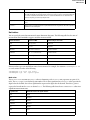
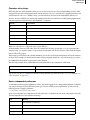


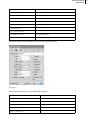

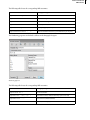
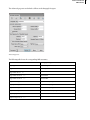

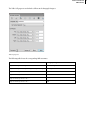
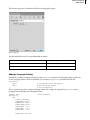

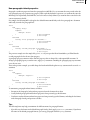
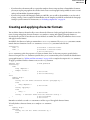
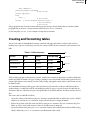
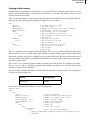

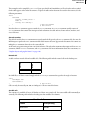
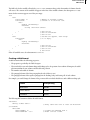

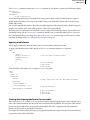
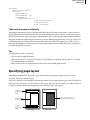
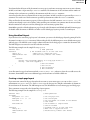
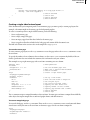
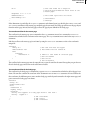
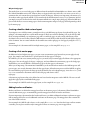
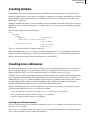
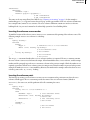
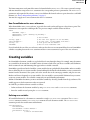

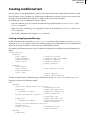
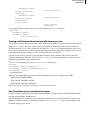
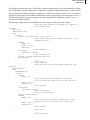


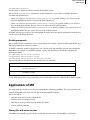
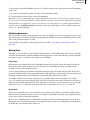
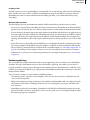

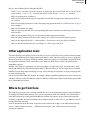
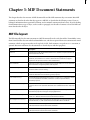
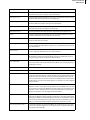
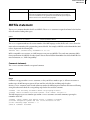

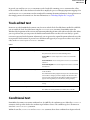

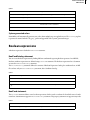
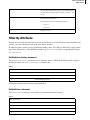

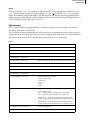
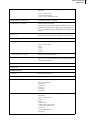



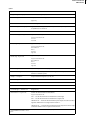

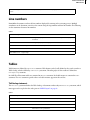
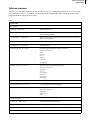
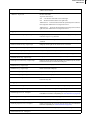


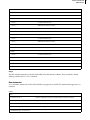

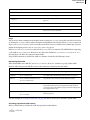
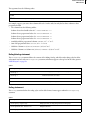
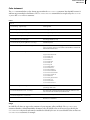







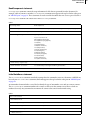
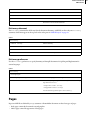


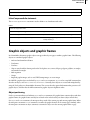

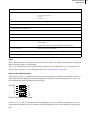
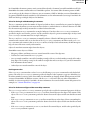
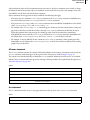
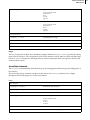


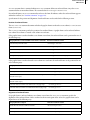
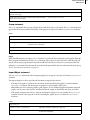

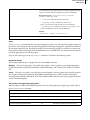


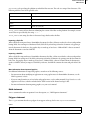
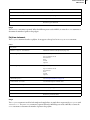

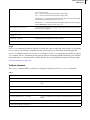


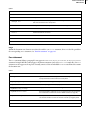

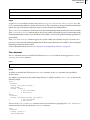


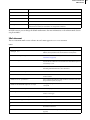

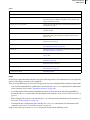
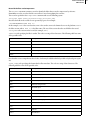
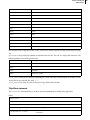


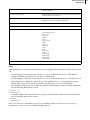

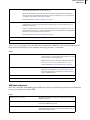
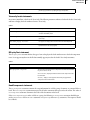


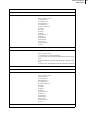

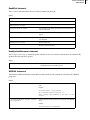

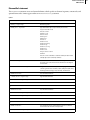

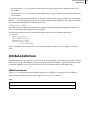
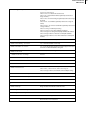


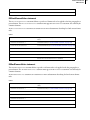
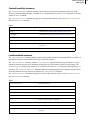
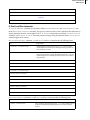
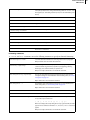
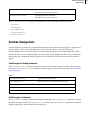




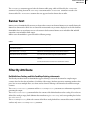
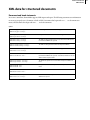
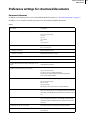
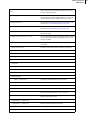


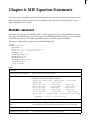
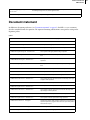
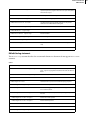


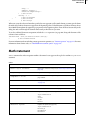
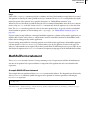

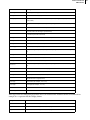
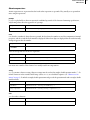
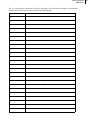
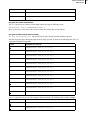

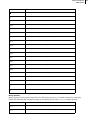
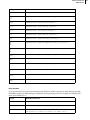
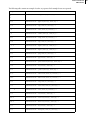


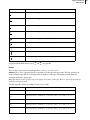
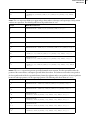
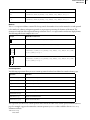


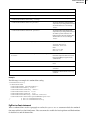
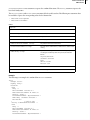

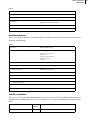


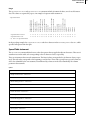
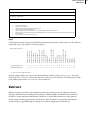
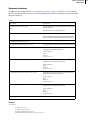


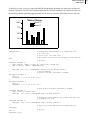

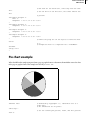


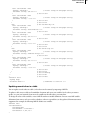


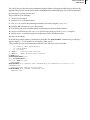
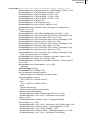

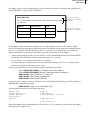


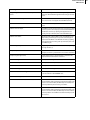








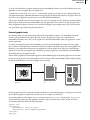

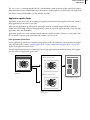
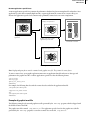
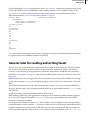
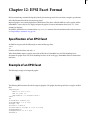

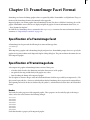
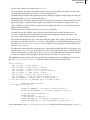

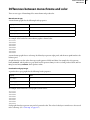
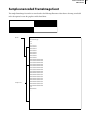
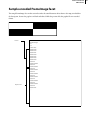


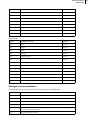
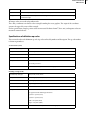


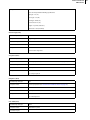
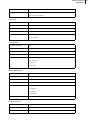

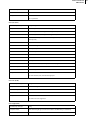

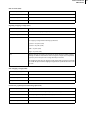
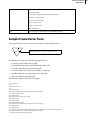

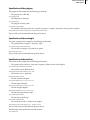



![CPU32 Reference Manual [330 pages!]](http://vs1.manualzilla.com/store/data/005686632_1-79fc9549061344d5fca8ab86e2038cb9-150x150.png)