1
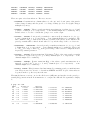
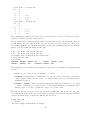
• charge: Charge density (separated core and valence contributions, multiplied by 4πr2 ).
• vcharge: Valence charge density (same normalization).
• ae: Orbital valence wavefunctions (radial part multiplied by r)
4.2
Pseudopotential generation
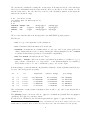
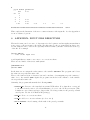
(You should now go to the Tutorial/Si directory and try the following.) We are going to generate a pseudopotential for Si, using the Troullier-Martins scheme. The calculation is relativistic
and we use the LDA (Ceperley-Alder flavor). The input file is named Si.tm2.inp and contains
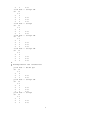
the lines (see Sect. 5 for more details):
#
#
#
#
Pseudopotential generation for Silicon
pg: simple generation
pg
n=Si
3
3
3
3
4
Silicon
tm2
3.0
c=car
0.0
0.0
4
0
2.00
1
2.00
2
0.00
3
0.00
1.90
1.90
0.0
0.00
0.00
0.00
0.00
1.90
# PS flavor, logder R
# Symbol, XC flavor,{ |r|s}
0.0
0.0
0.0
# norbs_core, norbs_valence
# 3s2
# 3p2
# 3d0
# 4f0
1.90
0.00
0.00
#
# Last line (above):
#
rc(s)
rc(p)
rc(d)
rc(f)
rcore_flag rcore
#
#23456789012345678901234567890123456789012345678901234567890
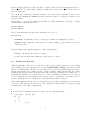
Note the two extra lines with respect to an all-electron calculation. The pseudopotential core
radii for all channels are 1.90 bohrs. Even though they are nominally empty in the ground state,
we include the 3d and 4f states in order to generate the corresponding pseudopotentials.
We can run the calculation by using the pg.sh script. Following the layout of the Tutorial
directory, we will assume that the script is in the directory directly above the current one. We
run the script and go into the directory created for the calculation (named as the input file
without the extension .inp):
$ sh ../pg.sh Si.tm2.inp
==> Output data in directory Si.tm2
==> Pseudopotential in Si.tm2.vps and Si.tm2.psf
$ cd Si.tm2
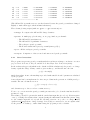
$ ls [A-Z]*
# show only the data filesAE
CHARGE AEWFNR3
PSLOGD3 PSPOTR3 PSWFNR3
AELOGD0
CHARGE
PSPOTQ0 PSWFNQ0 RHO
AELOGD1
INP
PSPOTQ1 PSWFNQ1 SCRPSPOTR0
AELOGD2
OUT
PSPOTQ2 PSWFNQ2 SCRPSPOTR1
5