1
PyMVPA Developer Guidelines
Release 0.4.8
Michael Hanke, Yaroslav O. Halchenko, Per B. Sederberg
April 23, 2012
CONTENTS
1
Documentation
1.1 Code Documentation . . . . . . . . . . . . . . . . . . . . . . . . . . . . . . . . . . . . . . . . .
1.2 Examples . . . . . . . . . . . . . . . . . . . . . . . . . . . . . . . . . . . . . . . . . . . . . . .
1
1
1
2
Code Formatting
3
3
Coding Conventions
5
4
Naming Conventions
4.1 Function Arguments . . . . . . . . . . . . . . . . . . . . . . . . . . . . . . . . . . . . . . . . .
7
7
5
Tests
9
6
Extending PyMVPA
6.1 Adding an External Dependency
6.2 Adding a new Dataset type . . .
6.3 Adding a new Classifier . . . .
6.4 Adding a new DatasetMeasure .
6.5 Adding a new Algorithm . . . .
.
.
.
.
.
11
11
11
11
12
13
7
Git Repository
7.1 Layout . . . . . . . . . . . . . . . . . . . . . . . . . . . . . . . . . . . . . . . . . . . . . . . .
7.2 Commits . . . . . . . . . . . . . . . . . . . . . . . . . . . . . . . . . . . . . . . . . . . . . . .
7.3 Merges . . . . . . . . . . . . . . . . . . . . . . . . . . . . . . . . . . . . . . . . . . . . . . . .
15
15
15
16
8
Changelog
17
9
Developer-TODO
9.1 Things to implement for the next release (Release goals) . . . . . . . . . . . . . . . . . . . . . .
9.2 Long and medium term TODOs (aka stuff that has been here forever) . . . . . . . . . . . . . . .
19
19
21
.
.
.
.
.
.
.
.
.
.
.
.
.
.
.
.
.
.
.
.
.
.
.
.
.
.
.
.
.
.
.
.
.
.
.
.
.
.
.
.
.
.
.
.
.
.
.
.
.
.
.
.
.
.
.
.
.
.
.
.
.
.
.
.
.
.
.
.
.
.
.
.
.
.
.
.
.
.
.
.
.
.
.
.
.
.
.
.
.
.
.
.
.
.
.
.
.
.
.
.
.
.
.
.
.
.
.
.
.
.
.
.
.
.
.
.
.
.
.
.
.
.
.
.
.
.
.
.
.
.
.
.
.
.
.
.
.
.
.
.
.
.
.
.
.
.
.
.
.
.
.
.
.
.
.
.
.
.
.
.
.
.
.
.
.
.
.
.
.
.
10 Building a binary installer on MacOS X 10.5
23
Index
25
i
ii
CHAPTER
ONE
DOCUMENTATION
Documentation of the code and supplementary material (such as this file) should be done in reST (reStructuredText) light markup language. See Demo or a Cheatsheet for a quick demo.
1.1 Code Documentation
Code must be documented in accordance to epydoc + reST usage guidelines However, the main focus should be put
on a properly rendering Module reference. The module reference is also generated from the docstrings and there
very similar to the API docs generated by epydoc. The main difference is that epydoc generates a much richer set
of information (e.g. inheritance graphs), which might not be useful, but even counter-productive in a user-centered
documentation. The module reference tries to limit the amount of information to a reasonable extent. it embeds
technical docs into the user manual and therefore allows for easy (and automatic) cross-references between manual
and module reference. A bunch of functions in doc/conf.py take care of converting the docstrings into the proper
format to be processed by Sphinx. This is done to ensure both human-readable plain text docs (e.g. when using
within IPython, and at the same time, an extensive use of Sphinx’s markup capabilities.
Parameter lists should be written as definition lists and not bulleted lists. For an example how to do it right, please
see mvpa/datasets/dataset.py. Basically, it should look like this:
:Parameters:
<name of the parameter>: <optional description of its type
an optional multiline description of the parameter
The same syntax has to be used for return value descriptions:
:Returns:
<what is returned>: <optional type or shape specs>
optional multiline description
The textwidth of all docstrings should not exceed 72 characters, to ensure nicely looking docs on a 80 characters
terminal in IPython.
1.2 Examples
Examples should be complete and stand-alone scripts located in doc/examples. If an example involves any kind
of interactive step, it should honor the MVPA_EXAMPLES_INTERACTIVE setting, to allow for automatic testing
of all examples. In case of a matplotlib-based visualization such snippet should be sufficient:
from mvpa import cfg
if cfg.getboolean(’examples’, ’interactive’, True):
P.show()
All examples are automatically converted into RsT documents for inclusion in the manual. Each of them is
preprocessed in the following way:
1
PyMVPA Developer Guidelines, Release 0.4.8
• Any header till the first docstring is stripped.
• Each top-level (non-assigned) docstring is taken as a text block in the generated RsT source file. Such a
docstring might appear anywhere in the example, not just at the beginning. In this case, the code snippet is
properly split and the text block is inserted at the corresponding location.
• All remaining lines are treated as code and inserted in the RsT source with appropriate markup.
The first docstring in each example must have a proper section heading (with ‘=’ markup).
Finally, each example should be added to the appropriate toctree in doc/examples.rst.
2
Chapter 1. Documentation
CHAPTER
TWO
CODE FORMATTING
pylint
Code should be conformant with Pylint driven by config located at doc/misc/pylintrc. It assumes camelback
notation (classes start with capitals, functions with lowercase) and indentation using 4 spaces (i.e. no tabs)
Variables are low-case and can have up to 2 _s. To engage, use 1 of 3 methods:
• place it in ~/.pylintrc for user-wide installation
• use within a call to pylint:
pylint --rcfile=$PWD/doc/misc/pylintrc
• export environment variable from mvpa sources top directory:
export
PYLINTRC=$PWD/doc/misc/pylintrc
2 empty lines
According to original python style guidelines: single empty line to separate methods within class, and 2
empty lines between classes BUT we do 2 empty between methods, 3 empty between classes
module docstring
Each module should start with a docstring describing the module (which is not inside the hashed-comment
of each file) look at mapper or neighbor for tentative organization if copyright/license has to be present in
each file.
header
Each file should contain a header from doc/misc/header.py.
notes
Use following keywords will be caught by pylint to provide a summary of what yet to be done in the given
file
FIXME
something which needs fixing (sooner than later)
TODO
future plan (i.e. later than sooner)
XXX
some concern/question
YYY
comment/answer to above mentioned XXX concern
WiP
Work in Progress: API and functionality might rapidly change
3
PyMVPA Developer Guidelines, Release 0.4.8
4
Chapter 2. Code Formatting
CHAPTER
THREE
CODING CONVENTIONS
__repr__
most of the classes should provide meaningful and concise summary over their identity (name + parameters
+ some summary over results if any)
5
PyMVPA Developer Guidelines, Release 0.4.8
6
Chapter 3. Coding Conventions
CHAPTER
FOUR
NAMING CONVENTIONS
4.1 Function Arguments
dataset vs data
Ones which are supposed to be derived from Dataset class should have suffix (or whole name) dataset.
In contrast, if argument is expected to be simply a NumPy array, suffix should be data. For example:
class Classifier(ClassWithCollections):
...
def train(self, dataset):
...
def predict(self, data):
class FeatureSelection(ClassWithCollections):
...
def __call__(self, dataset, testdataset):
Such convention should be enforced in all *train, *predict functions of classifiers.
7
PyMVPA Developer Guidelines, Release 0.4.8
8
Chapter 4. Naming Conventions
CHAPTER
FIVE
TESTS
• Every more or less “interesting” bugfix should be accompanied by a unittest which might help to prevent it
in the future refactoring
• Every new feature should have a unittest
• Unit tests that might be non-deterministic (e.g. depending on classifier performance, which is turn is randomly initialized) should be made conditional like this:
>>> from mvpa import cfg
>>> if cfg.getboolean(’tests’, ’labile’, default=’yes’):
...
pass
9
PyMVPA Developer Guidelines, Release 0.4.8
10
Chapter 5. Tests
CHAPTER
SIX
EXTENDING PYMVPA
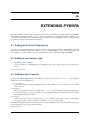
This section shall provide a developer with the necessary pieces of information for writing extensions to PyMVPA.
The guidelines given here, must be obeyed to ensure a maximum of compatibilty and inter-operability. As a
consequence, all modifications that introduce changes to the basic interfaces outlined below have to be documented
here and also should be announced in the changelog.
6.1 Adding an External Dependency
Introducing new external dependencies should be done in a completely optional fashion. This includes both builddependencies and runtime dependencies. With mvpa.base.externals PyMVPA provides a simple framework to test
the availability of certain external components and publish the results of the tests throughout PyMVPA.
6.2 Adding a new Dataset type
• Required interface for Mapper.
• only new subclasses of MappedDataset + new Mappers (all other as improvements into the Dataset base
class)?
go into mvpa/datasets/
6.3 Adding a new Classifier
To add a new classifier implementation it is sufficient to create a new sub-class of Classifier and add implementations of the following methods:
__init__(**kwargs)
Additional arguments and keyword arguments may be added, but the base-class contructor has to be called
with **kwargs!
_train(dataset)
Has to train the classifier when it is called with a Dataset. Successive calls to this methods always have
to train the classifier on the respective datasets. An eventually existing prior training status has to be cleared
automatically. Nothing is returned.
_predict(data)
Unlike _train() the method is not called with a Dataset instance, but with any sequence of data samples
(e.g. arrays). It has to return a sequence of predictions, one for each data sample.
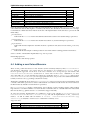
With this minimal implementation the classifier provides some useful functionality, by automatically storing some
relevant information upon request in state variables.
Supported states:
11
PyMVPA Developer Guidelines, Release 0.4.8
State Name
feature_ids
predicting_time
predictions
trained_dataset
trained_labels
training_confusion
training_time
values
Description
Feature IDS which were used for the actual training.
Time (in seconds) which took classifier to predict.
Most recent set of predictions.
The dataset it has been trained on.
Set of unique labels it has been trained on.
Confusion matrix of learning performance.
Time (in seconds) which took classifier to train.
Internal classifier values the most recent predictions are based on.
Default
Disabled
Enabled
Enabled
Disabled
Enabled
Disabled
Enabled
Disabled
If any intended functionality cannot be realized be implementing above methods. The Classifier class offers
some additionals methods that might be overriden by sub-classes. For all methods described below it is strongly
recommended to call the base-class methods at the end of the implementation in the sub-class to preserve the full
functionality.
_pretrain(dataset)
Called with the Dataset instance that shall be trained with, but before the actual training is performed.
_posttrain(dataset)
Called with the Dataset instance the classifier was trained on, just after training was performed.
_prepredict(data)
Called with the data samples the classifier should do a prediction with, just before the actual _prediction()
call.
_postpredict(data, result)
Called with the data sample for which predictions were made and the resulting predictions themselves.
Source code files of all classifier implementations go into mvpa/clfs/.
Outstanding Questions:
• when states and when properties?
6.4 Adding a new DatasetMeasure
There are few possible base-classes for new measures (former sensitivity analyzers). First, DatasetMeasure
can directly be sub-classed. It is a base class for any measure to be computed on a Dataset. This is
the more generic approach. In the most of the cases, measures are to be reported per each feature, thus
FeaturewiseDatasetMeasure should serve as a base class in those cases. Furthermore, for measures that make use of some classifier and extract the sensitivities from it, Sensitivity (derived from
FeaturewiseDatasetMeasure) is a more appropriate base-class, as it provides some additional useful functionality for this use case (e.g. training a classifier if needed).
All measures (actually all objects based on DatasetMeasure) support a transformer keyword argument to their
constructor. The functor passed as its value is called with the to be returned results and its outcome is returned as
the final results. By default no transformation is performed.
If a DatasetMeasure computes a characteristic, were both large positive and large negative values indicate
high relevance, it should nevertheless not return absolute sensitivities, but set a default transformer instead that
takes the absolute (e.g. plain N.absolute or a convinience wrapper Absolute).
To add a new measure implementation it is sufficient to create a new sub-class of DatasetMeasure (or
FeaturewiseDatasetMeasure, or Sensitivity) and add an implementation of the _call(dataset)
method. It will be called with an instance of Dataset. FeaturewiseDatasetMeasure (e.g.
Sensitivity as well) has to return a vector of featurewise sensitivity scores.
Supported states:
State Name
null_prob
raw_results
12
Description
State variable.
Computed results before applying any transformation algorithm.
Default
Enabled
Disabled
Chapter 6. Extending PyMVPA
PyMVPA Developer Guidelines, Release 0.4.8
Source code files of all sensitivity analyzer implementations go into mvpa/measures/.
6.4.1 Classifier-independent Sensitivity Analyzers
Nothing special.
6.4.2 Classifier-based Sensitivity Analyzers
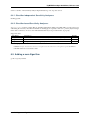
A Sensitivity behaves exactly like its classifier-independent sibling, but additionally provides support for
embedding the necessary classifier and handles its training upon request (boolean force_training keyword argument of the constructor). Access to the embedded classifier object is provided via the clf property.
Supported states:
State Name
base_sensitivities
null_prob
raw_results
Description
Stores basic sensitivities if the sensitivity relies on combining multiple ones.
State variable.
Computed results before applying any transformation algorithm.
Default
Disabled
Enabled
Disabled
Outstanding Questions:
• What is a mvpa.measures.base.ProxyClassifierSensitivityAnalyzer useful for?
• Shouldn’t there be a sensitivities state?
6.5 Adding a new Algorithm
go into mvpa/algorithms/
6.5. Adding a new Algorithm
13
PyMVPA Developer Guidelines, Release 0.4.8
14
Chapter 6. Extending PyMVPA
CHAPTER
SEVEN
GIT REPOSITORY
7.1 Layout
The repository is structured by a number of branches. Each developer should prefix his/her branches with a unique
string plus ‘/’ (maybe initials or similar). Currently there are:
mh Michael Hanke
per Per B. Sederberg
yoh
Yaroslav Halchenko
Each developer can have an infinite number of branches. If the number of branches causes gitk output to exceed a
usual 19” screen, the respective developer has to spend some bucks (or euros) on new screens for all others ;-)
The main release branch is called master. This is a merge-only branch. Features finished or updated by some
developer are merged from the corresponding branch into master. At a certain point the current state of master is
tagged – a release is done.
Only usable feature should end-up in master. Ideally master should be releasable at all times. Something must
not be merged into master if any unit test fails.
Additionally, there are packaging branches. They are labeled after the package target (e.g. debian for a Debian
package). Releases are merged into the packaging branches, packaging get updated if necessary and the branch
gets tagged when a package version is released. Maintenance (as well as backport) releases should be gone under
maint/codename.flavor (e.g. maint/lenny, maint/lenny.security, maint/sarge.bpo).
7.2 Commits
Please prefix all commit summaries with one (or more) of the following labels. This should help others to easily
classify the commits into meaningful categories:
• BF : bug fix
• RF : refactoring
• NF : new feature
• BW : addresses backward-compatibility
• OPT : optimization
• BK : breaks something and/or tests fail
• PL : making pylint happier
• DOC: for all kinds of documentation related commits
15
PyMVPA Developer Guidelines, Release 0.4.8
7.3 Merges
For easy tracking of what changes were absorbed during merge, we advice to enable merge summary within git:
git-config merge.summary true
16
Chapter 7. Git Repository
CHAPTER
EIGHT
CHANGELOG
The PyMVPA changelog is located in the toplevel directory of the source tree in the Changelog file. The content of
this file should be formated as restructured text to make it easy to put it into manual appendix and on the website.
This changelog should neither replicate the VCS commit log nor the distribution packaging changelogs (e.g.
debian/changelog). It should be focused on the user perspective and is intended to list rather macroscopic and/or
important changes to the module, like feature additions or bugfixes in the algorithms with implications to the
performance or validity of results.
It may list references to 3rd party bugtrackers, in case the reported bugs match the criteria listed above.
Changelog entries should be tagged with the name of the developer(s) (mainly) involved in the modification –
initials are sufficient for people contributing regularly.
Changelog entries should be added whenever something is ready to be merged into the master branch, not necessarily with a release already approaching.
17
PyMVPA Developer Guidelines, Release 0.4.8
18
Chapter 8. Changelog
CHAPTER
NINE
DEVELOPER-TODO
9.1 Things to implement for the next release (Release goals)
• A part of below restructuring TODO but is separate due to it importance: come up with cleaner hierarchy
and tagging of classifiers and regressions – now they are all Classifier
• Unify parameter naming across all classifiers and come up with a labeling guideline for future classifier
implementations and wrappers:
Numeric parameters can be part of .params Collection now, so they are
joined together.
• Provide sufficient documentation about internal variable naming to make Harvester/Harvesting functionality
usable. Currently the user is supposed to know, how a particular local variable is called to be able to harvest
e.g. feature_ids of classifiers over cross-validation folds:
class.HARVESTABLE={’blah’ : ’ some description’}
Add information on HARVESTABLE and StateVariable
Collectable -> Attribute
base.attributes
• Restructure code base (incl. renaming and moving pieces)
Let’s use the following list to come up with a nice structure for all logical components we have:
– Datasets
– Sensitivity analyzers (maybe: featurewise measures) * Classifier sensitivities (SVM, SMLR)
-> respective classifiers * ANOVA -> mvpa.measures.anova * Noise perturbation -> ->
mvpa.measures.noisepertrubation * meta-algorithms (splitting) -> mvpa.measures
DatasetMeasure -> Measure (transformers)
FeaturewiseDatasetMeasure?
combiners to be absorbed withing transformers? and then gone? {Classifier?}Sensitivity?
– Mappers::
mvpa.mappers (AKA mvpa.projections mvpa.transformers)
* Along with PCA/ICA mappers, we should add a PLS mapper:
PCA.train(learningdataset)
.forward,
.backward
Package pychem for Debian, see how to use from PyMVPA! ;-) Same for MDP
(i.e. use from pymvpa)
19
PyMVPA Developer Guidelines, Release 0.4.8
– Feature selection algorithms
* Simple thresholding
* RFE
* IFS
– .mapper state variable
mvpa.featsel (NB no featsel.featsel.featsel more than 4 times!)
mvpa.featsel.ifs
mvpa.featsel.rfe
– several base classes with framework infrastructure (Harvester, ClassWithCollections, virtual properties, ...)
– Transfer error calculation
– Cross-validation support
– Monte-Carlo-based significance testing
– Dataset splitter
– Metrics and distance functions
– Functions operating on dataset for preprocessing or transformations
– Commandline interface support
– Functions to generate artificial datasets
– Error functions (i.e. for TransferError)
– Custom exception types
– Python 2.5 copy() aka external code shipped with PyMVPA
– Several helpers for data IO
– Left-over from the last attempt to establish a generic parameter interface
– Detrending (operating on Datasets)
– Result ‘Transformers’ to be used with ‘transformer=’ kwarg
– Debugging and verbosity infrastructure
– plus additional helpers, ranging from simple to complex scattered all over the place
• Resultant hierarchy:
– mvpa
* datasets
* clfs
* measures
* featsel
• Add ability to add/modify custom attributes to a dataset.
• Possibly make NiftiDataset default to float32 when it sees that the data are ints.
• Add kernel methods as option to all classifiers, not just SVMs. For example, you should be able to run a
predefined or custom kernel on the samples going into SMLR.
• TransferError needs to know what type of data to send to any specific ErrorFX. Right now there is only
support for predictions and labels, but the area under the ROC and the correlation-based error functions
expect to receive the “values” or “probabilities” from a classifier. Just to make this harder, every classifier is
different. For example, a ridge regression’s predictions are continuous values, whereas for a SVM you need
to pass in the probabilities.
20
Chapter 9. Developer-TODO
PyMVPA Developer Guidelines, Release 0.4.8
For binary: 1 value
multiclass: 1 value, or N values
• In a related issue, the predictions and values states of the classifiers need to have a consitent format. Currently, SVM returns a list of dictionaries for values and SMLR returns a numpy ndarray.
9.2 Long and medium term TODOs (aka stuff that has been here
forever)
• Agree upon sensitivities returned by the classifiers. Now SMLR/libsvm.SVM returns (nfeatures
x X), (where X is either just 1 for binary problems, or nclasses in full multiclass in SMLR, or
nclasses-1 for libsvm(?) or not-full SMLR). In case of sg.SVM and GPR (I believe) it is just
(nfeatures,). MaskMapper puked on reverse in the first specification... think about combiner –
should it or should not be there... etc
• selected_ids -> implement via MaskMapper?
yoh:
it might be preferable to manipulate/expose MaskMapper instead of plain list of selected_ids within FeatureSelection classes
• unify naming of working/testing
– transerror.py for instance uses testdata/trainingdata
– rfe.py dataset, testdataset
• implement proper cloning of classifiers. untrain() doesn’t work in some cases, since we can create somewhat convolved object definitions so it is hard, if not impossible, to get to all used
classifiers. See for instance clfswh[’SVM/Multiclass+RFE’]. We can’t get all the way into
classifier-based sensitivity analyzer. Thus instead of tracking all the way down in hierarchy,
we should finally create proper ‘parametrization’ handling of classifiers, so we could easily
clone basic ones (which might have active SWIG bindings), and top-level ones should implement .clone() themselves. or may be some other way, but things should be done. Or may be via
proper implementation of __reduce__ etc
• mvpa.misc.warning may be should use stock python warnings module instead of custom one?
• ConfusionBasedError -> InternalError ?
• Think about how to deal with Transformers to serve them with
basic_analyzers... May be transformer can be a an argument for any analyzer! Ha! Indeed...
may be later
• Renaming of the modules transerror.py -> errors.py
• SVM: getSV and getSVCoef return very ‘packed’ presentation
whenever classifier is multiclass. Thus they have to be unpacked before proper use (unless
it is simply a binary classifier).
• Regression tests: for instance using sample dataset which we have
already, run doc/examples/searchlight.py and store output to validate against. Probably
the best would be to create a regression test suite within unit tests which would load the
dataset and run various algorithms on it a verify the results against previousely obtained
(and dumped to the disk)
• Agree on how to describe parameters to functions. Describe in NOTES.coding.
• feature_selector – may be we should return a tuple (selected_ids, discarded_ids)?
Michael:
Is there any use case for that? ElementSelector can ‘select’ and ‘discard’ already. DO we
need both simultaneously?
9.2. Long and medium term TODOs (aka stuff that has been here forever)
21
PyMVPA Developer Guidelines, Release 0.4.8
• Basic documentation: Examples (more is better) describing various use cases
(everything in the cncre should be done in examples)
• Non-linear SVM RFE
• ParameterOptimizer (might be also OptimizedClassifier which uses parameterOptimizer internally but as the result there is a classifier which automatically optimizes its parameters. It is
close in idea to classifier based on RFE)
• provide for Dataset – Dataset.__featattr which has attributes for
features similar to __dsattr way.
in –> data -> dataShape out –> features ->
22
Chapter 9. Developer-TODO
CHAPTER
TEN
BUILDING A BINARY INSTALLER ON
MACOS X 10.5
A simple way to build a binary installer for Mac OS is bdist_mpkg. This is a setuptools extension that uses
the proper native parts of MacOS to build the installer. However, for PyMVPA there are two problems with
bdist_mpkg: 1. PyMVPA uses distutils not setuptools and 2. current bdist_mpkg 0.4.3 does not work for MacOS
X 10.5 (Leopard). But both can be solved.
Per 1) A simple wrapper script in tools/mpkg_wrapper.py will enable the use of setuptools on top of distutils,
while keeping the distutils part in a usable state.
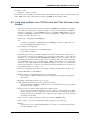
Per 2) The following patch (against 0.4.3.) makes bdist_mpkg compatible with MacOS 10.5. It basically changes
the way bdist_mpkg determined the GID of the admin group. 10.5 removed the nidump command:
diff -rNu bdist_mpkg-0.4.3/bdist_mpkg/tools.py bdist_mpkg-0.4.3.leopard/bdist_mpkg/tools.py
--- bdist_mpkg-0.4.3/bdist_mpkg/tools.py
2006-07-09 00:39:00.000000000 -0400
+++ bdist_mpkg-0.4.3.leopard/bdist_mpkg/tools.py
2008-08-21 07:43:35.000000000 -0400
@@ -79,15 +79,12 @@
yield os.path.join(root, fn)
+
+
+
+
+
+
def get_gid(name, _cache={}):
if not _cache:
for line in os.popen(’/usr/bin/nidump group .’):
fields = line.split(’:’)
if len(fields) >= 3:
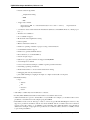
_cache[fields[0]] = int(fields[2])
try:
return _cache[name]
except KeyError:
raise ValueError(’group %s not found’ % (name,))
for line in os.popen("dscl . -read /Groups/" + name + " PrimaryGroupID"):
fields = [f.strip() for f in line.split(’:’)]
if fields[0] == "PrimaryGroupID":
return fields[1]
raise ValueError(’group %s not found’ % (name,))
def find_root(path, base=’/’):
"""
23
PyMVPA Developer Guidelines, Release 0.4.8
24
Chapter 10. Building a binary installer on MacOS X 10.5
INDEX
E
environment variable
MVPA_EXAMPLES_INTERACTIVE, 1
M
MVPA_EXAMPLES_INTERACTIVE, 1
25