1
System Concepts
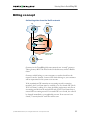
This allows you to easily manage both termination costs and routing from
a single location on the web interface. Thus, when such a routing tariff is
associated with a connection, you can send calls for termination to all
prefixes for which rates exist in the tariff.
Multiple routes
It is dangerous to have only one termination partner: if it is down, your
customers will not be able to make any calls. Normally, you will try to find
several vendors and enter their rates into the system. Each connection to
a vendor (with routing tariff) will produce one possible route, and
PortaBilling will arrange these according to cost or your other preferences,
thus providing fail-over routing.
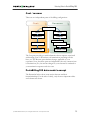
Routing plans
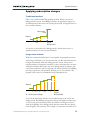
Routing preferences in the rate allow you to specify that, for example, you
would rather send a call to MCI than to T-Systems. However, this
decision is “global”, and so will apply to all calls made in your system. But
what if you would like to use MCI first for customer A, while T-Systems
should be the first route for customer B, and customer C should be
routed to MCI only?
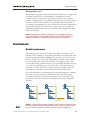
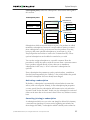
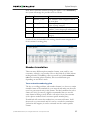
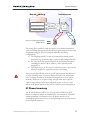
This can be accomplished using routing plans. A routing plan defines the
routes for which categories are available, as well as in which order they
should be arranged (route categories with a higher order value are tried
first). For instance, in the example above MCI may be assigned as the
“Normal” route category and T-Systems as the “Premium” category.
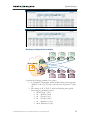
After that, three routing plans will be created:
• Quality - includes first Premium and then Normal routing
categories
• Ordinary - includes first Normal and then Premium routing
categories
• Cost-efficient – includes only Normal routing category
So, depending on which routing plan is assigned to the current customer,
the system will offer a different set of routes. There is one routing plan
which always exists in the system, called Default. This is assigned to your
customer unless otherwise specified. This routing plan uses all the
available routes regardless of their route category.
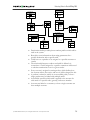
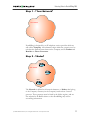
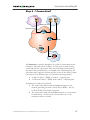
Routing algorithm
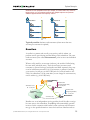
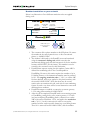
The routing principle is simple:
• The SIP server (or MVTS, or some other entity) asks PortaBilling
for routing destinations for a given number.
© 2000-2006 PortaOne, Inc. All rights Reserved. www.portaone.com
59