1
Chip-Select Module
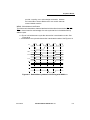
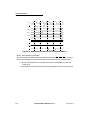
transfer of the first word of the longword is complete. If TA is negated, the alternate master
continues to sample TA and inserts wait states instead of terminating the transfer.
Clock 4 (C4)
At the start of clock 4, the alternate master increments the address to indicate the second
word of the longword transfer. The MCF5206 continues to assert CS and TA and the
selected slave outputs the data indicated by the new address on D[31:16]. At the end of
clock 4, the alternate master samples the level of TA. If TA is asserted, the transfer of the
second word of the longword is complete. If TA is negated, the alternate master continues
to sample TA and inserts wait states instead of terminating the transfer.
Clock 5 (C5)
At the start of clock 5, the MCF5206 negates CS and TA, completing the alternate master
transfer. After the next rising edge of CLK, the MCF5206 three states TA. The alternate
master can assert TS starting another transfer.
NOTE
Write enables (WE[3:0]) will not assert on zero wait state
alternate master write transfers.
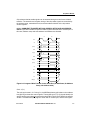
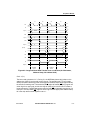
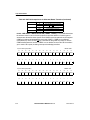
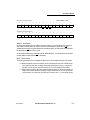
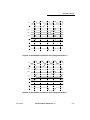
8.3.4.3 ALTERNATE MASTER BURST TRANSFER WITH ADDRESS SETUP AND
HOLD. Figure 8-10 illustrates a longword bursting read transfer from a 16-bit port with
either address setup or read address hold enabled.
MOTOROLA
MCF5206 USERÕS MANUAL Rev 1.0
8-25