1
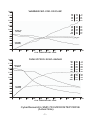
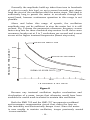
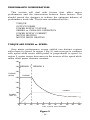
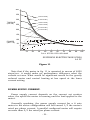
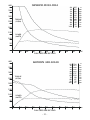
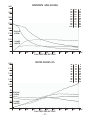
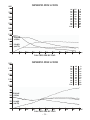
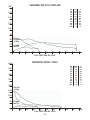
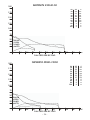
In region 1 the motor torque is held constant by controlling the
magnitude of the motor phase current. The step rate in this
region is sufficiently low to permit motor current to reach the
programmed value.
Above a certain speed, the motor torque begins to drop off as
the inverse of the speed. Motor winding inductance limits the rate
of current rise, and as speed increases, progressively less current
can be forced into the windings. Because motor torque is
proportional to phase current, and in region 2 current is
proportional to the step period, torque decreases as the inverse of
the step rate.
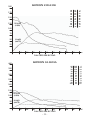
Because power is the product of speed and torque, power
remains constant with speed in region 2 in a loss-less step motor.
There are speed related power losses in the motor ( i.e. friction,
magnetic losses, windage and other losses ) that result in a
shallow slope to the power curve. Where this slope intersects the
speed axis is the maximum speed at which the motor will run.
CAUTION:
The SMD 703/707 drive is capable of running step motors at
speeds high enough to cause damage to motor bearings.
FACTORS AFFECTING POWER AND TORQUE
POWER SUPPLY VOLTAGE:
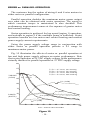
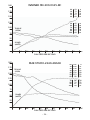
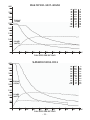
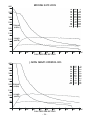
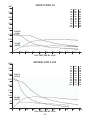
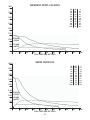
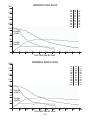
The choice of power supply voltage affects the power a step
motor generates in region 2. The speed to which constant torque
is maintained is proportional to power supply voltage.
Consequently maximum motor shaft power is also proportional to
the power supply voltage.
The step motor drive has a power supply range from 24 to 60
VDC. This results in a motor power range of 2.5:1.
Increasing power supply voltage increases motor heating.
Taking this into consideration, the choice of power supply voltage
should be just high enough to meet the application's power
requirements and no higher.
- 17 -