1
5.3. RULE EVALUATION
51
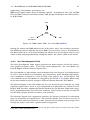
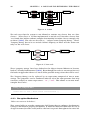
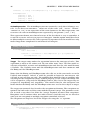
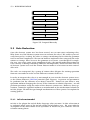
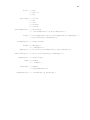
AbstractContentProposalProvider
AbstractJavaBasedContentProposalProvider
AbstractTerminalsProposalProvider
TerminalsProposalProvider
AbstractDSLProposalProvider
DSLProposalProvider
Figure 5.5: Proposal Hierachy
5.3
Rule Evaluation
Once the abstract syntax tree has been created, we can now start evaluating rules.
Why do we need the abstract syntax trees to evaluate the rules ? We could try to evaluate them just by ”reading” the rules as strings considering the fact that the grammar
itself is not that complicated. We can not however implement this using only the rules
written as strings. First, because the grammar is recursive, even though it is simple,
the user can create some pretty complicated rules, this would make interpreting the
rules directly as Strings extremely difficult if not impossible. Second because the use
of abstract syntax trees and the Visitor Pattern makes it a lot easier to write extendable code.
The rules are interpreted by a group of visitors that delegate the visiting operation
from one to another in order to visit different sections of the tree.
In order to interpret the rules it is not enough to just visit the abstract syntax trees,
as the Visitor Pattern’s [GHJV94] intended goal suggests: ”represent an operation to
be performed on the elements of an object structure. Visitor lets you define a new
operation without changing the classes of the elements on which it operates”, we will
perform operations using the nodes of the abstract syntax trees. However, these operations, cannot be explained without an introduction to the mechanisms behind the
inCode plugin. We will first go through mechanisms and then proceed to explain the
visiting process.
5.3.1
inCode metamodel
inCode is the plugin the inCode.Rules language relies on most. In this subsection it
is explained what parts of the inCode plugin inCode.Rules uses. We start with the
description of the meta-model used by inCode to model the java elements and the
relations among them.