1
Unfair Advantage
factors. De-selecting them will reduce the amount of computer time needed to perform the remaining
analysis at the cost of some accuracy. A rough rule of thumb is to go from bottom up, adding the intensities
until the sum is somewhere between 5 and 10 percent. In this example, we would de-select the bottom three
or four factors. This should only be necessary with a large number of input markets; the small case we are
dealing with here does not require it.
If we were interested only in a specific market or pair of markets, we could de-select the factors that were
only slightly loaded in those markets. For example, suppose we were interested only in sugar. Ignoring
factors with slight loadings, less that 0.2 in magnitude, leaves factors 1, 2, 3, 4, 5 and 6. As with the previous
case, we are trading slightly lower accuracy for reduced computing time and this is not necessary for the
current example. It should be noted that using only these factors will give highly misleading results for any
market except sugar.
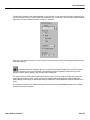
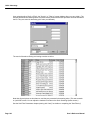
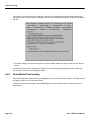
In most cases, the default – leaving all factors selected – is appropriate and that is what we will do on this
example. For more information on factor analysis, see [Williams1968], chapter 12 and
[RaymentJoreskog1996. Once you have de-selected the factors you wish to ignore, if any, press the "Next"
button to move to the current inter-market situation. Again, this may take some time as the Multi-Market
Analyzer is computing proprietary indicators based on the factors selected.
Reformatted From Multi-Market Analyzer On Line Help by Steven Davis, CSI and M. Edward Borasky,
Borasky Research. Click "Help" on the MMA Introduction screen for the full MMA Manual.
7.10.
MMA More on Factor Analysis
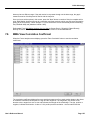
These paragraphs, offered by Bob Pelletier, were derived from a conversation with Steven Davis to stimulate
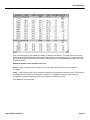
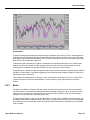
additional thought -Another view of the Factor Analysis table might be that lower order factors 1, 2, 3, & 4 identify markets with
high cell scores that are correlated, hence markets that qualify for outright long or short positions, and the
higher order factors, say 7, 8, 9 and 10 represent spread opportunities. The cell scores of larger positive
factors identify candidate long positions in the historical past and the large negative cell score factors identify
short positions.
Under these rules, factor 10 in our example suggests profits could have been captured by trading two corn
contracts against one contract each of soybeans and wheat. All other cell scores for factor 10 appear to
suggest nominal effects and, for that reason, might be ignored. The suggested inclusion to spread corn
against wheat and soybeans has to do with the magnitude of the respective cell factors of these three
markets versus the seven other nominal cell factors of the balance under factor 10. Please review the Davis
Unstretched Index results to determine the long short legs of the spread.
Kachigan's Multivariate Statistical Analysis, p. 236 - 270, suggests that it might "be somewhat illogical to
retain a factor that contains even less information than an original input variable." This would be the case for
factor 10, which explains less than one percent of the variances in the data. However, we believe it would be
OK to review and act upon low variance items, given the promising objectivity of the price data (as compared
with personality traits) and the relative magnitude differences between the factor 10 loadings.
The intermarket movement of correlated market products is imprecise because all of the information that
affects them cannot be totally known. Weather, marketing, supply and demand and many other factors
cannot be completely quantified. Fortunately, however, thanks to Unfair Advantage's enormous data
repository of related markets, many elements of the equation are known through economically related
products that coexist in a related environment.
Page 160
User's Reference Manual
























































































![Main lSetup l Cleanup] Parameters Locals}](http://vs1.manualzilla.com/store/data/005794368_1-f1180d1b21e5ef681561217b8f35e179-150x150.png)